Why Tinos
There are islands in Greece that carry a weight beyond the merely scenic — places where history, faith, and natural beauty converge in a combination so complete and so deeply felt by the people who live there and the people who come to them that the experience of visiting transcends the ordinary categories of travel. Tinos is one of these islands. Lying at the heart of the Cyclades, between Mykonos to the southeast and Andros to the north, Tinos is simultaneously one of the most important religious destinations in the entire Orthodox Christian world, one of the most architecturally and artistically distinctive islands in the Aegean, and one of the most genuinely beautiful and most genuinely surprising places in Greece — an island that reveals new layers of character and new sources of pleasure with each day spent in its company, and that consistently and generously exceeds the expectations of every traveller who arrives here with an open mind and a willingness to look carefully at what it has to offer.
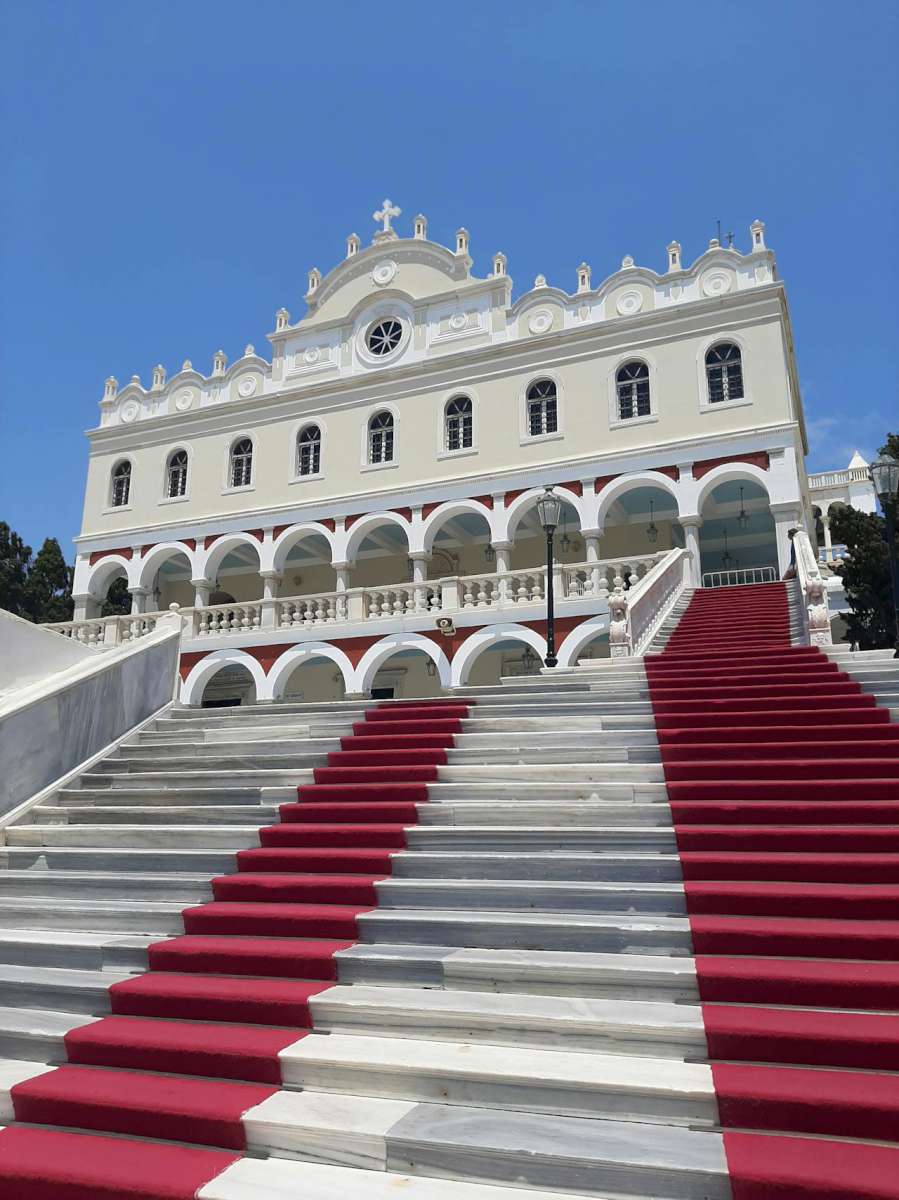
The island is known throughout Greece and throughout the Greek Orthodox world above all else as the home of the Panagia Evangelistria — the Church of Our Lady of Tinos — and of the miraculous icon of the Virgin Mary discovered beneath its altar in 1823 following a vision by the nun Pelagia, now Saint Pelagia, who is venerated alongside the icon itself. The discovery of the icon, occurring at the very moment of the Greek War of Independence, was interpreted as a divine sign of support for the newly forming Greek nation, and the church built above it became the most sacred pilgrimage site in Greece — the Greek Orthodox equivalent of Lourdes. Every year on the 15th of August, the Feast of the Dormition of the Virgin, tens of thousands of pilgrims descend on Tinos from across Greece and the Greek diaspora, many of them climbing the long marble processional way from the harbour to the church on their knees as an act of devotion. It is one of the most powerful and most moving religious observances in the Mediterranean world, and it has given Tinos an atmosphere of spiritual significance that is palpable even on the quietest days of the year, even for the visitor who comes with no religious intentions whatsoever.
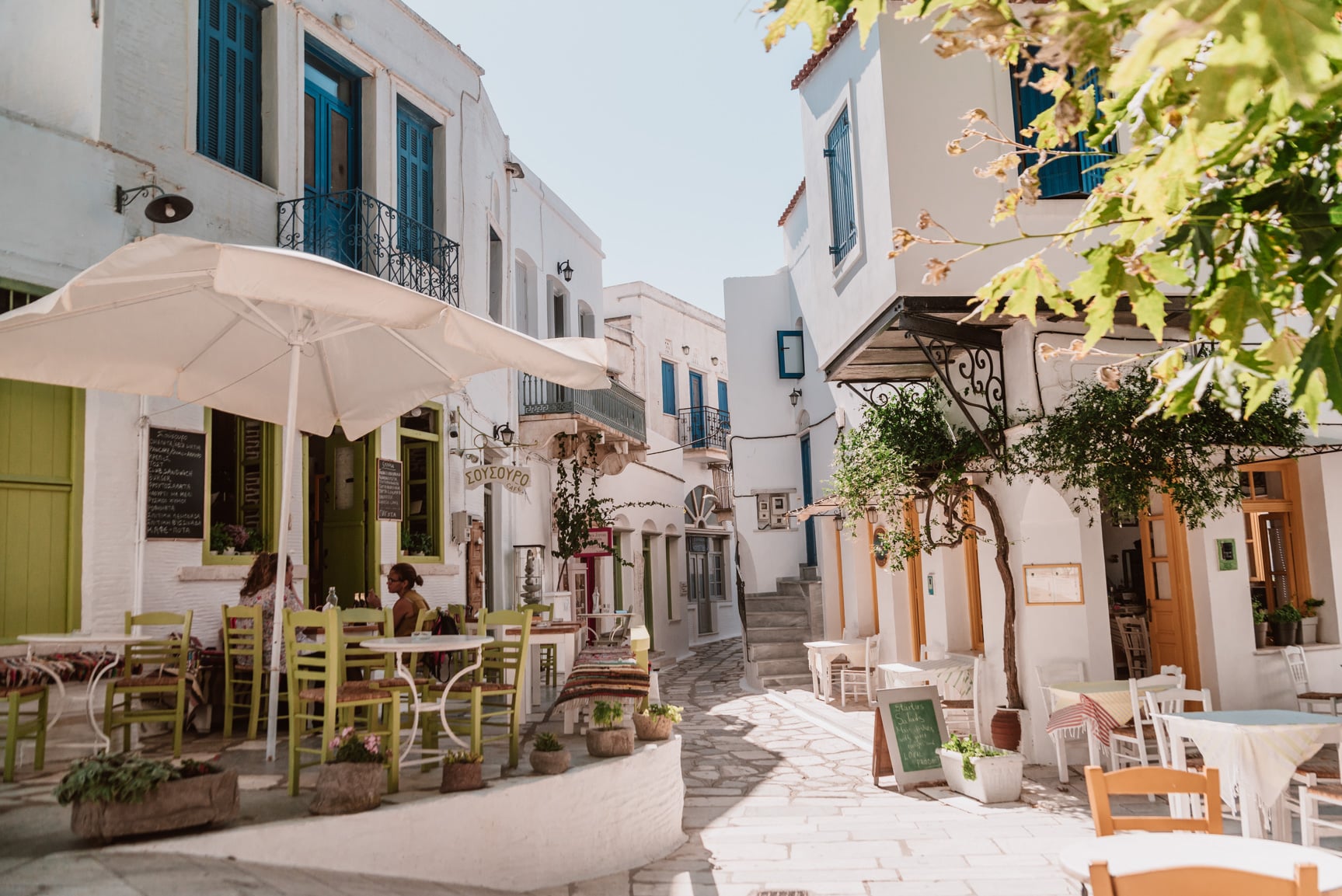
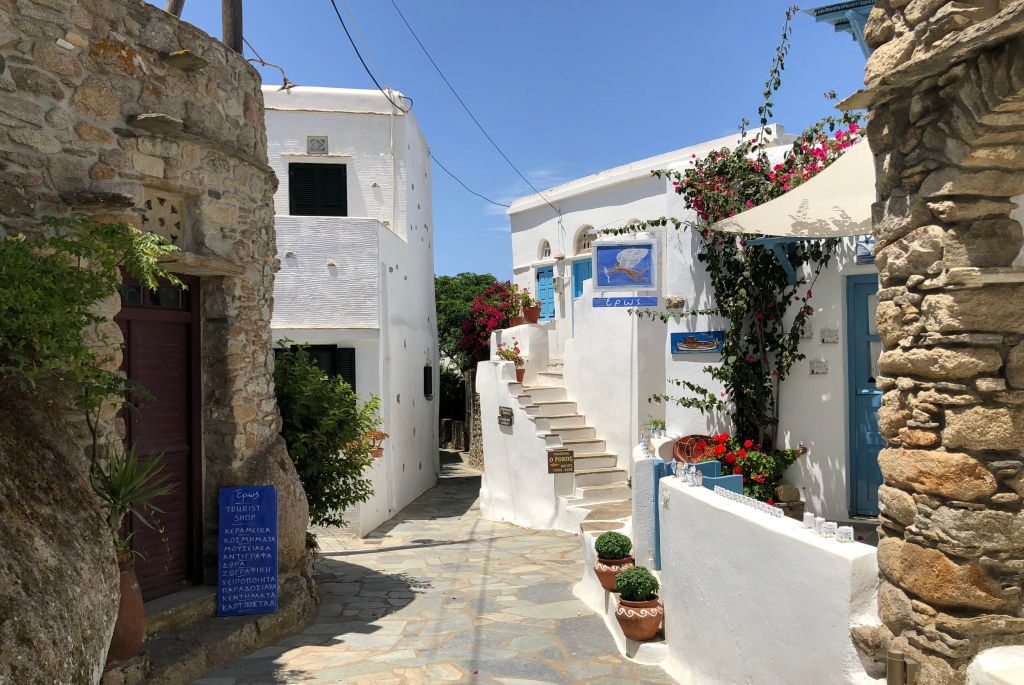
And yet Tinos is also, remarkably, an island of extraordinary secular beauty and cultural richness — an island of marble villages and medieval Venetian towers, of an artistic tradition in carved marble that has produced some of the finest sculptors in modern Greek history, of a landscape of great variety and dramatic beauty, of excellent food rooted in an agricultural tradition of unusual depth and quality, and of the famous Cycladic wind that sweeps across its hills and valleys with a constancy and a force that has shaped its architecture, its agriculture, and the character of its people in ways both practical and profound. To visit Tinos is to encounter an island of multiple personalities — sacred and secular, ancient and living, serene and wind-swept, profoundly Greek and endlessly surprising.
What to Do and What to See
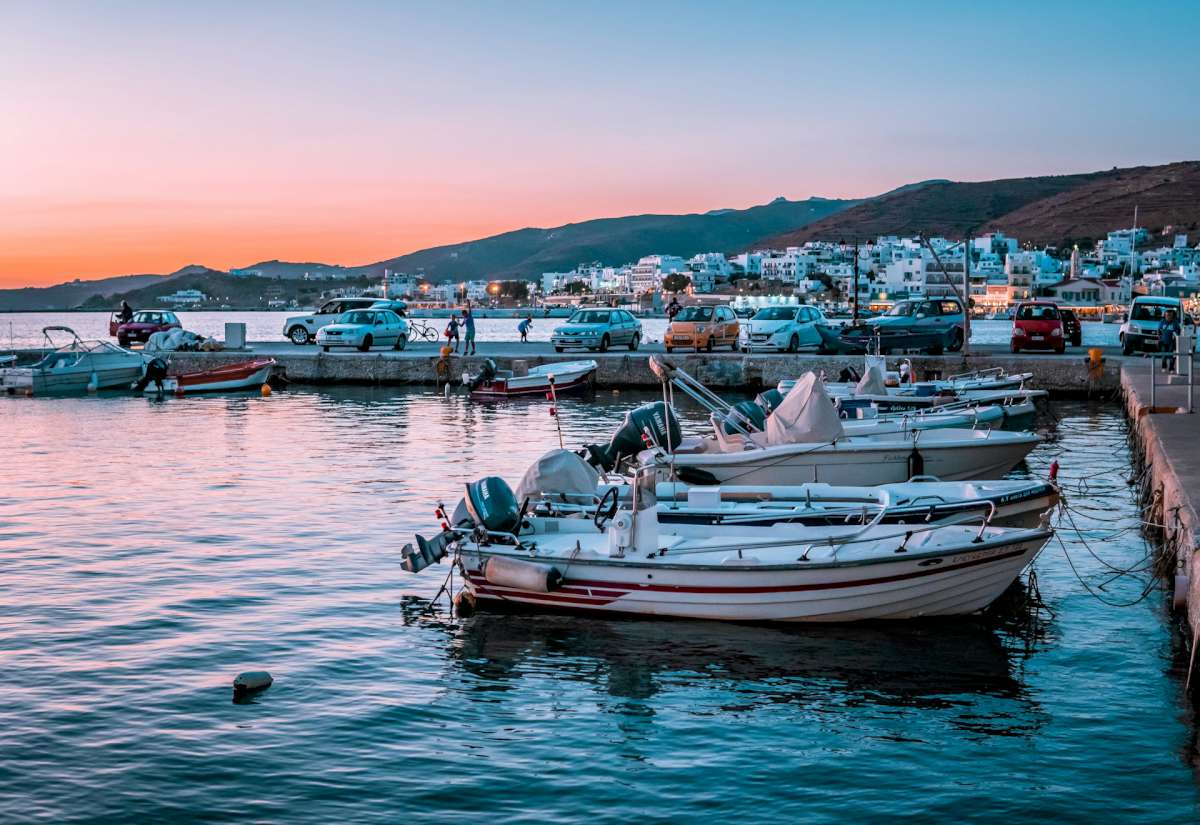
Tinos rewards the visitor who approaches it with curiosity across all its different dimensions — who visits the great church and the marble villages and the Venetian towers and the excellent local restaurants with equal attentiveness and equal pleasure. For those arriving by yacht, the island offers a harbour of considerable size and convenience, a coastline of great variety, and a series of beaches and anchorages that range from the organised and accessible to the remote and wild.
The Church of Panagia Evangelistria
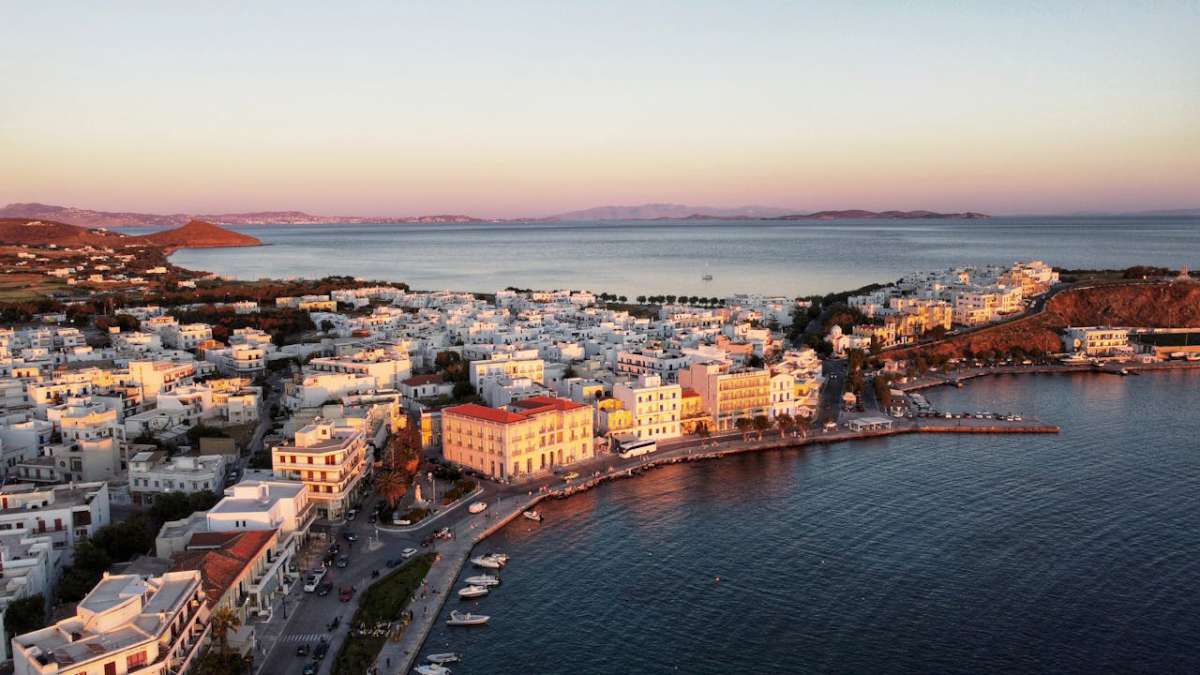
The Church of Our Lady of Tinos stands at the top of the broad marble processional way that climbs from the harbour of Tinos Town, its white neoclassical facade visible from far out to sea on the approach to the island. Within its walls, the miraculous icon of the Virgin — covered in gold, silver, and precious stones donated over two centuries by grateful pilgrims — is venerated continuously by a stream of worshippers whose faith and devotion are entirely genuine and entirely moving to witness, whatever one’s own religious convictions. The church complex is of considerable architectural beauty and historical interest, its votive museum containing one of the finest collections of ex-votos in the Greek world — silver ships, gold jewellery, precious objects donated by sailors saved from shipwreck, by the ill restored to health, by the desperate given hope — a treasury of human gratitude and human faith accumulated over two centuries that speaks more eloquently than any historical text about the depth of the island’s significance to the Greek soul. Below the main church, the crypt marks the spot where the icon was discovered, and the atmosphere here — candlelit, fragrant with incense, alive with the murmured prayers of pilgrims — is of a profundity that transcends the merely touristic.
Pyrgos — The Marble Village
In the northwestern corner of Tinos, the village of Pyrgos is one of the most beautiful and most culturally significant traditional settlements in the Cyclades — the historic centre of the island’s extraordinary marble-carving tradition, which has produced over the past two centuries a disproportionate share of the finest sculptors in modern Greek art. The village is built almost entirely of the pale local marble — its lanes, its houses, its churches, its fountains and doorways all carved from the same luminous white stone — and the result is a townscape of unusual coherence and unusual beauty, its geometric precision softened by the flowering plants that spill from every balcony and the warm afternoon light that falls on the marble surfaces in shades of gold and amber. The Museum of Tinian Artists in Pyrgos houses an excellent collection of sculpture by the island’s most celebrated sons, including Giannoulis Halepas — considered one of the greatest Greek sculptors of the 19th century — and the nearby Cemetery of Pyrgos, filled with carved marble monuments of exceptional artistry, is one of the most remarkable and most affecting burial grounds in Greece.
The Venetian Villages and Dovecotes
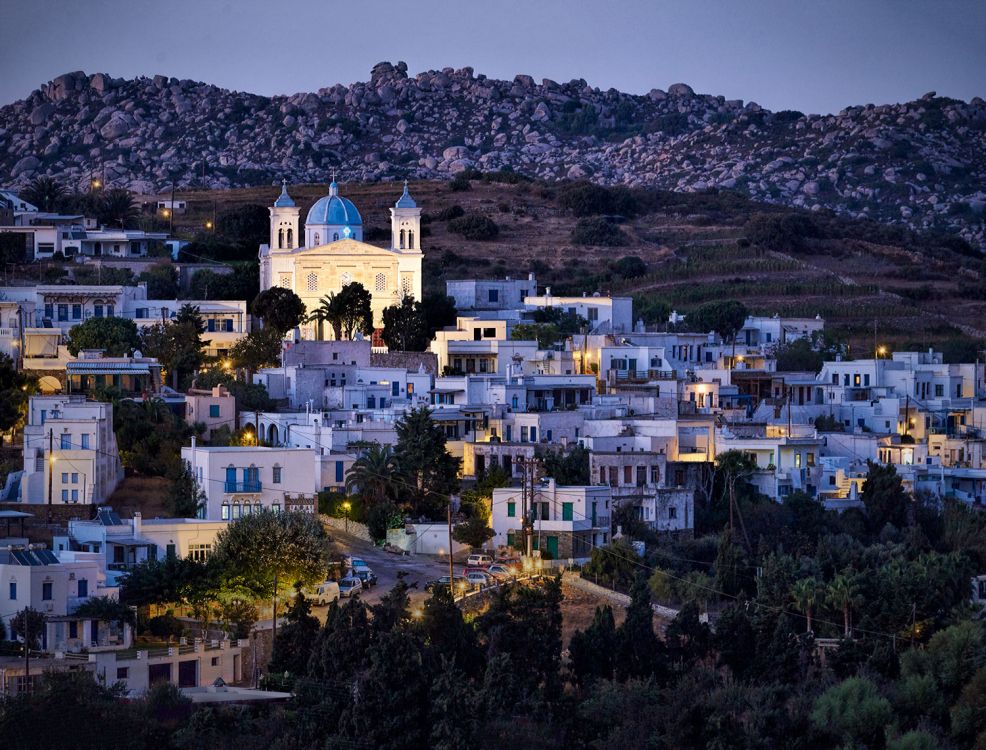
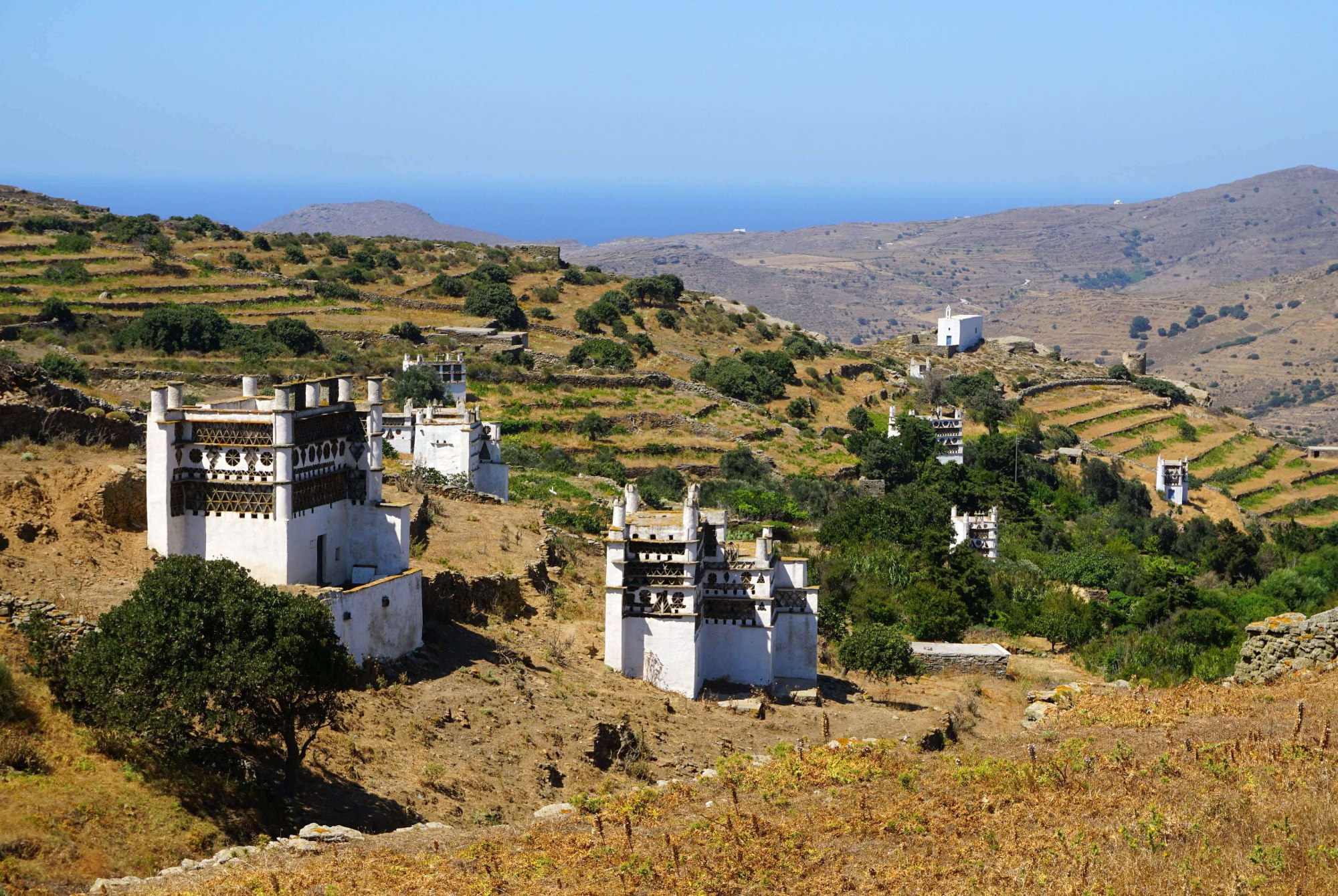
Across the interior of Tinos, a network of medieval villages built during the long Venetian occupation of the island — which lasted from 1207 to 1715, longer than on most other Cycladic islands — preserves an architectural heritage of great variety and great beauty. Villages such as Volax, set in an extraordinary lunar landscape of enormous rounded granite boulders, and Tarambados, surrounded by the famous Tinos dovecotes — elaborate multi-storied stone towers decorated with geometric patterns in slate and marble that are considered the finest examples of this Cycladic building type in the entire archipelago — offer an experience of the island’s interior that is entirely distinct from the harbour town and the pilgrimage church. The dovecotes of Tinos, of which over 700 survive across the island, are a UNESCO-recognised element of the island’s intangible cultural heritage and a visual feature of such extraordinary decorative richness that they have been the subject of serious architectural study for generations.
Exomvourgo — The Venetian Fortress
At the geographic heart of the island, the great rock of Exomvourgo rises to a height of 640 metres, its summit crowned by the ruins of the Venetian fortress that served as the island’s final refuge during the Ottoman conquest — holding out until 1715, making Tinos one of the last Venetian possessions in the Aegean to fall. The fortress ruins are extensive and dramatically sited, and the climb to the summit — through a landscape of extraordinary botanical richness, with the entire island and the surrounding Cyclades visible from the top — is one of the finest walks on any Cycladic island. The view from Exomvourgo on a clear day takes in Mykonos, Syros, Andros, Delos, Naxos, and on exceptional days the distant outline of Attica — a panorama of the central Cyclades of breathtaking scope and beauty.
The Beaches
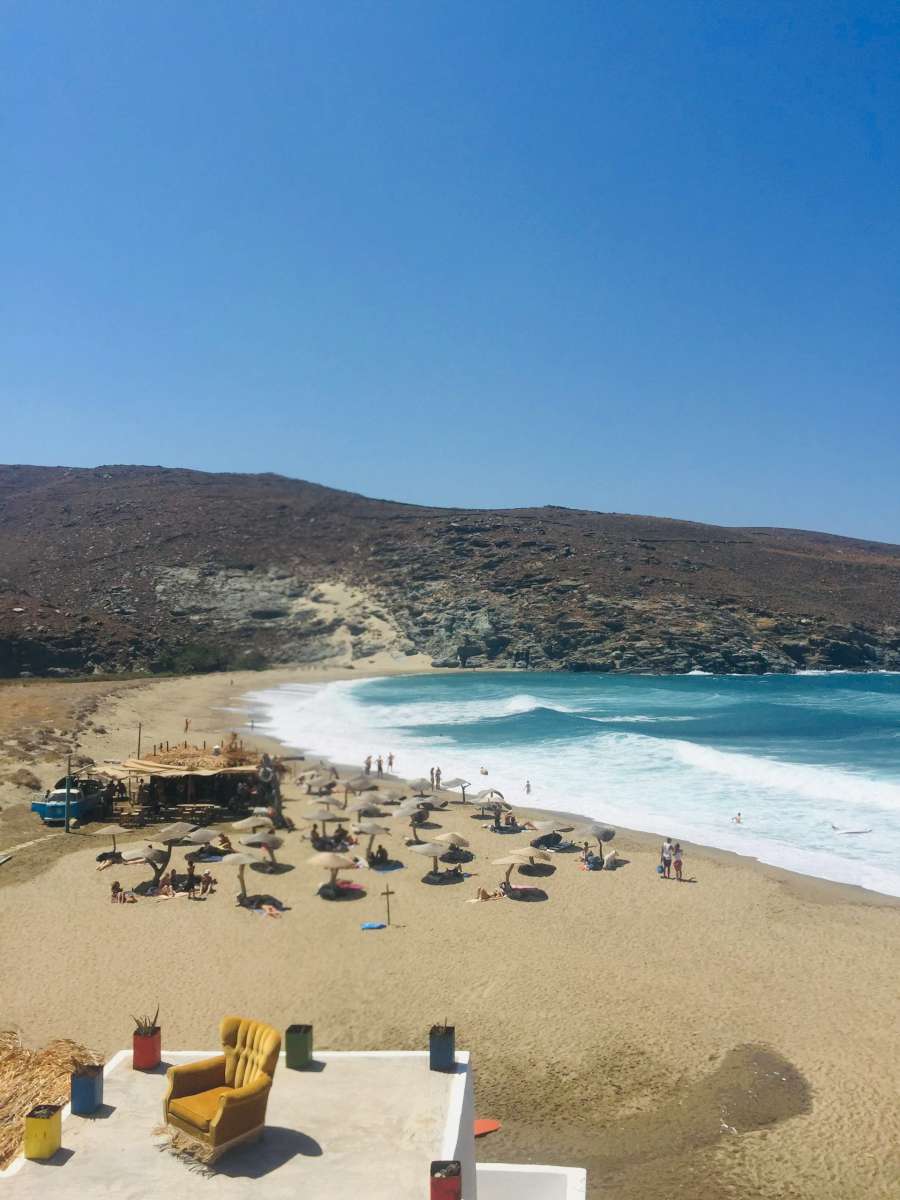
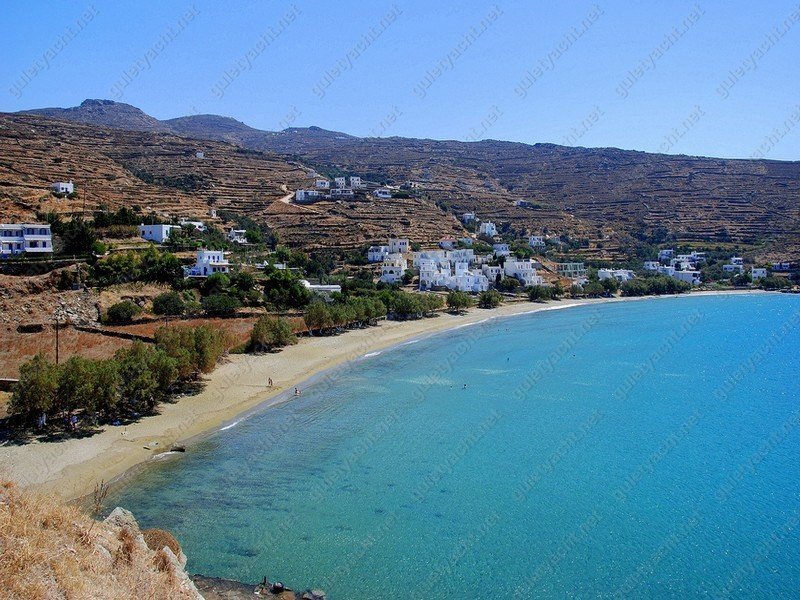
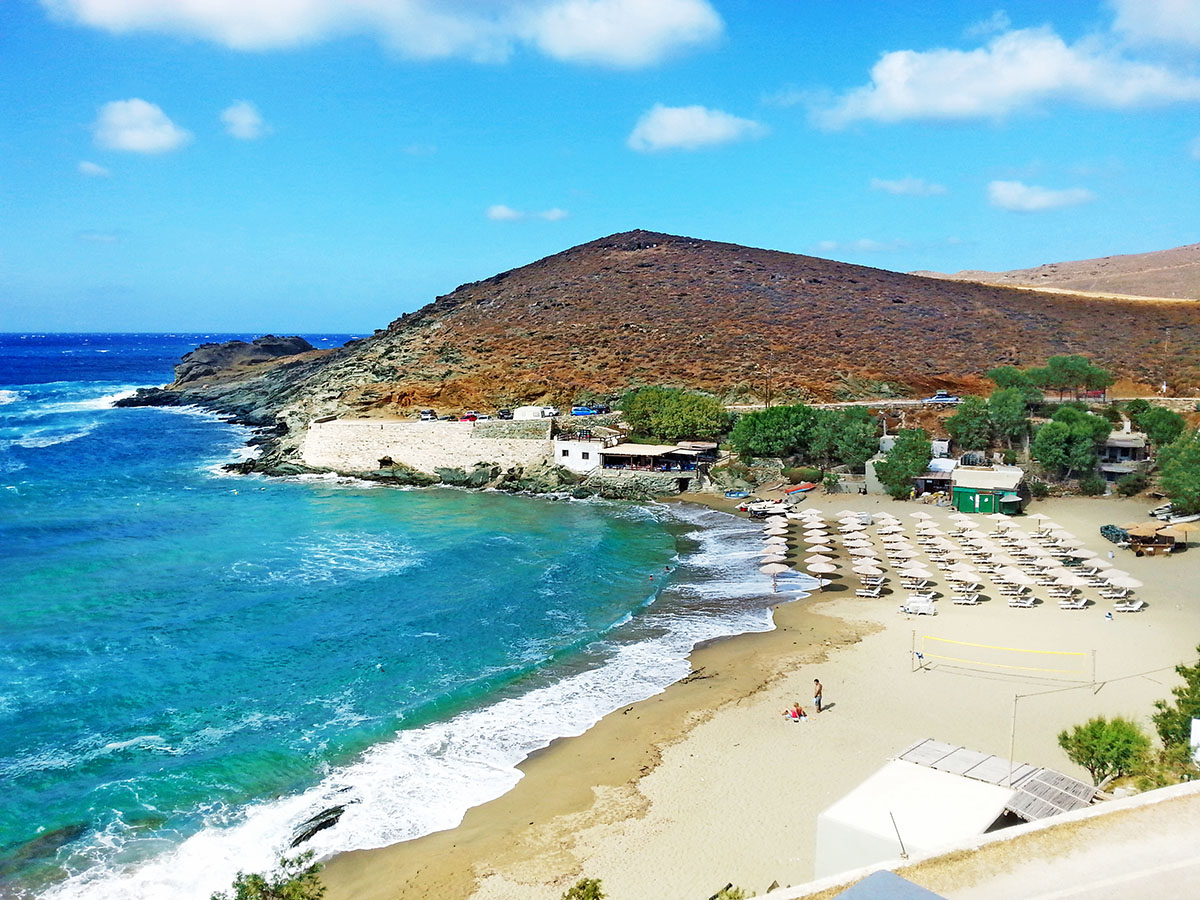
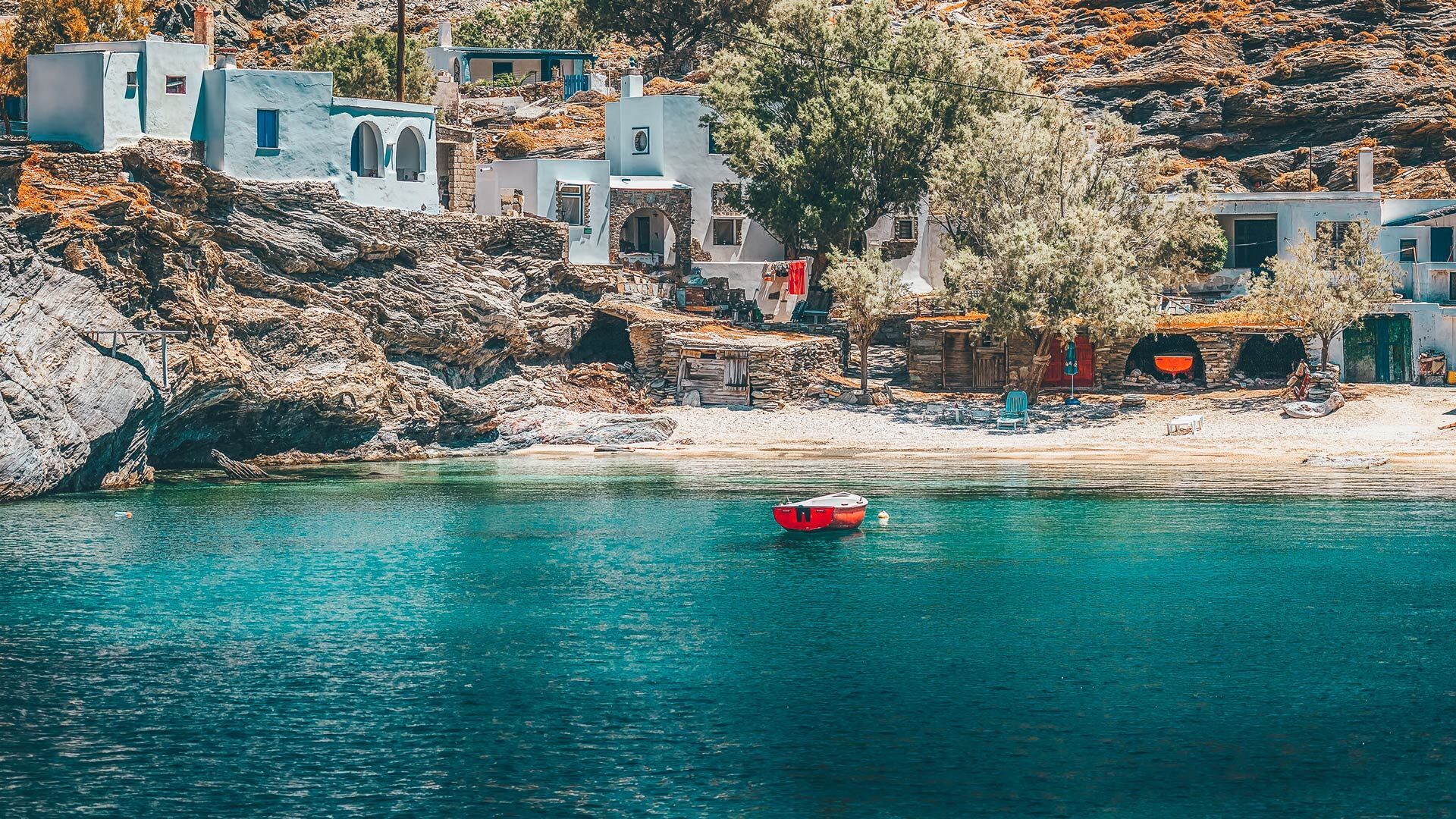
Tinos has a coastline of considerable variety, with beaches distributed across both the sheltered southwestern shore and the wilder, wind-exposed northeastern coast. Agios Fokas, just east of the harbour town, is the island’s most convenient beach — a long stretch of dark sand and clear water accessible on foot. Kolymbithra, on the northwestern coast, is a double bay of unusual beauty — one side sheltered and calm, the other exposed to the full force of the northern wind — and is considered one of the finest beach destinations on the island. Porto, on the southeastern coast, is a wide, sheltered bay of sandy beach and calm, shallow water particularly well suited to families. For those arriving by yacht, the approach to Kolymbithra from the sea — the twin bays opening suddenly from behind the headland — is one of the finest coastal approaches on Tinos, and anchoring in the calmer of the two bays for a morning swim before the wind builds is one of the simple pleasures of a Cyclades cruise at its most complete.
The Food of Tinos
Tinos has one of the finest and most distinctive food cultures in the Cyclades — an island kitchen rooted in an agricultural tradition of unusual depth and quality, drawing on locally produced artichokes, capers, sun-dried tomatoes, wild herbs, and the famous Tinos loukoumades and cheeses to produce a cuisine that is both entirely Cycladic in character and unmistakably its own. The island’s artichokes — grown in the fertile valleys of the interior and considered among the finest in Greece — are the foundation of a remarkable number of local dishes. The local cheeses, particularly the fresh kopanisti and the aged graviera, are of outstanding quality. And the combination of all these local products with the freshest possible fish and seafood, served at the excellent tavernas of both the harbour town and the villages of the interior, makes eating on Tinos one of the most rewarding culinary experiences in the Cyclades.
Why Choose Tinos
Tinos is the island for the traveller who wants the Cyclades to be more than a collection of beautiful beaches and famous sunsets — who wants depth, variety, cultural richness, and the particular pleasure of an island that takes its own identity seriously and expresses it with clarity and confidence in everything from its architecture to its food to the quality of the welcome it extends to those who arrive with genuine curiosity. It is an island for pilgrims and for atheists, for art lovers and beach lovers, for walkers and sailors, for those who want their food to mean something and their landscape to tell a story. Tinos delivers all of these things with a completeness that is rare even in the island-rich world of the Greek Aegean.
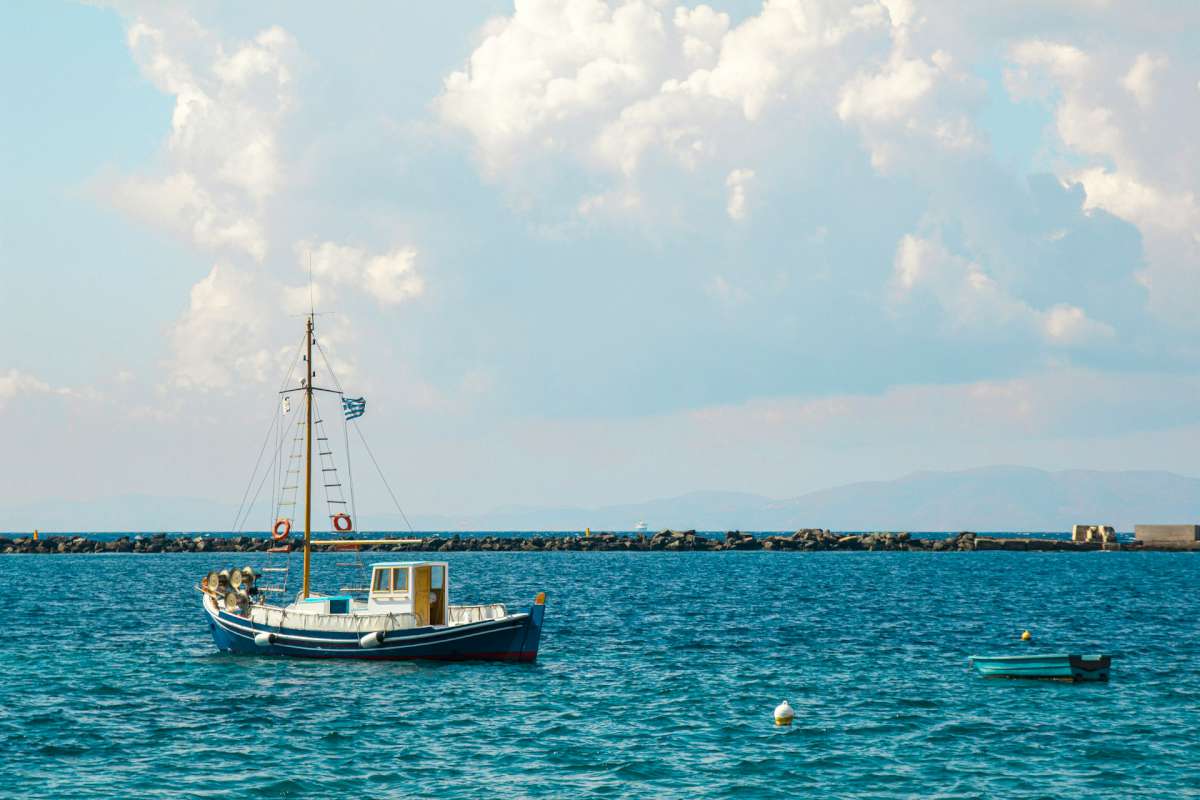
For sailing itineraries in the central Cyclades, Tinos occupies a position of great strategic convenience and great intrinsic reward. It is a natural stopping point between Andros and Mykonos, between Syros and Delos, and its large, well-sheltered harbour provides the kind of overnight security that sailors value on a coastline exposed to the summer meltemi. The island’s size means that a two or three day stay barely scratches the surface of what it offers, and the combination of the pilgrimage church, the marble villages, the Venetian fortress, and the excellent beaches and food means that those two or three days pass with a fullness and variety that makes Tinos feel, in retrospect, like several islands in one.
What makes Tinos ultimately unforgettable is the quality of its layering — the sense, accumulated over a day of wandering between the great church and the marble lanes of Pyrgos and the dovecote-scattered valleys of the interior, of an island that has been many things to many people over many centuries and has absorbed all of those roles without losing the thread of its own particular and irreplaceable identity. Sacred and beautiful, wind-swept and fertile, ancient and artistically alive, Tinos is one of the great islands of the Aegean — and one of the most consistently and most generously rewarding destinations in the whole of Greece.