Why Tilos
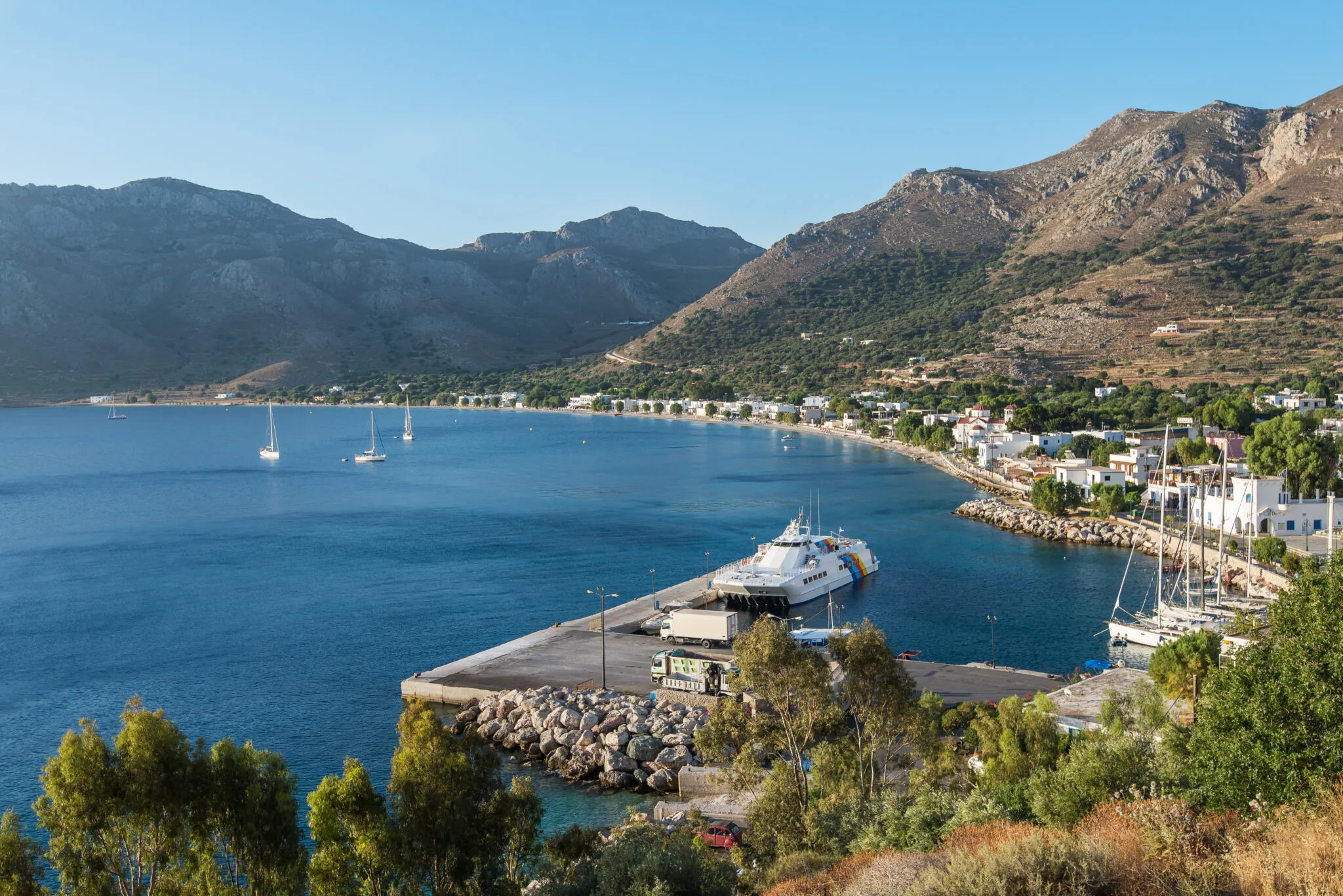
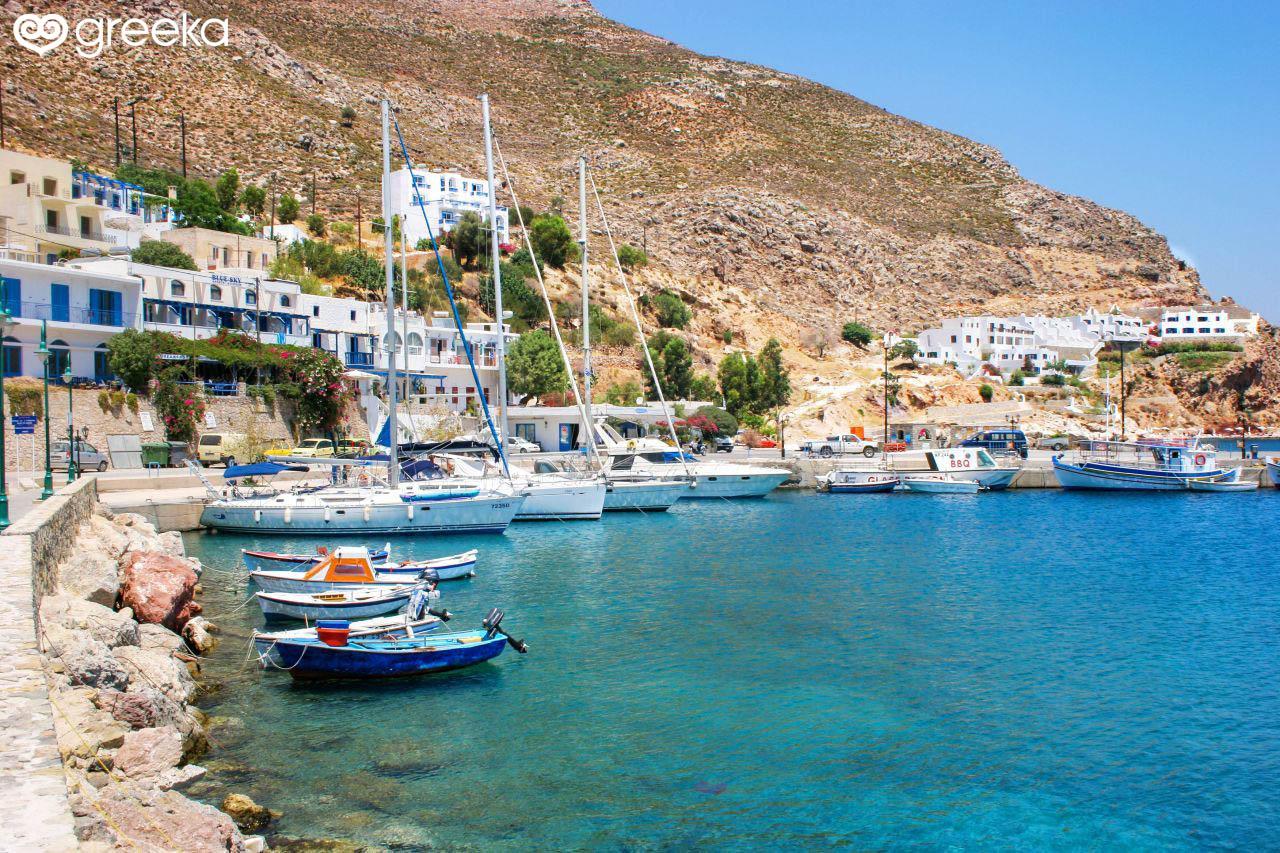
There are islands in the Aegean that demand your attention loudly — with famous sunsets, celebrated nightlife, or monuments that announce their magnificence from miles out to sea. And then there is Tilos, which does none of these things, and is quietly, completely magnificent because of it. Small, unhurried, and possessed of a rare ecological integrity that sets it apart from almost every other island in the Dodecanese, Tilos offers a quality of peace that has become genuinely scarce in the modern Mediterranean. Arriving by yacht into the small harbour of Livadia, with the gentle green hills of the island rising behind the village and the water around you perfectly still and perfectly clear, you feel something release in you that you perhaps did not realise was held tight. This is what Tilos does to people. It slows everything down to the right speed.
Tilos sits between Nisyros and Rhodes in the southeastern Dodecanese — small enough to cross on foot in a single day, but rich enough in landscape, history, and natural life to reward a week of unhurried exploration. The island has long been known in Greece for the progressive values of its community: it was the first municipality in Greece and among the first in Europe to legalise same-sex civil partnerships, back in 2008, and it has pursued an ambitious programme of environmental sustainability that has made it a model for ecological island living. Solar energy, bird sanctuaries, protected wetlands, and the banning of hunting across the entire island have created a place where the natural world has been allowed to recover and flourish in ways that are visible and deeply moving to anyone who pays attention.
That ecological commitment has produced something remarkable. Tilos is home to an extraordinary diversity of birdlife — over 150 species have been recorded here, including the rare Eleonora’s falcon, the blue rock thrush, and the Bonelli’s eagle — and the island’s landscape of wildflower meadows, ancient terraced hillsides, and dramatic coastal cliffs provides a habitat of exceptional beauty for both wildlife and the visitors fortunate enough to find their way here. The island also holds a scientific distinction unique in the Greek world: the Charkadio Cave, discovered in 1971, yielded the bones of dwarf elephants that survived on Tilos long after their extinction elsewhere — a find that made this small island briefly famous in paleontological circles and added yet another unexpected layer to its already surprising character.
What to Do and What to See
Tilos rewards the visitor who is willing to walk, to sit, to look carefully, and to resist the urge to fill every hour with activity. Its pleasures are largely quiet ones — a path through wildflowers to a deserted beach, a swim in a cove where no other boat has anchored that morning, a long lunch at the single taverna in a hilltop village where the owner knows every person who walks through the door. But within that gentleness there is also genuine richness: medieval castles, ancient ruins, significant natural sanctuaries, and a coastline of surprising variety that reveals itself fully only from the sea.
Livadia Village and Harbour
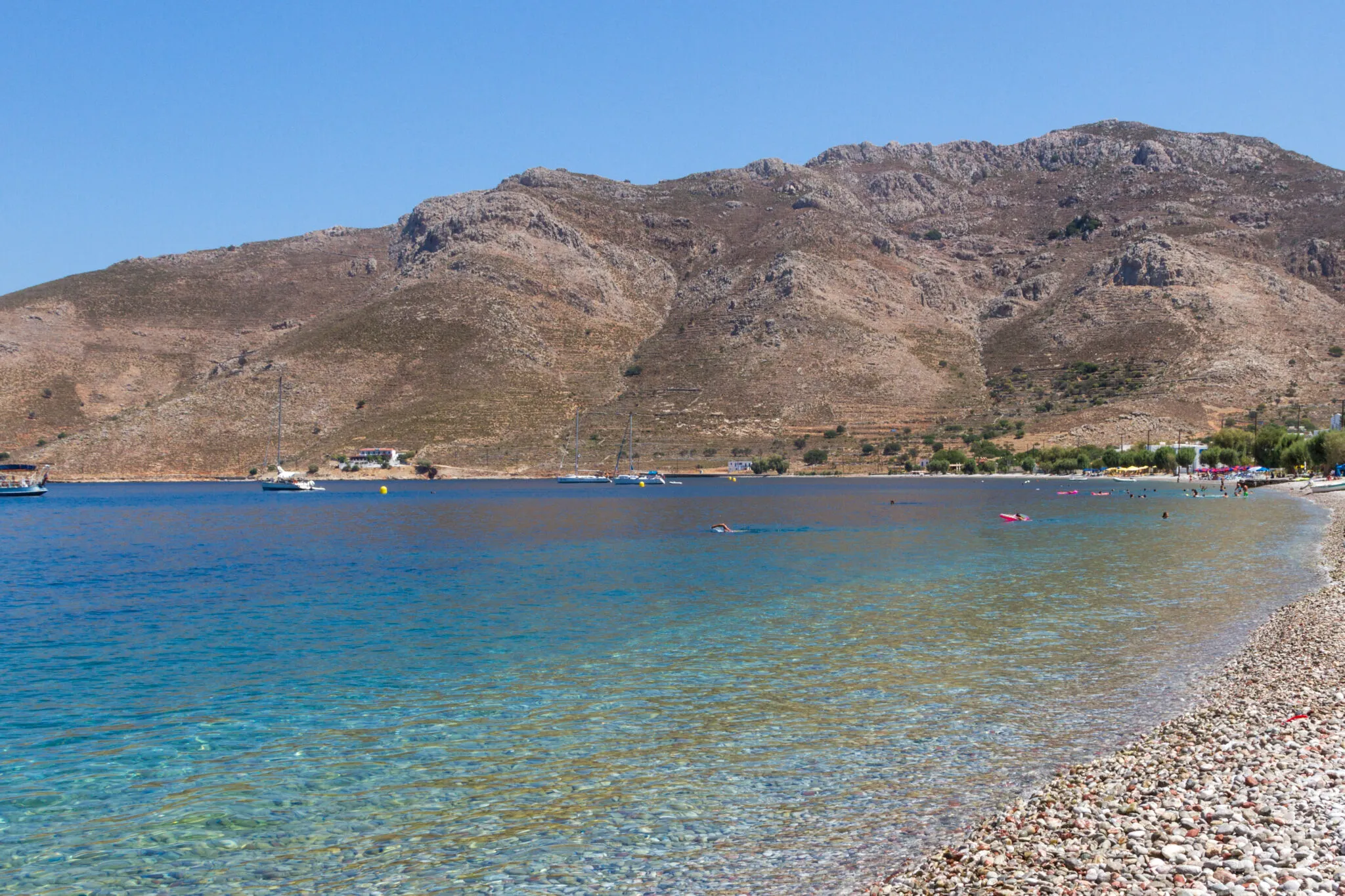
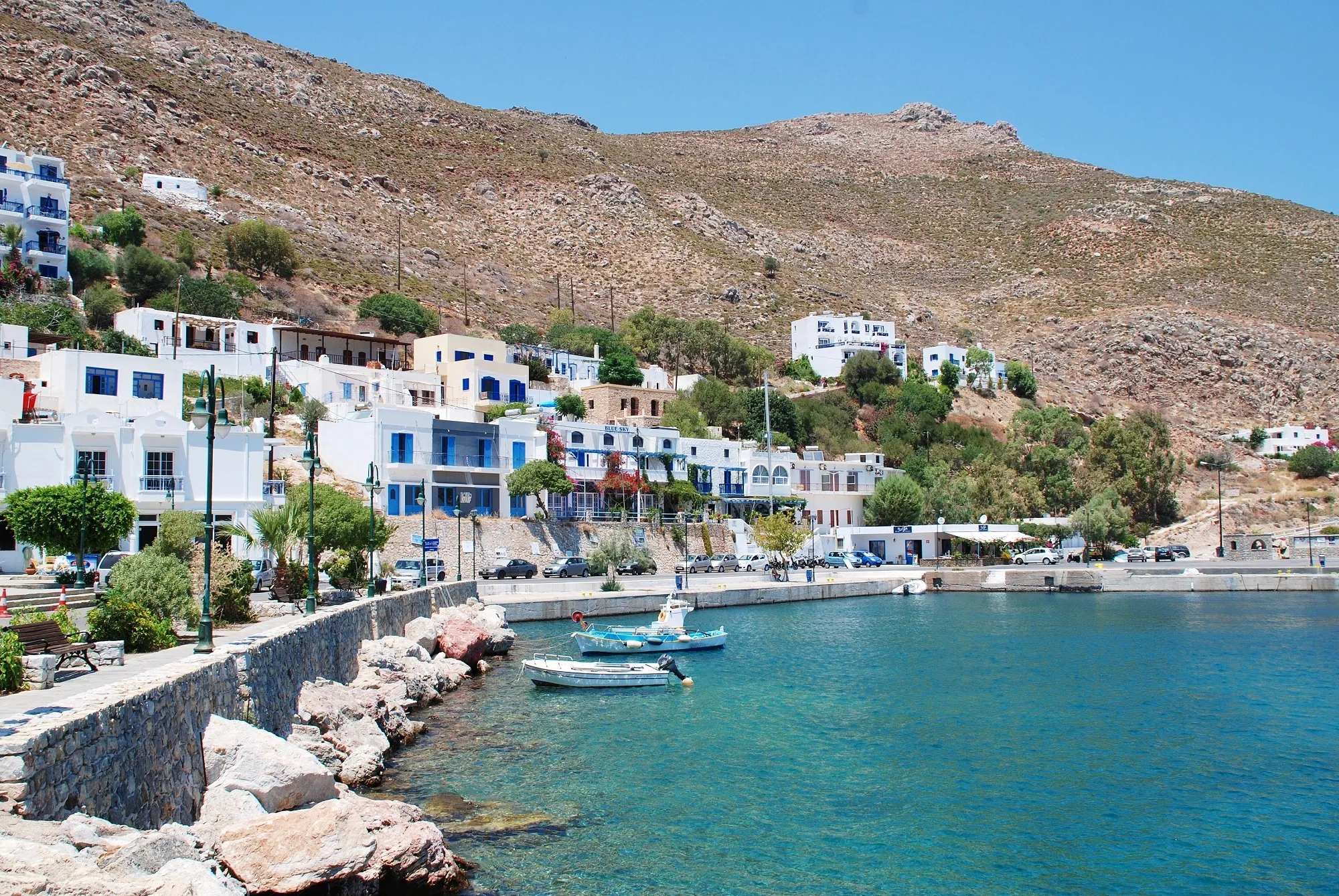
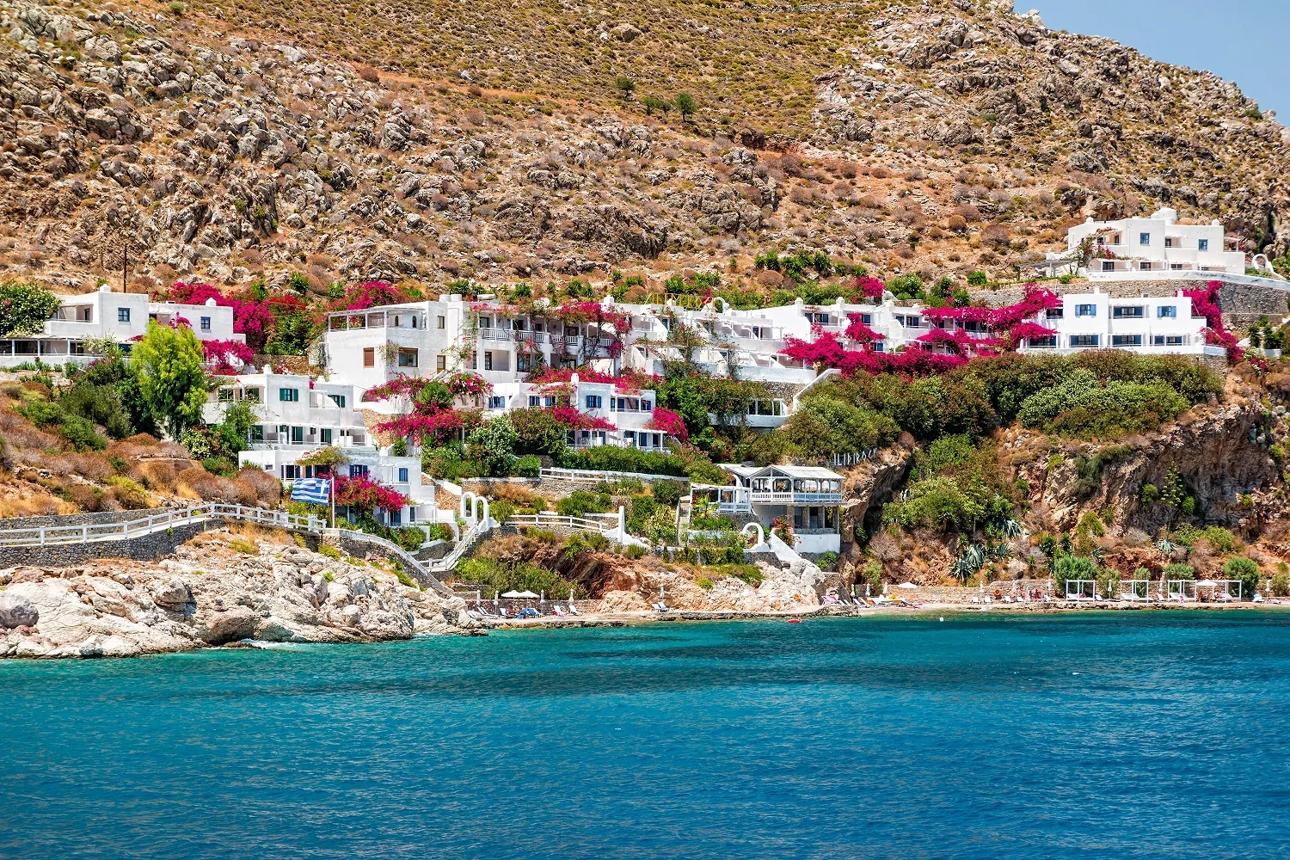
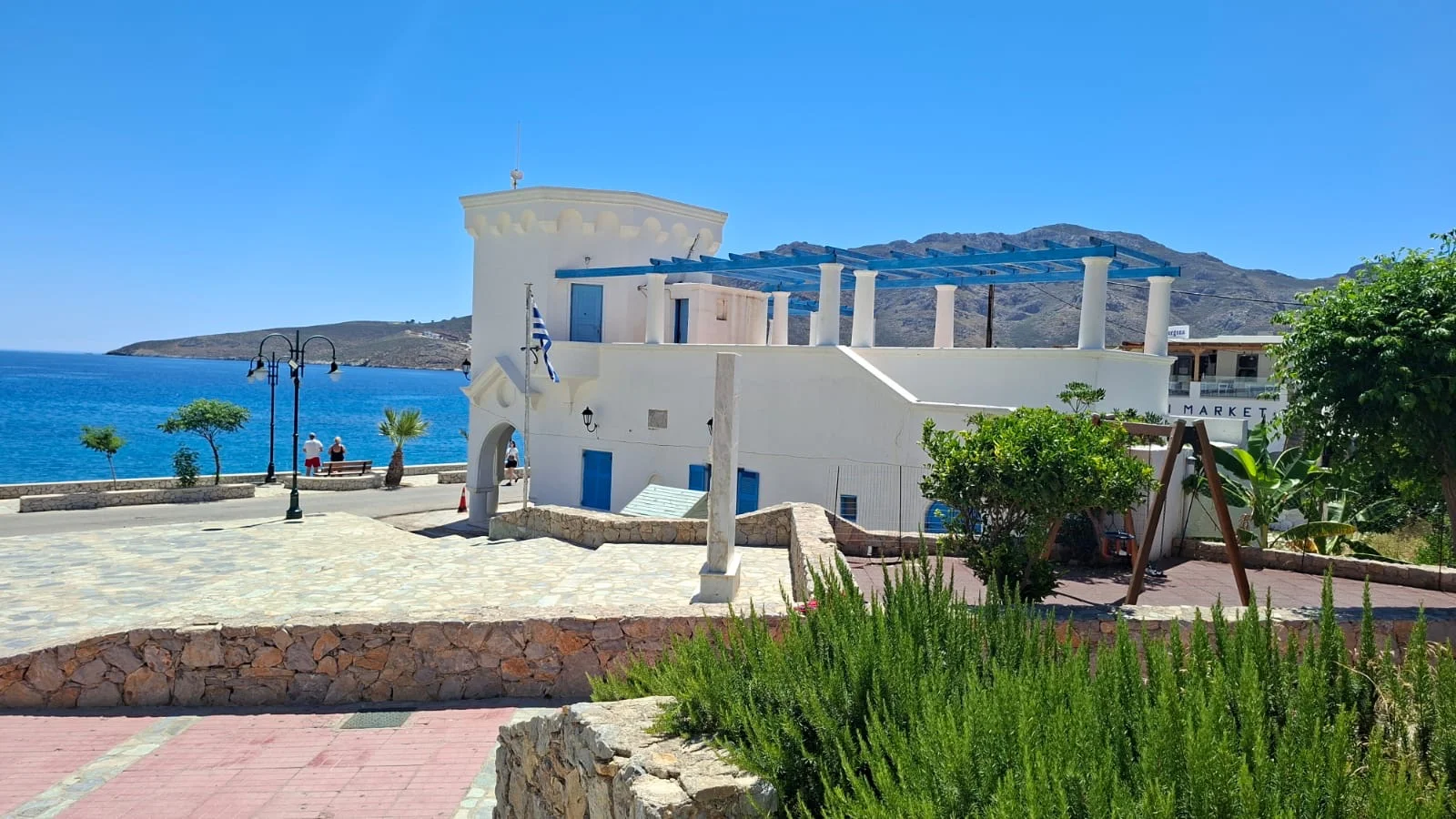
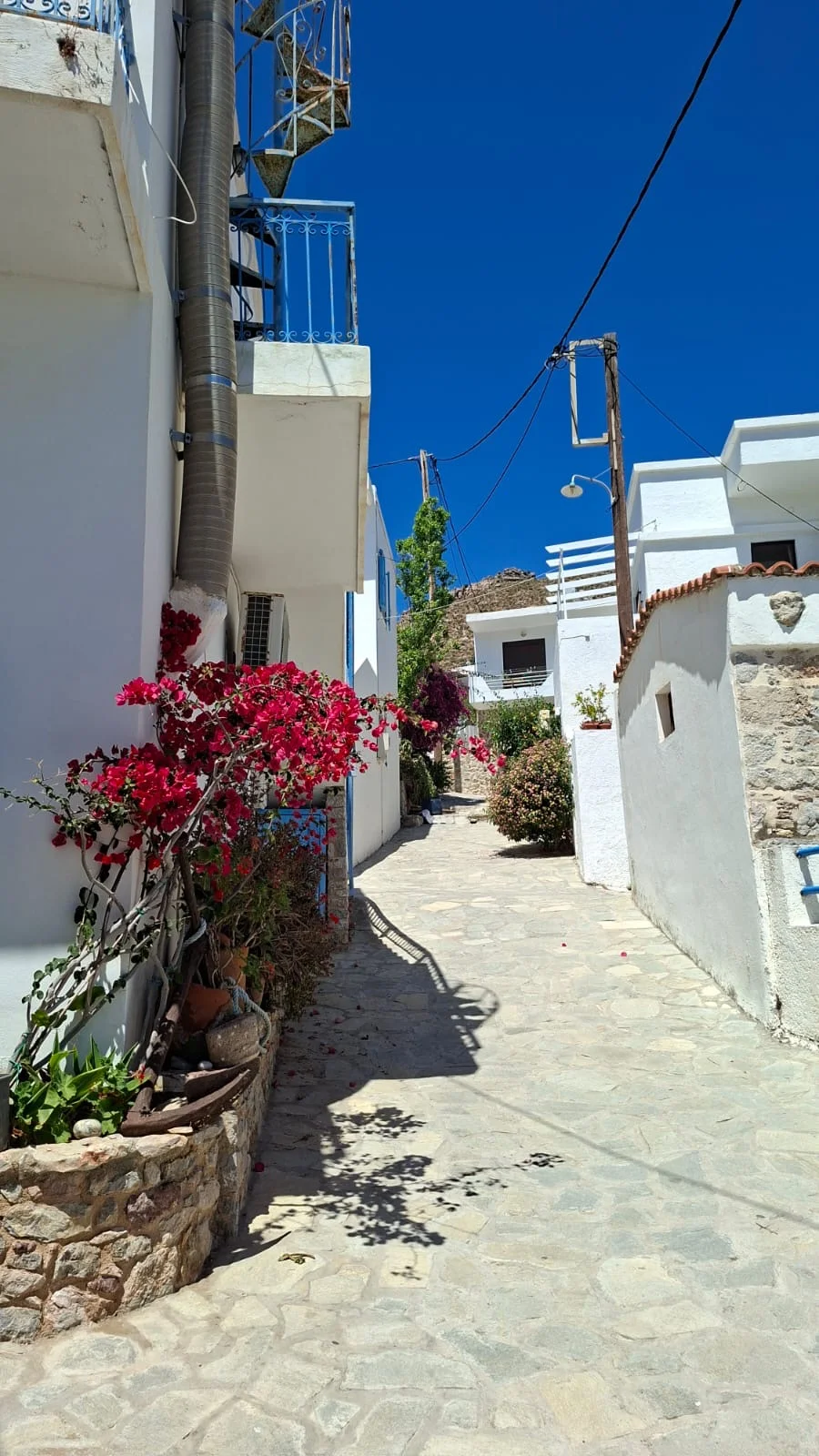
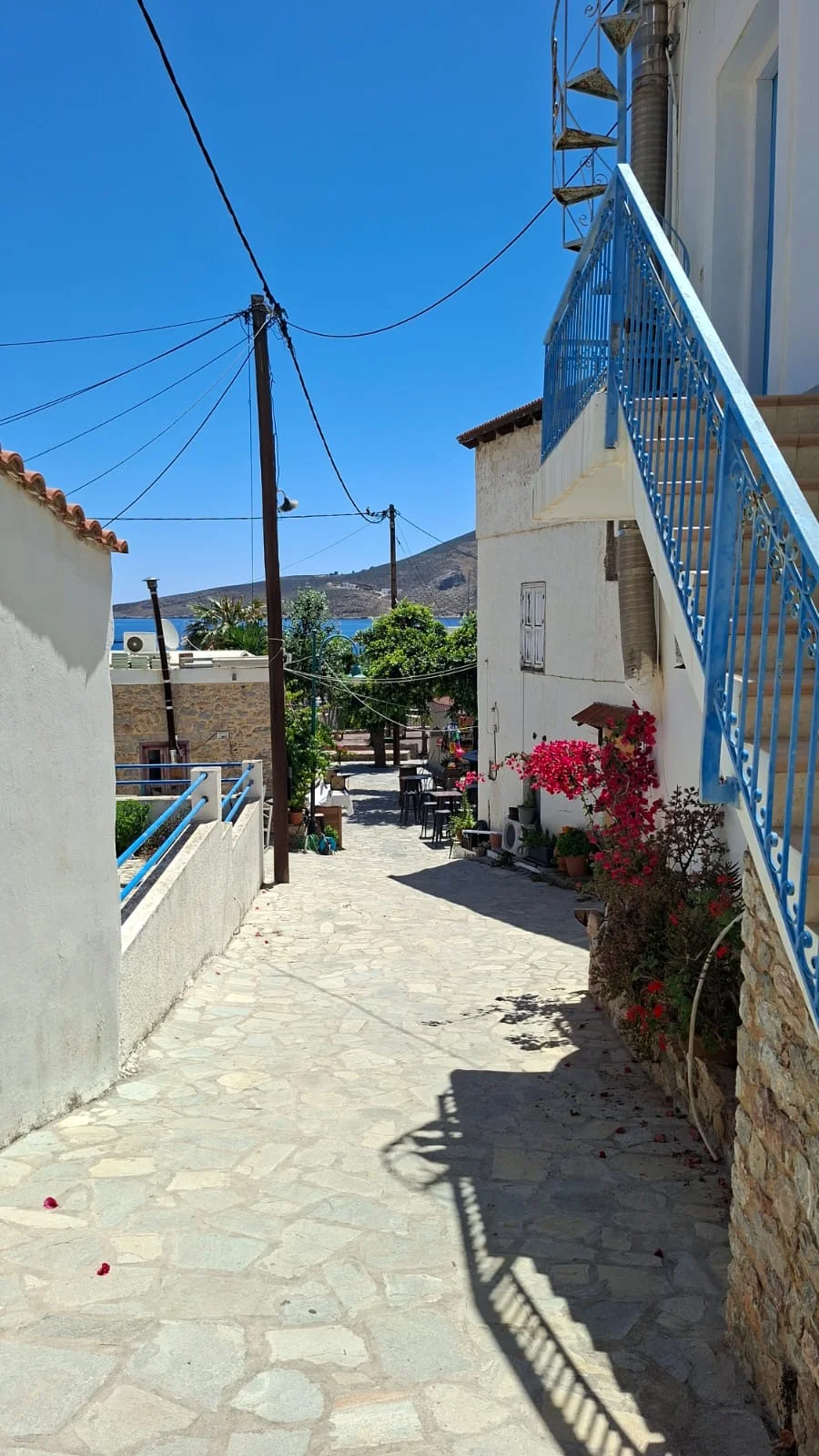
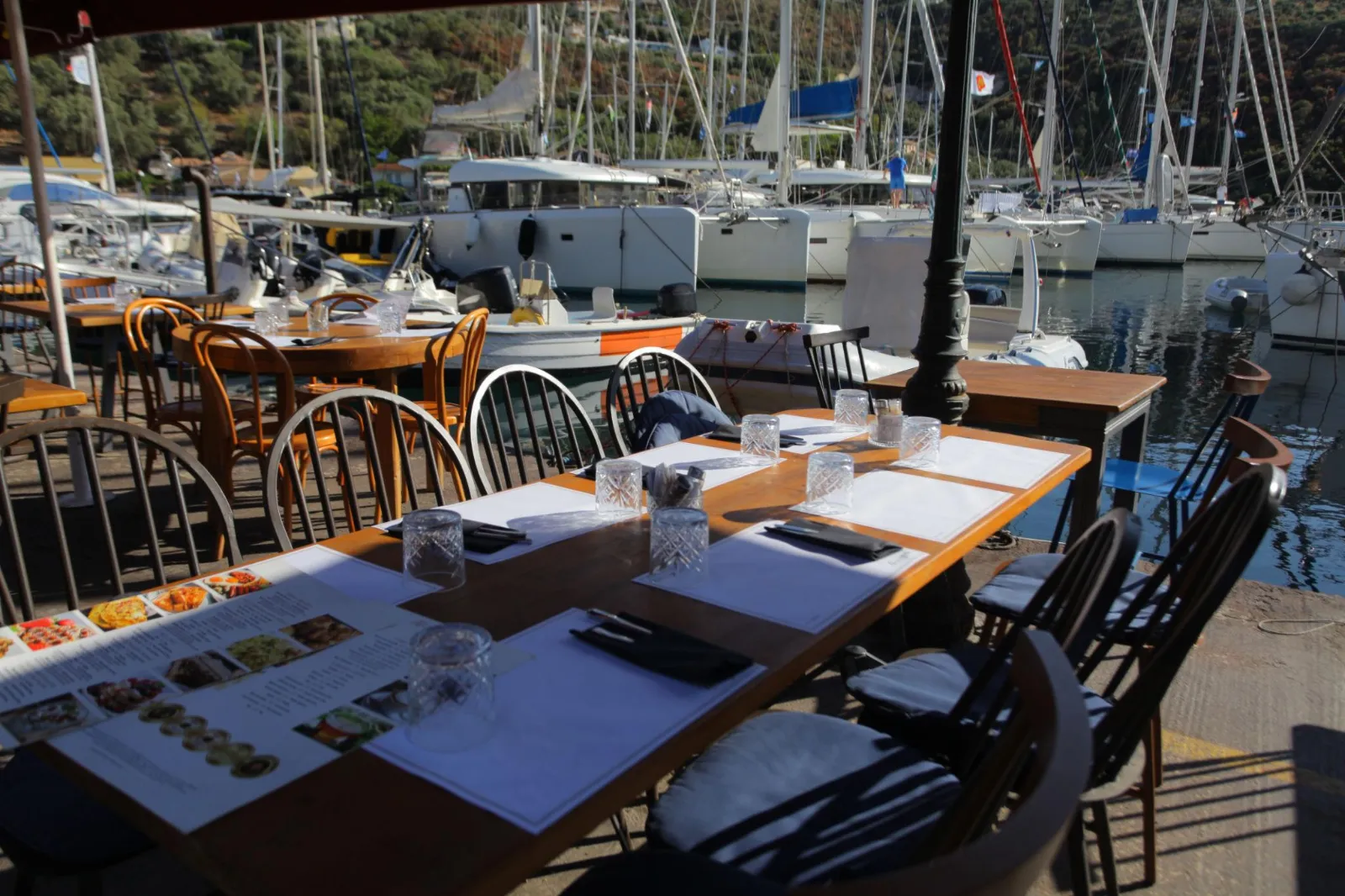
The island’s main settlement and harbour, Livadia is a small, immaculate village arranged around a curving pebble beach at the head of a gentle bay. It is the first thing you see arriving by yacht, and it makes a quietly perfect first impression — a line of white and pastel-coloured houses reflected in still water, a handful of tavernas and cafés open to the waterfront, small fishing boats pulled up on the beach, and behind it all the green hills of the island’s interior rising to their rocky ridges. Livadia is not a resort and makes no attempt to be one. Its single main street has a bakery, a small supermarket, a post office, and a few shops selling local honey, capers, and herbs — the essentials of a real community going about its real life. In the evenings, the waterfront tavernas fill with a mixture of locals and the small number of visitors the island receives, and the atmosphere is one of genuine, unselfconscious conviviality.
Megalo Chorio — The Island Capital
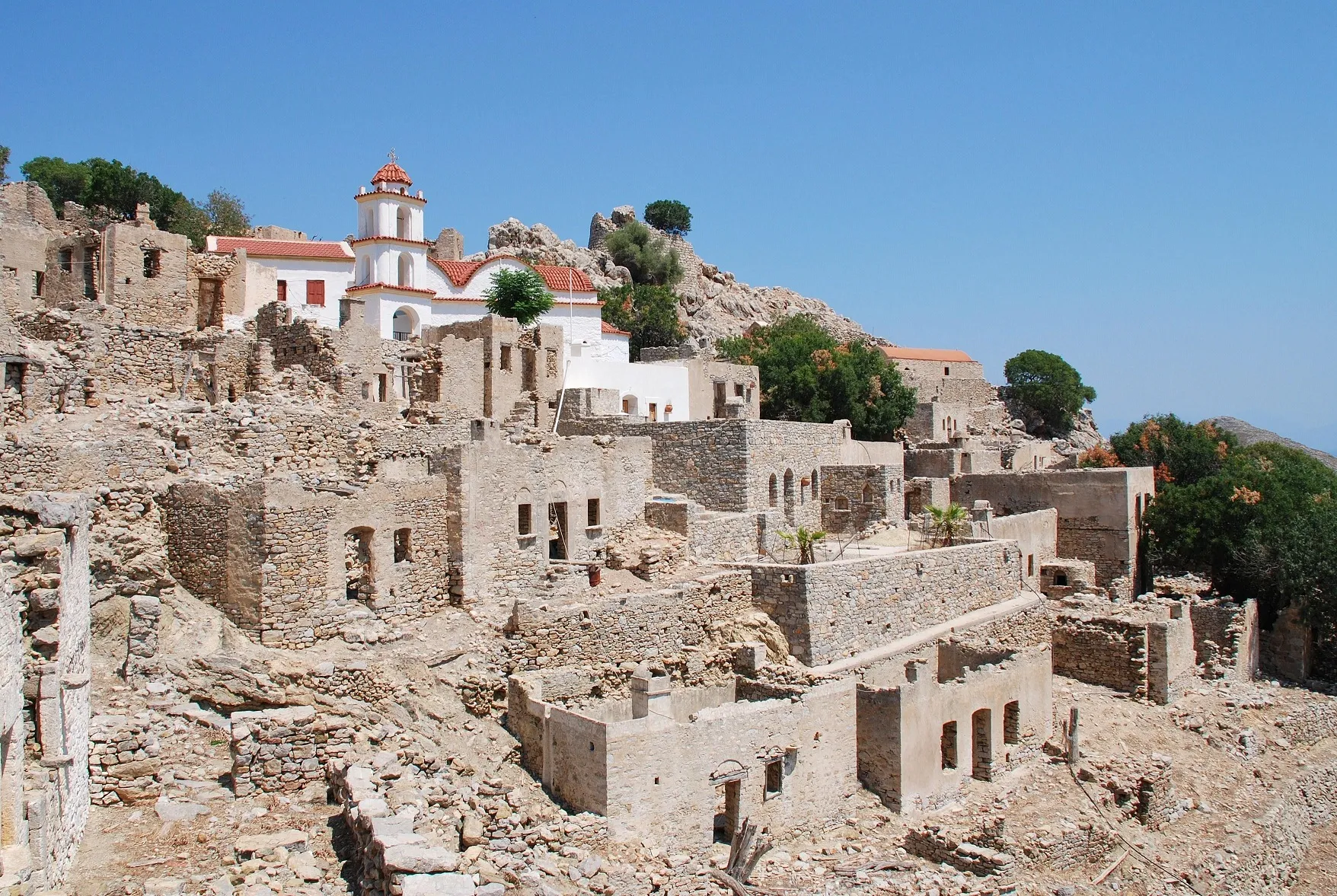
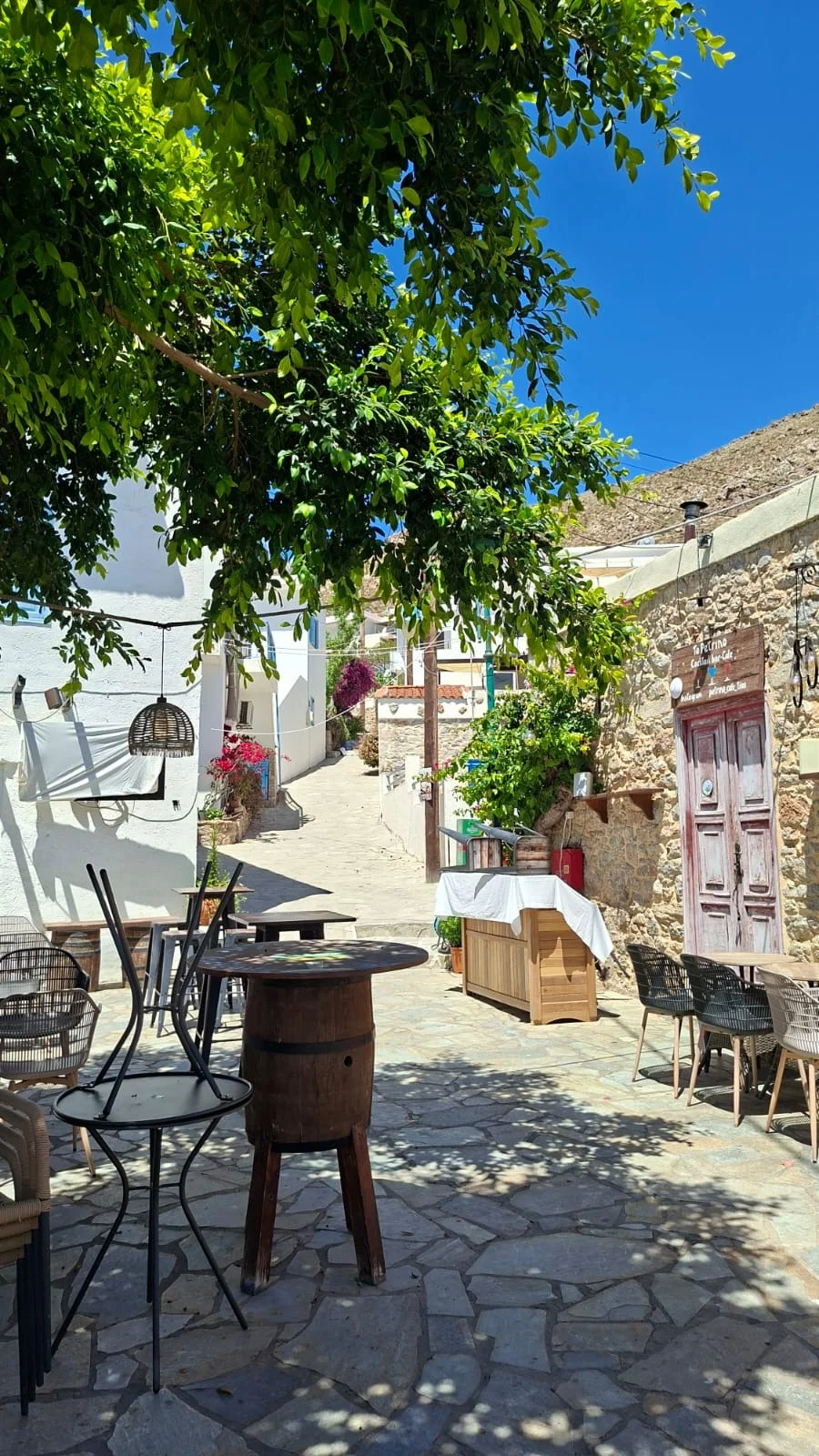
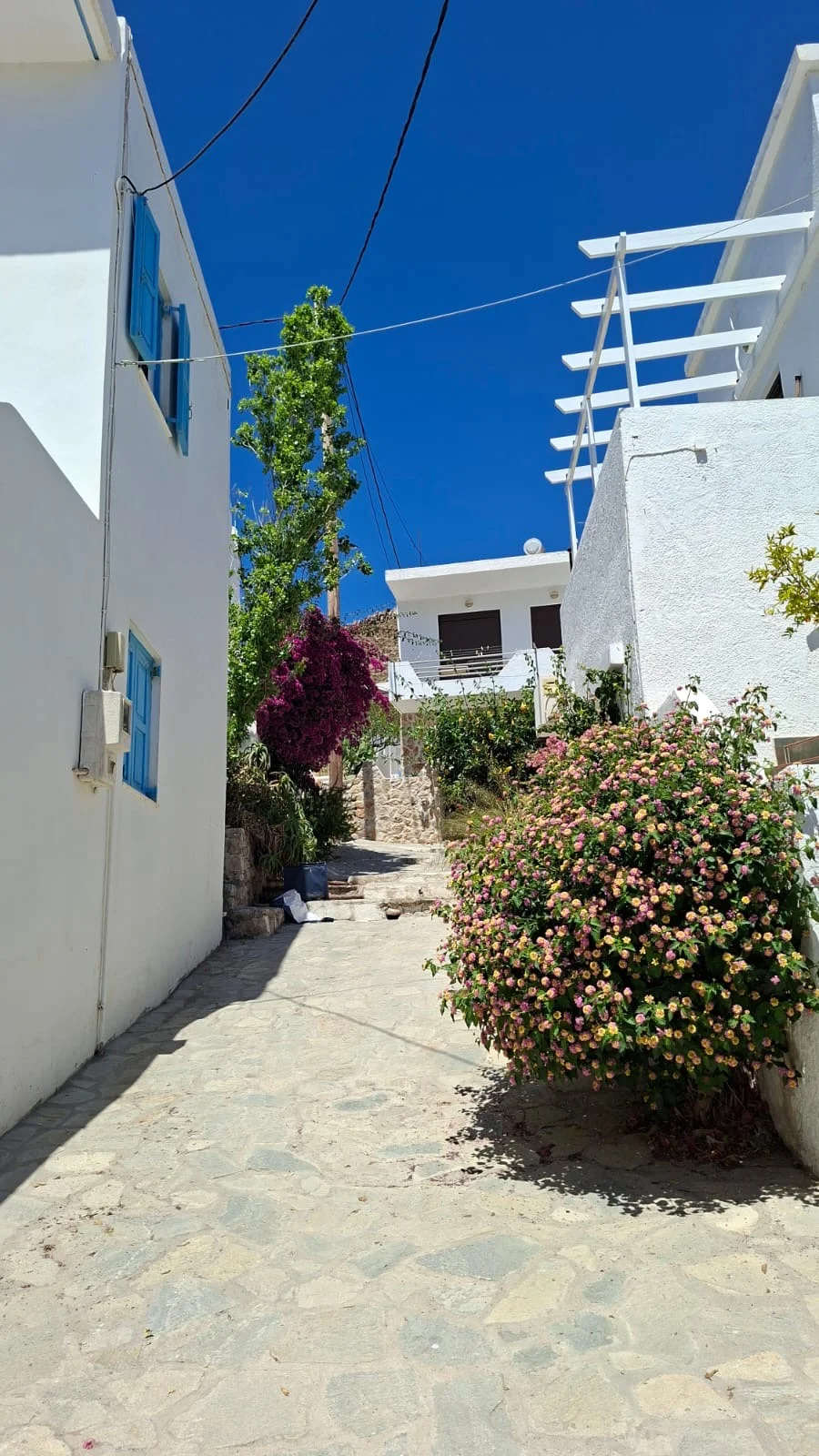
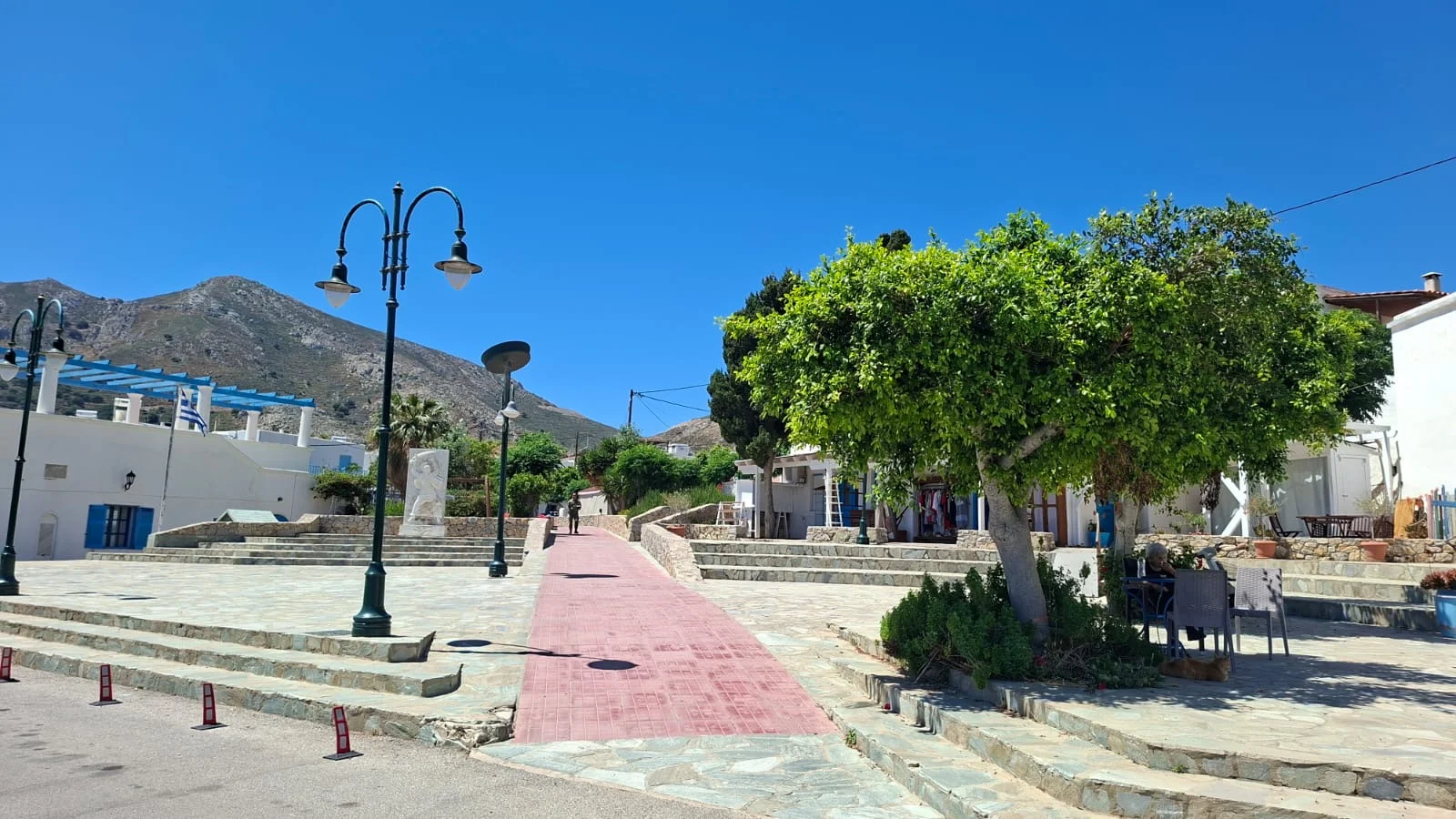
About seven kilometres from Livadia, perched on a hillside in the island’s interior, the medieval village of Megalo Chorio is the official capital of Tilos and one of the most beautifully sited settlements in the Dodecanese. Its stone houses and Byzantine churches climb the hillside below a commanding medieval castle, and the village square — with its enormous ancient plane tree and its single traditional kafeneion — is one of those spots where time appears to move differently from everywhere else. The church of Taxiarchis in the village square contains a remarkable collection of Byzantine icons and sacred objects, some of extraordinary age and beauty. The village is quiet, lived-in, and deeply traditional in a way that feels entirely natural rather than preserved for display.
The Castle of Megalo Chorio
Above the village, the medieval castle of Megalo Chorio crowns the hilltop in a series of ruined but evocative towers and walls that date back to the Knights of St. John and beyond. The climb to the castle from the village takes about twenty minutes along a rocky path, and the reward is a panorama of startling completeness — the entire island spread below, the sea visible on both sides, Nisyros and Kos to the north, Rhodes to the south, and on exceptionally clear days the faint outline of the Turkish coast to the east. Within the castle walls, a small church of the Archangel Michael is still used for the island’s major religious festival each summer. The ruins are unfenced and unmanicured, which only increases the sense of genuine discovery.
The Charkadio Cave
Set in a dramatic ravine in the hillside below Megalo Chorio, the Charkadio Cave is one of Tilos’s most extraordinary claims to scientific distinction. In 1971, the cave yielded a remarkable palaeontological find: the fossilised bones of dwarf elephants — a species of pygmy elephant that survived on Tilos in isolation long after becoming extinct elsewhere in the world, living here as recently as 4,000 years ago. The discovery made Tilos briefly famous in scientific circles and remains one of the most intriguing examples of island dwarfism ever documented. The cave itself is atmospheric and accessible on foot from the road between Livadia and Megalo Chorio, and a small outdoor museum nearby contextualises the find with considerable charm if limited budget.
Eristos Beach
On the western side of the island, the long, wide beach of Eristos is Tilos at its most classically beautiful — a broad sweep of golden-grey sand backed by tamarisk trees and low dunes, with water of extraordinary clarity and colour and almost no development along its length. It is the largest beach on the island and one of the finest in the Dodecanese, and its very low visitor numbers even in the height of summer give it an atmosphere of genuine seclusion. The wetland and reed bed immediately behind the beach is one of the island’s most important bird habitats, and early mornings here — with the herons and egrets moving through the reeds and the beach entirely empty before you — are among the most serene experiences available to any traveller in the Greek islands.
Agios Antonios and the Northern Coast
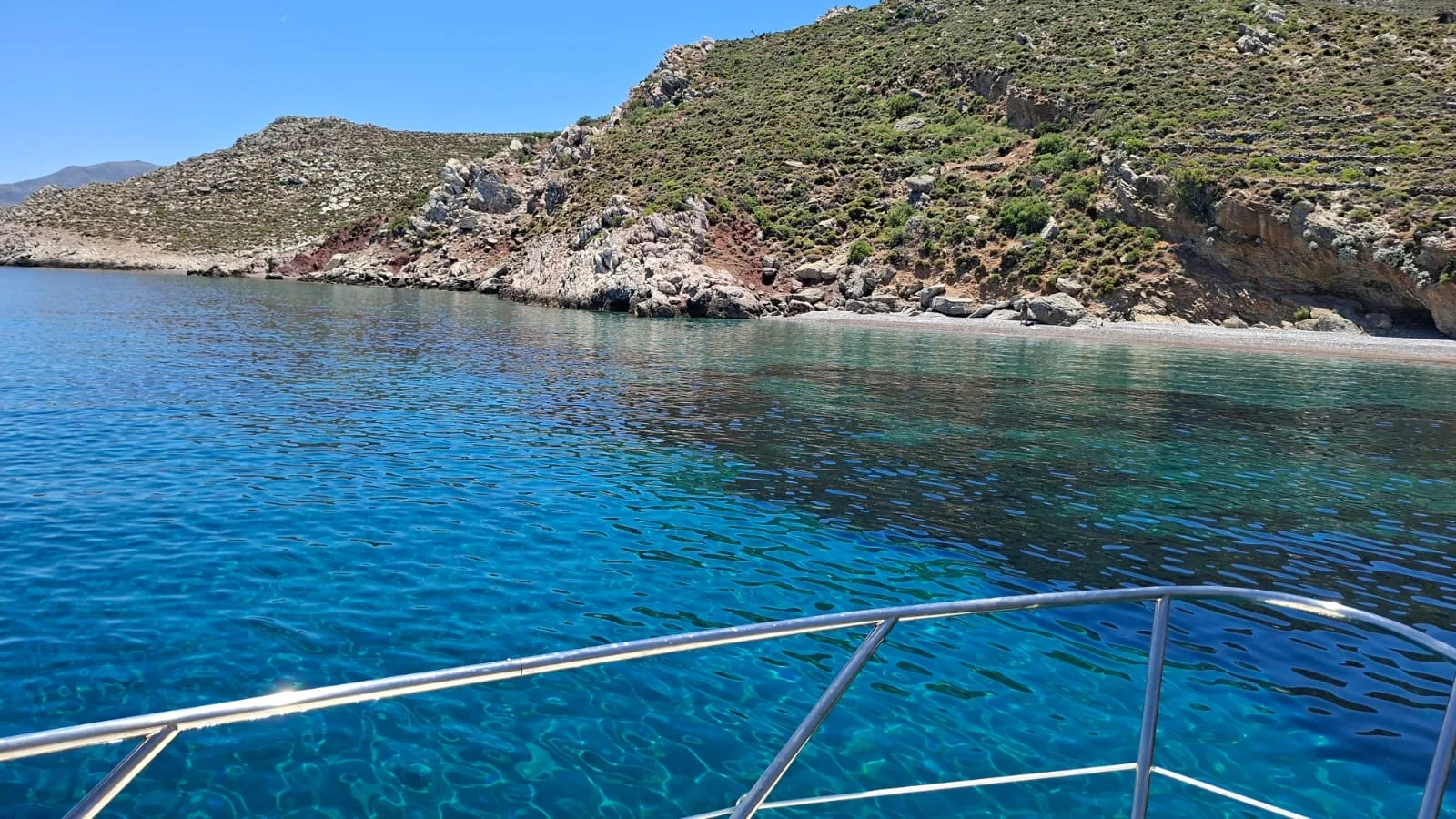
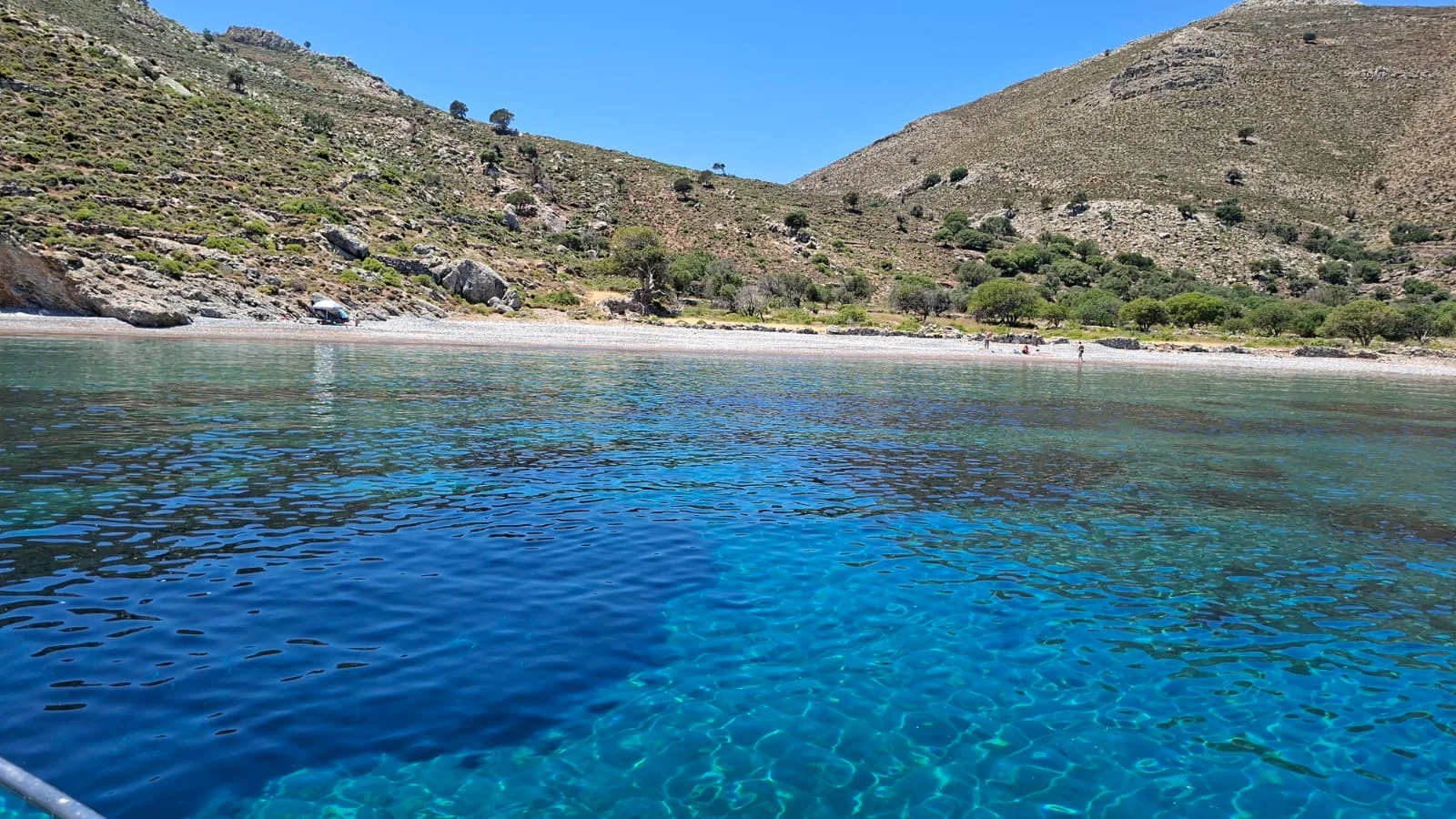
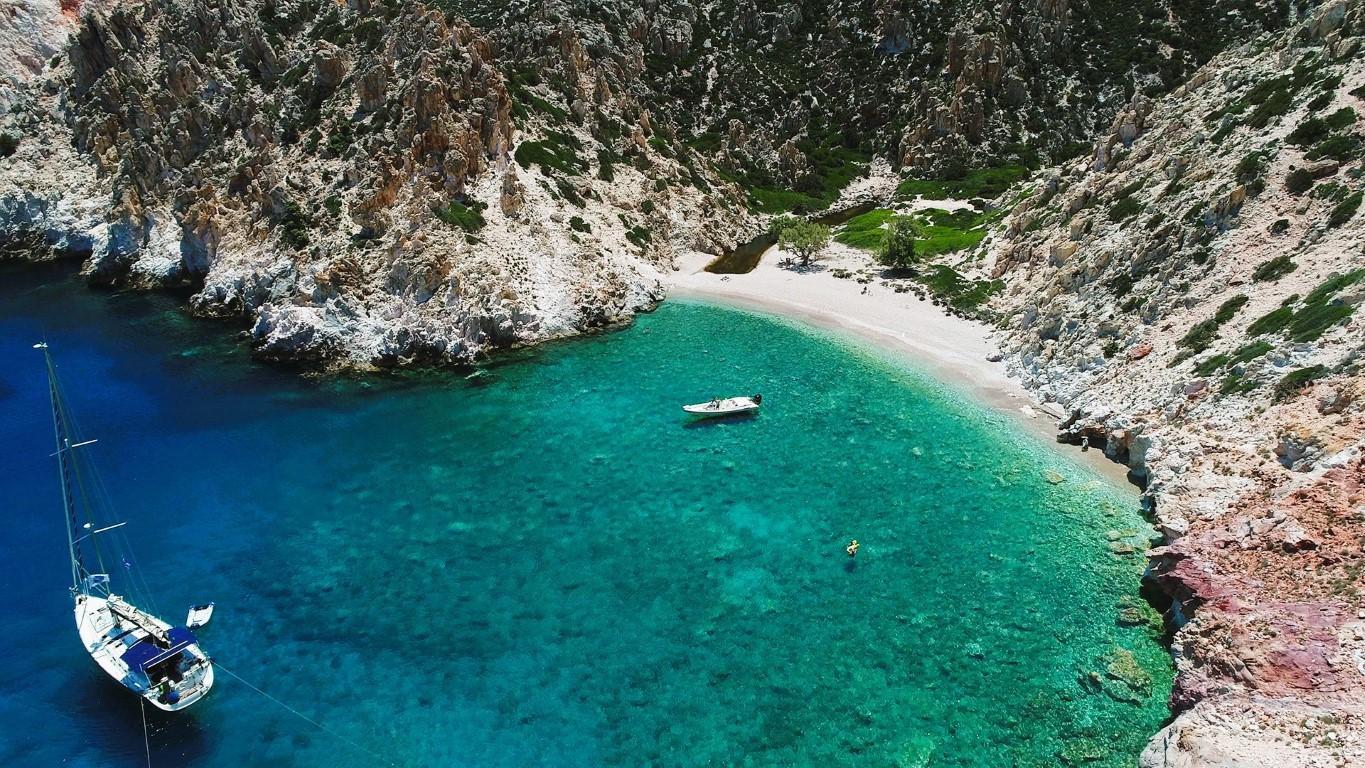
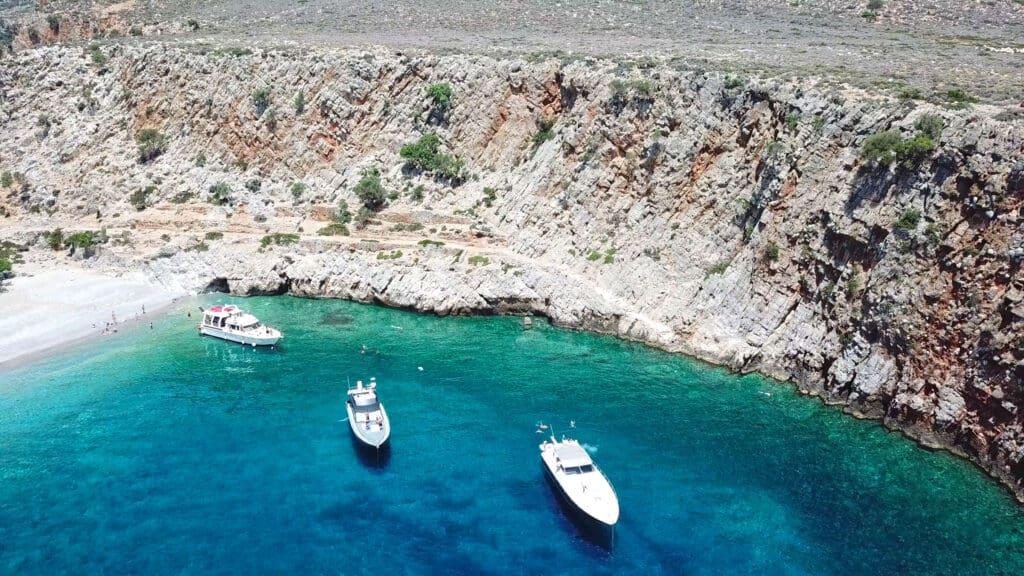
At the northern tip of the island, the tiny hamlet of Agios Antonios is little more than a small harbour, a taverna, and a few houses — but its position, looking directly across the narrow channel toward Nisyros and the distant bulk of Kos beyond, makes it one of the most scenically dramatic spots on Tilos. The northern coastline between Livadia and Agios Antonios is a sequence of small, rocky coves and headlands accessible almost exclusively by sea, their clear waters excellent for snorkelling over volcanic rock formations and through meadows of Posidonia seagrass. Anchoring off one of these small northern coves in the late morning, with no other vessel in sight and only the sound of the sea, is to experience the Aegean at something close to its purest.
The Bird Sanctuary and Wildlife Watching
The entire island of Tilos functions effectively as a wildlife sanctuary, and the rewards for those who take the time to look are considerable. The protected wetland at Eristos is the most significant birdwatching site, but raptors — including the spectacular Eleonora’s falcon, which breeds on the island’s sea cliffs — can be seen throughout the interior and coastline. The island’s meadows in spring are carpeted with wildflowers of extraordinary variety, including several endemic species, and the combination of floral and faunal richness makes Tilos a destination of genuine significance for naturalists and anyone with a serious interest in the natural world. The island’s local environmental organisation, which has driven much of the conservation work here, welcomes visitors and can arrange guided wildlife walks.
Why Choose Tilos
Tilos is the island for the traveller who values what the Aegean used to be, before it became famous. It is a place that has made a conscious, collective decision to protect its natural and cultural heritage rather than exchange it for the easier revenues of mass tourism, and the result is an island of exceptional integrity — where the landscape is intact, the community is genuine, the food is local, and the silence is real. In a Mediterranean that is becoming steadily noisier and more crowded, Tilos represents something increasingly precious: a place that has chosen quality over quantity, and depth over reach.
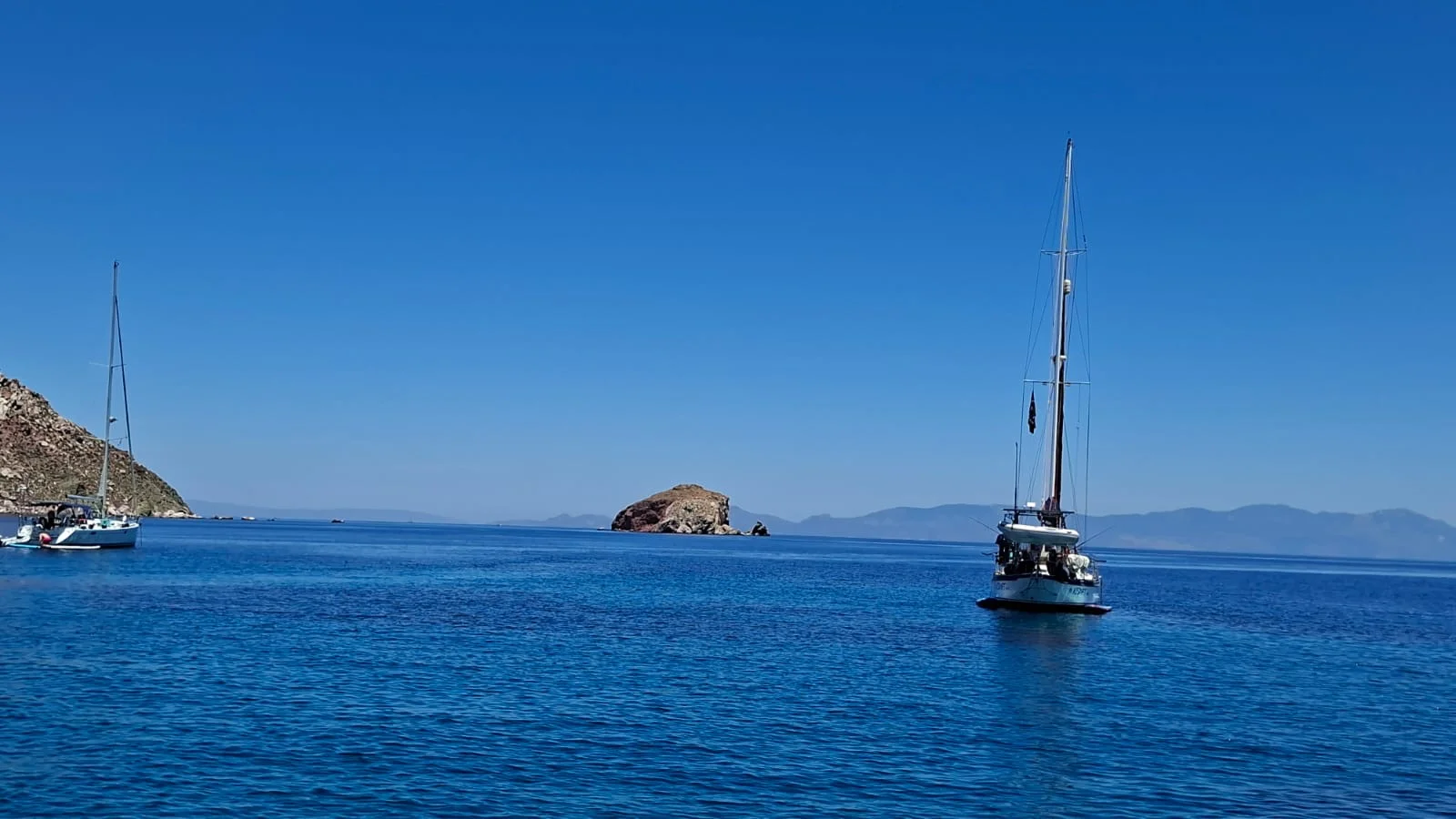
For those arriving by yacht, Tilos is an almost ideal anchorage destination. Its two main harbours — Livadia in the east and Agios Antonios in the north — are well sheltered and beautifully situated, and the island’s small size means that the entire coastline can be explored in a single day’s sailing. The absence of large ferry crowds after the afternoon departure means that evenings in Livadia are wonderfully calm — just the island’s own residents, the yacht crews, and the particular quality of light that falls across these hills when the day-trippers have gone and the island returns to itself.
What makes Tilos unforgettable in the end is the combination of humility and richness that defines it. This is an island with no famous landmark, no internationally celebrated monument, no single attraction that can be photographed and shared. What it has instead is the total experience of a place in balance — with its landscape, with its history, with its wildlife, and with the sea that surrounds it on all sides. Those who sail to Tilos and stay long enough to feel that balance — to walk its paths in the morning light, to swim its empty coves in the afternoon, to eat at its harbour taverna in the evening — almost invariably leave with the quiet conviction that they have found something genuinely rare. They are right.