Why Symi
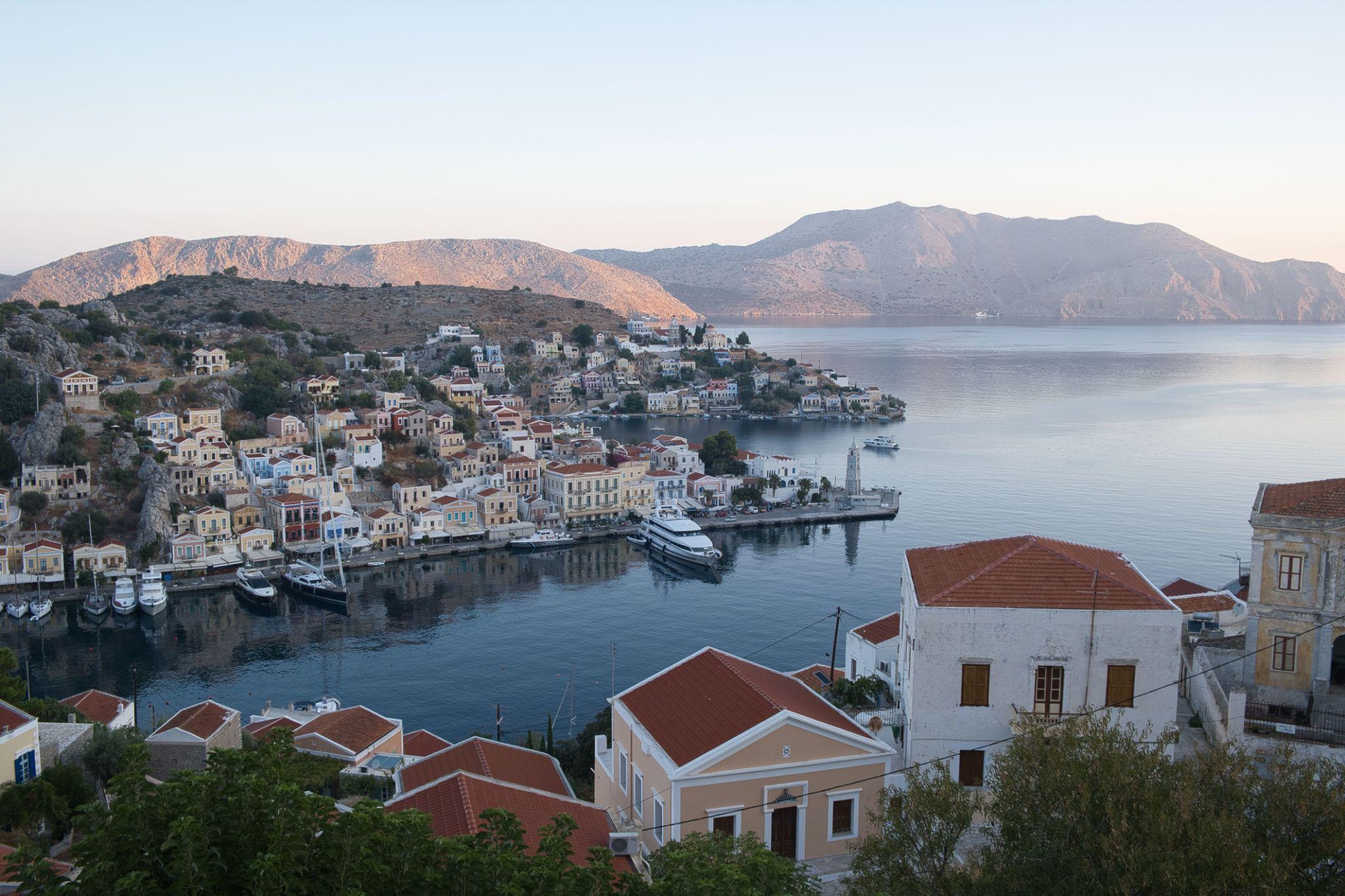
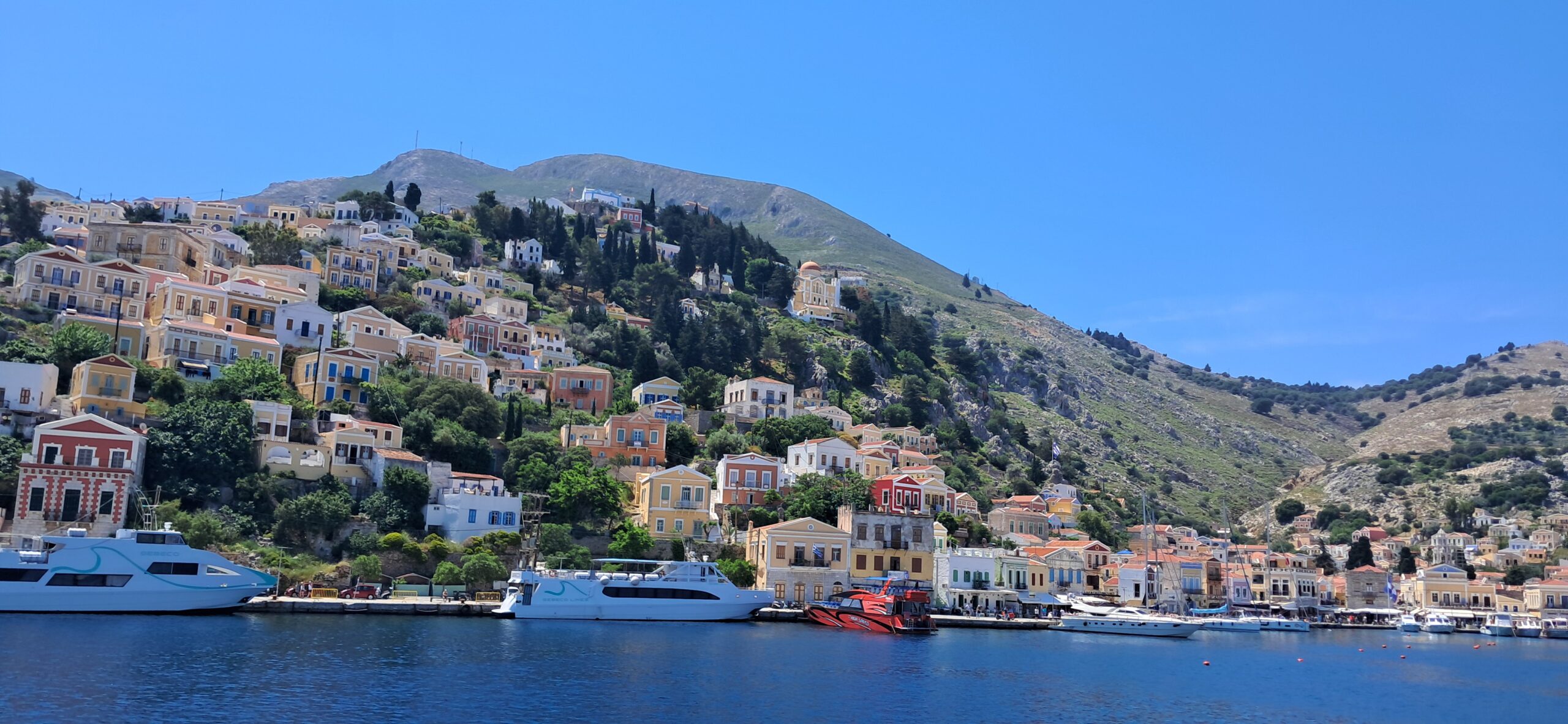
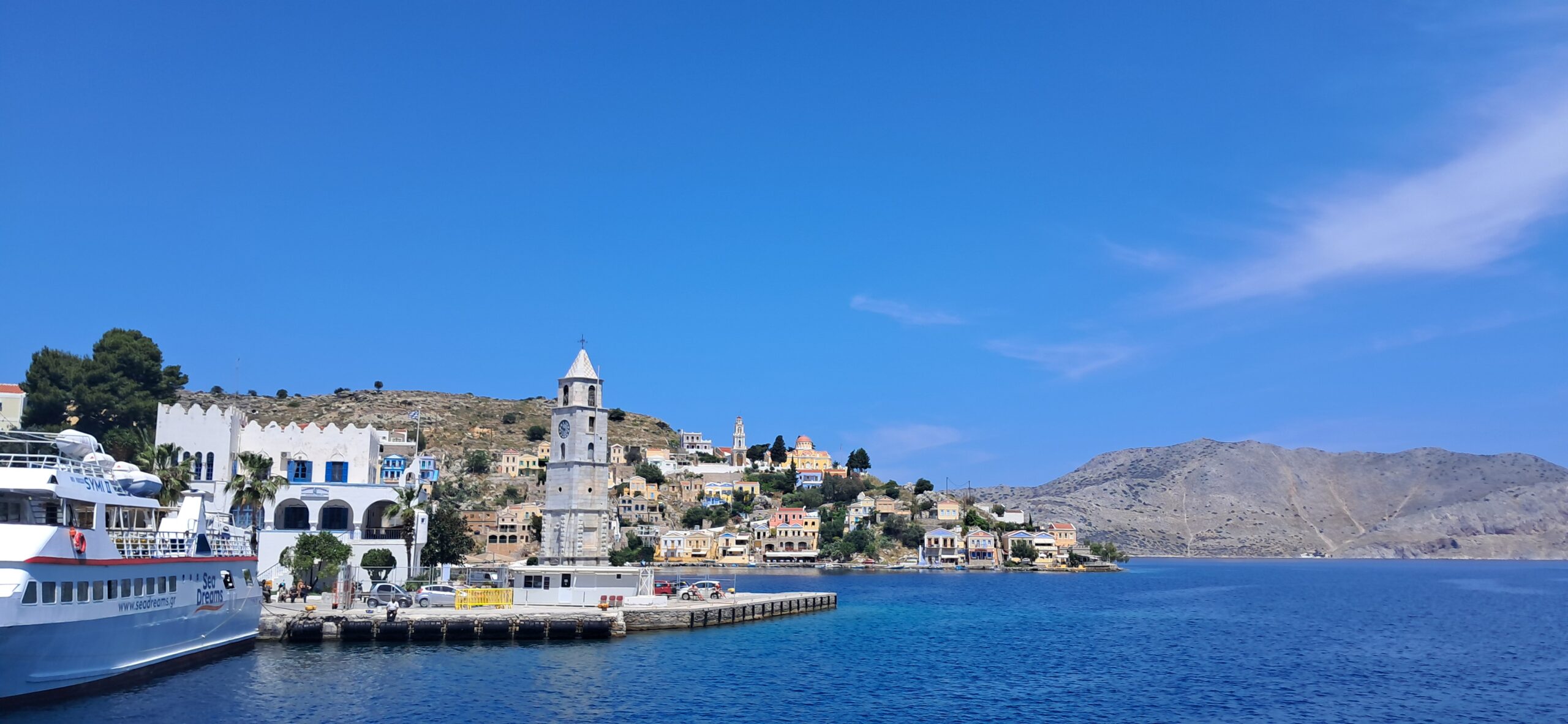
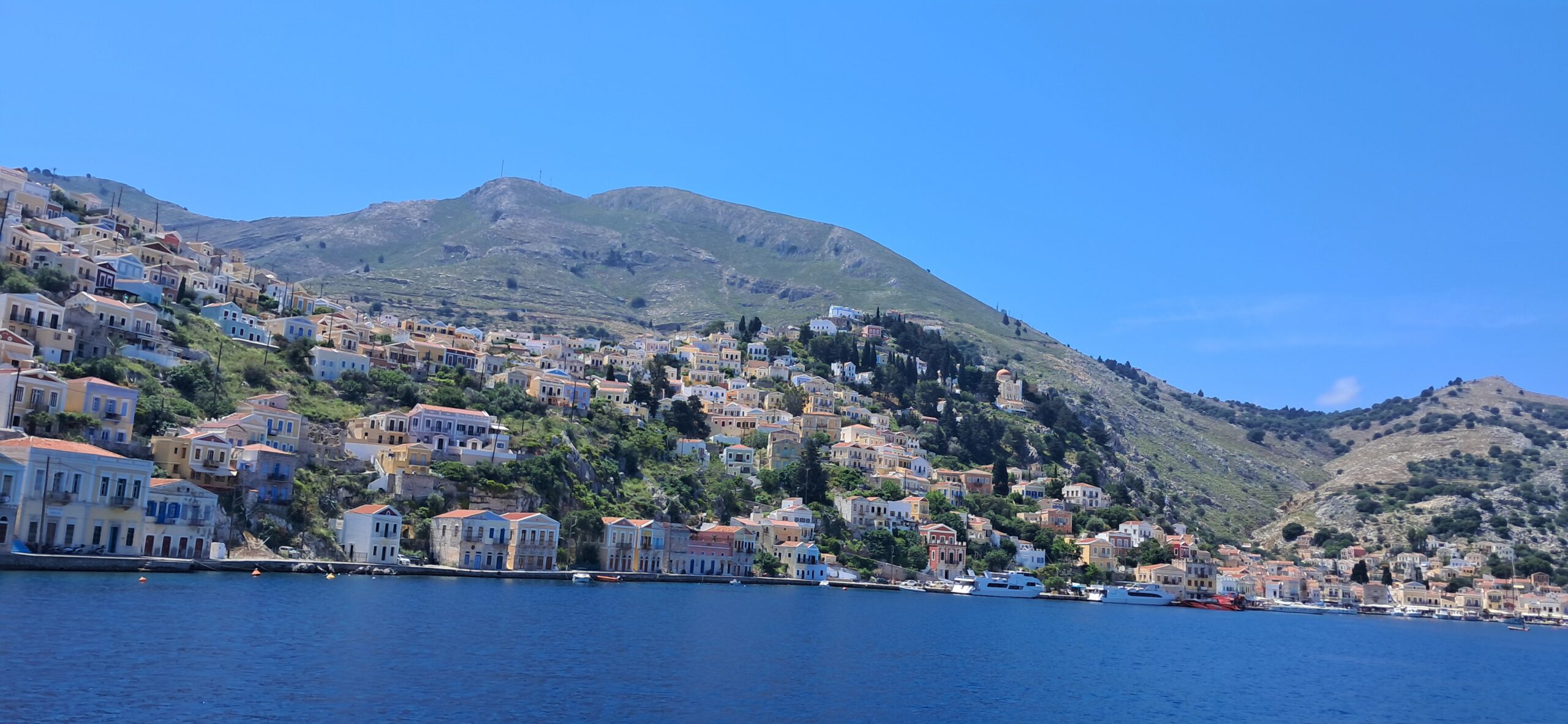
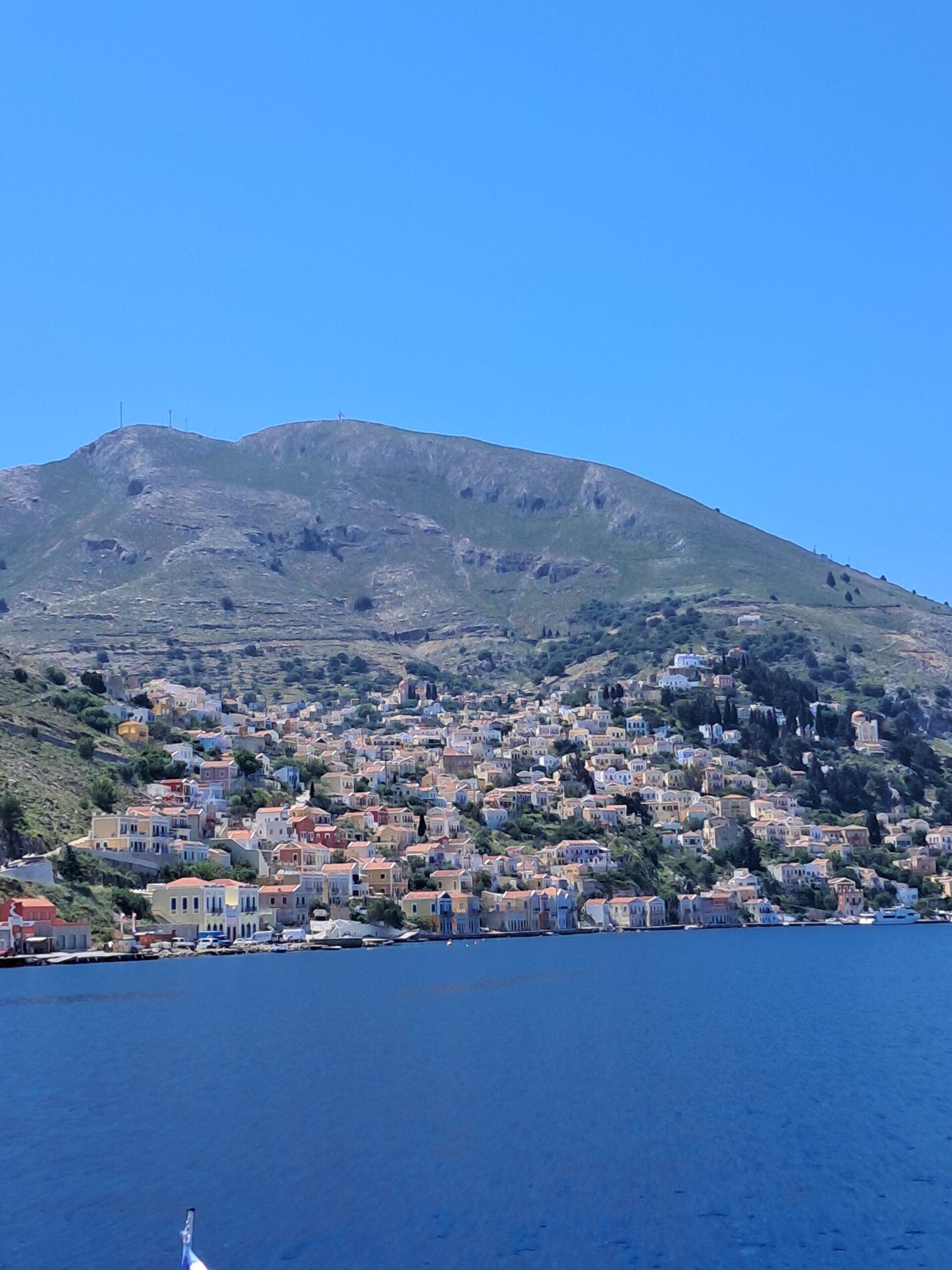
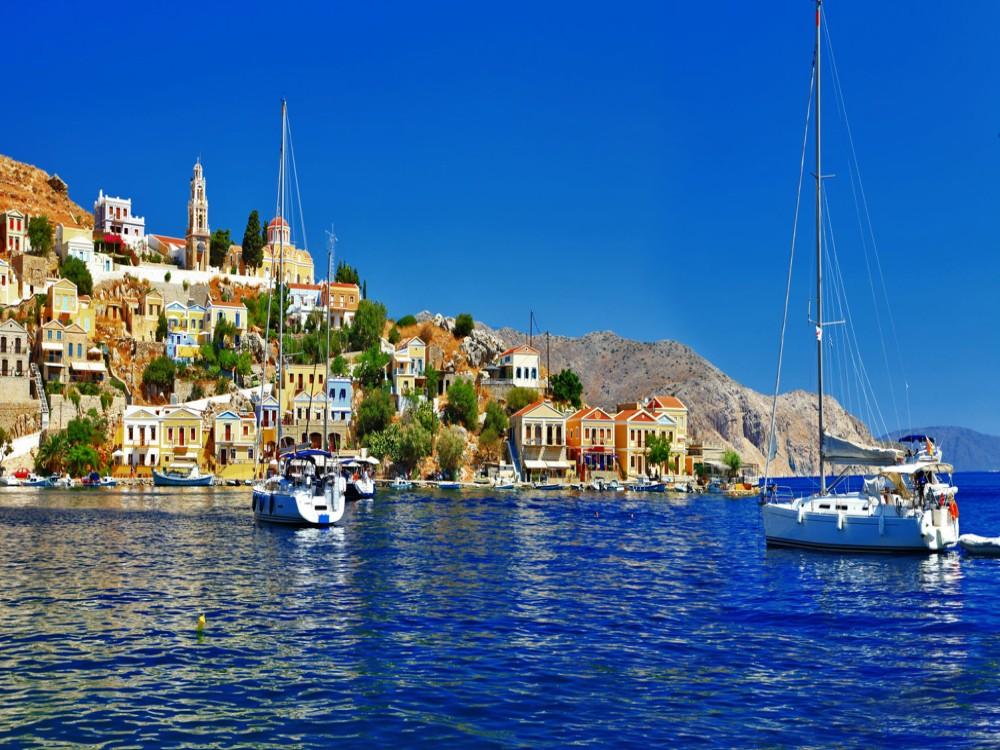
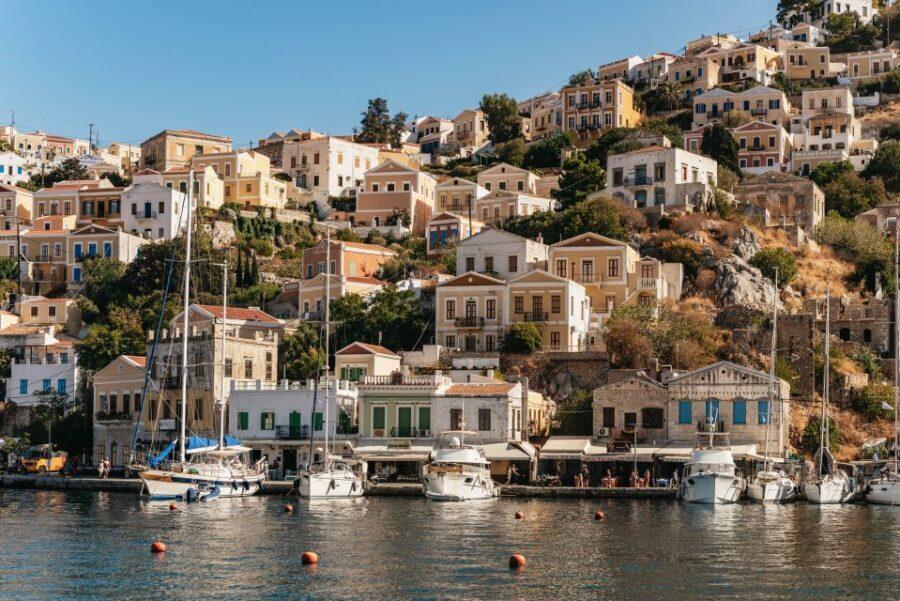
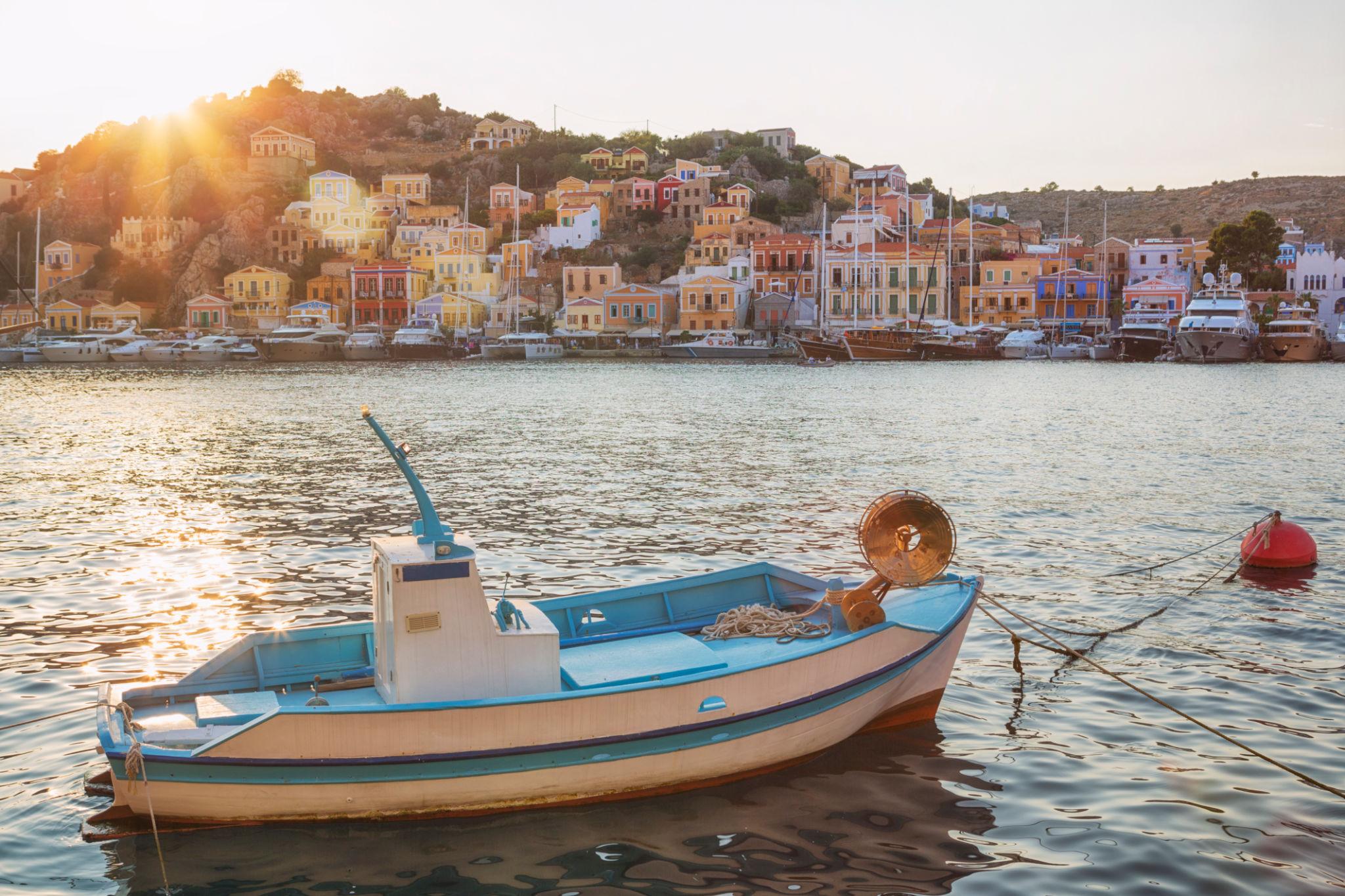
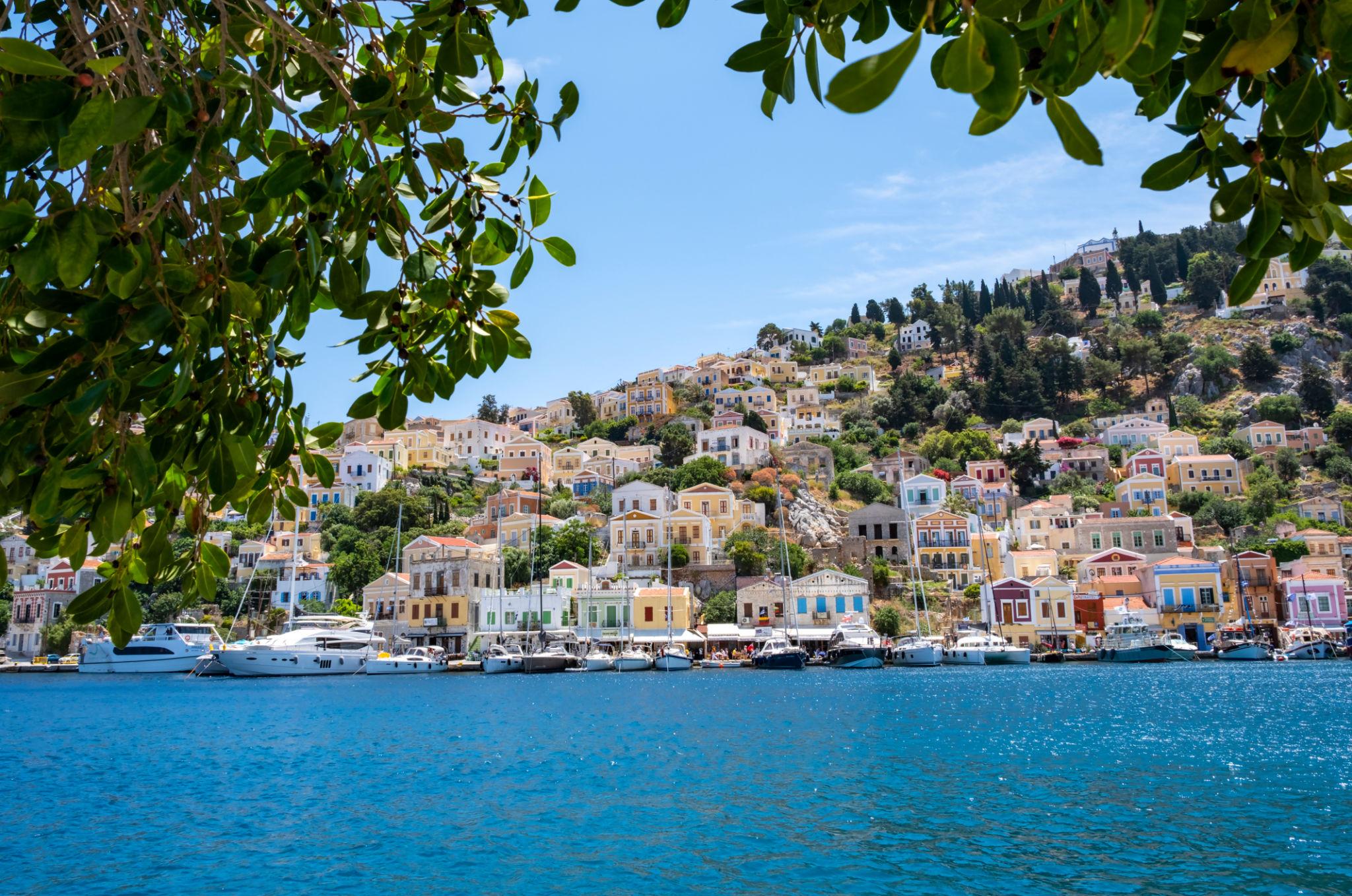
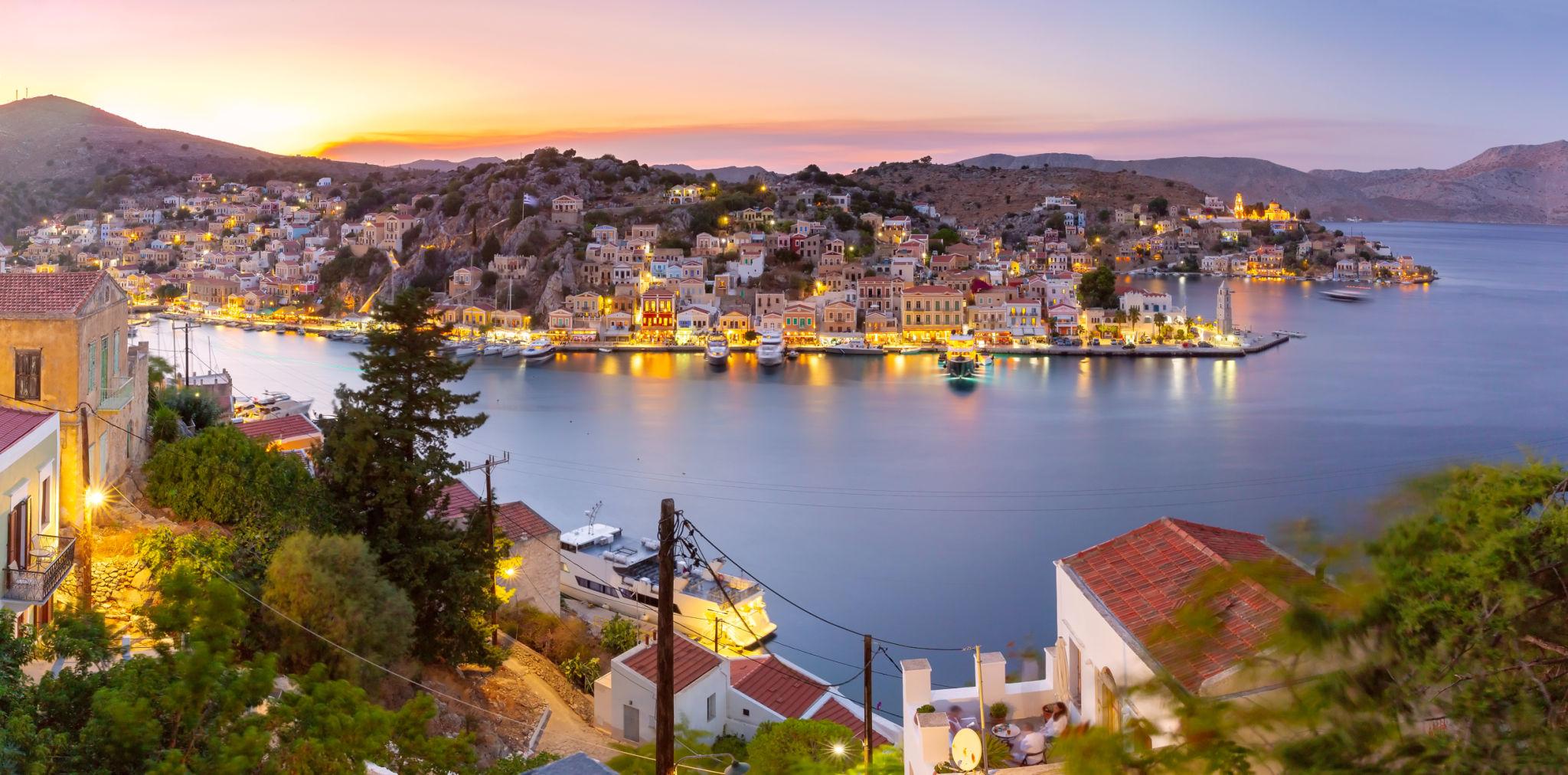
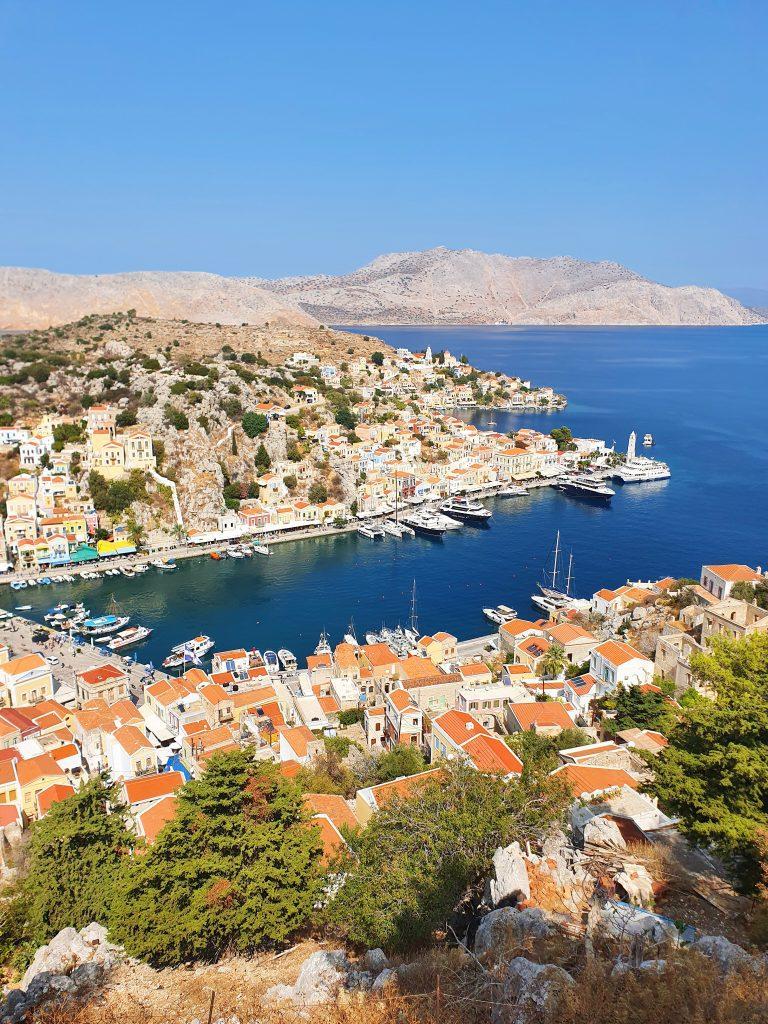
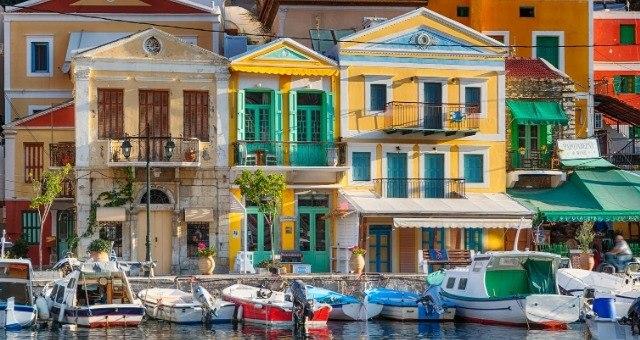
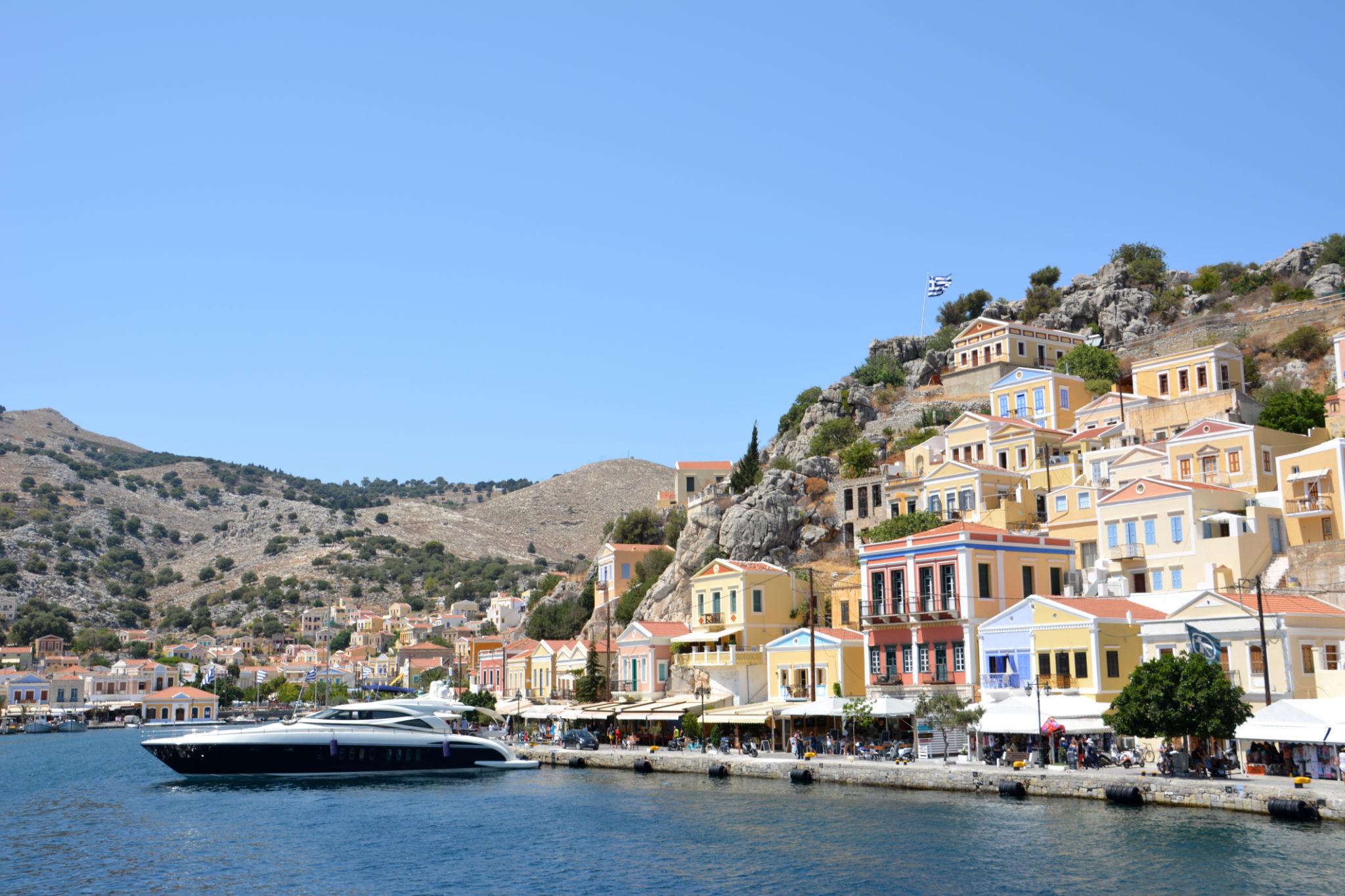
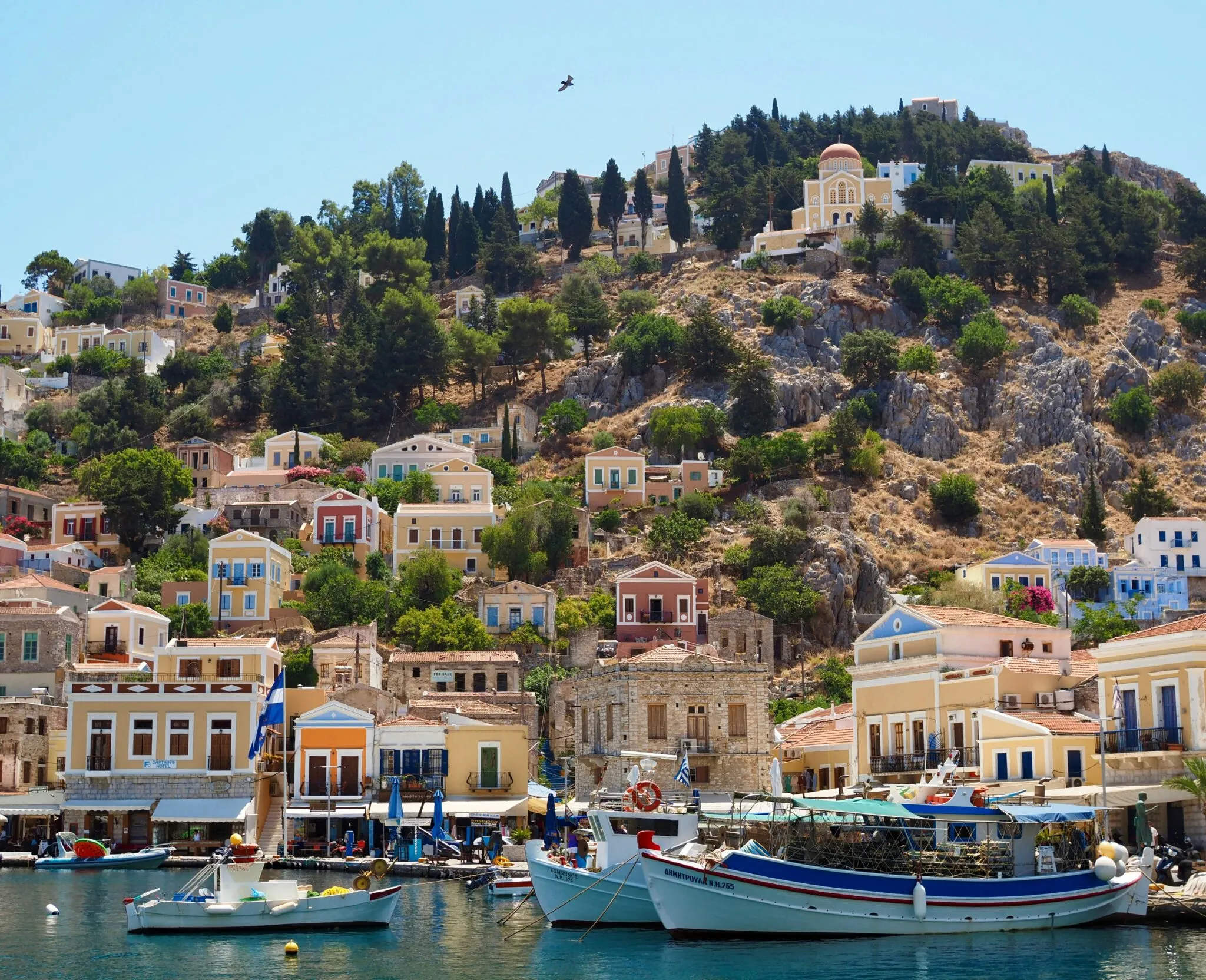
There are arrivals in Greece that are merely beautiful, and then there are arrivals that are genuinely breathtaking. Sailing into Symi harbour for the first time belongs firmly in the second category. As your yacht rounds the headland and the great amphitheatre of Gialos opens before you, the sight is one of the most spectacular in the entire Aegean: tier upon tier of neoclassical mansions in shades of ochre, terracotta, gold, and pale rose climbing the steep hillside above the harbour, their elegant facades reflected in the still, deep-blue water below. It is the kind of view that makes you reach for your camera and then slowly lower it again, because you understand instinctively that no photograph will do justice to what you are seeing. Symi must be experienced, not recorded.
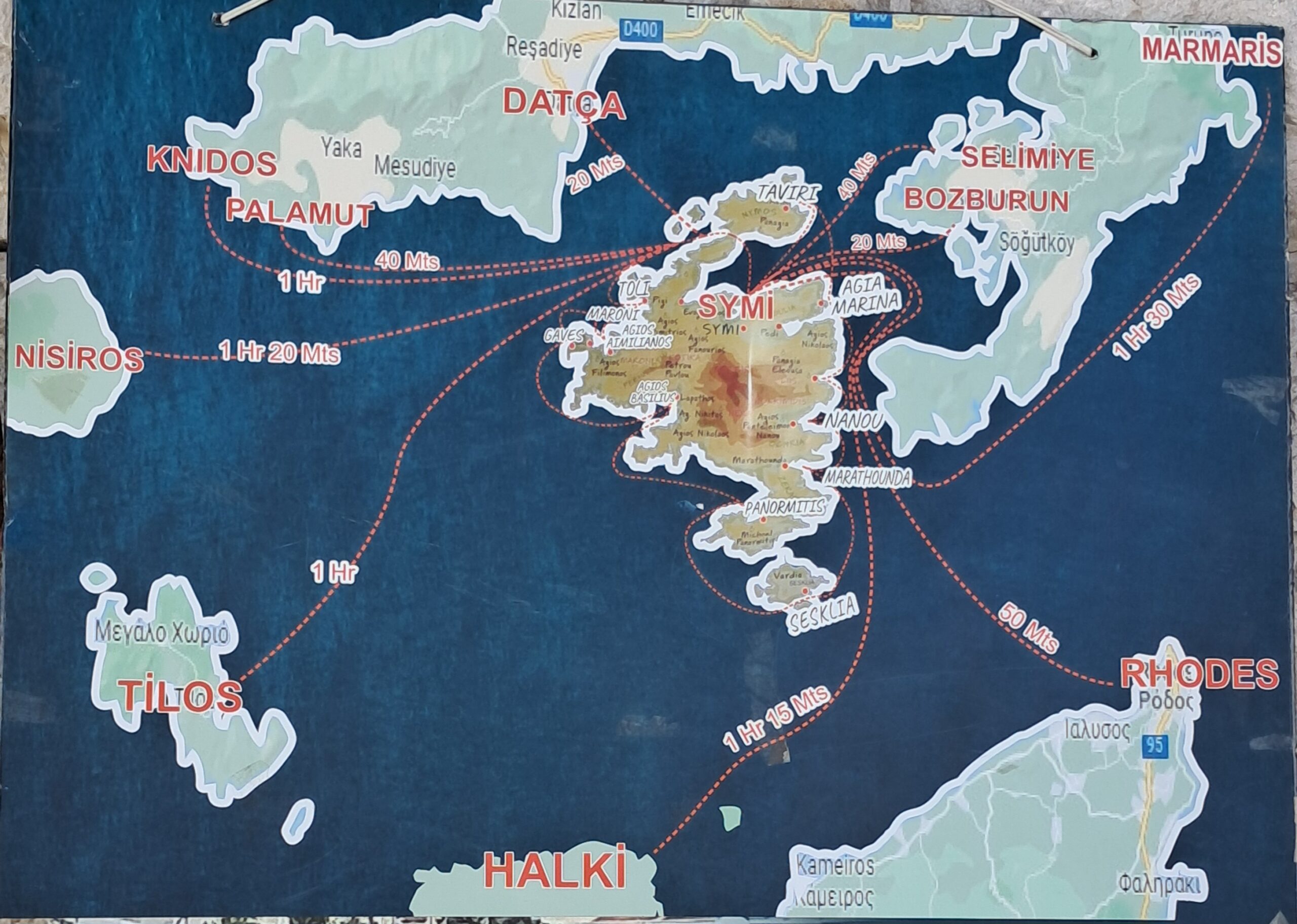
The island sits just north of Rhodes, separated from the Turkish coast by a narrow strait, and its entire history has been shaped by the tension between its small size and its enormous ambition. Symi is barely 58 square kilometres, rocky, largely without fresh water, and possessed of almost no agricultural land — and yet for three hundred years, between the 17th and early 20th centuries, it was one of the wealthiest and most sophisticated islands in the Aegean. That wealth came from the sea, as it so often does in this part of the world: from sponge diving, from shipbuilding, and from a merchant fleet that was, at its peak, one of the most capable in the eastern Mediterranean. The extraordinary neoclassical architecture that makes Symi so visually arresting today is the physical legacy of that golden age — the mansions built by ship captains and sponge merchants who had the money and the taste to commission some of the finest domestic architecture in Greece.
The decline came with the steam engine, which made Symi’s handcrafted wooden sailing vessels obsolete almost overnight, and the 20th century brought further hardship. But that very decline is what preserved Symi so completely. With no money for development and no industry to drive growth, the island simply stood still — and what it preserved in its stillness was one of the most architecturally coherent and visually magnificent townscapes in the entire Greek world. Today Symi is widely considered the most beautiful village harbour in the Dodecanese, and those who sail here understand at once that the description is not hyperbole.
What to Do and What to See
Symi’s pleasures are both visual and sensory — the extraordinary architecture of Gialos and Chorio, the exquisite monastery of Panormitis, the sequence of small coves and swimming spots that line the island’s deeply indented coastline, and the exceptional quality of the food in its harbour tavernas. It is an island that rewards slow time rather than frantic sightseeing, and the best approach — arriving by yacht, spending the evenings in the harbour, exploring the coastline by day — allows you to experience it at exactly the right pace.
Gialos — The Harbour
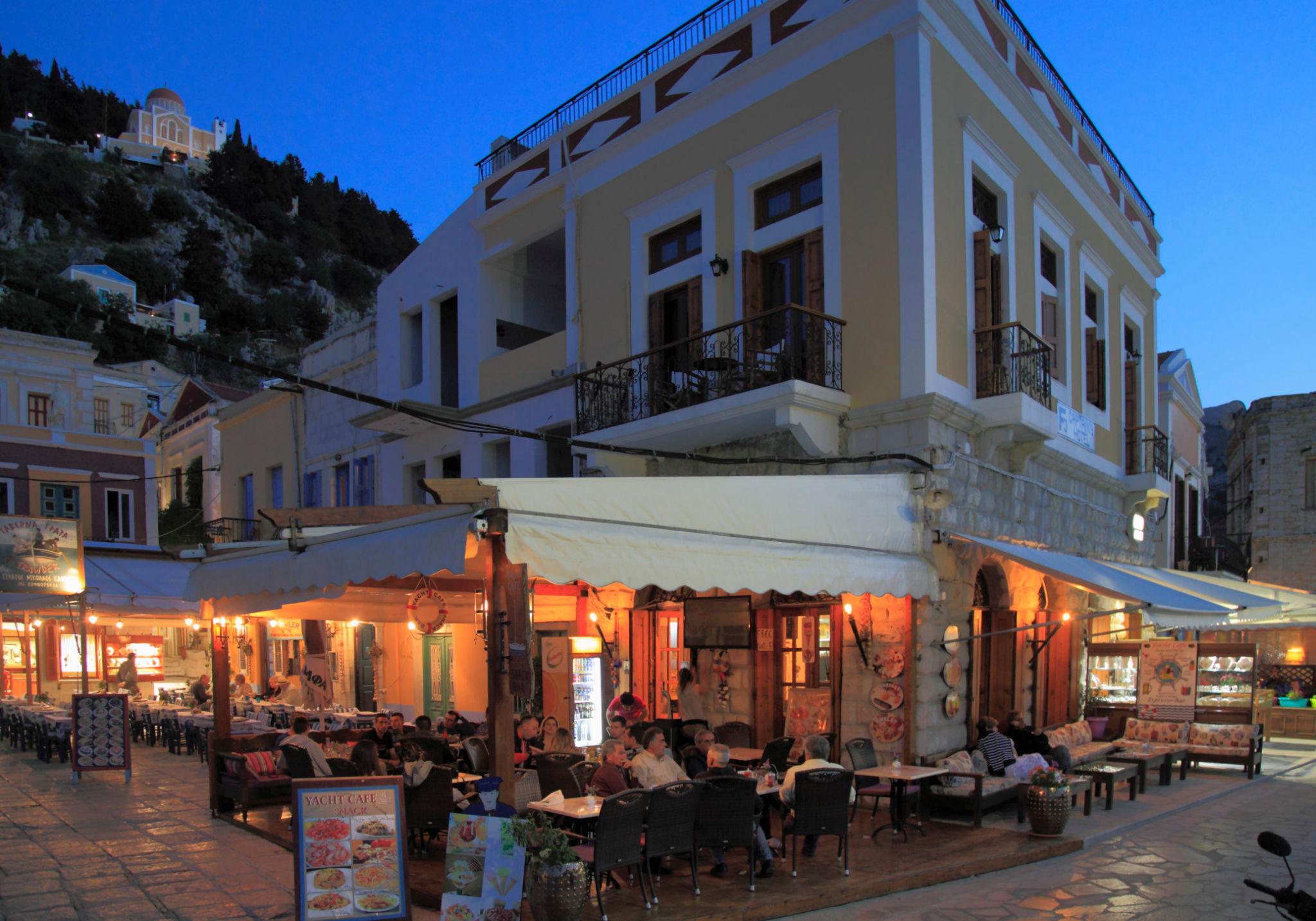
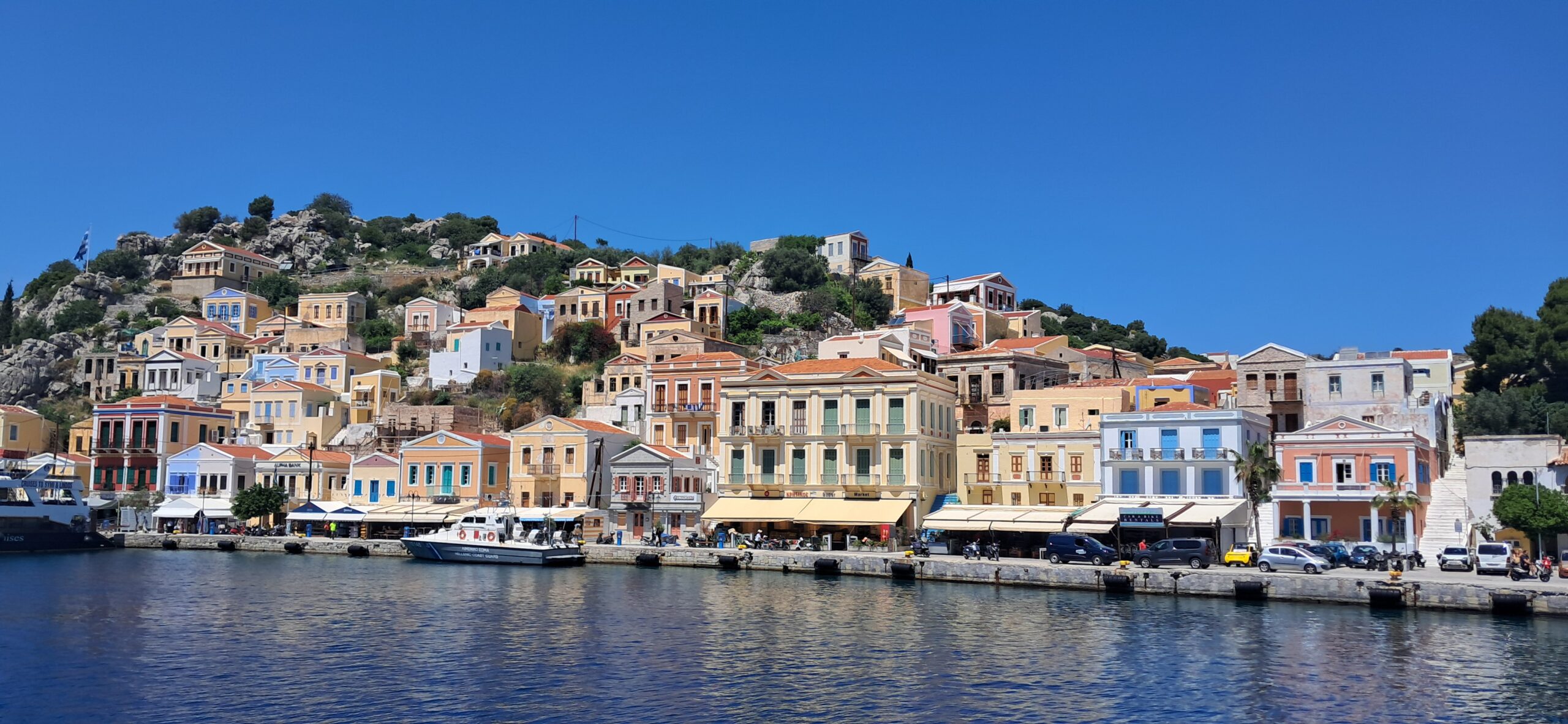
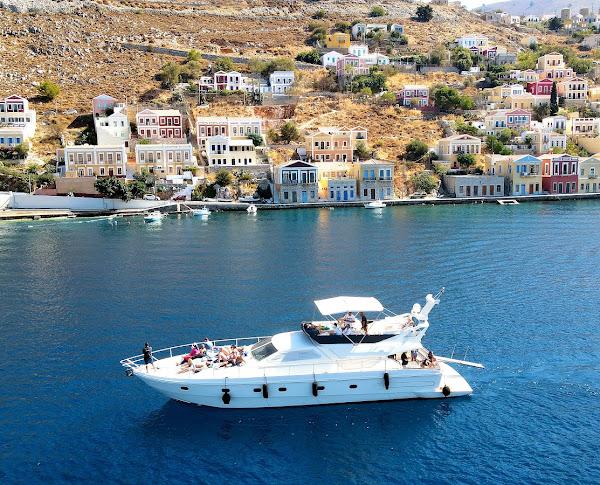
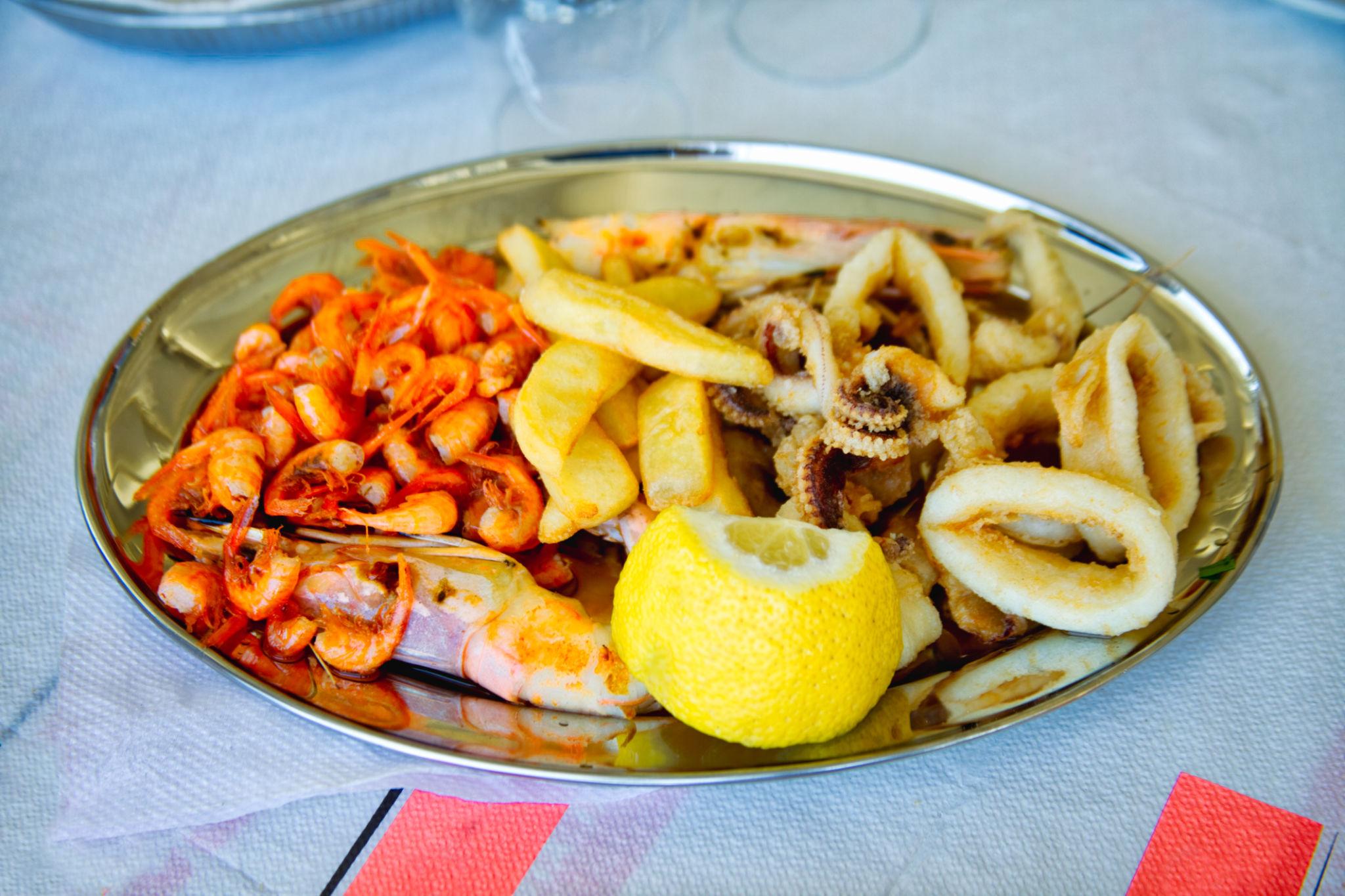
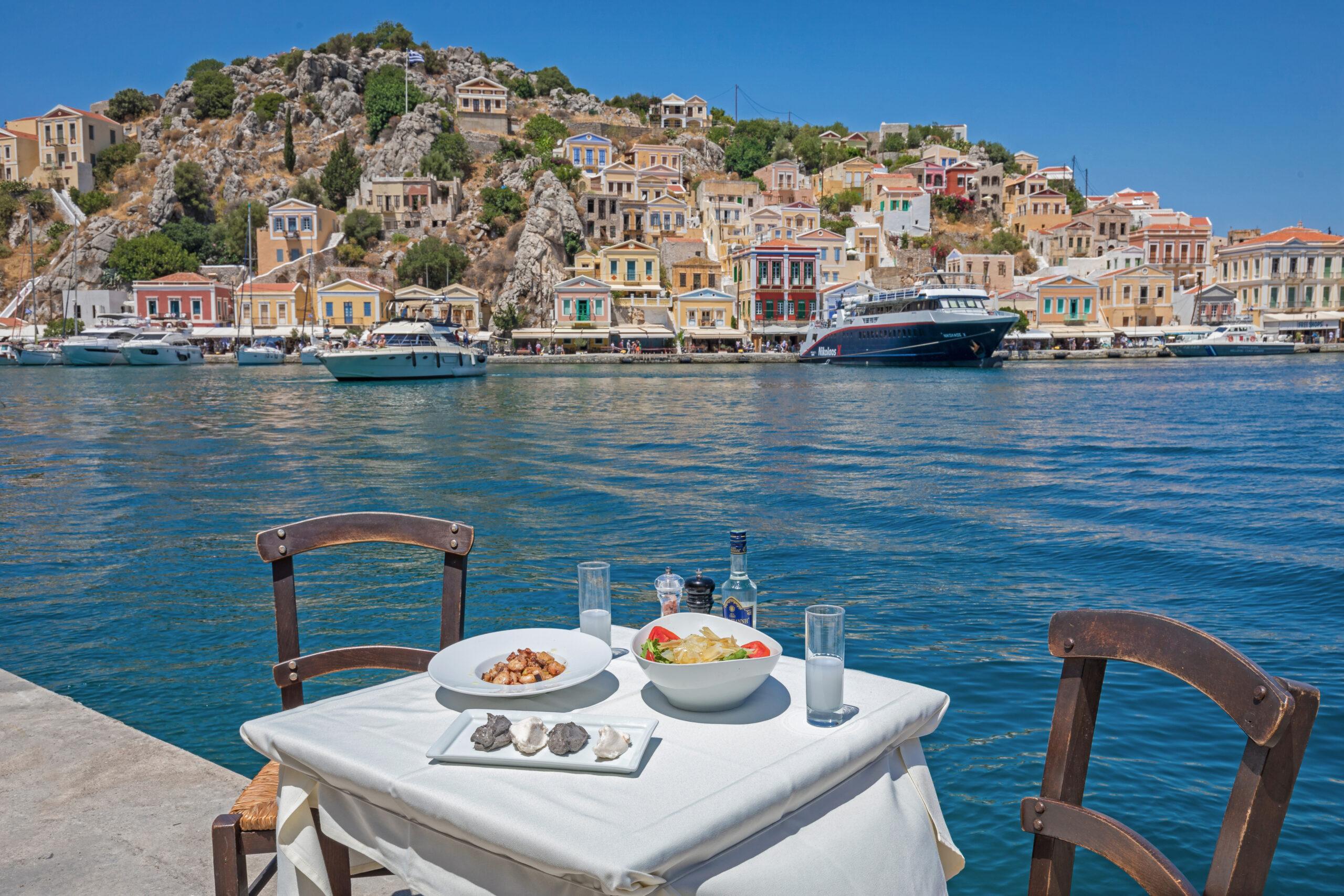
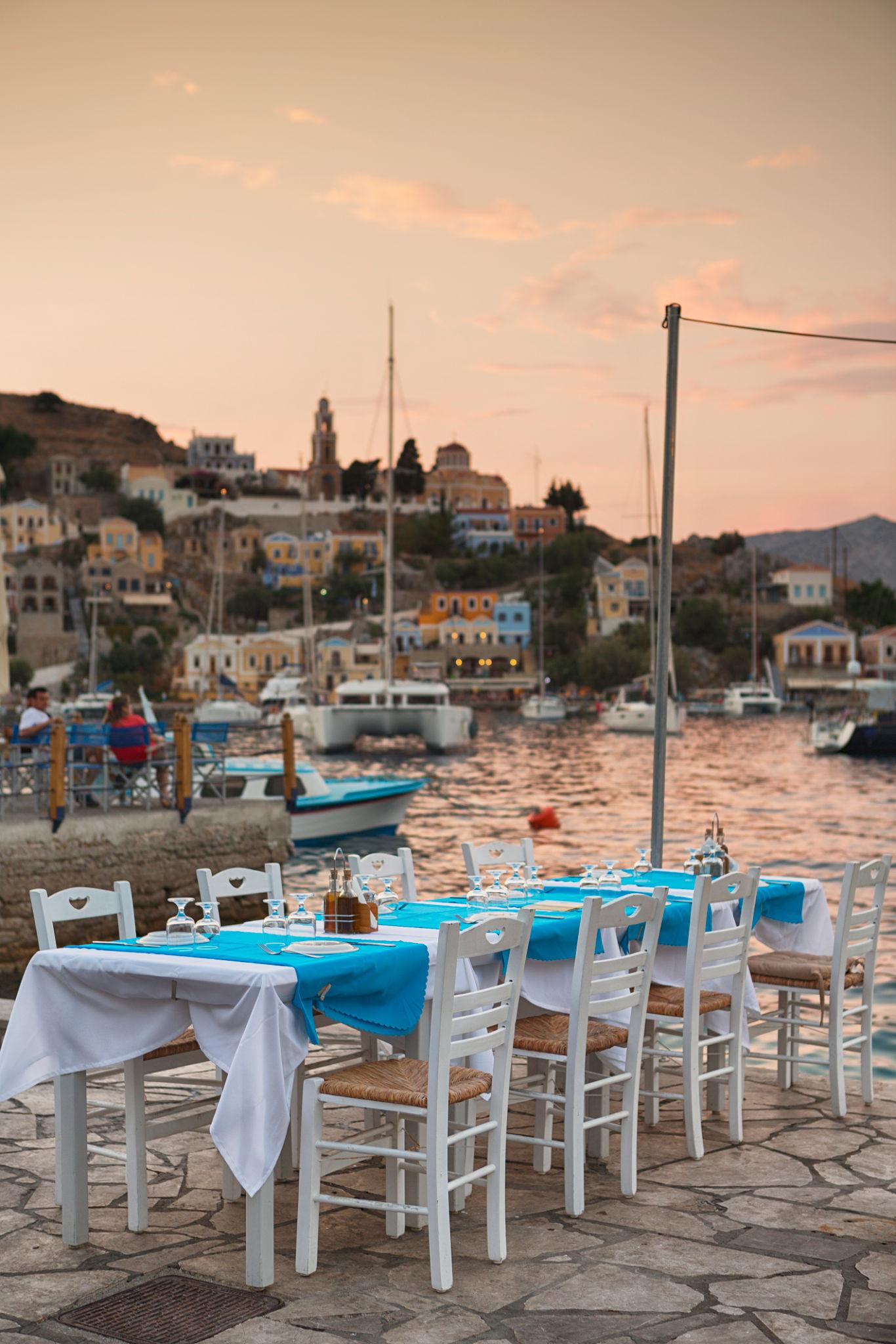
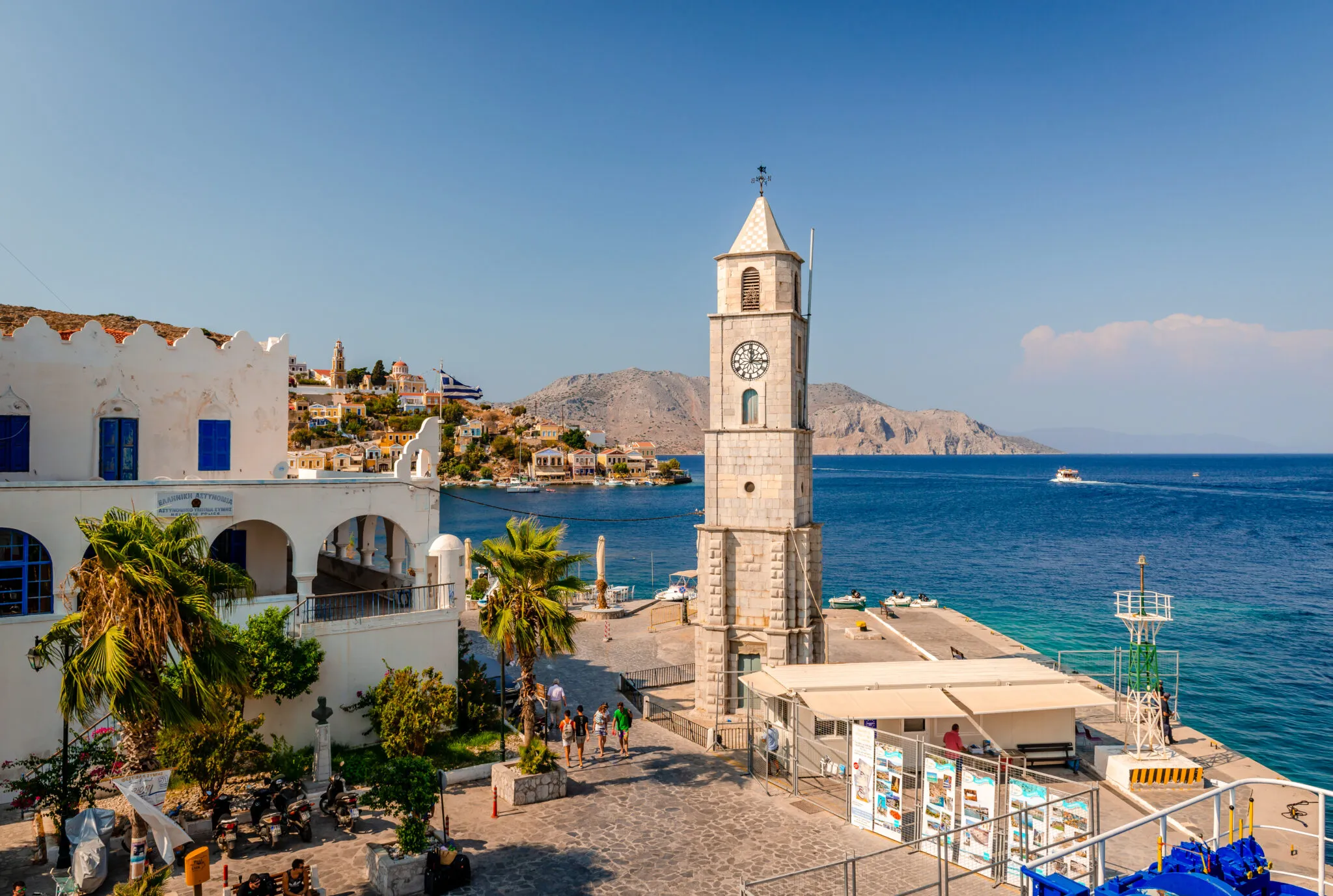
Gialos is, quite simply, one of the most beautiful harbour villages in the Mediterranean. The great sweep of neoclassical mansions that lines the harbour and climbs the hillside above it was built during the island’s golden age of sponge diving and shipbuilding, and the architectural coherence of the townscape — every building broadly consistent in style, scale, and palette, the whole ensemble rising in one glorious uninterrupted sweep from the waterfront to the skyline — is extraordinary. The harbour front is lined with restaurants and cafés whose tables reach almost to the water’s edge, and the atmosphere on a warm summer evening — boats swaying gently at their moorings, the lights of the mansions reflected in the harbour, the smell of grilled fish drifting from the tavernas — is as romantic as anything the Greek islands have to offer. The daily arrival of the day-trip boats from Rhodes brings a temporary rush of visitors in the late morning, but by mid-afternoon the harbour is returned to those who have chosen to stay, and the quality of the evening is entirely their own.
Chorio — The Old Capital
Above Gialos, connected by the famous Kali Strata — a grand staircase of 375 steps flanked by some of the finest neoclassical houses on the island — the old capital of Chorio is a quieter, more intimate version of the spectacle below. Many of the mansions here are abandoned or only partially restored, their faded facades and overgrown gardens giving the upper town a melancholy, romantic beauty that contrasts powerfully with the polished harbour front below. The Archaeological Museum of Symi, housed in one of the restored mansions, contains an excellent collection of finds from across the island’s long history. The castle of the Knights of St. John crowns the highest point, its walls incorporating the remains of an ancient temple, and the views from its ramparts over the harbour, the sea, and the Turkish coast are magnificent.
The Kali Strata
The great staircase that connects Gialos to Chorio is one of Symi’s most iconic experiences. Climbing its 375 broad stone steps in the early morning — before the heat builds and before the day-trip crowds arrive — is to walk through a gallery of extraordinary domestic architecture: mansions with ornate carved doorways and painted pediments, smaller workers’ houses with bright blue shutters and overflowing geraniums, the occasional ruined shell open to the sky. The staircase was built to be climbed slowly, with frequent pauses to look back at the harbour below as it diminishes with altitude, and it rewards that slowness generously at every level. Descending in the late afternoon as the light turns golden on the ochre facades is one of the great small pleasures of a visit to Symi.
The Monastery of Panormitis
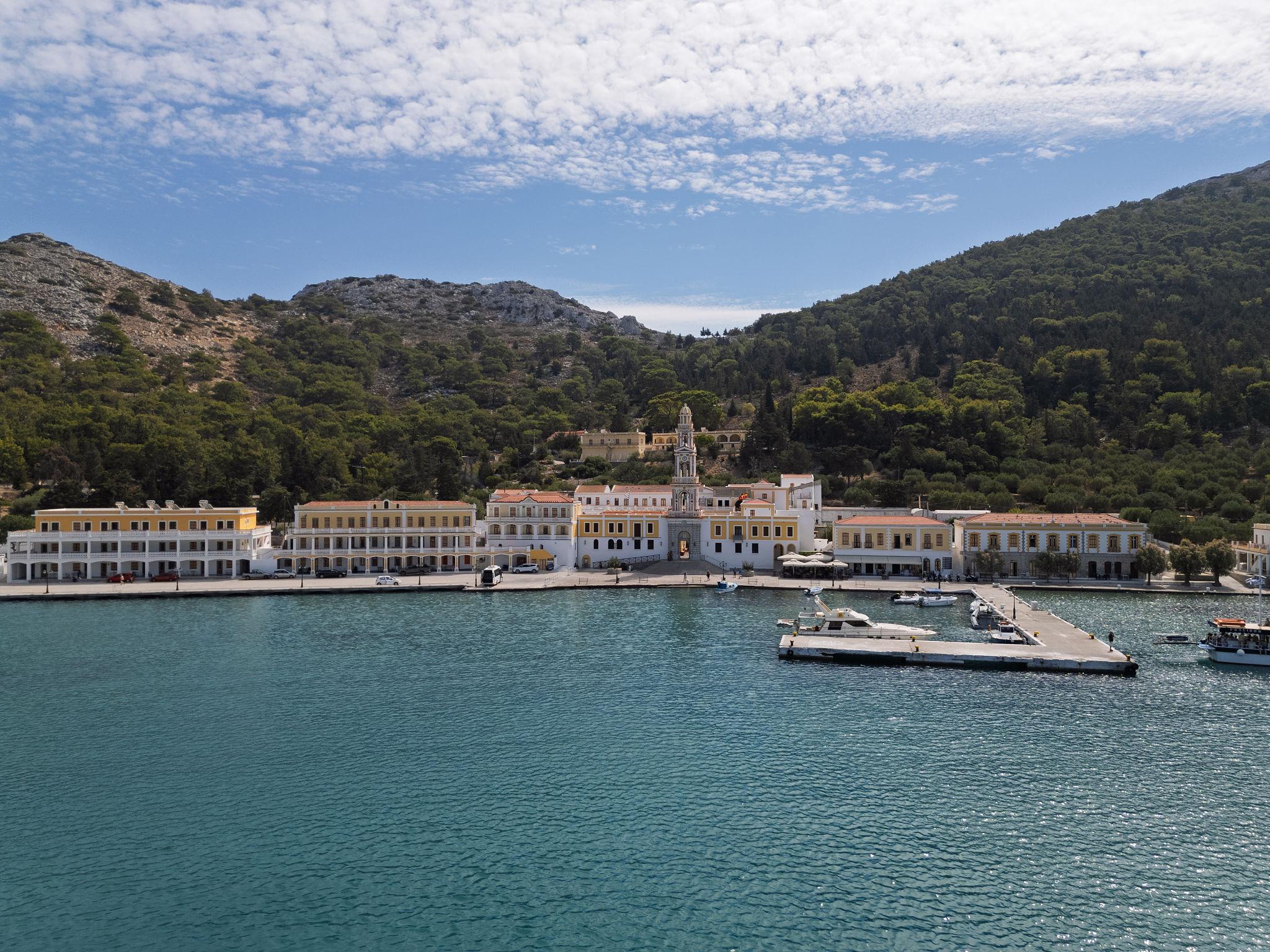
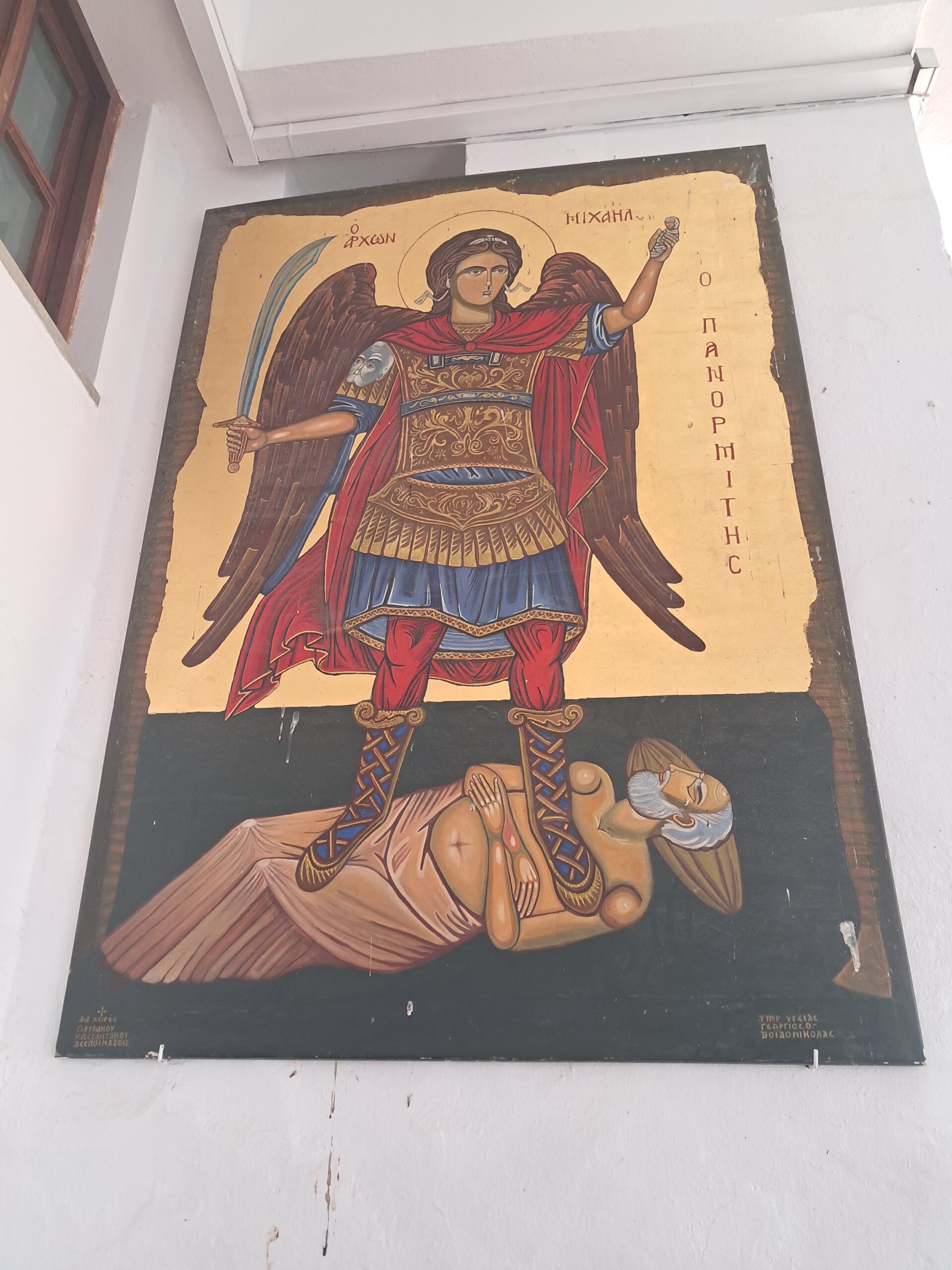
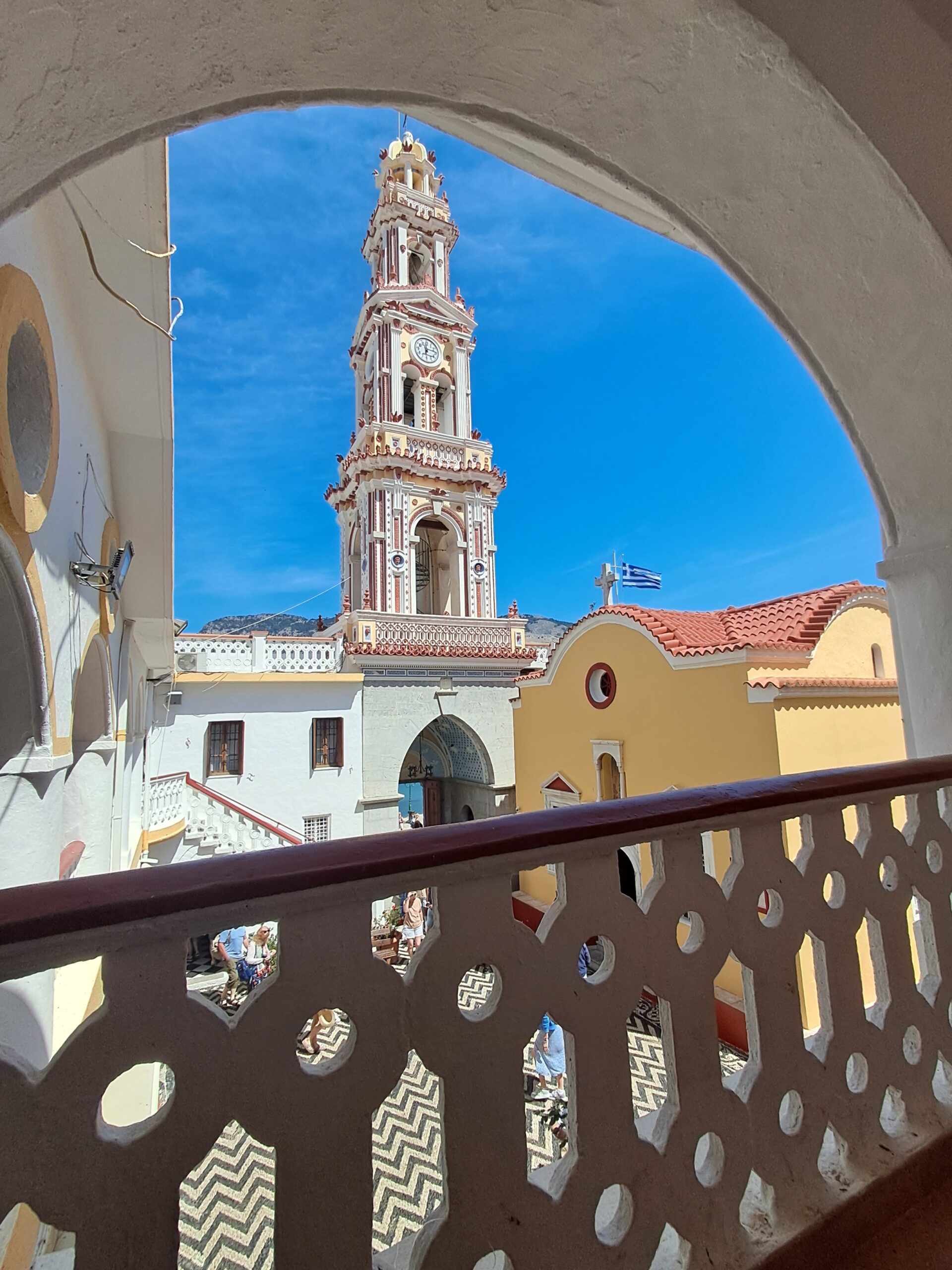
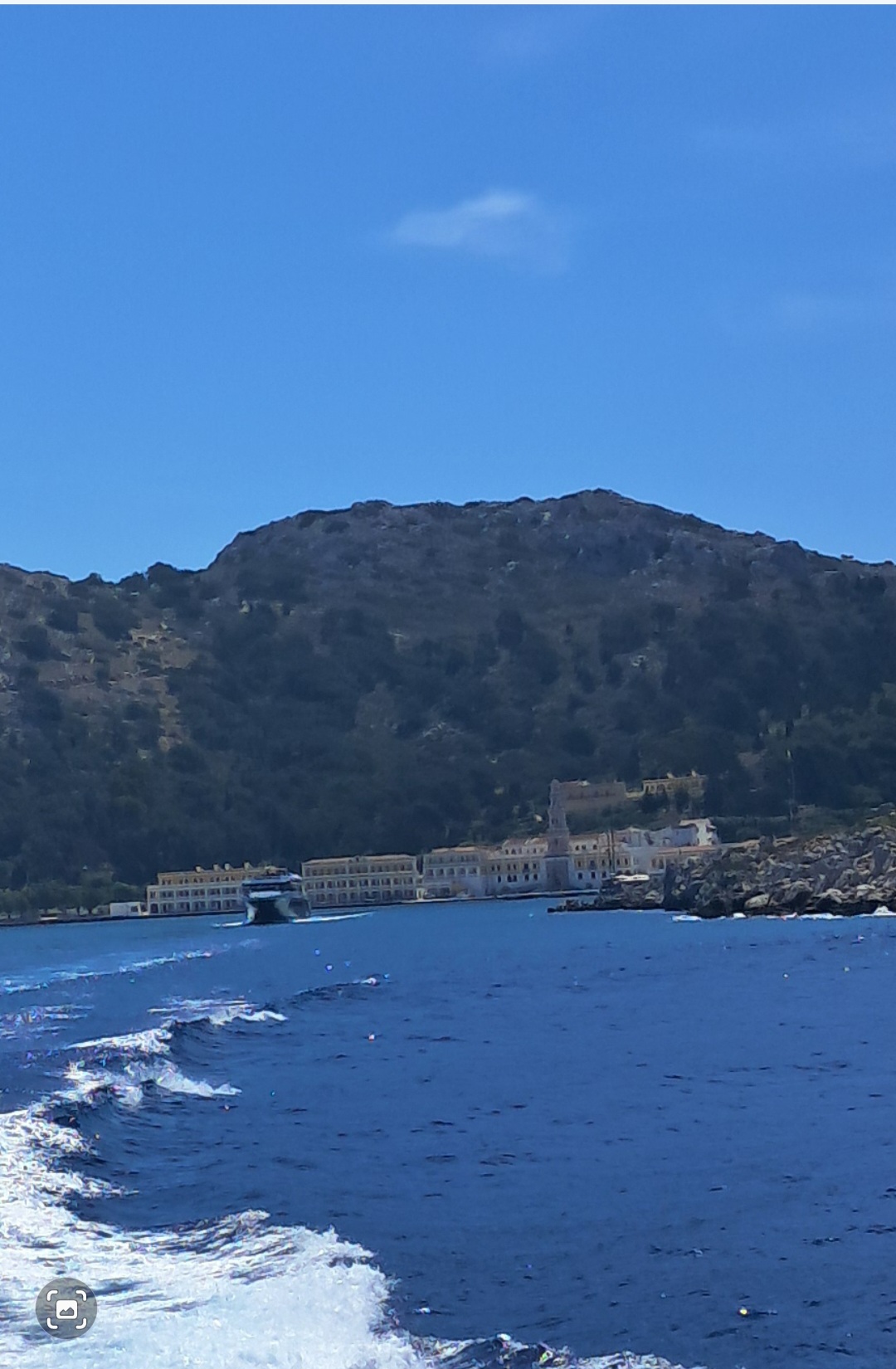
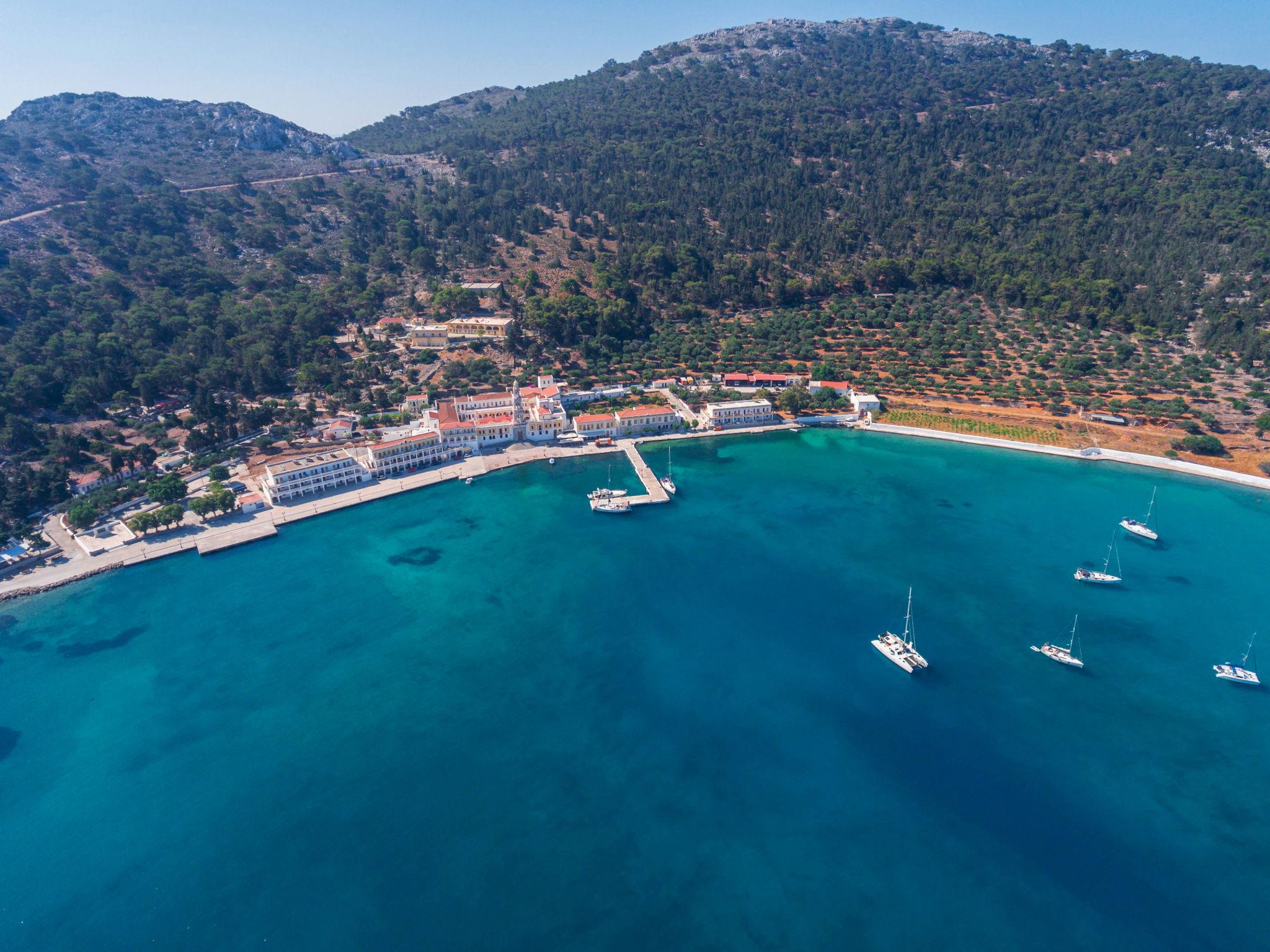
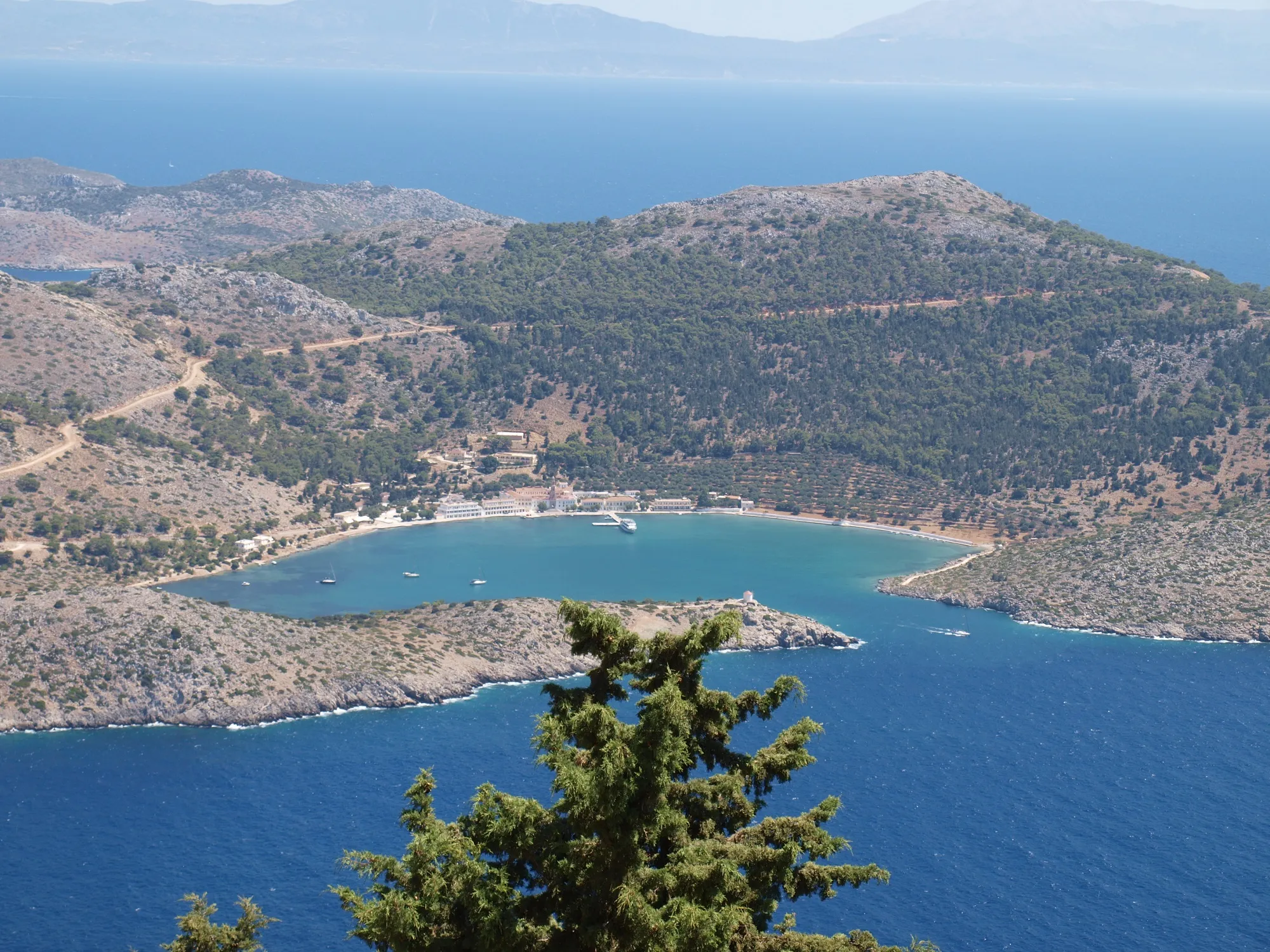
At the southern tip of the island, accessible by sea along a coastline of dramatic rocky headlands and turquoise coves, the Monastery of the Archangel Michael Panormitis is the spiritual heart of Symi and one of the most important and visited religious sites in the Dodecanese. The monastery was founded in the 18th century and is dedicated to St. Michael Panormitis, the patron saint of sailors throughout the Aegean — a fitting dedication for an island whose entire identity was built on the sea. The monastery complex, set in a sheltered bay of considerable beauty, includes a grand baroque church of extraordinary interior richness — gold iconostasis, antique lamps, ex-votos of every kind — a small museum, a guesthouse, and a bakery famous for its bread and loukoumades. Arriving at the monastery bay by yacht, dropping anchor in the clear water before the great white walls of the complex, is one of the finest approaches in the Dodecanese.
The Coves and Swimming Spots
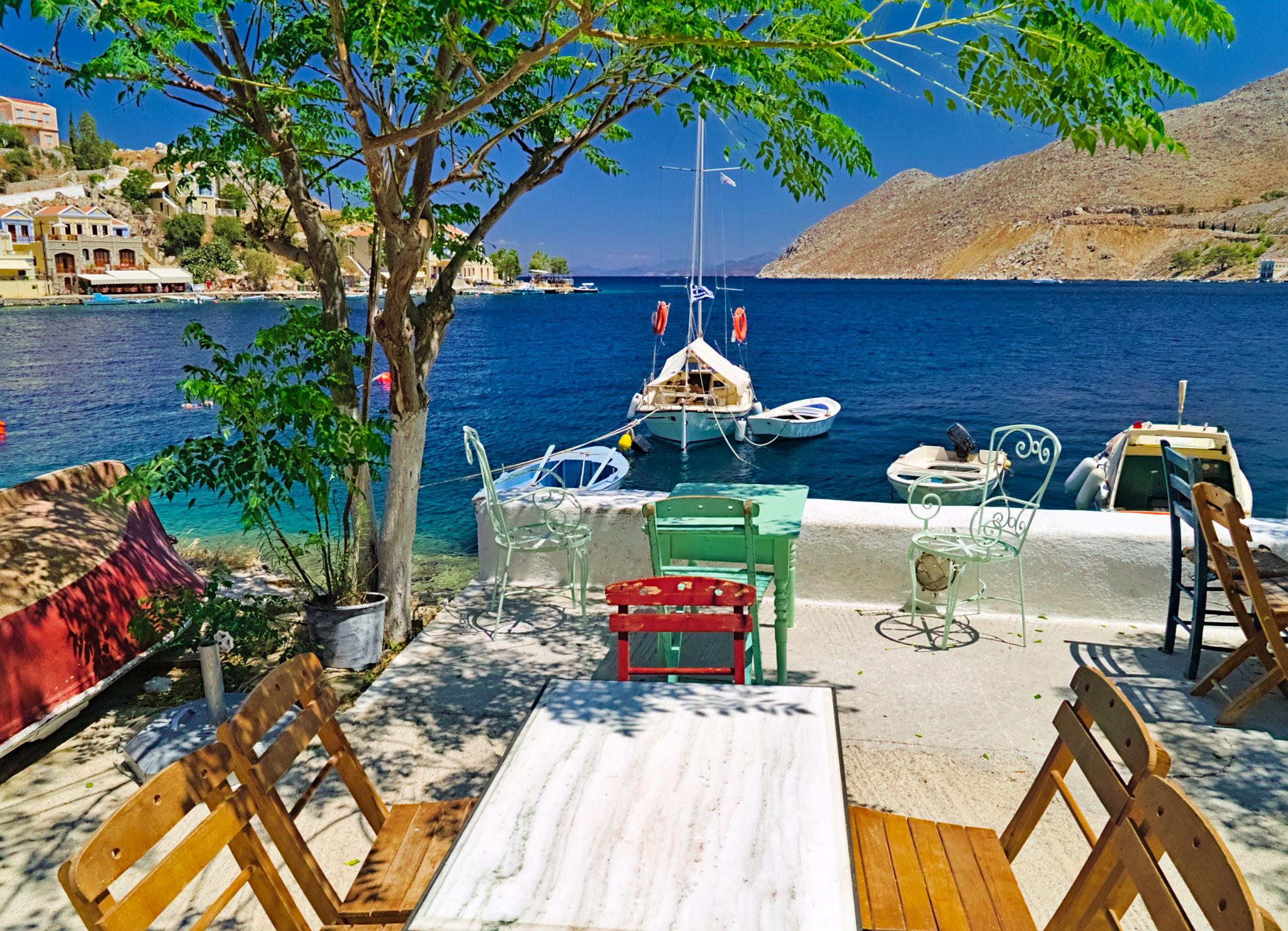
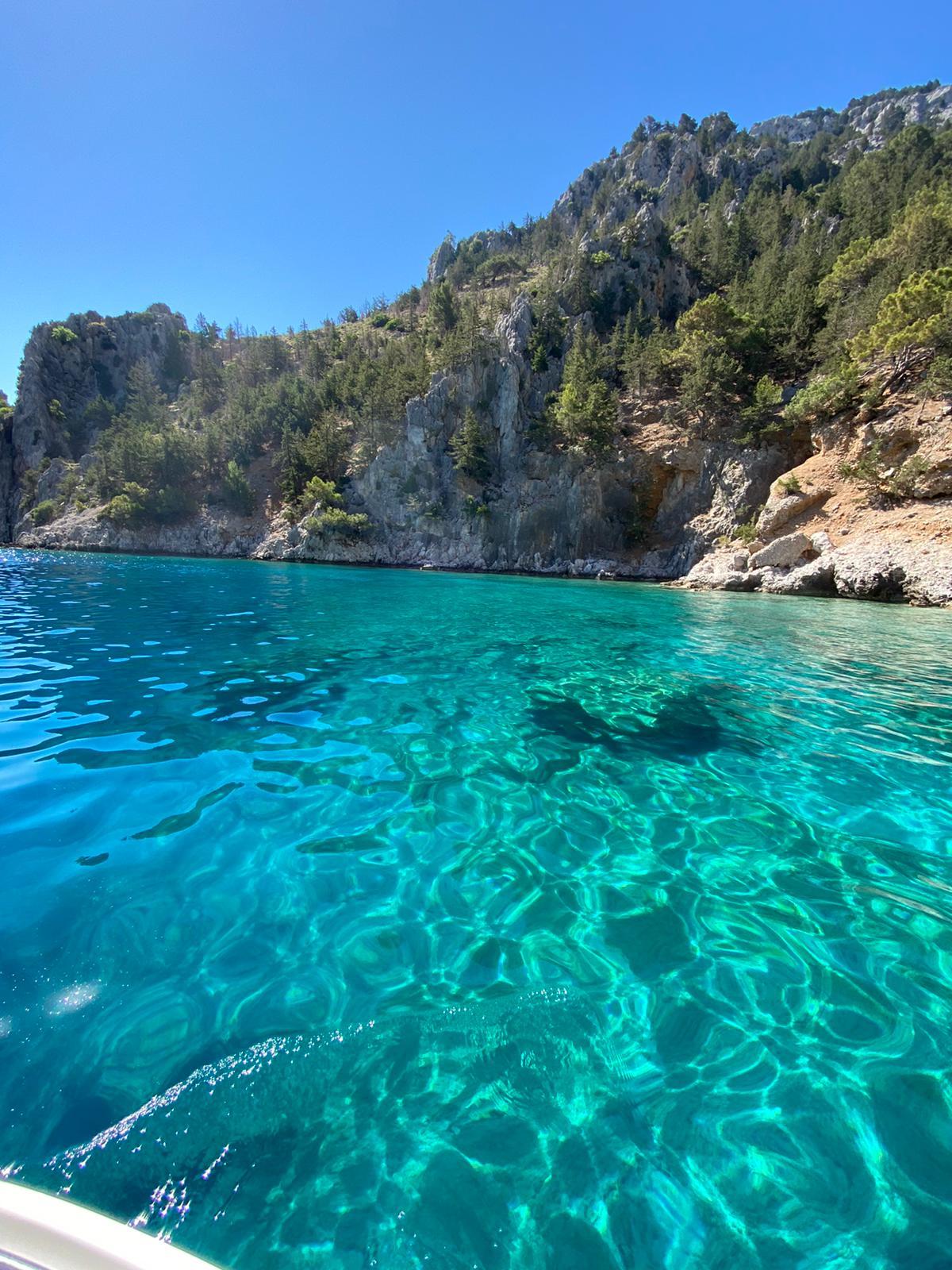
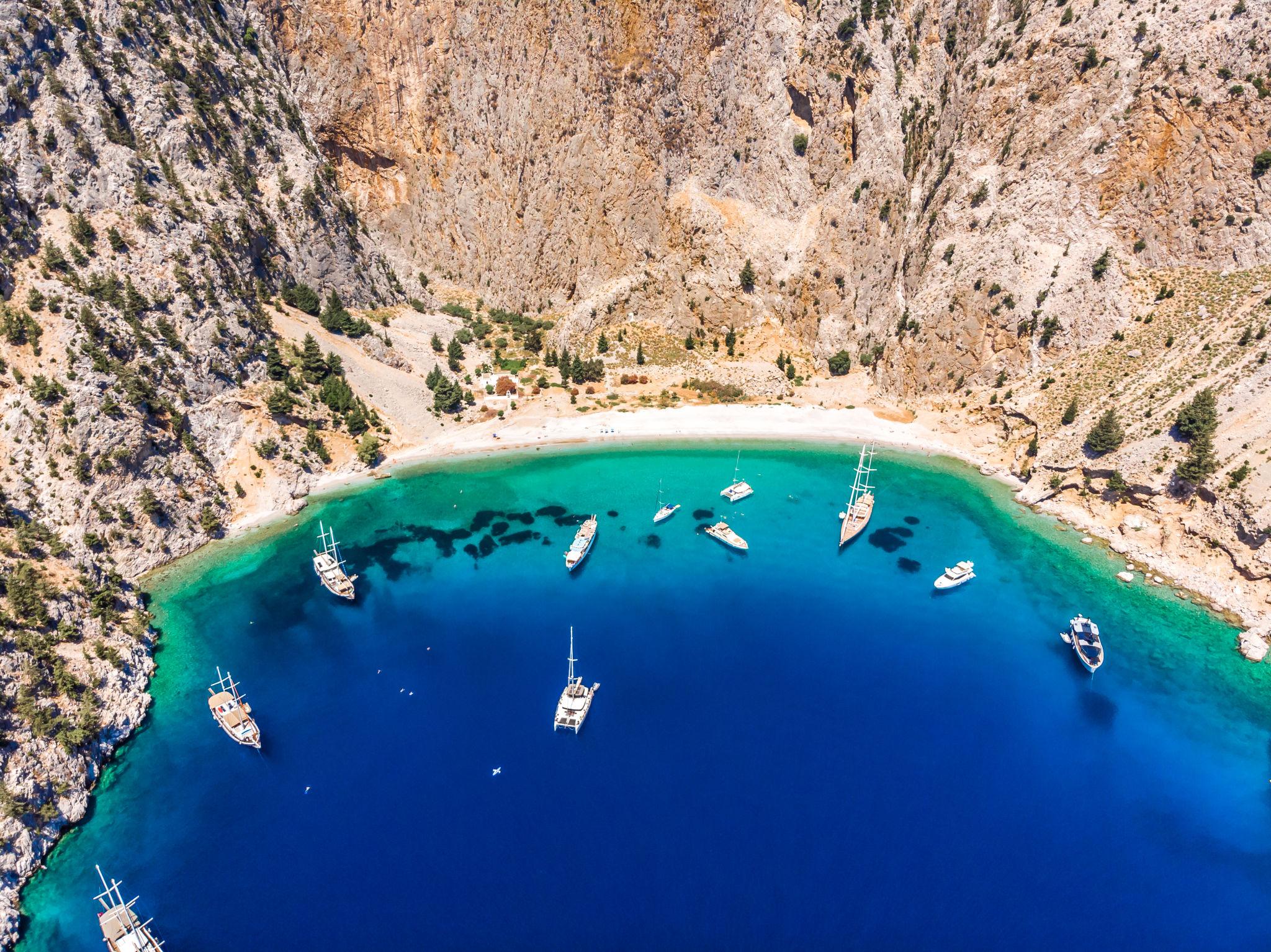
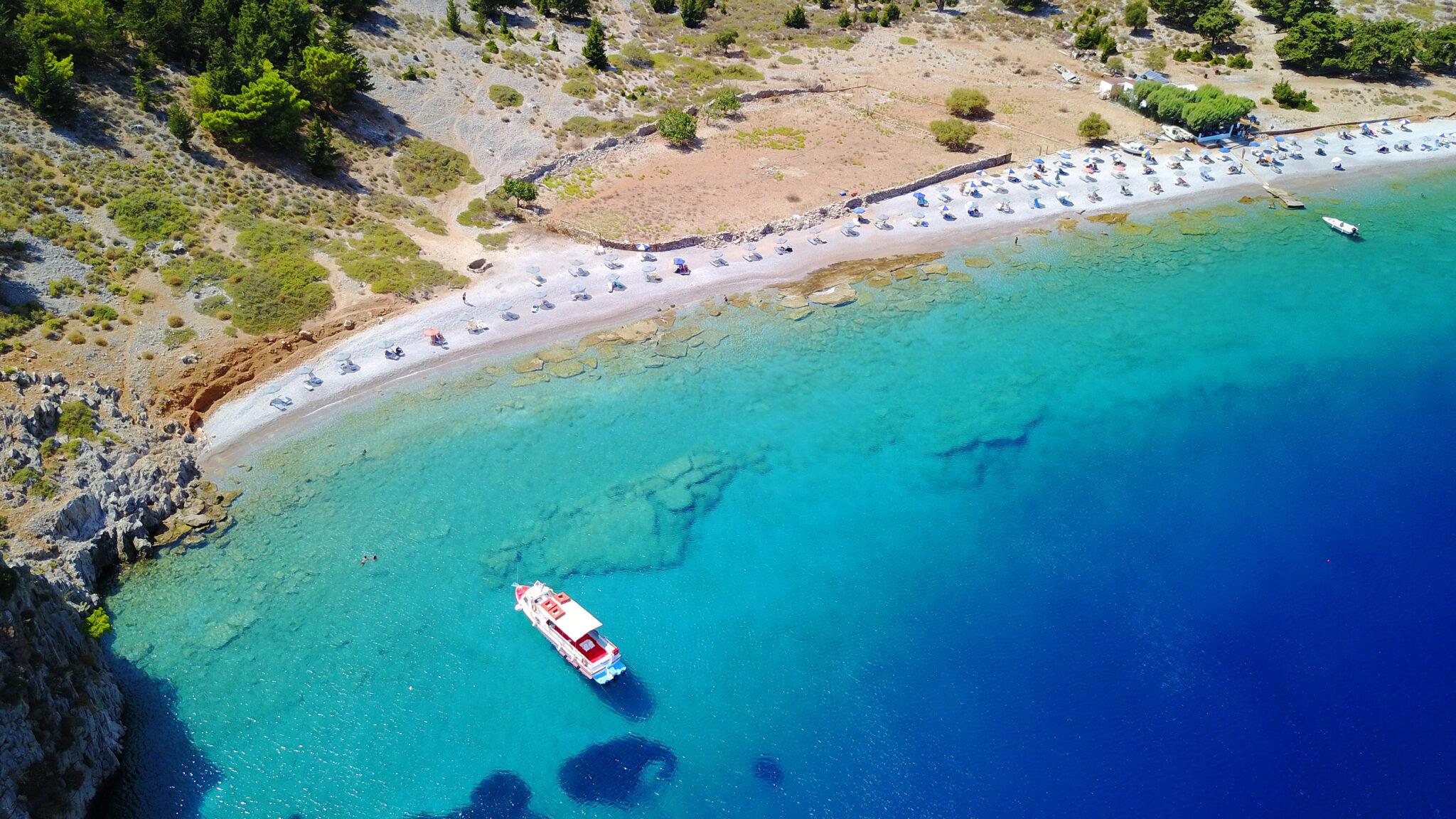
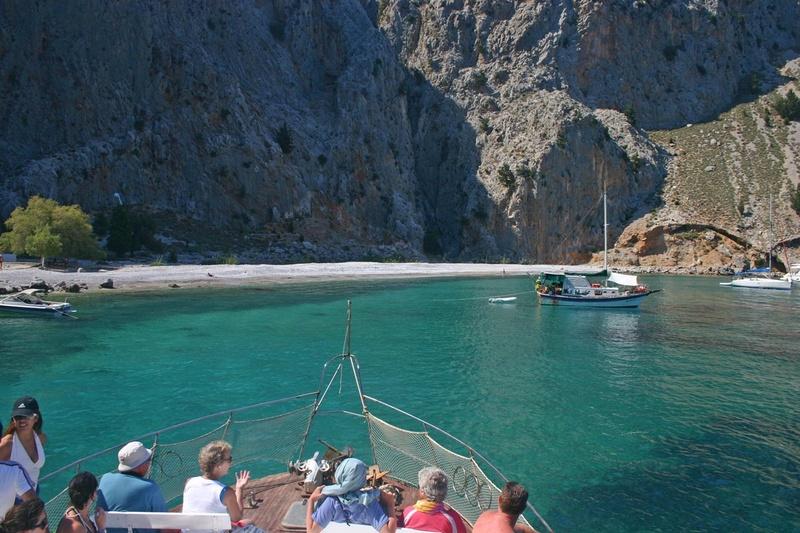
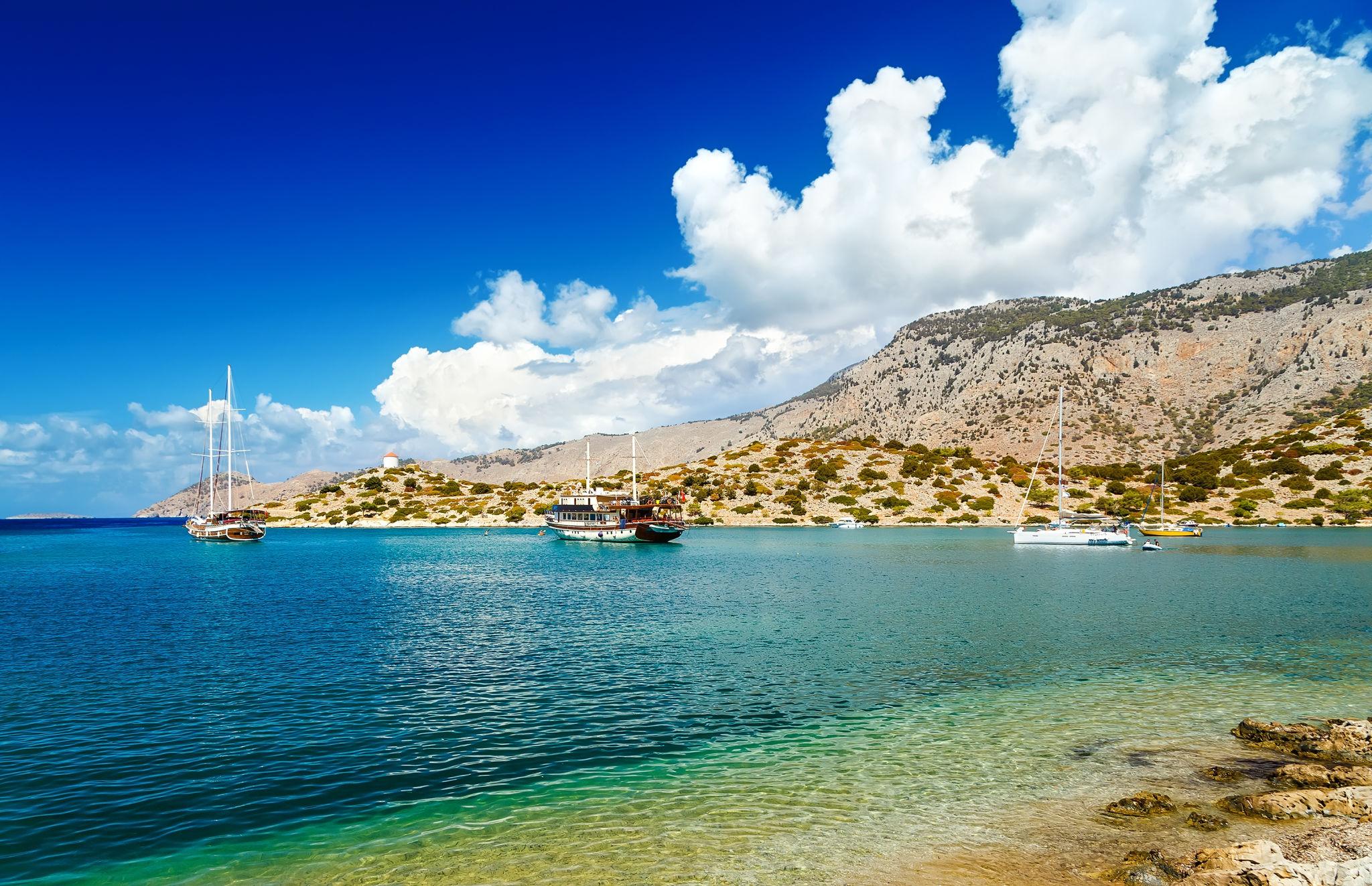
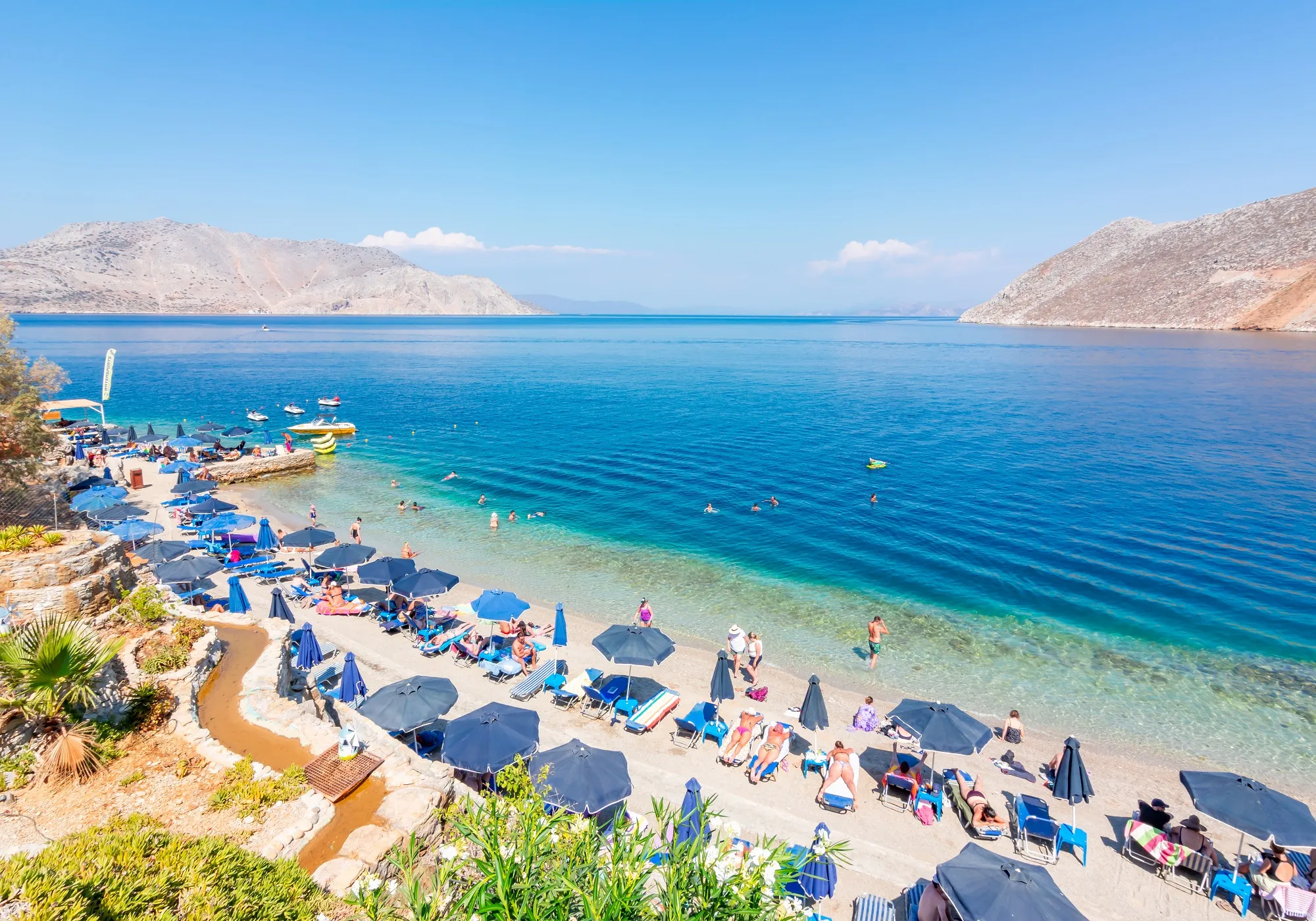
The coastline of Symi is one of its greatest treasures — deeply indented, wildly varied, and largely inaccessible by land. A yacht opens the entire perimeter of the island, and what it reveals is a succession of small coves, rocky inlets, and clear-water anchorages of extraordinary beauty. Nanou Bay on the eastern coast is a long, sheltered pebble beach with a single taverna and water of exceptional clarity. Marathounda on the west is equally beautiful and even quieter. Agios Georgios Dysalonas, accessible only by sea, is a tiny cove of almost aggressive perfection — a handful of white pebbles, vertical cliffs, and water so clear you can see the bottom at six metres depth. These spots are the island’s secret gift to those who arrive by sea, and they are inaccessible to everyone else.
The Sponge Diving Heritage
Like Kalymnos to the north, Symi’s identity was forged in the sponge-diving tradition, and the echoes of that tradition are everywhere on the island — in the architecture funded by sponge wealth, in the taverna conversations that still return to the sea, and in the small shops along the Gialos waterfront selling the natural sponges that Symian divers once brought up from the sea floor of North Africa and the Levant. The island’s connection to this tradition is perhaps less formally celebrated than Kalymnos’s, but it runs equally deep, and understanding it is essential to understanding why this small, rocky, resource-poor island built itself such magnificent houses and sent its sons so fearlessly into such dangerous waters.
Why Choose Symi
Symi is the island for the traveller who understands that beauty is not an accident — that it is the result of craft, investment, and cultural ambition sustained over generations — and who wants to be in the presence of that kind of beauty for a few unhurried days. The neoclassical townscape of Gialos is not just picturesque: it is a genuine architectural achievement, comparable to the finest small urban ensembles in Europe, and spending time within it — walking its lanes, eating at its tables, watching the light change on its facades through the course of a day — is a genuinely enriching experience in the fullest sense.
For those arriving by yacht, Symi occupies a position of almost perfect convenience and almost perfect beauty. It is a short and straightforward sail from Rhodes, making it an ideal first or last stop on a Dodecanese itinerary. Its harbour is one of the finest overnight anchorages in the region — well sheltered, beautifully sited, and served by tavernas of genuinely high quality. And the combination of an extraordinary harbour town with a wild, largely inaccessible coastline full of superb swimming spots makes Symi a destination that rewards both the architecturally inclined and the purely hedonistic in equal measure.
What separates Symi from the simply beautiful and makes it truly memorable is the completeness of its character. This is an island that has maintained its integrity across the centuries not through any deliberate preservation policy but through the natural logic of its own history — a history of extraordinary achievement followed by graceful decline, leaving behind a townscape of such coherence and quality that even the buildings that have never been restored contribute to the overall magnificence rather than detracting from it. Symi does not need to try to be beautiful. It simply is — deeply, structurally, and in a way that stays with you long after your yacht has rounded the headland and the harbour has disappeared from view behind you.