Why Skopelos
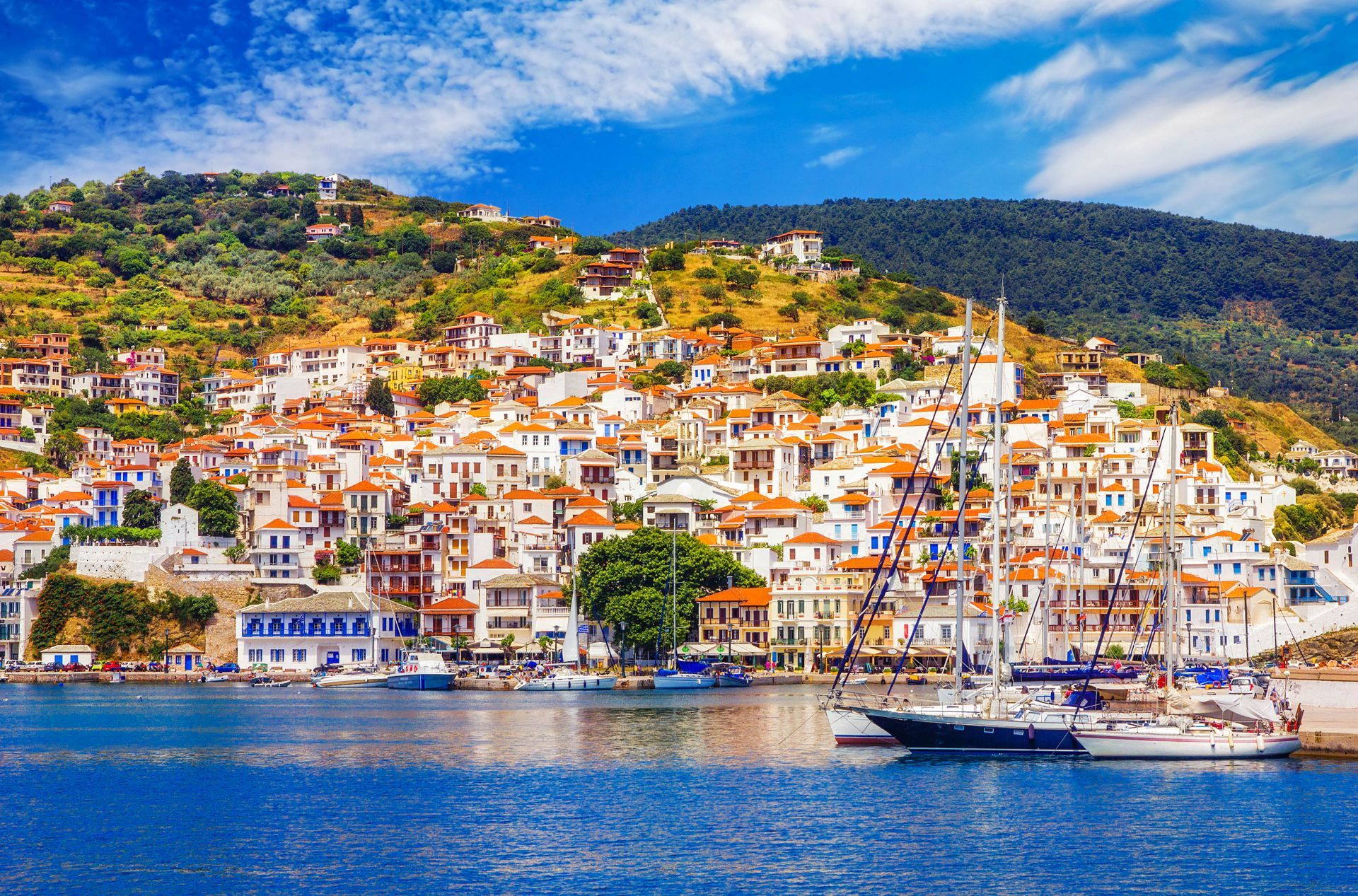
There is a moment, arriving at Skopelos Town by sea, when the hillside rises before you in a cascade of white houses, red-tiled rooftops, and the domes and towers of more than forty churches, all climbing steeply from the harbour to the crown of the hill where a Venetian castle watches over the scene in dignified silence. It is one of the most beautiful townscapes in all of Greece — an opinion shared not only by the thousands of visitors who discover it each year but by the Greeks themselves, who have long regarded Skopelos as the most handsome and most complete of the northern Aegean islands. The setting alone would be enough to justify the journey. But Skopelos, characteristically, offers far more than a single magnificent view. It offers an entire island of extraordinary, layered, unselfconscious beauty, and it offers it with the quiet confidence of a place that has always known its own worth.
Skopelos is the greenest of the Sporades — an island of dense pine and olive forests, plum orchards, and wild herbs whose fragrance drifts across the water well before the island comes into view. Where Skiathos, its neighbour to the west, has chosen a path of relative liveliness and easy resort pleasures, Skopelos has remained more reserved, more traditional, and more deeply itself — an island where the old agricultural and maritime rhythms of life are still visible in the landscape and in the character of its communities, and where the relationship between the people and their extraordinary natural surroundings has a depth and an intimacy that takes a little time to perceive and, once perceived, is impossible to forget. It is an island for the traveller who wants beauty and authenticity in equal measure, and who is willing to look slightly beyond the obvious to find both.
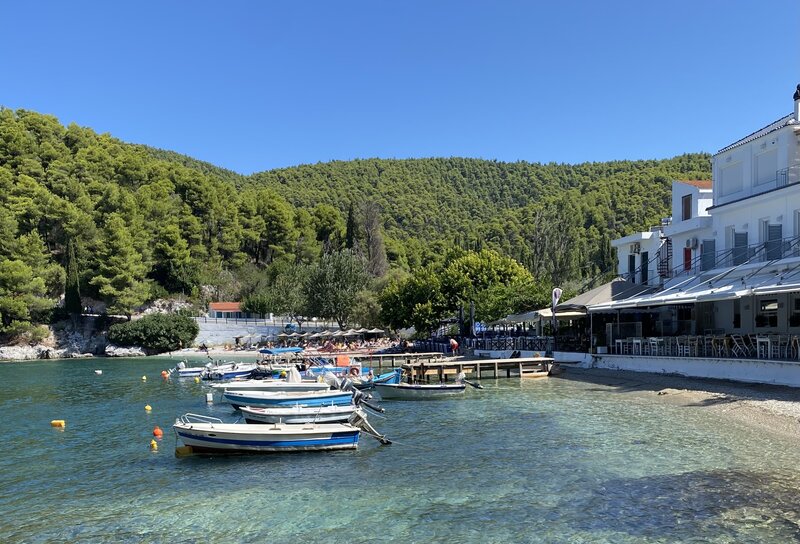
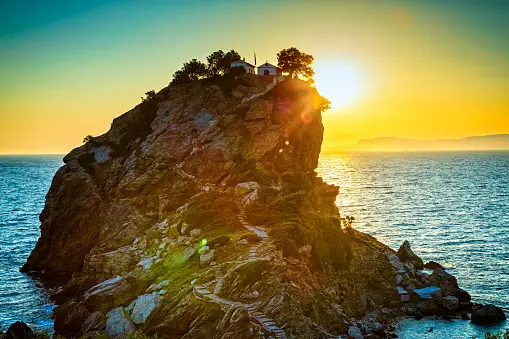
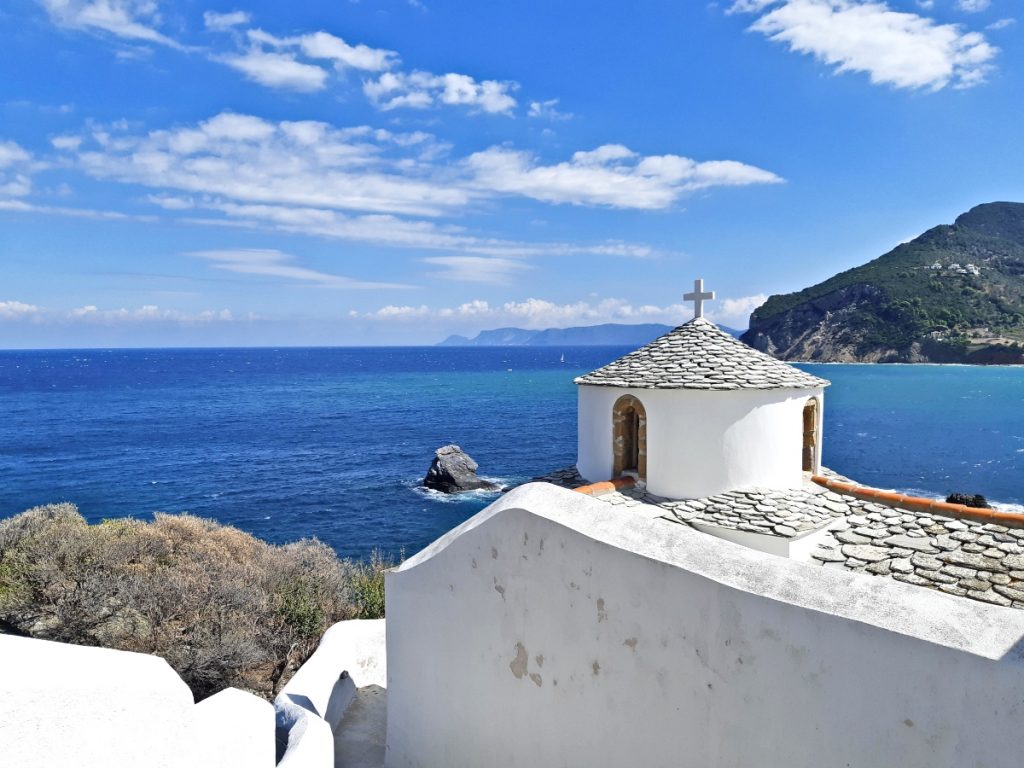
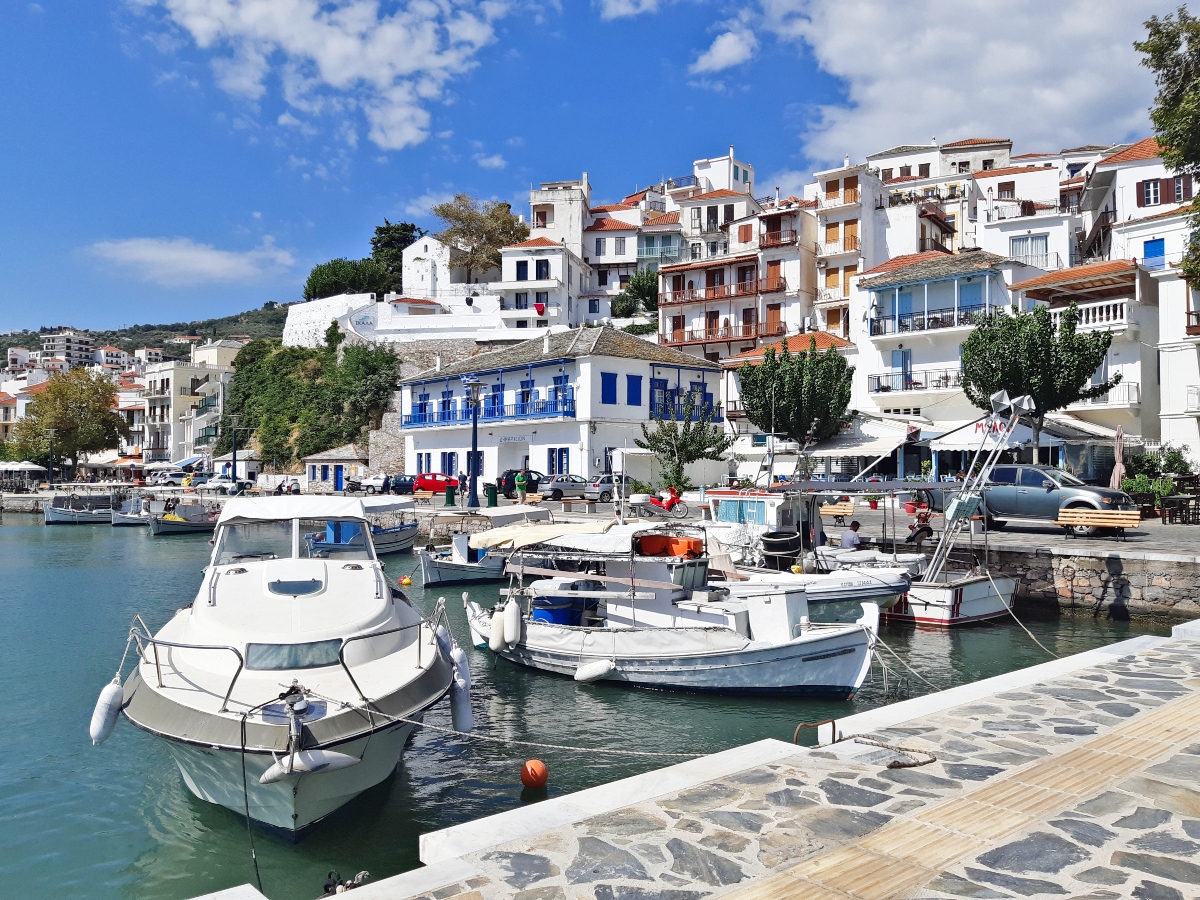
The island achieved a particular kind of global fame in 2008 when it was chosen as the primary filming location for the movie Mamma Mia — and specifically the clifftop church of Agios Ioannis sto Kastri, dramatically perched on its sea rock above the northern coast, became one of the most recognised images in the film. The movie brought a new wave of visitors to Skopelos, and yet the island absorbed that attention without losing its essential character. The chapels are still chapels, the olive groves are still olive groves, and the evening walk along the old port of Skopelos Town, with the fishing boats rocking gently and the first lights of the town reflected in the dark water below, is still one of the most quietly beautiful experiences the Aegean has to offer.
What to Do and What to See
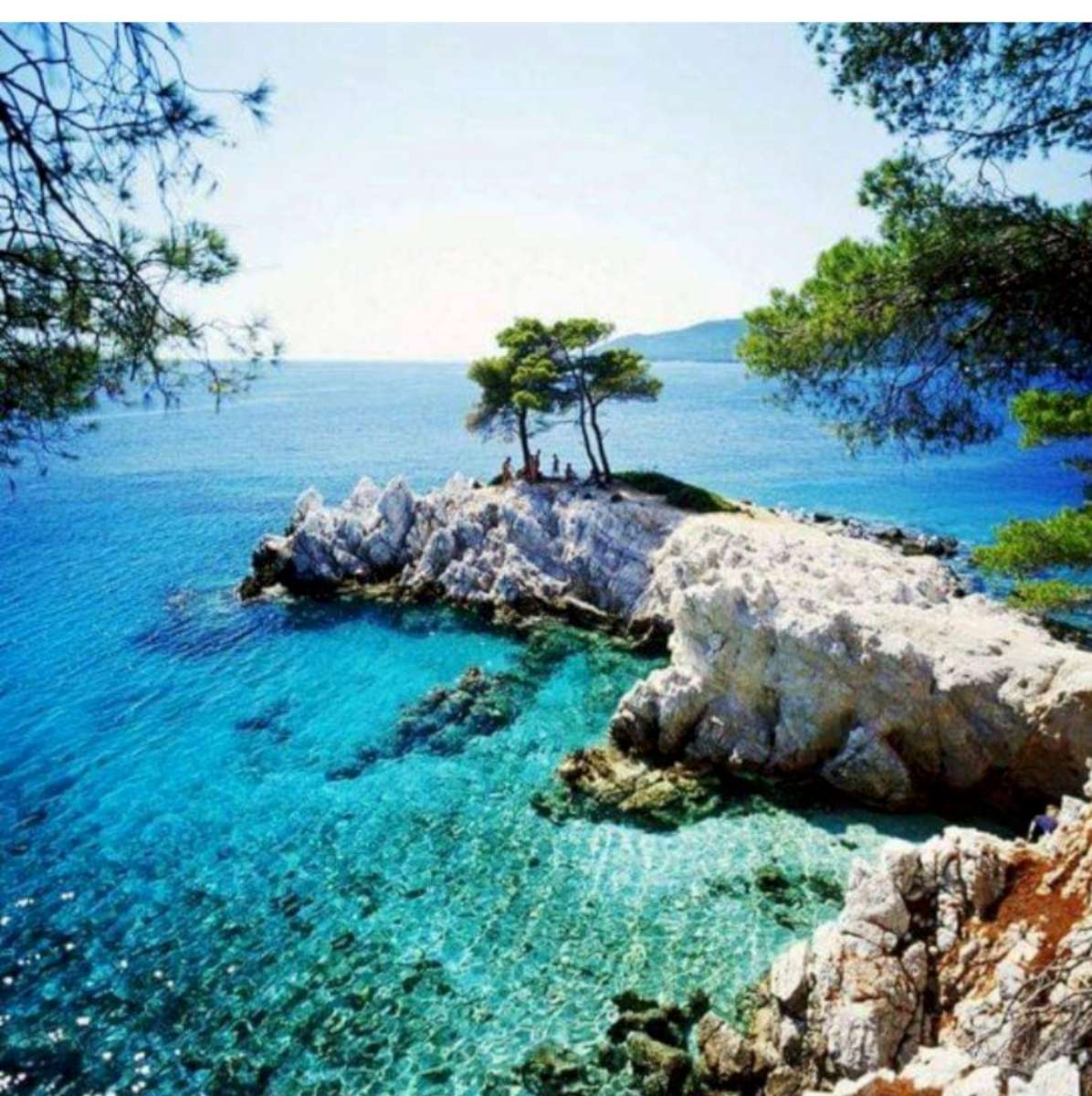
Skopelos rewards the visitor who moves between its different pleasures with an unhurried sense of rhythm — morning swims off beautiful beaches, afternoon walks through forests and orchards to clifftop chapels, evenings in the old town exploring its remarkable concentration of churches, tavernas, and traditional architecture. For those arriving by yacht, the island’s coastline adds a further and deeply rewarding dimension, with a succession of small bays and coves along the western and northern shores that offer some of the finest swimming and most sheltered anchorages in the northern Aegean.
Skopelos Town — Chora
Skopelos Town is, by general consent, one of the most architecturally beautiful island capitals in Greece. Its remarkable townscape — white cubic houses with wooden balconies and slate-grey rooftops climbing the hillside above the harbour in a dense, organically arranged mass — is exceptional in its integrity and its beauty, and almost entirely free of the modern intrusions that have compromised the historic character of many comparable Greek island towns. The port is lined with excellent tavernas and cafés, and the labyrinthine lanes of the old town behind and above it contain a density of small churches — 123 in total across the island, 40 in the town alone — that gives Skopelos a spiritual and architectural richness entirely disproportionate to its size. Each church is different in age, style, and character, many of them tiny and intimate, their interiors cool and dark and richly decorated with icons and carved woodwork of considerable quality.
Agios Ioannis sto Kastri
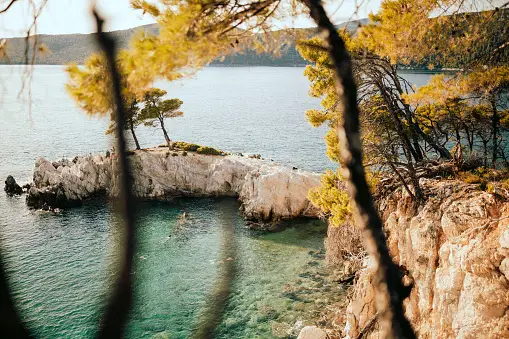
Perched on a sheer rock rising from the sea on the northwestern coast of Skopelos, the small whitewashed chapel of Agios Ioannis sto Kastri is the most dramatic and most celebrated single sight on the island. Reached by a staircase of 112 steps carved directly into the rock face, the chapel sits at the very summit of its sea-stack in a position of such breathtaking improbability and visual perfection that it has become one of the iconic images of the entire Aegean. The views from the summit — the sea in every direction, the pine-covered hills of Skopelos behind, the distant silhouettes of Alonissos and the National Marine Park islands to the north — are magnificent. By yacht, approaching Agios Ioannis from the sea and viewing the chapel from the water below is an experience of a completely different and equally memorable kind. The scale of the rock and the improbable delicacy of the white chapel on its summit are at their most dramatic from the sea.
Glossa and the Northern Villages
At the northern end of the island, the village of Glossa occupies a hillside of great natural beauty above the port of Loutraki, its traditional stone and whitewashed houses arranged along a ridge with views across the channel to Skiathos on one side and the open northern Aegean on the other. Glossa is one of the most authentically traditional villages in the Sporades — a place where the kafeneion culture is intact, where the local dialect preserves features of the ancient Thessalian speech, and where the surrounding landscape of olive groves, plum orchards, and dry stone walls has barely changed in a century. The local Skopelos plum — dried and preserved in a tradition going back to the Byzantine era — is one of the island’s most celebrated products, and the prune-based pastries and preserves made in Glossa’s small bakeries are worth the journey to the northern end of the island in their own right.
Stafylos and Velanio Beaches
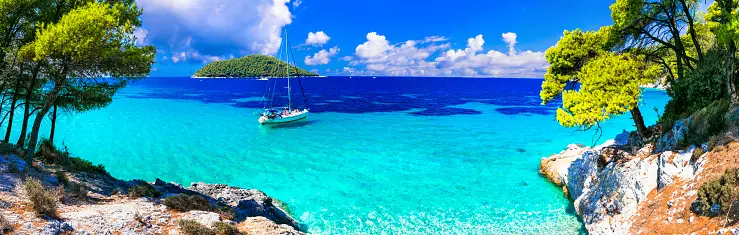
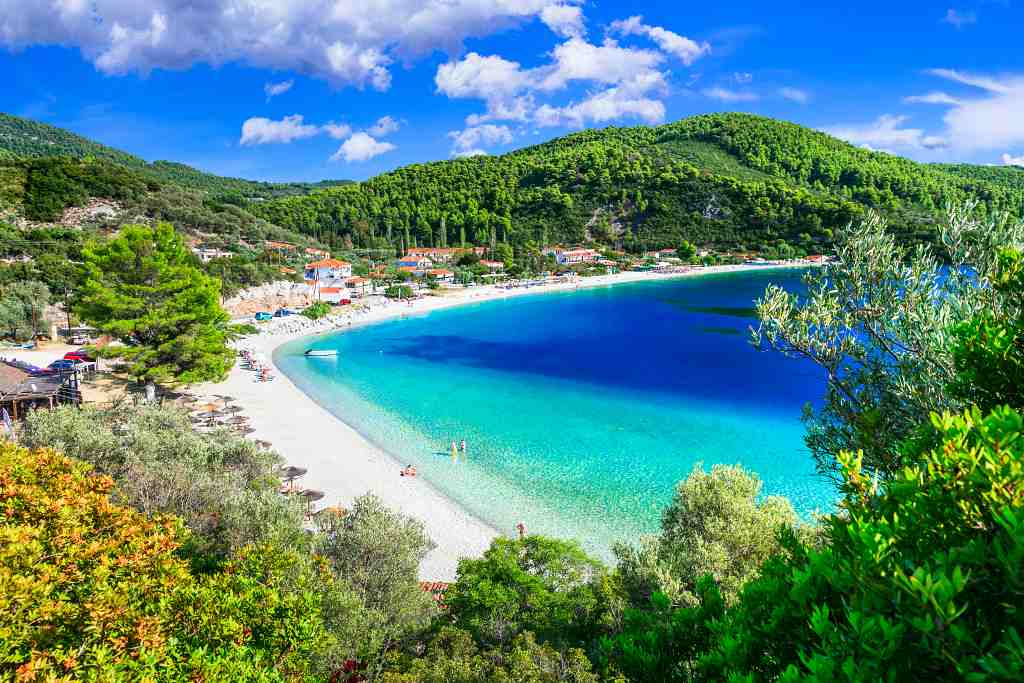
On the southern coast of Skopelos, the double bay of Stafylos and Velanio offers two of the island’s finest beaches in a setting of great natural beauty. Stafylos — named for the legendary Minoan prince said to have founded a settlement here — is a broad bay of pebble and sand with clear, calm water and a small taverna at the back of the beach. Velanio, just around the headland and accessible via a short path, is Skopelos’s longest beach — a wide sweep of golden sand and turquoise water in a sheltered, deeply peaceful setting. The snorkelling off the rocky outcrops at either end of Velanio is excellent, and the beach is calm enough for families while remote enough to feel genuinely private even in the height of summer.
Panormos and Milia Bays
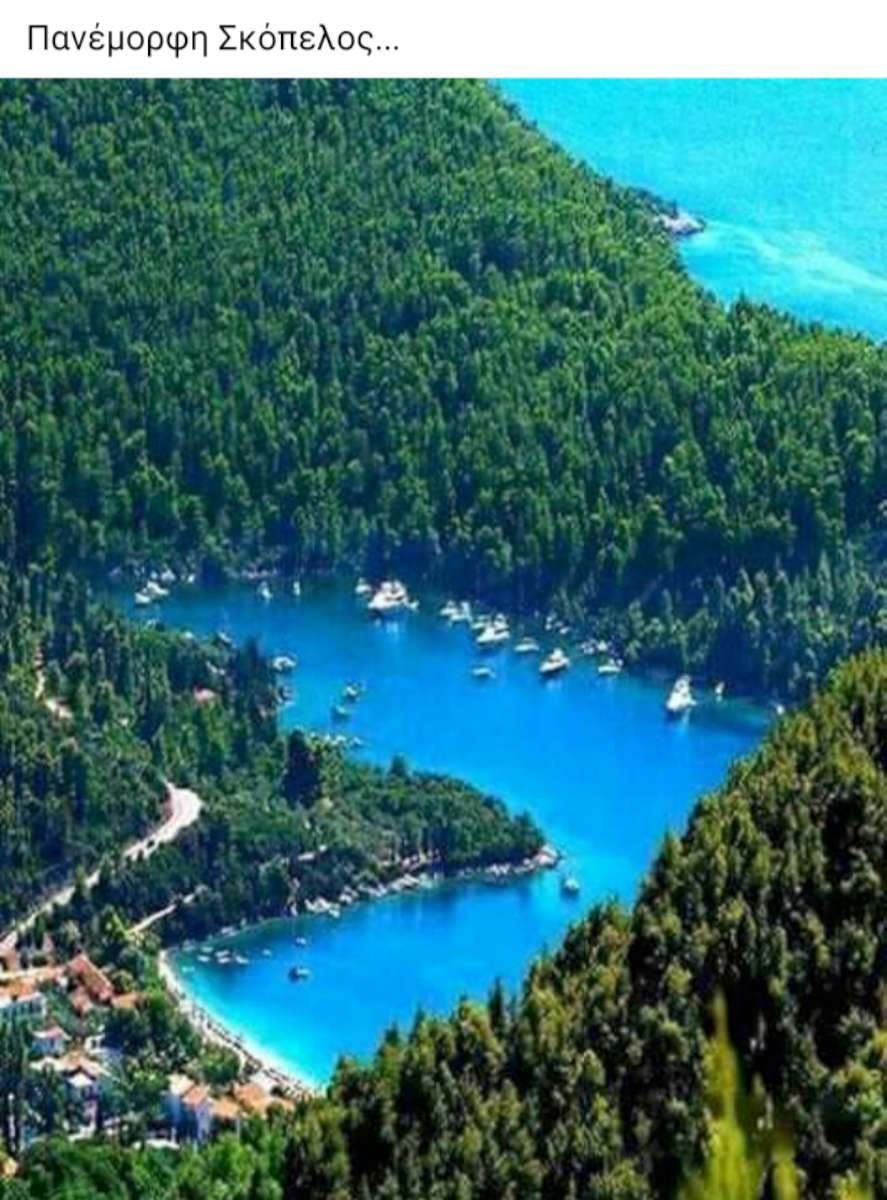
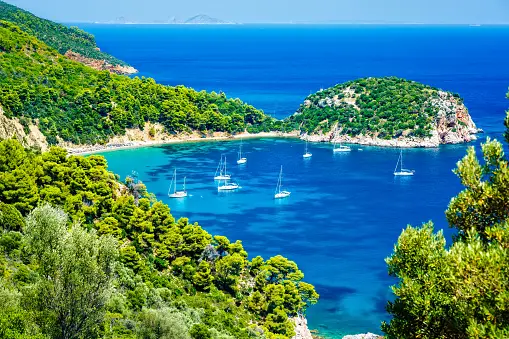
On the western coast, sheltered from the prevailing winds by the island’s central ridge, the bays of Panormos and Milia are considered by many who know the island well to be among the finest anchorages in the Sporades. Panormos is a deep, almost circular bay of extraordinary shelter and beauty — pine trees descending to the waterline, water of unusual clarity and depth, and a small seasonal taverna at the back of the beach whose grilled fish and cold white wine represent a combination difficult to improve upon. Milia, a short sail further north, is a long, exposed sweep of fine white pebble and deep turquoise water — more dramatic than Panormos and visually more striking, particularly when approached from the sea in the late afternoon light. Both bays are ideal overnight anchorages for yachts exploring the western coast, and both are at their finest at the beginning and end of the day, when the summer visitors have left and the bays return to their own quiet, unhurried character.
The Monasteries and Chapels
Beyond the extraordinary concentration of churches in Skopelos Town, the island’s interior and coastline are dotted with monasteries of varying age and accessibility, several of them in positions of remarkable natural beauty. The 16th-century Monastery of Evangelistria on the hillside above the town offers views over the harbour and the surrounding sea and contains a fine carved iconostasis of considerable artistry. The Monastery of Metamorfosi, set among pine trees on a hillside above the eastern coast, is one of the oldest on the island and one of the most beautifully maintained. Walking the old paths that connect these monasteries — through pine forests fragrant with resin, past ancient cisterns and abandoned terraces, with the sea visible in glimpses between the trees — is one of the deepest pleasures that Skopelos has to offer, and one that rewards the early morning visitor with a quality of light and silence that is simply extraordinary.
Why Choose Skopelos
Skopelos is the island for the traveller who wants the northern Aegean at its most complete — its most beautiful, its most authentic, and its most rewarding across the full range of pleasures that a Greek island can offer. It combines the natural setting of a still largely wild and forested island with the cultural richness of a town of genuine architectural distinction, the outdoor pleasures of exceptional beaches and fine walking with the culinary pleasures of an island whose kitchen draws on a tradition of real depth and quality. It is an island of considerable versatility, equally suited to couples seeking beauty and peace, to families wanting safe, calm waters and easy island pleasures, and to active travellers who want to walk, swim, and explore with a beautiful harbour town as their base each evening.
For those sailing the Sporades, Skopelos occupies the central and in many ways the most rewarding position in the island group. Skiathos to the west is livelier and more social. Alonissos to the east is wilder and more remote. Skopelos is both things at once — alive enough to be stimulating, quiet enough to be restorative, beautiful enough at every turn to make the decision to come here feel, each day, like the right one. The sailing between these three islands is straightforward, the distances short, and the variety of experience offered by the combination extraordinary — a full week of cruising in which no two days and no two anchorages repeat themselves.
What ultimately makes Skopelos irreplaceable is the sense it gives you, after a day or two, of having arrived somewhere that is entirely and genuinely itself — that has not shaped itself to meet your expectations but simply exists, in its own extraordinary beauty and its own unhurried rhythm, and invites you to meet it on its terms. That invitation, extended with the natural warmth and generosity that characterise this island and its people, is one of the finest things the Greek islands have to offer. Skopelos makes it feel effortless.