Why Skiathos
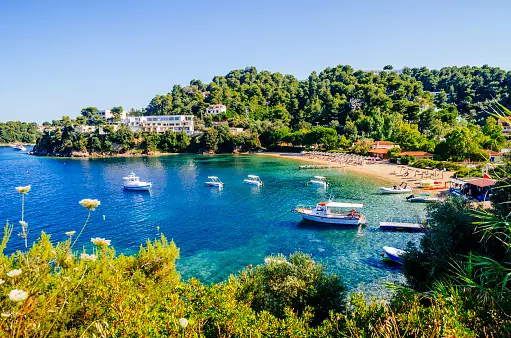
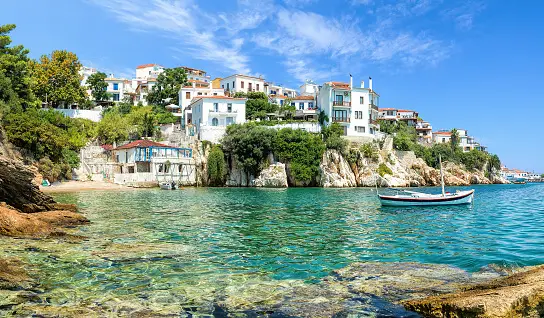
There are islands in Greece that make an immediate and overwhelming case for themselves — that hit you with their beauty the moment you arrive and do not relent for the entirety of your stay. Skiathos is one of these islands. Small, intensely green, fringed with over sixty beaches of extraordinary quality, and possessed of a social energy and warmth that makes it one of the most naturally welcoming places in the Greek world, Skiathos occupies a position in the northern Aegean — in the Sporades island group, just off the coast of Thessaly — that gives it a character entirely distinct from the drier, more spare beauty of the Cyclades or the Dodecanese. Here, the landscape is lush and fragrant, pine forests reaching almost to the waterline, the hills brilliant with wildflowers in spring and deep green throughout the summer, and the sea between the trees of the most improbable and beautiful blue.
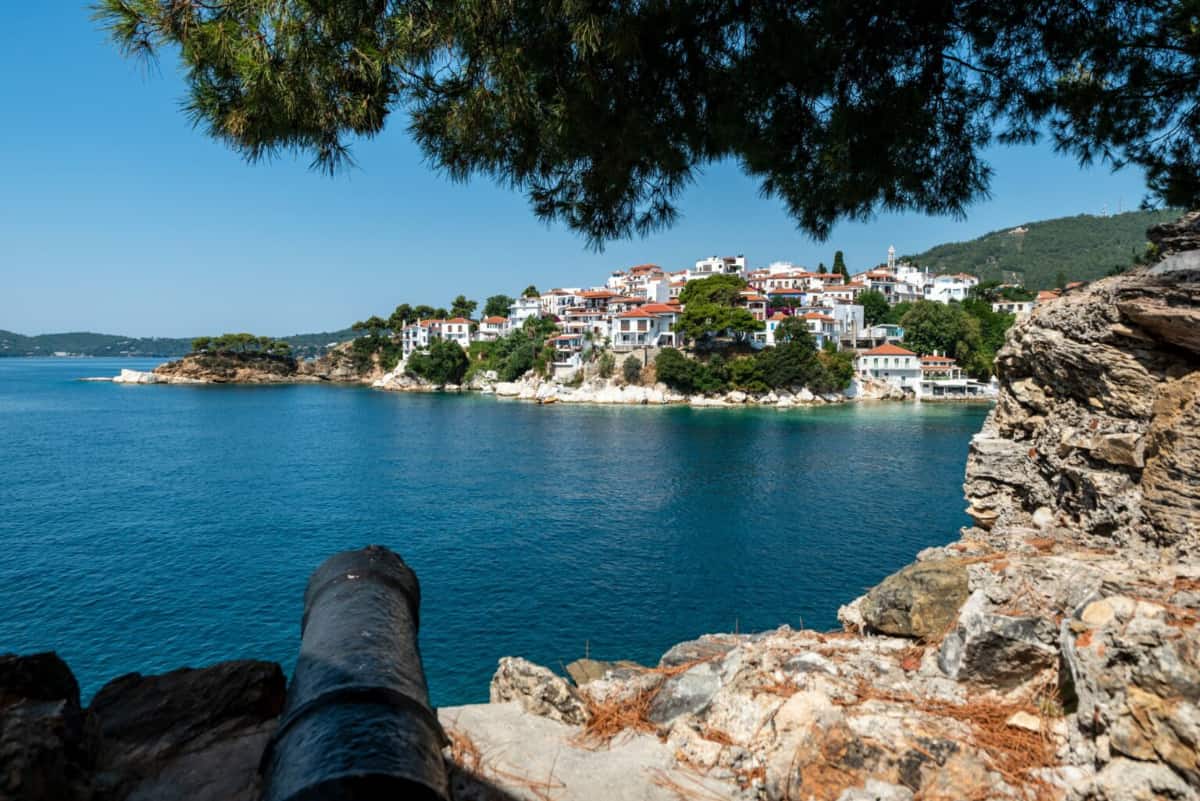
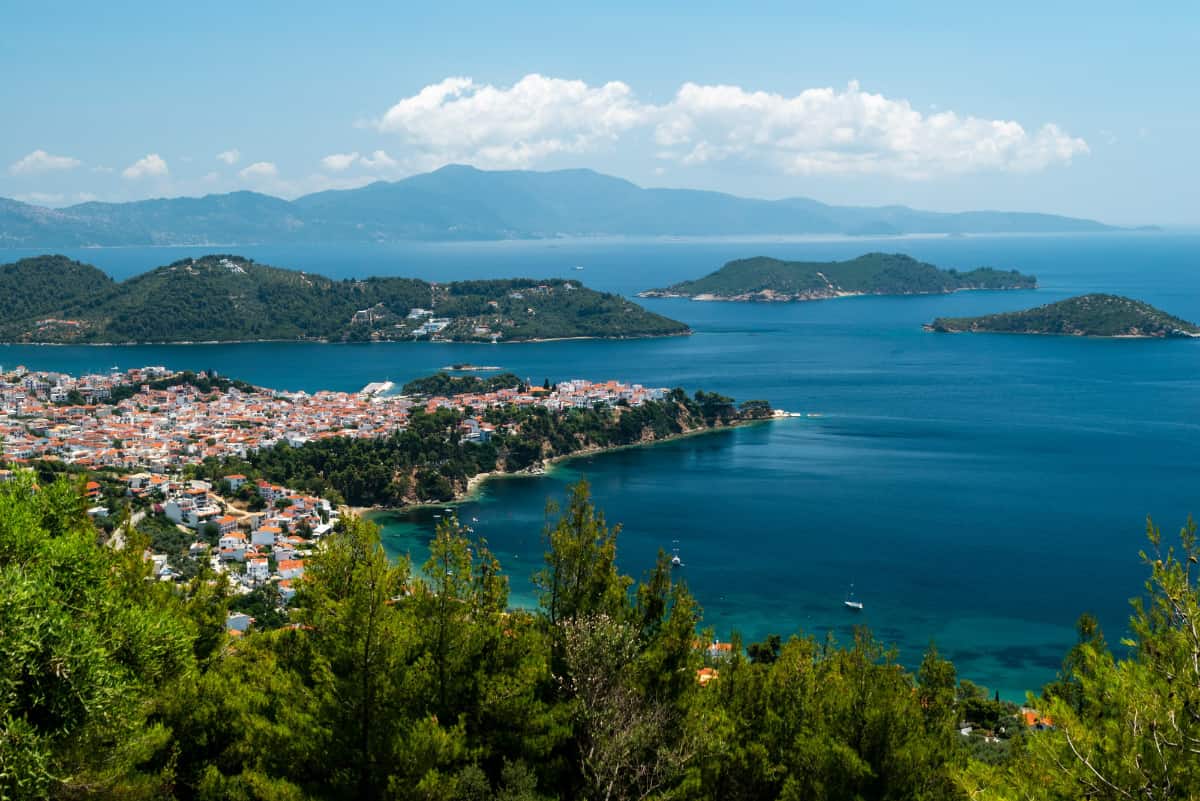
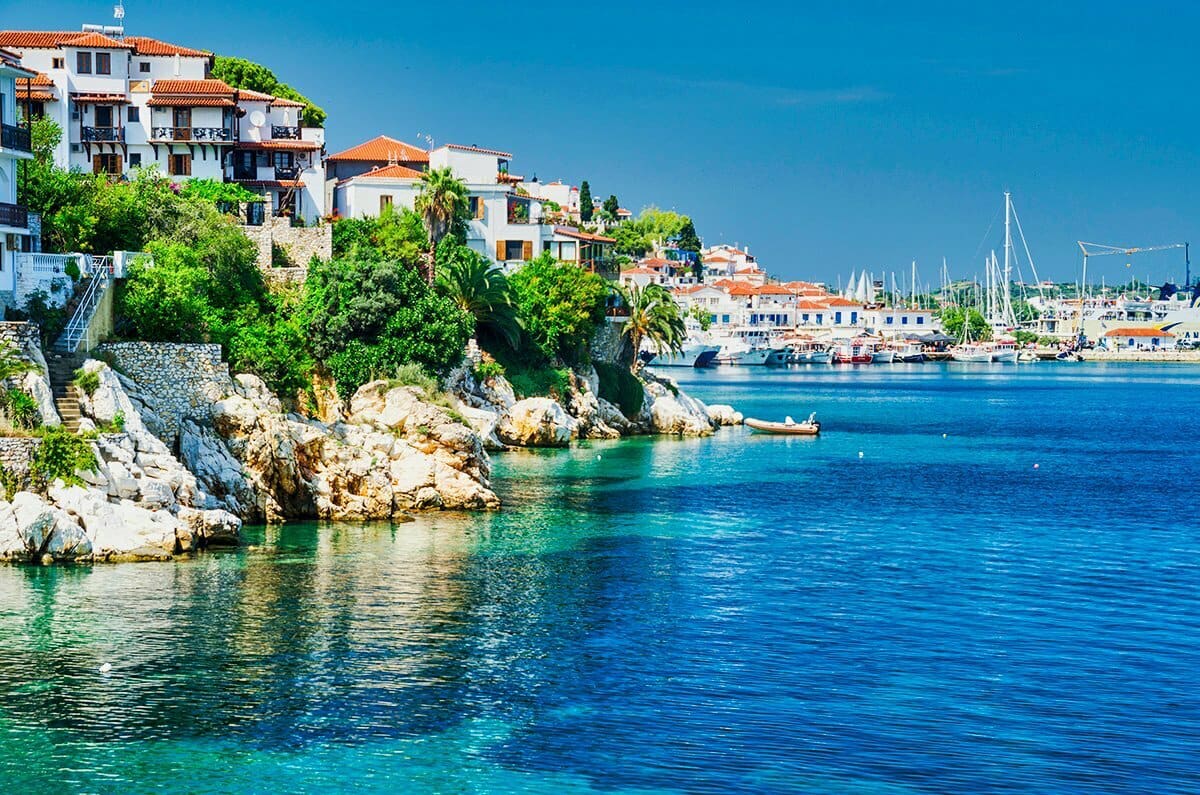
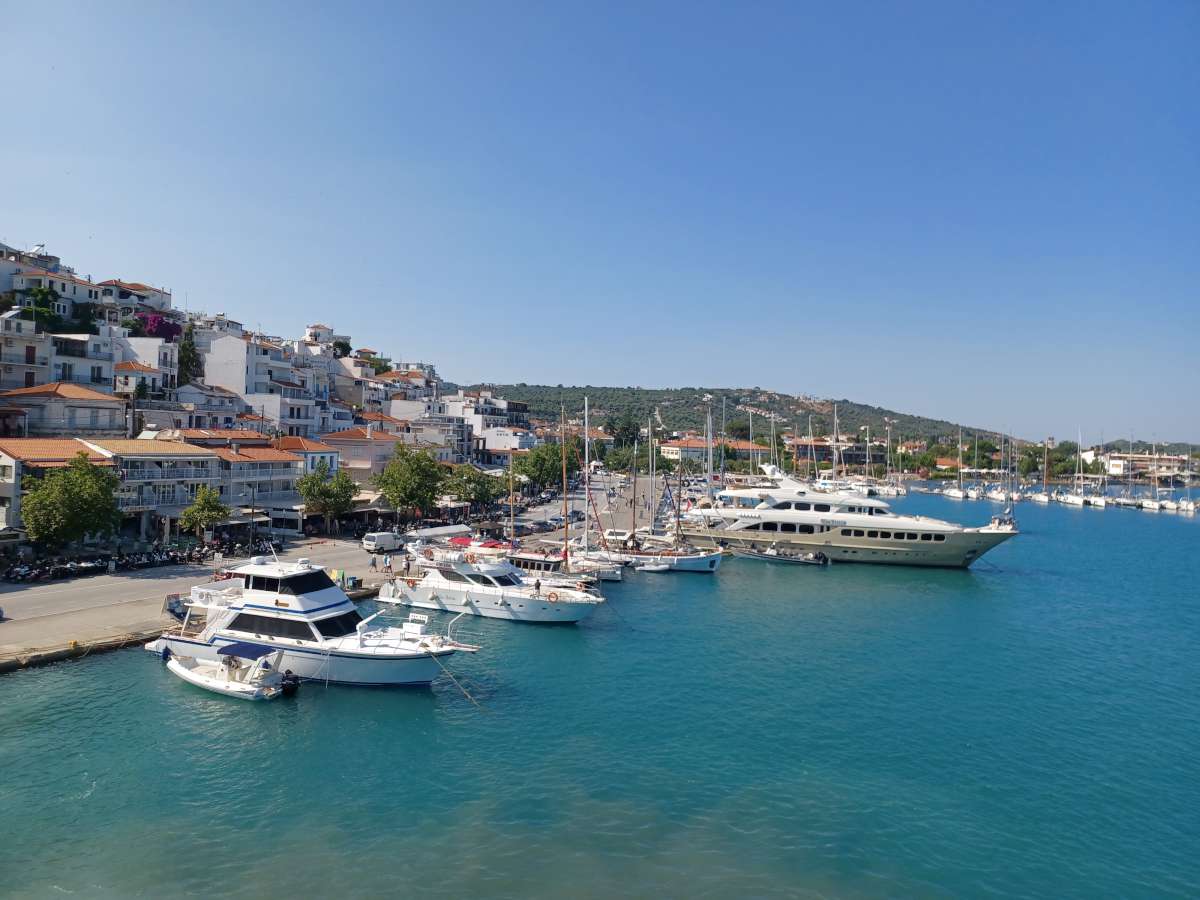
Skiathos Town, the island’s single main settlement, clusters around a double harbour of considerable charm — a bustling, cosmopolitan little port that manages somehow to be both genuinely alive and genuinely beautiful, its red-roofed white houses climbing the two low hills that frame the harbour in a scene that is immediately and unmistakably Greek. The town has a reputation as one of the liveliest on the Greek islands — its nightlife is celebrated, its restaurant scene excellent, its waterfront a natural stage for the evening volta — and yet it never loses the essential character of a real community, a place where people actually live and work and take pride in what they have. The combination of that vitality with the extraordinary natural beauty of the surrounding island and coastline is what makes Skiathos so immediately and so lastingly appealing.
The island has a literary connection that gives it an additional layer of distinction. Alexandros Papadiamantis, one of the greatest writers of modern Greek literature, was born in Skiathos in 1851, and the small house where he lived and wrote is now one of the island’s most visited cultural sites. His prose, soaked in the light and the landscape and the rhythms of life on this island, is a reminder that Skiathos has always been the kind of place that inspires — a place of beauty acute enough to demand expression, and of a human warmth vivid enough to be worth recording.
What to Do and What to See
Skiathos rewards the visitor who wants both activity and rest — both the pleasure of discovery and the pleasure of simply lying on one of Greece’s finest beaches in water of exceptional clarity and warmth. The island’s compact size means that everything is accessible, and the variety of its coastline — from the famous organised beaches of the south to the wilder, more remote coves of the north accessible only by sea — ensures that no two days need look the same.
Koukounaries Beach
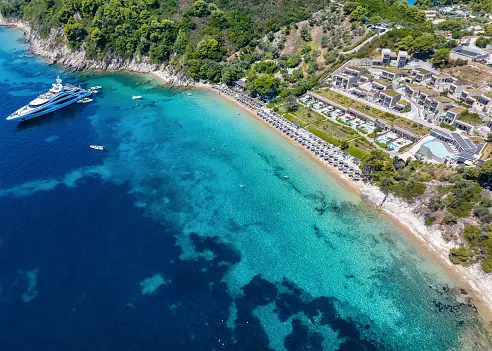
At the western end of the island, Koukounaries is widely considered one of the finest beaches in all of Greece — a long, wide crescent of extraordinarily fine golden sand backed by a natural lagoon and a dense stand of Aleppo pines that reach right to the edge of the beach. The water is calm, brilliantly clear, and of a colour that ranges from pale turquoise at the shore to deep sapphire further out, and the setting — pine trees, golden sand, and the open sea — is of a natural perfection that very few beaches in the Mediterranean can match. It is deservedly famous, and deservedly visited, though arriving by yacht allows you to approach from the sea and anchor off its western end before the beach fills in the late morning.
Lalaria Beach
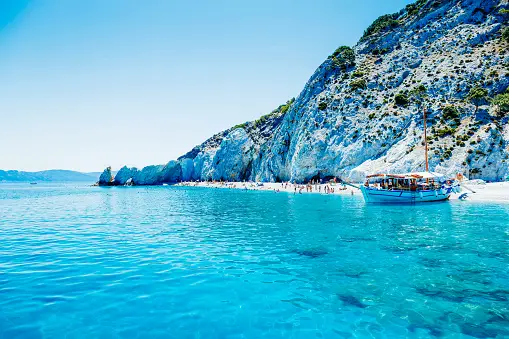
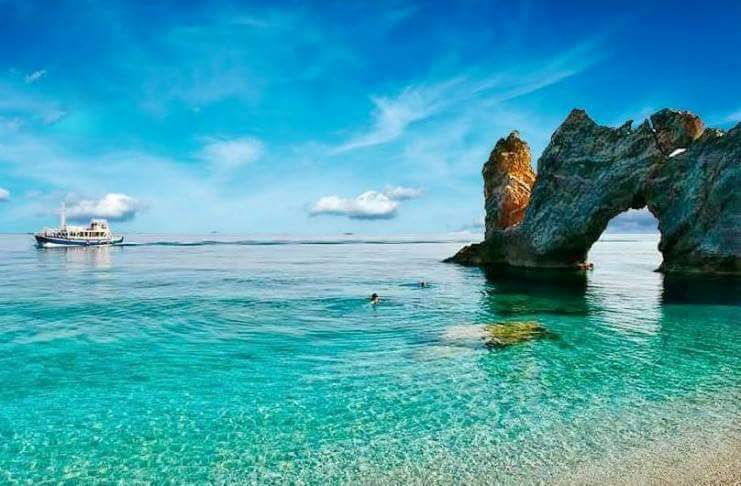
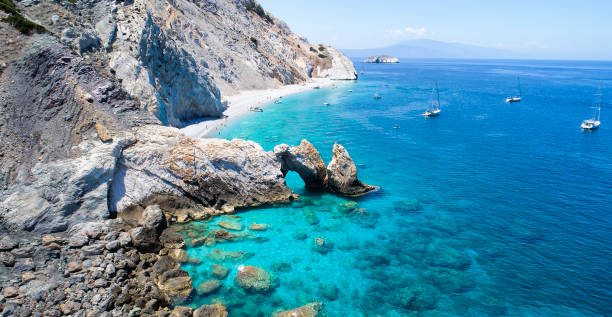
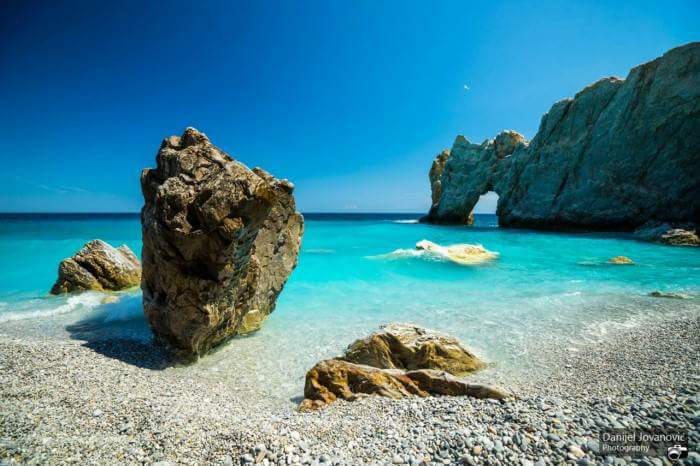
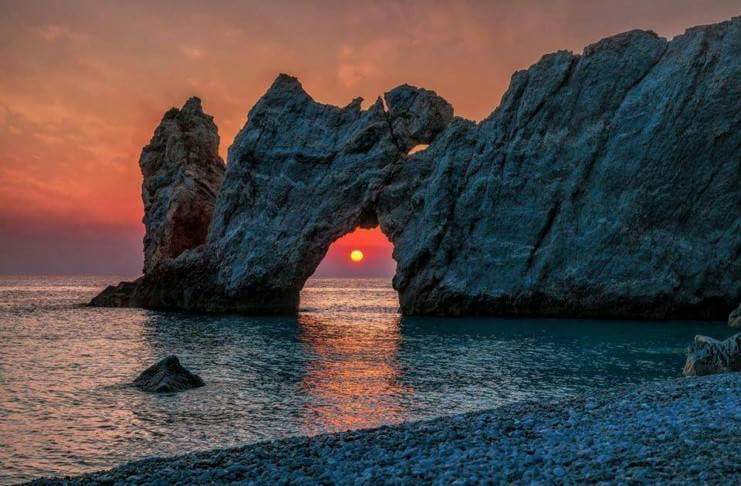
On the northern coast, accessible only by sea, Lalaria is perhaps the most visually dramatic and distinctive beach on Skiathos — a cove of smooth, silvery-white rounded pebbles enclosed by sheer white limestone cliffs that have been sculpted by the sea into arches and sea caves of extraordinary beauty. The water here is a deep, luminous turquoise of almost unreal intensity, the contrast with the white stone walls that enclose it producing a visual effect that stays in the memory long after everything else about the island has softened. Approaching Lalaria by yacht, passing through the great natural arch in the cliff face to reach the cove, is one of the finest small-boat moments in the northern Aegean.
Skiathos Town
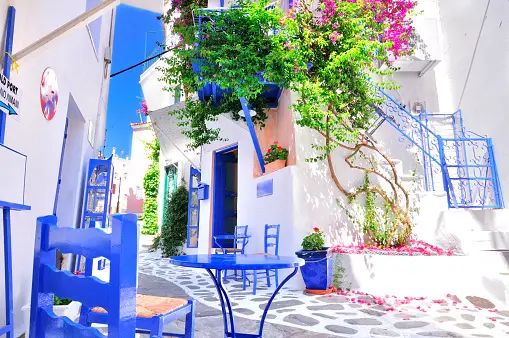
The island’s capital and harbour town is one of the most enjoyable small towns in the Greek islands — a place where the pleasures of eating, walking, sitting, and watching unfold with an ease and a naturalness that feel entirely unforced. The old town on the Kastro hill above the harbour preserves a network of lanes and stairways of considerable charm, and the church of Trion Ierarchon at its summit offers views over both harbours and the surrounding sea that are worth every step of the climb. The waterfront below is lined with cafés, fish tavernas, and the kind of open-air bars that make summer evenings in Skiathos a genuinely celebratory experience. The house of Papadiamantis, tucked into one of the old town’s quieter lanes and preserved exactly as the writer left it, is a small but genuinely moving cultural visit.
Kastro — The Medieval Fortified Capital
At the northern tip of the island, perched on a sheer rocky promontory above the sea, the ruins of the medieval fortified town of Kastro are one of Skiathos’s most atmospheric and rewarding destinations. Built in the 16th century as a refuge from pirate raids, Kastro was the island’s main settlement for over three hundred years — a complete walled town with churches, houses, and cisterns, entirely abandoned in 1829 when the population moved down to the safer, more convenient site of the current town. Today only the ruins remain, together with two restored churches and the gateway arch of the original fortification, but the setting — on its dramatic clifftop above the northern sea, reached by a path through fragrant pine and maquis — is magnificent, and the views from the promontory in every direction are among the finest on the island.
The Monasteries
The forested interior of Skiathos is dotted with monasteries and chapels of varying age and beauty, several of which are still inhabited by small monastic communities. The Monastery of Evangelistria, founded in the late 18th century on a wooded hillside above the town, is the most significant and most visited — a place of considerable historical importance, as it was here that the blue-and-white flag of independent Greece was first raised during the War of Independence in 1807, making it a site of genuine national significance. The monastery church contains exceptional Byzantine frescoes and a remarkable carved wooden iconostasis, and the surrounding gardens and terraces, shaded by great plane trees and with views down through the pine forest to the sea, are wonderfully peaceful.
The Northern Beaches and Sea Caves
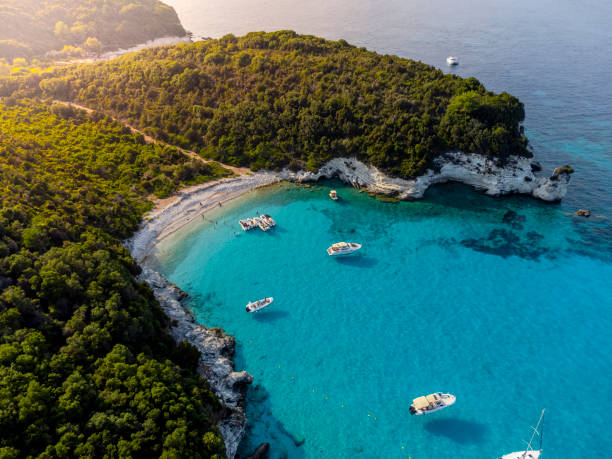
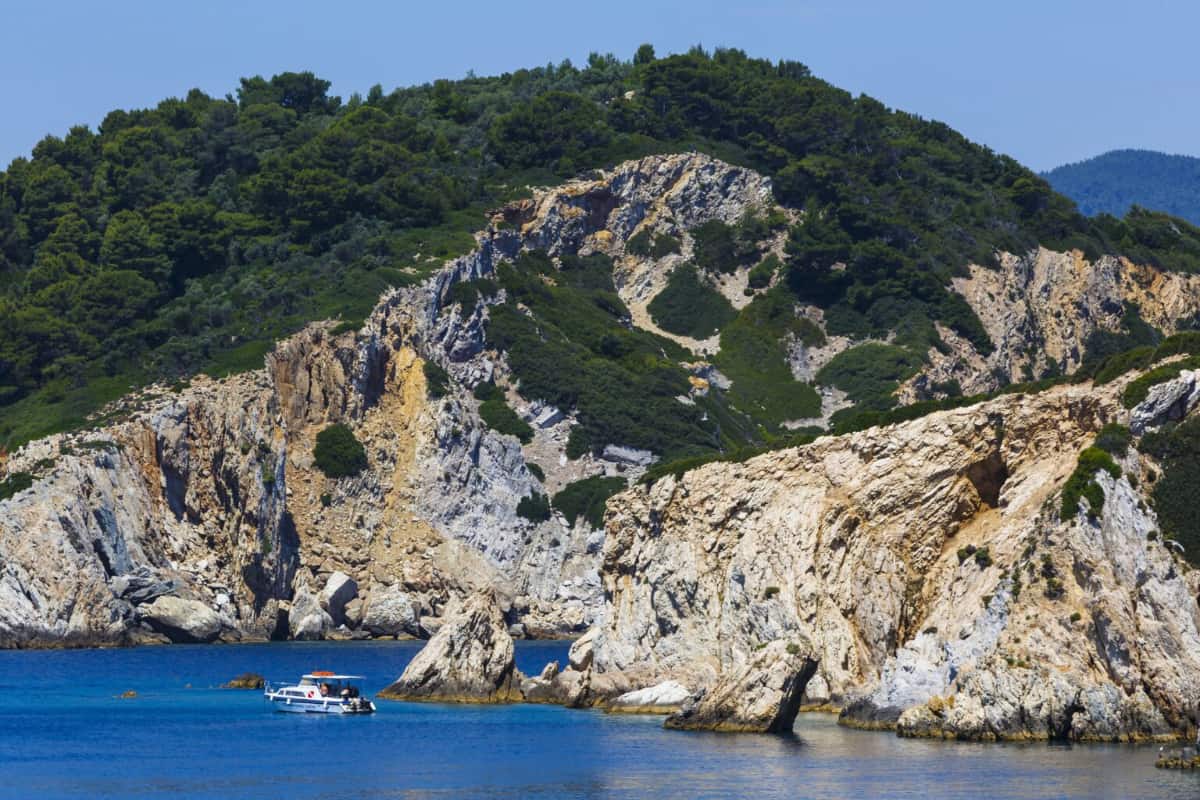
The northern coast of Skiathos, exposed to the prevailing winds and largely inaccessible by road, is the wildest and most scenically dramatic part of the island — a sequence of coves, sea caves, and rocky headlands that reveal themselves only to those who approach by sea. Elia, Krassa, Mikros and Megalos Aselinos — each one different in character, each one offering clear water and complete solitude in a setting of natural beauty. The sea caves at the base of the northern cliffs are extraordinary — some large enough to sail a dinghy into, their vaulted interiors lit from below by the turquoise water and from above by shafts of light through natural openings in the rock. These are the places that justify a yacht above every other means of exploring Skiathos, and they are inaccessible in every other way.
Why Choose Skiathos
Skiathos is the island for the traveller who wants the full, rich, uncompromised Greek island experience — beauty, energy, excellent food, superb beaches, and a social warmth that makes you feel welcome from the first evening. It is an island that succeeds equally well for groups of friends seeking a lively, beautiful base for a week of sailing and socialising, for couples in search of a romantic harbour town and a succession of perfect beaches, and for families wanting the combination of calm, clear water and the easy pleasures of a genuine and well-served island community. Very few destinations in the northern Aegean balance these different demands so naturally and so completely.
For those arriving by yacht, Skiathos offers a particularly rewarding combination of an excellent, well-equipped harbour town — with all the provisioning, dining, and social pleasures that implies — and a coastline sufficiently varied and wild to reward several days of exploration without any sense of repetition. The northern coast, accessible only by sea, contains some of the finest and most distinctive scenery in the Sporades. The famous beaches of the south are best approached from the water, before the land traffic builds. And the position of Skiathos within the Sporades makes it a natural starting point for a wider cruise through Skopelos and Alonissos — islands of equal beauty and very different character that together form one of the finest sailing itineraries in the northern Aegean.
What ultimately makes Skiathos memorable rather than simply pleasant is the sheer generosity of what it offers — the generosity of its landscape, lush and green and intensely beautiful; the generosity of its coastline, with its sixty beaches and its sea caves and its dramatic northern cliffs; the generosity of its town, alive and warm and genuinely welcoming; and the generosity of its light, which in the northern Aegean has a softer, more diffuse quality than the sharp, bleaching brightness of the south, and which falls on pine trees and red rooftops and still blue water in a way that is entirely, unmistakably, and unforgettably its own.