Why Serifos
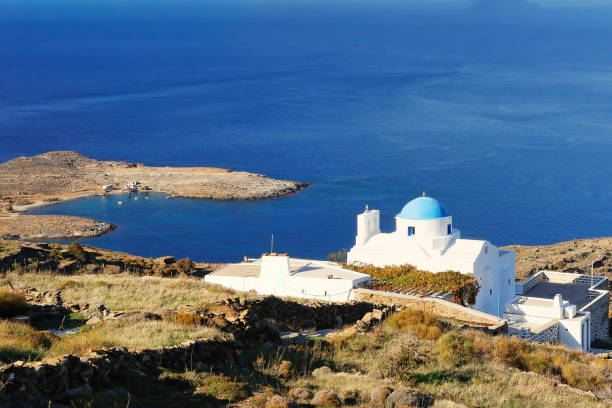
There are islands in the western Cyclades that wear their beauty without apology and without adornment — bare, rugged, dramatically composed places whose grandeur is of the elemental, uncompromising kind that requires no architectural embellishment and no tourist infrastructure to communicate itself with complete authority to anyone willing to look at it honestly. Serifos is this kind of island. Lying between Kythnos to the north and Sifnos to the south in the western chain of the Cyclades, Serifos rises from the sea in a series of steep, golden-brown hills of bare schist and granite whose dramatic profile announces itself from a great distance — an island that looks, from the sea on the approach, exactly as an ancient and mythologically significant Cycladic island should look: austere, magnificent, entirely itself, and crowned by one of the most spectacular Cycladic choras in the entire archipelago.
The mythology of Serifos is among the richest and most resonant of any Greek island. It was to the shore of Serifos that the wooden chest carrying Danaë and her infant son Perseus washed up, rescued from the sea by the fisherman Diktys, and it was on Serifos that Perseus grew to manhood before departing on his legendary quest to kill the Gorgon Medusa. It was to Serifos that he returned in triumph — the head of Medusa in his bag — to find the island’s king Polydektes attempting to force his mother into marriage, and it was here that he produced the severed head and turned the king and his entire court into stone on the spot, an act of divine justice that the islanders, with characteristic Greek wit, have always cited as the mythological explanation for the island’s extraordinarily rocky landscape. The mythological connection with Perseus gives Serifos a resonance and a narrative richness that amplifies its considerable natural beauty, and the landscape — the bare rocky hills, the golden schist, the dramatic silhouettes — feels, knowing the stories, not merely beautiful but genuinely, permanently storied.
The island has a second great distinction alongside its mythology: iron. Serifos was one of the most important iron-mining islands in the ancient Aegean, its rich deposits of iron ore worked since antiquity and exploited with increasing industrial ambition in the late 19th and early 20th centuries, when the mines at Mega Livadi employed hundreds of workers and made the island briefly and dramatically prosperous. The miners’ strike of 1916 — one of the first and most significant labour actions in modern Greek history, brutally suppressed by the mine owners but ultimately contributing to the development of workers’ rights in Greece — is a chapter of the island’s history of which its community remains justifiably proud. The mines closed in the 1960s, and their rusted infrastructure at Mega Livadi — the old loading quays extending into the sea, the company headquarters slowly returning to the earth, the carved hillside above — survives as one of the most atmospheric and most visually extraordinary pieces of industrial heritage in the Cyclades. Serifos is an island whose layers — mythological, ancient, medieval, industrial — are all visible in the landscape simultaneously, and that layering gives it a depth and an interest entirely disproportionate to its modest international profile.
What to Do and What to See
Serifos rewards the visitor who comes to it with a genuine appetite for its particular and distinctive pleasures — who wants a spectacular chora, extraordinary beaches, atmospheric industrial heritage, mythological landscape, and the particular quality of a western Cycladic island that has preserved its rugged, authentic character without concession and without apology.
Chora — The Spectacular Capital
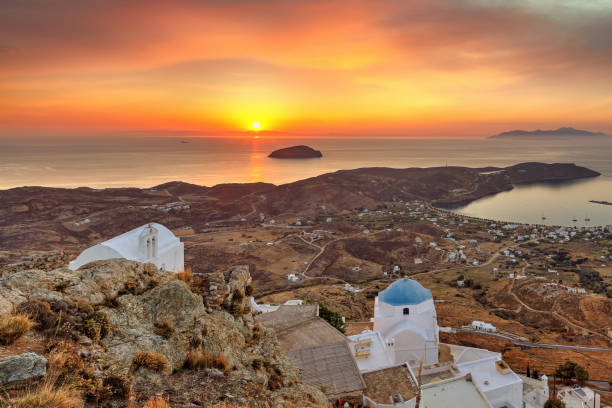
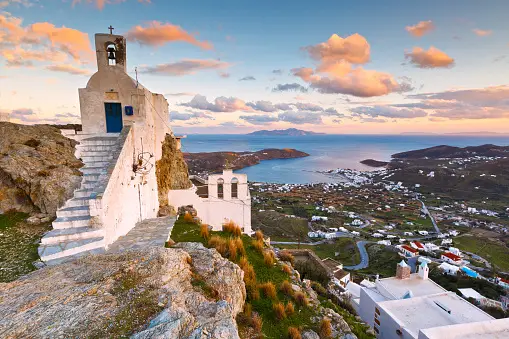
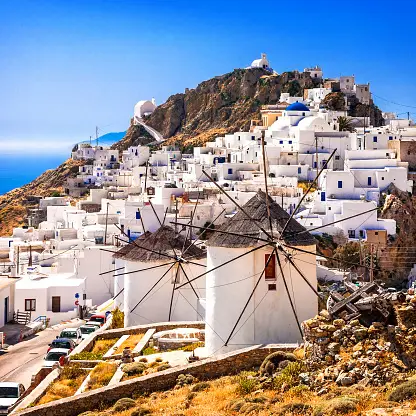
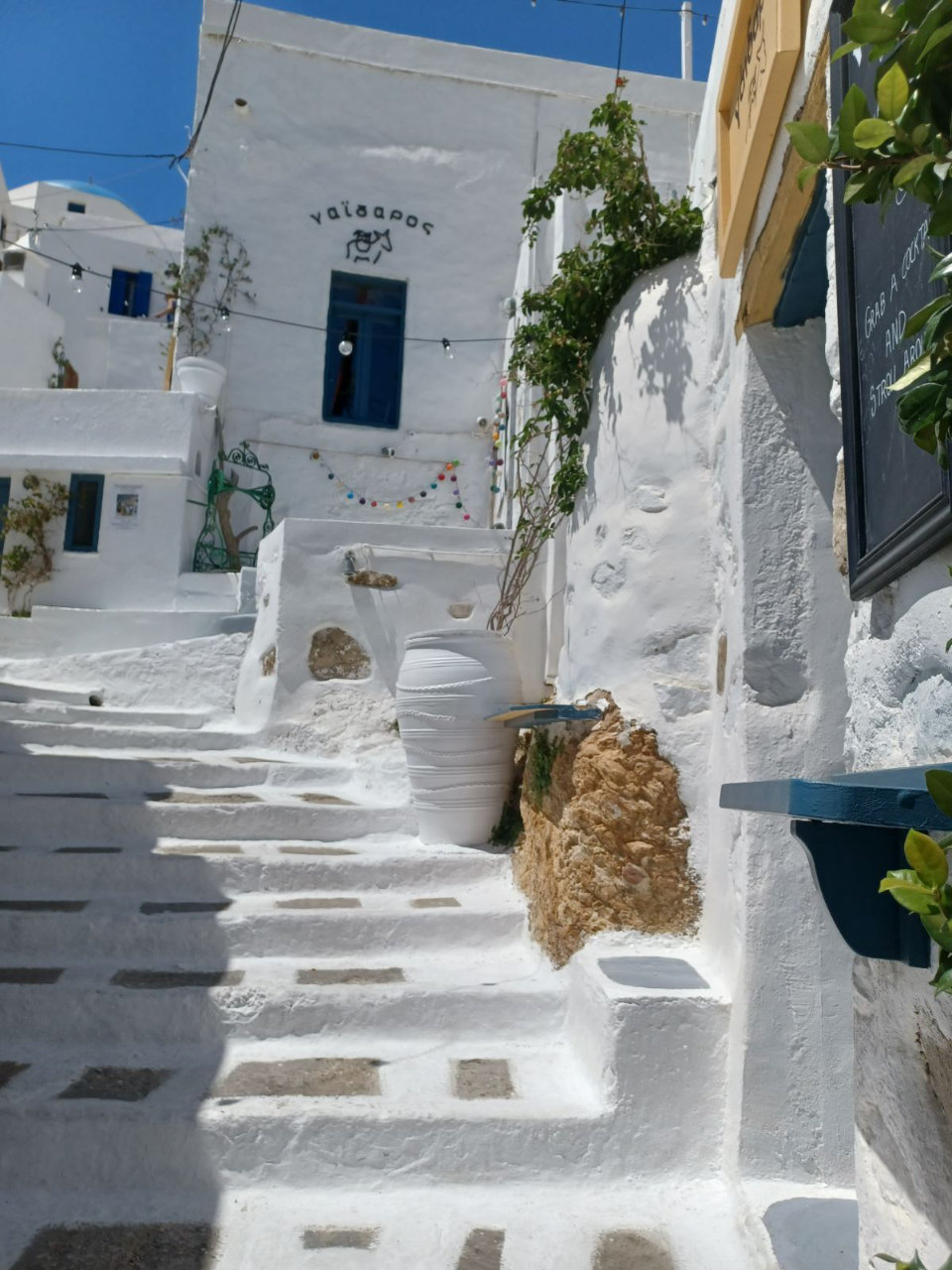
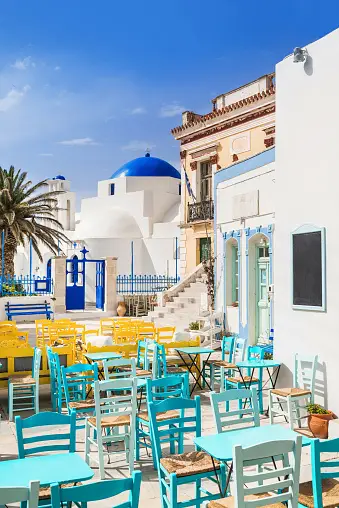
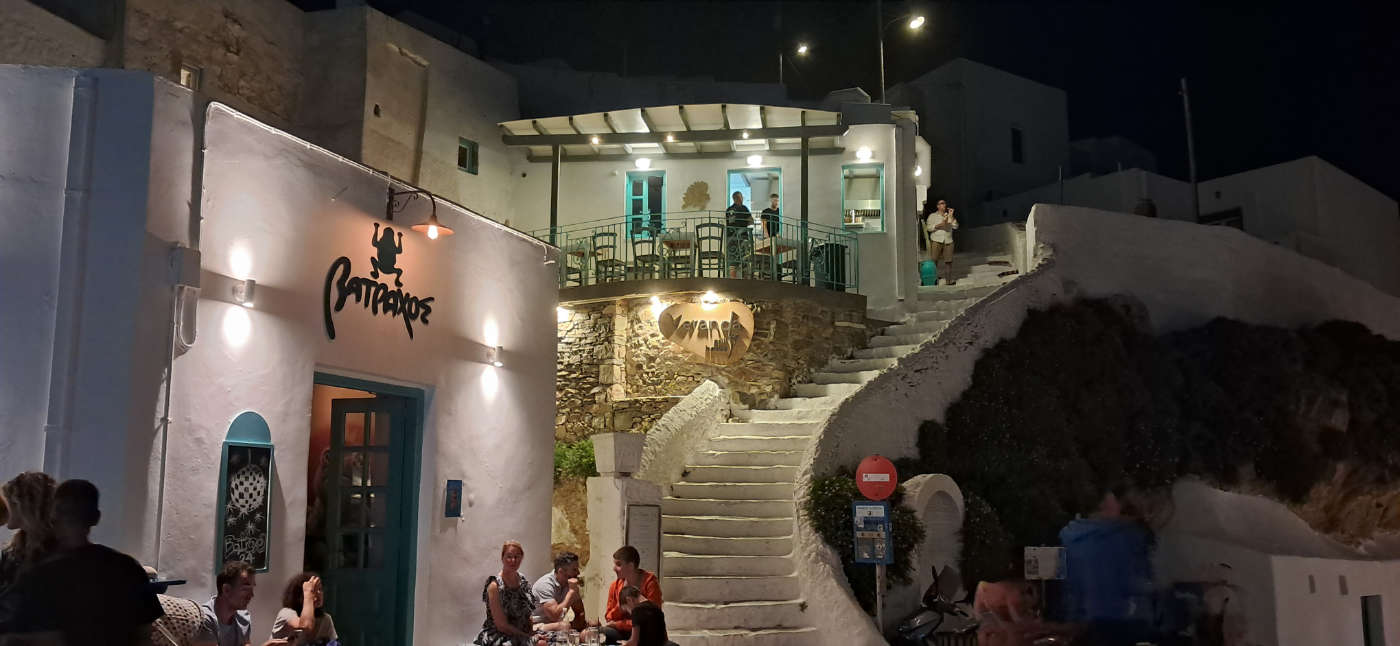
The Chora of Serifos is, by the consensus of those who know the Cyclades well, one of the finest and most dramatically situated island capitals in the entire archipelago — a dense cascade of whitewashed houses climbing a steep conical hill to a height of 230 metres, its windmills standing on the summit ridge against the sky, its lanes and stairways descending in every direction through a composition of Cycladic architecture that manages to be simultaneously completely familiar and completely astonishing in its scale and its drama. The views from the top of the Chora — over the harbour of Livadi below, over the surrounding hills of bare golden schist, over the western Cyclades stretching to the horizon in every direction — are among the finest from any island capital in the Cyclades, and the experience of climbing the Chora on foot from the harbour below, following the stepped path that ascends through the lower village in a series of switchbacks and vaulted passages, is one of the most physically engaging and most visually rewarding of all Cycladic village experiences. The summit of the Chora, where the remains of the Venetian castle preserve a section of medieval wall above the highest houses, offers views of such sweeping and complete Cycladic magnificence that the climb — even in the heat of a summer afternoon — is worth every step.
The Beaches
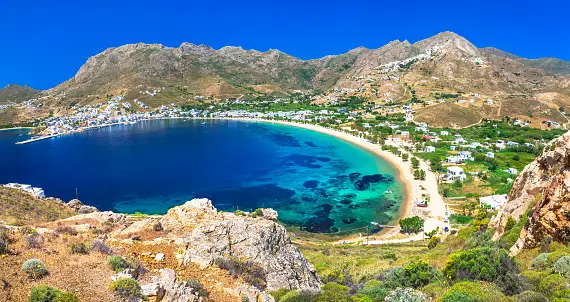
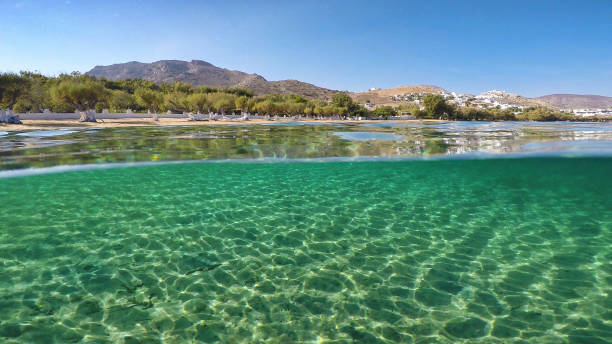
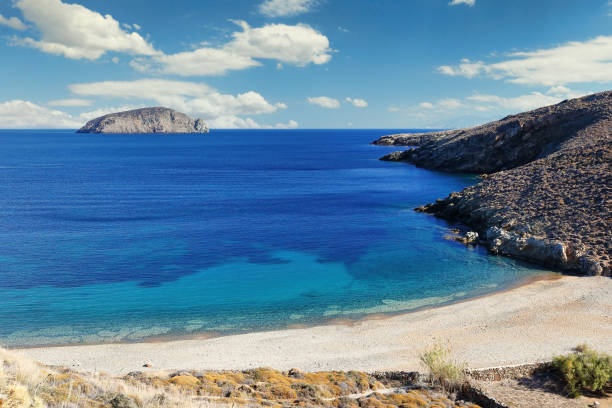
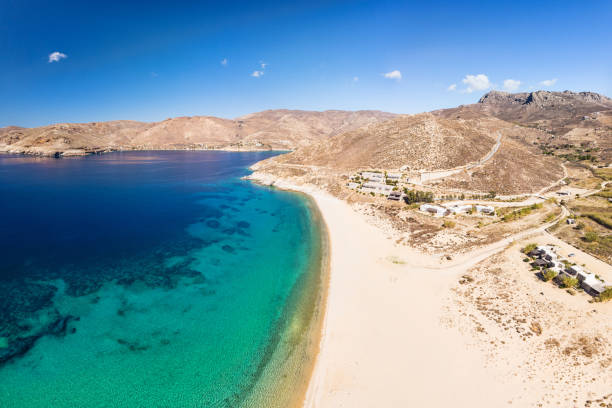
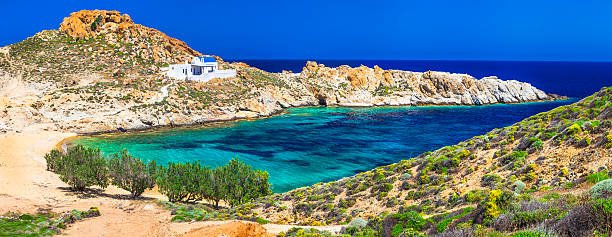
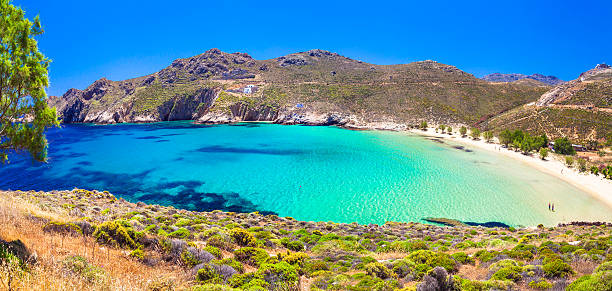
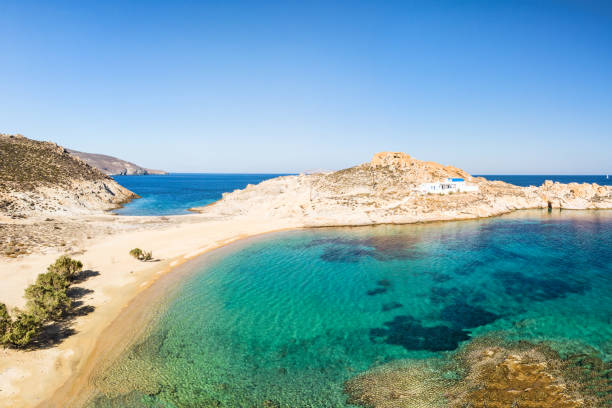
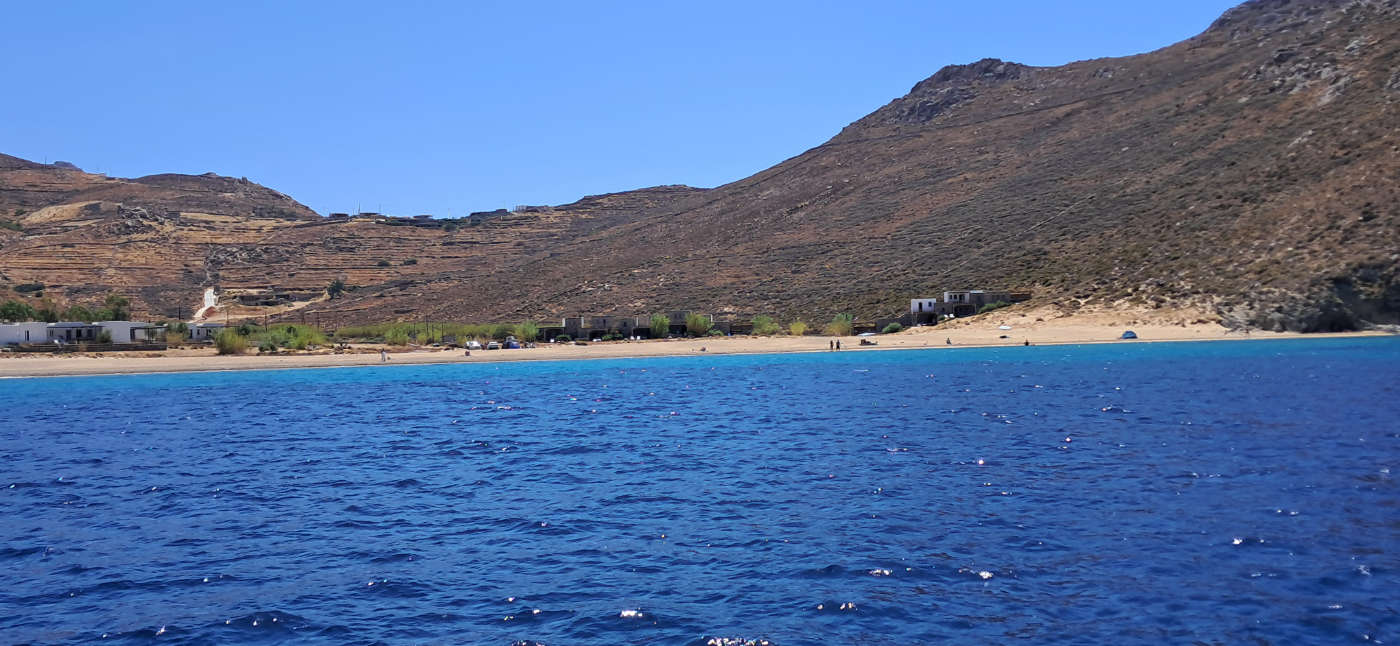
Serifos has a coastline of considerable variety and considerable natural quality — its beaches distributed around the island in a sequence that ranges from the organised and accessible near the port of Livadi to the wild and completely solitary on the more remote western and southern coasts. Psili Ammos is the island’s most celebrated beach — a wide, deep arc of fine golden sand and clear turquoise water of outstanding natural quality, set in a sheltered bay of great beauty and accessible by road from the port. Agios Sostis is wider, calmer, and particularly well suited to families with its gentle gradient and shallow water. Lia, on the southern coast, is more remote and more dramatically set — a long, pale beach in a deep bay surrounded by the island’s characteristic golden hills, its water of great clarity and great beauty. Ganema, sheltered from the prevailing north winds by its eastern orientation, is the island’s most reliable calm-water beach on windy days. And the wilder, more remote beaches of the western coast — accessible by sea from the harbour or by long walks from the road — offer swimming of extraordinary natural quality in complete and complete solitude, their pale sand and crystal water framed by the bare schist cliffs of the island’s western face in a landscape of elemental Cycladic beauty.
Mega Livadi and the Mining Heritage
On the southwestern coast of Serifos, the village of Mega Livadi and the surrounding mining landscape constitute one of the most extraordinary pieces of industrial heritage in the Cyclades — a place of great historical significance and great atmospheric power, its rusted ore-loading jetties extending into a bay of brilliant blue water, its company buildings slowly subsiding into the landscape, and its carved and terraced hillside preserving the visible evidence of decades of industrial extraction in a setting of such dramatic natural beauty that the contrast between the industrial past and the Aegean present is permanently and deeply affecting. The bay of Mega Livadi itself is one of the most beautiful and most sheltered anchorages on the island — calm, well protected, and surrounded by a landscape of mining-era buildings and bare hillside that has a quality of romantic ruin entirely characteristic of the western Cyclades at their most evocative. The Kyklops Taverna on the waterfront — named with appropriate mythological awareness — serves excellent food in a setting of atmospheric industrial beauty that is one of the most completely memorable dining environments in the western Cyclades.
The Monastery of Taxiarches
In the northern part of the island, the 17th-century Monastery of the Taxiarches — the Archangels Michael and Gabriel — is the most important Byzantine and post-Byzantine monument on Serifos and one of the finest small monasteries in the western Cyclades. Built in 1600 on the foundations of an earlier Byzantine church, the monastery preserves frescoes of considerable quality and a collection of Byzantine icons, manuscripts, and ecclesiastical objects of genuine historical and artistic importance, including a chrysobull of 1572. The monastery is still active and extends to visiting pilgrims and interested travellers the traditional Greek Orthodox hospitality — cool water, shade, conversation — in the manner of a community that understands its role in the island’s landscape as something more than architectural. The walk to the monastery from Chora, through the island’s interior on old paths that cross the characteristic Serifiot landscape of bare hills and ancient terraces, is one of the finest short walks in the western Cyclades.
The Aspros Pyrgos — White Tower
On the island’s central ridge, the Aspros Pyrgos — the White Tower — is a Hellenistic circular tower of considerable architectural quality, its pale stone walls standing to a height of several metres and its construction attributed in local mythology to the Cyclopes who, according to tradition, were the first inhabitants of Serifos and who built their monuments from the great rocks available on the island’s volcanic surface. The tower is one of several ancient structures scattered across Serifos’s landscape — watchtowers, walls, and cisterns that speak of a settlement history stretching back continuously to the Bronze Age — and its position on the island’s central ridge, visible from a considerable distance in every direction, gives it a landscape-defining quality entirely characteristic of the ancient Cycladic approach to territorial organisation. Visiting the tower as part of a walking circuit of the island’s interior offers one of the finest combinations of archaeological interest and landscape beauty available on any western Cycladic island.
Why Choose Serifos
Serifos is the island for the traveller who wants the western Cyclades at their most elemental, most dramatically beautiful, and most completely authentic — who wants the spectacular chora and the extraordinary beaches and the mythological landscape and the atmospheric industrial heritage in a setting of rugged, golden, entirely Cycladic grandeur that is available on no other island in the western group in quite the same combination or quite the same intensity. It is for those who find that beauty is more satisfying when it is unpolished, that the finest Cycladic villages are the ones that have not been smoothed and sweetened for tourist consumption, and that the most rewarding island experiences are those that require a degree of physical engagement — a climb, a walk, a dinghy trip to a remote cove — that brings you into genuine contact with the landscape rather than merely observing it from a comfortable distance.
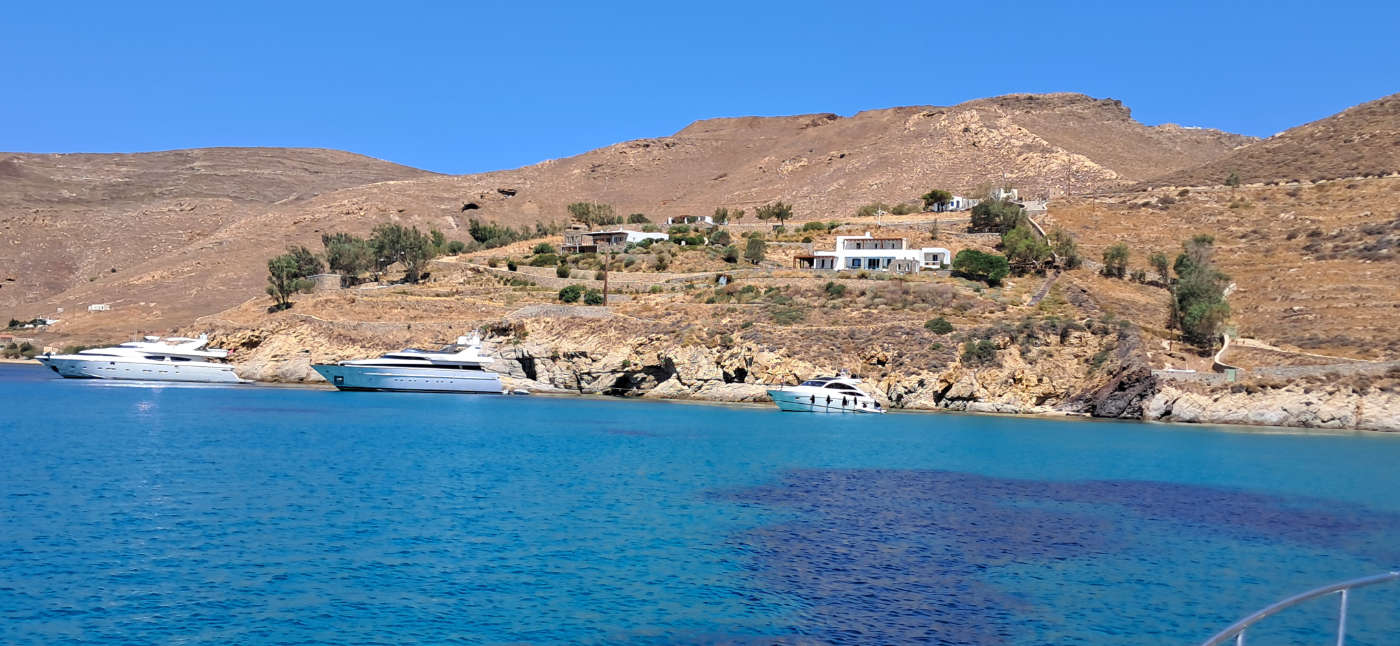
For sailing itineraries in the western Cyclades, Serifos occupies a central and strategically important position — a natural overnight stop between Kythnos and Sifnos, its harbour of Livadi well sheltered and well equipped, and its coastline offering anchorages of great variety and great natural quality for those willing to explore beyond the main port. The passage between Serifos and Sifnos to the south is one of the finest short passages in the western Cyclades — the two islands visible to each other across a channel of brilliant blue water, the dramatic profile of the Serifos Chora on one horizon and the equally dramatic silhouette of the Sifnos Chora on the other, the passage between them a crossing of barely two hours in good conditions that connects two of the most completely beautiful and most completely distinctive islands in the entire western archipelago.
What Serifos ultimately gives the visitor who comes to it with the physical willingness and the genuine curiosity it requires is the experience of a Greek island that has been exactly what it is — mythological, industrial, spectacular, rugged, warm — for longer than recorded history, and that wears all of those layers simultaneously with the easy, unselfconscious confidence of a place that has never needed to be anything other than itself. Perseus chose well, however involuntarily, when his wooden chest washed up on the shore of Serifos. Those who arrive today, by ferry or by yacht and of their own entirely voluntary choosing, consistently find that the island repays the decision with interest.