Why Santorini
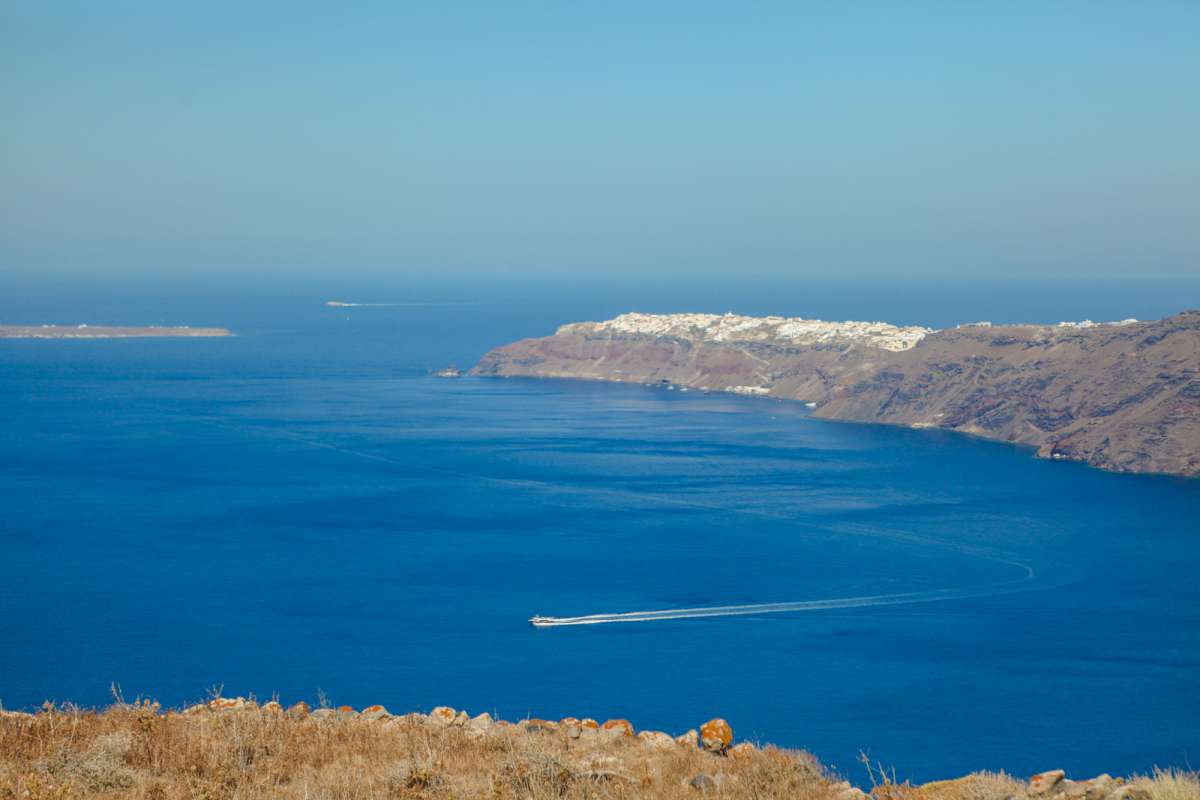
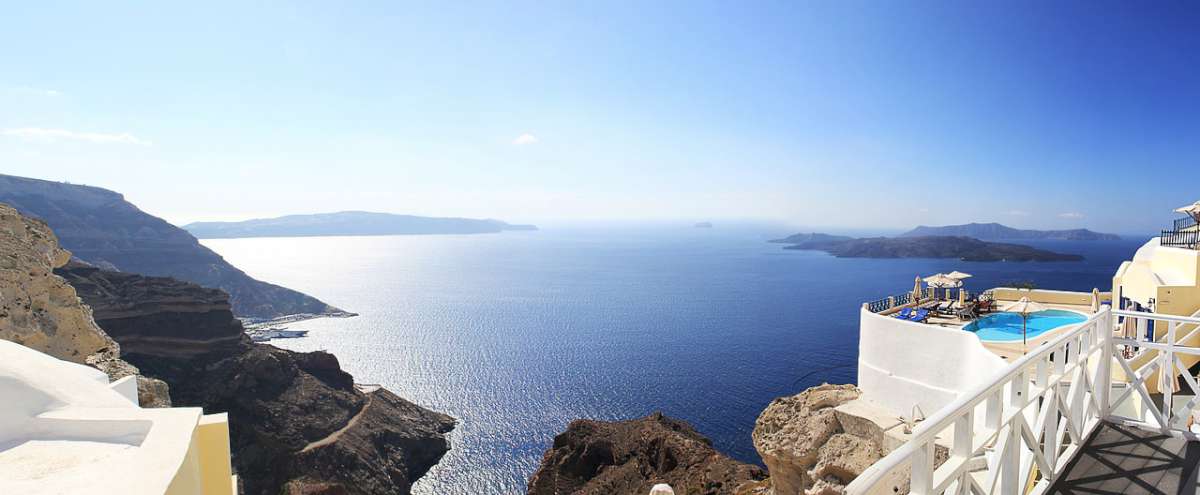
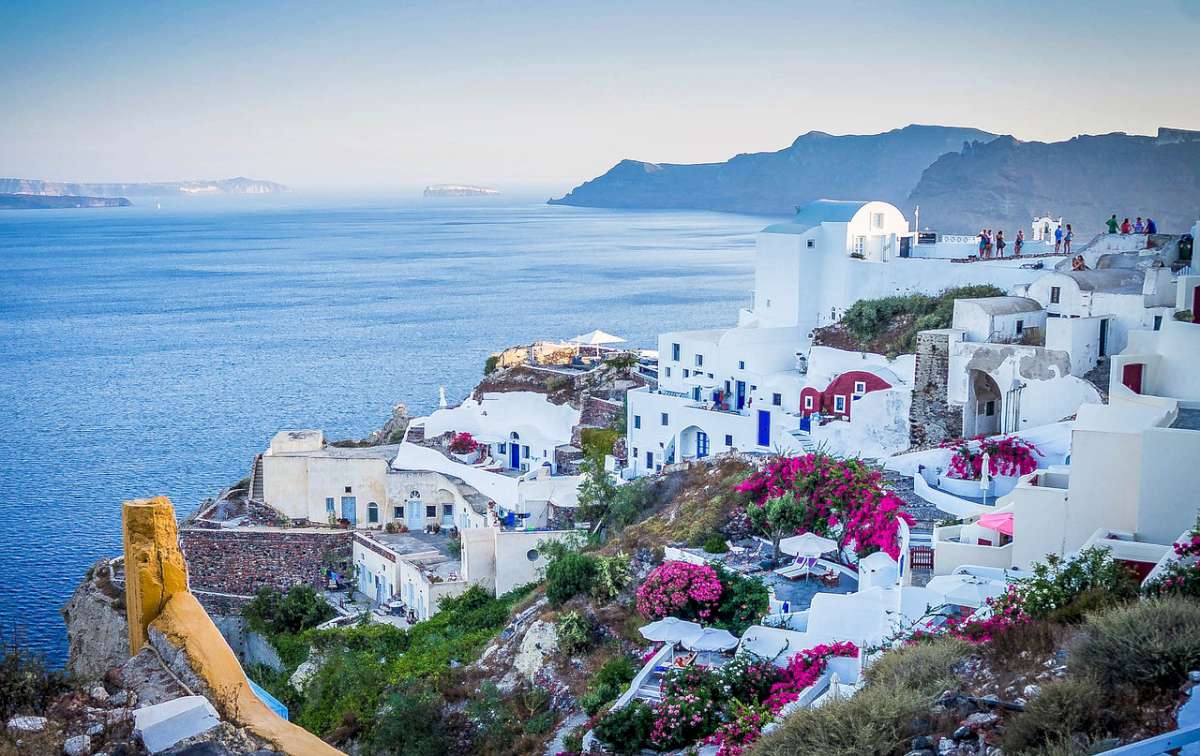
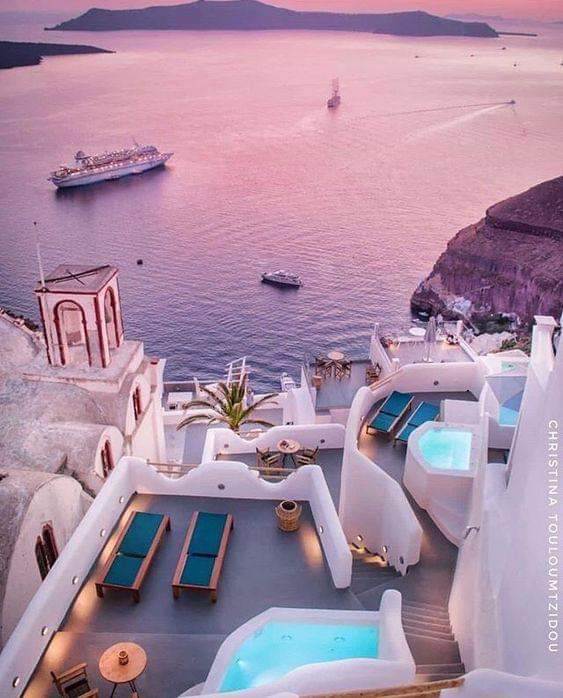
There are places whose fame is so complete, whose image has been so thoroughly disseminated across every medium and every platform and every travel publication for so many decades, that arriving at them for the first time risks a particular kind of disappointment — the sense that what you are seeing is not a discovery but a recognition, not an experience but a confirmation of something already thoroughly known. Santorini is one of these places. And then you stand at the edge of the caldera for the first time — the vast, drowned volcanic crater of the island, its inner walls of black and red and ochre volcanic rock falling sheer into the sea 300 metres below, the arc of Oia curving away to the north in its famous cascade of white domes and blue cupolas, the flat-topped volcanic islands of Nea Kameni visible in the centre of the drowned caldera, the open Aegean beyond — and you understand, with complete and immediate clarity, that no photograph and no description has adequately prepared you for the reality of what you are looking at. The caldera of Santorini is one of the great natural spectacles of the world, and no amount of familiarity with its image diminishes, even slightly, the overwhelming physical impact of the first encounter with the thing itself.
The island we call Santorini — whose ancient name was Thera — is the surviving rim of a volcanic caldera created by one of the largest volcanic eruptions in recorded human history: the Minoan eruption of approximately 1600 BC, which destroyed the ancient Bronze Age civilisation of the island, generated a tsunami of catastrophic scale across the eastern Mediterranean, and almost certainly contributed to the decline of the Minoan civilisation of Crete. The eruption left behind the characteristic crescent shape of the modern island — the surviving rim of the original volcanic cone, its inner face the sheer caldera wall of black and red volcanic rock that drops vertically to the sea, and its outer face the more gradual slope of volcanic debris that gives the island’s eastern coast its characteristic black sand beaches and its gently rolling agricultural landscape of vineyards and tomato fields. The caldera is not merely a scenic backdrop. It is a geological event of civilisation-changing power whose physical evidence surrounds the visitor on every side, and whose scale and drama give Santorini a quality of natural sublimity — the particular combination of beauty and awe that the caldera’s sheer walls and vast enclosed sea produce in every visitor who stands at the edge for the first time — that no other island in the Cyclades, or perhaps in the Mediterranean, can equal.
The island’s human civilisation is as extraordinary as its geological history. Beneath the volcanic soil of the island’s southern tip, the ancient city of Akrotiri — buried under the ash of the Minoan eruption and preserved in a condition of extraordinary completeness — has yielded, since excavations began in 1967, the most complete picture of a Bronze Age Aegean city in existence: multi-storey buildings with intact frescoes of extraordinary quality, sophisticated drainage systems, furniture and household goods preserved in the volcanic ash, and a picture of daily life in a prosperous, art-loving, technically sophisticated Bronze Age community of the 17th century BC that has no parallel anywhere in the Aegean. Akrotiri is the Greek Pompeii — and in the quality and the completeness of its evidence for Bronze Age life, it may be a more significant archaeological site than the Italian original.
What to Do and What to See
Oia — The Iconic Village
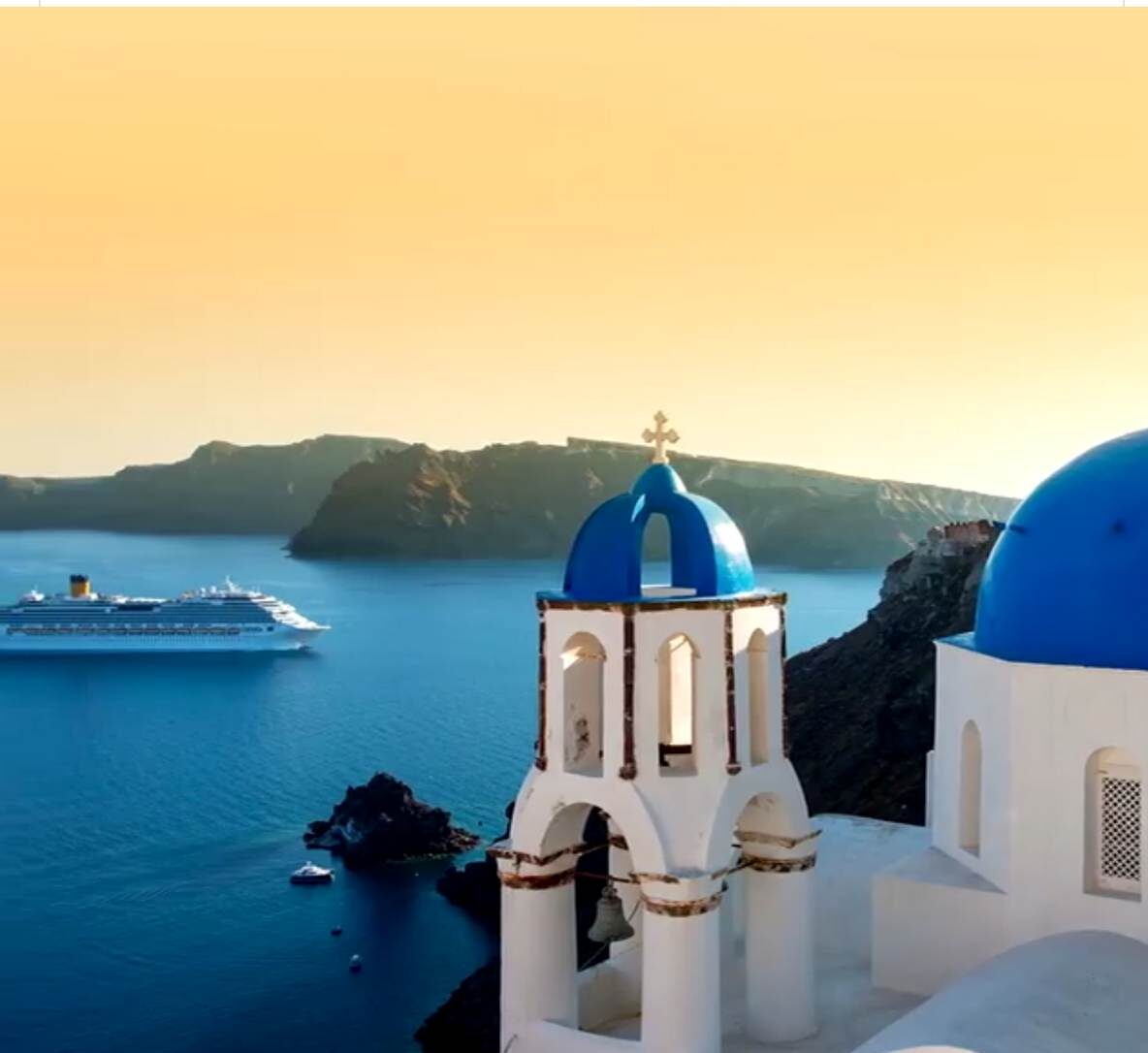
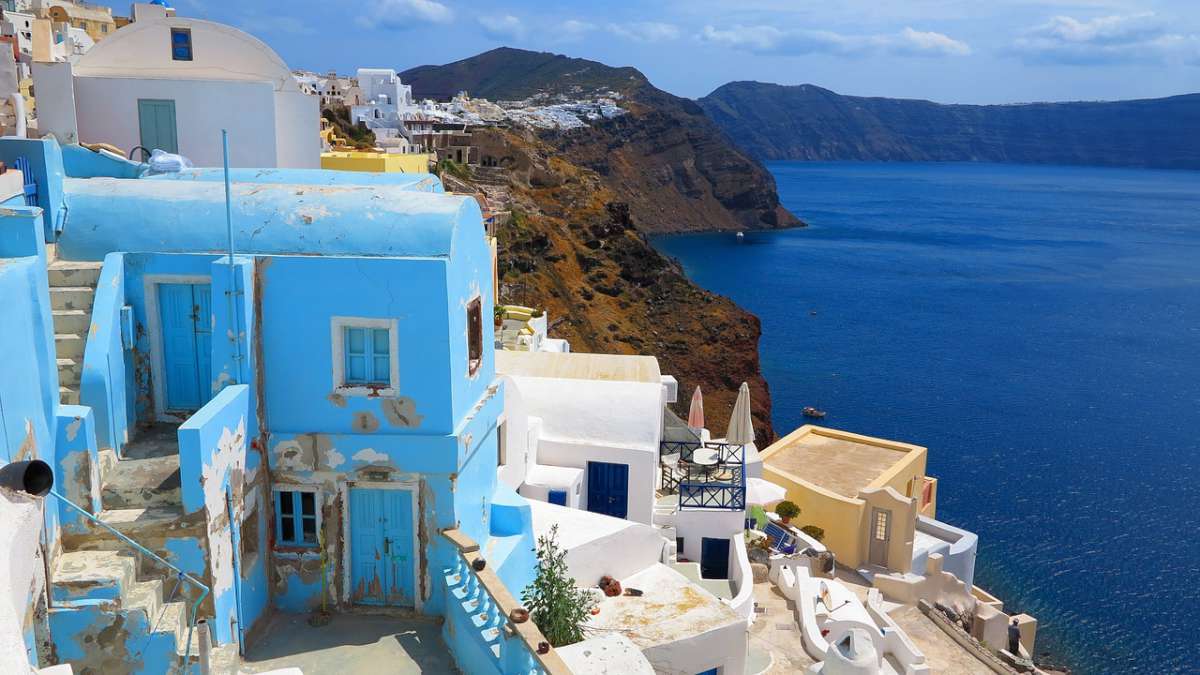
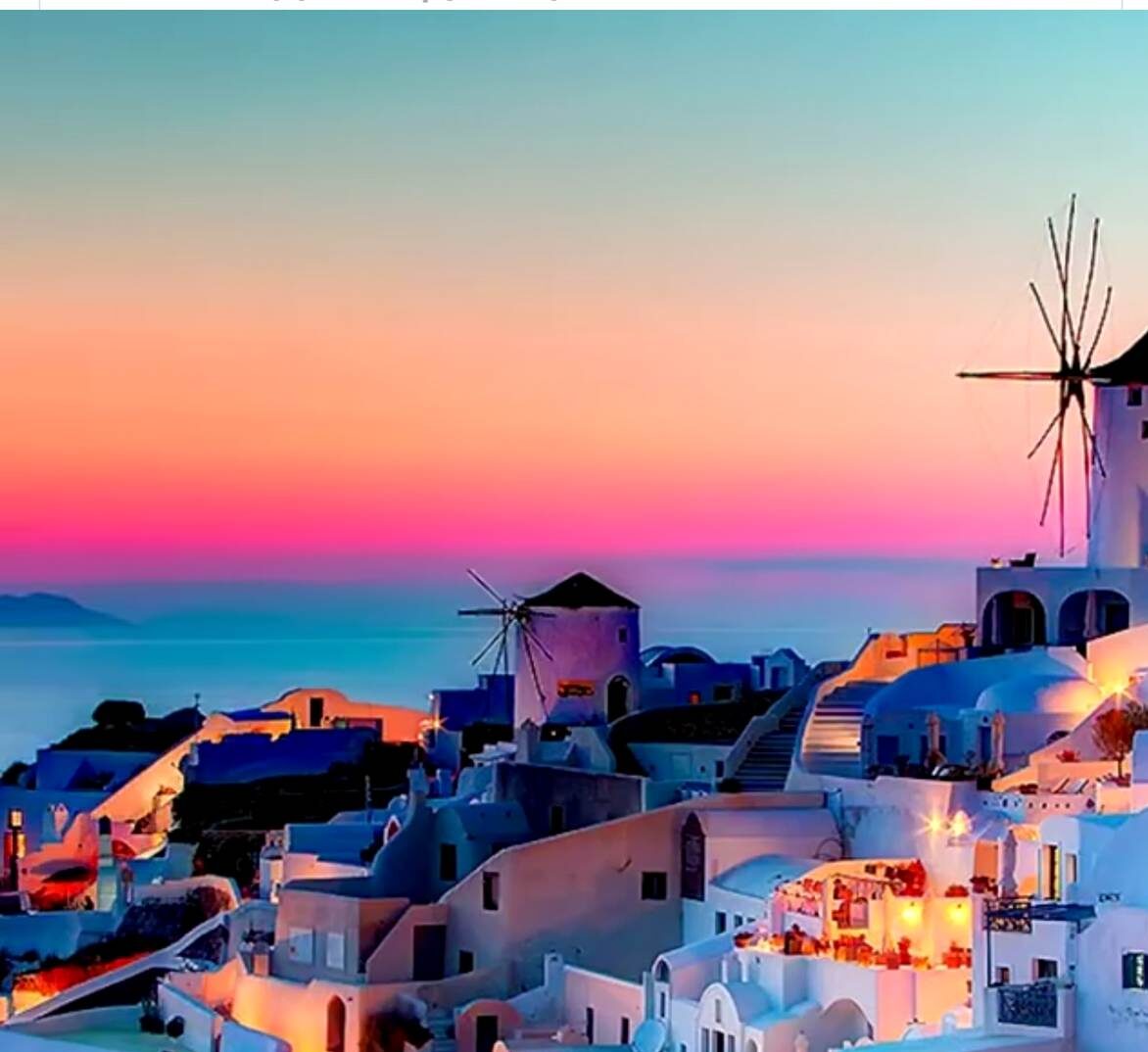
On the northern tip of Santorini, the village of Oia is the most famous and most completely beautiful village in the Cyclades — a dense cascade of whitewashed cave houses, blue-domed churches, and boutique hotels carved into the caldera cliff, its narrow cobblestone lanes decorated with flowering bougainvillea and its caldera-edge terraces offering views of overwhelming magnificence over the drowned volcanic crater below. Oia is the origin of the image of Santorini that the world knows — the blue dome against the white wall against the Aegean blue — and the reality of the village, for all the crowds that its fame inevitably attracts, surpasses the image with a completeness and a certainty that never fails to impress. The sunset at Oia — watched from the Byzantine castle ruins at the village’s highest point, or from the caldera-edge terrace of any of the cafés and restaurants that line the rim — is one of the most spectacular and most celebrated natural spectacles in the Mediterranean, the sun descending behind the volcanic islands of the caldera and painting the sky in a sequence of colours of extraordinary intensity before disappearing below the horizon in a final, saturated burst of gold and scarlet that the assembled crowd greets, every evening without exception, with spontaneous applause.
Fira and the Caldera Walk
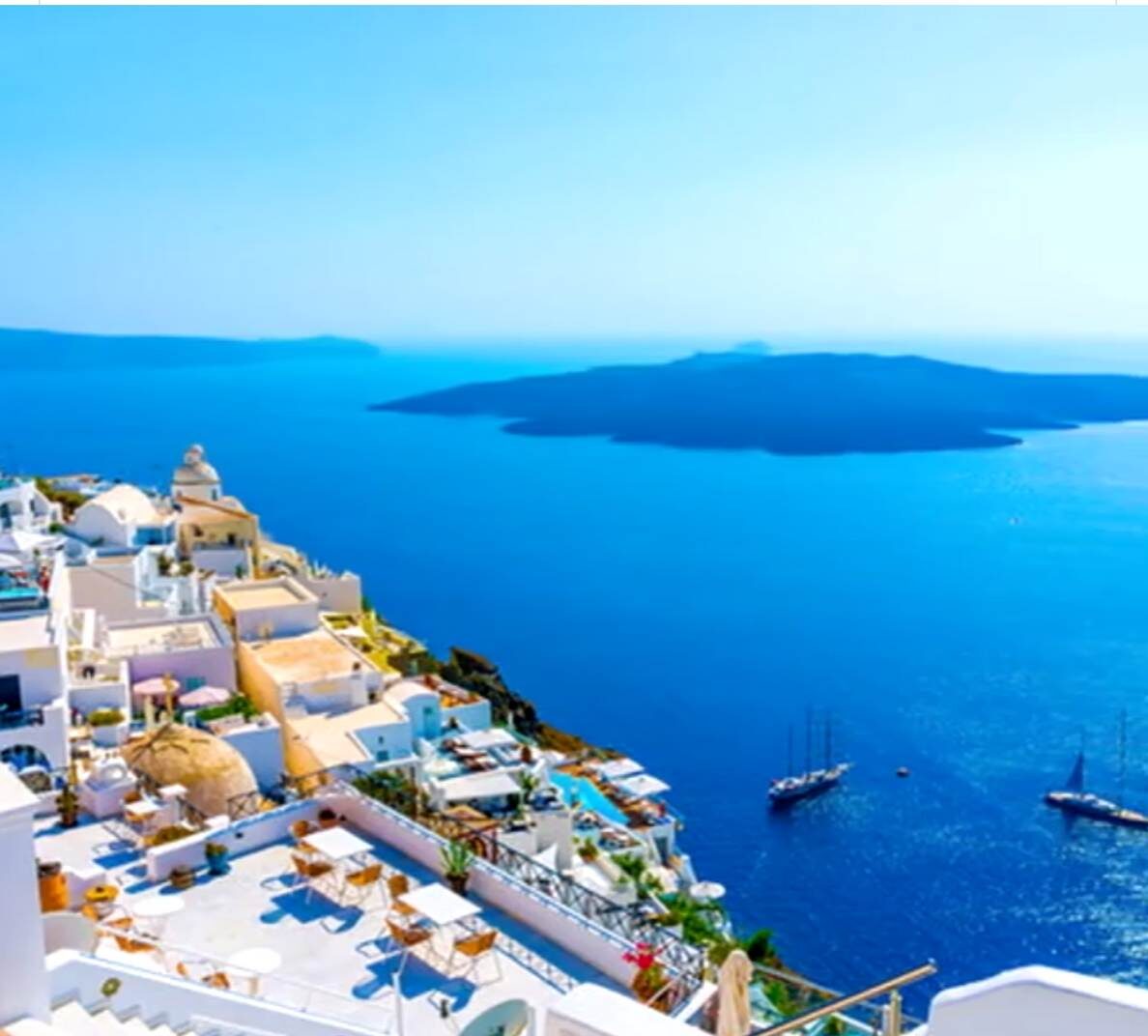
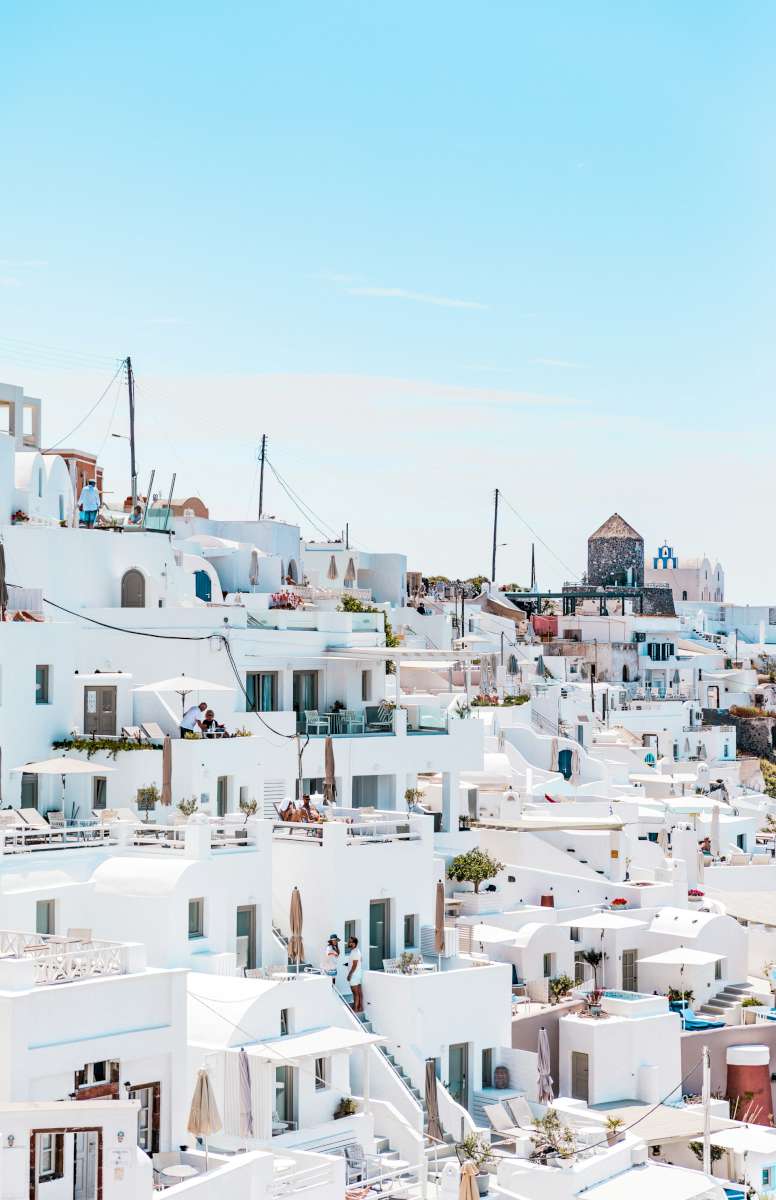
The capital of Santorini — Fira — is built on the caldera rim at the island’s widest and most dramatic point, its dense concentration of white cubic buildings and caldera-edge terraces providing the finest and most varied caldera views on the island, including the closest views of the volcanic islands of Nea and Palaia Kameni in the centre of the caldera. The caldera walk from Fira northward through the villages of Firostefani and Imerovigli — a path of 3.5 kilometres along the caldera rim that takes approximately one hour and offers continuous and continuously spectacular views of the caldera, the volcanic islands, and the Aegean — is one of the finest short coastal walks in the Cyclades, its combination of natural drama and architectural beauty providing a walking experience of extraordinary quality. The full caldera path from Fira to Oia — approximately 10 kilometres, taking three to four hours — is the most famous and most rewarding hike in the Cyclades: a walk of continuous spectacular views, passing through three distinct village environments, with the caldera always present below and the Aegean always visible on the horizon.
Akrotiri — The Minoan City
On the southern coast of Santorini, beneath a protective shelter of impressive modern architecture, the excavated ancient city of Akrotiri is the most important Bronze Age archaeological site in the Cyclades and one of the most important in the entire Aegean world. The city was buried under volcanic ash in the Minoan eruption of approximately 1600 BC — an event that preserved its buildings, its frescoes, its furniture, and its material culture in a condition of extraordinary completeness, creating an archaeological record of Bronze Age Aegean life of a depth and a vividness that no other site in the Greek world can match. The excavated streets and buildings of Akrotiri are accessible under the protective roof, the multi-storey buildings of the ancient city preserved to heights of several metres and the quality of the original construction — sophisticated, well-proportioned, aesthetically refined — visible in even the most damaged remains. The frescoes found at Akrotiri — the famous Spring Fresco, the Ship Procession, the Boxing Children — are displayed in the National Archaeological Museum of Athens and constitute some of the finest works of art from the Bronze Age Aegean, their colour, vitality, and narrative sophistication entirely remarkable for work of the 17th century BC.
The Volcanic Islands — Nea and Palaia Kameni
In the centre of the Santorini caldera, the volcanic islands of Nea Kameni and Palaia Kameni — still geologically active, their formation beginning only in 197 BC and continuing through eruptions as recent as 1950 — are accessible by boat excursion from the port of Fira in a cruise of extraordinary natural drama. The walk to the crater of Nea Kameni — through a landscape of black, still-warm volcanic rock, the sulphurous vents visible in the crater floor, the entire caldera panorama of Santorini and Thirassia visible in every direction — is one of the most completely extraordinary geological experiences available on any island in the Aegean. The warm, mineral-rich thermal springs of Palaia Kameni — accessible by swimming from the boat in the shallow, heated water of the volcanic bay — complete a caldera excursion of geological fascination and natural beauty of the first order.
The Black Sand Beaches
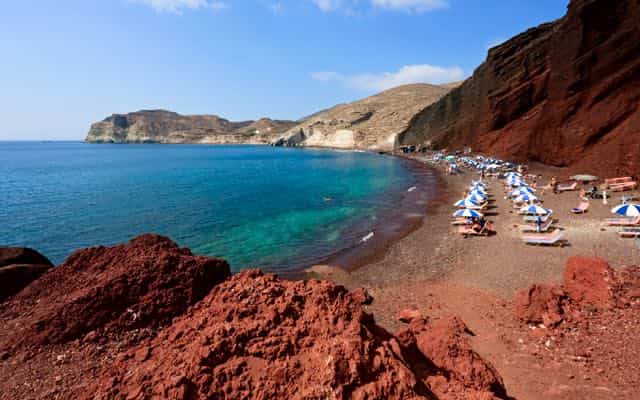
On the eastern and southeastern coast of Santorini, the volcanic geology of the island has created a sequence of beaches of entirely distinctive character — beaches of black and red volcanic sand entirely unlike anything elsewhere in the Cyclades, their dramatic coloured sand and brilliant blue water composing a beach environment of extraordinary visual intensity. Perissa and Perivolos, on the southeastern coast, are the most accessible and most completely equipped — long black sand beaches of good natural quality with excellent beach facilities and tavernas, their dark sand absorbing the heat of the Aegean sun with an enthusiasm that makes early morning and late afternoon swimming the most comfortable options. Red Beach, near Akrotiri, is the most dramatically set of all — a small cove of deep red volcanic sand enclosed by sheer red and black volcanic cliffs of extraordinary colour, its overall composition one of the most visually striking beach settings in the entire Greek world.
The Santorini Wineries
On the island’s volcanic soil — among the oldest continuously cultivated vineyard soils in the world, their terraced low-bush vines grown in the distinctive Santorini basket-weave formation to protect them from the Cycladic winds — the island’s indigenous Assyrtiko grape produces wines of extraordinary character and international renown. The volcanic soil’s mineral richness, the exceptional drainage of the ash-based ground, and the island’s unique microclimate create a wine of great complexity, great mineral intensity, and great natural acidity that has made Santorini Assyrtiko one of the most celebrated white wines in the Mediterranean. The island’s wineries — concentrated on the plateau of Pyrgos and the agricultural interior — offer tastings in settings of great natural beauty, their terrace views over the southern caldera and the open Aegean providing a wine-tasting environment of entirely theatrical quality. Vinsanto — the island’s traditional sweet wine, made from sun-dried Assyrtiko grapes — is one of the great dessert wines of the Greek world, its concentrated sweetness and volcanic mineral complexity making it the finest and most characteristic accompaniment to the fresh local cheeses and the preserved cherry tomatoes that constitute the island’s most distinctive gastronomic tradition.
Thirassia — The Quiet Caldera Island
On the western arc of the Santorini caldera, the island of Thirassia — the only other inhabited island in the Santorini archipelago — is Santorini’s quieter, smaller, and far less visited alter ego: a caldera island of the same volcanic geology and the same extraordinary caldera views, but without the hotels, without the crowds, and without any of the infrastructure that Santorini’s tourism has accumulated over decades. Accessible by boat from Fira in 20 minutes, Thirassia has a single small village on its caldera rim, a handful of excellent fish tavernas on the port below, and the same extraordinary caldera panorama that Santorini’s most expensive hotels charge the highest rates in the Cyclades to provide — available here, from a simple taverna table at the edge of the cliff, for the price of a plate of grilled fish and a glass of Assyrtiko.
Why Choose Santorini
Santorini is the island for every traveller who wants the Cyclades at their most completely and most overwhelmingly spectacular — the most dramatic volcanic landscape in the Mediterranean, the most famous and most completely beautiful caldera in the world, the most important Bronze Age archaeological site in the Aegean, the finest white wine in the Greek islands, and the most celebrated sunset in the entire world — in a setting of extraordinary architectural beauty, world-class hospitality infrastructure, and the particular quality of a destination that has been receiving the most demanding international visitors for long enough to meet every expectation with complete confidence and complete ease.
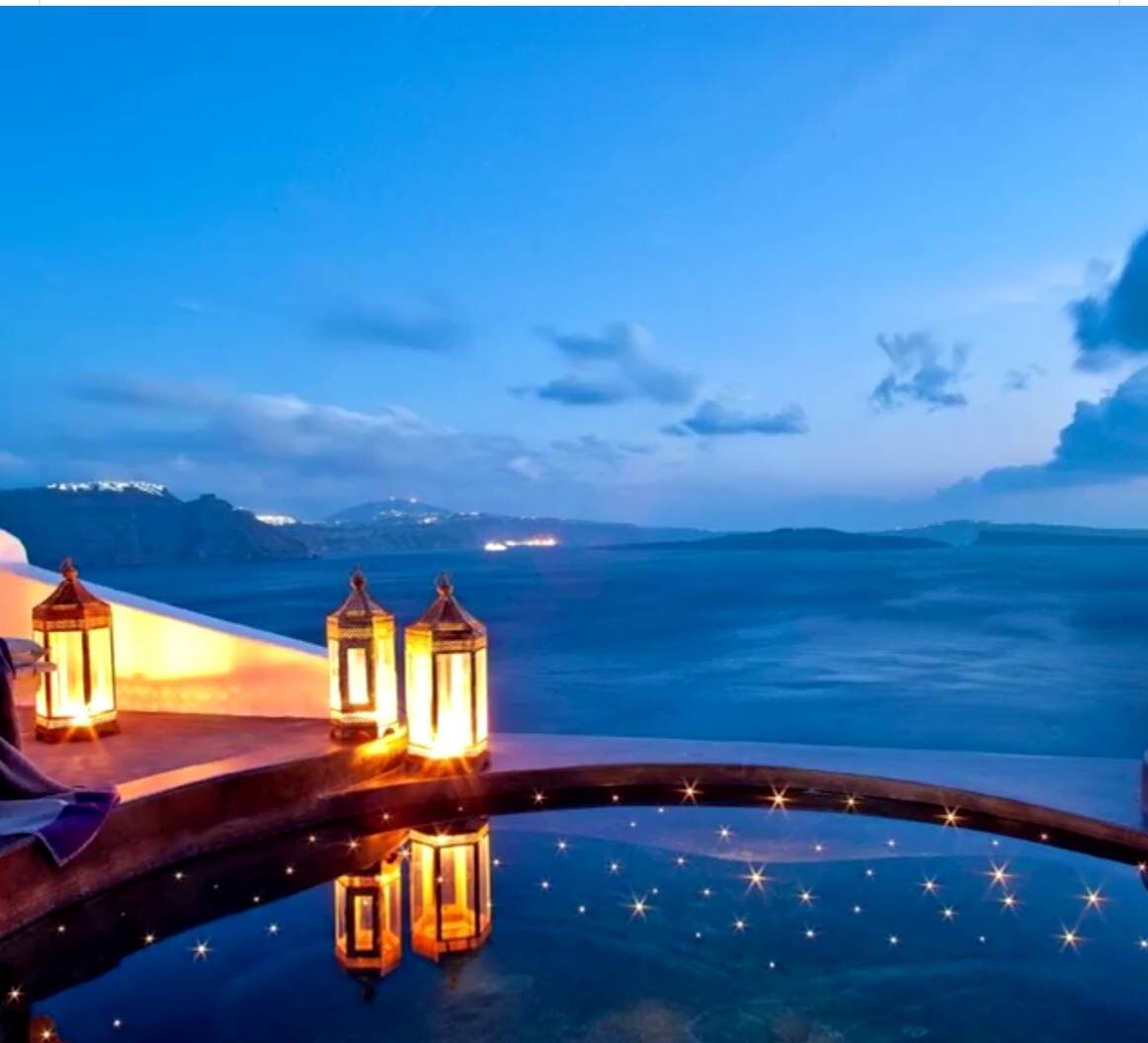
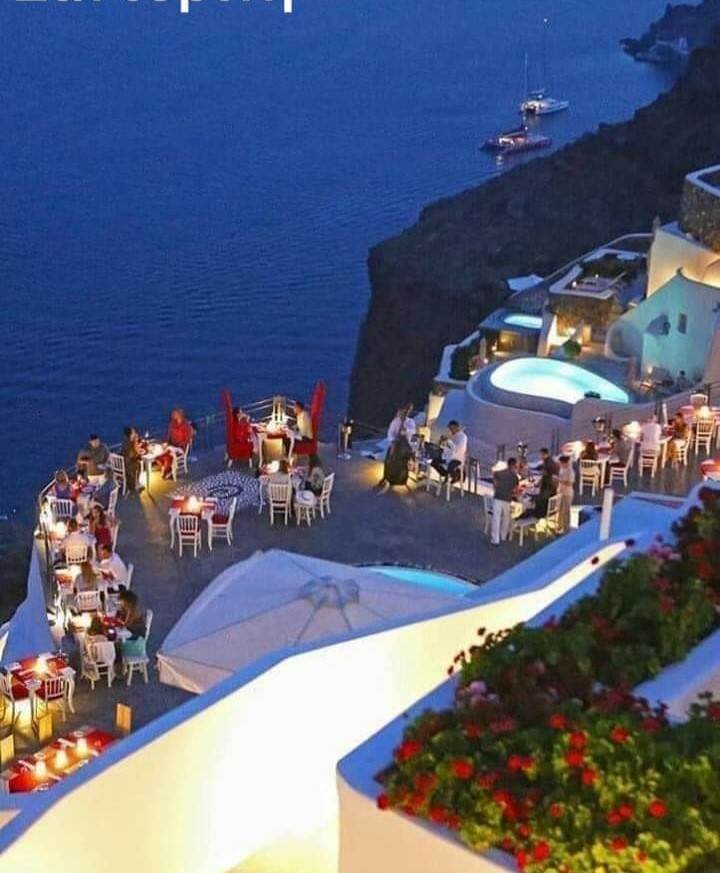
It is for couples seeking the most romantic destination in the Mediterranean — a caldera-edge infinity pool, a sunset at Oia, a candlelit dinner on a terrace above the drowned volcano. It is for those who want the finest archaeological encounter with the Bronze Age world at Akrotiri. For wine enthusiasts who want to taste Assyrtiko in the volcanic vineyards where it grows. For sailors who want to navigate the caldera under sail — the approach from the south, the volcanic walls rising on every side, the anchor dropped in the caldera anchorage below Fira in one of the most dramatic and most completely memorable sailing experiences in the Aegean.
What Santorini ultimately gives every visitor who comes to it with genuine attention and genuine openness — who stands at the caldera edge in the early morning before the crowds arrive, when the light is still clean and horizontal and the volcanic walls are lit in shades of gold and red that no photograph has ever fully captured — is the experience of the natural world at its most completely overwhelming and most permanently unforgettable. The fame of Santorini is entirely justified. The reality of it exceeds the fame. That combination — expected greatness that still manages to exceed every expectation — is the rarest and most valuable quality in all of travel, and it is available here, on this volcanic crescent above the drowned caldera in the southern Cyclades, with a completeness and a consistency that no other island in the Mediterranean can match.