Why Polyaigos
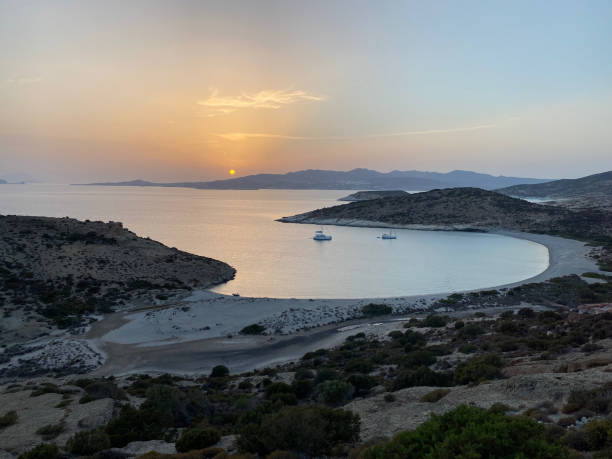
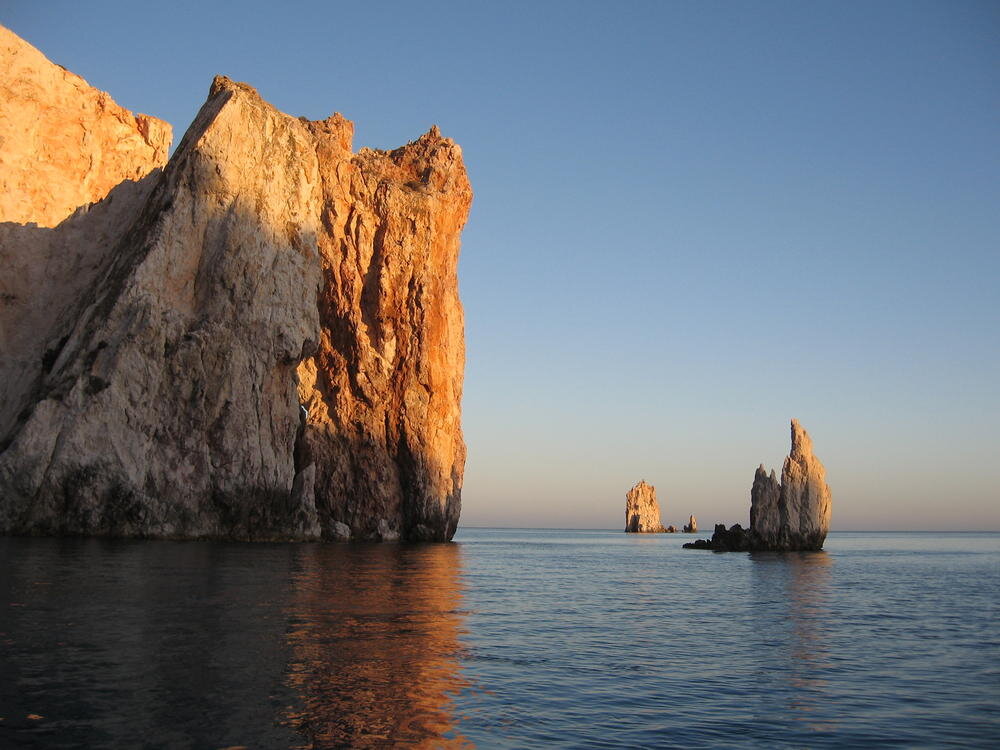
There are places in the Aegean that the modern world has not yet reached — not because they are inaccessible or unknown, but because they are protected by something more fundamental than distance: by the absence of everything that makes a place easy to visit, easy to consume, and easy to forget. Polyaigos is one of these places. The largest uninhabited island in the entire Aegean Sea and one of the largest uninhabited islands in the Mediterranean, Polyaigos lies 1.1 nautical miles southeast of Kimolos and 3.8 nautical miles east of Milos, its 18 square kilometres of volcanic hills, sheer white cliffs, sea caves, and extraordinary southern beaches entirely without roads, buildings, infrastructure, or permanent human presence of any kind. There are no tavernas on Polyaigos. No beach bars, no sunbeds, no ferry connections, no shops. What there is — in complete, undiluted, and entirely overwhelming abundance — is the most completely pristine and most completely unspoiled natural coastal environment in the western Cyclades: a landscape of volcanic grandeur and natural silence that the rest of the Aegean, in the age of mass tourism, has almost entirely ceased to offer.
The island’s name means simply “many goats” — a description as ancient as it is accurate, for the wild goat herds that roam Polyaigos’s rugged interior have been its primary inhabitants for as long as human memory extends, grazing the island’s scrubland and volcanic hillsides with the unhurried authority of creatures who understand that this landscape belongs to them and to the seabirds and the monk seals who share it with them. The island’s greater pedigree is equally ancient: archaeological evidence indicates continuous human presence from the Mesolithic or Neolithic period, and the mineral wealth of Polyaigos — rich deposits of silver barite and other industrial minerals — made it valuable enough in antiquity that Kimolos and Milos engaged in formal litigation over its ownership for over 78 years, from 416 BC to 338 BC, when the island was finally assigned to the administration of Kimolos. Silver barite was extracted commercially from the island as recently as the 20th century by the Silver Minerals and Barite Company, and the traces of this industrial past are visible still in the landscape — adding a layer of human history to a natural environment that reads, at first encounter, as entirely and completely primeval.
The island’s ecological significance is extraordinary and internationally recognised. Polyaigos is a member of the European Union’s Natura 2000 ecological network and has been designated a Special Protection Area for the Eleonora’s Falcon — a species of which 75% of the entire world population nests on the Aegean islands. The sea caves of its coastline are among the most important remaining shelters and breeding grounds for the critically endangered Mediterranean monk seal, one of the rarest marine mammals on earth. The endemic Milos viper — Microvipera schweizeri — found only on Milos, Kimolos, Polyaigos, and Sifnos, moves through its volcanic scrubland. The endemic blue lizard of Milos — Podarcis milensis — inhabits its sun-warmed rocks. Thirty-two endemic, rare, or endangered species of plants root in its volcanic soil. In September 2025, Greece’s Central Archaeological Council unanimously declared Polyaigos an official archaeological site, granting it the strongest available protection status — a designation that reflects not only the island’s ancient human history but the full breadth of its natural and cultural significance. Polyaigos is not merely a beautiful beach destination. It is, in the most genuine and most authoritative sense, one of the best-preserved natural environments in the entire Mediterranean.
What to Do and What to See
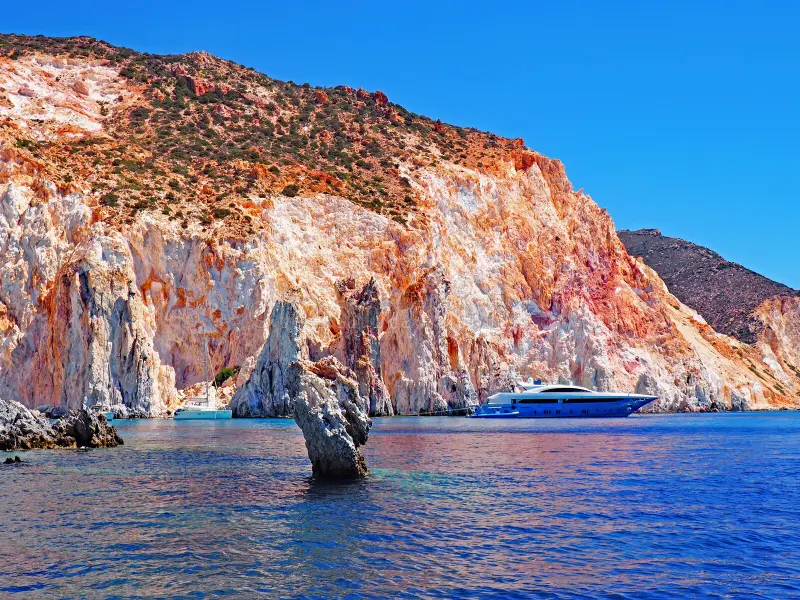
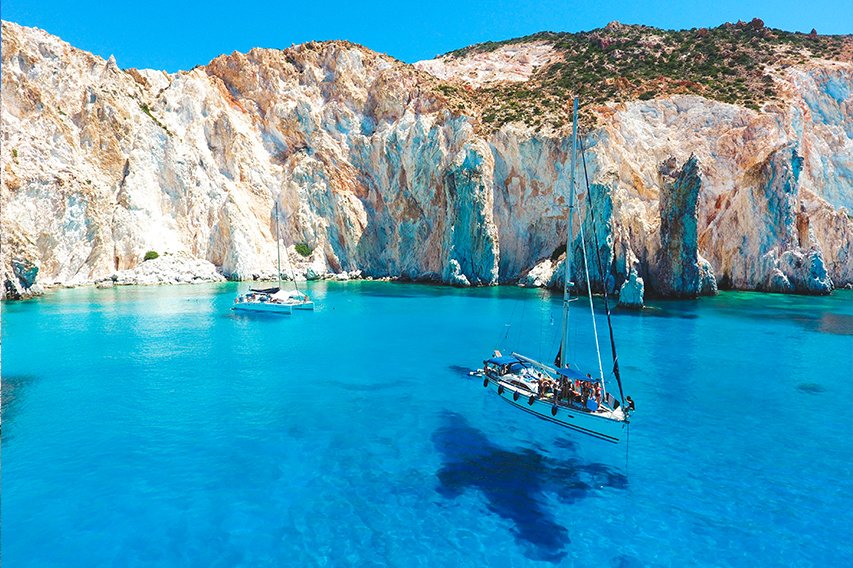
Polyaigos is accessible only by private boat or by day excursion boat from Milos and Kimolos — a condition of access that ensures its beaches remain among the most uncrowded and most completely natural in the western Cyclades, and that makes arriving at it by yacht, with the freedom to anchor off its southern coast and spend a full day or a night in its extraordinary natural setting, one of the finest and most completely memorable sailing experiences available in the Aegean.
The Southern Beaches
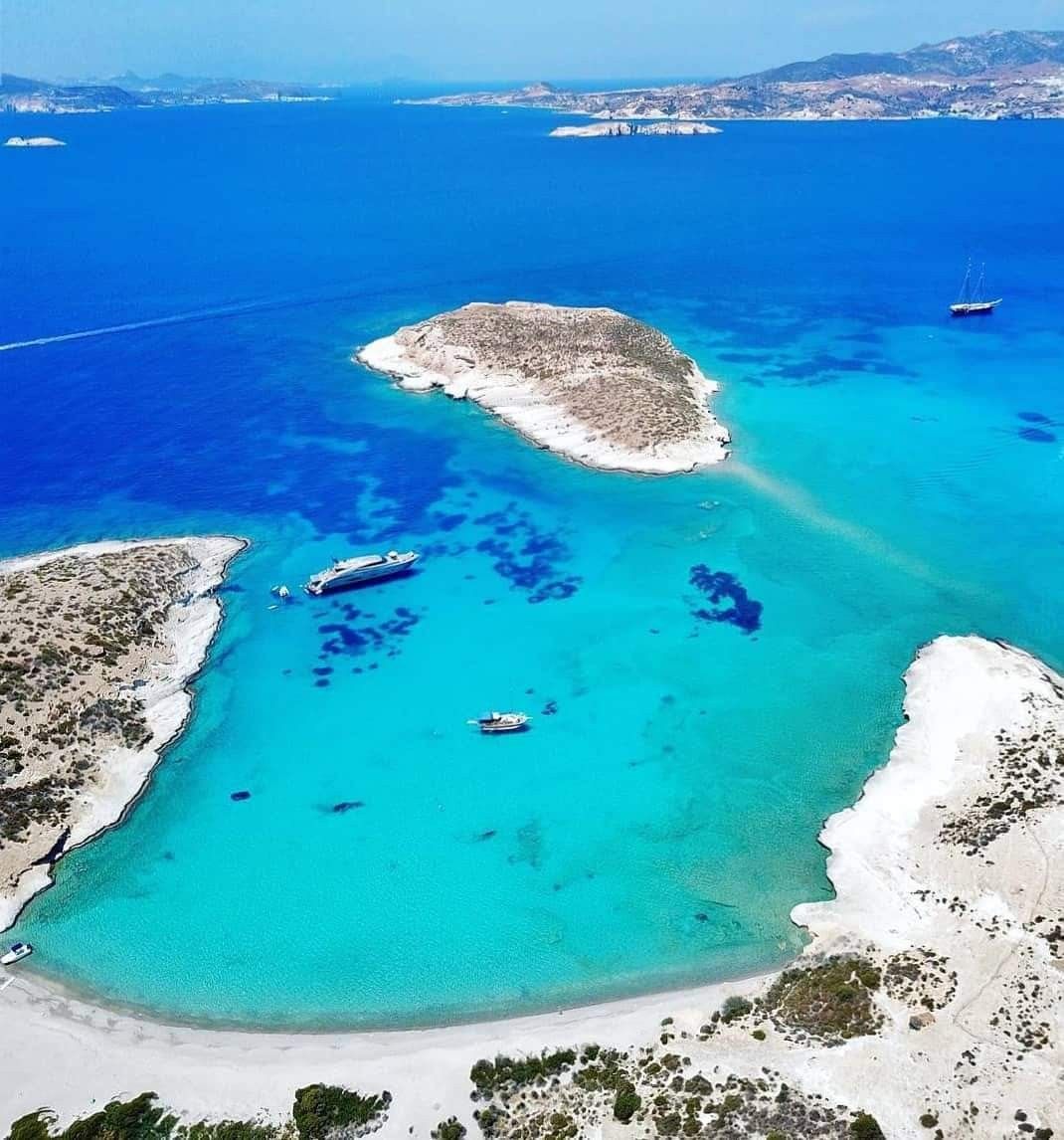
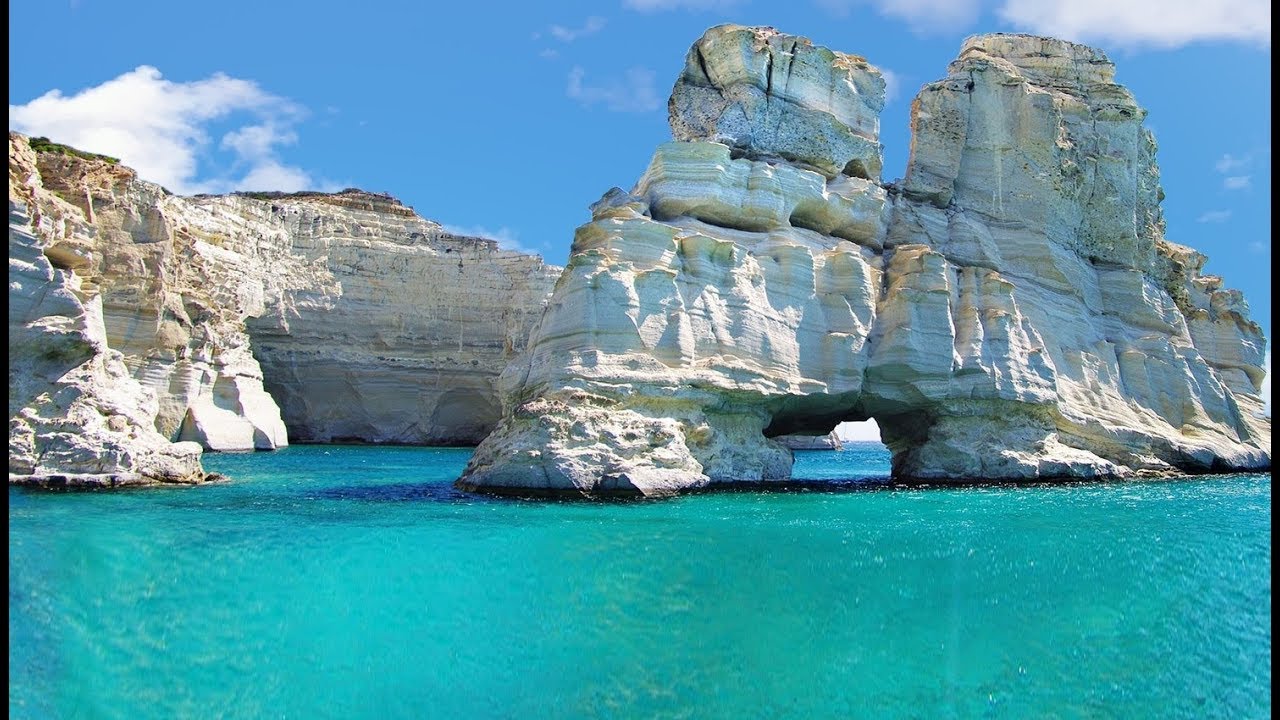
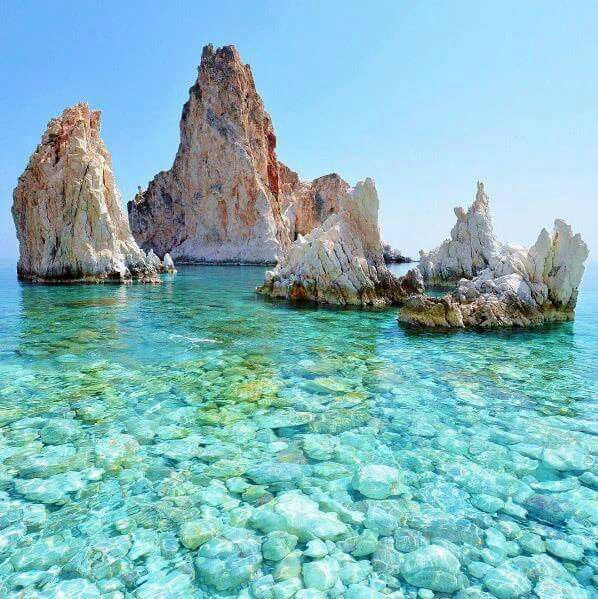
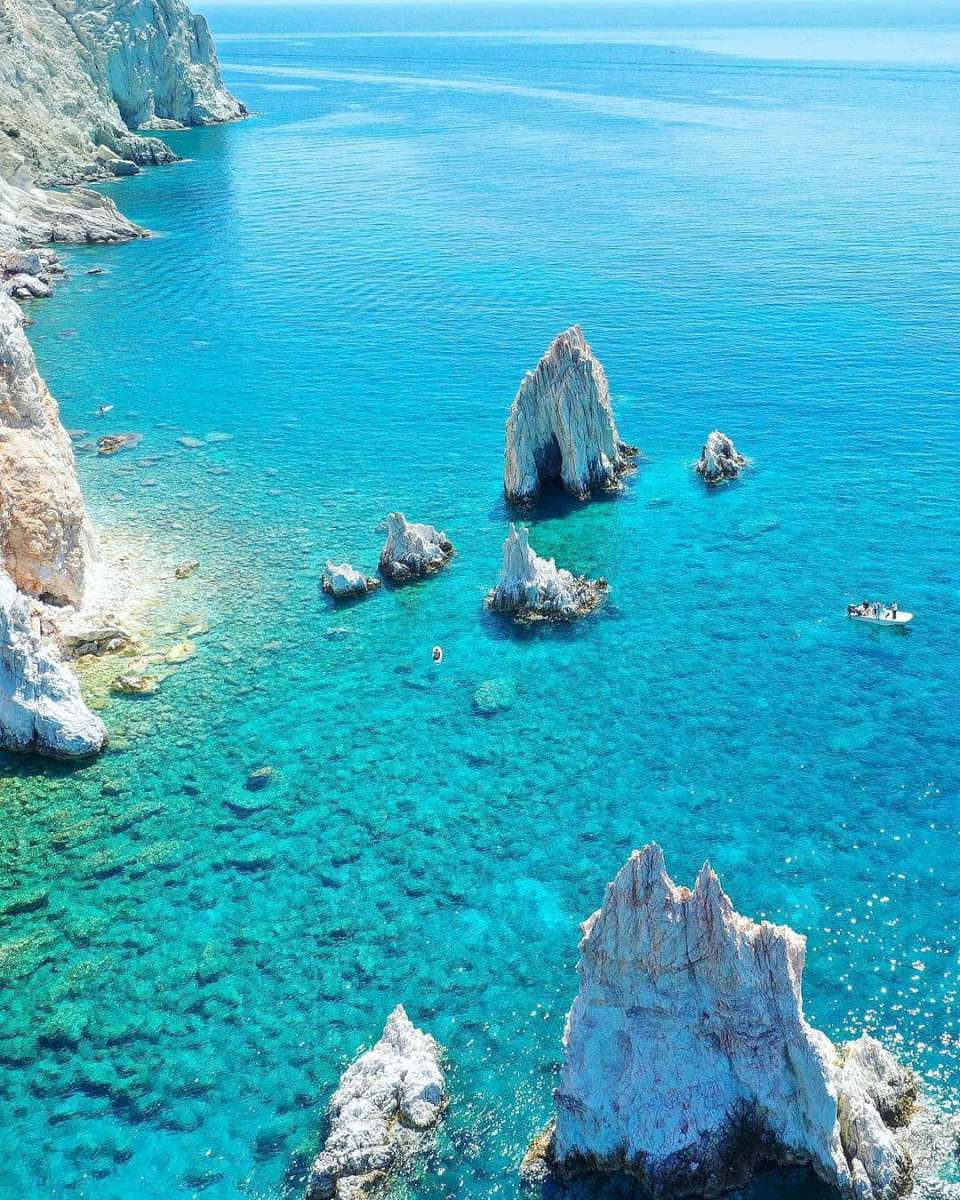
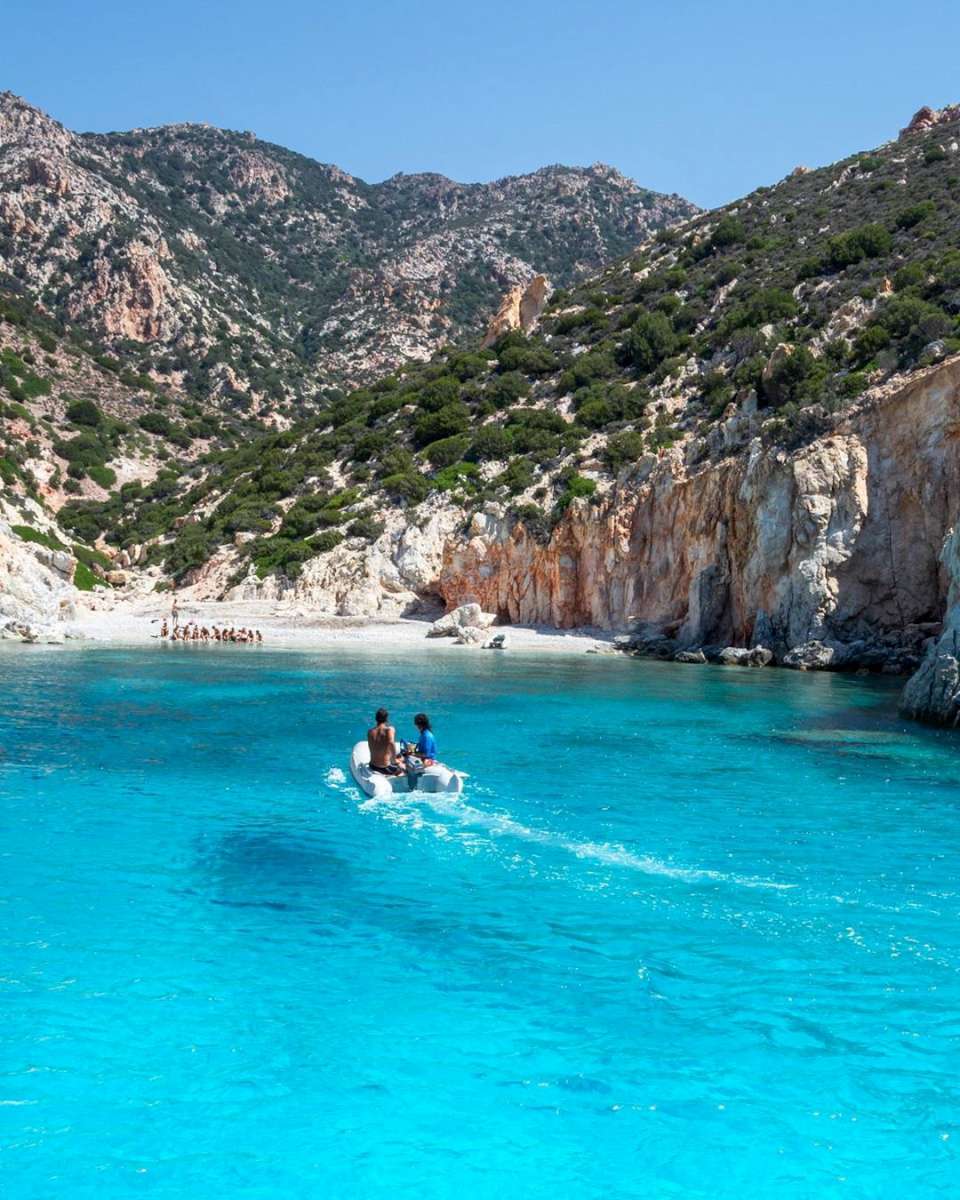
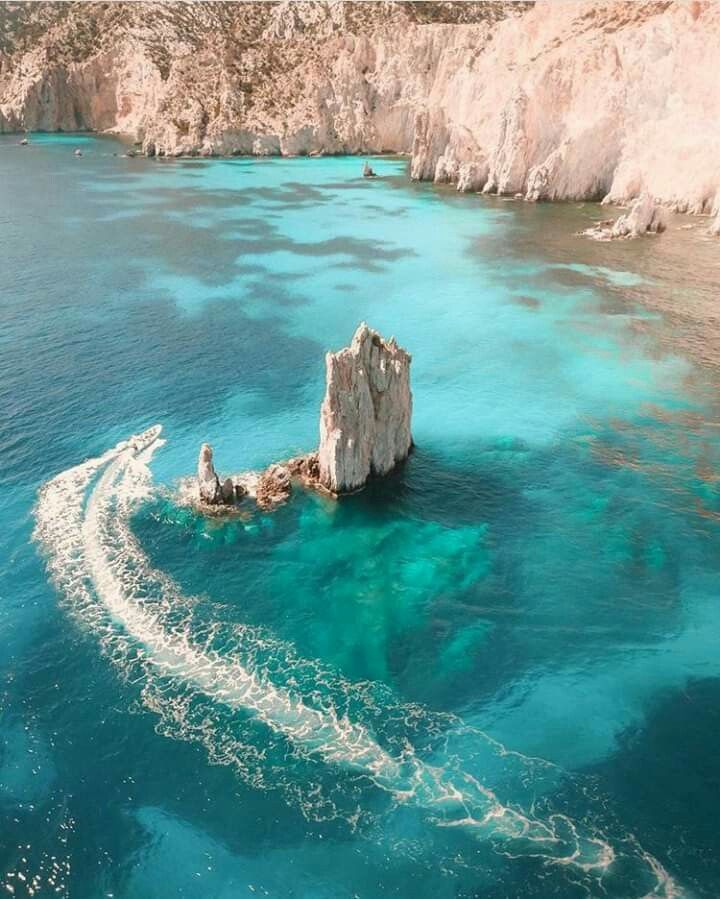
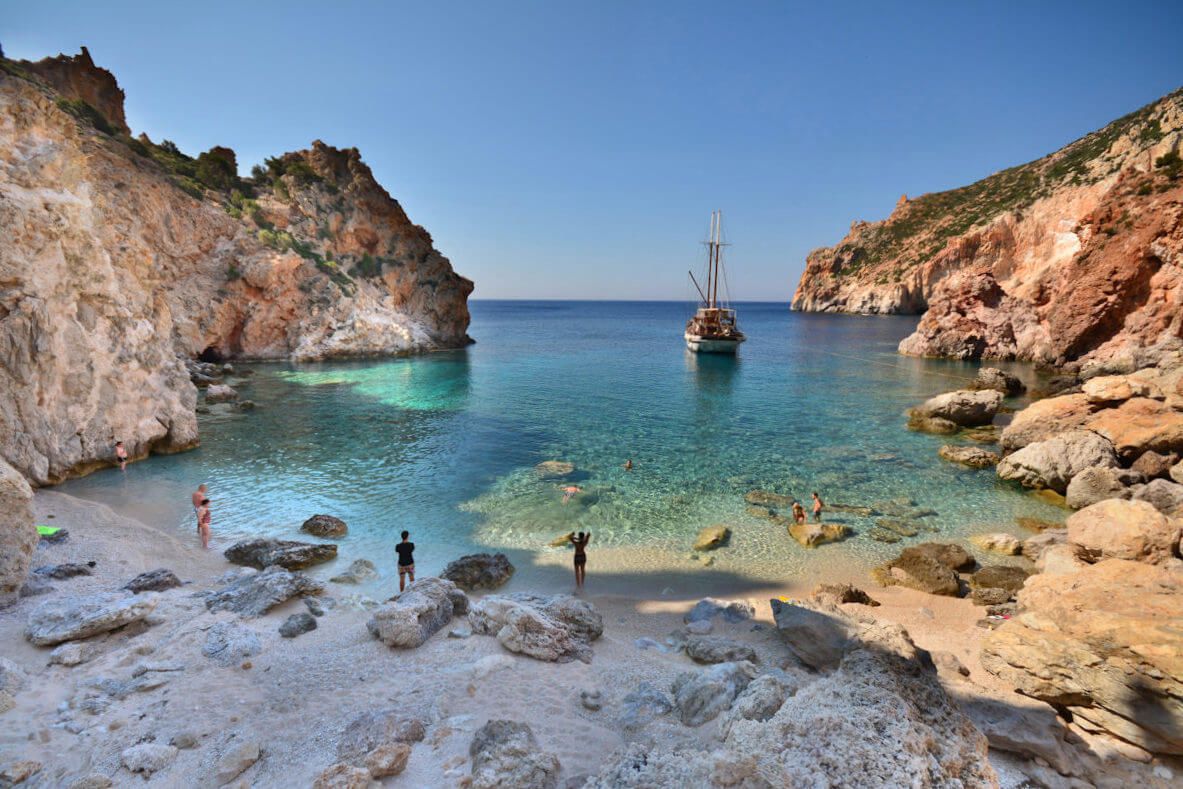
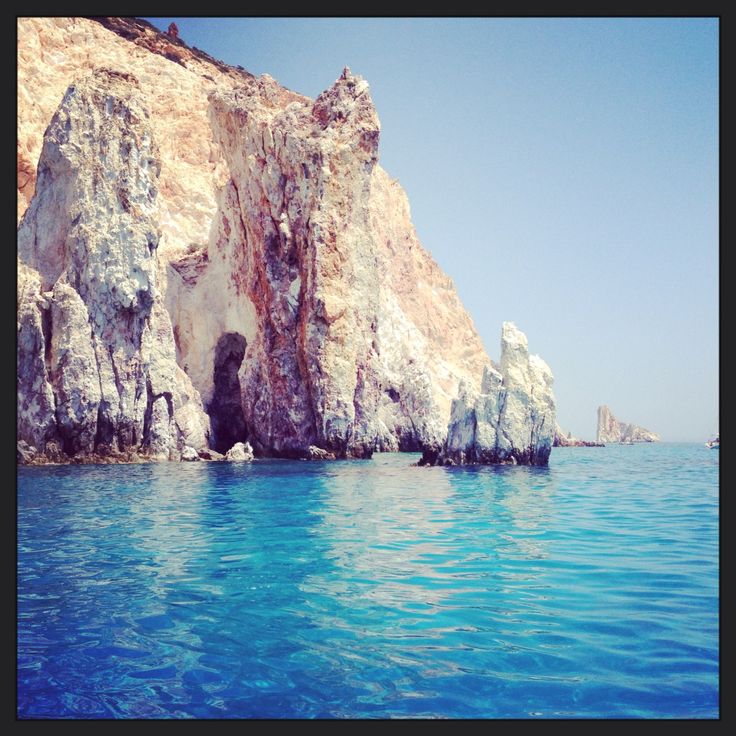
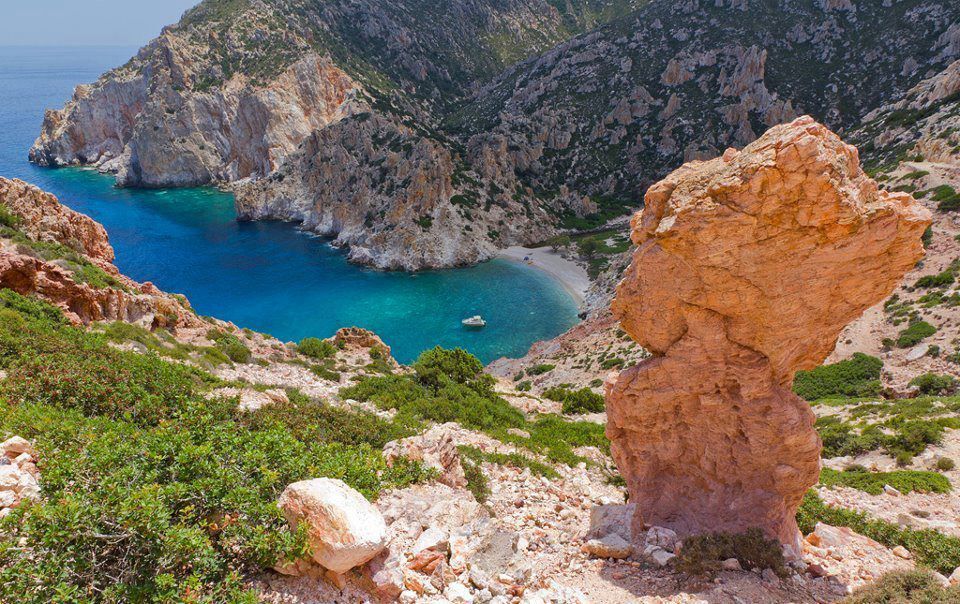
The southern coast of Polyaigos preserves the finest concentration of natural beaches in the western Cyclades — a series of coves of pale volcanic sand and turquoise water set between the sheer white cliffs and volcanic rock formations of the island’s southern face, each one accessible only from the sea and each one of extraordinary natural beauty and extraordinary natural silence. The water off the southern beaches of Polyaigos has a quality of clarity and colour that even the most experienced Cycladic sailors consistently rate among the finest they have encountered anywhere in the Aegean — the volcanic white rock of the surrounding cliffs reflecting in the shallow water a light of the most intense and most completely improbable turquoise, deepening to the purest and most saturated blue as the seabed drops away from the shore. Swimming off these beaches — the white cliffs above, the silent volcanic hills behind, the empty sea ahead and the wild goats watching from the ridge — is one of the most complete and most permanently memorable natural experiences available to any visitor in the western Cyclades, and it is available, by virtue of the island’s protected and uninhabited status, in a degree of solitude and natural completeness that the famous beaches of Milos and the other western Cycladic islands can no longer provide.
The Sea Caves and the Monk Seal Habitat
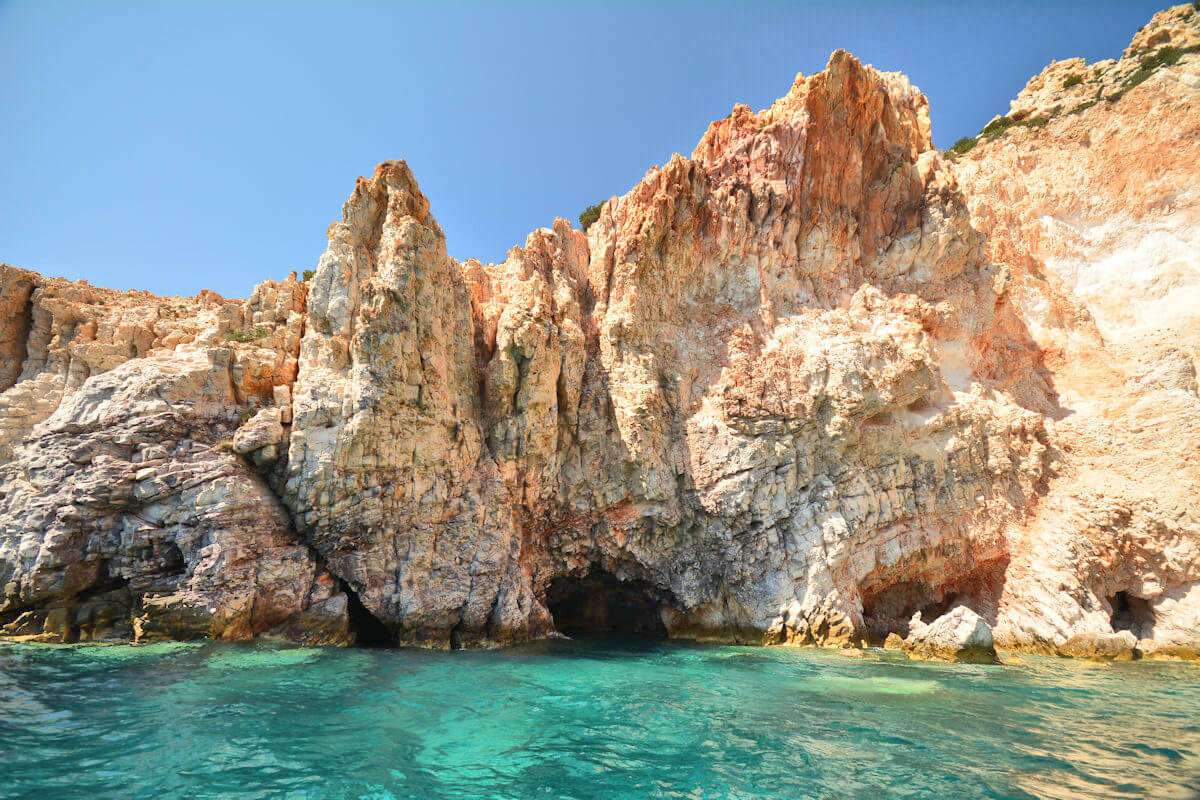
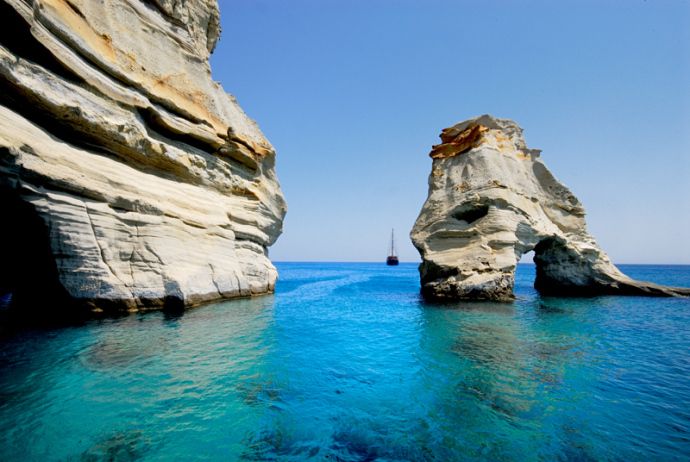
The coastline of Polyaigos is punctuated by a series of sea caves — carved into the volcanic rock of the island’s cliffs by millennia of Aegean wave action — of considerable scale and considerable natural beauty, their interiors lit by the turquoise light reflected from the water below in the manner characteristic of the volcanic cave systems of the western Cyclades. These caves are, above all, the habitat and the refuge of the Mediterranean monk seal — one of the most endangered marine mammals in the world, with a total estimated population of fewer than 800 individuals. Polyaigos is one of the most important remaining breeding grounds for the monk seal in the entire Mediterranean, its protected sea caves providing the sheltered, undisturbed breeding environment that the species requires and that the development of virtually every other accessible coastline in the Aegean has destroyed. Approaching these caves respectfully by dinghy — keeping a careful distance from any seal that may be present and observing the strict protection protocols that the island’s Natura 2000 and archaeological site designations require — is an experience of profound natural privilege: an encounter with one of the rarest and most beautiful of all Mediterranean marine animals in one of the last places in the sea where it survives undisturbed.
Sykia Bay and the Archaeological Site
On the island’s southern coast, Sykia Bay — a sheltered anchorage of great beauty and great historical depth — was specifically included in Greece’s 2025 designation of Polyaigos as an official archaeological site, its seabed preserving the remains of a Classical-period shipwreck of considerable historical significance. The designation of Sykia Bay as a protected archaeological zone reflects the extraordinary concentration of ancient maritime activity in the waters around Polyaigos — a channel that was one of the most important shipping routes in the ancient western Cyclades, connecting the mining islands of Milos and Kimolos with the trade routes of the broader Aegean, and whose seabed preserves, in consequence, a record of ancient navigation and ancient commerce of great archaeological importance. Anchoring in Sykia Bay and swimming in its extraordinarily clear water — knowing that the seabed below preserves the cargo of an ancient ship that passed through this same channel two and a half millennia ago — is one of the most completely evocative connections with the ancient Aegean world available to the cruising visitor in the western Cyclades.
The Wildlife and the Eleonora’s Falcon
Above the sea, the skies of Polyaigos are governed by the Eleonora’s Falcon — a remarkable migratory raptor that breeds on the cliffs and rocky outcrops of the Aegean islands from spring to autumn before making its extraordinary annual migration to Madagascar for the winter. Polyaigos is part of the Special Protection Area that hosts 75% of the entire world population of this species, and watching the falcons — agile, fast, elegantly proportioned, their flight of great precision and great natural authority — working the thermals above the island’s volcanic cliffs is one of the finest wildlife spectacles available to the sailing visitor in the western Cyclades. The island also hosts the Bonelli’s Eagle, a powerful and increasingly rare raptor of great beauty, alongside the endemic Milos viper and the endemic blue lizard of Milos — the latter extraordinarily vivid in the male breeding season, its scales of an intense blue-green that stands out against the pale volcanic rock with the quality of a small, living jewel.
The Wild Goats of Polyaigos
The island’s most permanent and most characteristically Polyaigos inhabitants are its wild goats — the animals whose presence gives the island its ancient name and whose long, uninterrupted tenancy of this volcanic landscape has shaped its vegetation, its ecology, and its particular quality of elemental, stripped-back natural beauty. The goats of Polyaigos have grazed this island continuously since antiquity, their browsing maintaining the island’s characteristic open scrubland and keeping the vegetation at the low, fragrant, wind-pressed level that allows the extraordinary volcanic geology of the hills to remain fully visible. Encountering the goat herds on the island’s interior paths — the animals regarding the visitor with the calm, slightly contemptuous assessment of creatures who understand that they are the owners of this landscape and that the human visitor is merely a guest — is one of the most characteristically and most memorably Polyaigos experiences, and one of the most convincingly eloquent reminders of what a Cycladic island looks like when it belongs entirely and exclusively to the natural world.
Why Choose Polyaigos
Polyaigos is the destination for every sailor in the western Cyclades who wants the rarest and most completely irreplaceable thing that the Aegean still has to offer — a coastline of extraordinary natural beauty in complete and genuine solitude, beaches of first-rank quality entirely without facilities or crowds, wildlife of international conservation significance in its natural undisturbed habitat, and the experience of an island that exists, still and completely, on its own ancient and entirely natural terms. It is not an island for those who need the reassurance of infrastructure, the comfort of a beach bar, or the social animation of a busy anchorage. It is an island for those who understand, at the deepest level, that the finest and most completely satisfying experiences the Aegean has to offer are those that ask the most of the visitor — the most independence, the most self-sufficiency, the most genuine attention to the natural world — and give back, in return, the most completely irreplaceable and the most permanently unforgettable.
For the sailing itinerary of the western Cyclades, Polyaigos is the natural partner to the Milos and Kimolos visit — barely an hour’s sail from the anchorage at Adamas and a direct, calm crossing from the port of Psathi, its addition to any western Cycladic sailing programme costing a morning’s passage and returning an entire day of extraordinary natural beauty and extraordinary natural silence. The combination of a night at anchor in Vathy on Sifnos, a day of volcanic drama at Kleftiko on Milos, and a morning anchored off the southern beaches of Polyaigos in complete solitude is, for the sailing visitor in the western Cyclades, as close to perfection as the Aegean allows.
What Polyaigos ultimately gives the visitor who earns it with the effort of getting there — by private boat, by yacht, by excursion from Milos or Kimolos — is the experience of the Aegean as it was before tourism, before development, before the age in which every beautiful coastline became a managed destination and every extraordinary beach a place where sunbeds were placed and money was exchanged. On Polyaigos the cliffs are still entirely white and the water is still entirely turquoise and the goats still own the hills and the monk seals still give birth in the sea caves and the Eleonora’s falcons still rule the air above the volcanic crags, and the whole extraordinary ensemble — one of the finest and most completely intact natural environments in the Mediterranean — is available, by private boat, to those willing to make the short passage from Kimolos or Milos to one of the last genuinely wild places in the Cyclades. It is, in the truest and most complete sense of the word, irreplaceable.