Why Monemvasia
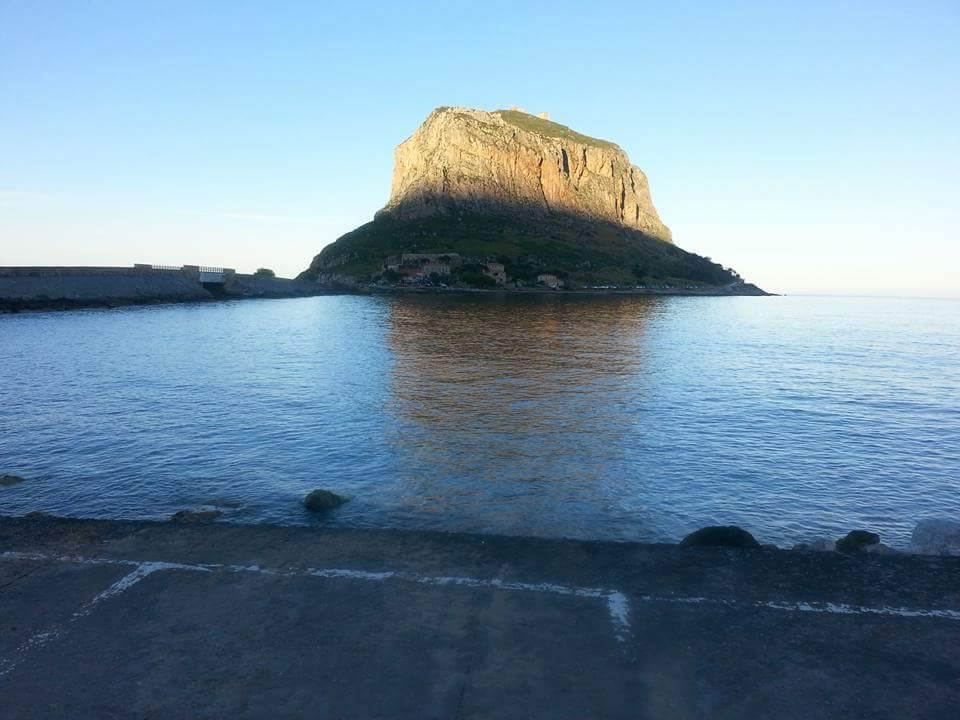
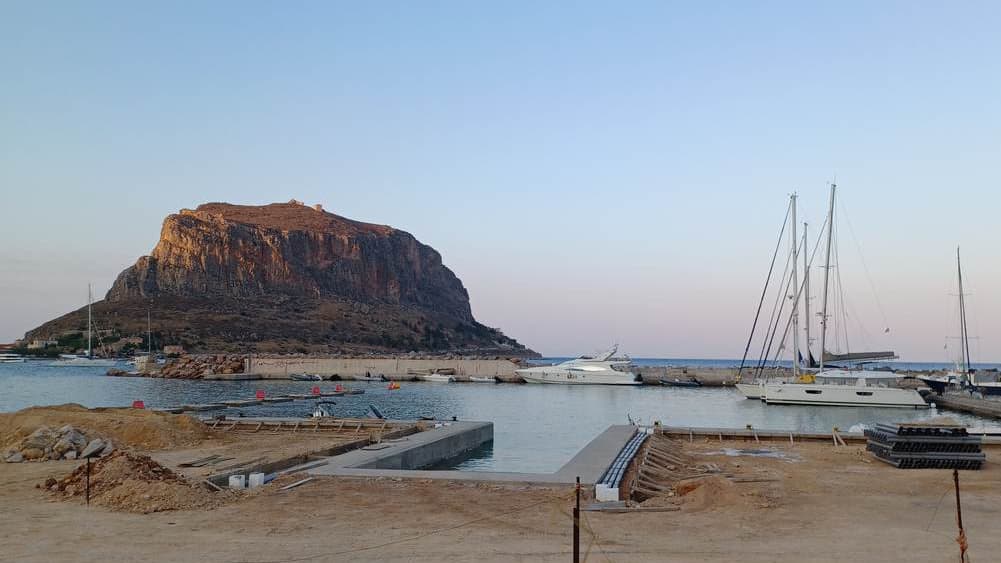
There are places in the world that are not merely beautiful or historically significant but that exist in a category entirely their own — places so completely and so consistently extraordinary in their architecture, their landscape, their historical depth, and their overall quality of experience that the act of arriving at them and walking through them operates on the visitor as a kind of revelation, a demonstration that the built environment, at its very best, can achieve a quality of human meaning and natural integration that exceeds anything that purely descriptive language can adequately convey. Monemvasia is one of these places. A medieval fortified town built on an enormous rock rising from the sea on the southeastern coast of the Peloponnese — its name meaning literally “single entrance,” a reference to the single narrow causeway connecting it to the mainland — Monemvasia is the most completely preserved and most completely extraordinary Byzantine and medieval town in Greece, its labyrinthine lanes and vaulted houses and Byzantine churches and Venetian mansions and Ottoman fountains layered one on top of the other in a rock that has been continuously inhabited since the 6th century AD and that preserves, in consequence, a density of historical experience and architectural beauty available at very few comparable sites in the entire Mediterranean world.
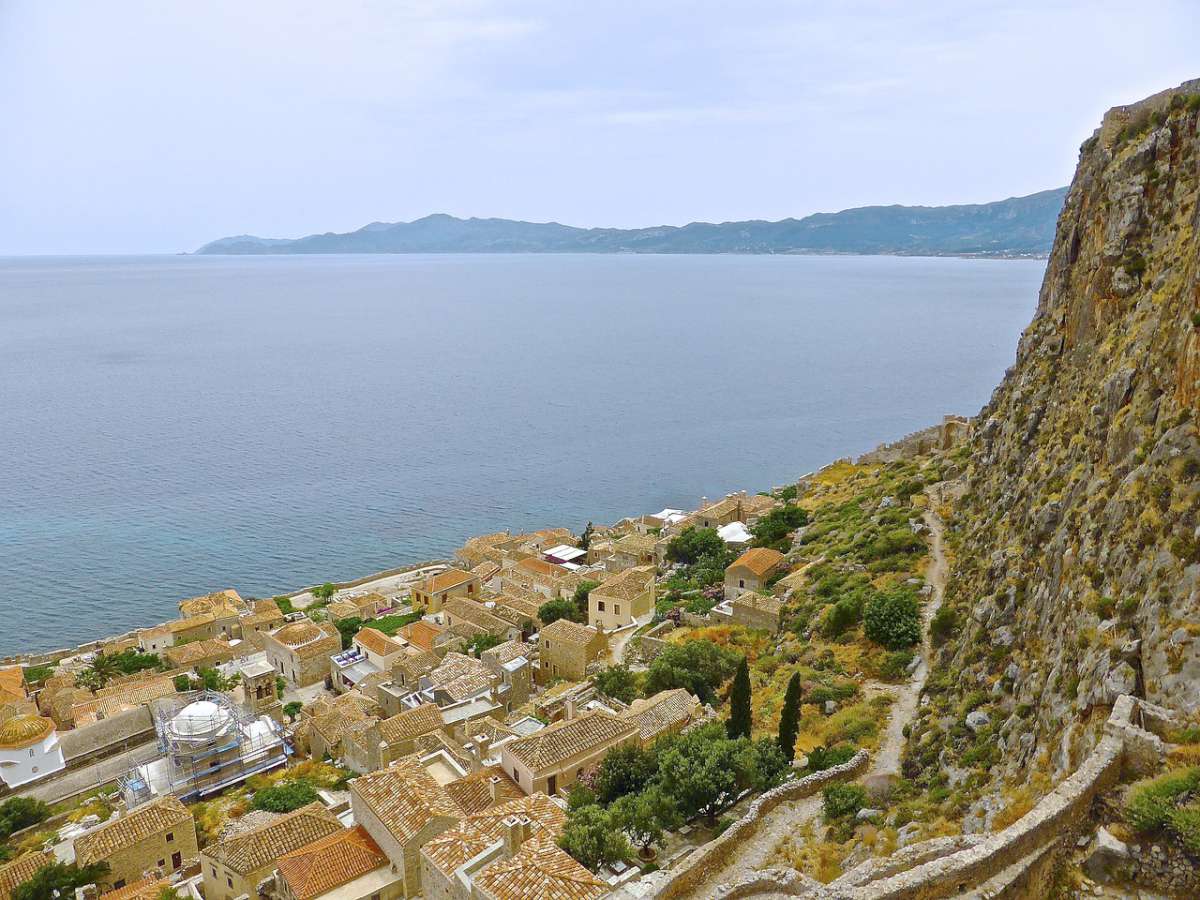
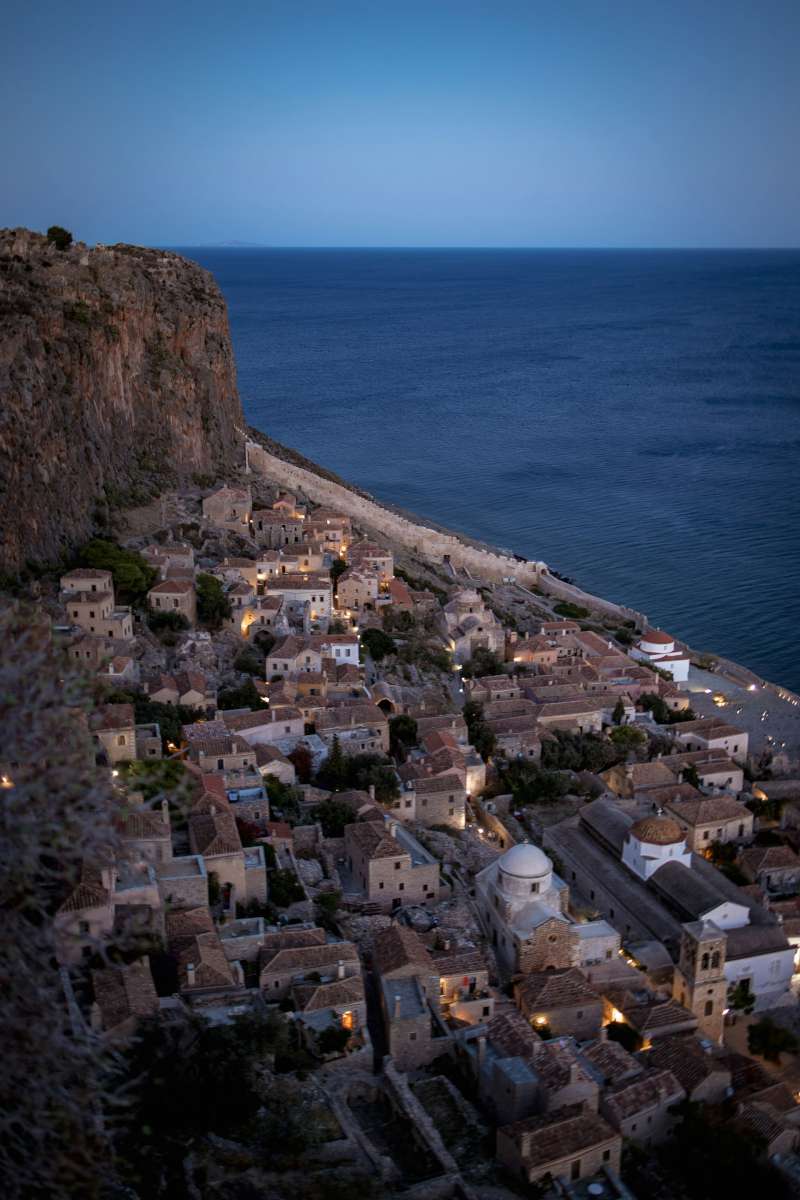
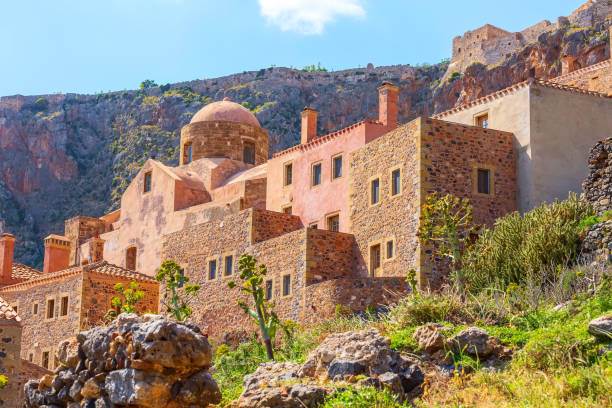
The rock of Monemvasia — a massive limestone plug 300 metres high and 1.8 kilometres long, detached from the Peloponnese coast by an earthquake in 375 AD and separated from the mainland by a narrow strait that was bridged by the single causeway that gives the town its name — dominates its section of the Laconian coast with an authority so complete and so visually overwhelming that the entire landscape organises itself around it. The lower town, on the eastern face of the rock below the summit, is a complete medieval city in miniature — its single entry gate opening onto a vaulted tunnel that emerges, blinking, into a world of Byzantine towers and Venetian palaces and Ottoman houses and flowering bougainvillea cascading over stone walls, all of it contained within the rock’s defensive perimeter and all of it in a remarkable state of preservation, restoration, and continuing inhabitation. The upper town — the ancient acropolis on the summit of the rock, accessible by a steep path from the lower town — preserves the ruins of a larger medieval city whose scale is startling when seen from above, its cisterns, churches, and house foundations extending across the summit plateau in a landscape of great historical intensity and great natural drama.
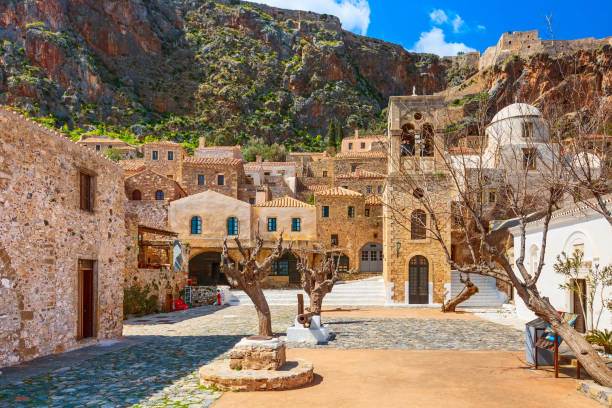
Monemvasia was, in the Byzantine and medieval periods, one of the most important ports in the Eastern Mediterranean — a major stop on the sea route between Constantinople and the Italian cities, famous for its production of the sweet Monemvasia wine that the English, unable to pronounce the city’s name, called Malmsey. The succession of powers that controlled the rock — Byzantine, Norman, Venetian, Ottoman, Venetian again, Ottoman again, and finally Greek — each left its architectural mark, and the resulting layering of styles and periods gives the lower town its extraordinary visual complexity and its endlessly surprising quality of revelation: every new lane, every new vaulted passage, every new courtyard yields a new combination of architectural elements from different centuries and different civilisations in compositions of such complete and such entirely accidental beauty that the experience of walking the town — slowly, attentively, without a fixed itinerary — is one of the most continuously and most completely rewarding of any historical town in Greece.
What to Do and What to See
The Lower Town — The Medieval City
The lower town of Monemvasia is the destination’s essential and irreplaceable experience — a walk of no more than 800 metres from the single entrance gate to the furthest point of the town, but a walk of such density of historical and architectural experience, such continuous surprise, and such overwhelming beauty that it consistently occupies visitors for a full half-day or more of deeply absorbed exploration. The Cathedral of Christ in Chains — the largest medieval church in southern Greece, its 13th-century Byzantine nave combined with a Venetian bell tower of the 16th century in a composition of great architectural distinction — is the architectural masterpiece of the lower town. The Church of Agia Sofia on the cliff edge, its 12th-century Byzantine interior preserving fragments of original frescoes of considerable quality, is the most historically venerated. And the dozens of smaller Byzantine chapels, Venetian palaces, and traditional houses that line the lanes between and around them constitute a townscape of such complete and such overwhelming architectural richness that the entire lower town — legally designated a protected archaeological site — is essentially a single, continuous monument of the highest significance.
The Upper Town and the Acropolis
The upper town of Monemvasia — reached by a steep, well-maintained path from the lower town that ascends through the natural rock to the summit plateau 300 metres above the sea — is a different and in some ways even more dramatic experience than the lower town: a wide, largely uninhabited plateau of ruined Byzantine and medieval buildings, enormous ancient cisterns, and the magnificent Church of Agia Sofia at the cliff edge, whose 13th-century octagonal dome is visible from a great distance at sea and whose interior, though partially ruined, preserves its essential architectural dignity. The views from the upper town — over the entire Laconian coast, the open Mediterranean to the south, and the lower town clinging to the rock below — are of overwhelming grandeur and overwhelming beauty.
The Beaches and the Surrounding Coast
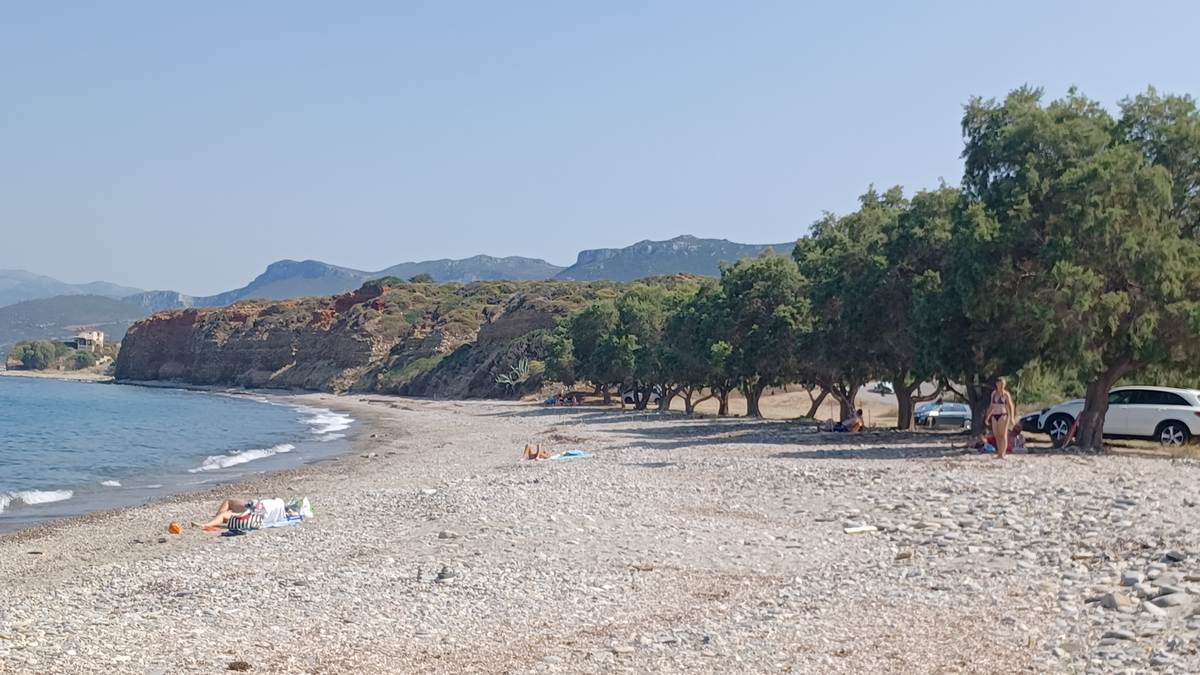
The coastline around Monemvasia — the deeply indented Laconian coast south of the rock, accessible by small boat or by the road south from the causeway — has beaches of great natural quality in a setting of complete natural solitude, the pine-forested hills and rocky headlands of the southeastern Peloponnese providing a coastal landscape of elemental Mediterranean beauty that is among the finest in the southern mainland.
Why Choose Monemvasia
Monemvasia is the destination for those who want the Greek world at its most completely historical and most completely extraordinary — who want to walk through a living medieval city of such completeness and such beauty that the experience constitutes not merely sightseeing but a genuine and permanent encounter with the Byzantine and medieval Mediterranean world. It is for lovers of architecture and history of the first rank. For those sailing the Laconian coast who want the greatest single historical destination between the Saronic Gulf and Crete. And for those who want to spend a night in the lower town — in one of the boutique hotels housed in the restored Venetian and Byzantine buildings — and experience the extraordinary quiet and the extraordinary atmosphere of the rock after the day visitors have left and the medieval city returns to itself.