Why Leros
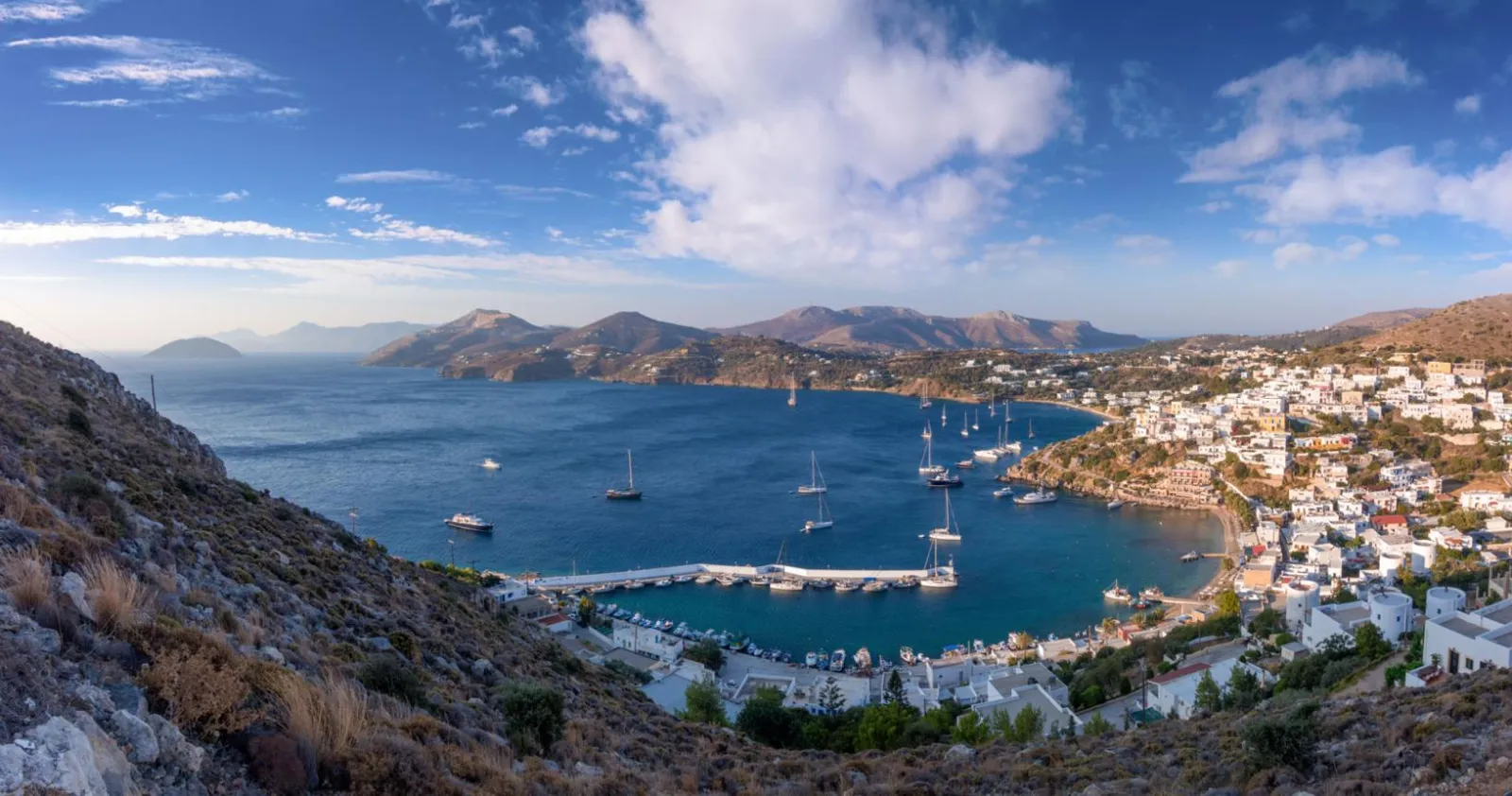
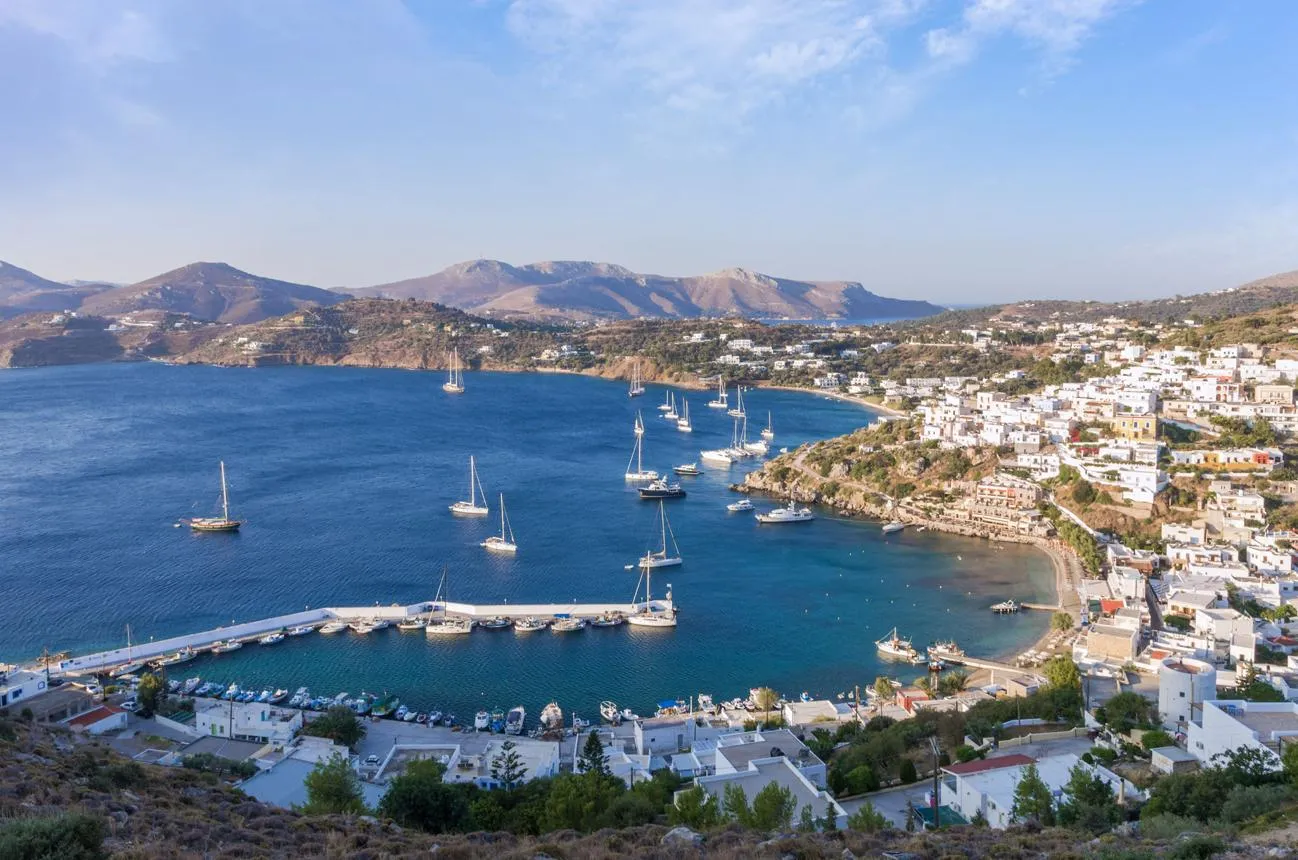
There is a particular kind of Greek island that rewards the traveller who looks a little closer, who takes a little longer, and who resists the pull of the obvious. Leros is that island. Small, deeply idiosyncratic, and possessed of a beauty that reveals itself gradually rather than all at once, it sits in the heart of the Dodecanese like a quietly magnificent secret — known to those who know, and still blissfully overlooked by the crowds that descend each summer on its more famous neighbours. Arriving by sea into Lakki Bay, one of the largest and most sheltered natural harbours in the entire Mediterranean, you immediately sense that this is a place with a story unlike any other in Greece.
That story begins with the gods. Leros was considered sacred to Artemis, the goddess of the hunt and the moon, and the island still carries something of her wildness and her grace — in the way the light shifts across its hills in the late afternoon, in the deep silence of its inland valleys, in the sudden drama of its coastline where calm, enclosed bays give way without warning to open sea and rugged cliffs. The island has five distinct harbours, an extraordinary geographical peculiarity that gives it an endlessly varied character and means that whatever the wind direction, whatever the mood, there is always a sheltered, beautiful place to anchor. For sailors, Leros is one of the finest islands in the Dodecanese.
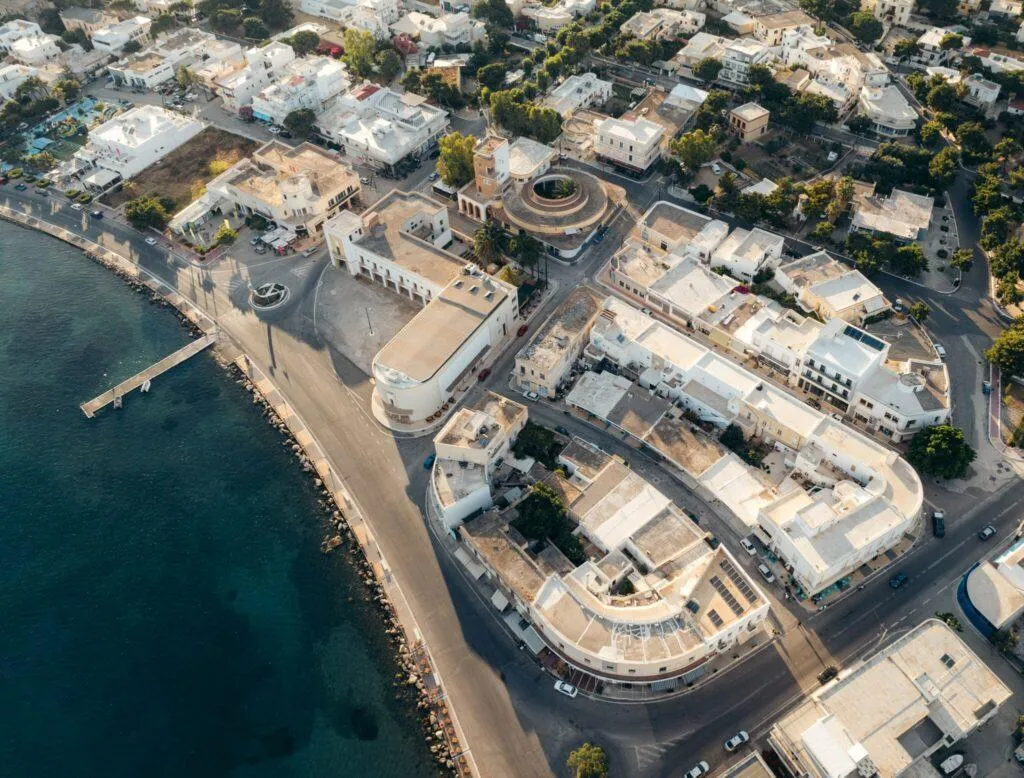
What strikes visitors most forcefully, after the natural beauty, is the remarkable Italianate architecture that distinguishes Leros from every other Greek island. During the Italian occupation of the Dodecanese in the early 20th century, Leros was chosen as a major naval base and was developed with considerable investment — Art Deco cinemas, grand administrative buildings, colonnaded piazzas, elegant rationalist facades, and a seafront promenade in the island’s main town of Agia Marina that would not look out of place on the Italian Riviera. This layer of unexpected European elegance, draped over a landscape of Greek Orthodox churches and traditional stone villages, gives Leros an atmosphere that is entirely, fascinatingly its own.
What to Do and What to See
Leros is a compact island — just 53 square kilometres — but within that modest footprint it contains a remarkable variety of landscapes, history, and experiences. The five bays that punctuate its coastline each have their own distinct character, and the best way to appreciate them is to approach each one from the sea, letting the island unfold gradually as you sail its perimeter. Inland, a handful of traditional villages and a dominant medieval castle offer a compelling counterpoint to the waterfront pleasures below. This is an island that repays unhurried exploration above all else.
The Elegant Hidden Gem of the Dodecanese
Peaceful bays, neoclassical architecture, crystal-clear waters and authentic island atmosphere make Leros one of the most charming and elegant destinations in the Aegean.
Unlike crowded tourist islands, Leros offers a slower rhythm of life, combining beautiful natural harbors, hidden beaches and timeless Greek island character.
An ideal destination for:
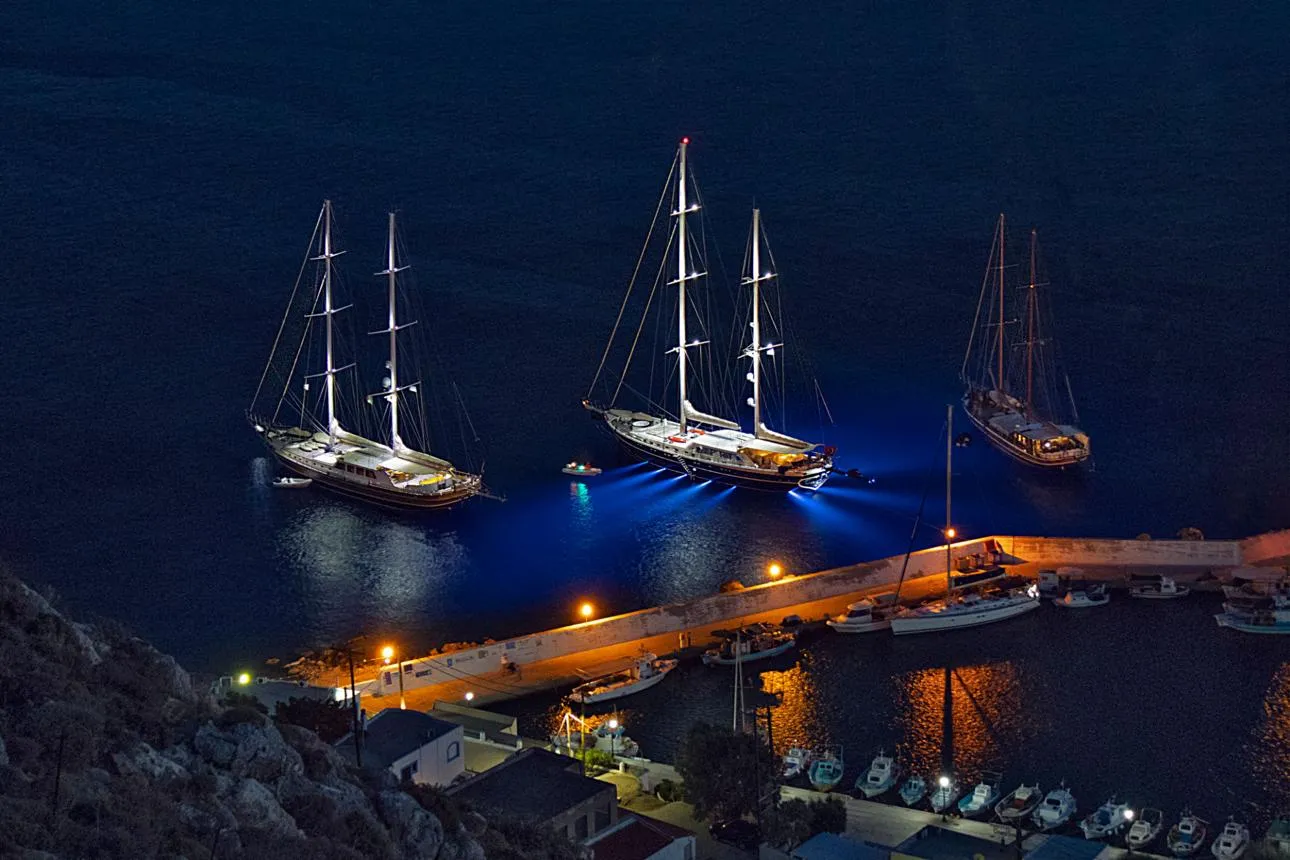
Luxury yacht cruising
Relaxed island exploration
Hidden turquoise bays
Waterfront dining
Authentic Aegean atmosphere
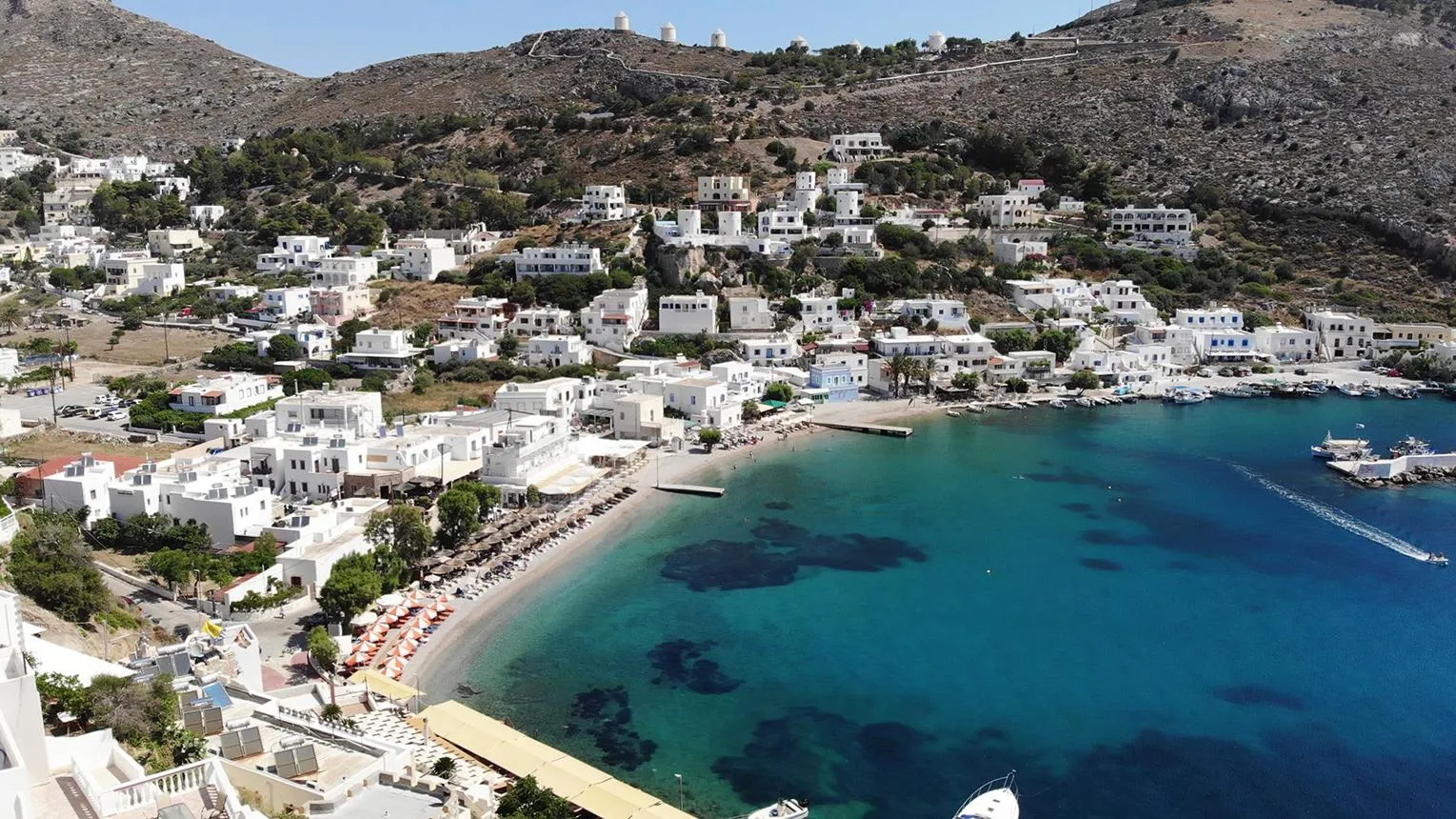
PANTELI VILLAGE
Waterfront Elegance
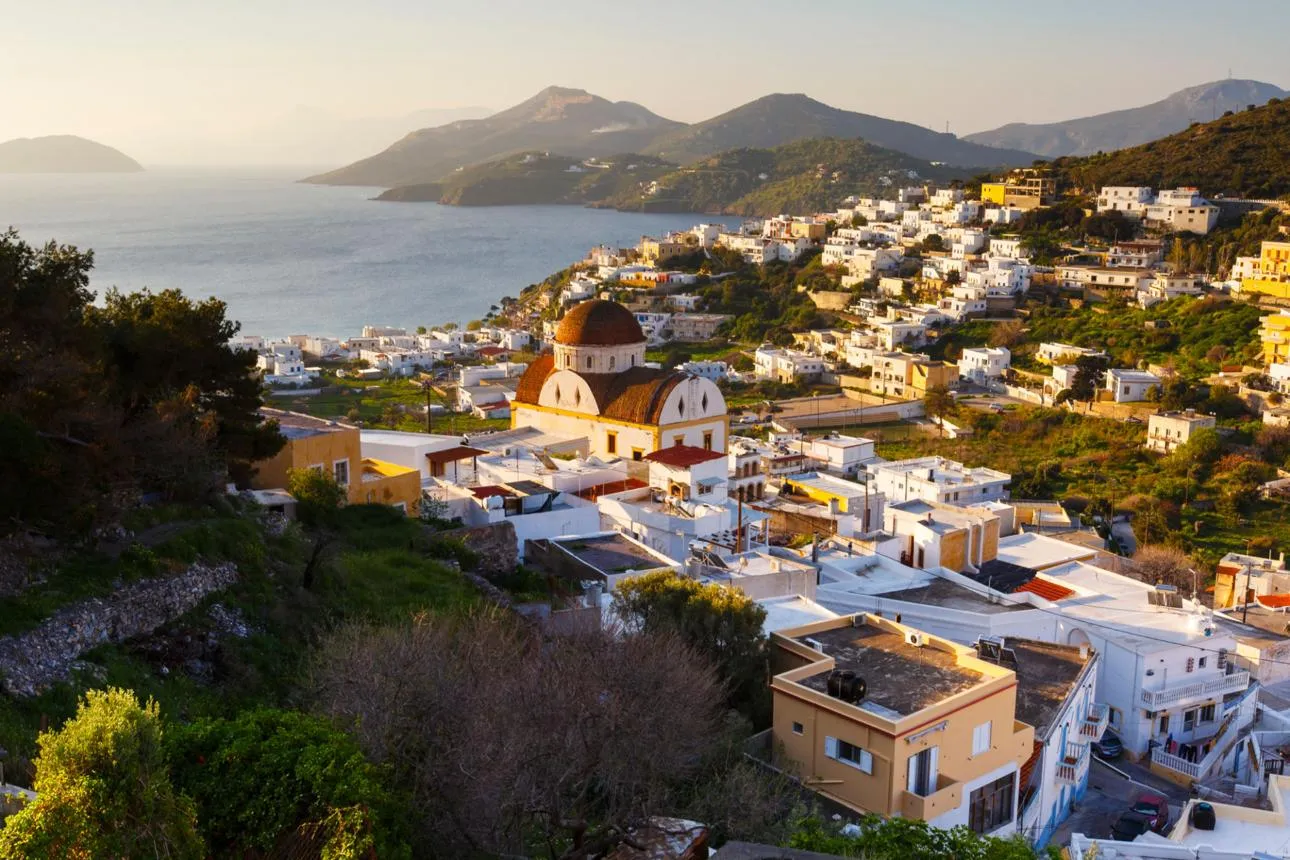
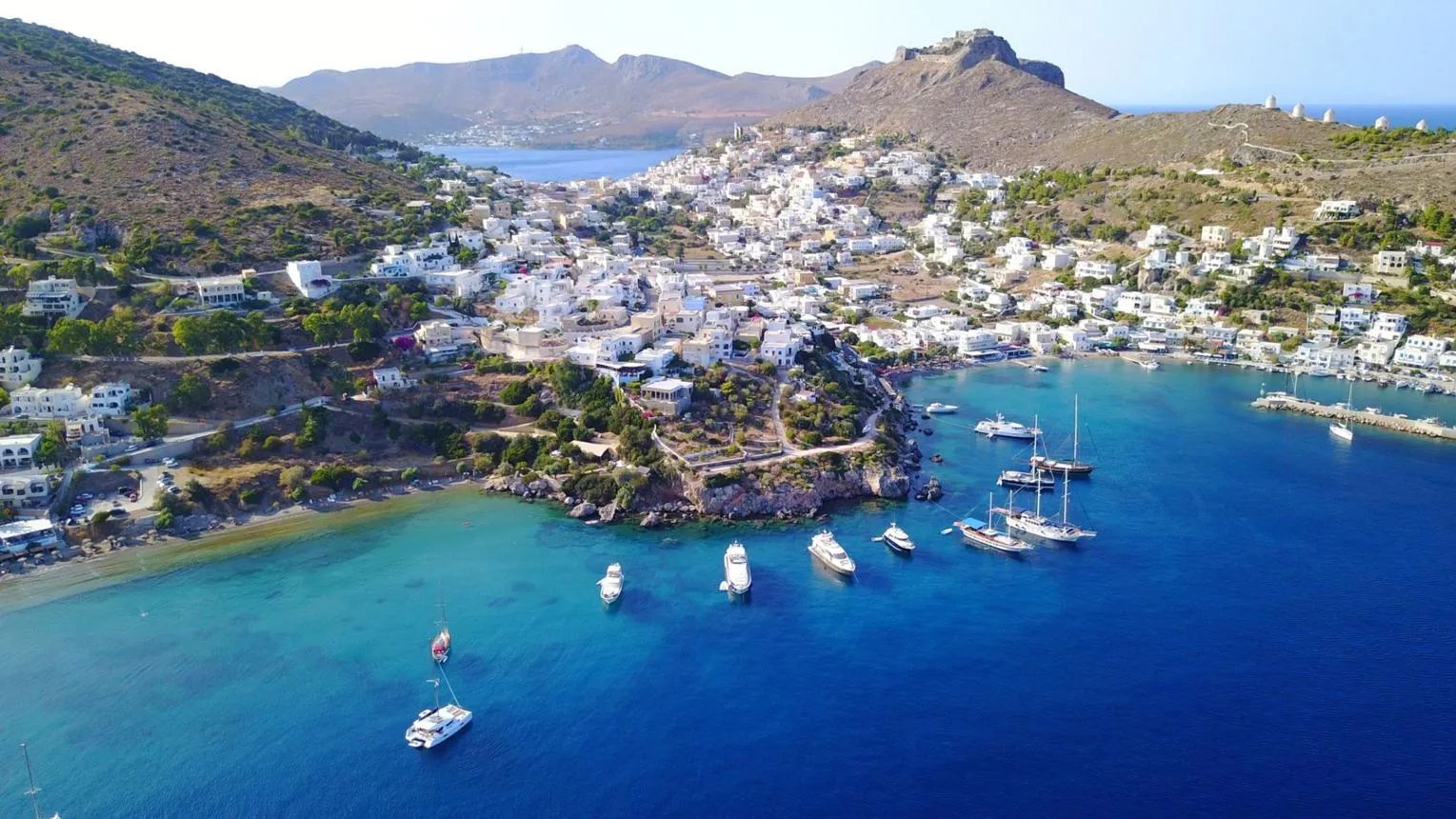
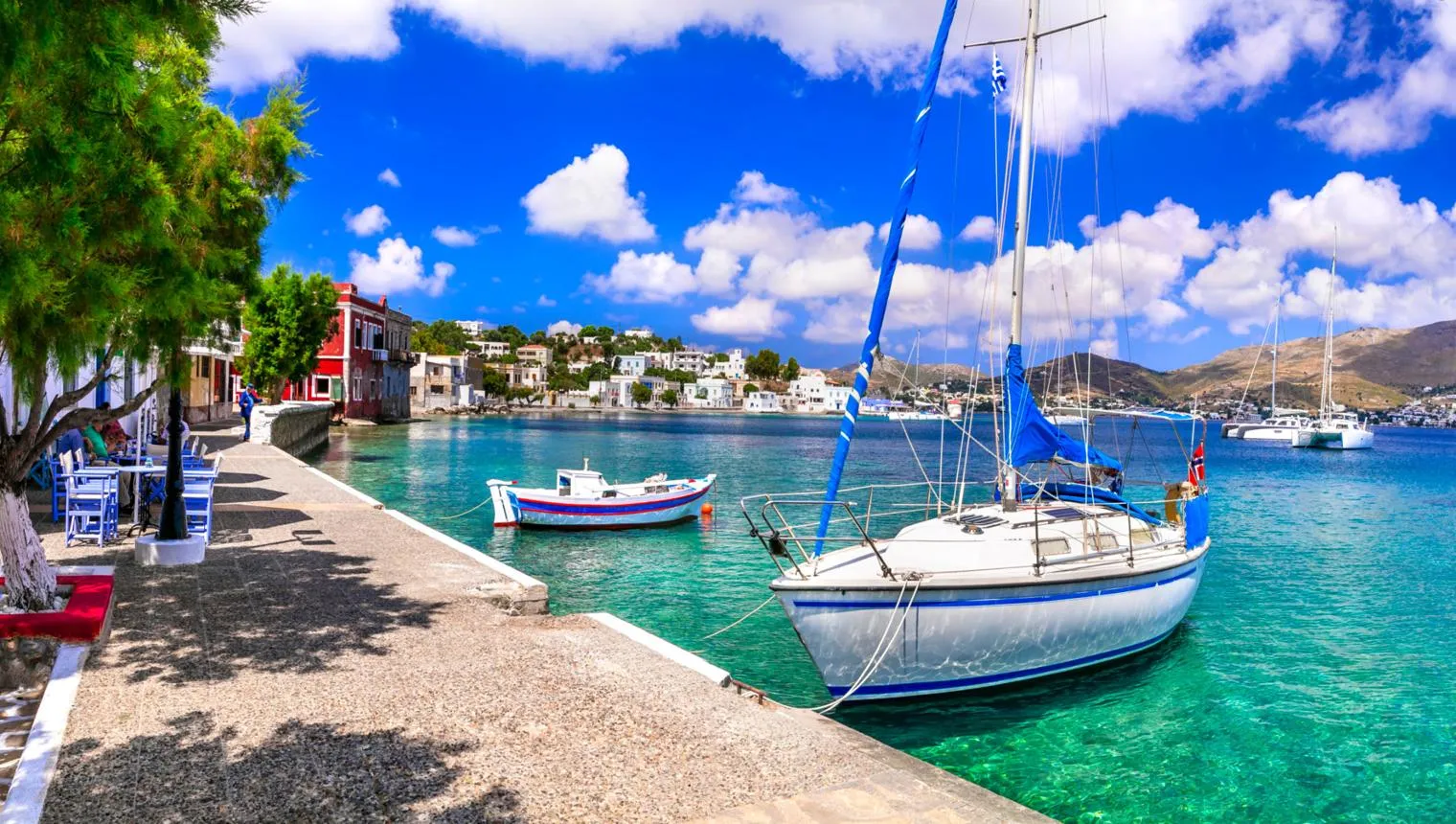
The picturesque seaside village of Panteli is one of the island’s most elegant and atmospheric locations.
Traditional waterfront tavernas, fishing boats and crystal-clear waters create the perfect Mediterranean setting for relaxed dining and sunset strolls.
Ideal for:
Waterfront lunch & dinner
Harbor atmosphere
Evening cocktails
Relaxed luxury moments
Authentic Greek island charm
Above the village rises the impressive Castle of Panagia, offering panoramic views across the Aegean.
AGIA MARINA & THE NEOCLASSICAL HARBOR
Timeless Island Character
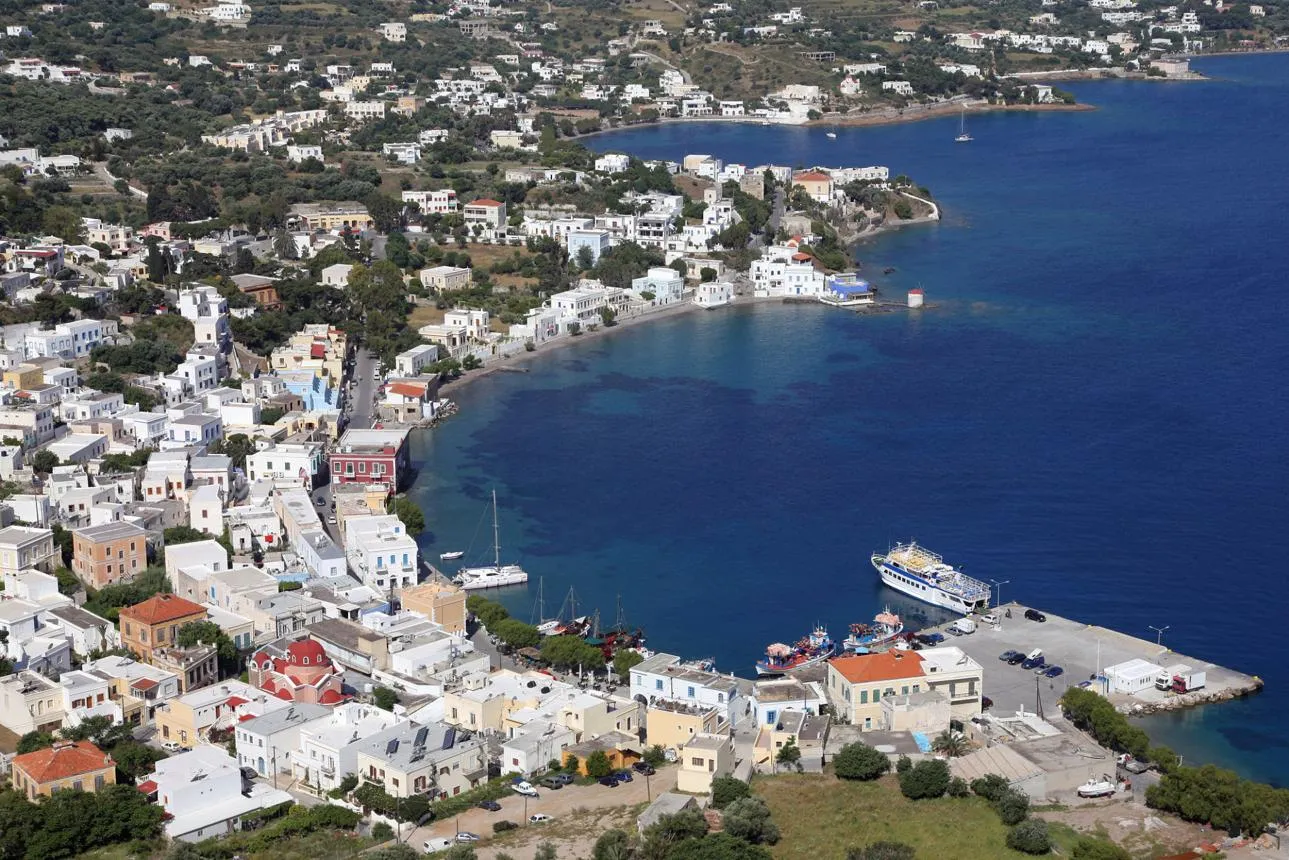
Agia Marina is famous for its elegant neoclassical buildings, colorful harbor and authentic island atmosphere.
The waterfront promenade blends traditional island life with refined architecture rarely found in smaller Greek islands.
Guests may enjoy:
Harbor cafés & boutique atmosphere
Traditional architecture
Relaxed seaside walks
Authentic local culture
Beautiful marina scenery
One of the most photogenic harbor towns in the Dodecanese.
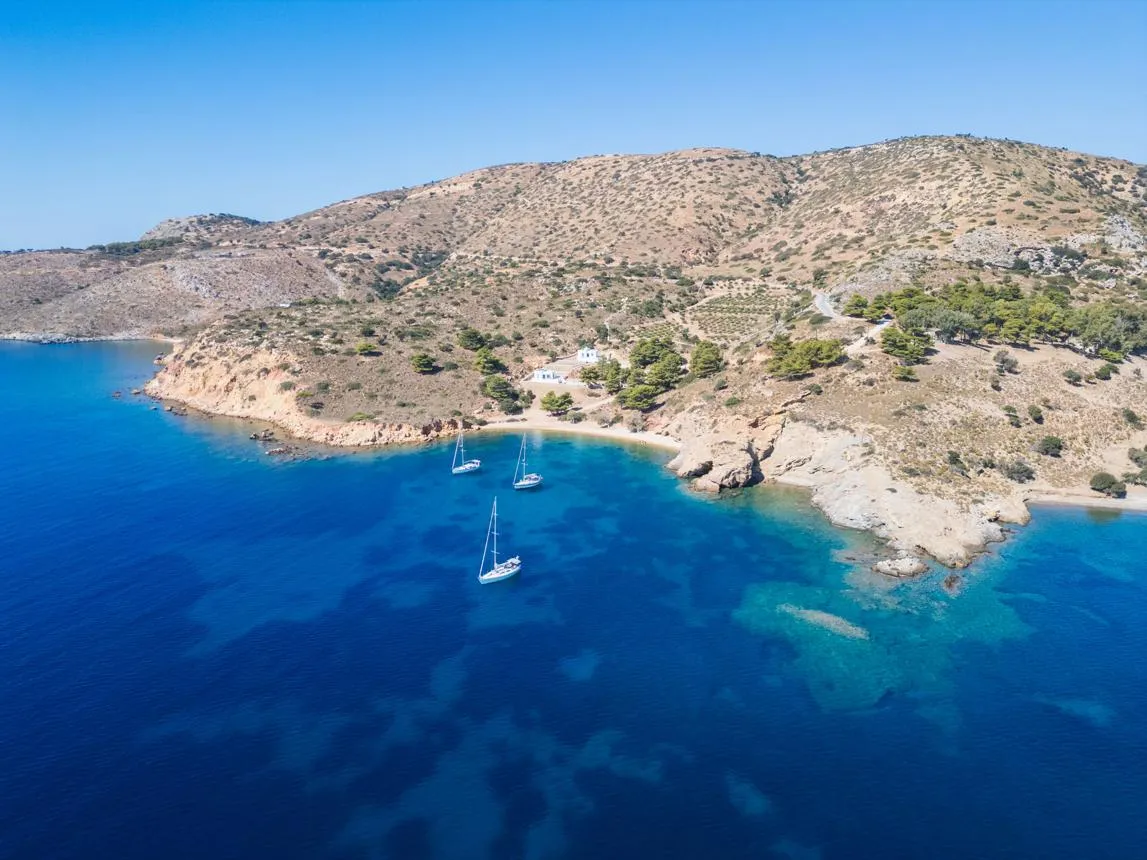
BLEFOUTIS BAY
Crystal Waters & Total Serenity
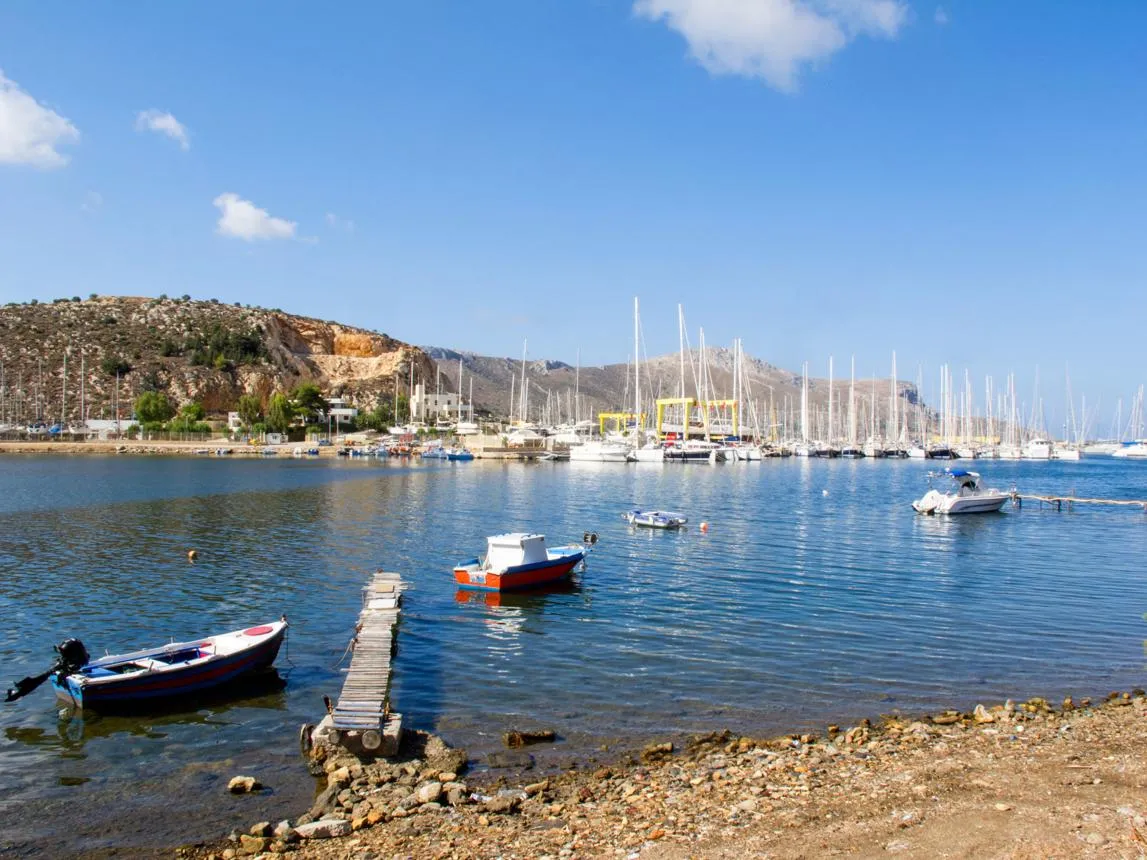
Located on the northern side of the island, Blefoutis Bay offers calm turquoise waters and a peaceful atmosphere ideal for yacht anchoring.
Protected from summer winds, the bay is perfect for:
Swimming
Floating relaxation
Paddleboarding
Snorkeling
Private sunset moments
A hidden paradise for guests seeking tranquility and natural beauty.
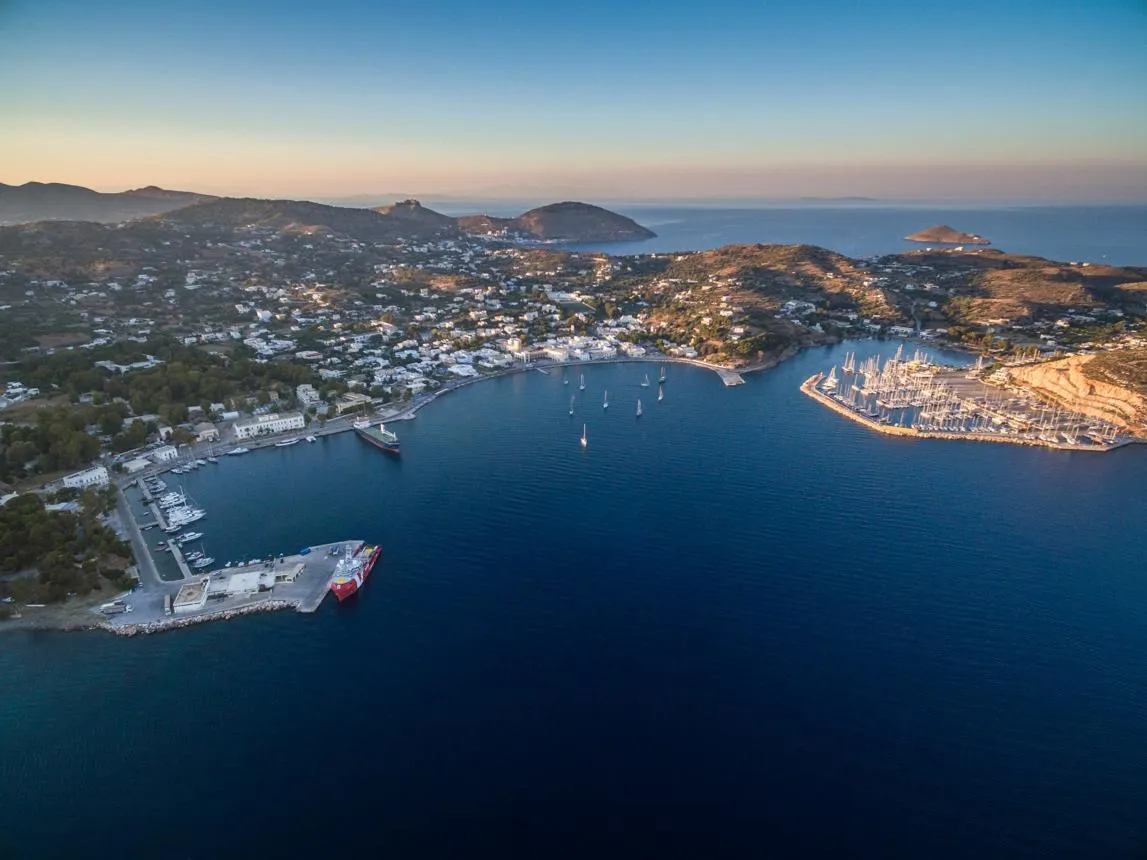
LAKKI
Italy-Inspired Architecture in the Aegean
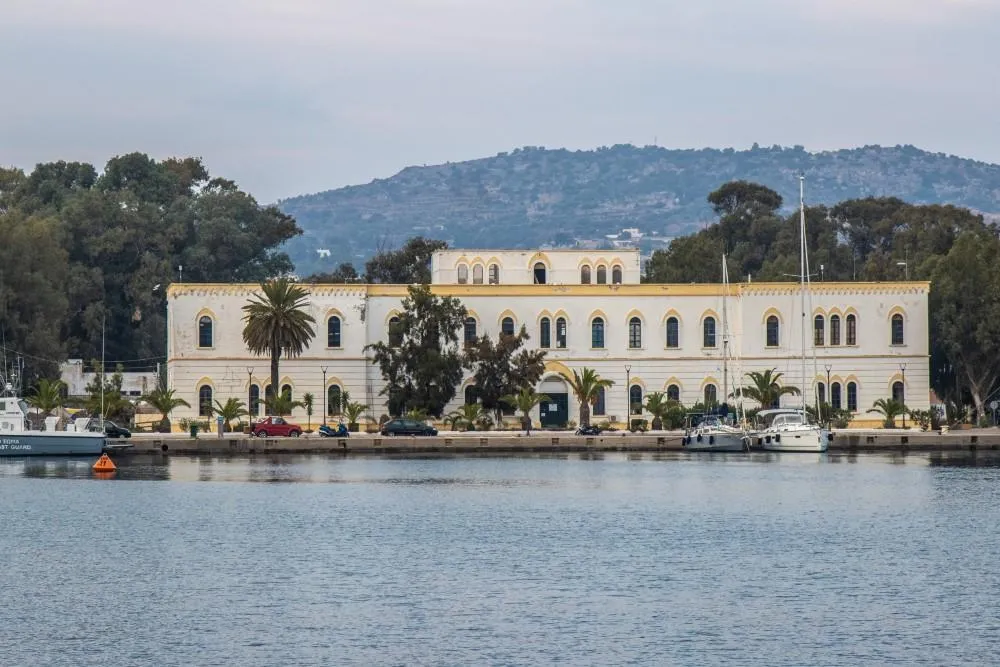
The port town of Lakki is famous for its rare Italian rationalist architecture dating from the 1930s.
Wide boulevards, geometric buildings and a large natural harbor create a completely different atmosphere from traditional Cycladic villages.
Lakki offers:
Unique architectural scenery
Large protected harbor
Stylish marina atmosphere
Elegant waterfront cafés
Fascinating island history
One of the most architecturally unique destinations in Greece.
CASTLE OF PANAGIA
The Crown Above Leros
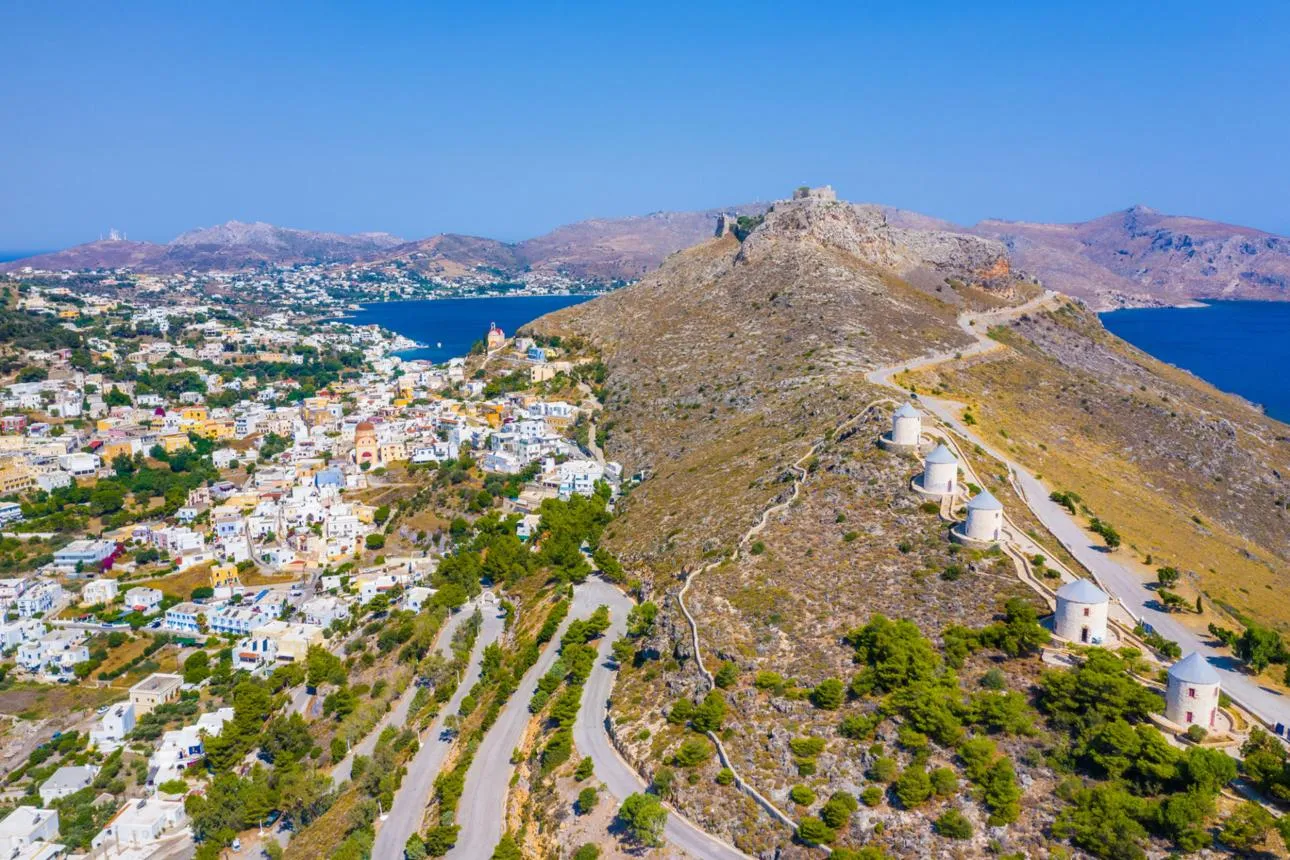
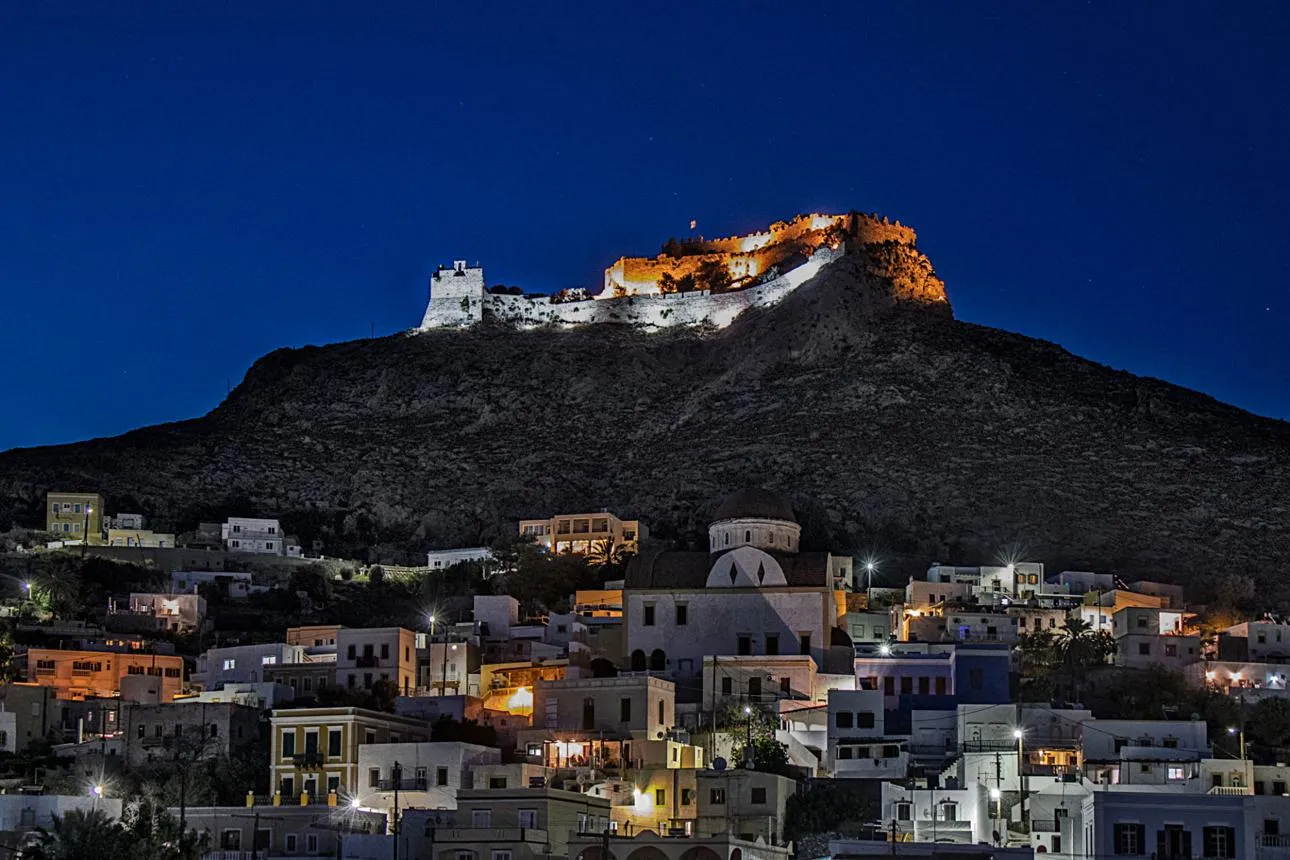
Perched dramatically above Panteli, the imposing Castle of Panagia is one of the island’s most iconic landmarks.
Built by the Knights of Saint John, the castle dominates the skyline of Leros and offers breathtaking panoramic views across the Aegean Sea, the surrounding bays and the neighboring islands.
A visit to the castle combines:
Spectacular panoramic scenery
Historic medieval architecture
Sunset photography
Traditional whitewashed pathways
One of the best viewpoints in the Dodecanese
THE VIEW FROM THE CASTLE
Panoramic Aegean Beauty
From the top of the castle walls, guests enjoy stunning panoramic views over:
Panteli Bay
Agia Marina harbor
Lakki natural harbor
The surrounding turquoise coastline
Endless Aegean blue horizons
Especially during golden hour and sunset, the atmosphere becomes truly magical as the island lights begin to glow beneath the castle.
One of the most photogenic viewpoints in the entire Dodecanese.
THE LEROS EXPERIENCE
Leros combines hidden turquoise bays, elegant harbor towns and authentic island life with a peaceful atmosphere rarely found in the Mediterranean today.
Perfectly suited for luxury yacht exploration, the island offers calm cruising waters, beautiful anchorages and unforgettable sunset scenery.
A destination where simplicity becomes true luxury.
Why Choose Leros
Leros is the island for the traveller who has grown slightly weary of being told where to go and what to feel. It does not market itself aggressively, it does not offer a glossy, simplified version of the Greek island experience, and it is entirely uninterested in competing with Santorini for Instagram. What it offers instead is something increasingly rare in the Mediterranean: the genuine, unmediated experience of a real place — with all the texture, complexity, and quiet beauty that implies. The traveller who chooses Leros is choosing depth over spectacle, and they will not be disappointed.
For couples and those seeking tranquillity and romance, Leros is close to ideal. The harbour evenings at Agia Marina, the castle at sunset, the long unhurried meals at waterfront tavernas, the sense of having discovered somewhere that has not been processed for easy consumption — all of this adds up to an experience of rare intimacy and calm. The island’s small scale means that in a few days you can feel genuinely at home here in a way that is simply impossible on a larger, busier island.
What ultimately separates Leros from the rest of the Dodecanese is the astonishing layering of its history and character. In the space of a single day you can walk through ancient ruins sacred to a Greek goddess, stand in a medieval castle built by the Knights of St. John, wander an Art Deco Italian piazza, and pay your respects at a British war cemetery — all on an island small enough to cross in under an hour. Very few places on earth contain so much history in so little space, worn so lightly and lived in so naturally. That, in the end, is what makes Leros unforgettable: it does not show you its past as a performance. It simply lives inside it, quietly and completely, and invites you to do the same.