Why Kyra Panagia
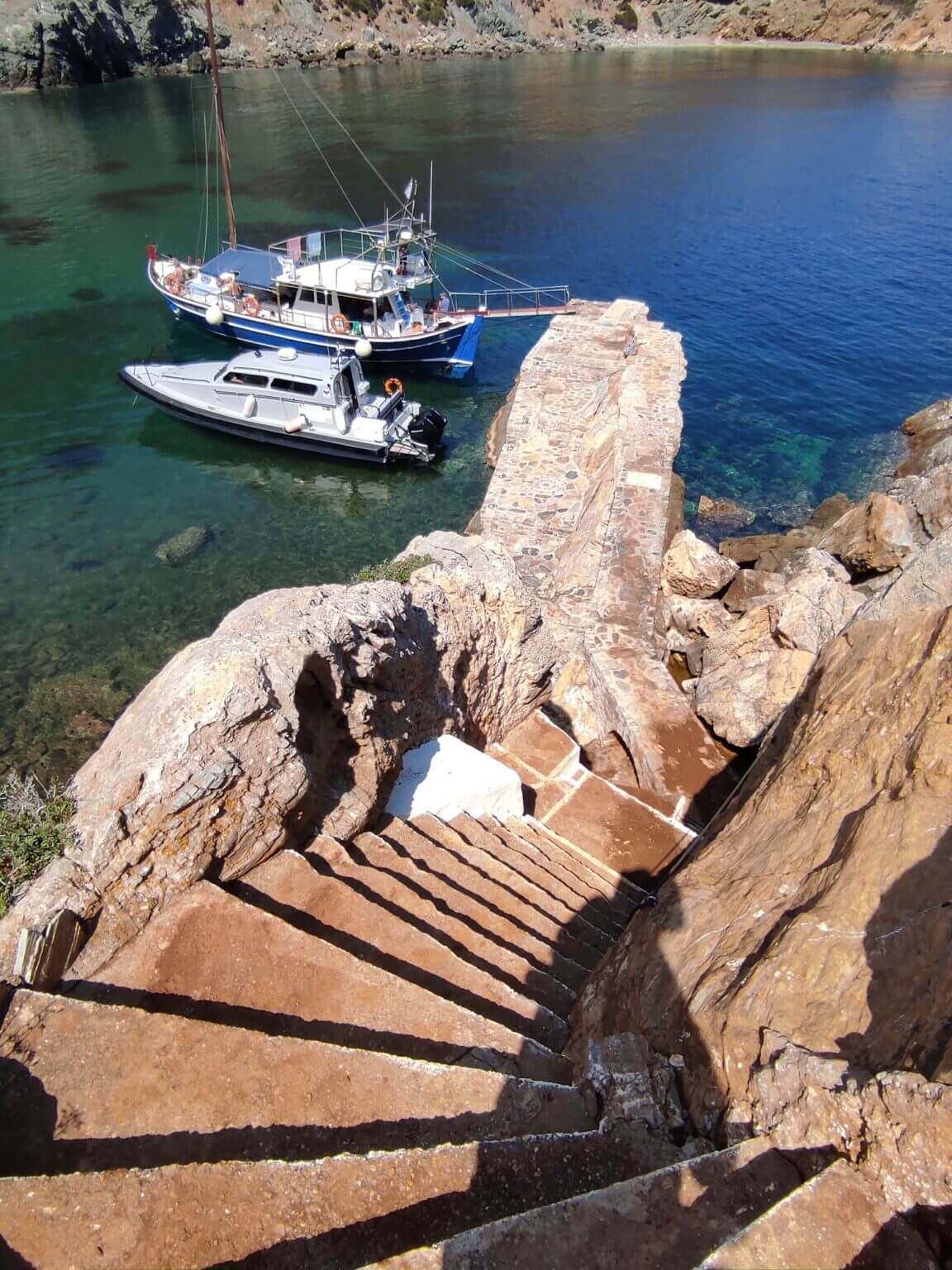
There are places in the Greek world that exist beyond the ordinary categories of travel — places that are not resorts, not destinations in the conventional sense, not islands you can book a hotel on or find a taverna at the end of a long afternoon. Kyra Panagia is one of these places. One of the uninhabited satellite islands of the National Marine Park of Alonissos, lying some 25 nautical miles northeast of Skopelos in the heart of the most protected marine environment in Europe, Kyra Panagia is accessible only by sea, inhabited only by a single monk in an ancient monastery and by the wild goats, rare birds, and extraordinary marine life that have made this island their undisturbed home for centuries. To arrive here by yacht — to drop anchor in one of its two deeply sheltered sandy bays and step ashore into a silence and a wildness that feel entirely removed from the modern world — is to experience the Aegean in a state of grace that is simply, and increasingly, without parallel.
The island is not large — roughly 25 square kilometres of densely vegetated hills, steep valleys, and a coastline of considerable drama — but within those dimensions it contains a variety of landscape and natural richness that belies its modest size. The interior is covered in ancient holm oak and maquis scrub, the valleys watered by springs that run even through the summer months and that give the island a lushness rare in the northern Aegean. Wild goats move across the hillsides in groups, entirely untroubled by the occasional presence of visitors, and the birdlife — including Eleonora’s falcon, the Audouin’s gull, and the shearwaters that nest in the island’s sea caves — is of a quality that draws ornithologists from across Europe. Beneath the surface, the waters surrounding Kyra Panagia are among the cleanest and most biologically rich in the entire Mediterranean, their visibility regularly exceeding 30 metres and their depths inhabited by a diversity of fish, invertebrates, and marine mammals that reflects the full benefit of decades of effective protection.
What gives Kyra Panagia its particular and unforgettable quality, beyond the natural beauty and the biological richness, is the feeling it produces in the visitor of having stepped outside the ordinary boundaries of time. The monastery — ancient, still functioning, tended by a single monk who has chosen this extraordinary isolation as his vocation — speaks of a continuous human presence on this island stretching back through the Byzantine era and beyond. The wild goats move across the same hillsides they have inhabited for millennia. The sea caves that indent the coastline were sheltering sailors long before the monastery was built. To spend even a single day anchored here, swimming in water of exceptional clarity, walking the old paths through the maquis, and sitting in the evening silence of the bay with nothing but sea and sky and the distant outline of the next island on every horizon, is to experience a quality of stillness that is both deeply restorative and, in the deepest sense, genuinely humbling.
What to Do and What to See
Kyra Panagia does not offer organised activities, guided tours, or any of the infrastructure that the word “destination” usually implies. What it offers is something rarer and more valuable: access to a natural and historical environment of exceptional quality, the freedom to explore it at your own pace and on your own terms, and the particular pleasure of being somewhere genuinely, completely, and beautifully off the beaten path. For those arriving by yacht, the island’s two main bays provide superb anchorages, and the combination of extraordinary swimming, wildlife watching, monastery visiting, and coastal walking makes a full and deeply rewarding day entirely from those simple elements.
The Monastery of Kyra Panagia
The ancient monastery from which the island takes its name stands above the northern bay in a position of great natural beauty — its whitewashed walls and blue-domed church visible from the sea on the approach, surrounded by the shade of ancient plane trees and the sound of the spring that has watered the monastic garden for centuries. The monastery’s origins are traced to the Byzantine era, and the current building, though much restored, preserves elements of considerable age and considerable beauty. It is inhabited today by a single monk — one of the most extraordinary vocations in the Greek Orthodox world — who maintains the church, tends the garden, and receives occasional visitors with the gracious, unhurried hospitality of someone for whom the arrival of a yacht in the bay below is a small but welcome variation in the rhythm of a day that is otherwise entirely shaped by prayer, work, and the natural world.
Visiting the monastery is a privilege that should be approached with appropriate respect — modest dress is required, and the monk’s schedule of prayer and work naturally takes precedence over any tourist agenda. But the welcome extended to respectful visitors is genuine, and the interior of the church — its walls covered in frescoes of varying age, its iconostasis carved and gilded, its atmosphere of cool, fragrant, ancient devotion — is one of the most moving small sacred spaces in the northern Aegean. The monastery’s feast day, celebrated on the 15th of August — the Dormition of the Virgin, one of the most important dates in the Orthodox calendar — draws a small flotilla of boats from Alonissos and the surrounding islands for a celebration of remarkable intimacy and authentic religious feeling.
The Northern Bay — Agios Petros
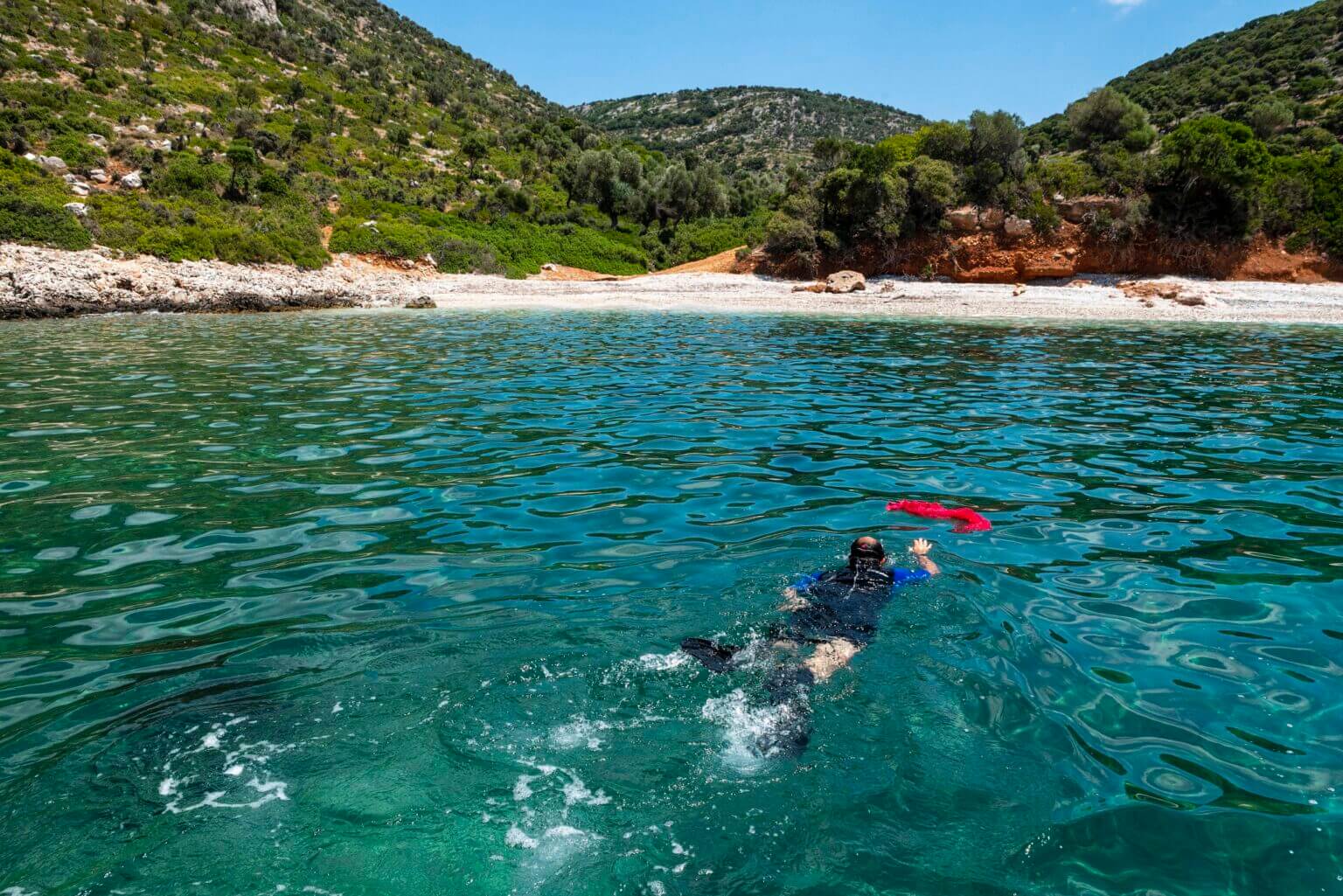
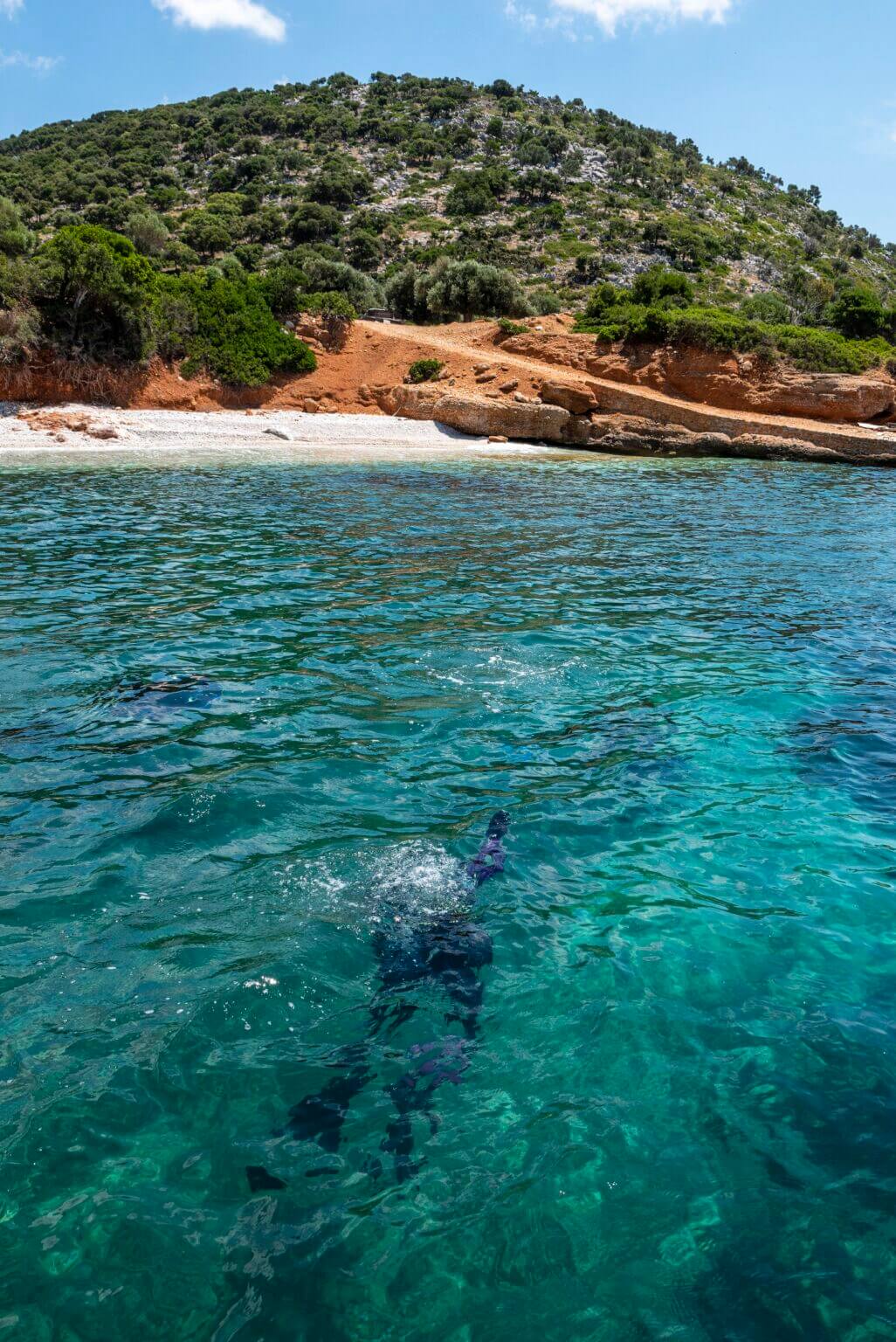
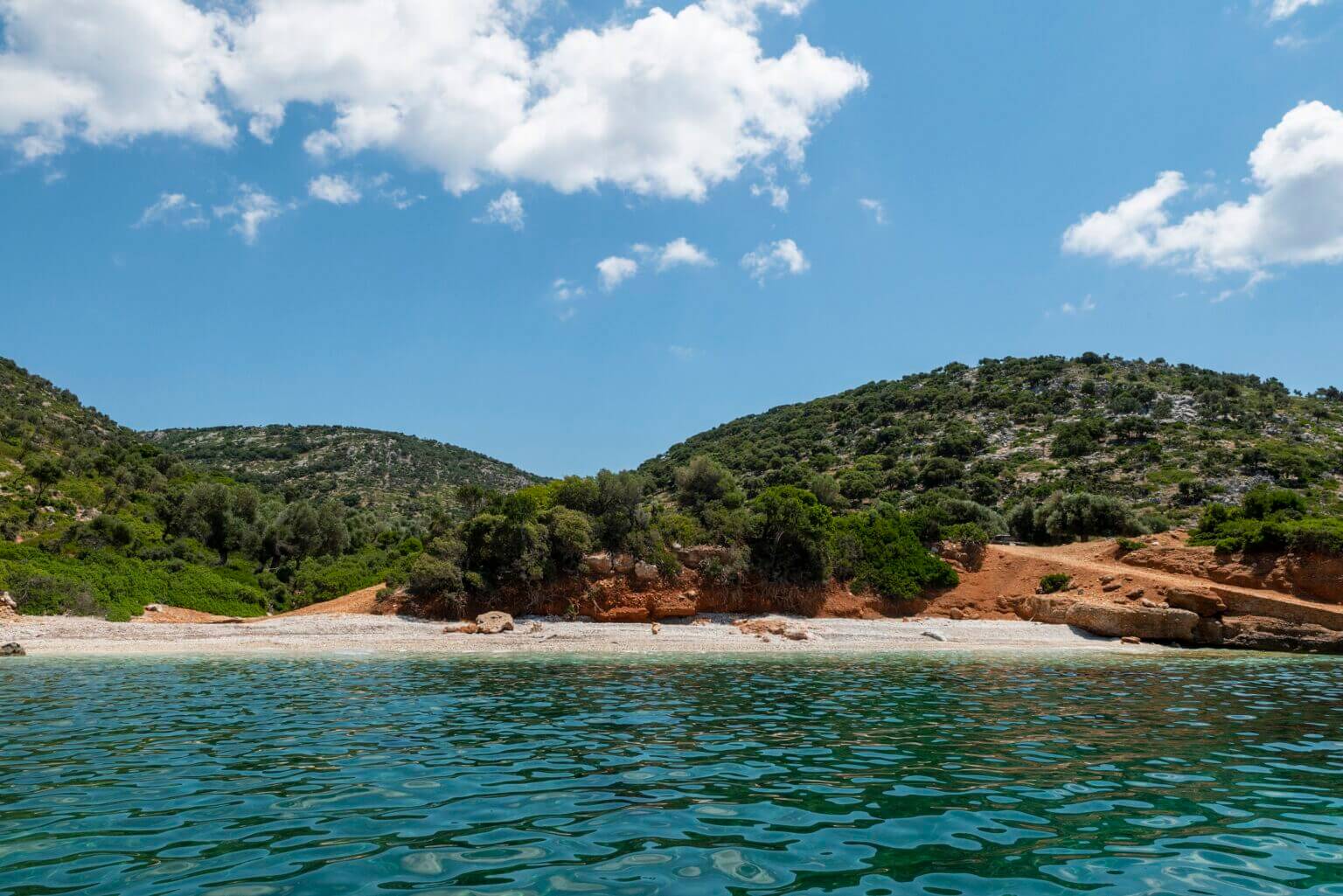
The northern bay of Kyra Panagia, known as Agios Petros, is one of the finest and most completely sheltered natural anchorages in the National Marine Park — a wide, deep bay of sandy bottom enclosed on three sides by the island’s hills, with water of the kind of clarity and blue-green luminosity that seems almost artificially perfect until you are swimming in it and realise that it is simply the Aegean as it was always meant to be. The beach at the back of the bay is a wide arc of clean golden sand, entirely without facilities and entirely without crowds, and the swimming here — in warm, still, crystal-clear water with the monastery visible on the hillside above and the wild hills of the island rising behind — is as close to a perfect experience as the northern Aegean offers. The snorkelling off the rocky headlands at either end of the bay is outstanding, the seabed rich with life that reflects the island’s fully protected status.
The Southern Bay and Sea Caves
The southern bay of Kyra Panagia is narrower and more dramatic than the northern, enclosed by steeper hills and opening onto a seascape of considerable grandeur. The water here is deeper and a more intense shade of blue, and the rocky coastline on either side of the bay is indented with a series of sea caves of varying size and accessibility — some large enough to enter by dinghy, their vaulted interiors lit by the extraordinary blue-green light reflected from the water beneath, others visible only from outside but beautiful in their sculpted geometry. The sea caves of Kyra Panagia are among the finest in the park and provide, for those who explore them from a dinghy or while snorkelling, an experience of the island’s wildest and most dramatic coastline that is simply unavailable to those who do not arrive by sea.
Wildlife Watching
For those with an interest in the natural world, Kyra Panagia is one of the finest wildlife watching destinations in the entire Aegean. The waters surrounding the island, within the core zone of the National Marine Park, support a population of common and striped dolphins that are regularly seen from yachts and sometimes approach to ride bow waves in the bay. The Mediterranean monk seal — the park’s most celebrated and most elusive resident — has been recorded in the sea caves of Kyra Panagia, and while an encounter is never guaranteed, the possibility adds a quality of watchful attention to every swim and every coastal exploration that is entirely pleasurable in itself. Above the waterline, the skies over the island are patrolled by Eleonora’s falcons in summer, and the cliff faces of the southern coast support nesting colonies of seabirds including Yelkouan shearwaters and Audouin’s gulls — both species of significant conservation interest. For birdwatchers, a morning spent watching from the cockpit of a yacht anchored in the northern bay, binoculars in hand and coffee in the other, is a genuinely rewarding experience.
The Walking Paths and Interior
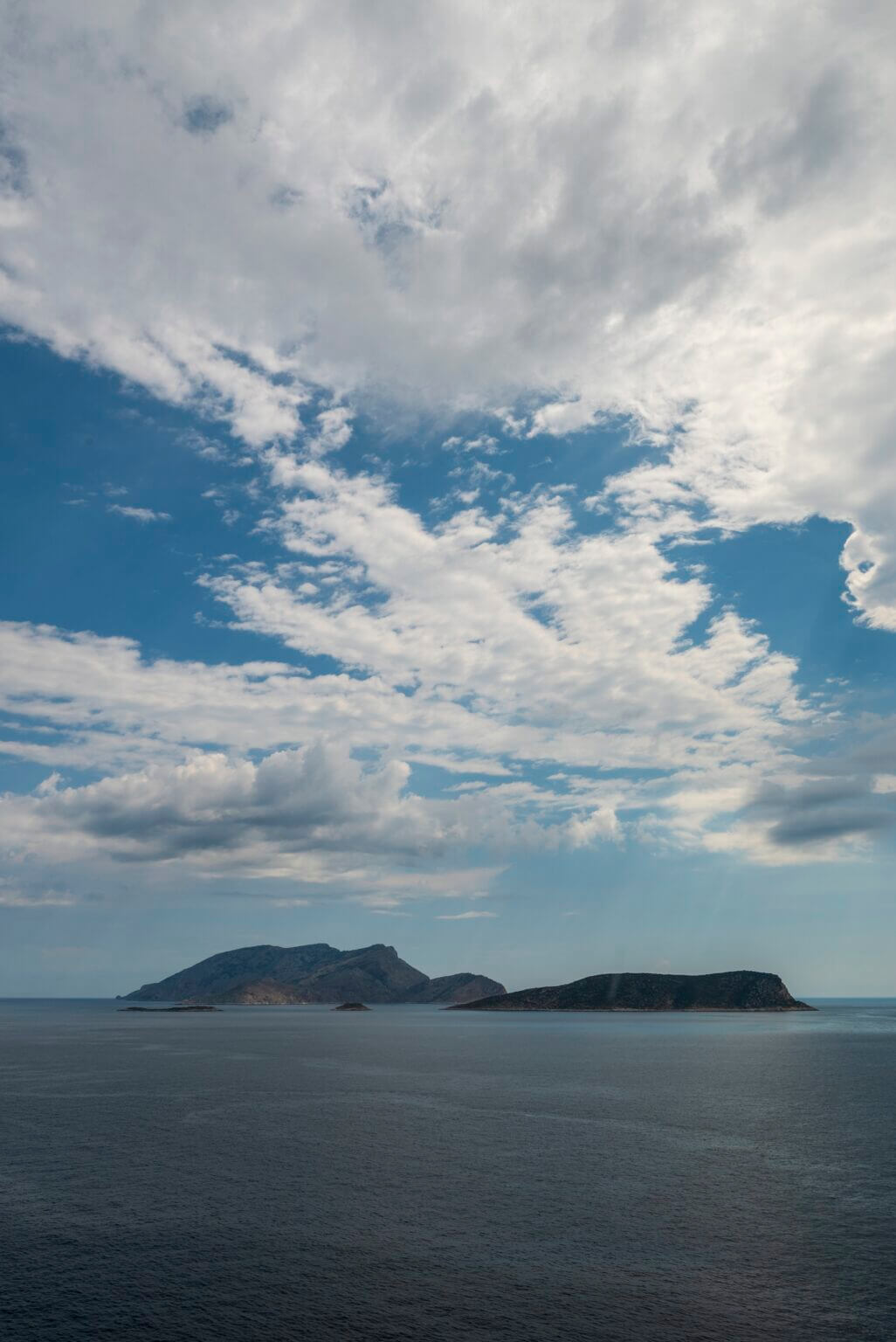
The island’s interior is crossed by old paths — some of them ancient, connecting the monastery with the island’s water sources and former agricultural terraces — that allow a limited but rewarding exploration of the island’s landscape on foot. The walk from the northern bay to the monastery is short and straightforward, passing through maquis of wild rosemary, thyme, and cistus whose fragrance in the morning heat is intense and deeply characteristic of the northern Aegean. The path that continues from the monastery toward the island’s central ridge offers views across the full extent of the park — the uninhabited islands of Gioura, Psathoura, and Piperi visible in the distance, and on clear days the outline of Mount Athos on the Macedonian horizon — that are among the most expansive and most beautiful in the entire northern Aegean. Wild goats accompany the walk at a respectful distance, entirely accustomed to the occasional human presence on paths that are otherwise their own.
Why Choose Kyra Panagia
Kyra Panagia is the destination for the traveller who has understood that the rarest and most valuable thing the Greek islands can offer is not beauty alone — beauty is widely available — but beauty combined with wildness, with genuine ecological integrity, and with the particular quality of silence that descends on a place where human presence has always been light and where the natural world has been given the space and the protection to flourish on its own terms. It is an island for those who want their sailing in the Aegean to mean something beyond the accumulation of beautiful anchorages — who want to feel, at anchor in a bay of extraordinary water, that they are in a place that matters and that has been preserved because it matters.
For yacht travellers extending a Sporades itinerary into the National Marine Park, Kyra Panagia represents the point at which the cruise transcends the merely scenic and enters the genuinely extraordinary. Combined with Alonissos as a base, and with the other accessible park islands — Peristera, Gioura — as additional destinations, it forms part of an archipelago experience available nowhere else in the northern Aegean and comparable, in terms of natural quality and protected status, to the finest marine parks in the entire Mediterranean. The sailing distances within the park are manageable, the anchorages superb, and the cumulative effect of spending several days in waters of this quality and among islands of this wildness is one of the most completely satisfying experiences that a yacht in the Aegean can provide.
What Kyra Panagia gives the visitor who makes the effort to reach it is, in the end, something simple and something profound in equal measure: the experience of an island that has not been changed by tourism, that has not been shaped by the expectations of visitors, and that exists — in its monastery, its wild goats, its monk seal caves, its extraordinary water, and its deep and beautiful silence — entirely and purely as itself. In the modern Mediterranean, that is a gift of the rarest kind.