Why Kimolos
There are islands that exist in the permanent orbit of a more famous neighbour — close enough to share the same volcanic geology, the same colour of water, and the same quality of Cycladic light, yet distant enough in character, in atmosphere, and in the texture of daily life to be an entirely different experience. Kimolos is this kind of island. Lying barely one kilometre northeast of Milos, separated from it by one of the narrowest and most navigable channels in the Cyclades, Kimolos is Milos’s quieter, smaller, more intimate alter ego — an island of 36 square kilometres and barely 600 permanent residents that shares its neighbour’s volcanic drama and extraordinary coastal geology but none of its international fame, and that offers, in consequence, a quality of solitude, authenticity, and unspoiled natural beauty that Milos itself, for all its extraordinary gifts, can no longer provide in the same measure.
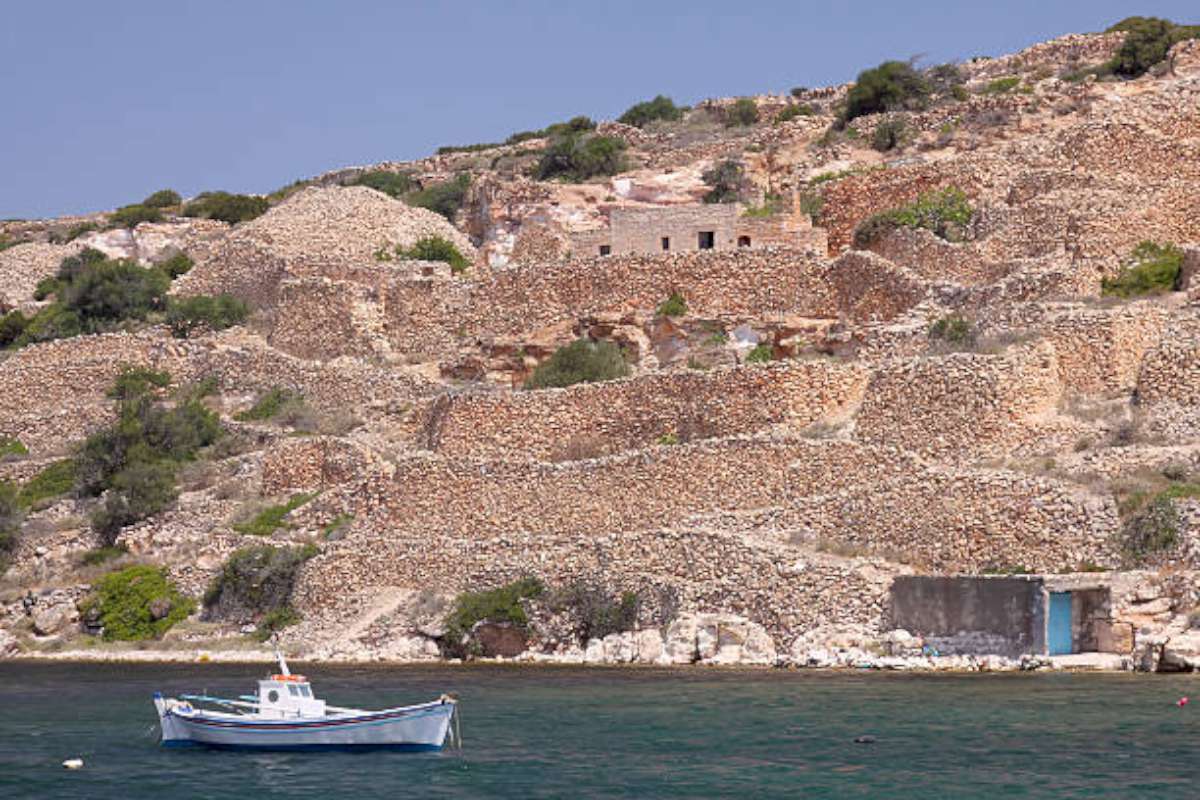
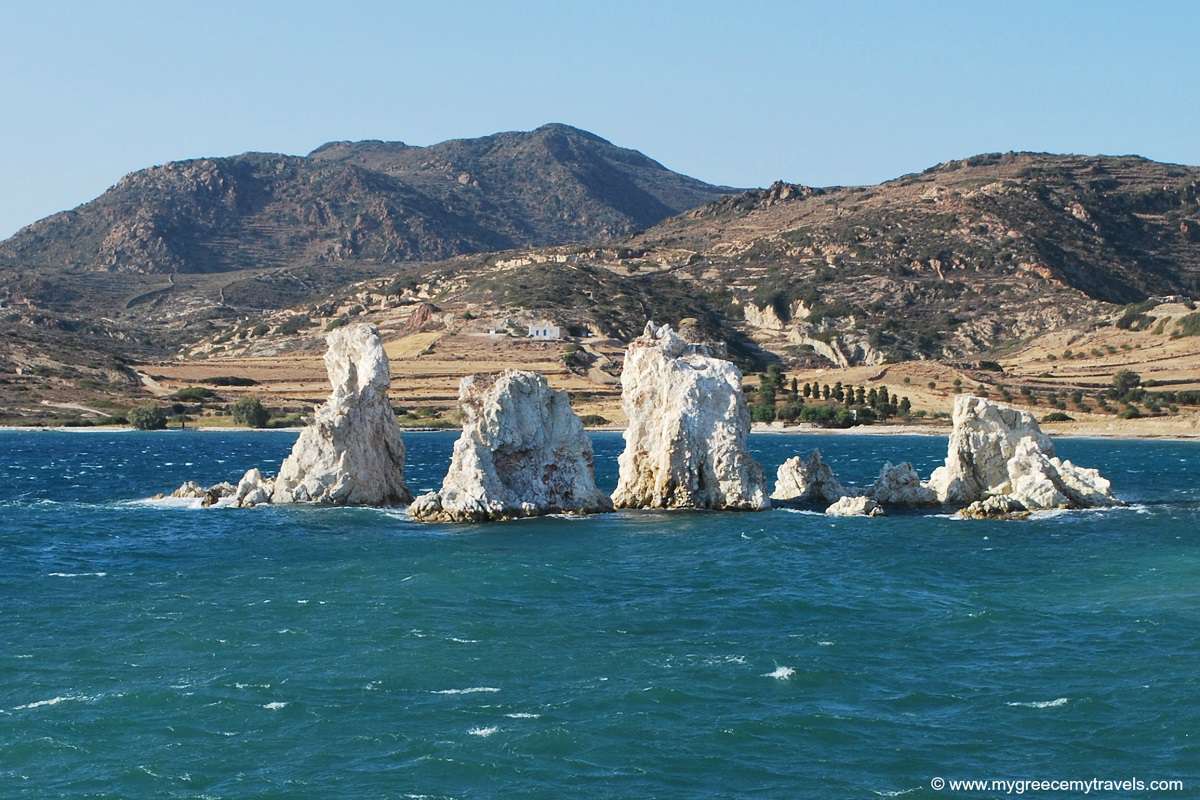
The island takes its name from the Greek word for chalk — kimolia — a reference to the deposits of earth chalk and volcanic minerals that have been extracted from its hills since antiquity and that gave it, in the ancient and medieval world, a commercial significance entirely disproportionate to its small size. From the Minoan era through the 18th century, Kimolos exported its chalk — valued for its whitening, cleansing, and medicinal properties — across the Mediterranean, and the prosperity generated by this trade funded a civic life of considerable sophistication in antiquity: in the 3rd century BC the island was wealthy enough to mint its own coins, and in the 5th century BC it had developed, as a satellite of Milos, a democratic political organisation modelled on the Athenian Republic. The chalk trade is long since concluded, but the volcanic minerals that generated it are still visible everywhere in the island’s extraordinary landscape — in the white and silver-grey outcrops of perlite on the southern coast that gave the island its medieval Venetian name of Argentiera, in the strange rock formations of the interior, and above all in the shape-shifting, colour-changing coastal geology that makes Kimolos, like its neighbour Milos, one of the most visually astonishing volcanic islands in the Aegean.
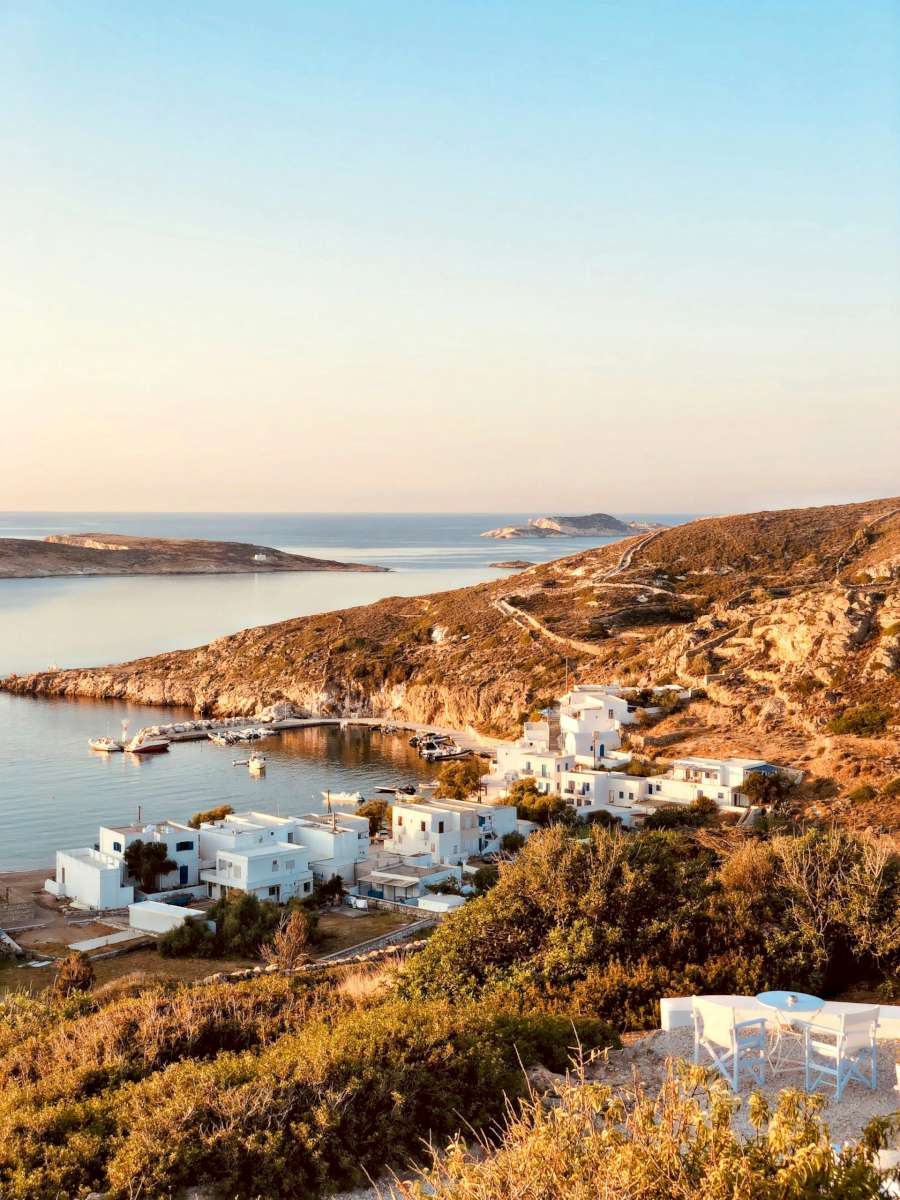
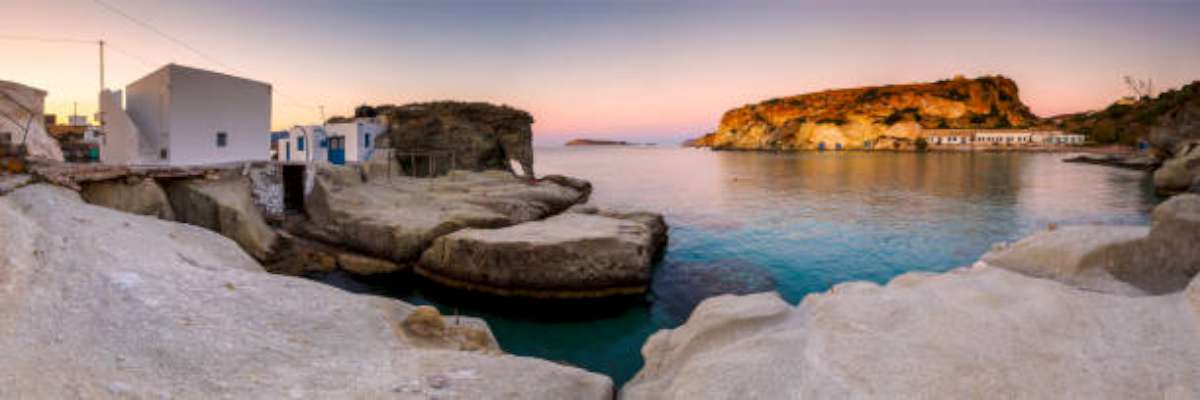
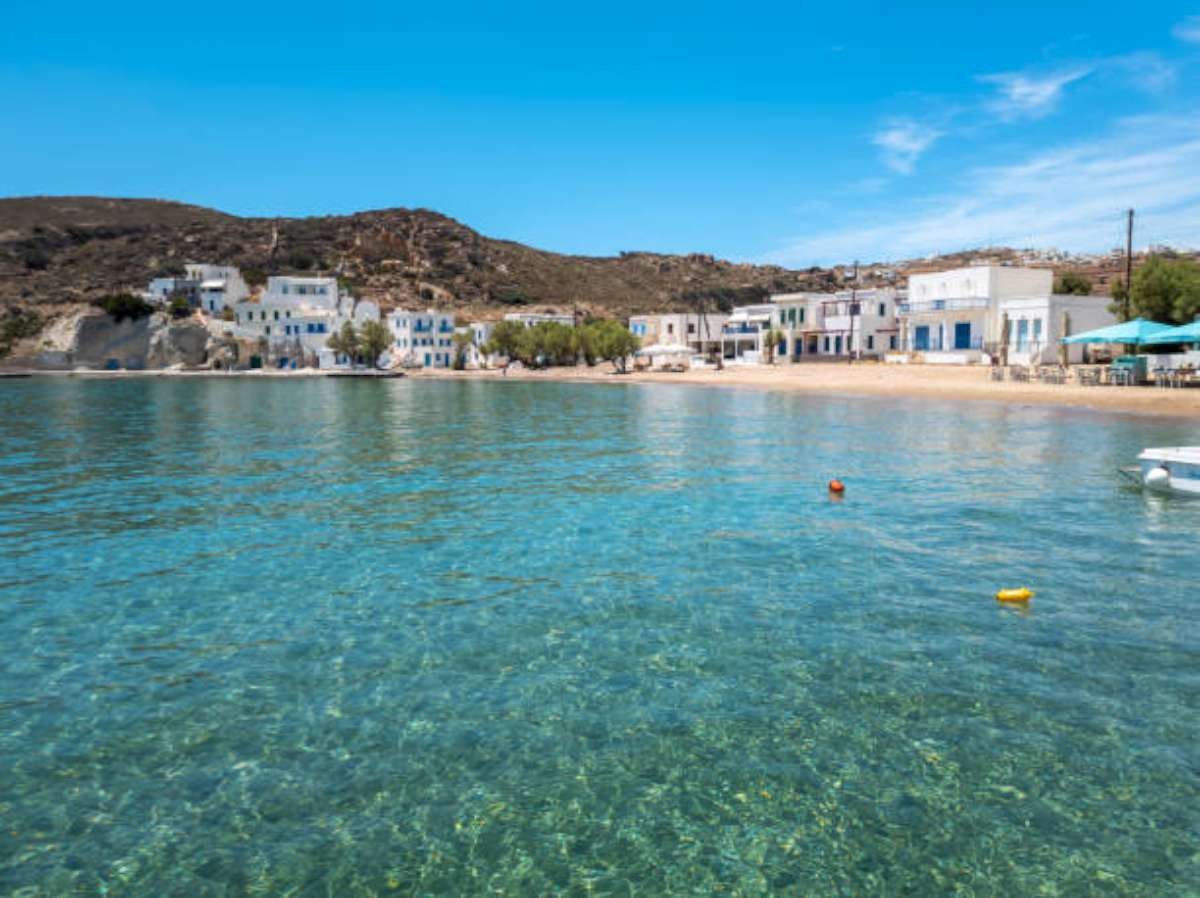
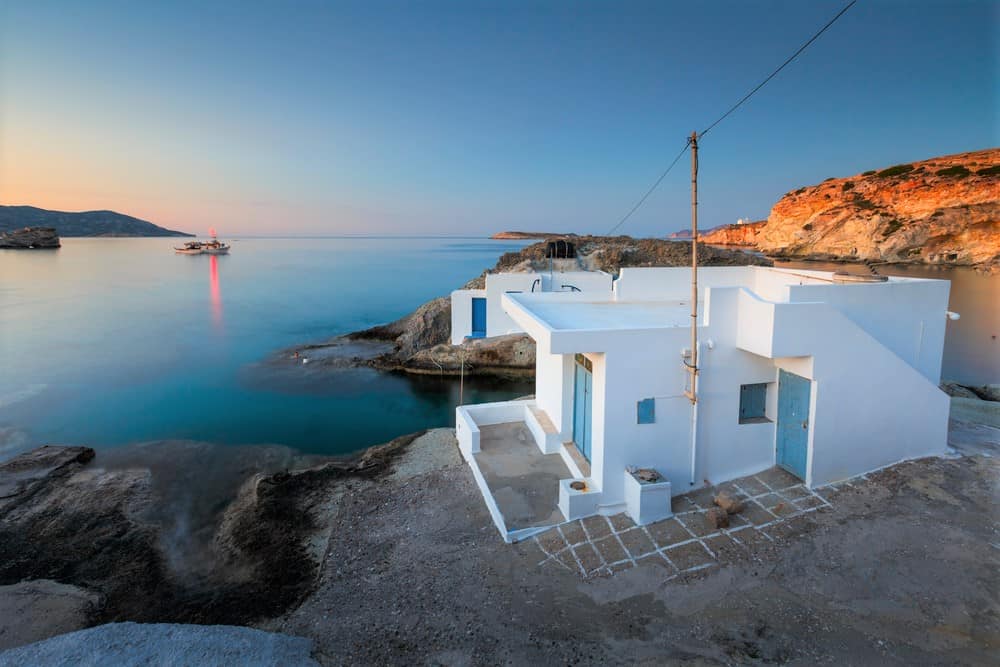
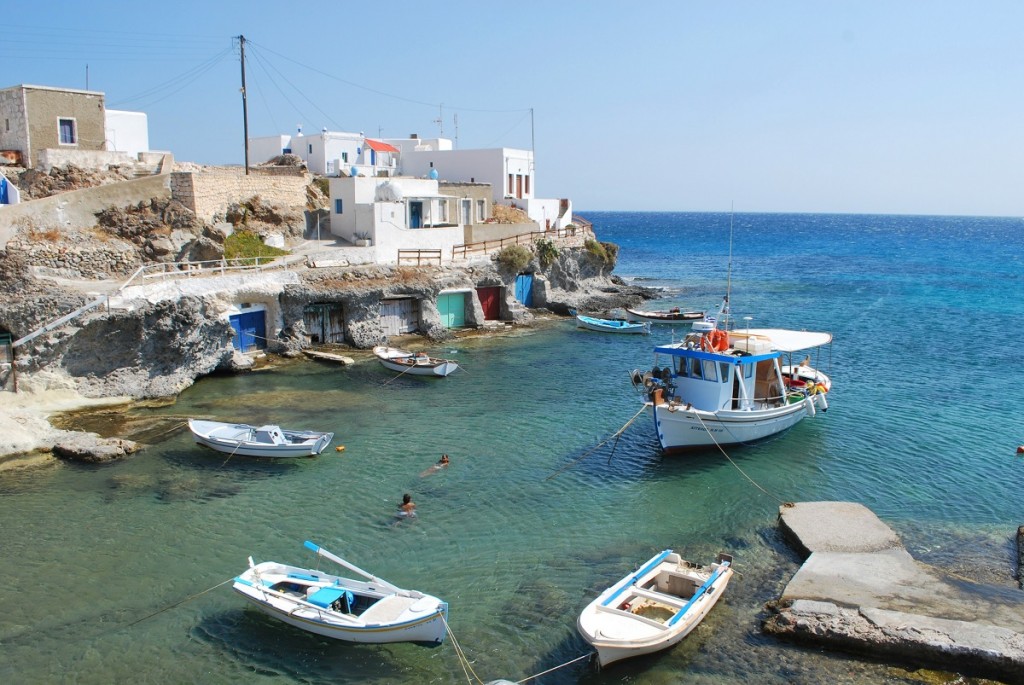
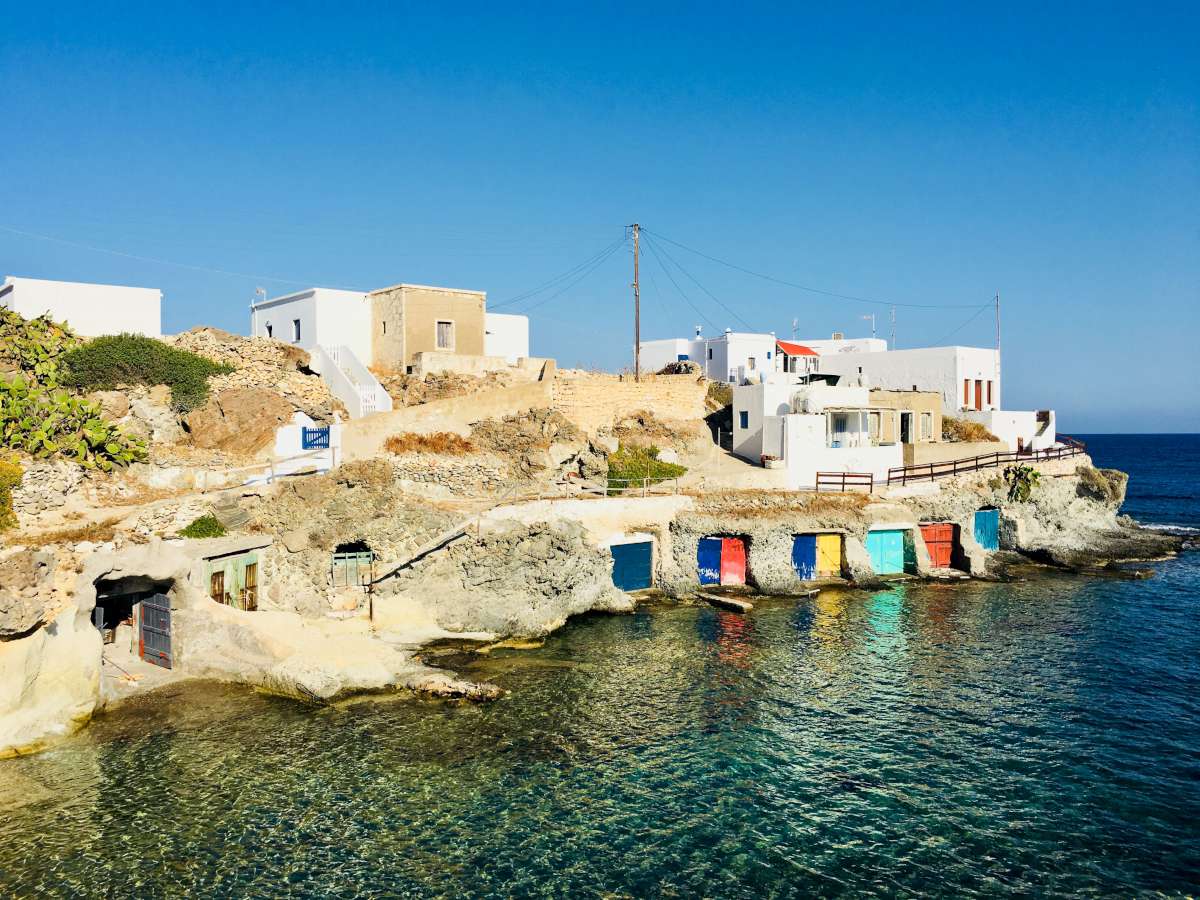
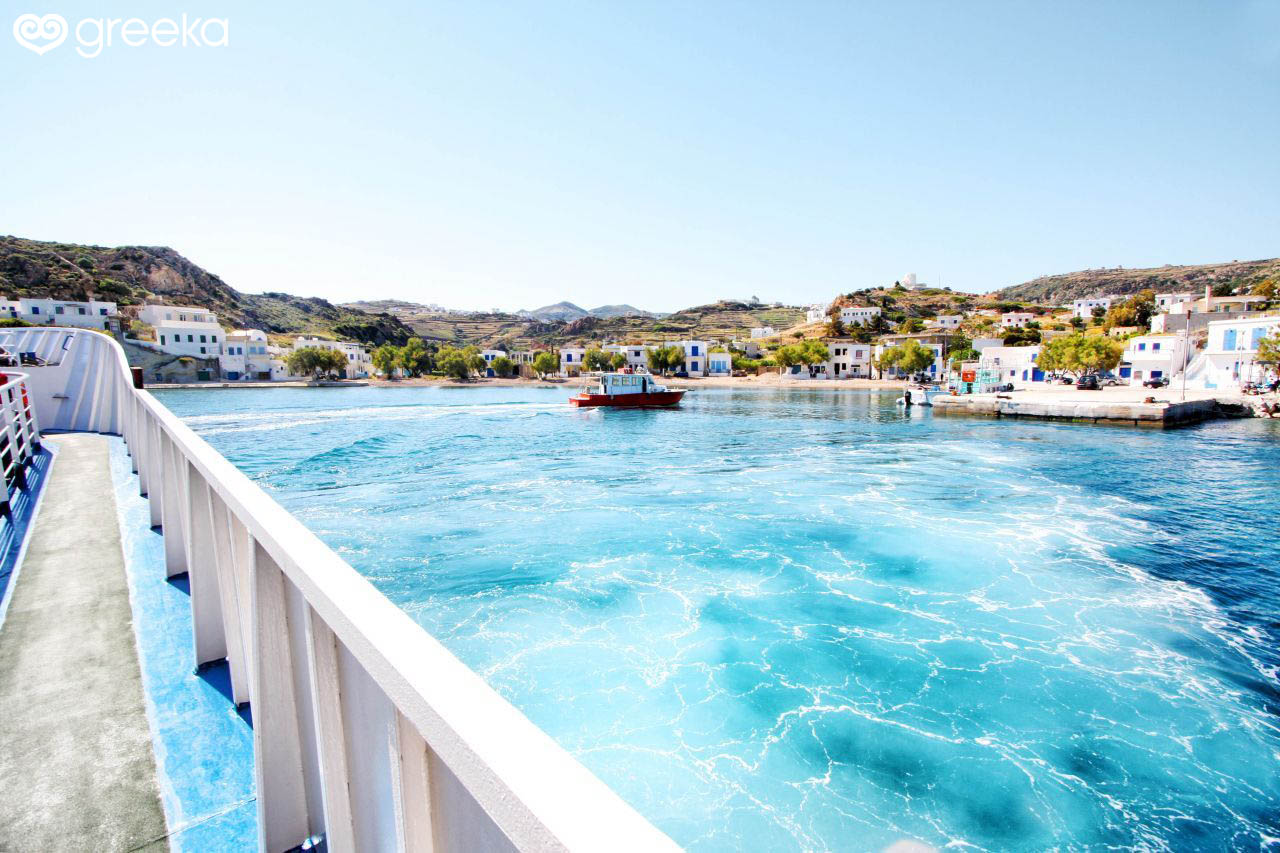
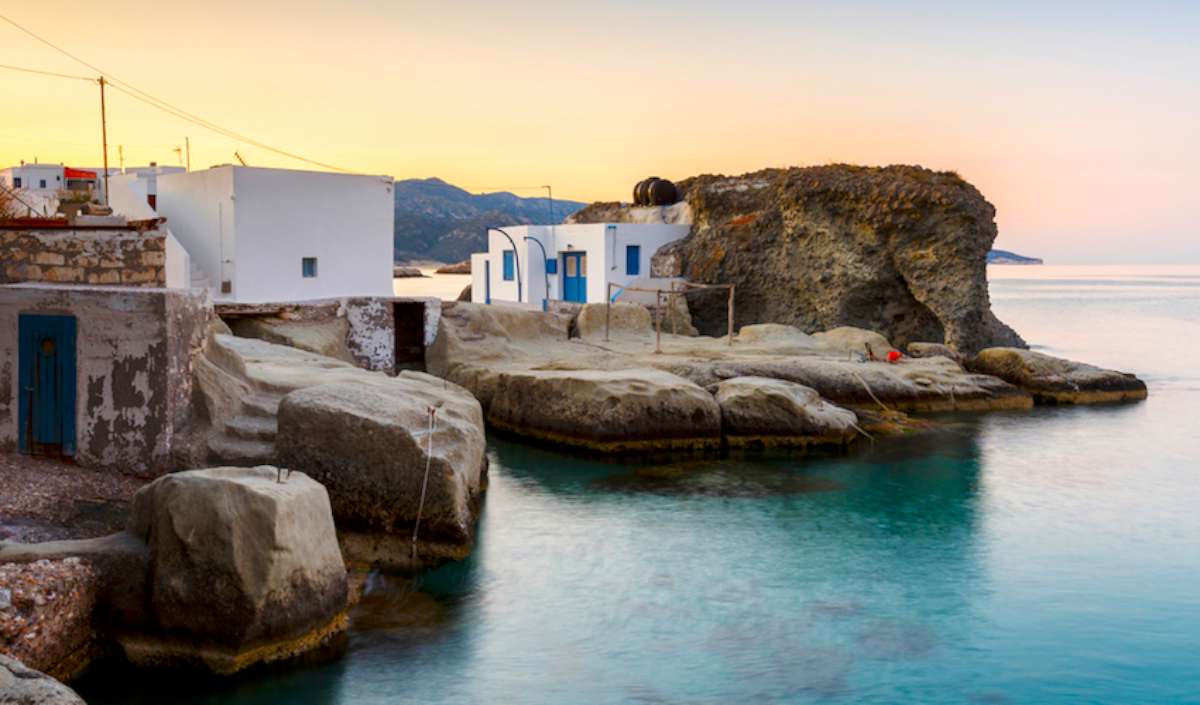
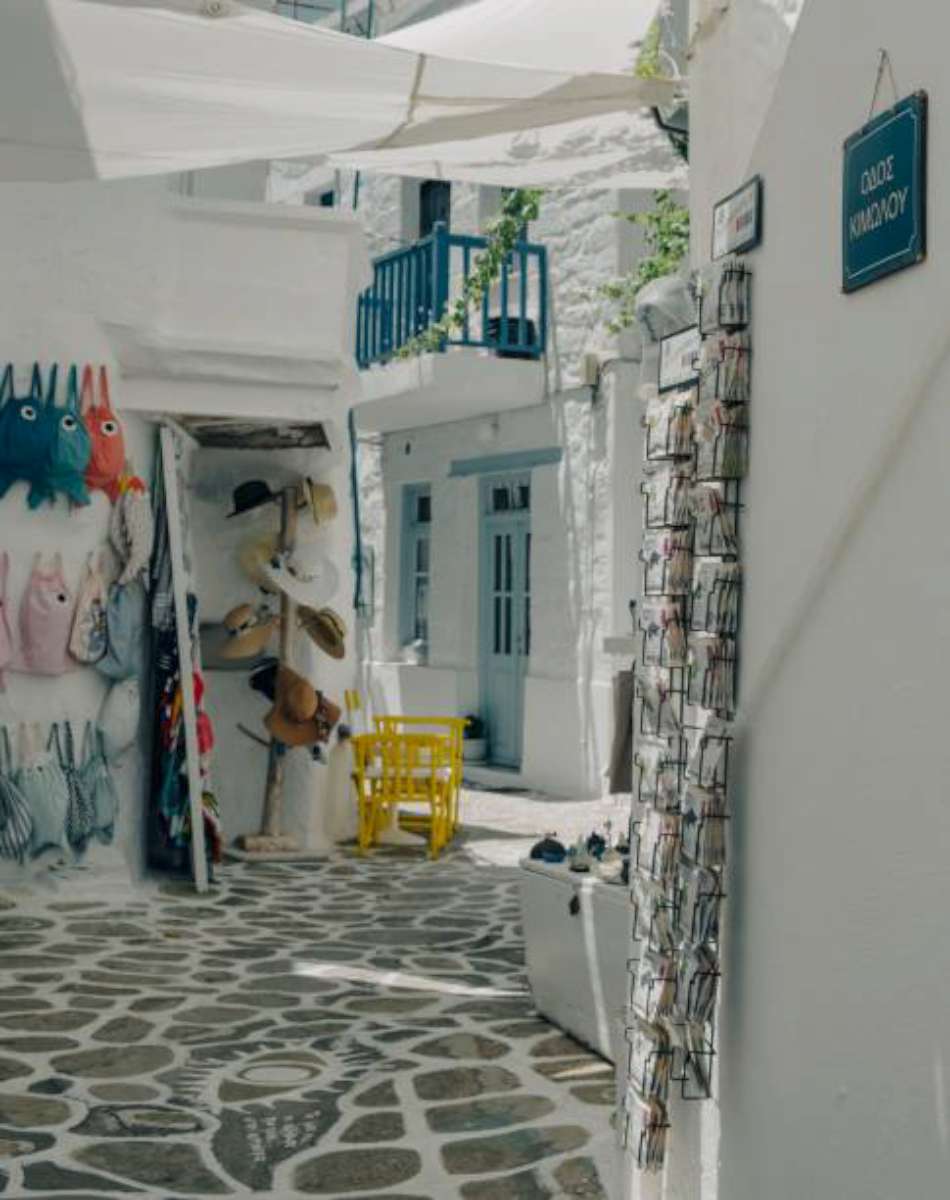
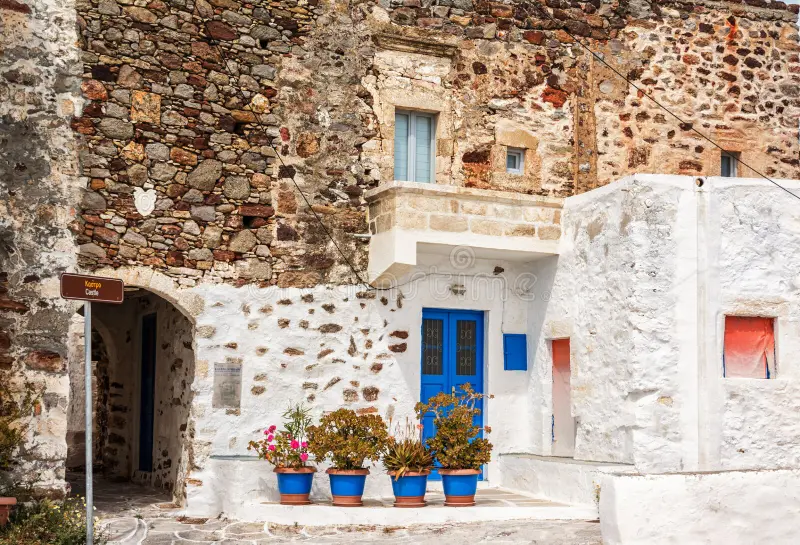
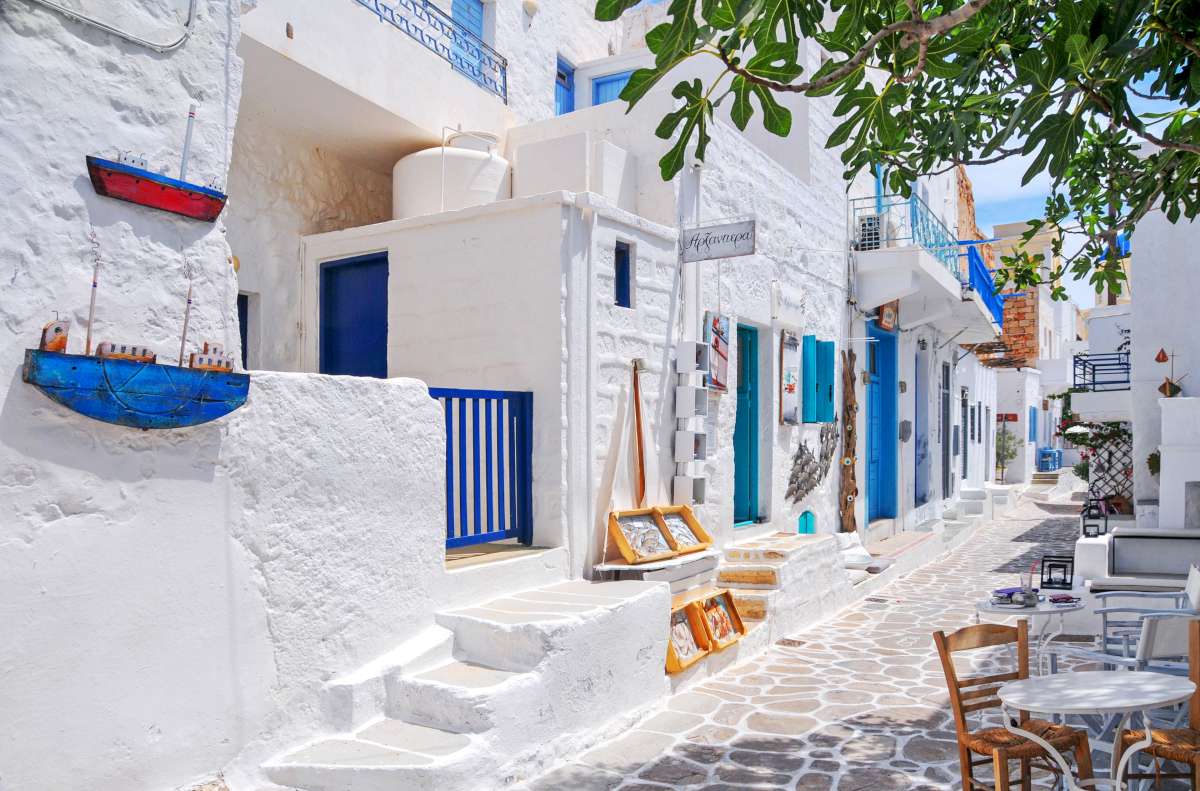
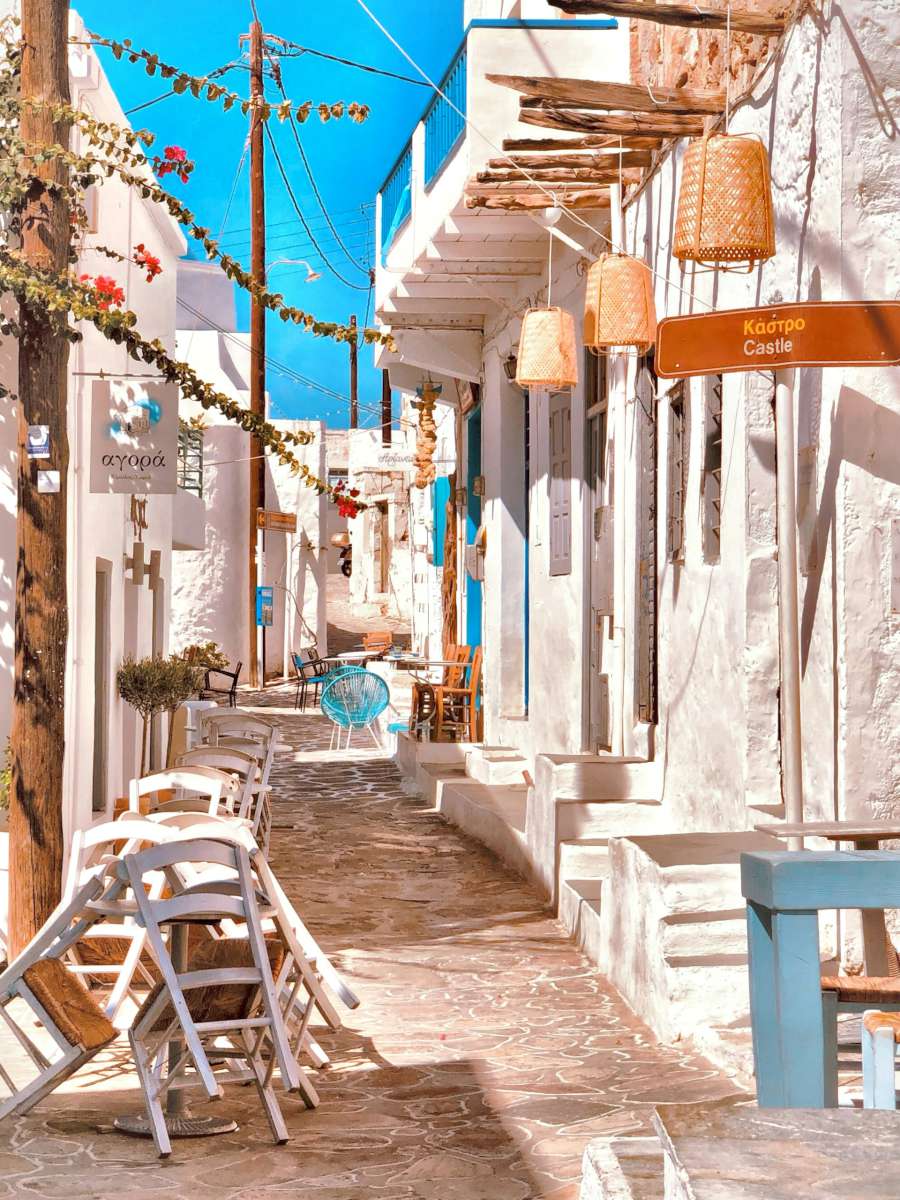
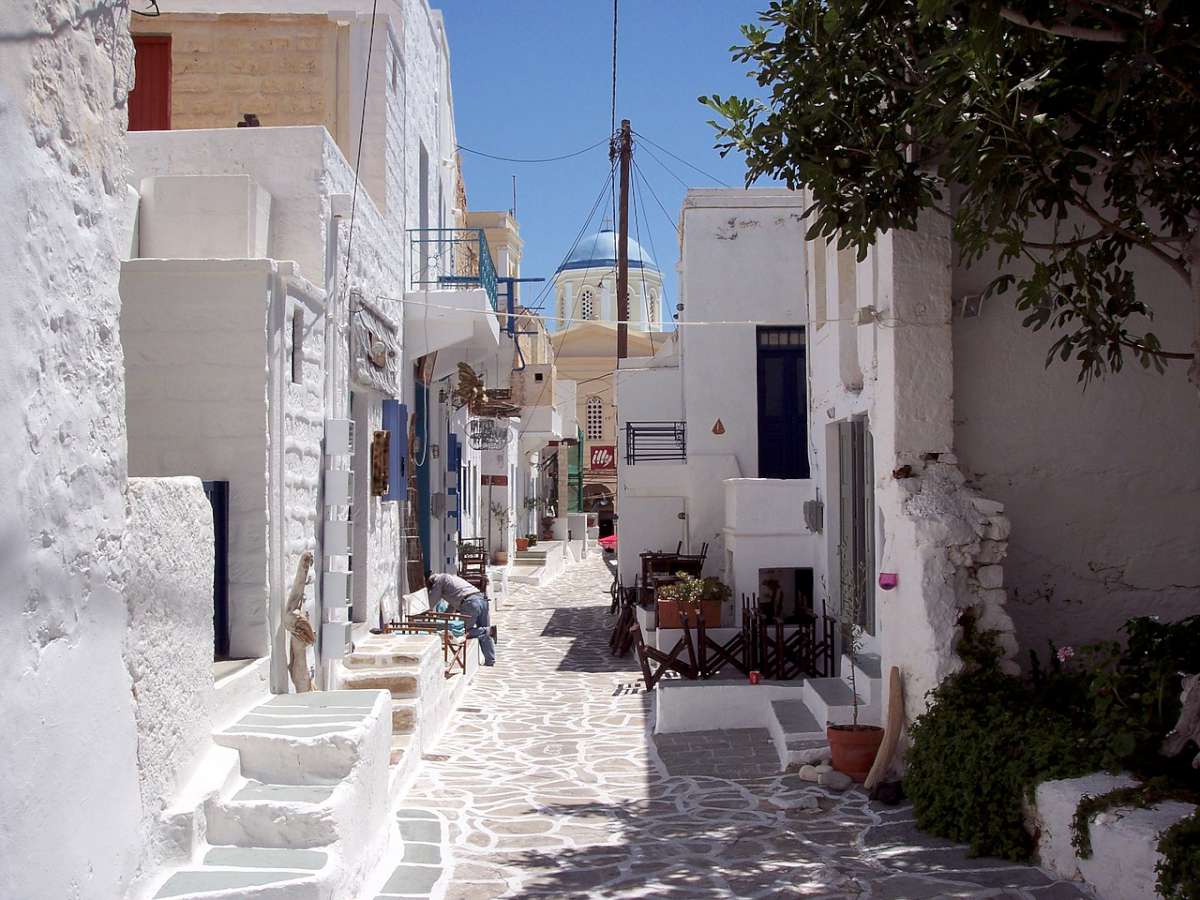
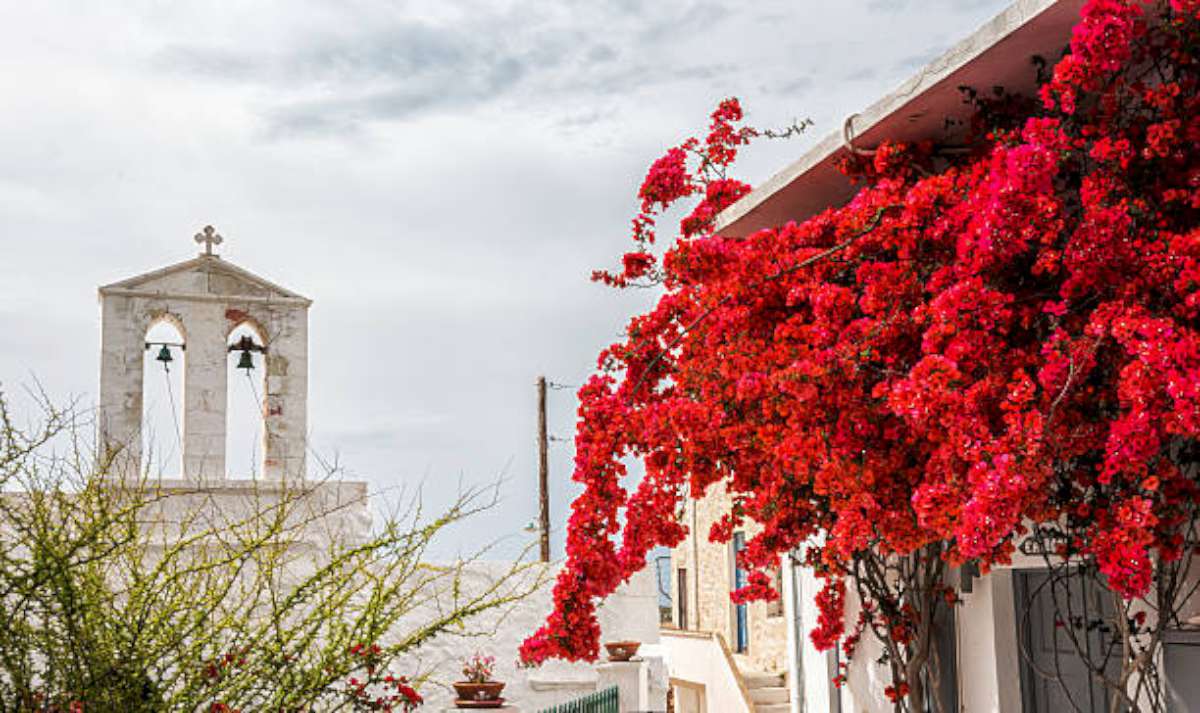
The island’s greatest distinction, alongside its volcanic beauty and its extraordinary solitude, is its Chorio — the main village perched on the hill above the port of Psathi in a dense, whitewashed cluster of Cycladic houses and narrow lanes that preserves within its interior the remains of a medieval Venetian castle of unusual architectural completeness. The outer ring of houses in the Chorio was built directly against the castle walls in the traditional manner — the houses themselves serving as the outer defensive perimeter — and the result is a fortified village of great historical interest and great visual beauty, its medieval core surrounded by the familiar whitewashed Cycladic architecture of the outer quarters in a composition entirely characteristic of the western Cyclades at their most authentic and most completely themselves. Walking the lanes of the Chorio in the morning, when the village is quiet and the light is clean and the only sounds are the bells of the island’s chapels and the distant sea, is one of the most completely genuine small island experiences available in the western Cyclades.
What to Do and What to See
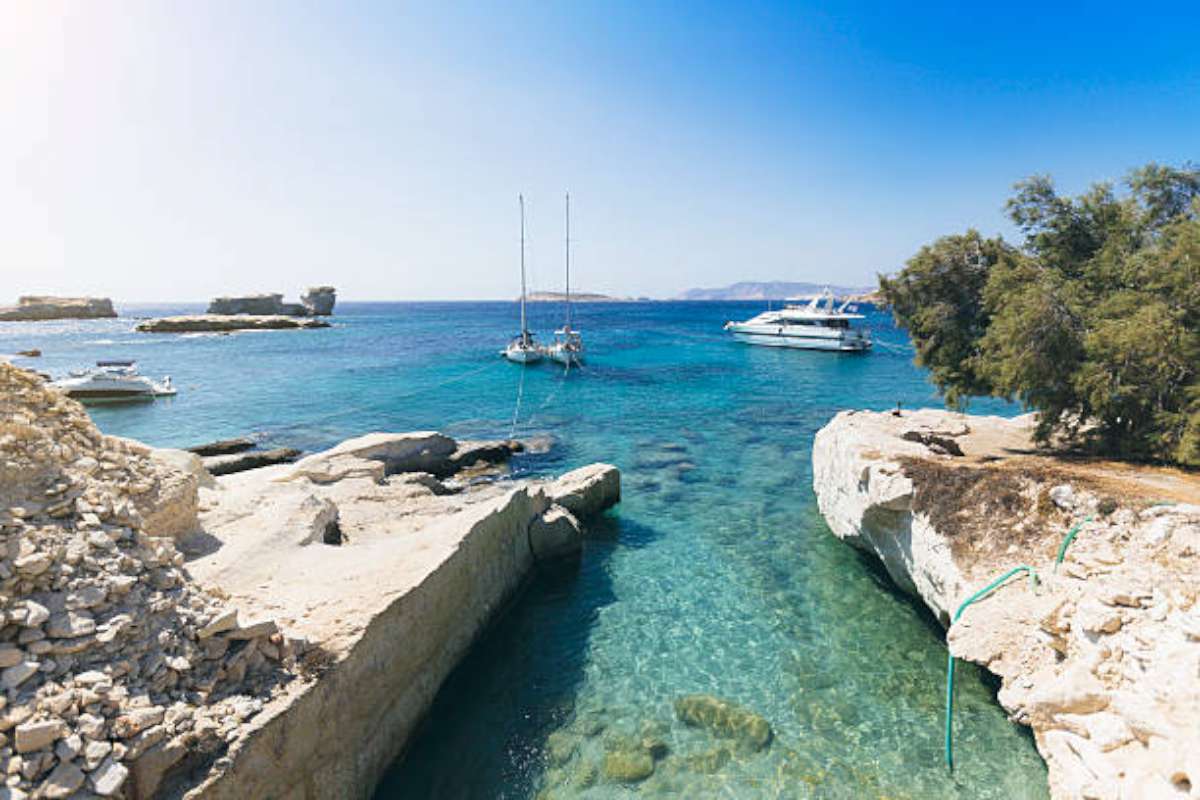
Kimolos rewards the visitor who comes to it with the simplest and most uncomplicated of intentions — to swim in extraordinary water, to walk a beautiful volcanic landscape, to explore an authentic Cycladic village, and to experience the particular quality of peace and natural beauty that only a genuinely undiscovered island can provide. For those arriving by yacht, the island is a natural paradise of anchorages, sea caves, volcanic coastal formations, and empty beaches accessible only from the water.
Chorio and the Venetian Kastro
The main village of Kimolos — Chorio, also known as Kastro — is the island’s architectural heart and its most irreplaceable experience. Reached by a short road from the port of Psathi below, the village divides into two distinct quarters: the Exo Kastro, the outer village of traditional Cycladic whitewashed houses, and the Messa Kastro, the inner medieval settlement built within and around the 13th-century Venetian castle whose walls are incorporated into the outer ring of houses in the classic defensive manner of the Cycladic fortified settlement. The Messa Kastro is extraordinary — a dense, enclosed world of vaulted lanes and medieval stone houses of great antiquity and great atmospheric depth, its single entrance gateway of Venetian workmanship still intact and its interior preserving a quality of medieval domestic architecture entirely unlike anything in the outer village. The Archaeological Museum of Kimolos, housed in a building at the edge of the village, contains finds from the island and the surrounding waters of considerable quality, including material from the ancient settlement at Ellinika and objects recovered from ancient and medieval shipwrecks in the channel between Kimolos and Milos — a channel that the frequency and violence of the channel winds has made one of the most productive shipwreck sites in the western Cyclades. The windmills on the ridge above the village, their white towers intact against the sky, complete a townscape of great visual beauty and great historical layering.
The Beaches
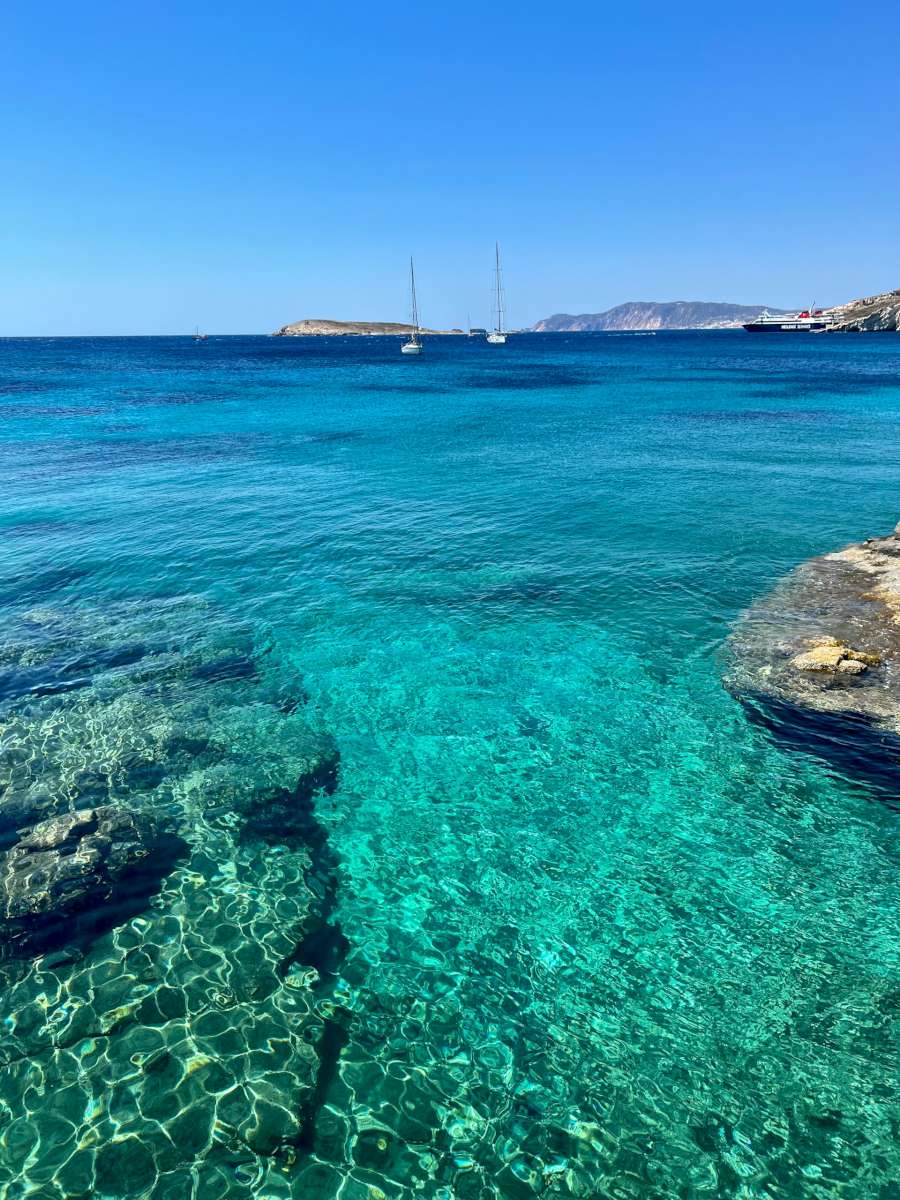
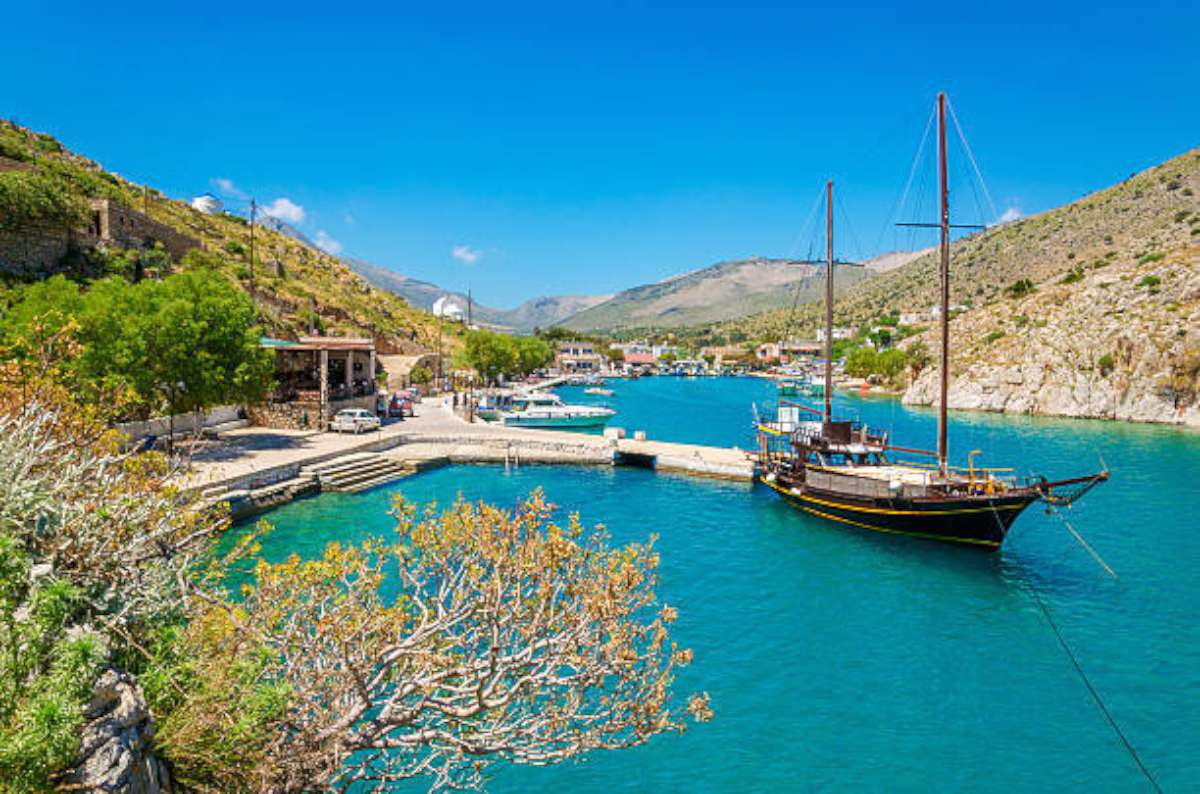
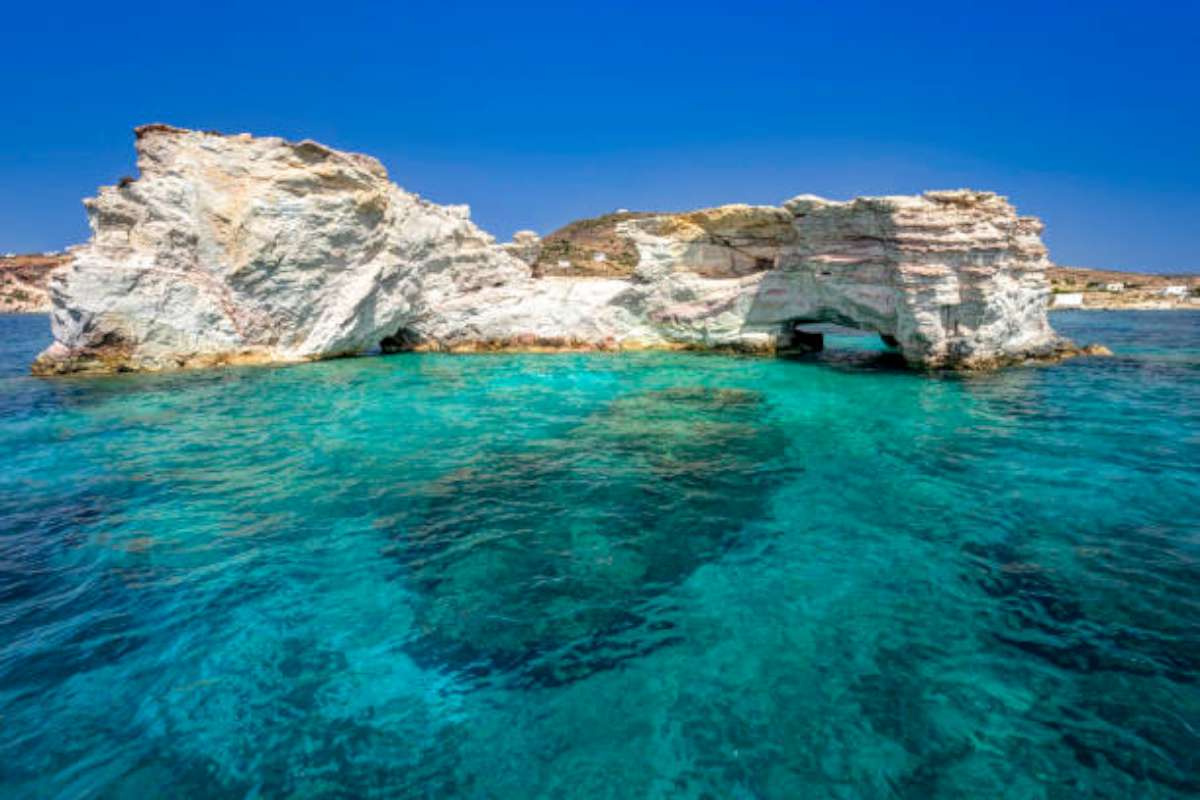
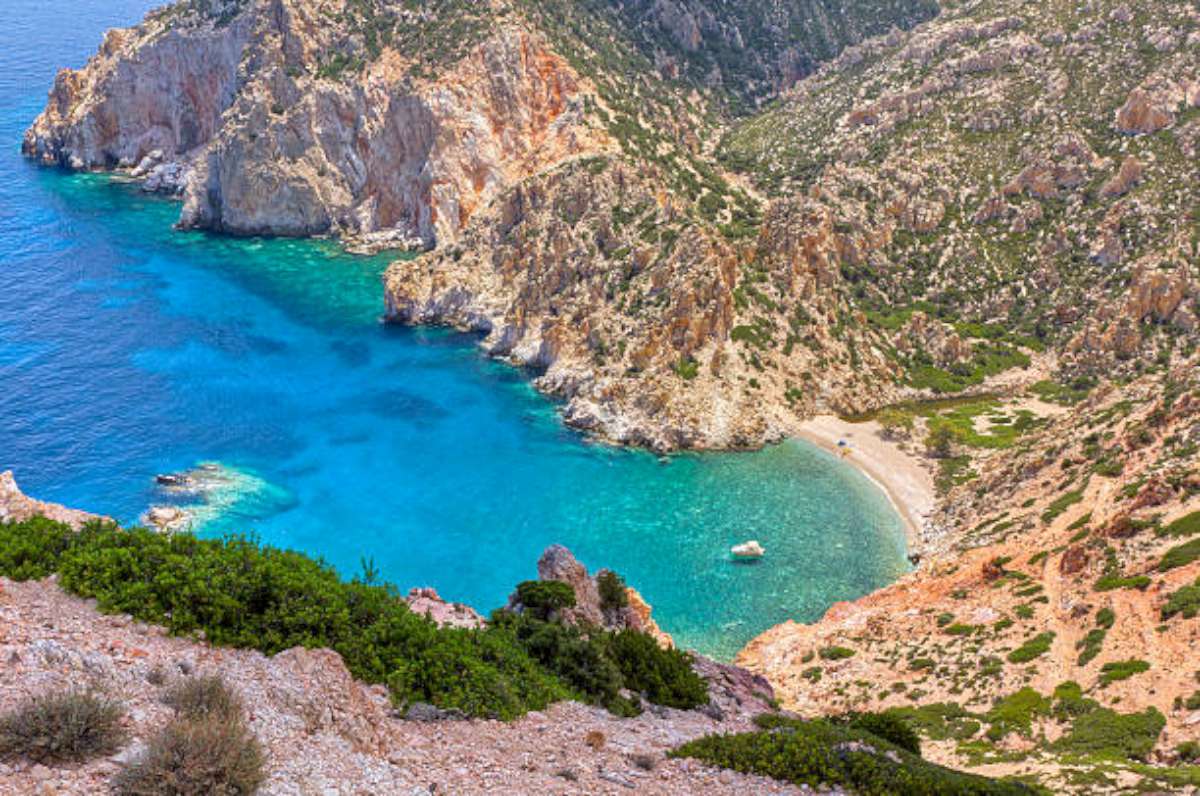
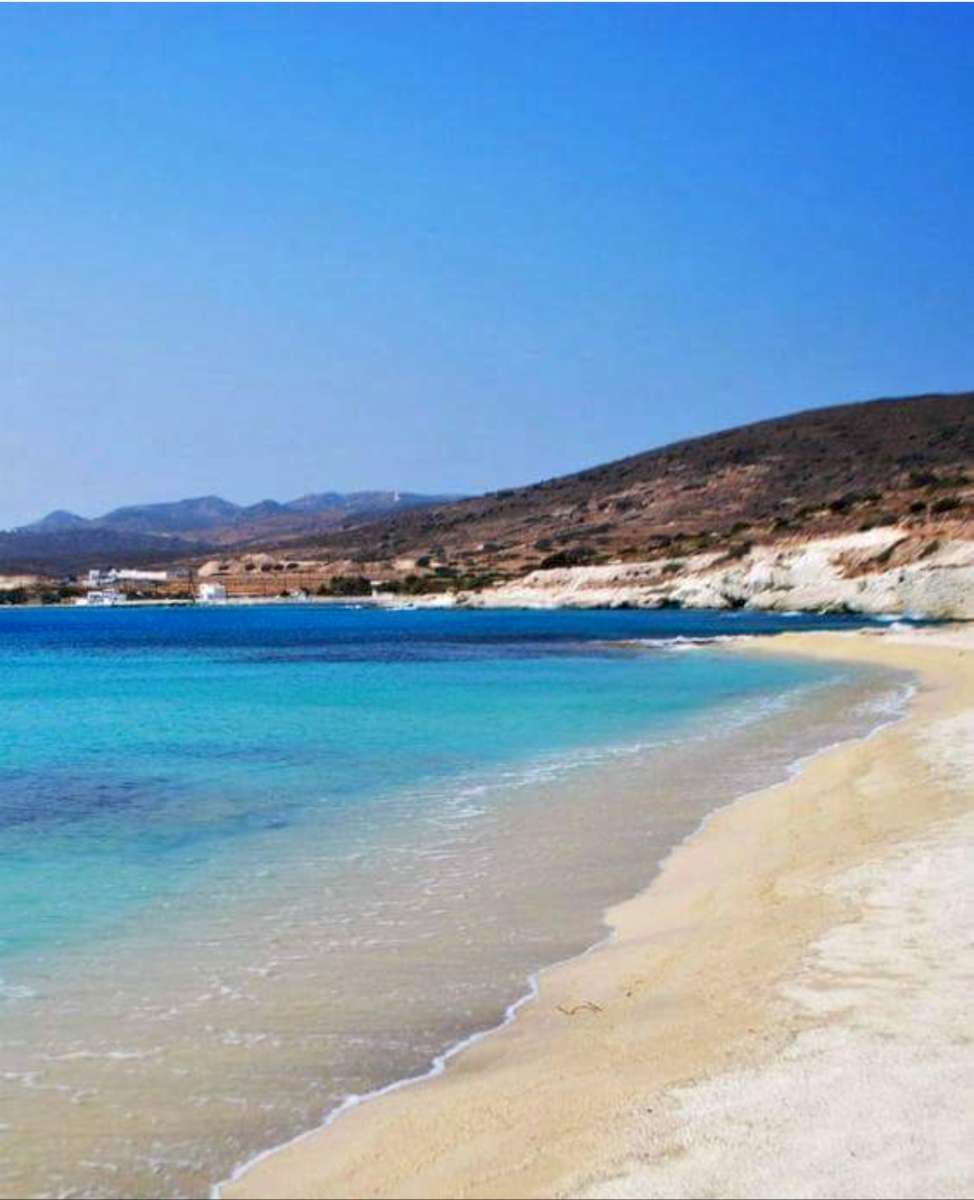
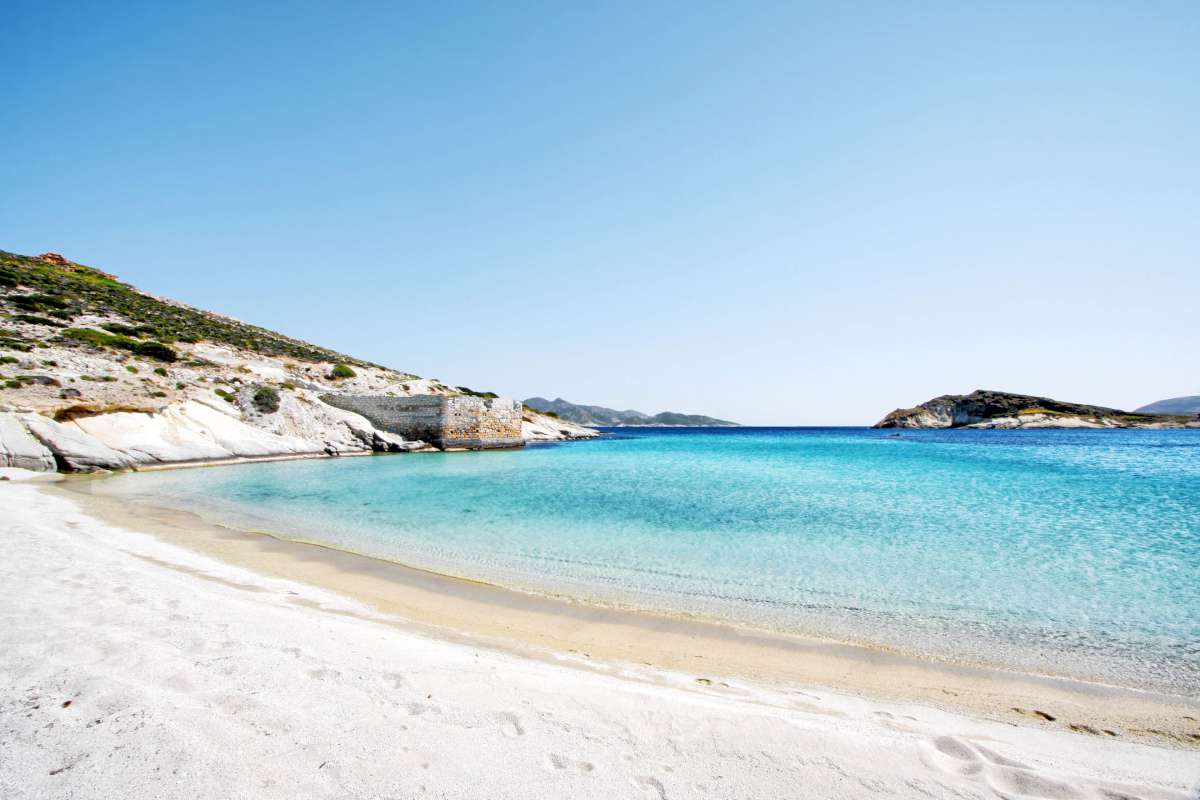
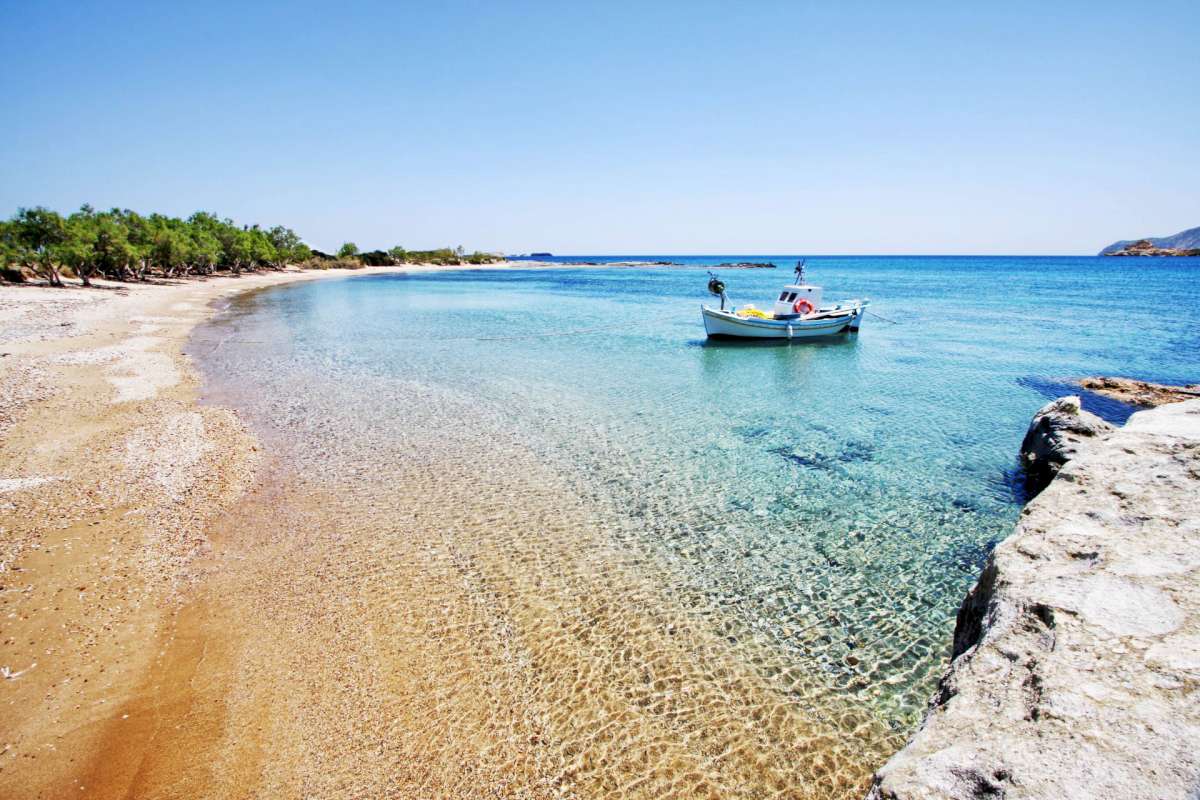
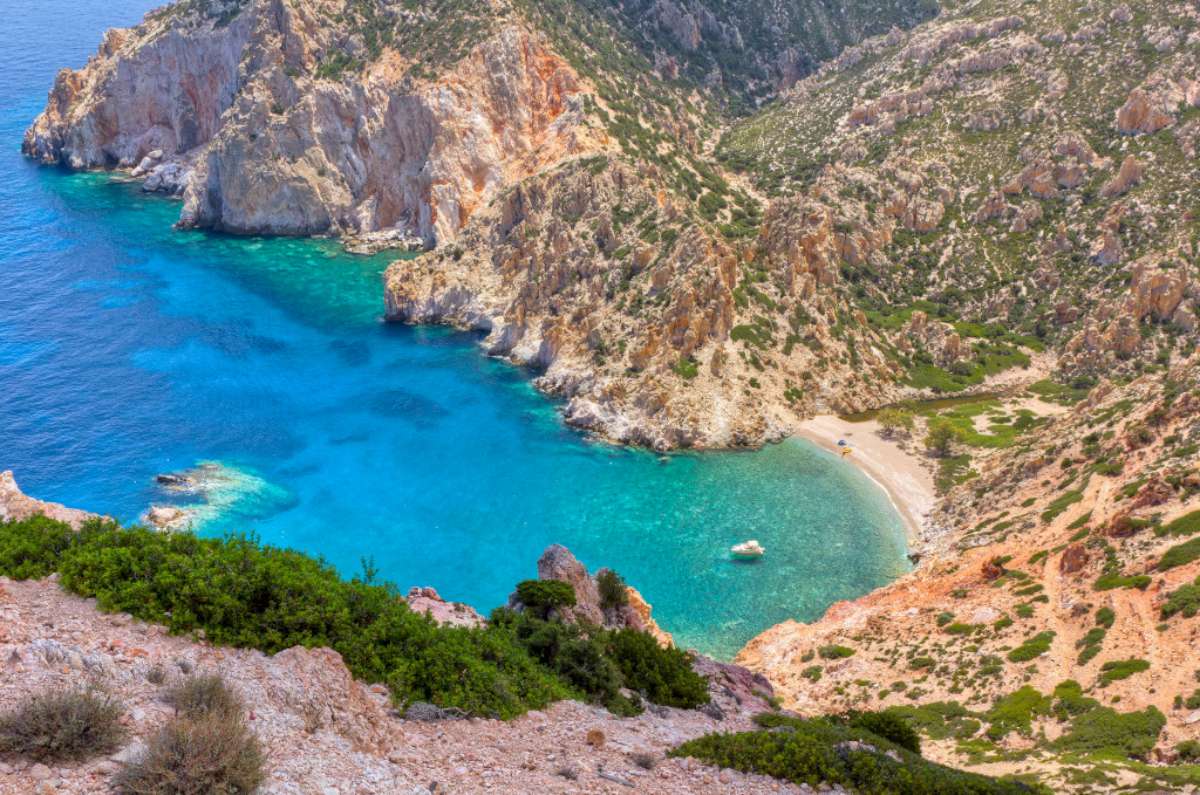
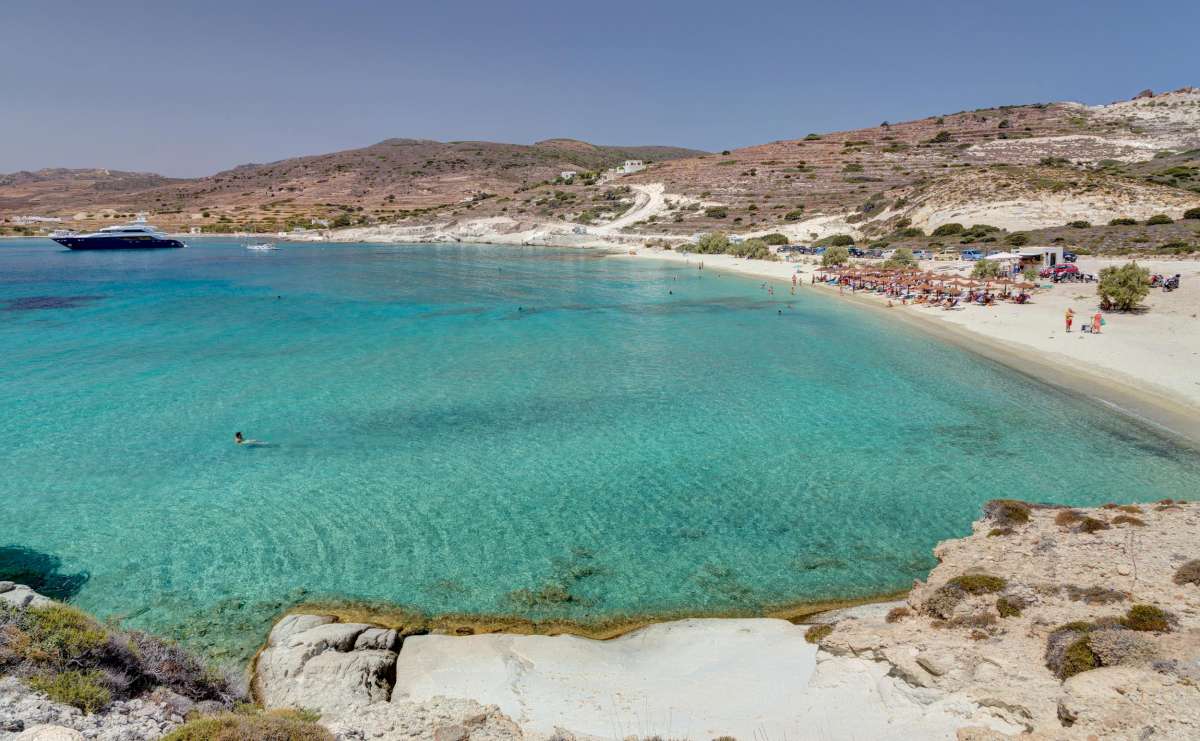
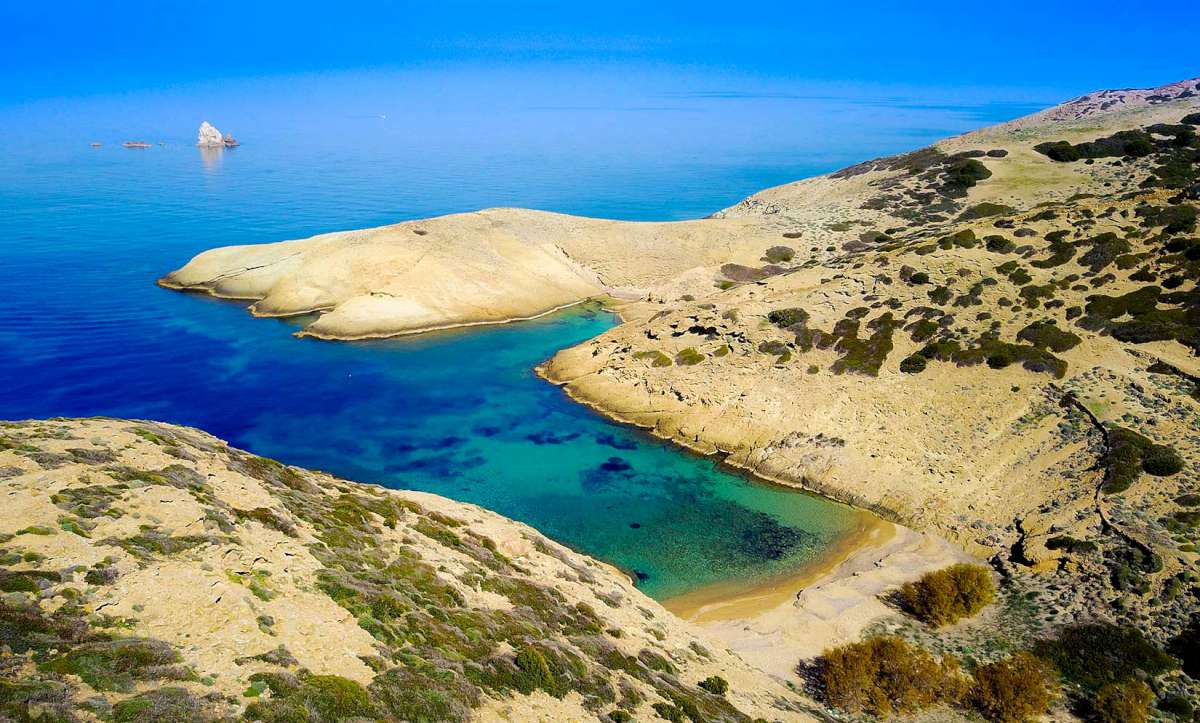
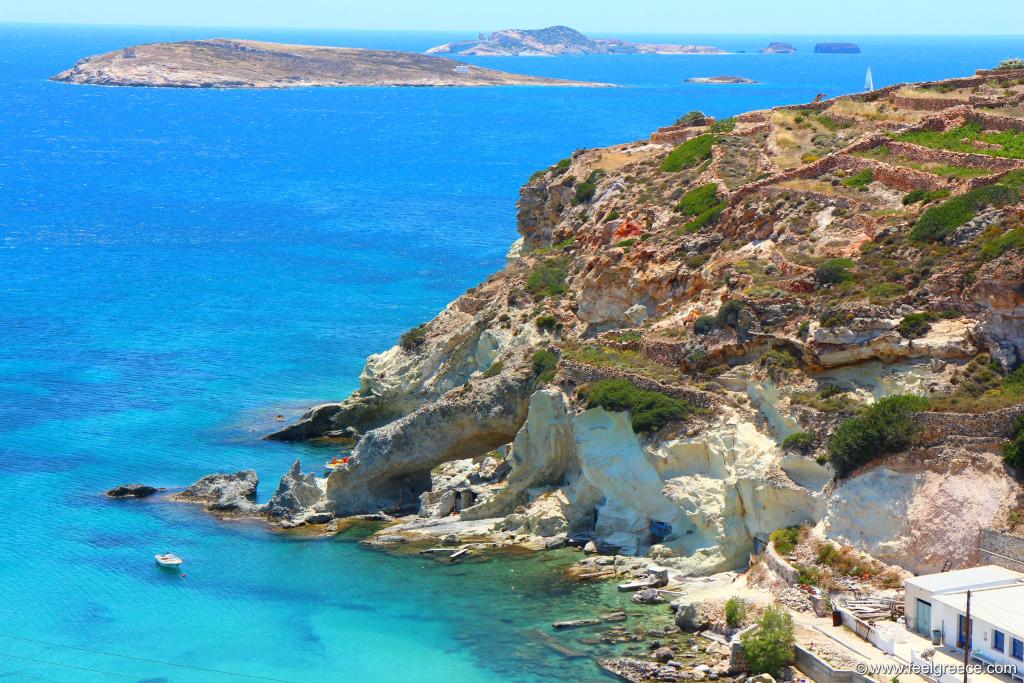
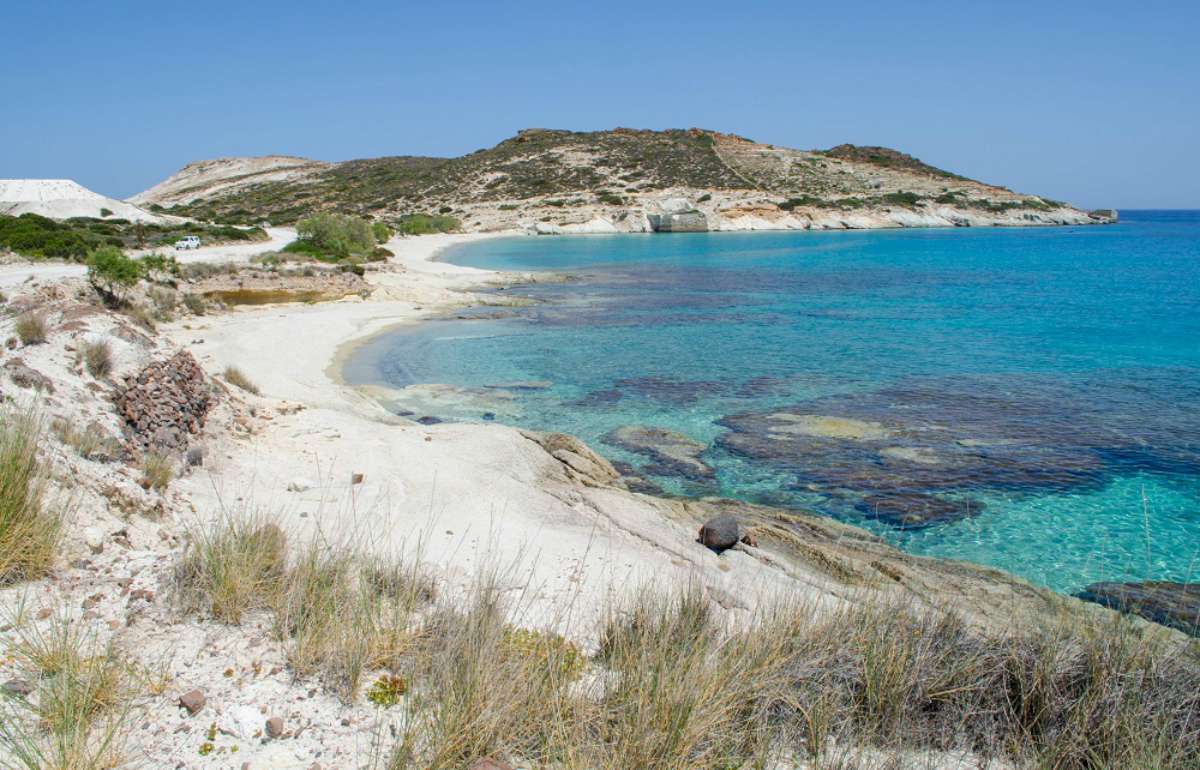
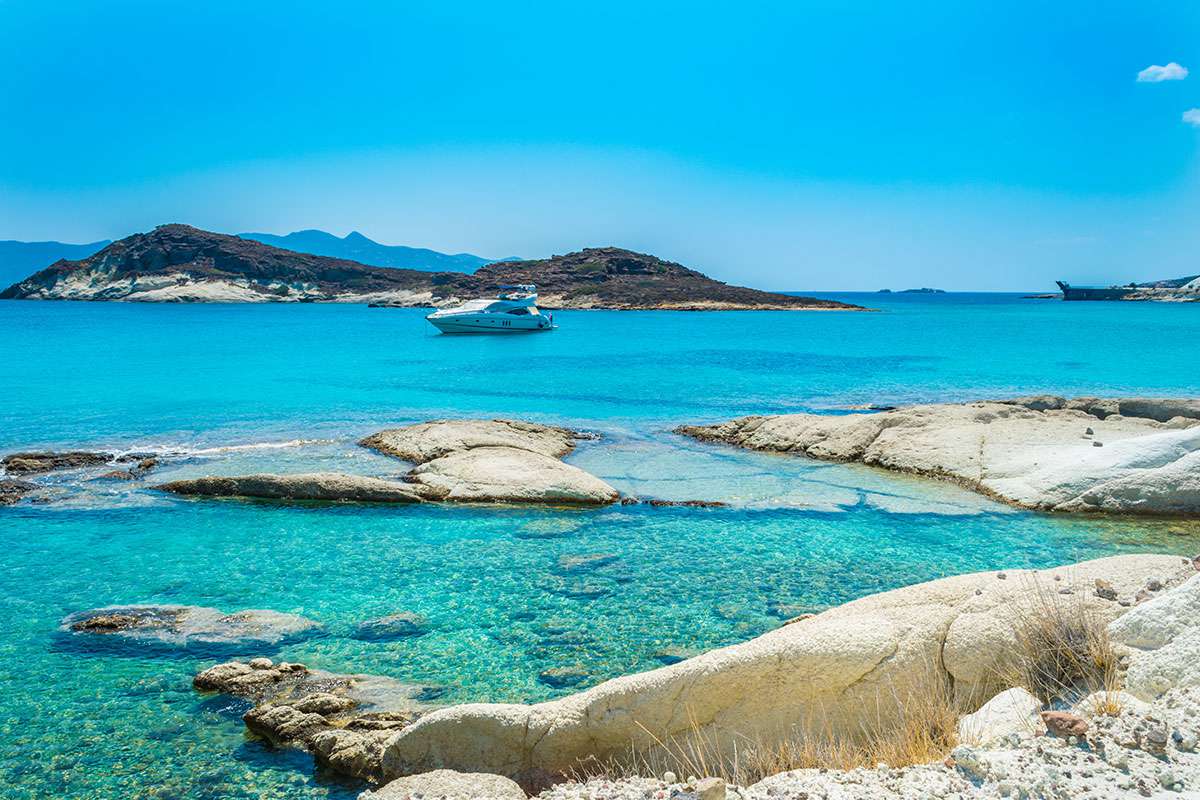
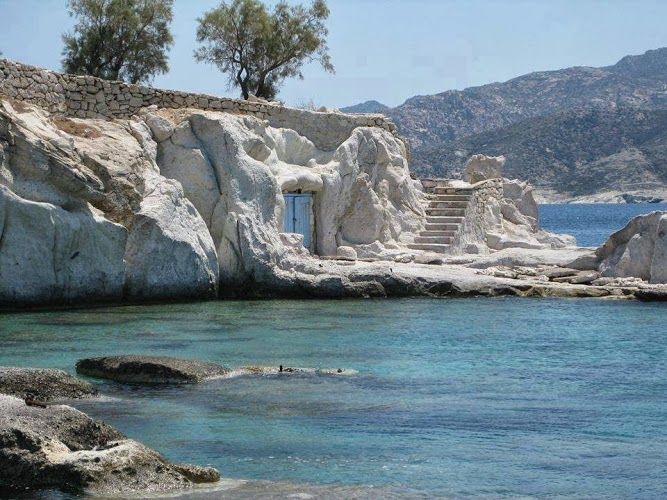
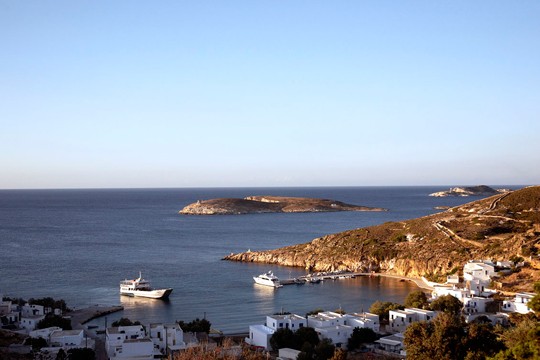
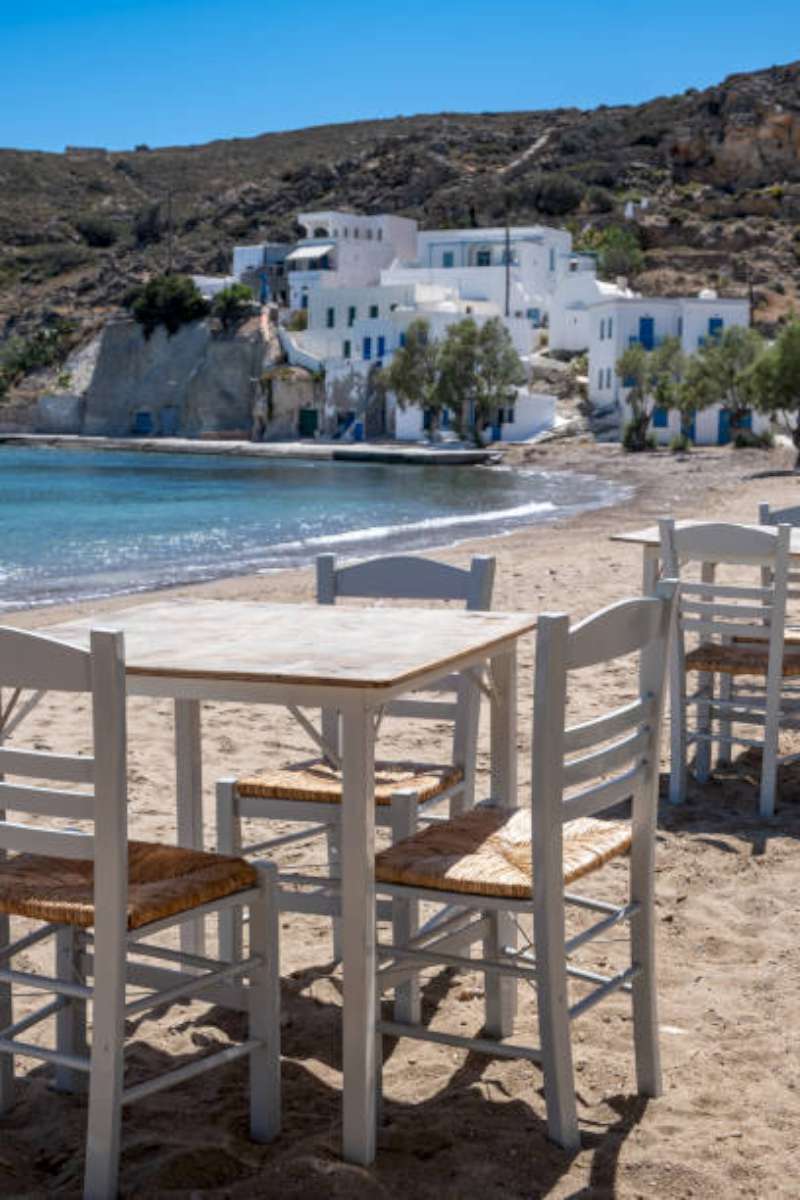
Kimolos has a coastline of 38 kilometres enclosing beaches and coves of remarkable variety and remarkable quality — the volcanic geology of the island creating a coastal landscape of coloured rock, sea caves, and pale volcanic sand entirely characteristic of the western Cycladic volcanic arc. Prassa, on the northern coast, is the island’s finest and most celebrated beach — a wide, pale arc of volcanic sand and extraordinarily clear turquoise water set against low white cliffs of volcanic tuff, its shallow gradient and calm water making it one of the most completely beautiful and most completely enjoyable beaches in the western Cyclades. Bonatsa, on the southwestern coast, is a wide bay of pale sand and calm, clear water particularly well suited to families. Aliki, on the southern coast, is more exposed and more dramatically set — its pale sand and deep blue water framed by the silver-grey volcanic cliffs of the island’s southern face. Mavrospilia — the Black Cave — is a sea cave of striking dimensions on the northern coast, its interior lit by the turquoise light reflected from the water below in the manner characteristic of the volcanic cave systems of the western Cyclades, and accessible by swimming or dinghy in calm conditions. For those arriving by yacht, the variety and quality of the anchorages distributed around Kimolos’s coastline — the sheltered bay of Psathi, the northern anchorage off Prassa, the dramatic coves of the volcanic southwestern coast — make it one of the most completely rewarding coastal destinations in the western group.
The Skiadi Rock Formation
In the interior of Kimolos, the geological formation known as Skiadi is one of the most extraordinary and most completely improbable natural features in the Cyclades — a massive mushroom-shaped rock of volcanic tuff, its cap of harder stone balanced on a narrower eroded stem, rising from the floor of a small valley in the island’s interior in a display of geological individuality that seems, at first encounter, too theatrical to be entirely natural. The Skiadi is the result of millions of years of differential erosion — the harder upper layer of the formation resisting the wind and rain that wore away the softer volcanic tuff below — and its dimensions, its perfect balance, and the surreal quality of its presence in the otherwise austere Cycladic landscape give it a character somewhere between natural wonder and outdoor sculpture. Walking to the Skiadi from Chorio through the island’s fragrant scrubland, with the sea visible in blue flashes between the volcanic hills, is one of the most characteristically and most memorably Kimolos experiences available on the island.
Polyaigos — The Largest Uninhabited Island in the Aegean
East of Kimolos, the island of Polyaigos — half the size of Kimolos and entirely uninhabited — is the largest uninhabited island in the entire Aegean Sea, its 18 square kilometres of volcanic landscape, dramatic coastal cliffs, and extraordinary beaches entirely without roads, buildings, or permanent human presence. Accessible by boat from Kimolos in a crossing of about 30 minutes, Polyaigos is a protected nature reserve of great ecological significance — a refuge for the endangered Mediterranean monk seal and a breeding ground for rare seabirds, its undisturbed natural environment preserving a quality of wild Aegean landscape increasingly rare in the island world. The beaches of Polyaigos — accessible only by sea, their pale volcanic sand and extraordinary turquoise water entirely without facilities and entirely without visitors — are among the finest and most completely unspoiled in the western Cyclades. By yacht, spending a morning anchored off the beaches of Polyaigos — swimming in water of extraordinary clarity in absolute and complete silence, with the volcanic cliffs above and the empty island behind — is one of the most profound and most completely memorable natural experiences available to the cruising sailor in the western Cyclades.
The Hot Springs of Prassa
On the northern coast of Kimolos, adjacent to the fine beach of Prassa, natural hot springs rise from the volcanic seabed of the shallow bay and mix with the cooler sea water to create a bathing environment of unusual warmth and unusual therapeutic quality — a natural spa of modest scale but genuine pleasure, its warm water emerging from the volcanic rock at the beach’s edge and creating pools of heated, mineral-rich water that have been used for bathing and therapeutic purposes by the island’s inhabitants for generations. The combination of the hot springs with the extraordinary beach of Prassa — the pale volcanic sand, the turquoise water, the white volcanic cliffs above — creates one of the most completely pleasurable and most completely distinctive natural experiences available on any beach in the western Cyclades.
Why Choose Kimolos
Kimolos is the island for the traveller who has been to Milos — or who is planning to visit it — and understands that the one nautical mile of water separating them contains, on the Kimolos side, an experience of the same volcanic beauty and the same extraordinary coastal geology in a setting of complete and entirely genuine solitude. It is for those who want the coloured volcanic cliffs and the extraordinary turquoise water and the dramatic sea caves of the western Cycladic volcanic arc without the crowds that Milos’s international fame now inevitably attracts, and who find that the most beautiful landscapes are most completely beautiful when they are experienced in silence and without competition.
For sailing itineraries in the western Cyclades, Kimolos is a natural and effortless addition to any Milos visit — the channel crossing of barely one nautical mile from the port of Pollonia making it the easiest and most completely rewarding day trip or overnight stop in the entire western group. The anchorages of Kimolos — Psathi, Prassa, the northern and western coves — are of excellent quality and provide the sailor who moves between them with a sequence of coastal experiences of remarkable variety and remarkable beauty. The combination of Polyaigos, the uninhabited giant to the east, with the beaches and volcanic formations of Kimolos itself creates a two or three day sailing itinerary of extraordinary natural quality and extraordinary completeness, available barely an hour’s sail from the main harbour of Milos.
What Kimolos ultimately gives the visitor who crosses the narrow channel from Milos or who arrives directly by ferry from Piraeus is the gift most valued by those who know the western Cyclades well: the gift of an island of genuine, unperformed, entirely natural beauty that has not yet been discovered by the mass of international visitors, whose beaches are empty in the morning and whose village taverna knows your name by the second evening, and whose quality of volcanic landscape and extraordinary coastal geology is, in the honest judgment of those who have seen both islands properly, every bit as extraordinary as the more famous island one nautical mile to the southwest. That judgement, once made, is permanent and entirely convincing. Kimolos deserves better than to live in the shadow of Milos. It deserves to be discovered on its own terms, and it rewards that discovery generously and completely.