Why Kea
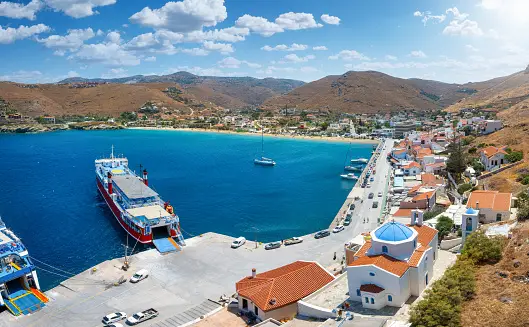
There are islands that exist in a permanent state of pleasant contradiction — close enough to the mainland to be reached in an hour yet remote enough in character to feel like a genuine escape, well known to Athenians yet almost entirely undiscovered by international tourism, possessed of a natural beauty and a historical depth that would make them famous if they happened to sit a little further south in the archipelago, and yet perfectly content with the quieter, more intimate kind of appreciation that their relative obscurity affords them. Kea — known to its admirers by its medieval name Tzia, and to ancient mythology as the island of the Muses — is the supreme example of this agreeable contradiction in the entire Cyclades. The closest of all the Cycladic islands to Athens, barely 60 kilometres from the port of Lavrio on the Attic coast, Kea receives the weekend boats from the mainland with a warmth and a regularity that have made it the best-loved island escape of the Athenian middle and creative classes for generations, while remaining, for the international traveller, one of the most genuinely undiscovered and most genuinely rewarding destinations in the entire Greek island world.
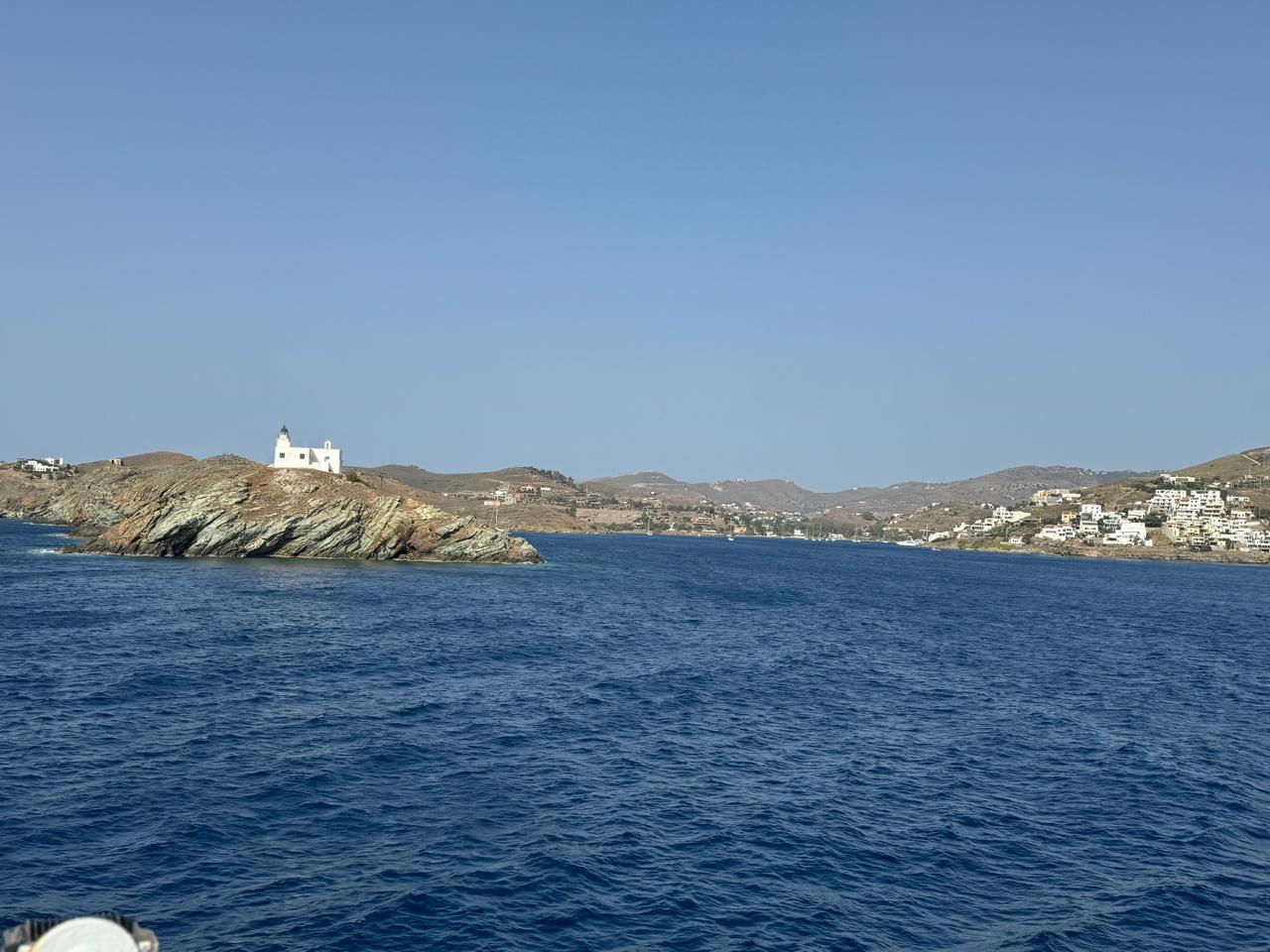
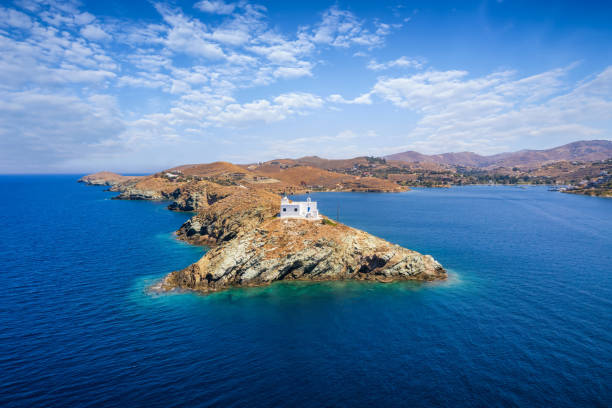
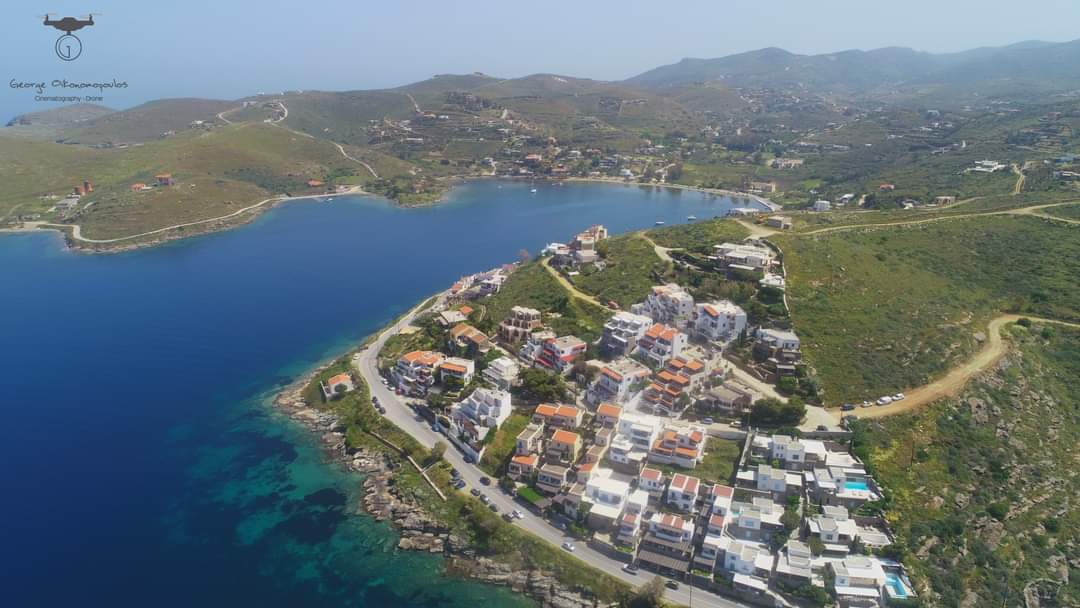
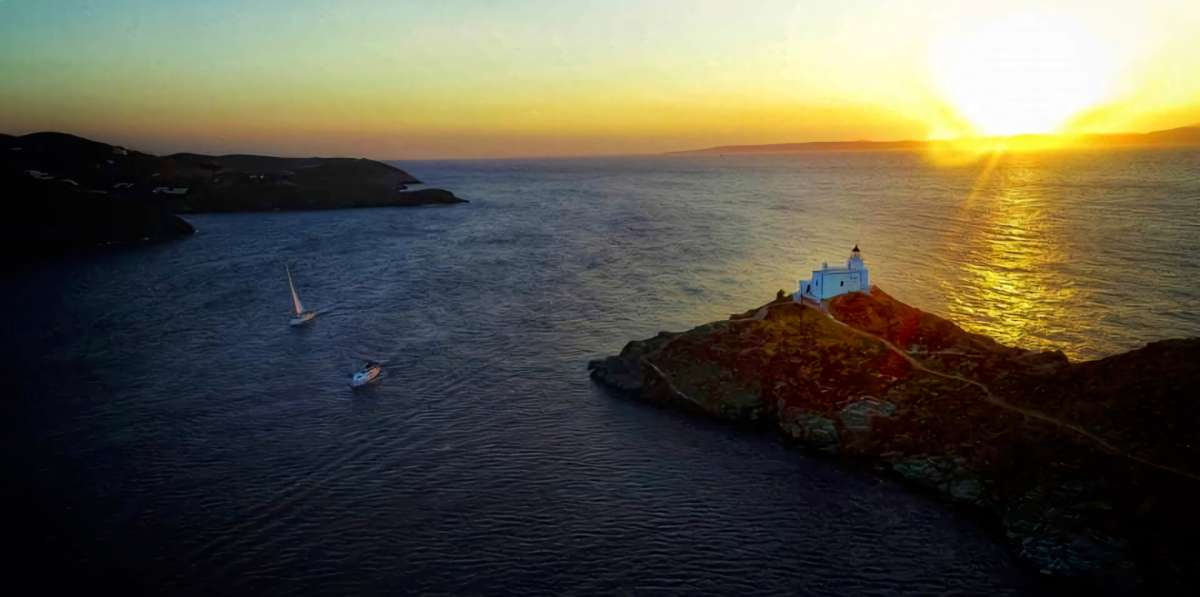
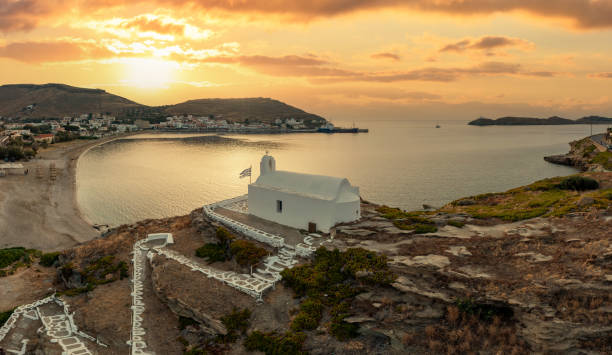
The island announces itself on the approach from the sea with a landscape of striking beauty and striking distinctiveness — steep, terraced hillsides covered in ancient oak forests descending to a coastline of considerable drama, long sandy beaches alternating with rocky headlands, and a quality of greenness and agricultural richness that sets Kea immediately apart from the drier, more austere Cyclades to the south. The famous oak forests of Kea — among the last surviving stands of holm oak in the Cyclades, protected now as a natural heritage site — cover the northern and central parts of the island in a dense, fragrant canopy that gives the landscape a depth and a lushness entirely characteristic of this northernmost of the Cyclades and entirely distinct from the sun-bleached stone of Mykonos or Santorini. Walking through these forests on the island’s ancient path network, with the smell of oak and wild herbs around you and the sea visible in blue flashes between the trees, is one of the most completely characteristic and most completely pleasurable experiences the island has to offer.
Kea has been inhabited continuously since the Neolithic period and was, in antiquity, one of the most prosperous and most culturally significant of the Cycladic islands — home to four separate ancient city-states, each with its own acropolis and its own walls, and famous across the ancient world for the quality of its poets, philosophers, and athletes. The philosopher Prodicus, the lyric poet Simonides, and the painter Polygnotos were all natives of Kea, and the island’s ancient cities of Ioulis, Karthaia, Poiessa, and Korissia each left behind remains of considerable archaeological interest that are distributed across the island in positions of great natural beauty. This depth of ancient heritage, combined with the medieval Venetian towers that dot the landscape and the traditional Cycladic architecture of its villages, gives Kea a historical layering entirely disproportionate to its modest size and its relatively low tourist profile.
What to Do and What to See
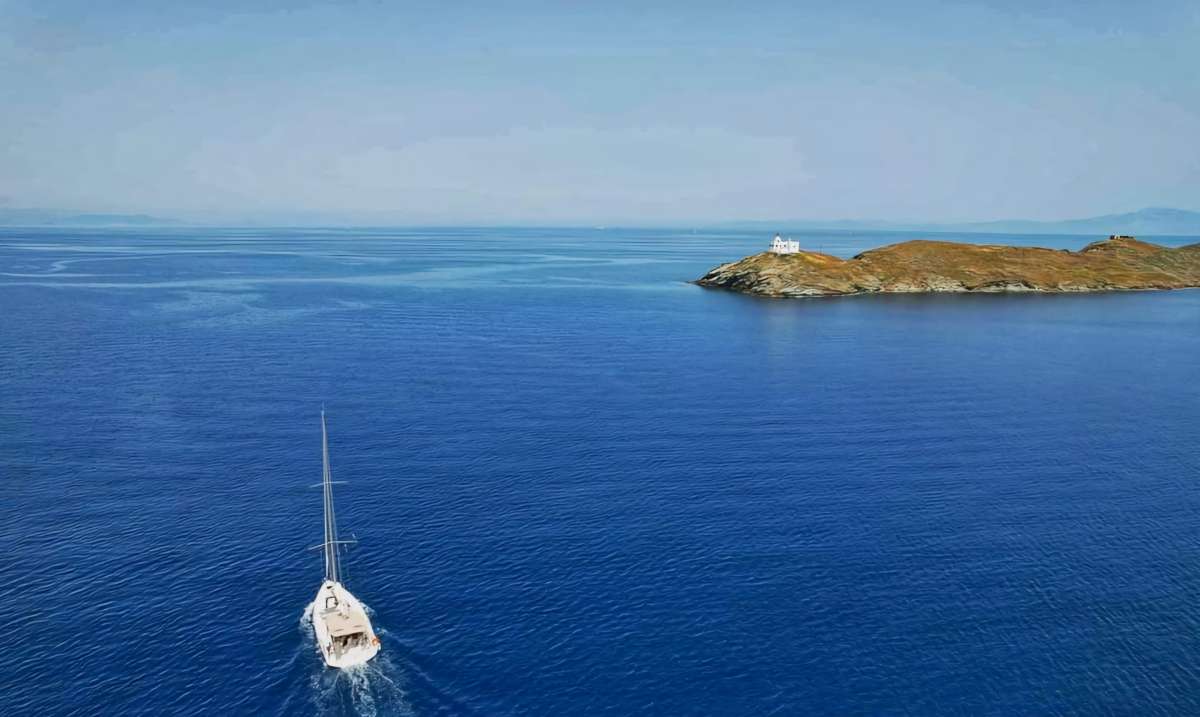
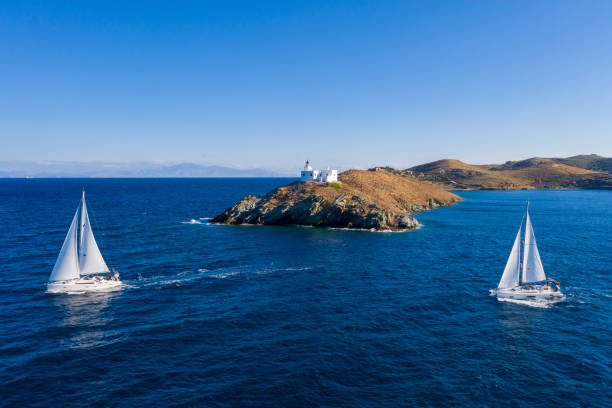
Kea rewards the visitor who explores it with genuine curiosity — on foot along its ancient paths, by sea along its varied and beautiful coastline, and on the winding roads that connect its traditional villages with its archaeological sites and its exceptional beaches. For those arriving by yacht, the island offers a series of well-sheltered anchorages, a coastline of great variety, and the particular pleasure of being in a destination that combines excellent natural and cultural resources with the refreshing absence of the crowds and the tourist infrastructure that characterise more internationally famous Cycladic islands.
Ioulis — The Chora
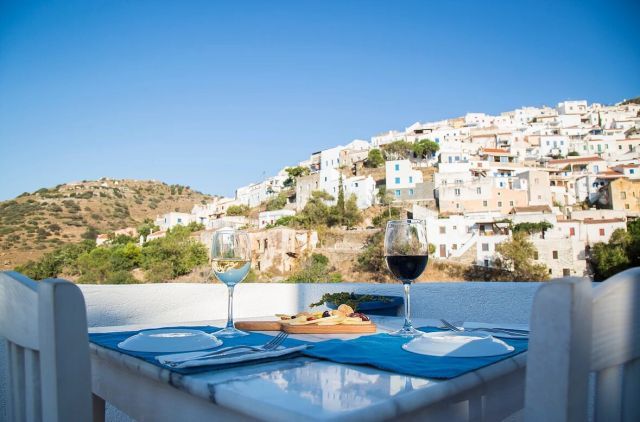
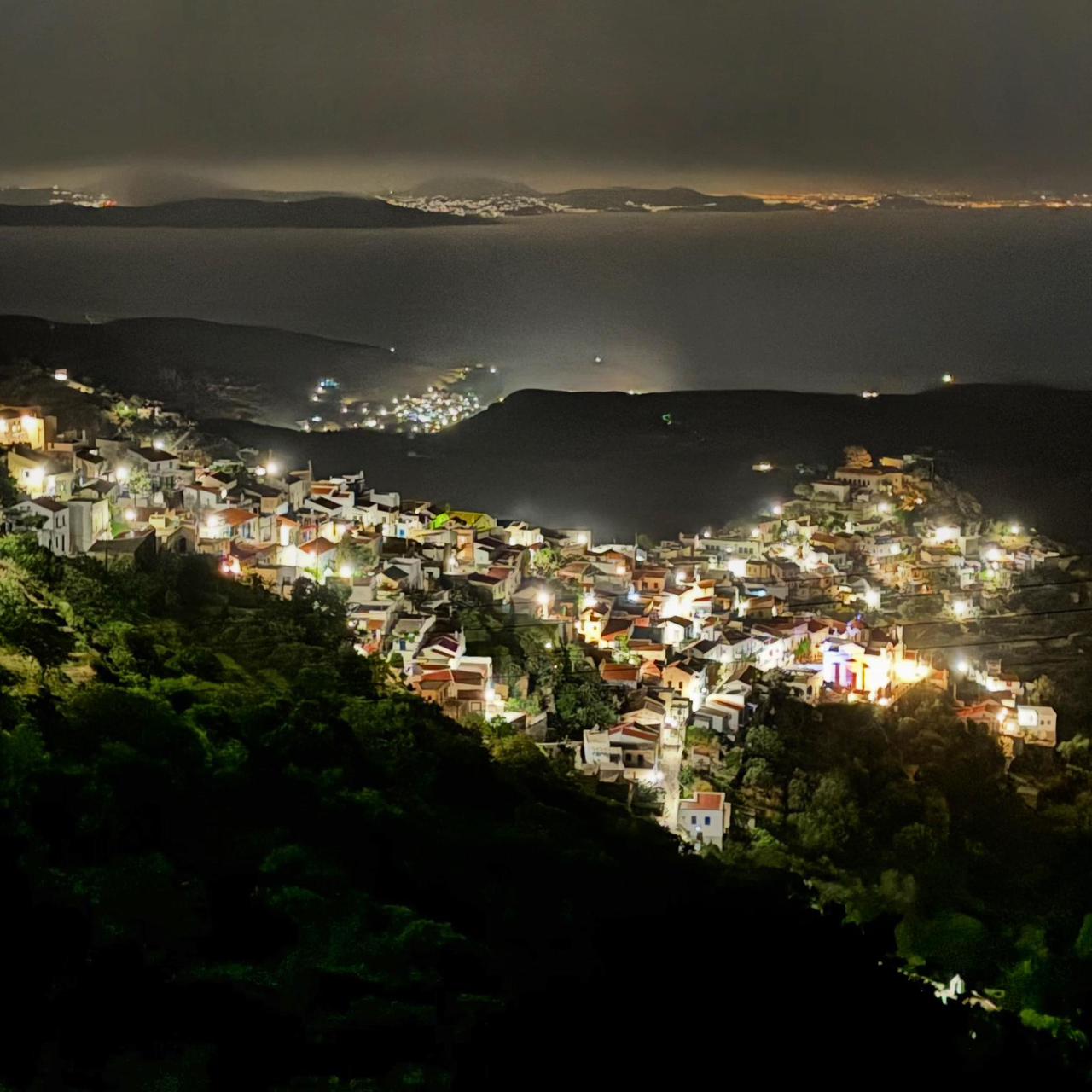
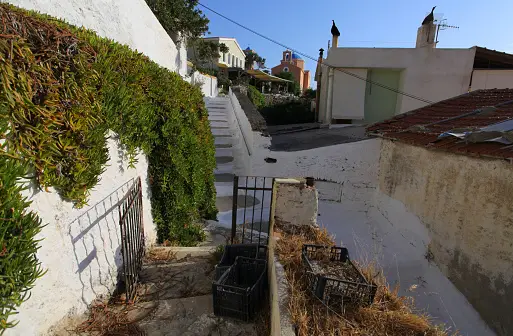
The island’s capital, Ioulis — set inland on a hillside in the classic Cycladic manner that placed the main settlement away from the coast and out of sight of pirates — is one of the most beautiful and most completely authentic island capitals in the northern Cyclades. Its whitewashed lanes and Venetian-influenced architecture climb the hillside in a dense, organically arranged settlement of considerable charm, its main square shaded by a great plane tree and lined with the kafeneions and small restaurants where Athenian weekenders and local residents have been sharing the same tables and the same unhurried conversations for generations. The medieval Venetian castle above the town, constructed in part from the stones of ancient buildings, offers views across the island and out to the Attic coast and the distant mountains of mainland Greece that are magnificent on clear days. The Archaeological Museum of Ioulis houses finds from the island’s four ancient cities of considerable quality, and the town’s well-stocked small shops — honey, local wine, handmade ceramics — reflect the particular tastes of its cultivated Athenian visitor base.
The Lion of Kea
In the hills above Ioulis, carved directly into the living rock of a natural stone outcrop in the 6th century BC, the Lion of Kea is the oldest and largest ancient rock carving in the Cyclades — a monumental recumbent lion of considerable power and beauty, its archaic smile and stylised mane perfectly preserved in the hard local stone, lying in a natural clearing with views across the northern part of the island toward the sea. The lion measures over six metres in length and is one of the most remarkable and least visited ancient monuments in the entire Cyclades — a work of genuine artistic ambition executed in the archaic manner that is, in its remote hillside setting, both deeply impressive and curiously intimate. The walk from Ioulis to the lion, through the oak forest and along ancient stone-paved paths, takes about twenty minutes and is one of the most rewarding short excursions on the island.
The Ancient City of Karthaia
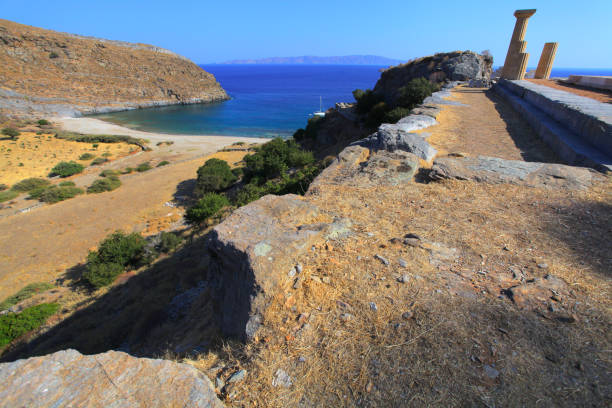
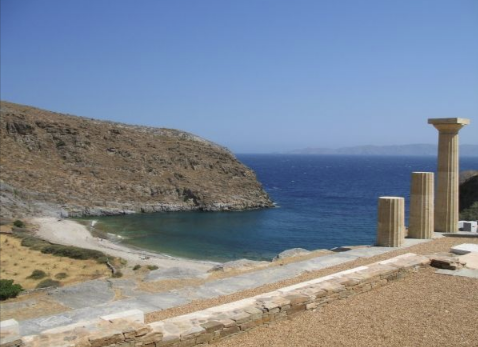
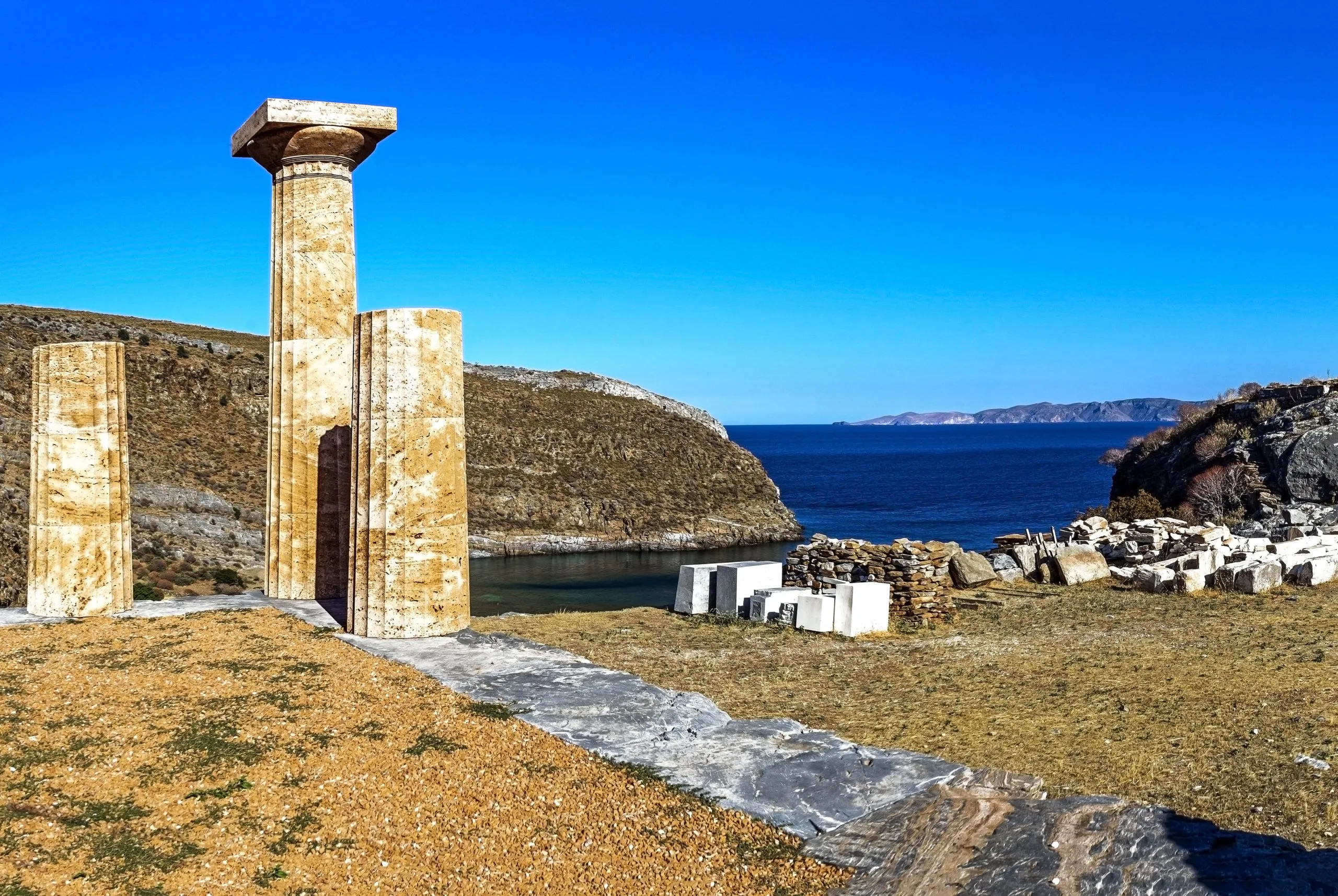
On the southeastern coast of Kea, the ruins of the ancient city of Karthaia occupy a dramatic promontory above a beautiful double bay accessible only on foot via a long path through the island’s southern landscape, or — more practically and more rewardingly — by sea. The ruins include the remains of two temples — one of Apollo, one of Athena — whose column drums and foundation courses are still visible above the scrub and wildflowers, together with substantial sections of the ancient city walls and the outline of the ancient theatre carved into the hillside above the sea. The setting is extraordinary — steep limestone headlands, clear turquoise water in the two bays below, the open Aegean to the south and east, and a silence broken only by the wind and the sea that gives the ruins a quality of romantic isolation rarely encountered at ancient sites in the Greek islands. By yacht, anchoring in the southern bay below Karthaia and approaching the ruins on foot from the shore is one of the finest combinations of sailing and archaeology available in the northern Cyclades.
The Beaches
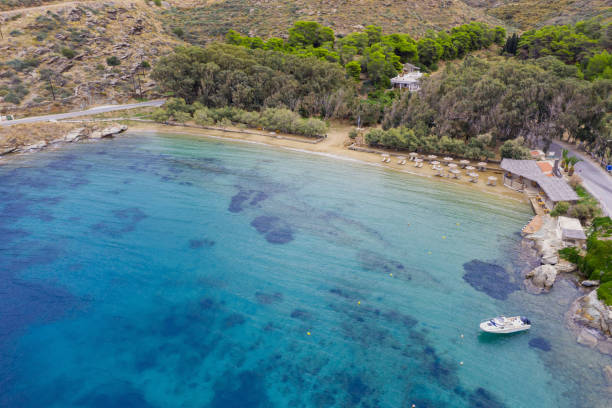
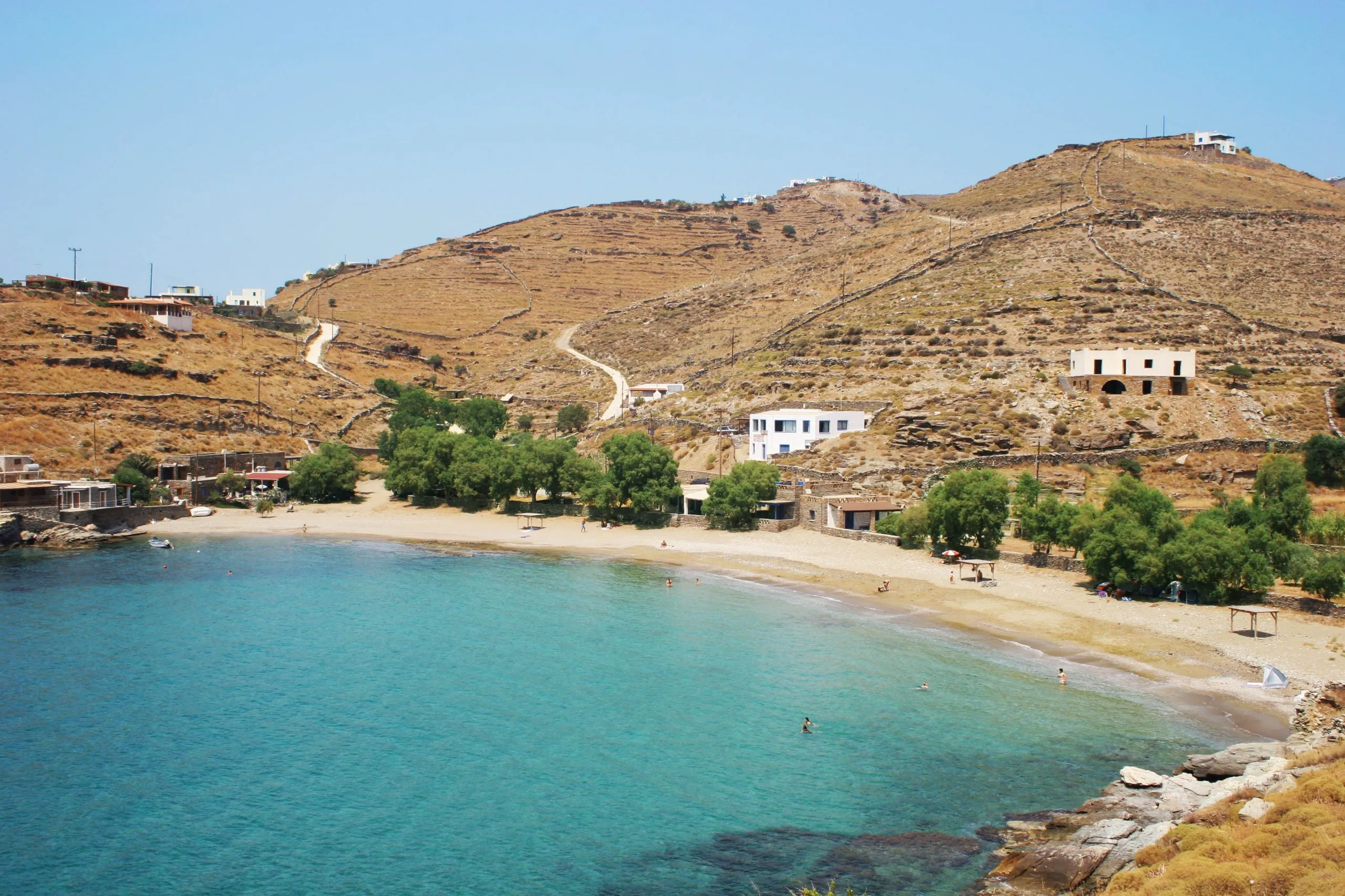
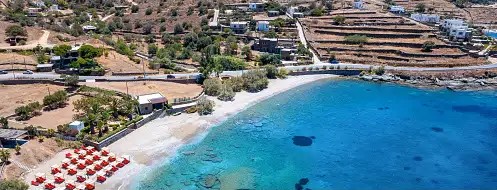
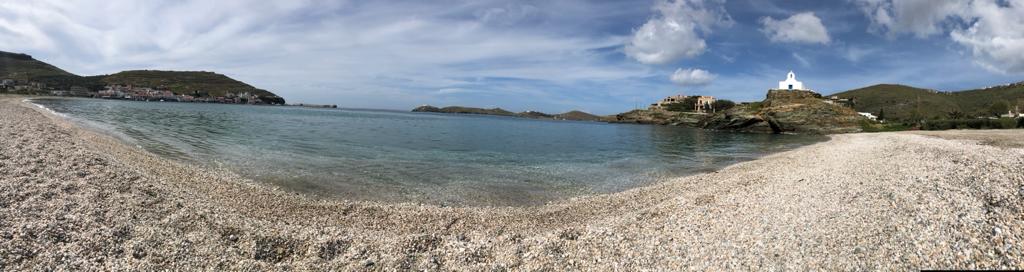
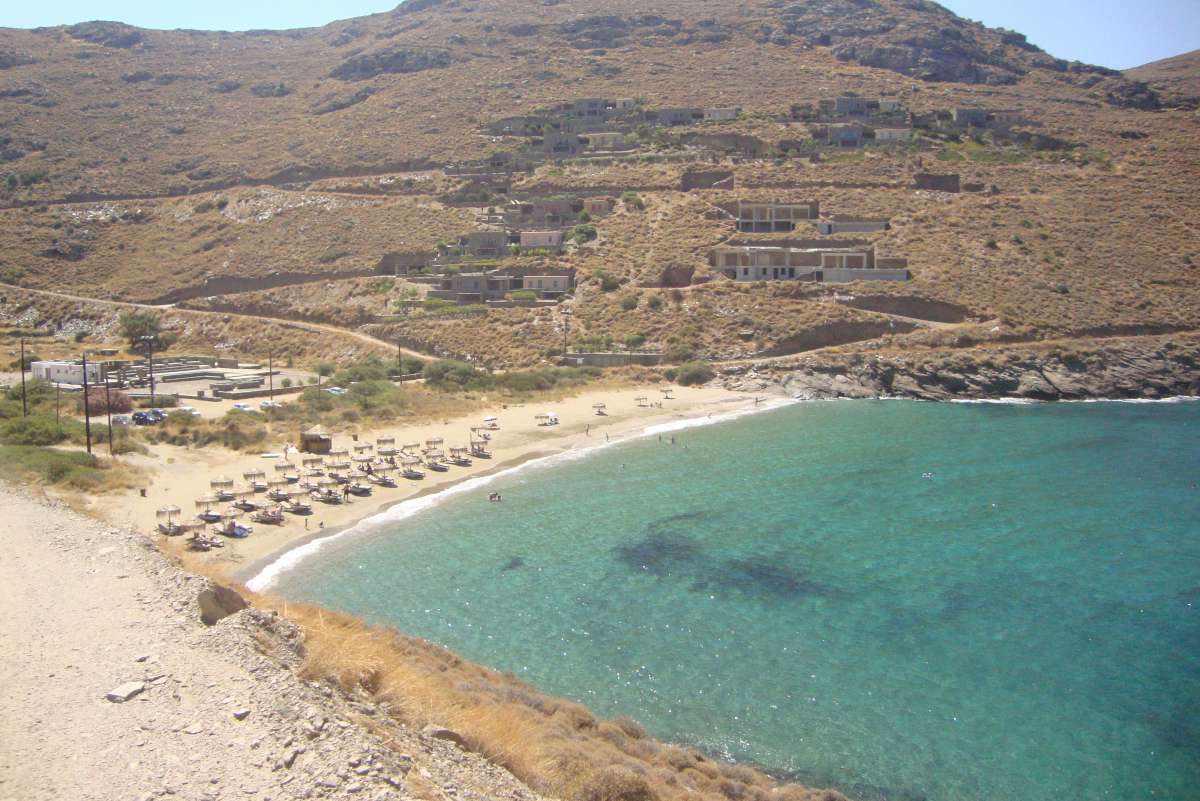
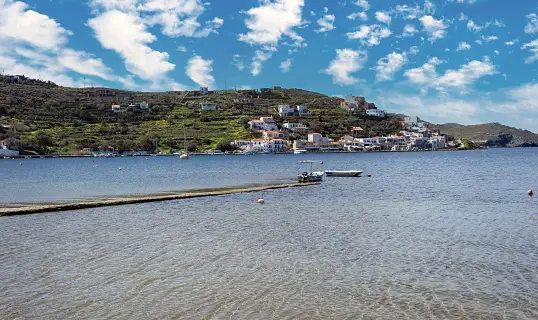
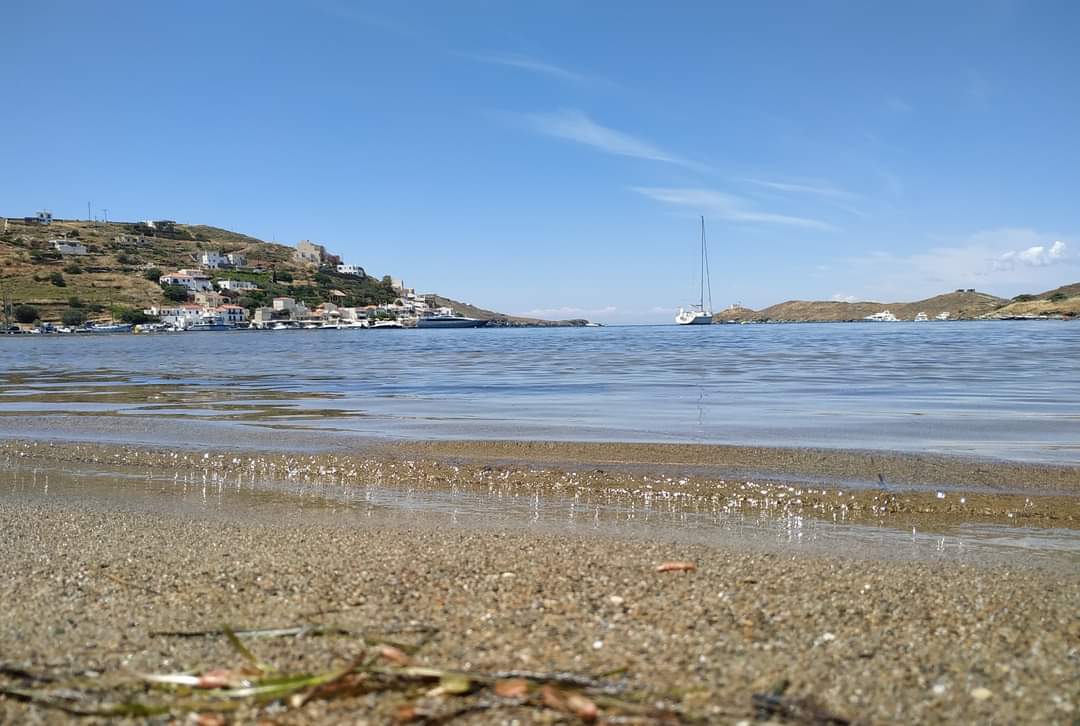
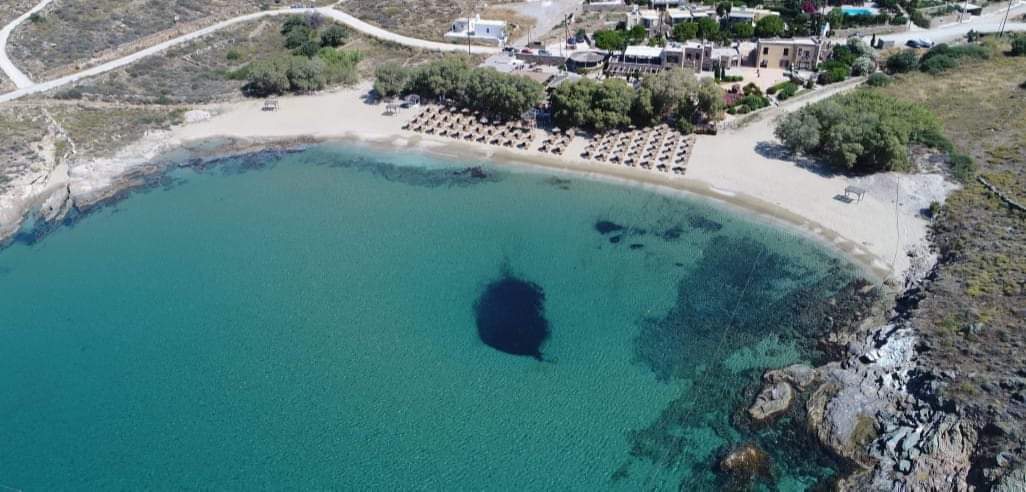
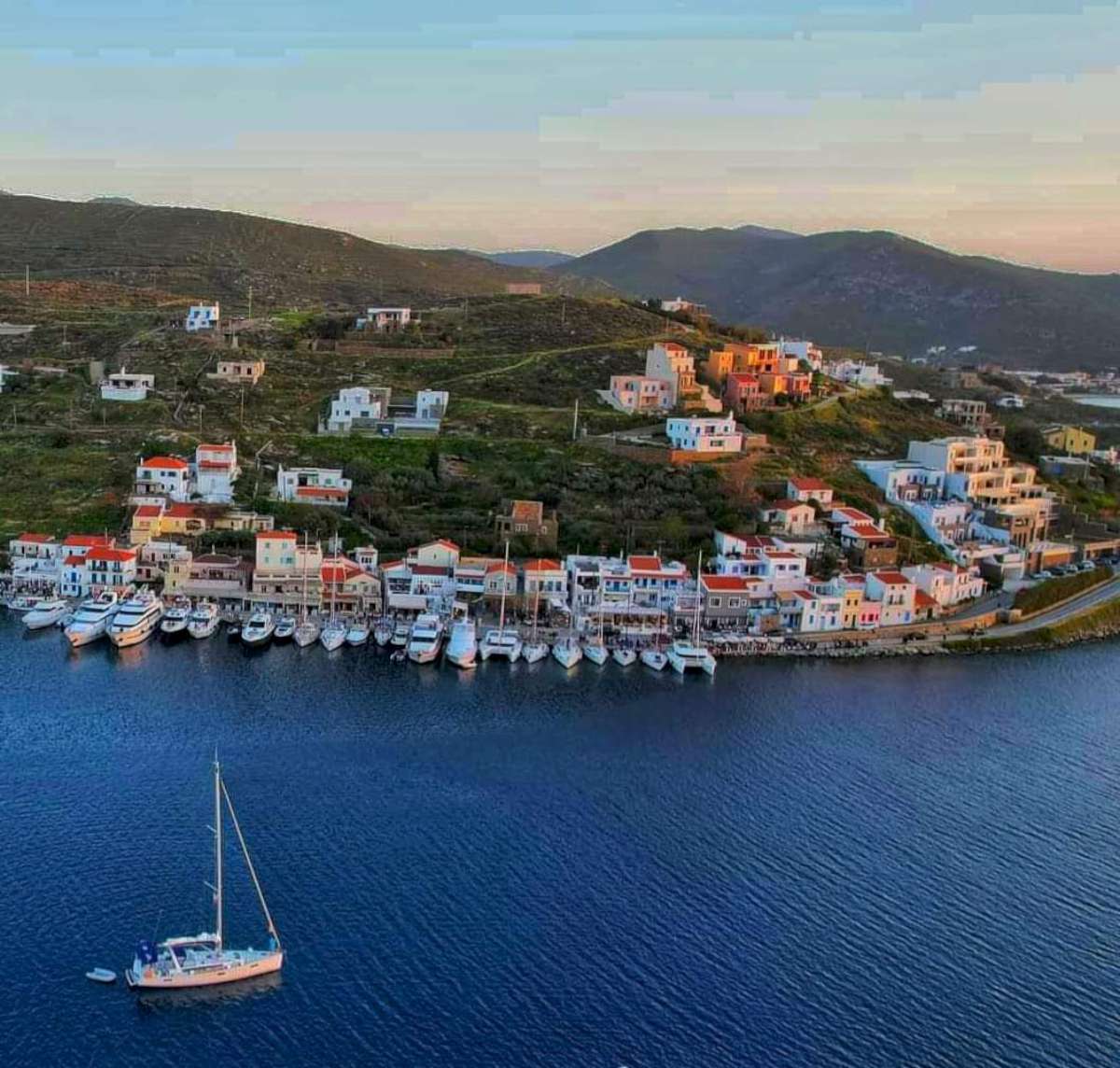
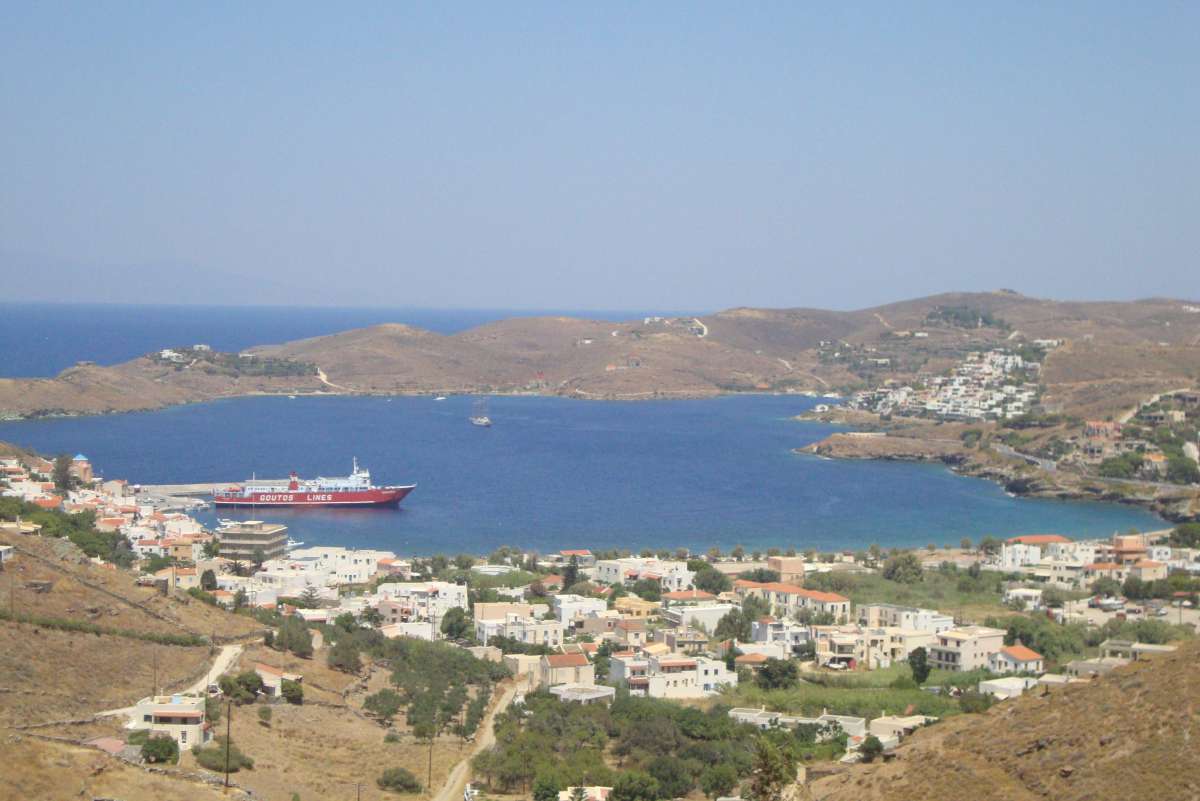
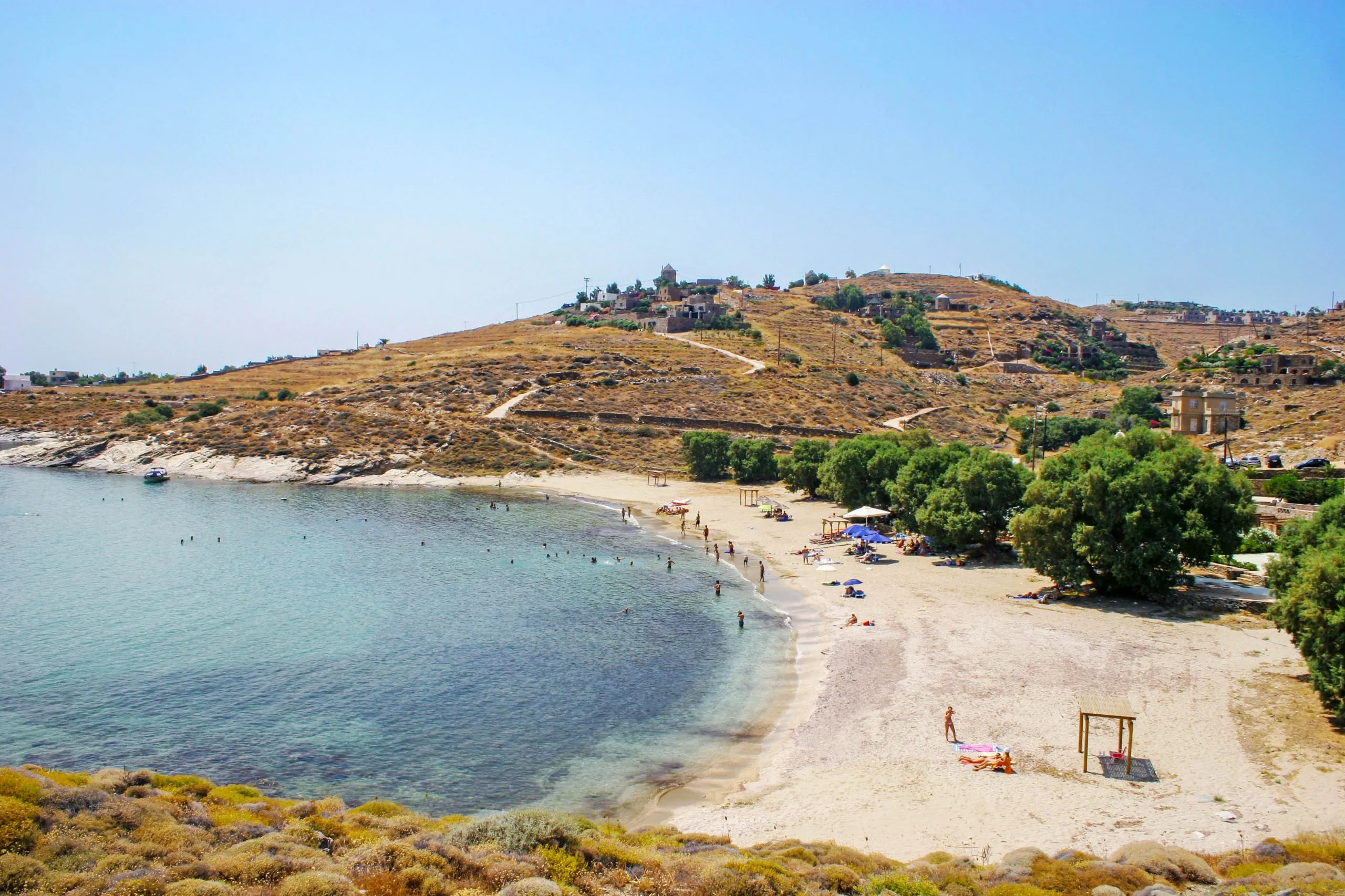
Kea has a coastline of exceptional variety, with beaches distributed across all four sides of the island and offering character ranging from the organised and accessible to the remote and completely wild. Korissia Bay, near the main port, is calm, sandy, and convenient — the island’s most accessible beach and a natural starting point for those new to the island. Vourkari, the elegant small harbour a short walk north of Korissia, is the social centre of the island’s sailing community — a beautiful narrow inlet lined with excellent fish restaurants and cafés whose waterfront tables are occupied from morning to late evening by a cosmopolitan mix of Athenian weekenders and international sailors. Otzias, on the northern coast, is a wide, clean sandy beach of considerable beauty in a sheltered bay with calm, clear water. And the beaches of the southern and southeastern coast — Spathi, Poles, Koundouros — are wilder, more dramatic, and more completely beautiful, their pale sand and turquoise water set against the rocky southern landscape with a natural intensity that is among the finest in the island.
Vourkari and the Sailing Community
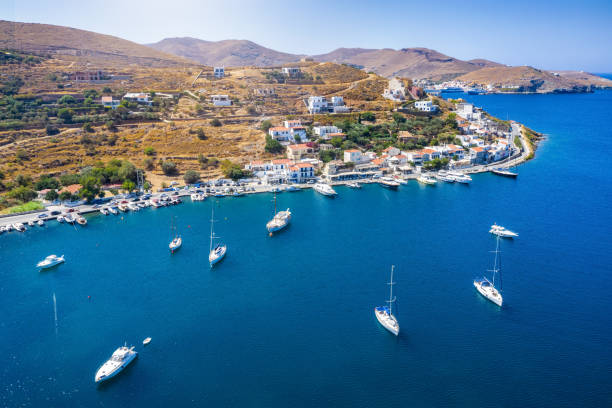
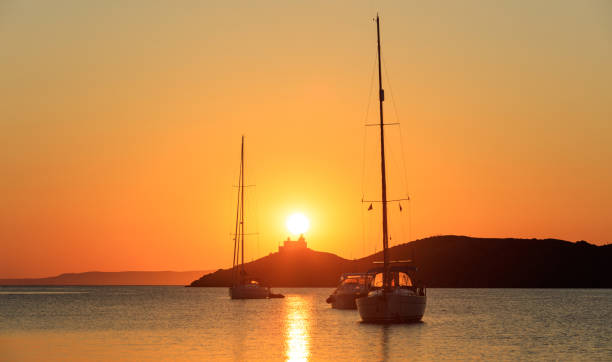
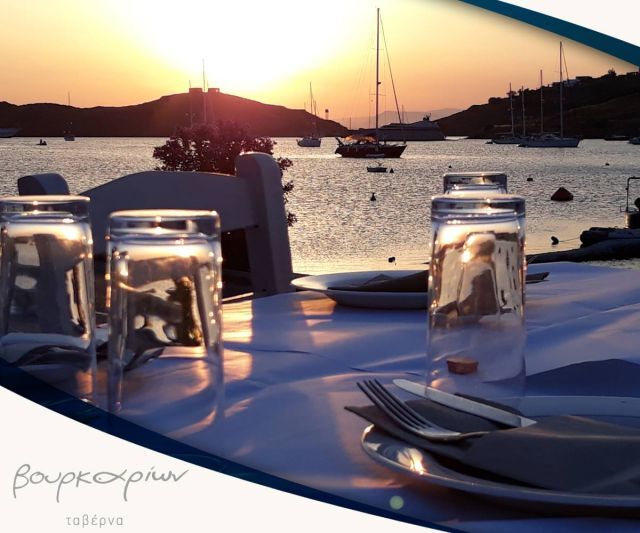
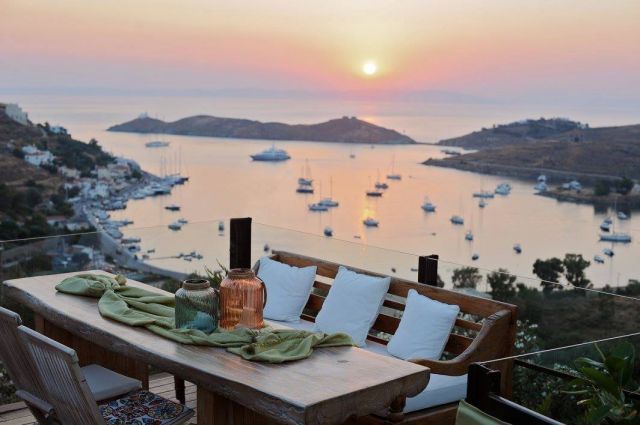
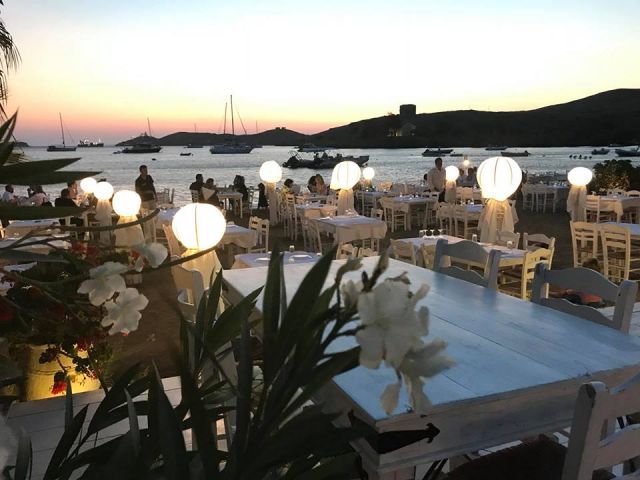
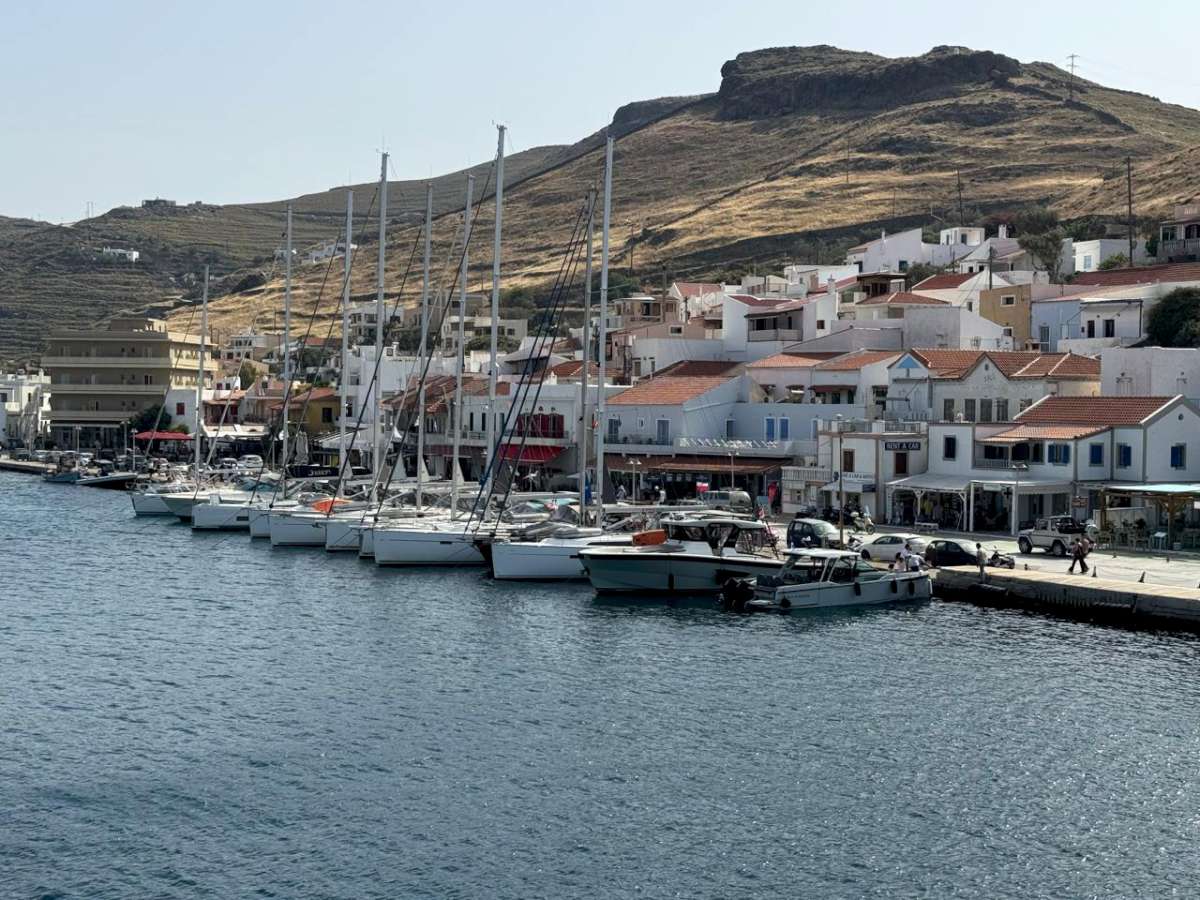
The small harbour of Vourkari, a short sail or walk from the main port of Korissia, is one of the most civilised and most pleasurable small yacht harbours in the northern Cyclades — a narrow, completely sheltered inlet whose quaysides are lined with the moored yachts of Athenians and international sailors who have discovered, over generations of summer sailing, that Vourkari is the kind of harbour that is extremely easy to stay in longer than planned. The restaurants along the waterfront are among the finest on the island — several of them with reputations that draw diners from Athens specifically for a long fish lunch — and the atmosphere of the harbour on a summer evening, with the yachts rocking gently at their moorings and the tables full and the water reflecting the lights of the village above, is one of the most elegant and most completely pleasurable small harbour scenes in the Cyclades.
Why Choose Kea
Kea is the island for the traveller who wants the Cyclades without the crowds — who wants the natural beauty, the archaeological richness, the excellent food, and the authentic community life of a real Greek island without the queues, the overbooked restaurants, and the selfie sticks that characterise the more famous Cycladic destinations in the height of summer. It is an island that has been loved for generations by the most discerning of Athenian visitors — architects, writers, academics, sailors — and that has been shaped by that love into a destination of considerable sophistication and considerable authenticity, offering a quality of experience that many far more famous islands, paradoxically, struggle to match.
For sailing itineraries in the northern Cyclades and the Saronic Gulf, Kea occupies a position of great strategic and intrinsic value — the natural first stop on a southbound Cyclades cruise from the Attic coast, or the ideal last anchorage on a northbound return, and in either case a destination of sufficient quality and variety to justify two or three days of unhurried exploration. The sailing between Kea and the Saronic islands to the northwest, or between Kea and Kythnos to the south, is straightforward and beautiful, and the combination of Vourkari’s excellent harbour with the island’s archaeological sites, ancient oak forests, and exceptional beaches creates an itinerary of genuine completeness.
What Kea ultimately gives the traveller who finds it is the particular and increasingly rare pleasure of a destination that has not yet been discovered by the mass market — that retains the character, the pace, and the genuine community life of a real Greek island in a setting of great natural and historical beauty, and that extends to the visitor who makes the effort to come here the quiet, generous, unselfconscious welcome of a place that has plenty to offer and no particular need to advertise the fact. That quality — of sufficiency without performance, of beauty without theatre — is the rarest quality in the modern travel world, and Kea possesses it completely.