Why Kastelorizo
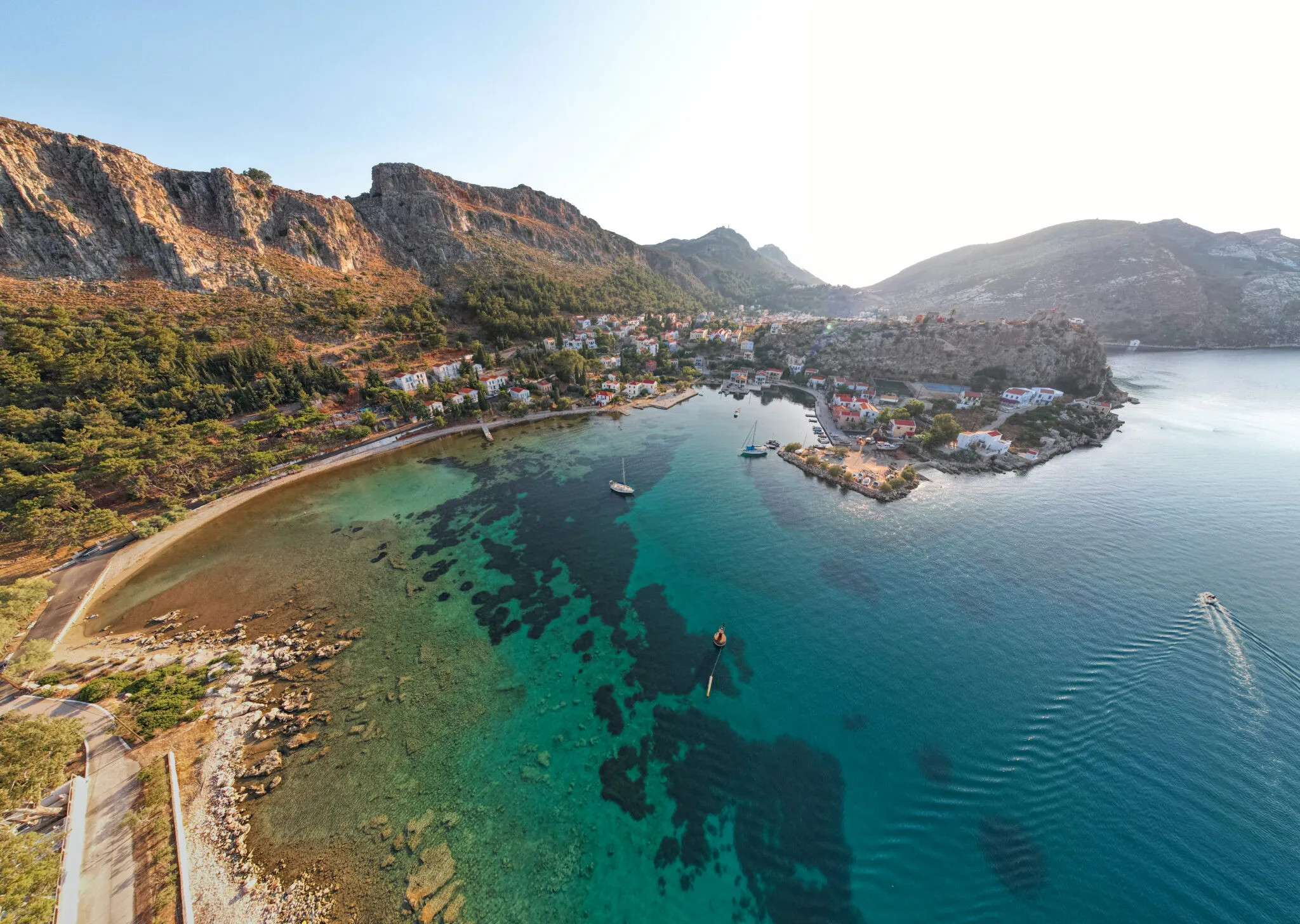
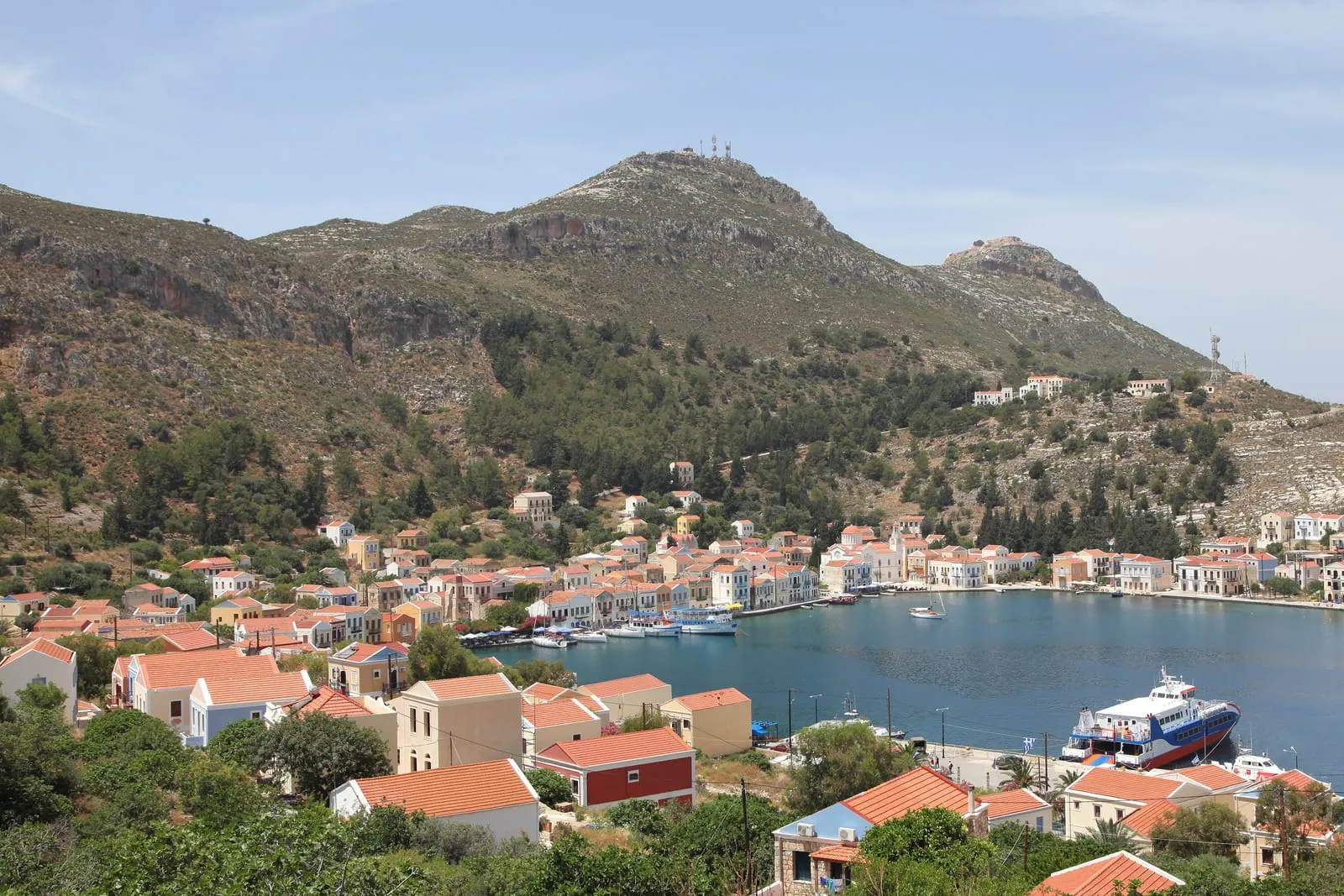
There are journeys in the Greek world that are as much about the idea of the destination as the destination itself — places whose remoteness and improbability are inseparable from the experience of being there, and whose beauty is deepened rather than diminished by the effort required to reach them. Kastelorizo is the supreme example of this truth in the entire Greek island world. The smallest inhabited island in the Dodecanese, lying at the very eastern extreme of Greek territory just a few hundred metres from the Turkish coast and nearly 600 kilometres from Athens, Kastelorizo has a population of barely 500 permanent residents, a single harbour village of extraordinary architectural beauty, no airport connection to the wider Greek island system, and a quality of remoteness and self-contained completeness that makes it feel, to the sailor who finally rounds the headland and sees the great amphitheatre of coloured neoclassical mansions opening before them, like the most improbable and most wonderful discovery in the Aegean.
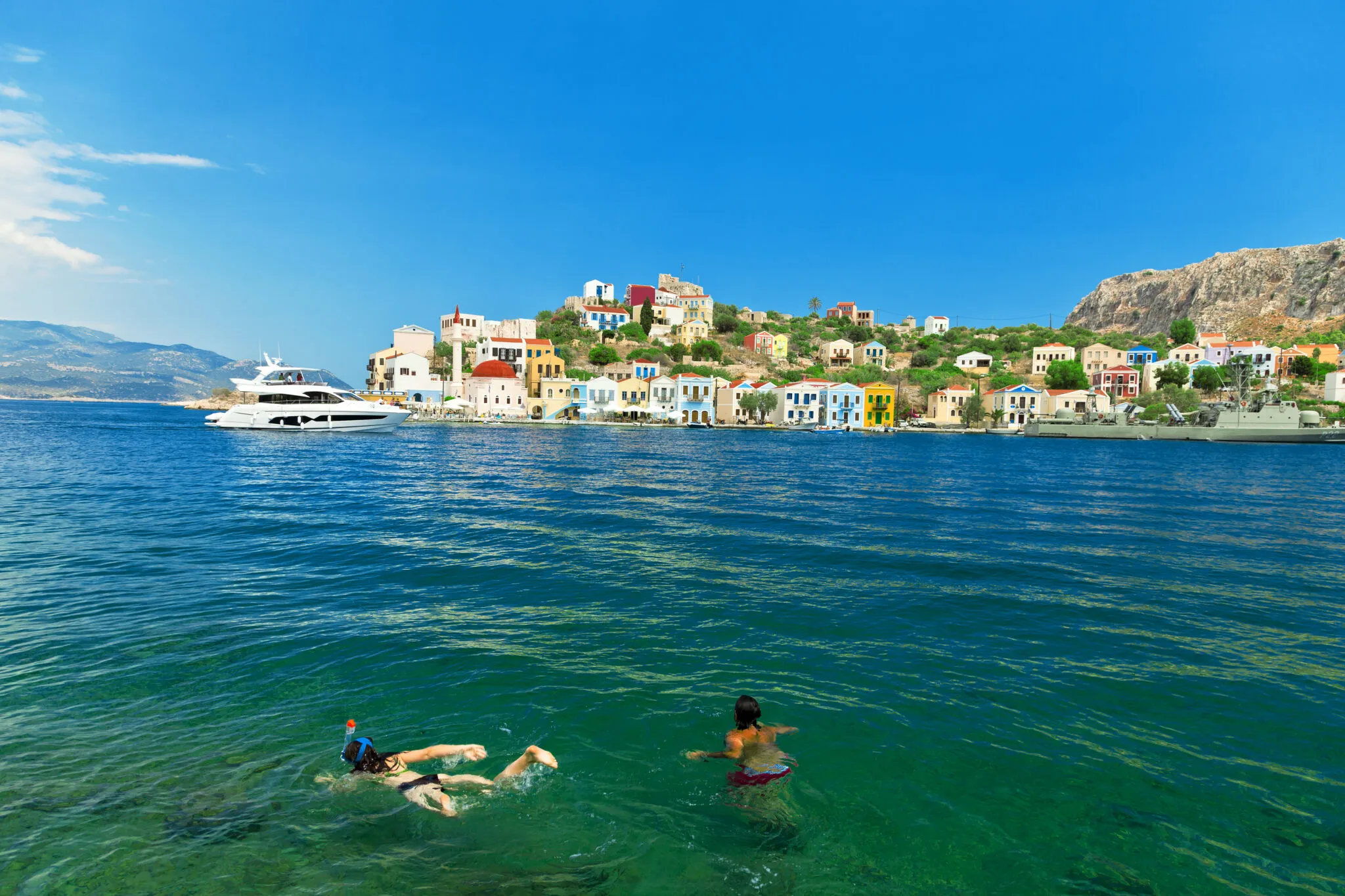
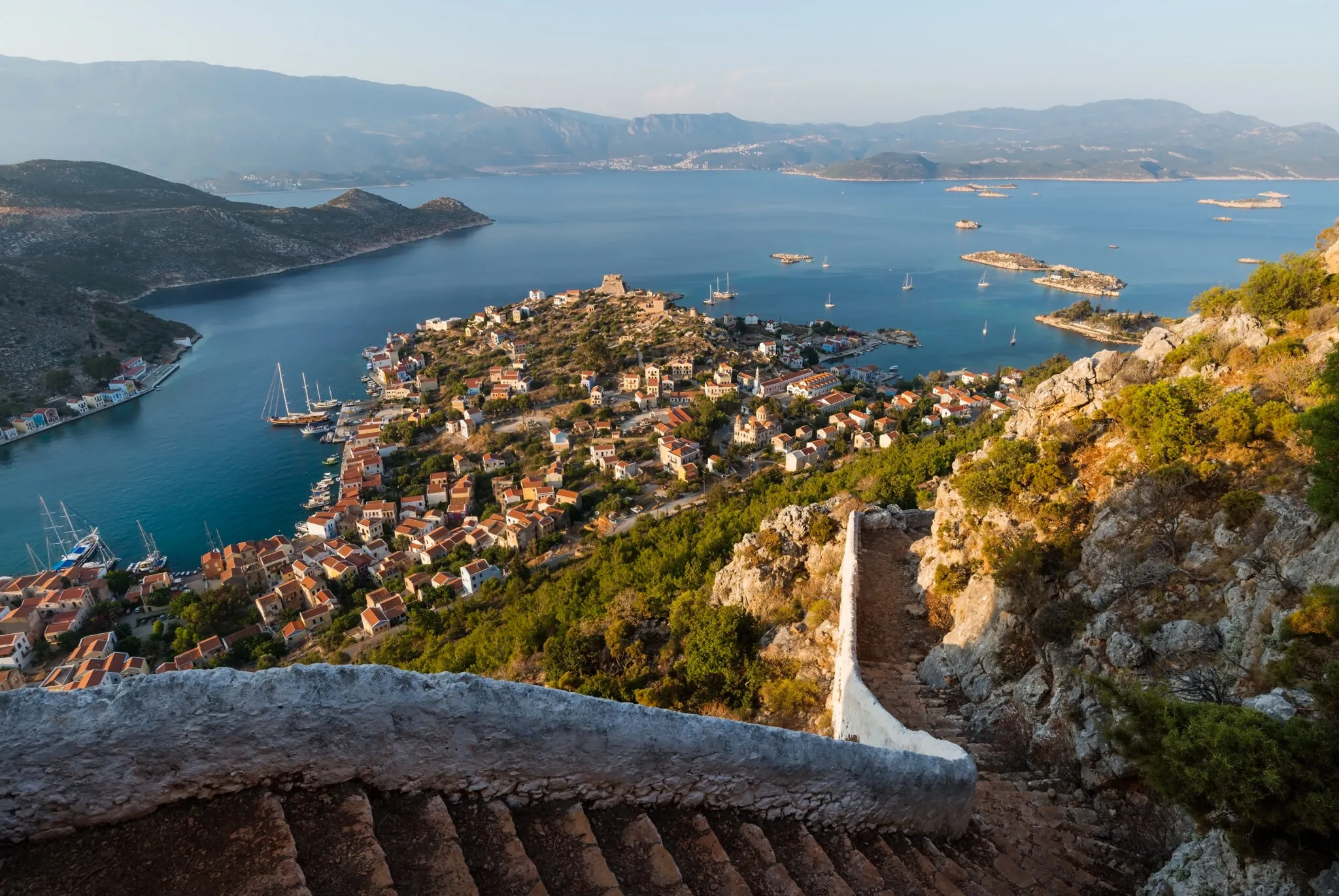
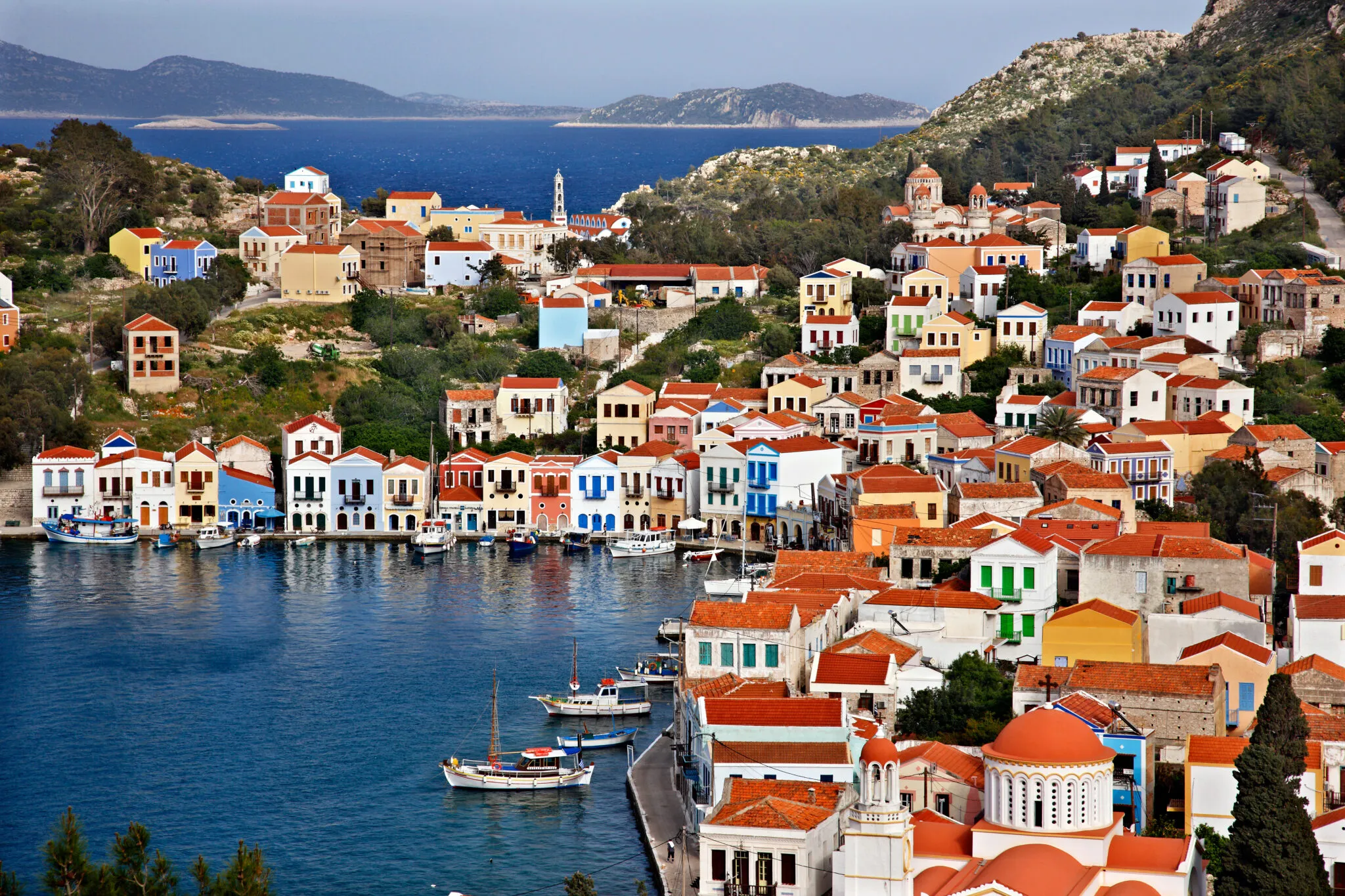
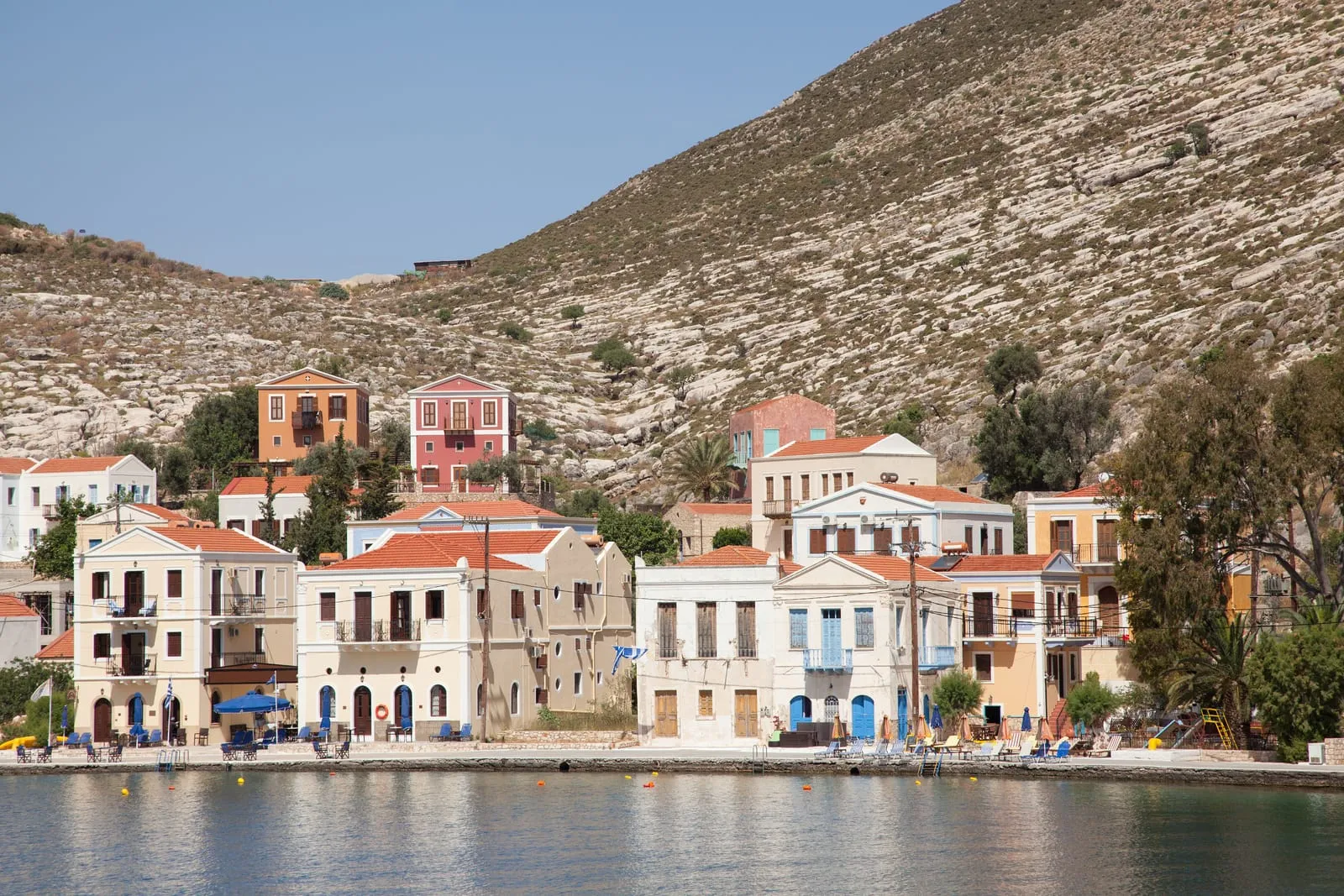
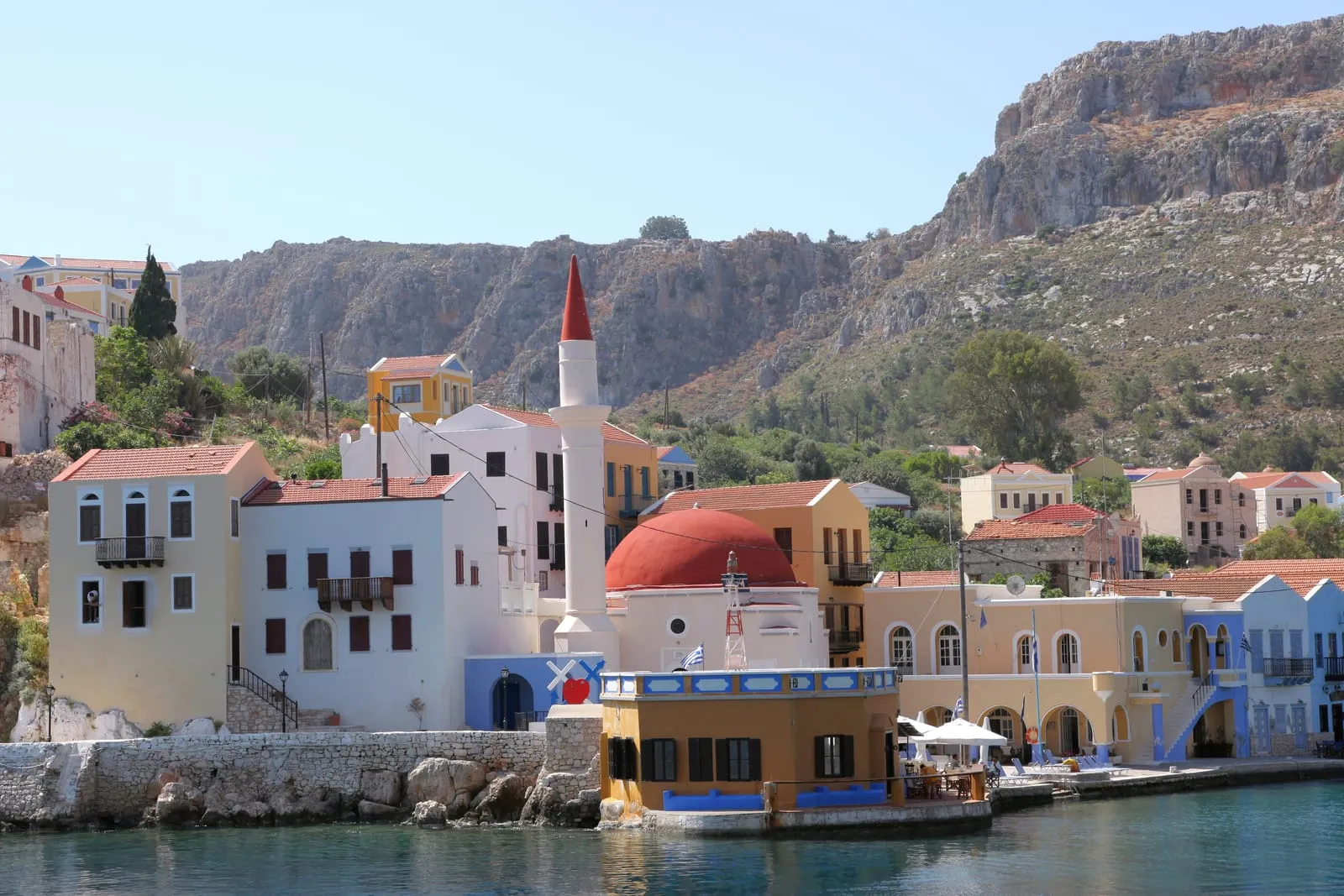
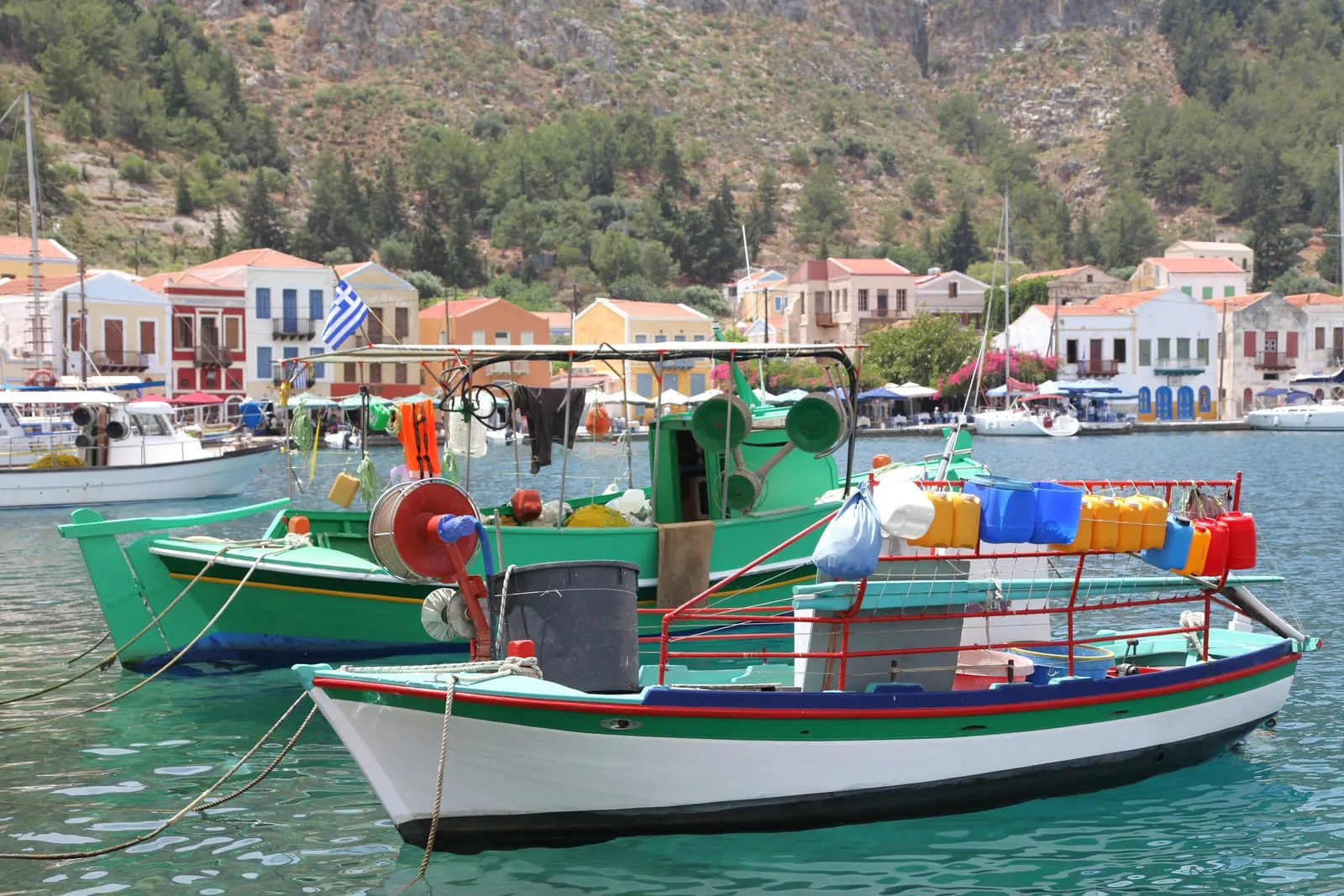
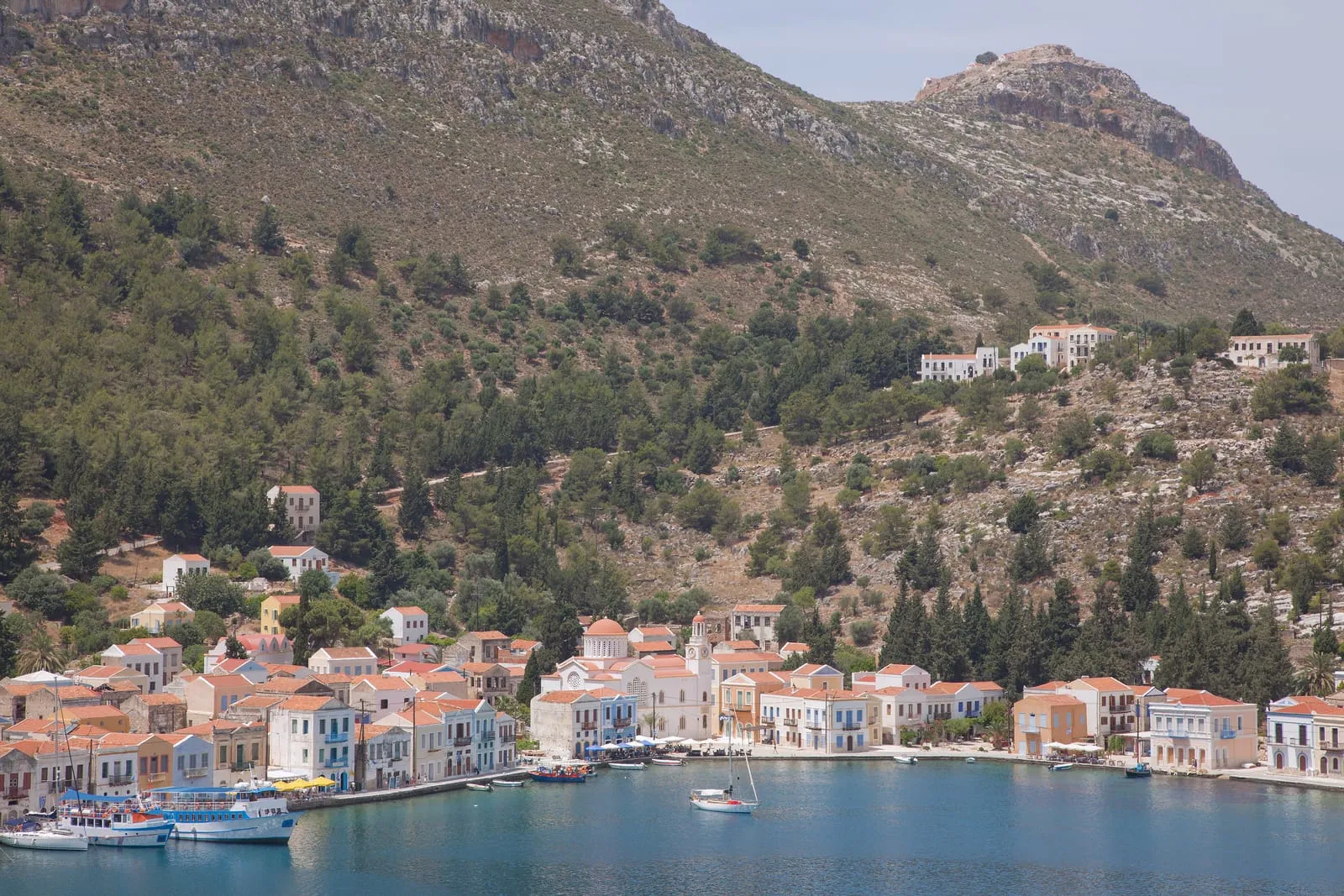
The harbour of Kastelorizo Town — Megisti, as the island is also known — is one of the most beautiful small harbour scenes in the entire Mediterranean. Mansions of Anatolian-influenced neoclassical architecture in shades of terracotta, ochre, pale rose, and faded gold line three sides of a perfectly enclosed bay, their tall facades reflected in water of extraordinary clarity, their carved wooden balconies and arched doorways speaking of a prosperity and a cultural sophistication that once made this tiny island a significant commercial and maritime centre of the eastern Mediterranean. At the height of its prosperity in the 19th and early 20th centuries, Kastelorizo had a population of over 10,000 people and a merchant fleet that traded across the entire Levant. The catastrophes of the 20th century — two world wars, the Italian occupation, a devastating fire, and the great emigration that followed — reduced that population to a fraction of its former size and left the town in a state of partial ruin from which it has been slowly and lovingly recovering ever since. What that recovery has produced is a place of haunting beauty — a harbour town of genuine architectural magnificence that wears its difficult history with extraordinary dignity, and whose small, warm, intensely proud community extends to the sailor who makes the effort to come this far a welcome of quite remarkable depth and genuineness.
Kastelorizo achieved a particular international fame in 1991 when it was chosen as the filming location for Giuseppe Tornatore’s Cinema Paradiso follow-up, Mediterraneo — an Italian film about a group of soldiers stationed on a remote Greek island during the Second World War that won the Academy Award for Best Foreign Film and introduced the island to an international audience of millions. The film’s portrait of isolation, beauty, and the transformative effect of a remote island on the people who find themselves there is, those who know Kastelorizo will tell you, entirely accurate. The island still transforms people. It does so quietly, gradually, and with the complete authority of a place that has survived everything the 20th century threw at it and emerged, against all probability, more itself than ever.
What to Do and What to See
Kastelorizo does not offer a long list of monuments, organised excursions, or a varied programme of tourist activities. What it offers is something rarer and more valuable: a harbour of extraordinary beauty to live in for a few days, a coastline of spectacular geological drama accessible only by sea, an ancient and medieval heritage of genuine quality, and the particular, unrepeatable pleasure of being at the very edge of Greece — at a point where the sea narrows to a channel and the Turkish coast is close enough to see the individual houses of the village of Kaş on the opposite shore, and where the feeling of being simultaneously at an ending and a beginning is constant and strangely exhilarating.
Kastelorizo Town — Megisti
The town itself is the primary experience of Kastelorizo, and it is more than sufficient. The harbour front, lined with its neoclassical mansions in their extraordinary variety of faded colours, is one of the most beautiful small urban waterscapes in the Mediterranean — a scene that rewards hours of quiet looking from a table at one of the harbour’s small tavernas, in the changing light of morning, afternoon, and evening. Behind the waterfront, the town extends in a network of lanes and stairways climbing the hillside, passing restored mansions alongside roofless ruins still awaiting their recovery, small Byzantine and Ottoman-era structures, and the occasional large and elegant neoclassical house whose restoration is a testament to the love that the island’s diaspora — particularly its large Australian community, many of them descendants of the great emigration — retains for this extraordinary place. Walking the town at any time of day is an experience of layered architectural beauty and quiet historical poignancy that stays in the memory with unusual persistence.
The Castle of the Knights of St. John
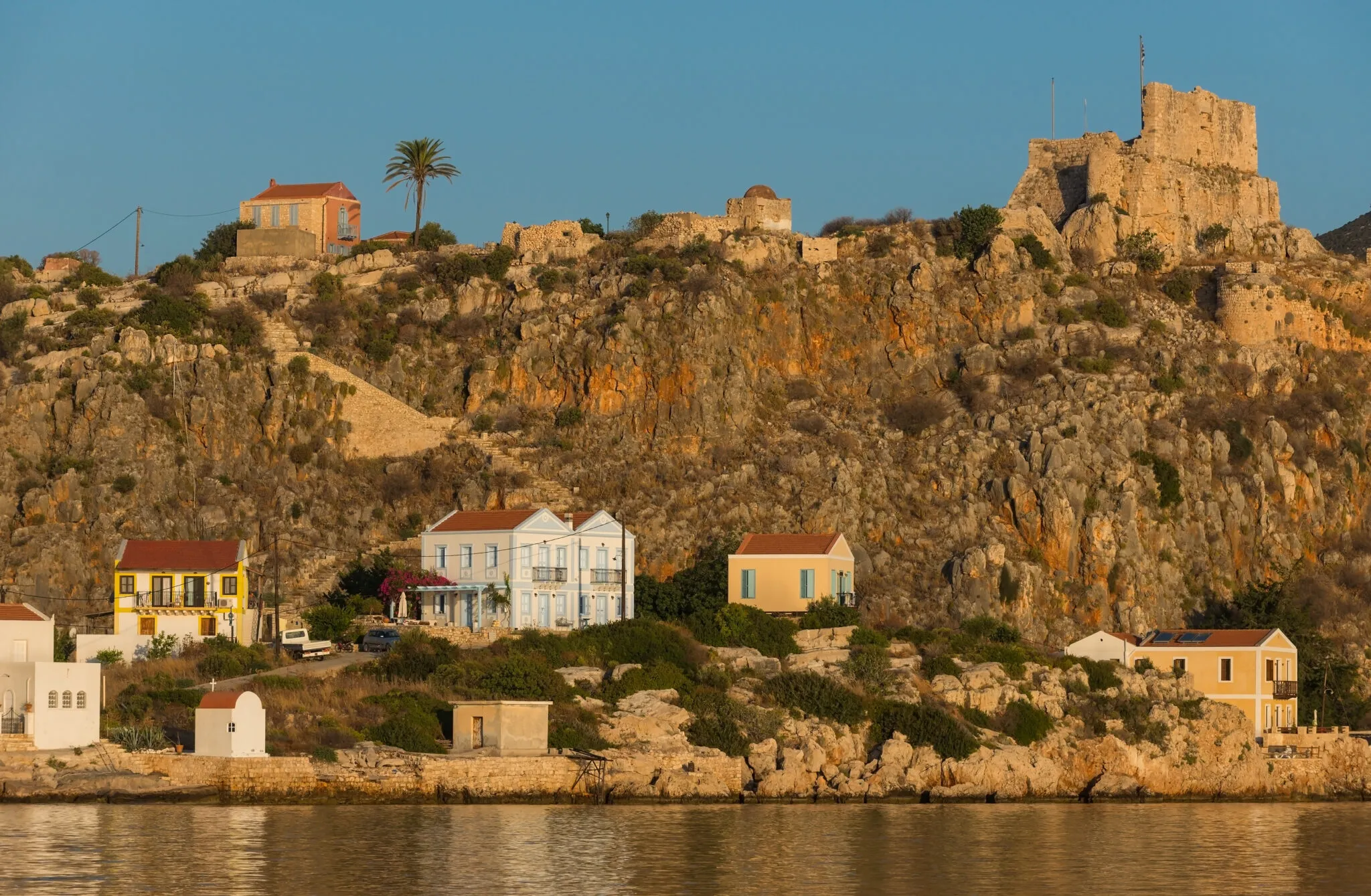
Above the town on the western headland, the ruins of the Castle of the Knights of St. John occupy the site of an even older Lycian and Byzantine fortification, their red sandstone walls giving the island one of its most recognisable silhouettes when viewed from the sea. Built in the 14th century, the castle controlled the harbour entrance and protected the island’s population from the piracy that plagued the eastern Mediterranean throughout the medieval period. The interior of the castle contains the small but excellent Archaeological Museum of Kastelorizo, housing finds from the island and surrounding waters including Lycian funerary reliefs, ancient coins, and the material evidence of an inhabited history stretching back to the Bronze Age. The views from the castle ramparts over the harbour, the town, the Turkish coast, and the open sea extending westward toward Rhodes are extraordinary.
The Blue Cave — Fokiali
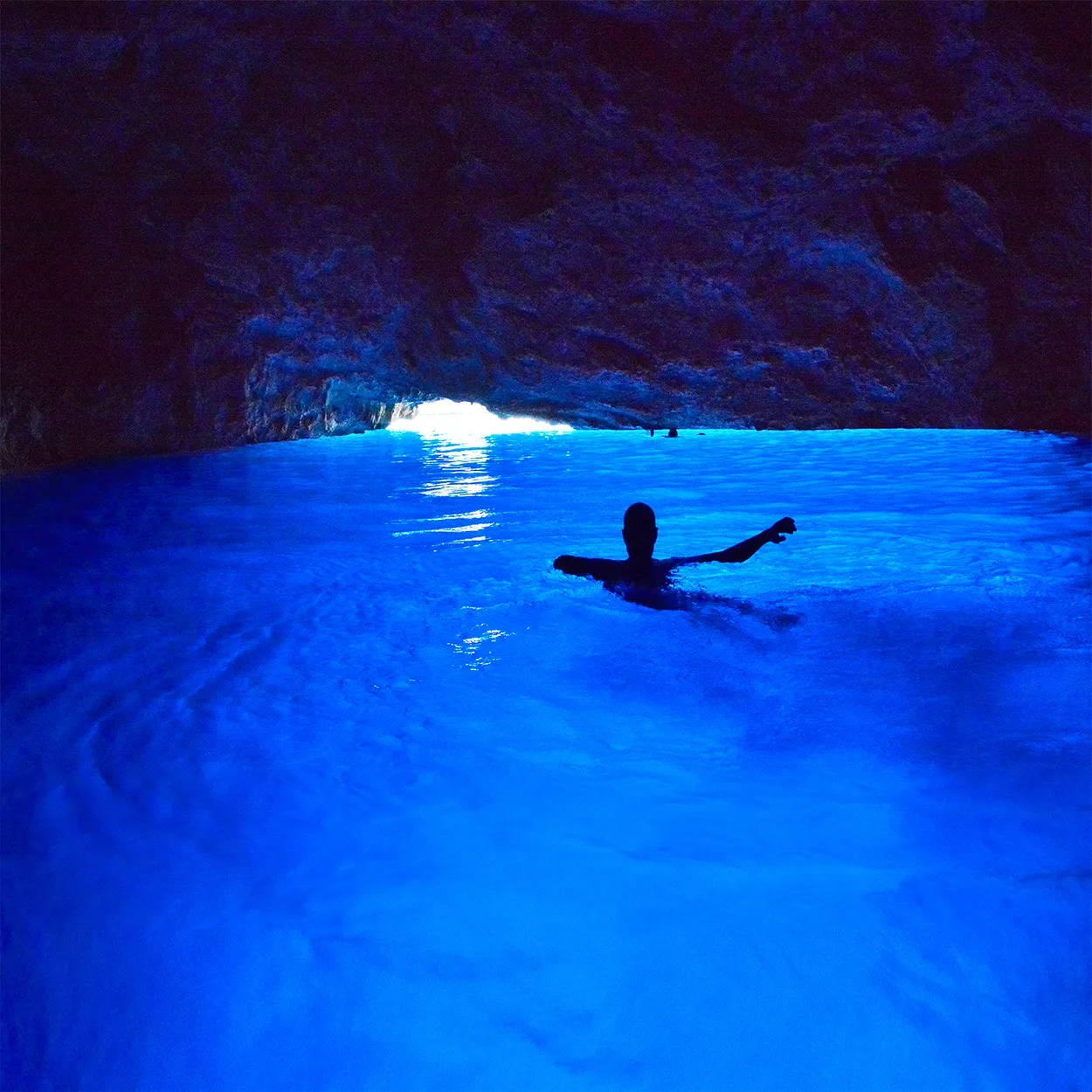
The single most spectacular natural feature of Kastelorizo is the Blue Cave — Fokiali — a large sea cave on the island’s southern coast accessible only by small boat, entering through a low arch in the cliff face that opens into a vaulted chamber of such extraordinary luminosity that it rivals the famous Blue Grotto of Capri and, by the judgment of many who have seen both, surpasses it. The cave’s interior is lit entirely by light refracted through the shallow water of the entrance arch, producing an effect of brilliant, shifting, otherworldly blue-white illumination that plays across the cave’s stalactite-covered ceiling and walls in a display of natural beauty that is simply breathtaking. The water inside the cave is of exceptional clarity, and swimming within it — surrounded by the blue light on every side and the vaulted rock ceiling overhead — is one of the finest and most completely memorable swimming experiences available anywhere on the Turkish or Greek coast. By yacht, the approach to the Blue Cave by dinghy from your anchorage in the harbour is a short and simple excursion, and the experience of entering the cave for the first time — the light changing suddenly and dramatically as you pass through the arch — is one that no sailor who has visited Kastelorizo ever forgets.
The Lycian Tomb
On the cliffside immediately above the harbour of Kastelorizo, carved directly into the living rock of the headland in the 4th century BC, the Lycian rock tomb of Kastelorizo is one of the finest examples of Lycian funerary architecture in the Aegean world — a monumental tomb with a carved Doric facade of considerable refinement and beauty, entirely incongruous in its setting above a tiny Greek harbour but entirely characteristic of the Lycian civilisation that once dominated this stretch of coast from its centre on the Turkish mainland directly opposite. The tomb is visible from the harbour below and from the sea on the approach, and it is one of the most evocative single monuments on the island — a reminder that the long human history of this extraordinary place reaches back far beyond the neoclassical mansions of the 19th century and the Knights of St. John to a civilisation that carved its homes for the dead into the living rock of a headland above a sea that has been beautiful for three thousand years.
The Mosque and the Palaeontological Museum
Within the town, the former Ottoman mosque — converted from an earlier church and now serving as the island’s small Palaeontological Museum — contains a remarkable and unexpected collection of prehistoric animal bones recovered from the island’s caves, including the remains of dwarf elephants and dwarf deer that inhabited the island during the Pleistocene era, when Kastelorizo was part of the Anatolian mainland. The museum is tiny but genuinely fascinating, and the building itself — with its minaret still standing, the only complete minaret in the Dodecanese — is of considerable architectural interest. Next to it, the Byzantine church of Agios Konstantinos, built partly from the columns of an ancient temple, completes a small but extraordinarily dense concentration of historical layers in a single corner of an already exceptionally layered town.
The Surrounding Islets
Around Kastelorizo, a small archipelago of uninhabited islets and rocky outcrops — among them Ro, famous as the home of the legendary Lady of Ro who raised the Greek flag every morning until her death in 1982 as an act of solitary patriotic defiance — provide additional anchorages and swimming of great quality. Ro itself, a low, flat island of considerable historical and emotional significance to Greeks, is a short sail from Kastelorizo and a deeply affecting visit — the flagpole from which Despina Achladioti flew her flag still stands, and the small monument to her memory there is tended with evident care. The waters between the islets are of exceptional clarity, and the snorkelling over the shallow, rocky seabed is outstanding.
Why Choose Kastelorizo
Kastelorizo is the destination for the traveller who wants to go to the end of something — to the furthest point, the smallest island, the most improbable harbour — and find there, against all expectation, something of great beauty and great completeness. It is an island for those who understand that remoteness is not a disadvantage but a gift, that the effort of getting somewhere far away is repaid with interest by the quality of what waits at the end of the journey, and that the finest harbours in the world are rarely the most famous ones. It is, in the most literal geographical sense, the last Greek island — and it is extraordinary.
For those sailing eastward from Rhodes and the Dodecanese, Kastelorizo represents the natural culmination of an eastern Aegean itinerary — the point at which the island chain reaches its eastern extreme, the Turkish coast narrows to its closest approach, and the sailor looks back westward across the full sweep of the Greek island world with a perspective that only this particular, improbable, magnificently remote anchorage can provide. The sailing approach from Rhodes is straightforward, the harbour is well sheltered, and the combination of the Blue Cave, the Lycian tomb, the neoclassical harbour town, and the extraordinary quality of the welcome extended by its tiny community make Kastelorizo one of the most completely satisfying and most completely memorable single destinations in the entire eastern Mediterranean.
What Kastelorizo ultimately gives the visitor who makes the effort to reach it is the rarest gift that travel can bestow: the feeling of having arrived somewhere that the world has not quite caught up with — somewhere that exists in its own time, at its own pace, on its own terms, and that receives the traveller willing to meet it on those terms with a warmth and a beauty and a completeness that make every nautical mile of the journey feel not merely worthwhile but, in retrospect, inevitable. You come to Kastelorizo once and you understand, very quickly, that you will find a reason to come back.