Why Irakleia
There is a particular kind of traveller who has seen enough of the famous Greek islands to know that the real treasures are often the ones that do not appear on the covers of travel magazines — the ones that require a little more effort, a little more curiosity, and a willingness to swap the comfort of the known for the reward of the genuinely discovered. For these travellers, Irakleia exists as a kind of answer — a small, unhurried, breathtakingly beautiful island in the heart of the Cyclades that remains, against all probability, one of the least visited and most authentically itself of all the Greek islands. It is the kind of place that those who find it tend to keep quietly to themselves, not out of selfishness but out of a protective instinct toward something fragile and irreplaceable.
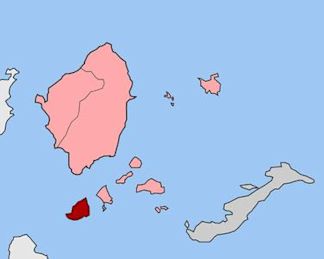
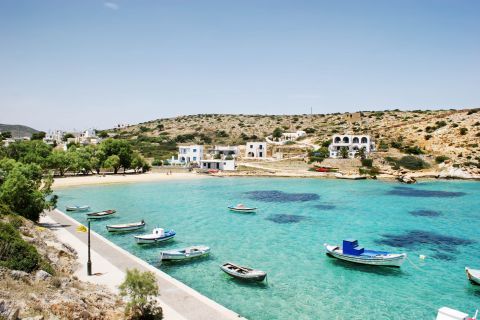
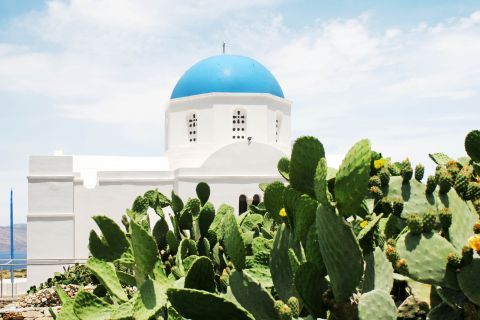
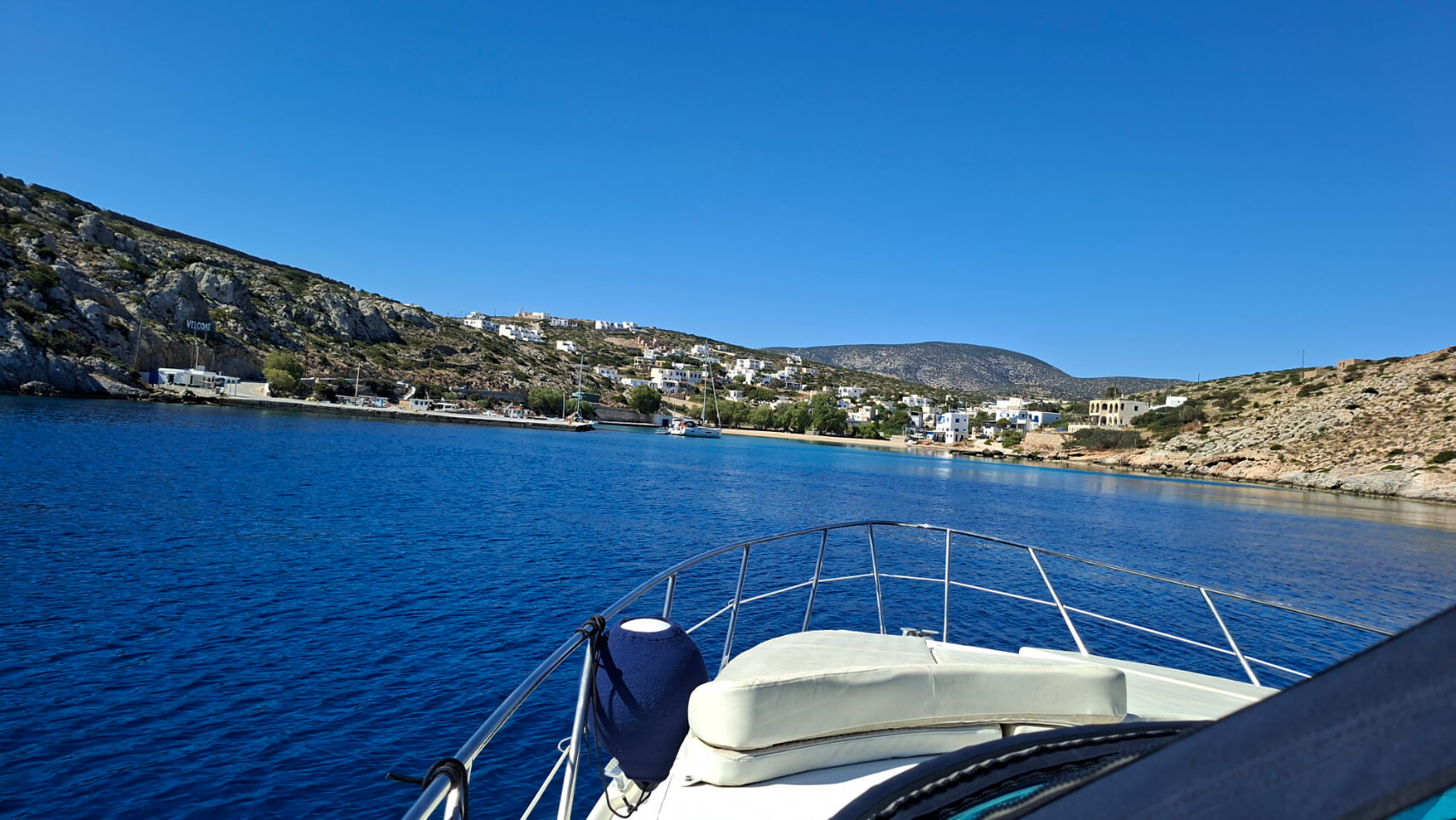
Irakleia is the smallest and westernmost of the Small Cyclades — a group of four tiny inhabited islands that lie in the channel between Naxos and Amorgos, scattered across a sea of extraordinary clarity and colour like a secret the Aegean has been keeping from the rest of the world. The island covers barely 19 square kilometres, has a permanent population of around 150 souls, and receives only a small fraction of the visitors that descend each summer on the more famous Cyclades around it. And yet within those modest dimensions and those unhurried numbers, Irakleia contains landscapes of startling wild beauty — dramatic cave systems, remote beaches of golden sand and turquoise water, clifftop paths with views across the entire Cyclades, and a quality of silence and stillness that has become genuinely rare in the modern Mediterranean. To arrive here by yacht, to drop anchor in the small harbour of Agios Georgios as the afternoon light falls across the white houses and the blue-domed chapel, is to feel that you have found something the tourist world has not yet caught up with. That feeling, increasingly precious in the Greek islands, is entirely justified.
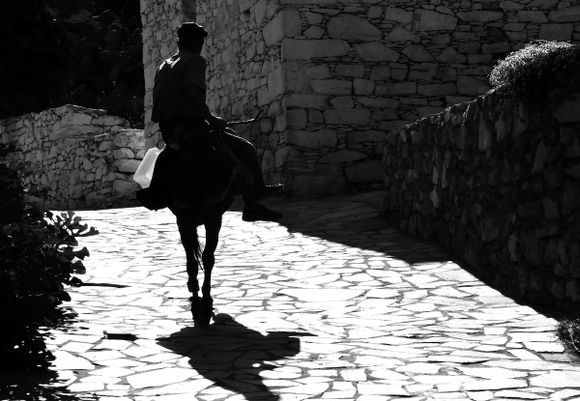
The island’s character is shaped by its scale and its isolation in the most direct and beautiful way. Life here moves to rhythms that feel ancient and natural — the fishing boats going out before dawn, the single taverna filling for lunch and dinner, the afternoon siesta observed with complete seriousness, the evening gathering at the port in the slow, companionable manner of communities that have always had more time than they have had things to fill it with. Visiting Irakleia is not merely visiting a beautiful place. It is a brief immersion in a way of living that the pace of the modern world has made seem radical in its simplicity, and that immersion — even for two or three days — has an effect on the spirit that is entirely disproportionate to the modest size of the island responsible for it.
What to Do and What to See
Irakleia does not offer a programme, a schedule, or a list of organised activities. What it offers instead is a sequence of simple, profound pleasures — swimming in water of exceptional clarity, walking paths through wild Cycladic landscape, exploring a remarkable natural cave, eating the freshest possible fish at a harbour taverna, and sitting in the silence of a small island at the end of an unhurried afternoon. For those arriving by yacht, the island’s coastline adds an additional and deeply rewarding dimension — a succession of small, remote beaches and hidden coves accessible only from the sea, each one more beautiful and more private than the last.
Agios Georgios — The Village and Harbour
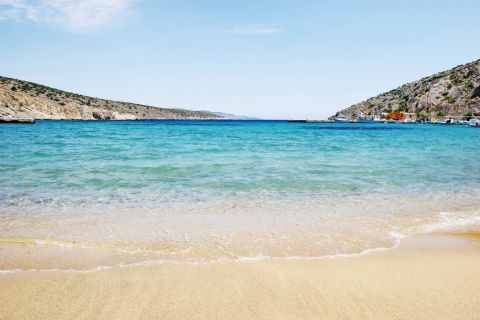
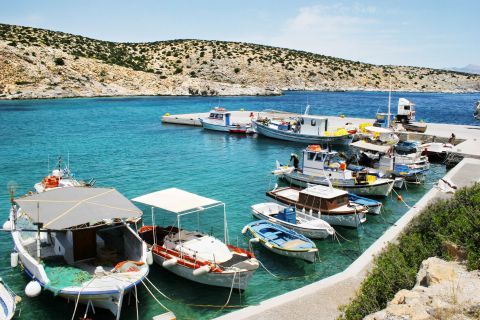
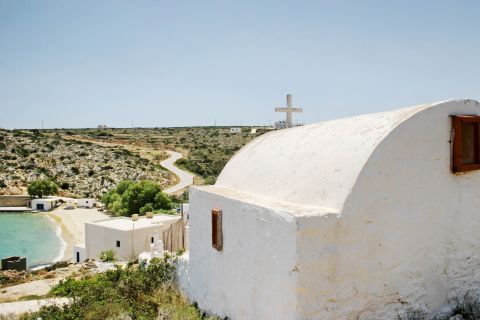
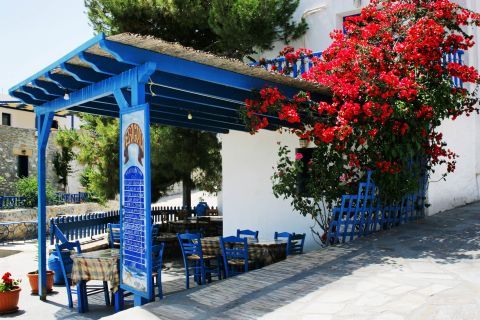
The island’s main and only real settlement, Agios Georgios is a small cluster of whitewashed Cycladic houses arranged around a sheltered harbour of considerable charm. It is a genuine village rather than a resort — a place where the bakery opens before sunrise, where the fishermen mend their nets on the quayside, and where the single general store stocks everything from fishing line to fresh vegetables with the cheerful pragmatism of a community that has always had to manage on its own resources. The harbour is small and beautifully proportioned, the blue-domed chapel at its edge one of the most photographed in the Small Cyclades, and the tavernas that line the waterfront serve food of the kind of honest, ingredient-led simplicity that reminds you why Greek cooking at its best is among the finest in the world. Arriving by yacht into Agios Georgios harbour is to arrive in a scene of complete Cycladic authenticity that feels entirely unperformed and entirely at ease with itself.
The Cave of Agios Ioannis
Irakleia’s most celebrated natural feature is the extraordinary cave of Agios Ioannis, carved by nature into the limestone hillside above the island’s southern coast. Reached by a well-marked walking path of about 45 minutes from the village of Chora, or approached by sea and then on foot from the small beach below, the cave is one of the finest and most atmospheric in the Cyclades — a deep, complex system of chambers and passages decorated with stalactites and stalagmites of remarkable variety and beauty, and culminating in a natural chapel dedicated to Saint John that has been used as a place of worship since the Byzantine era. The cave’s interior is lit only by torchlight and by the natural daylight that penetrates the entrance, giving it a quality of otherworldly beauty that is difficult to describe and impossible to forget. The feast day of Agios Ioannis each August brings the entire island community together at the cave for a celebration of food, music, and religious devotion that is one of the most authentic and moving traditional festivals in the Cyclades.
Livadi Beach
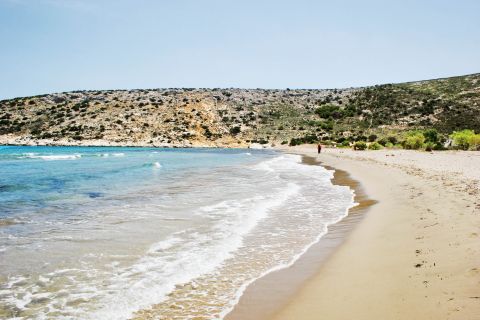
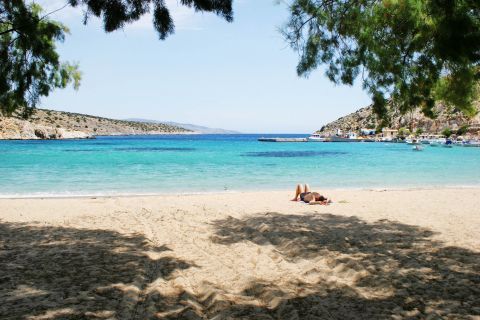
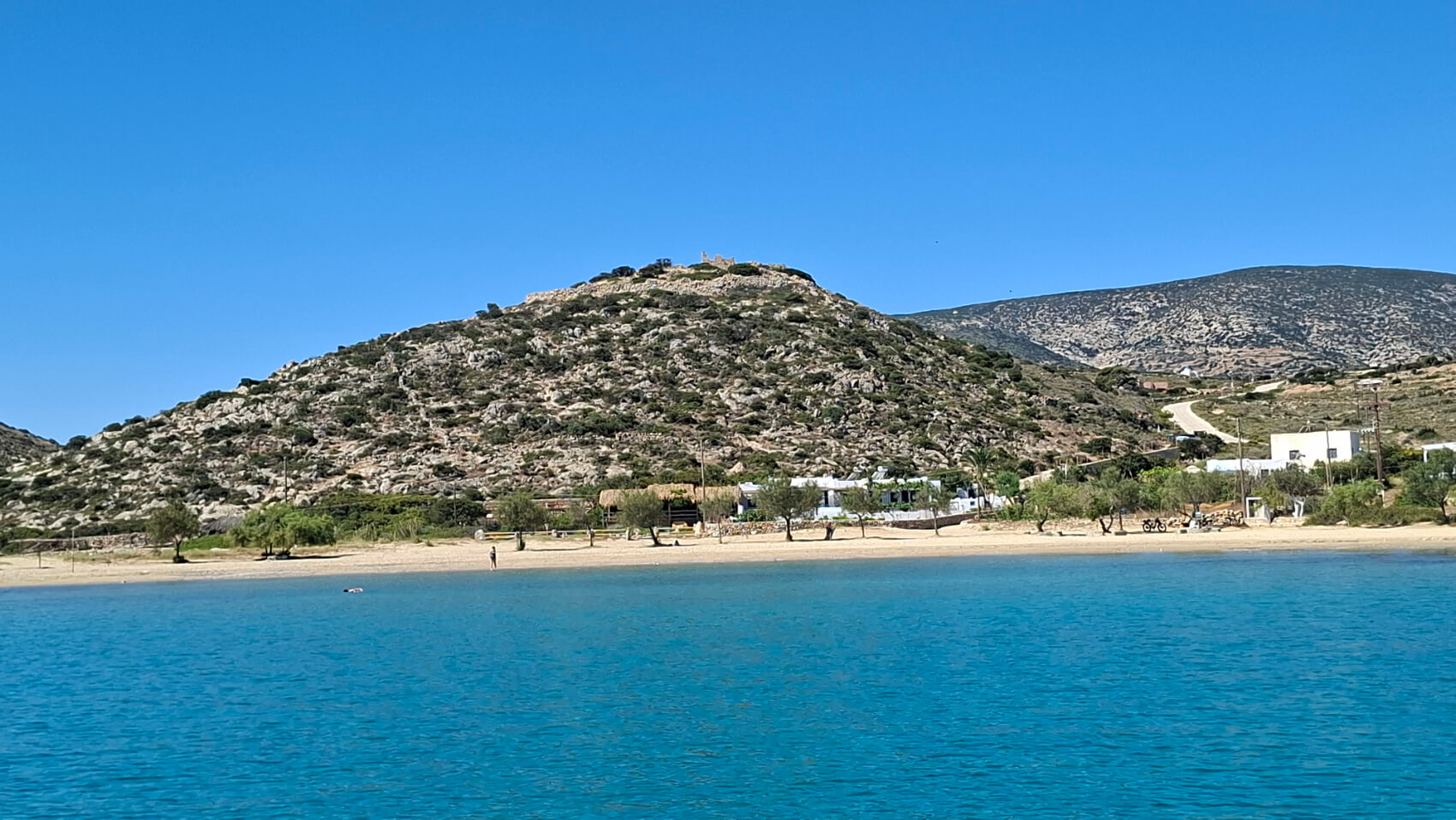
The finest and most easily accessible beach on Irakleia, Livadi lies on the southern coast about a 20-minute walk from Agios Georgios through a landscape of low Cycladic scrub and dry stone walls. It is a wide, sandy beach of exceptional beauty — fine golden sand, shallow, calm turquoise water, and a complete absence of beach infrastructure beyond the natural shade of the occasional rock formation. The water at Livadi is among the clearest in the Small Cyclades, and the snorkelling off the rocky headlands at either end of the beach is outstanding. By yacht, the approach to Livadi from the sea — the golden sand visible from a considerable distance, framed by the low brown hills of the island’s southern coast — is straightforward and beautiful.
Chora — The Old Capital
Perched on a ridge above Agios Georgios, the small village of Chora is the island’s old capital — a cluster of traditional Cycladic houses connected by stepped whitewashed lanes that wind between low walls and blue-painted doorways in the classic manner of the island architecture of this part of the Aegean. It is tiny, almost completely peaceful, and possessed of the kind of unselfconscious beauty that comes from a community building for itself rather than for visitors over many generations. The views from Chora’s ridge across the sea toward Naxos, Schinoussa, and the distant outline of Amorgos are magnificent, and the walk between Chora and Agios Georgios — through terraced fields and past ancient threshing floors — is one of the island’s most rewarding short excursions.
The Remote Northern Coves
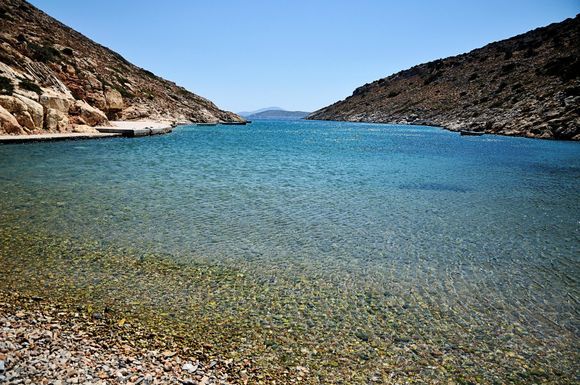
The northern coast of Irakleia, largely inaccessible on foot and invisible from the single road that crosses the island, reveals itself fully only to those who approach it by sea. A succession of small coves and rocky inlets — Merikhas, Alimnia, the unnamed coves between the headlands of the northern shore — offer swimming in water of extraordinary clarity, complete solitude, and the particular quality of wildness that comes from a Cycladic coastline entirely untouched by development. The sea floor here is rich in colour and marine life, the water temperature warm from late May through October, and the silence is broken only by the sound of the waves against the rock and the occasional cry of a seabird overhead. These northern coves are among the finest undiscovered swimming spots in the entire Cyclades, and they are, in every practical sense, available only to those who arrive by yacht.
The Walking Paths
Irakleia has a network of old kalderimi — traditional stone-paved paths — that once connected the island’s fields, cisterns, and settlements, and several of these paths have been restored and marked for walking. The main path system links Agios Georgios, Chora, and the cave of Agios Ioannis in a circuit of several hours that crosses the full breadth of the island, passing through landscapes of wild Cycladic beauty — dry stone walls, abandoned terraces, ancient cisterns, and expansive views across the Small Cyclades in every direction. Walking these paths in the early morning, when the air is still cool and the light is horizontal and golden across the hillsides, is one of the simplest and finest pleasures the island has to offer.
Why Choose Irakleia
Irakleia is the island for the traveller who has understood that the most valuable thing the Greek islands can offer is not famous sunsets or celebrated nightlife or the glamour of a well-known name, but the experience of genuine, unmediated contact with a landscape and a community of extraordinary beauty and extraordinary authenticity. It is for the person who finds deep satisfaction in a morning swim in an empty cove, a long lunch at a harbourside table, a walk across a quiet island in the afternoon light, and an evening of simple, honest food and unhurried conversation. Irakleia provides all of these things with a completeness and a naturalness that more famous destinations, paradoxically, often struggle to achieve.
For those sailing the Cyclades, Irakleia and the Small Cyclades as a group represent one of the most rewarding detours available in the entire Aegean. The passage from Naxos to Amorgos through the Small Cyclades — touching Irakleia, Schinoussa, Koufonisia, and Donousa in sequence — is considered by those who know it to be one of the finest short sailing itineraries in Greece: a succession of small, jewel-like islands of varying character, each one beautiful in its own way, collectively offering a depth of experience entirely disproportionate to the modest distances involved. Irakleia, as the westernmost of the group, is the natural entry point to this extraordinary sequence.
What makes Irakleia ultimately unforgettable is the contrast it offers to the world around it — the contrast between its quietness and the noise of the modern world, between its simplicity and the complexity of everywhere else, between its unhurried ease and the relentless forward pressure of daily life. To spend even two days on this small, beautiful, almost entirely peaceful island is to be reminded of something important that most of us know but rarely have occasion to feel: that the finest things do not require scale or celebration or a famous name. They require only beauty, quiet, and the willingness to receive them. Irakleia offers all three, in abundance, and without condition.