Why Donoussa
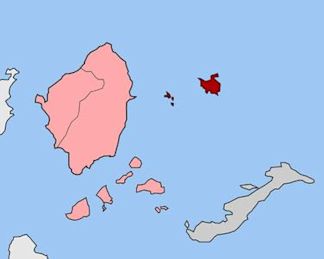
There are islands in the Aegean that exist at such a comfortable distance from the well-travelled routes that they have preserved, almost entirely intact, a quality of life and a quality of natural environment that the more accessible islands of the Cyclades lost decades ago. Donoussa is one of these islands — the most remote and the most easterly of the Small Cyclades, sitting alone in the open Aegean between Naxos and Amorgos at a slight remove from its sister islands of Irakleia, Schinoussa, and Koufonisia, its additional distance from the main ferry routes having conferred upon it the particular and increasingly precious gift of being genuinely, completely, and happily off the map. It is an island that the majority of even experienced Greek island travellers have never visited, that appears on very few itineraries, and that rewards those who make the deliberate decision to seek it out with an experience of the Small Cyclades at their most pristine, most authentic, and most completely themselves.
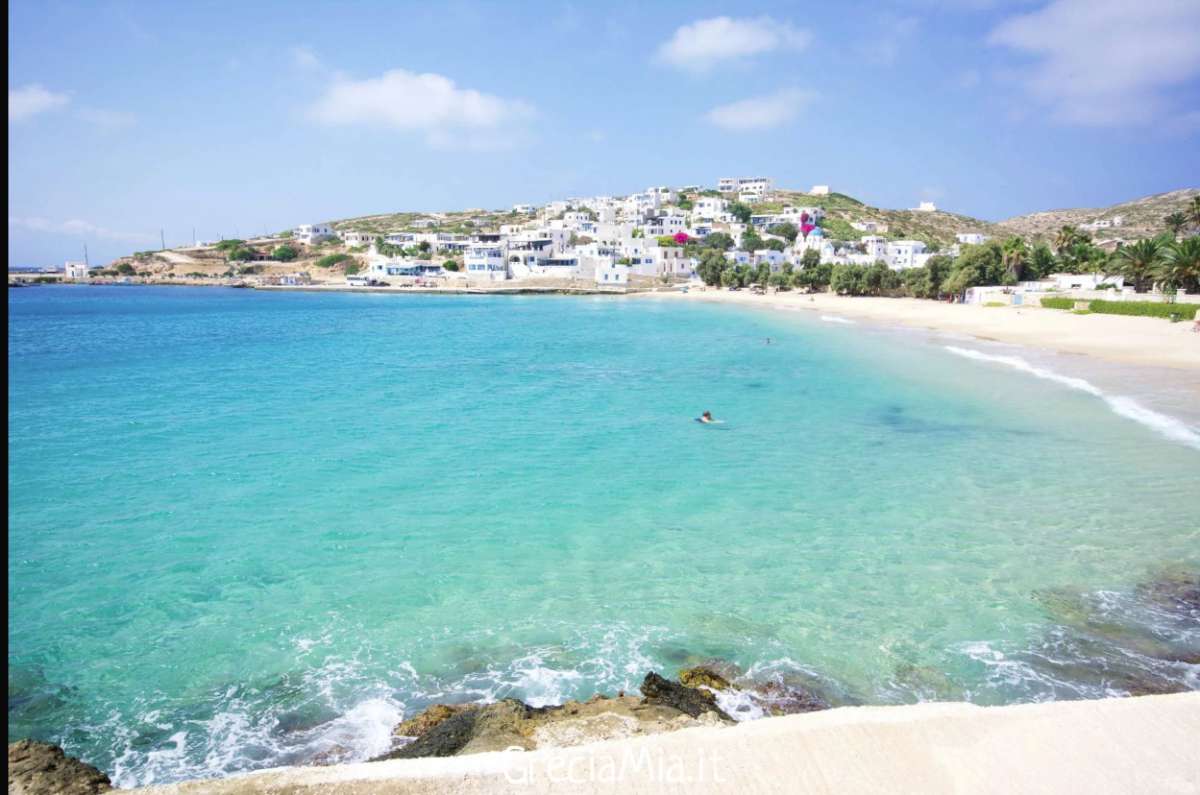
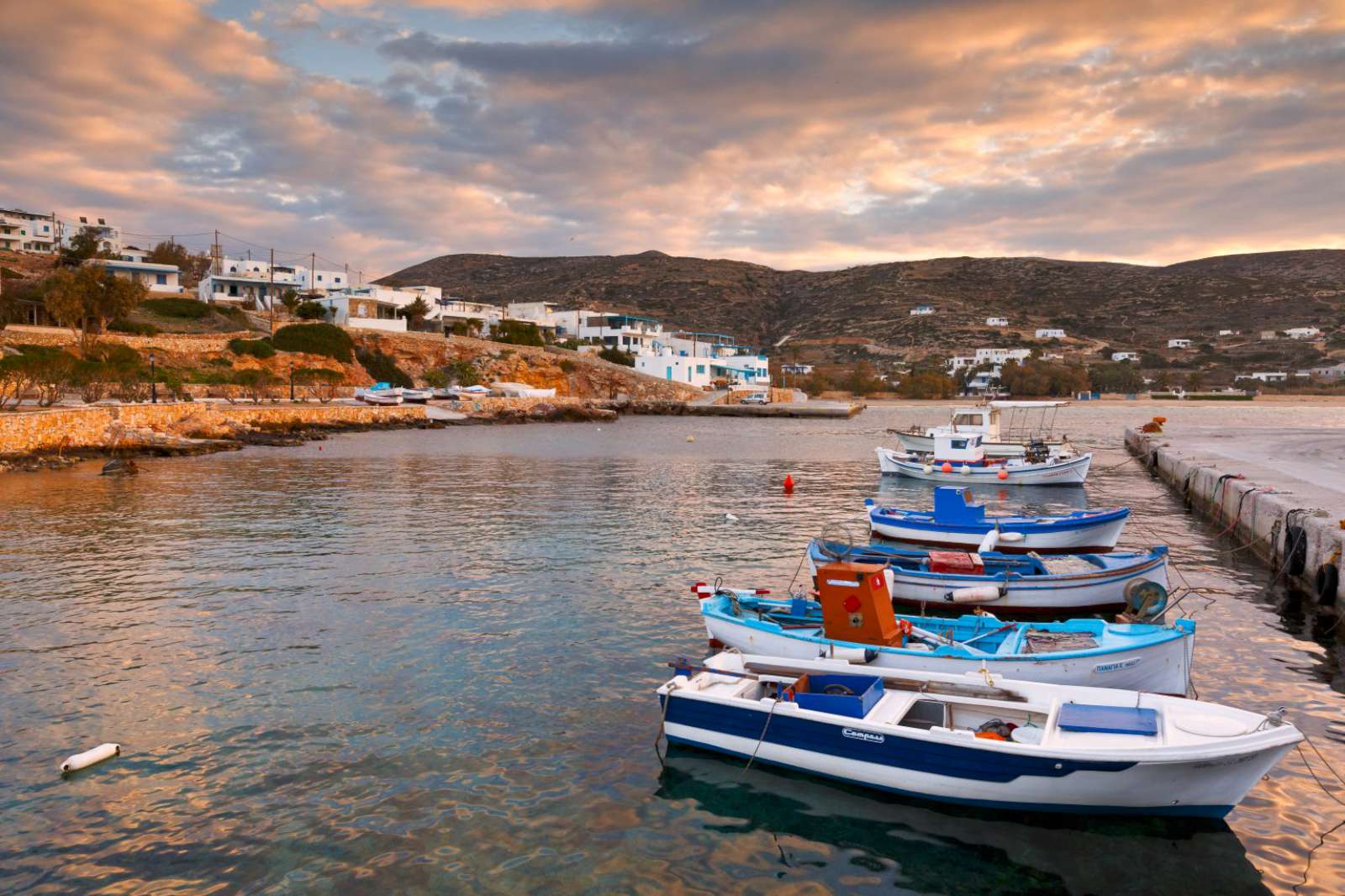
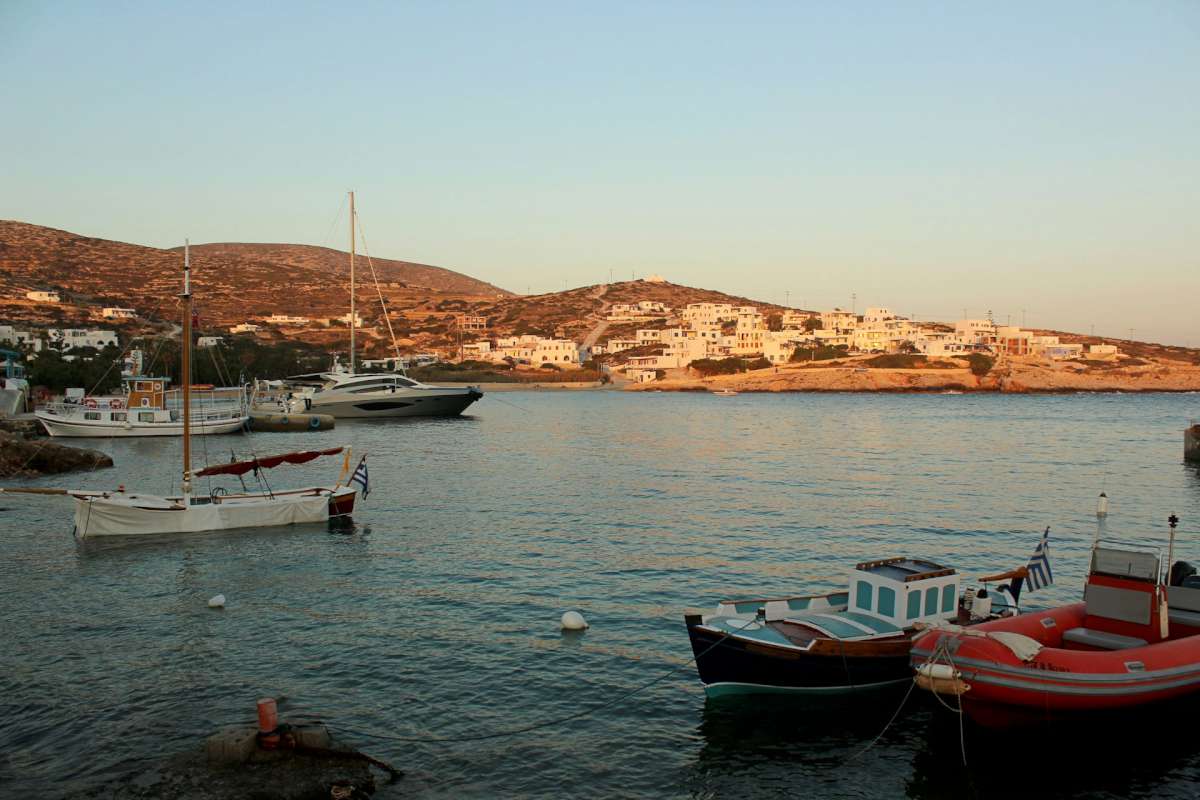
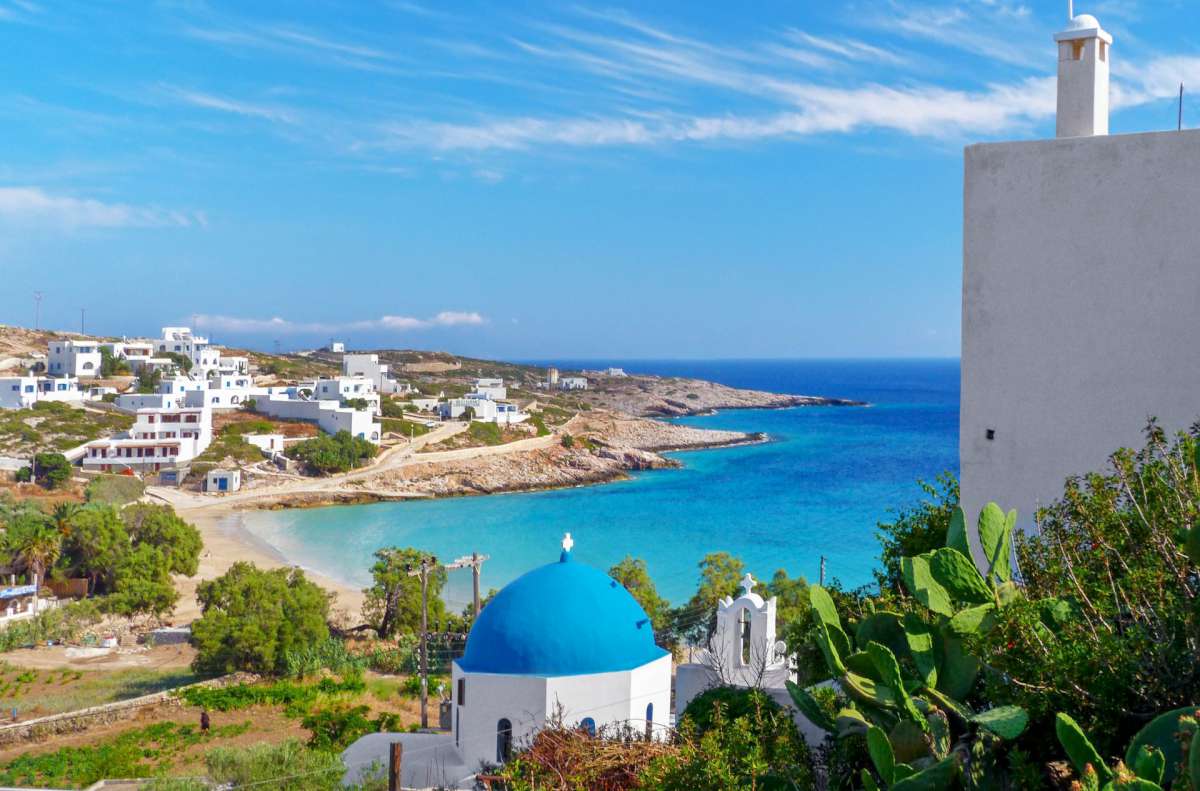
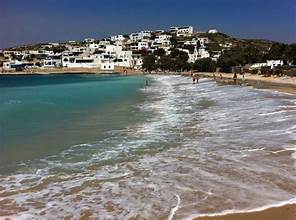
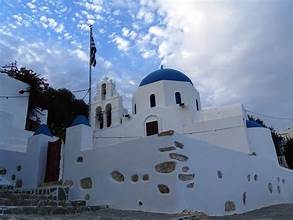
The island is small — barely 13 square kilometres — and its permanent population of around 160 people inhabits a single main village, Stavros, perched above the harbour in a cluster of whitewashed Cycladic houses and blue-painted doors of such complete simplicity and such complete beauty that it seems almost too perfectly composed to be real. The harbour below is tiny, the tavernas are few and excellent, the beaches are scattered around the coastline in a sequence of sandy coves and rocky inlets that offer swimming of extraordinary quality in complete and absolute solitude, and the pace of life is calibrated entirely to the rhythms of the sea, the sun, and the small fishing community that has inhabited this island for centuries. There is one road on Donoussa. Most of the island’s beaches and coves are accessible only on foot or by sea. Mobile phone reception is intermittent. These are not inconveniences. They are the precise conditions under which Donoussa becomes what it is — a place of rare and complete peace, available to those willing to leave the connected world behind for a few days and accept the island’s own terms without negotiation.
What gives Donoussa its particular and unforgettable atmosphere, beyond the natural beauty and the solitude, is the quality of its light. The island sits at the eastern edge of the Cyclades, facing the open sea that stretches toward the Dodecanese, and the light here — especially in the early morning and the late afternoon — has a clarity and an intensity that distinguishes it from the more diffuse light of the central Cyclades. The white houses of Stavros catch that light in the morning with a brilliance that seems almost incandescent, and the sea around the island at midday is of a blue so deep and so saturated that it appears, from above, almost violet. Donoussa is an island where the light itself is worth the journey — and that is, by any measure, a high standard of recommendation.
What to Do and What to See
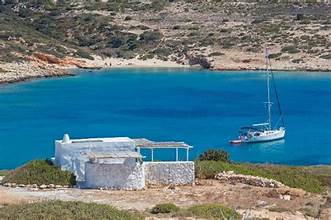
Donoussa does not offer monuments, museums, or organised activities. It offers beaches, paths, a beautiful village, the freshest possible fish, and the complete freedom to spend each day entirely as you choose in a setting of exceptional natural beauty. For those arriving by yacht, the island’s coastline — accessible almost entirely from the sea, its coves and headlands invisible from the single road — reveals itself as one of the finest and most varied sequences of swimming spots in the Small Cyclades, each one different in character and each one offering the kind of solitude that has become the most sought-after and most difficult to find luxury in the modern Mediterranean.
Stavros Village and Harbour
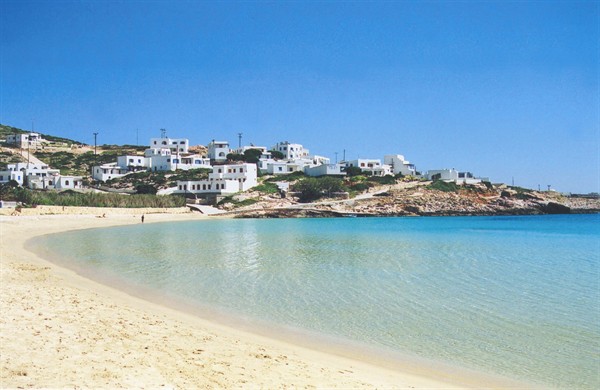
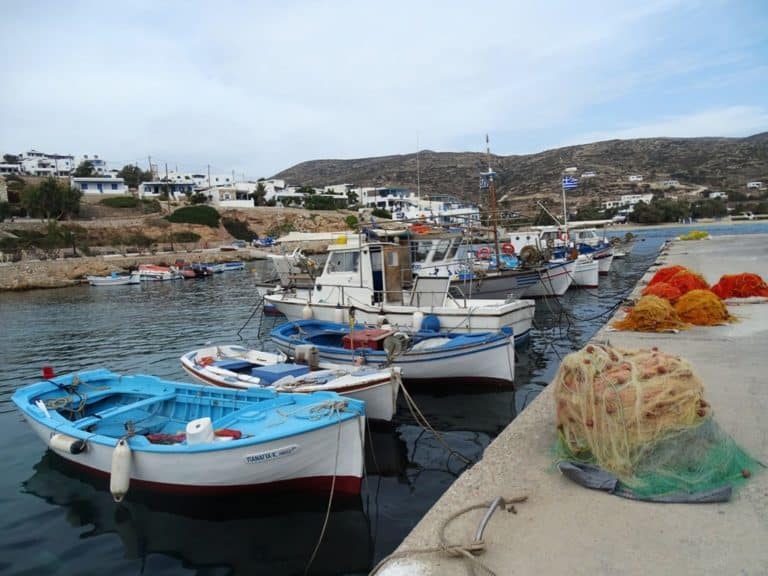
The village of Stavros is the social and spiritual centre of Donoussa — a small, dense cluster of whitewashed Cycladic houses climbing the hillside above the harbour in the classic island manner, its central lane lined with the island’s two or three tavernas, its small church of the Saviour gleaming white above the blue of the harbour water. The village is genuinely and completely simple — there is no pretension here, no boutique hotel aesthetic, no carefully curated rusticity — and its simplicity is the source of its considerable charm. The tavernas serve what the boats brought in and what the kitchen decided to do with it, and the results are consistently excellent and consistently honest — grilled fish, fresh salads, local cheese, cold wine from the barrel. The harbour front in the evening, when the fishing boats have returned and the day’s heat has softened into the warm dusk and the first stars are appearing above the dark Aegean, is one of the most quietly beautiful small harbour scenes in the island world.
Kendros Beach
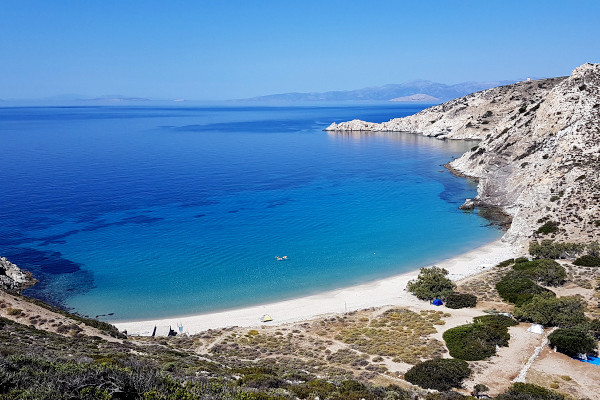
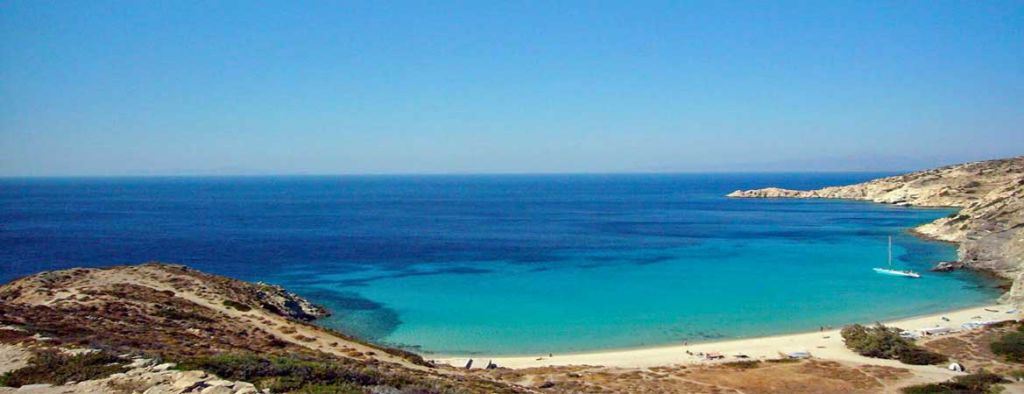
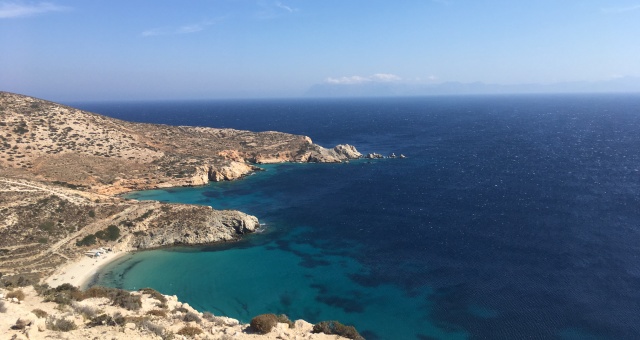
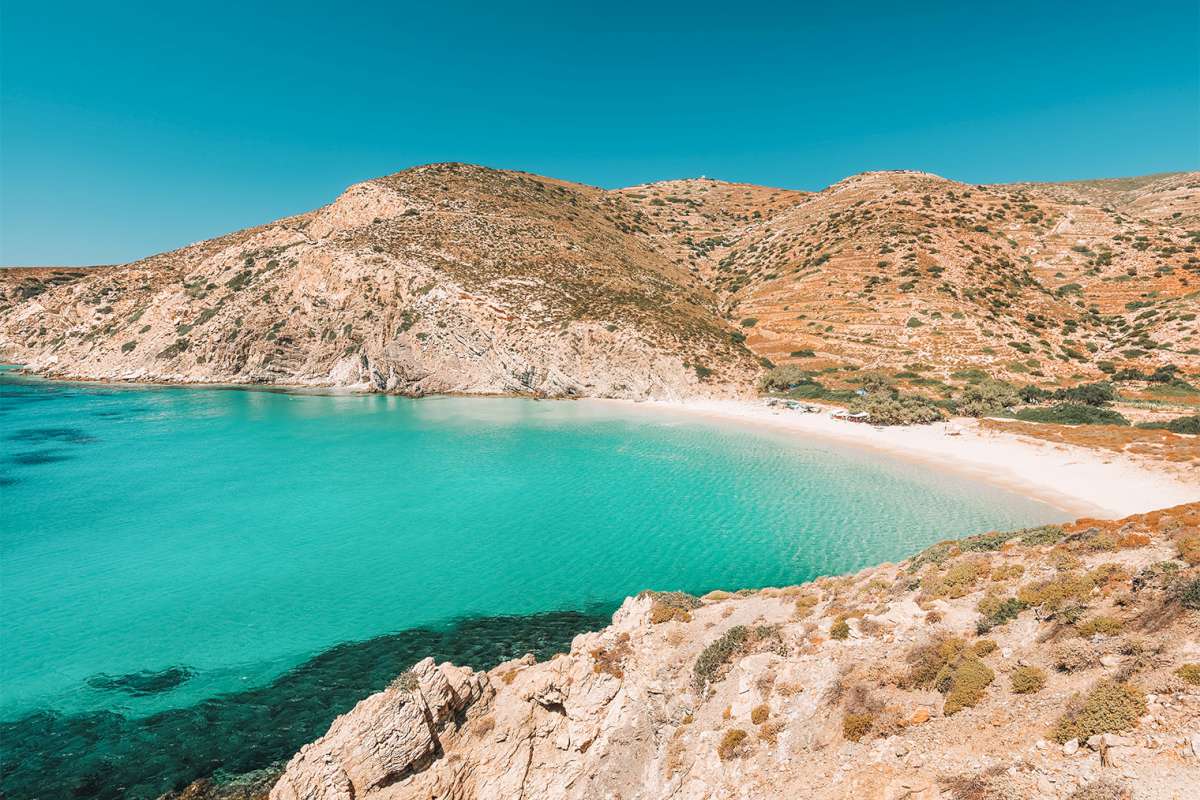
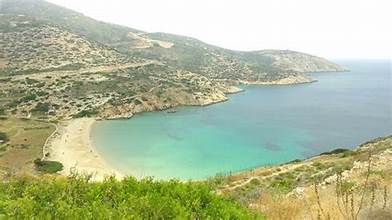
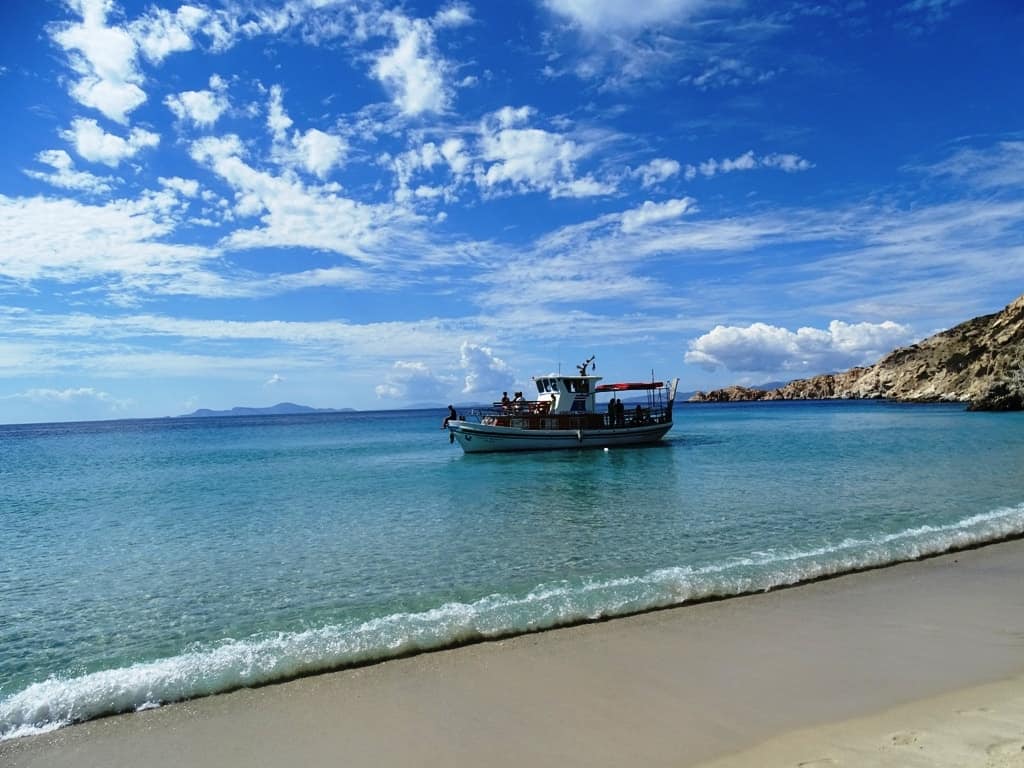
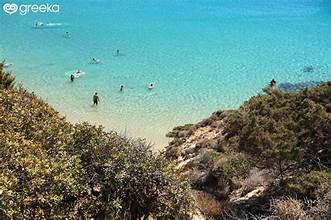
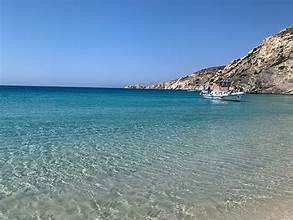
On the southern coast of Donoussa, the beach of Kendros is the island’s finest and most celebrated — a long, wide arc of fine golden sand enclosed by low rocky headlands, its water shallow, warm, and of a colour that shifts from pale turquoise at the shore to a deep, saturated blue in the middle of the bay. It is accessible on foot via a path of about thirty minutes from Stavros, or by sea — and the sea approach, with the beach revealing itself gradually from behind the southern headland, is one of the finest small coastal approaches in the Small Cyclades. The beach is entirely without facilities, the sand is impeccably clean, and on most summer mornings the number of people on it can be counted on two hands. The snorkelling off the rocky headlands at either end is outstanding.
Livadi Beach and the Western Coves
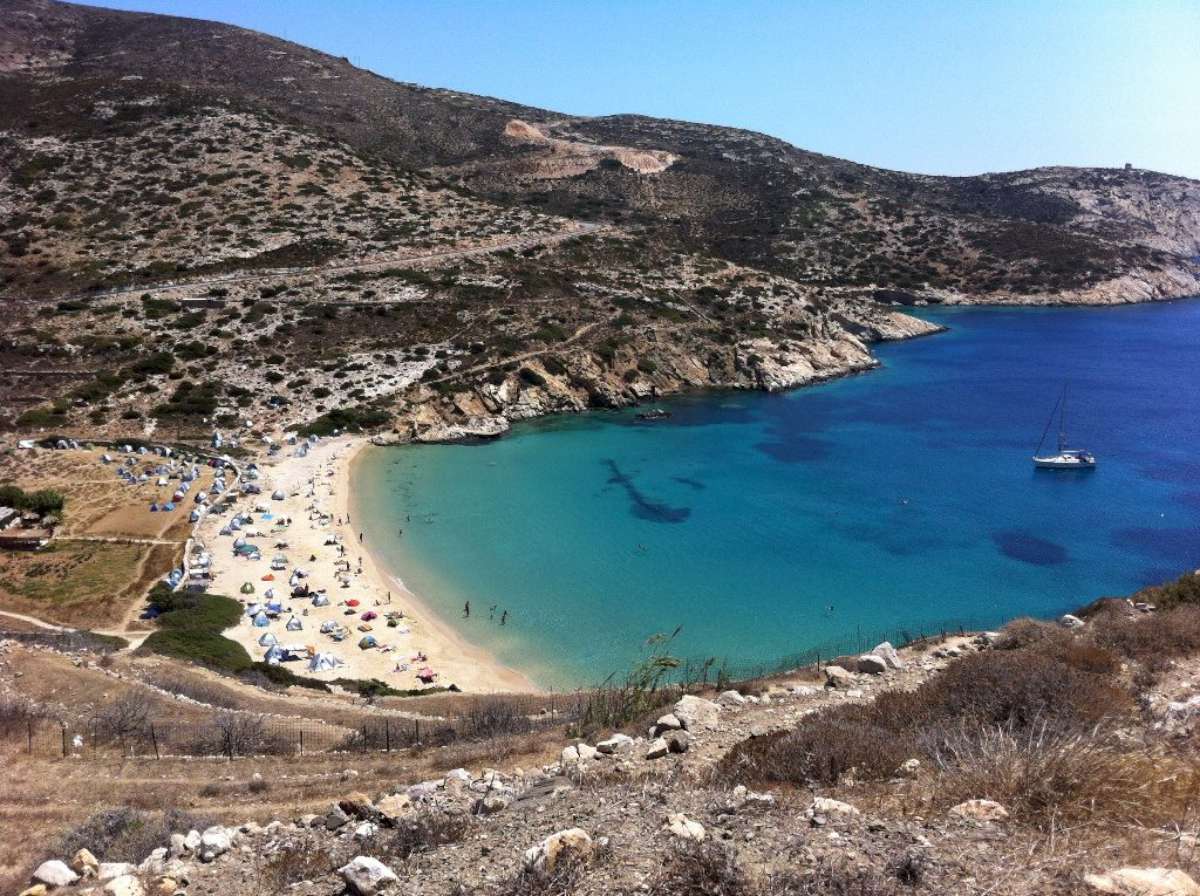
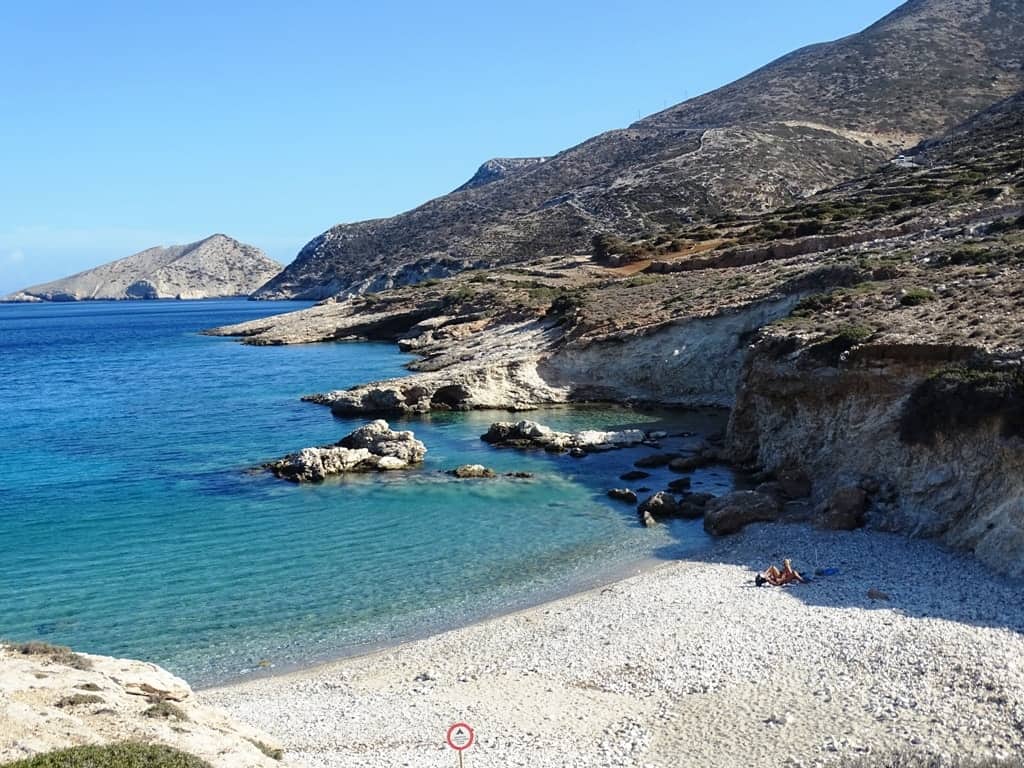
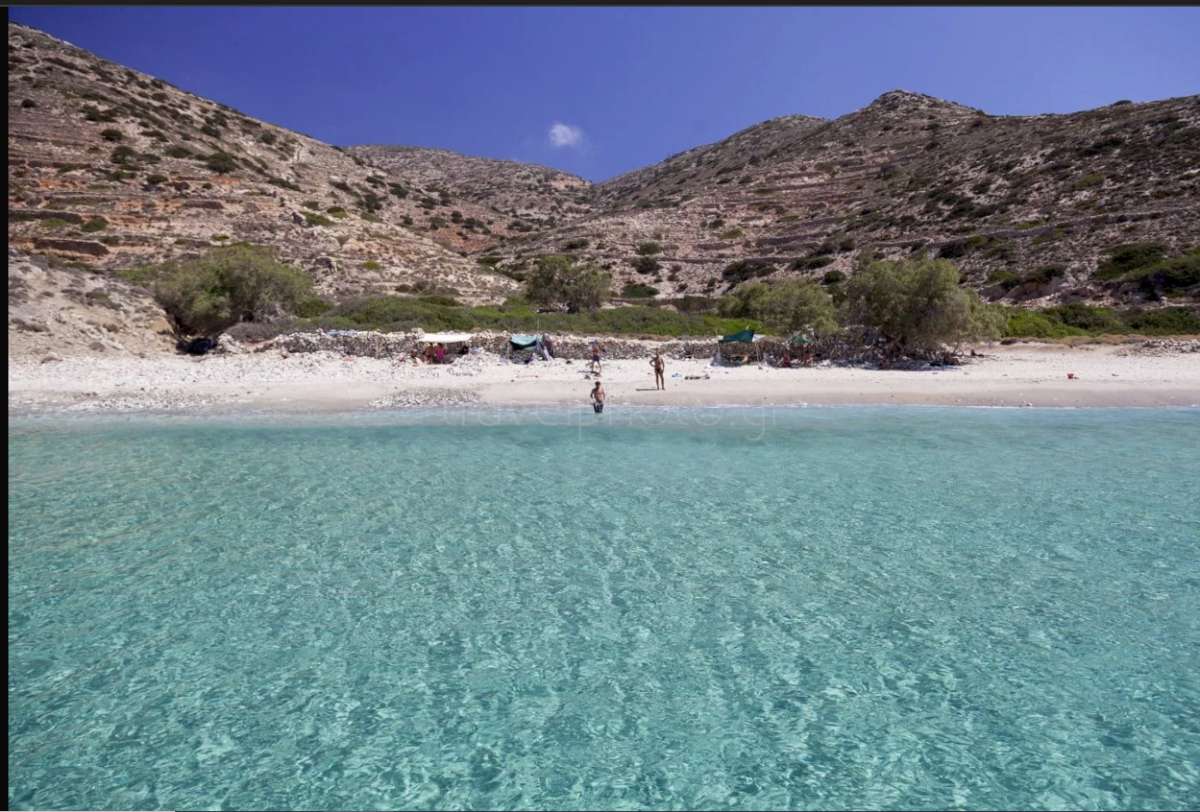
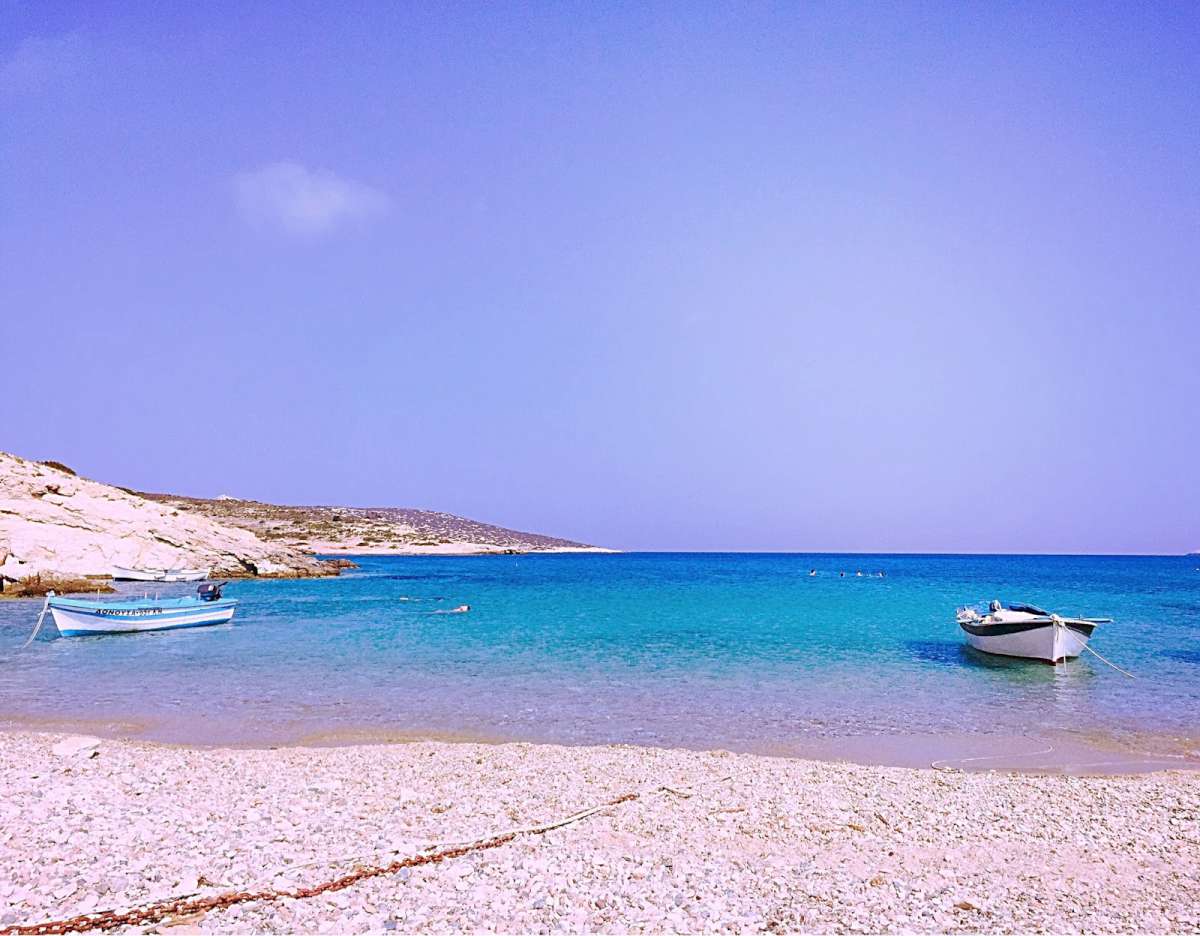
On the western coast of Donoussa, the sandy bay of Livadi offers sheltered, calm swimming in a setting of great natural beauty — a wide, pale beach backed by low scrubland and accessible either on foot from Stavros via a path through the island’s interior or by sea. The water here is among the calmest on the island, sheltered from the prevailing Aegean winds by the headland to the north, and the quality of the light in the late afternoon — falling on pale sand and still water in horizontal shafts of gold and amber — is of the kind that keeps photographers returning until the last of the light is gone. Further around the western coast, a succession of smaller coves accessible only by sea offer swimming of increasing solitude and increasing wildness — rocky inlets of clear deep water, sea caves of modest but beautiful dimensions, and the particular sensation of being somewhere so completely undisturbed that the presence of your own vessel in the water is the only sign of human activity visible in any direction.
The Walking Paths
Donoussa has a network of old paths crossing its hills and descending to its beaches that constitute, in their modest way, one of the finest small-island walking experiences in the Cyclades. The path from Stavros to the hamlet of Mersini on the northern coast crosses the island’s central ridge through a landscape of wild thyme, oregano, and rock roses, with views across the full breadth of the island and out to the open sea in every direction that are magnificent in their simplicity and their scope. The descent from the ridge to Mersini’s small harbour — where a single seasonal taverna serves the freshest possible calamari to the handful of tables above the water — is one of the great small pleasures of exploring Donoussa on foot. The path to Kalotaritissa on the southeastern coast, descending through abandoned terraces and past ancient cisterns to a small, sheltered bay of deep clear water, is equally rewarding and equally characteristic of the island’s quiet, unhurried, entirely genuine beauty.
The Night Sky
Donoussa has almost no artificial light pollution — a consequence of its small population, its minimal development, and its distance from the main ferry routes and the larger islands. The night sky above the island is, as a result, one of the finest in the Cyclades — a canopy of stars of extraordinary density and brilliance, the Milky Way visible on clear nights as a bright band across the darkness, the silence broken only by the sea and the occasional sound from the village below. Sitting in the cockpit of a yacht anchored off Kendros beach on a clear summer night, with that sky above you and the dark island around you and the only lights those of the village and the riding lights of your own vessel, is one of the most simple and most profound experiences that a night in the Aegean can offer. It is the kind of experience that recalibrates your sense of scale and your sense of what matters, and it is available here, in this small, remote, entirely beautiful island, in a way that the lit-up, populated, connected world of the larger Cyclades can no longer provide.
Why Choose Donoussa
Donoussa is the island for the traveller who has understood, through experience or through intuition, that what they are really looking for when they come to the Greek islands is not a particular monument or a particular beach or a particular social scene, but a particular quality of experience — the quality that comes from being somewhere genuinely remote, genuinely beautiful, genuinely peaceful, and genuinely itself, without performance and without mediation. It is an island for those who find deep contentment in the simplest possible combination of clear water, warm sun, fresh fish, and a sky full of stars, and who understand that this combination, available in genuine form, is one of the rarest and most valuable things that travel can provide.
For those sailing the Small Cyclades, Donoussa is the natural eastern anchor of the group — the island that rewards the decision to go a little further, to venture beyond Koufonisia and Schinoussa to the most remote and most easterly of the four inhabited islands. The sailing from Koufonisia to Donoussa crosses open water of considerable beauty, the passage taking a few hours in good conditions and offering, in those hours, a quality of open-sea sailing in clear Aegean water that is itself a pleasure entirely independent of the destination. The combination of Donoussa with its three sister islands creates one of the finest and most varied small-island sailing itineraries in Greece — a route of 50 or 60 nautical miles that passes through four completely different island characters and four completely different kinds of Cycladic beauty, and that ends, at Donoussa, at the furthest and quietest and perhaps most completely satisfying point of the entire journey.
What Donoussa gives the sailor who arrives here and stays long enough to feel the island’s rhythm is something that the Greek islands, at their most famous and most visited, can no longer easily provide: the feeling of having arrived somewhere truly undiscovered, truly peaceful, and truly, without qualification or compromise, beautiful. That feeling is Donoussa’s greatest gift, and it is given with the quiet, uncalculating generosity of an island that has always had more beauty than visitors and has never seen any particular reason to change the balance.