Why Chalki
There are places in the world where the noise of modern life does not reach, where the pace of things is set not by notifications and schedules but by the movement of the sun across the sky and the rhythm of the sea against the harbour wall. Chalki is one of those places. This tiny island — just 28 square kilometres, with a permanent population of barely three hundred souls — sits west of Rhodes in the Dodecanese like a secret that the Aegean has been quietly keeping. It has no cars to speak of, no supermarkets, no banks, no clubs, and no ambition whatsoever to be anything other than precisely what it is: one of the most serene, most beautiful, and most completely itself of all the small Greek islands. Those who find their way here by yacht — and there is no better way to arrive — tend to understand within the first hour why people who come to Chalki once almost always come back.
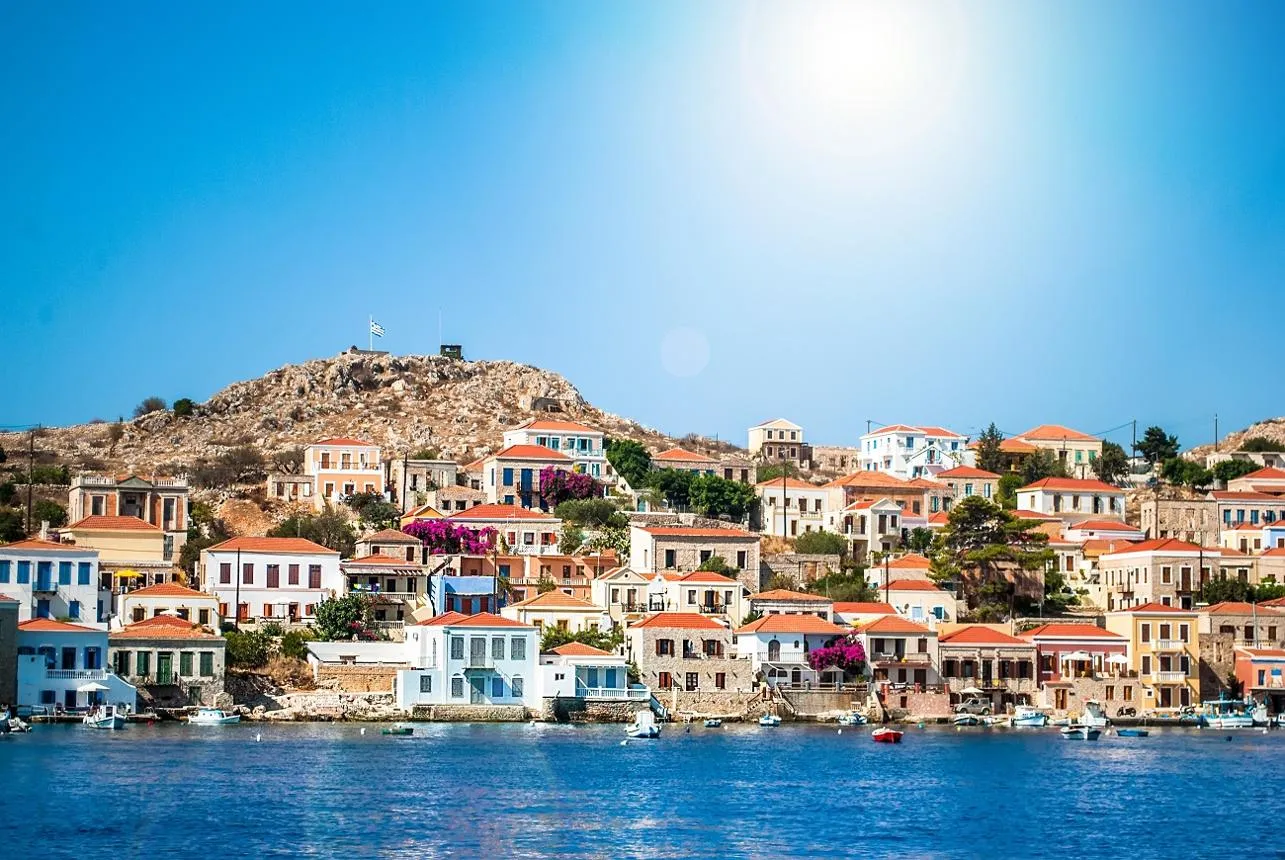
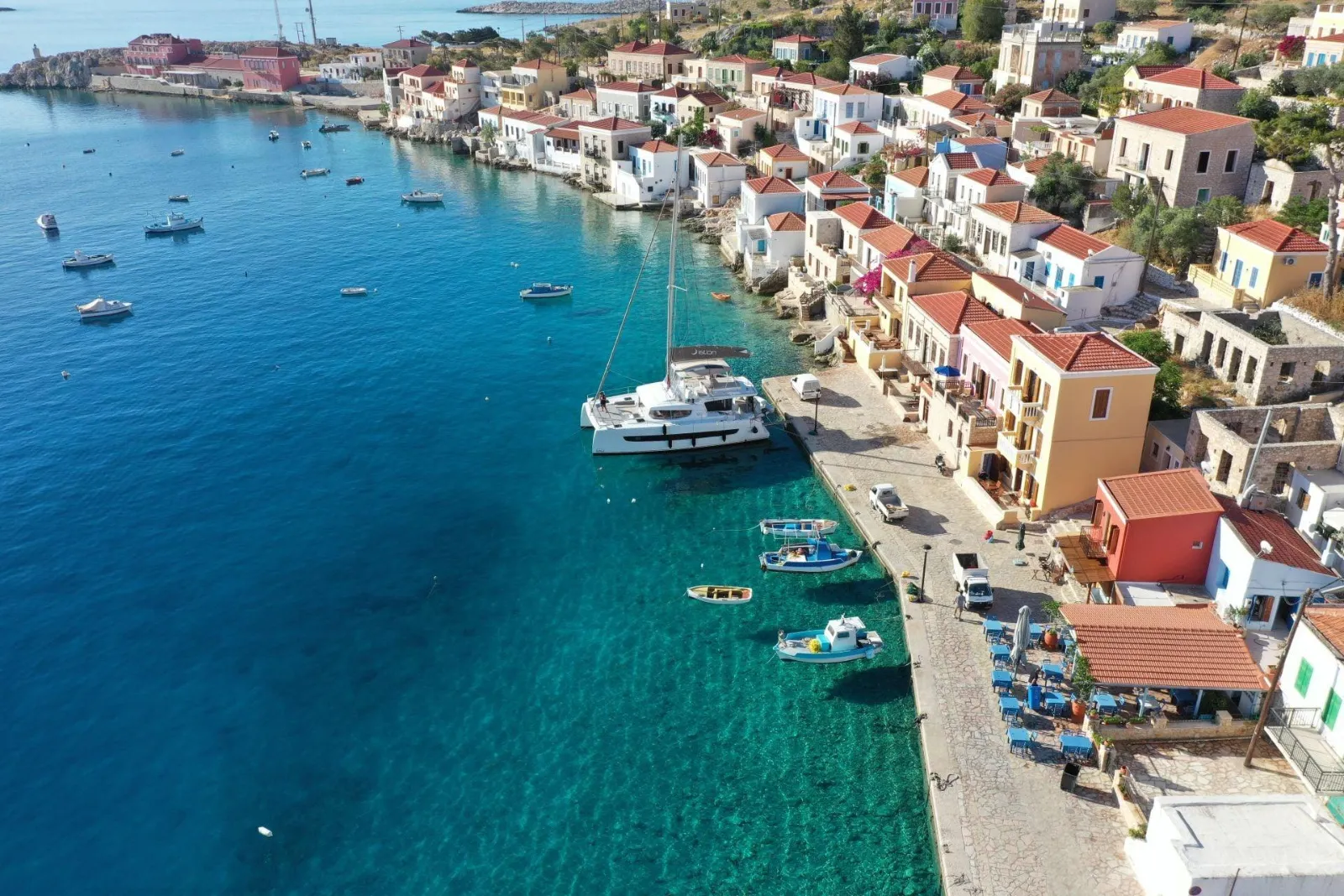
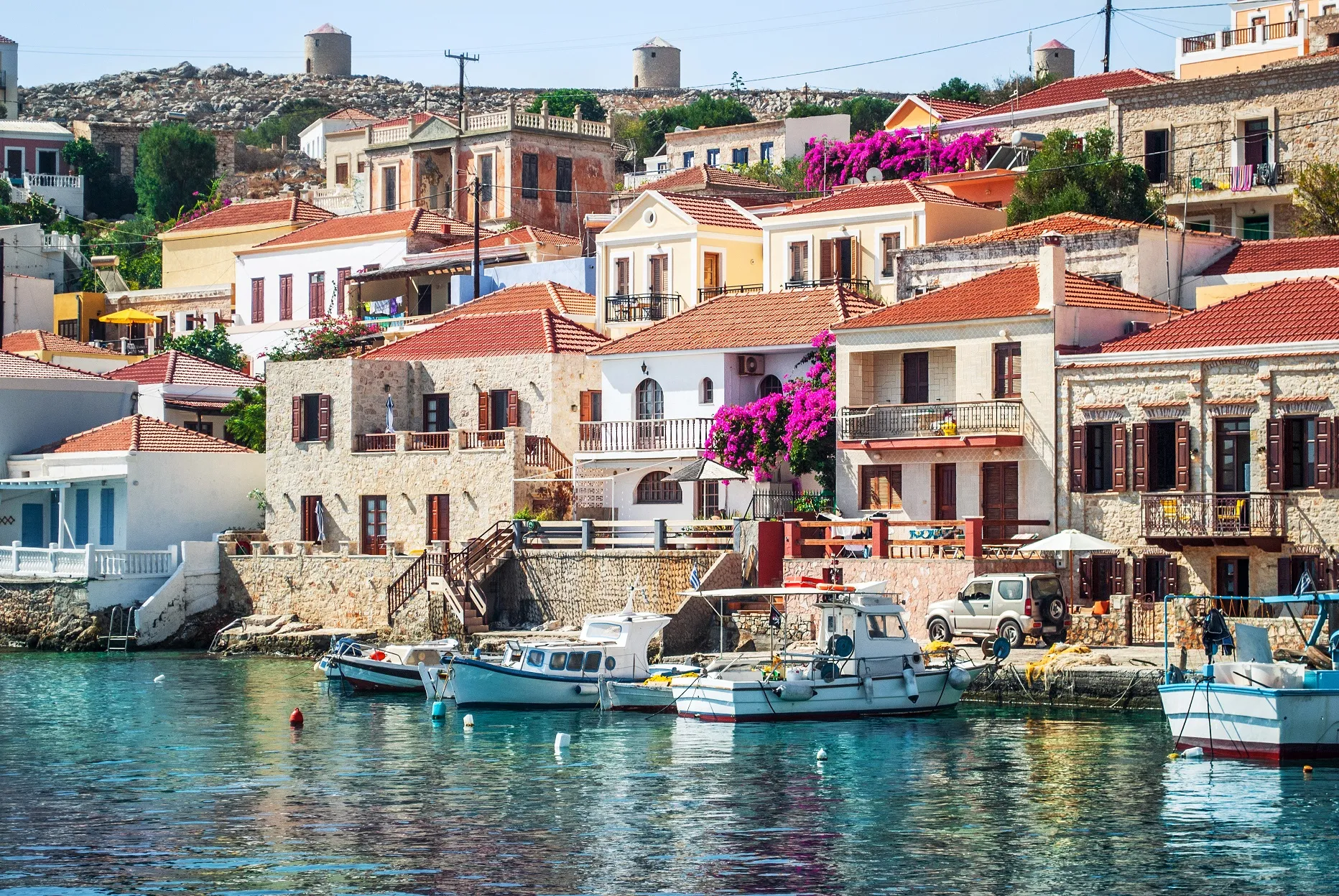
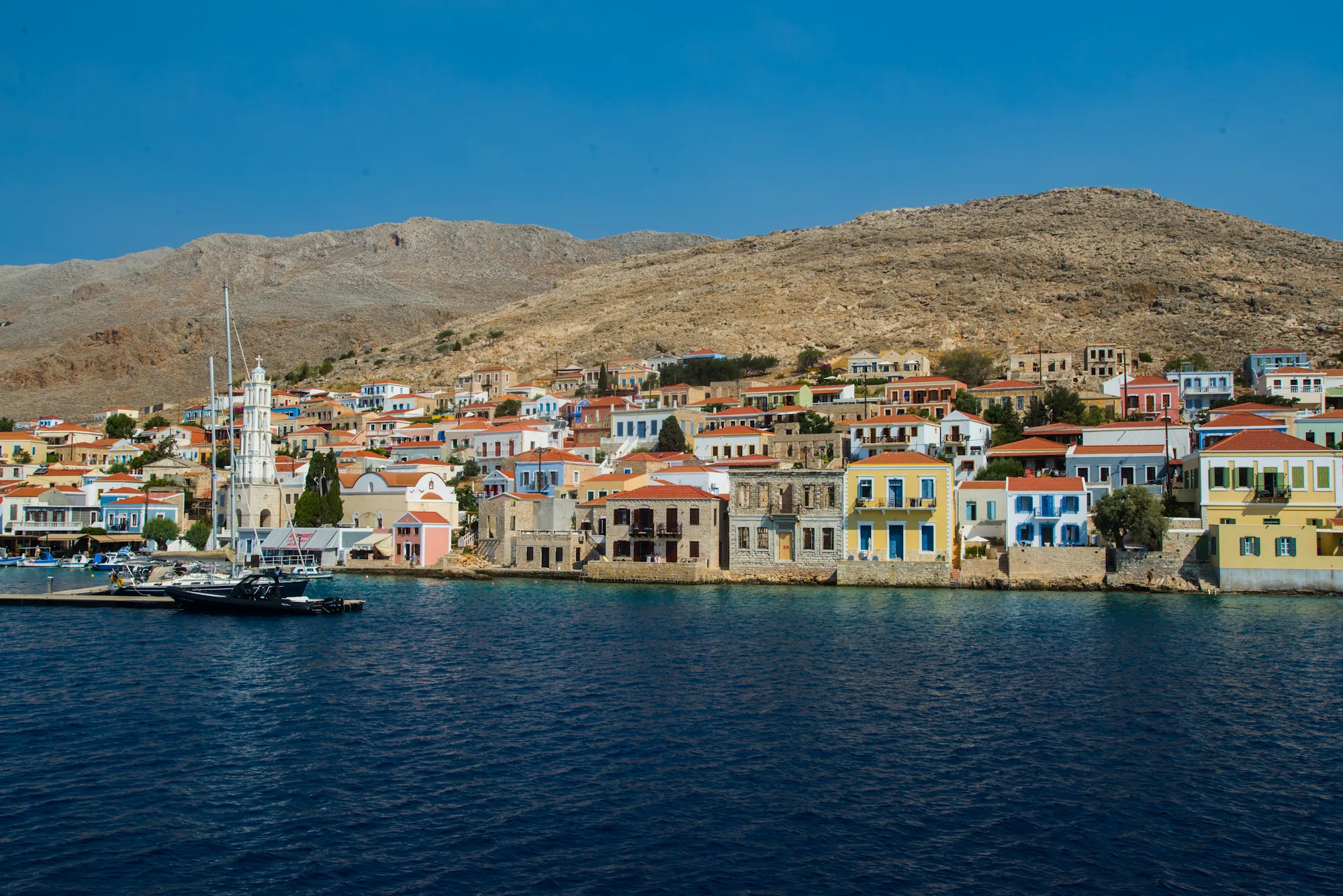
The island announces itself visually with an elegance that stops you mid-sentence. Sailing into Nimporio harbour, the island’s single village, you are greeted by a perfect small theatre of neoclassical architecture — a horseshoe of tall, narrow mansions in faded ochre, gold, and terracotta rising from the waterfront, their elegant facades reflected in water of extraordinary clarity, a clock tower presiding over the scene with quiet authority. The architecture tells the same story as Symi, just a short sail away: this was once a prosperous sponge-diving community, wealthy enough to build mansions of genuine grandeur on a rock barely large enough to support them. The decline of the sponge trade brought the same graceful stillness here that it brought to Symi, and what it preserved in that stillness is a village of such architectural coherence and natural beauty that it was designated an official Isle of Peace and Friendship by UNESCO in the 1980s — a designation that, for once, feels not like a bureaucratic label but like a simple and accurate description.
Chalki wears its beauty lightly and without performance. There are no tourist offices pressing maps into your hands, no organised excursions departing on a fixed schedule, no illuminated signs pointing you toward the highlights. The island simply exists, in its own unhurried way, and extends to visitors the same gentle, generous welcome that it has always extended to the sailors who have passed through these waters. To spend even two or three days here is to recalibrate something in yourself — to remember what stillness actually feels like, and to understand why the Greeks, who have been living surrounded by the sea for thousands of years, have always known that the finest things in life are most often found in the quietest places.
What to Do and What to See
Chalki’s pleasures are intentionally simple and intentionally profound. There is no long list of monuments to tick off, no museum requiring three hours of attention, no busy programme of activities to fill every waking hour. What there is, instead, is a village of extraordinary beauty, a coastline of hidden coves and crystalline water accessible almost exclusively by sea, a hilltop medieval castle with views that justify every step of the climb, and a quality of light and silence that constitutes, in itself, an experience worth travelling for. Chalki rewards those who bring nothing more than curiosity, good shoes, and a willingness to simply be somewhere beautiful.
Nimporio Village and Harbour
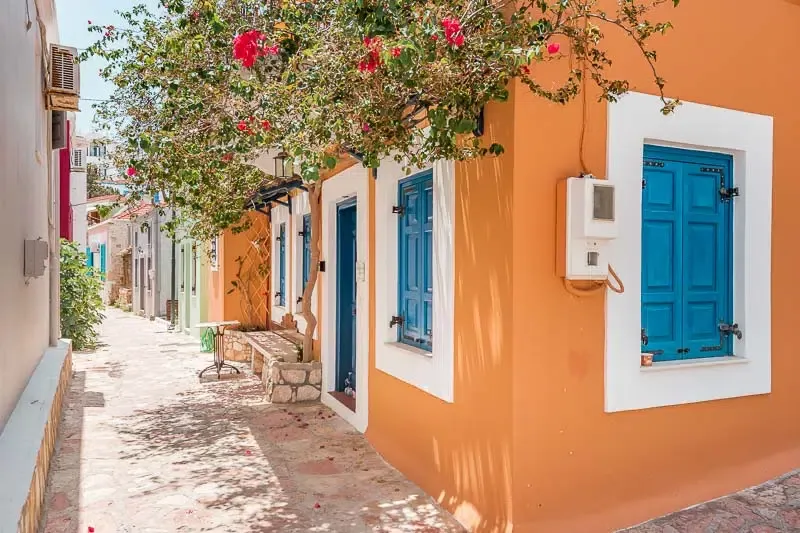
The village of Nimporio is the entirety of settled Chalki, and it is more than enough. The harbour front is lined with the neoclassical mansions that give the island its distinctive character — tall, narrow buildings of considerable elegance whose faded painted facades in shades of yellow, ochre, and pale rose create a townscape of remarkable warmth and coherence. Many of these mansions were built during the island’s prosperous sponge-diving era of the 18th and 19th centuries, and though some are now converted into small guesthouses and holiday rentals, many retain their original character almost intact. The village’s single main street runs behind the waterfront through a network of narrow lanes paved in black and white pebble mosaic, past small churches, simple kafeneions, and the occasional cat asleep in a doorway. The clock tower at the head of the harbour, visible from far out to sea, is the island’s most recognisable landmark and its unofficial symbol. Sitting at one of the waterfront tavernas in the early evening, with a glass of local wine and a plate of fresh fish, watching the yachts in the harbour and the light fading slowly on the mansions behind them, is one of the most uncomplicated and complete pleasures available anywhere in the Greek islands.
The Castle of the Knights and Chorio
Above Nimporio, a long and well-marked path climbs through a landscape of wild thyme and flowering scrub to the ruins of the medieval castle of the Knights of St. John, which crowns the island’s highest ridge above the ghost village of Chorio. The castle itself is ruined but evocative — its walls and towers still standing to a considerable height in places, enclosing the ruins of a small Byzantine church and commanding views of such extraordinary scope that the climb feels instantly worthwhile. Far below and on every side, the sea stretches to the horizons: Rhodes to the east, the distant outline of Tilos and Nisyros to the north, the Turkish coast to the northeast, and the open Mediterranean to the south and west. On clear days, Karpathos and even Crete are faintly visible. It is one of the finest panoramic views in the Dodecanese.
Chorio itself — the medieval village that once clustered within and below the castle walls, inhabited until the population moved down to the harbour in the early 20th century — is now a ghost settlement of considerable atmospheric power. Roofless stone houses, overgrown lanes, and small chapels in various states of preservation spread across the hillside below the castle, and the silence here, broken only by the wind and the distant sound of the sea, is of the particular quality that abandoned places sometimes achieve: not desolate, but reflective, and haunted in the most benign and beautiful sense.
The Church of Agios Nikolaos
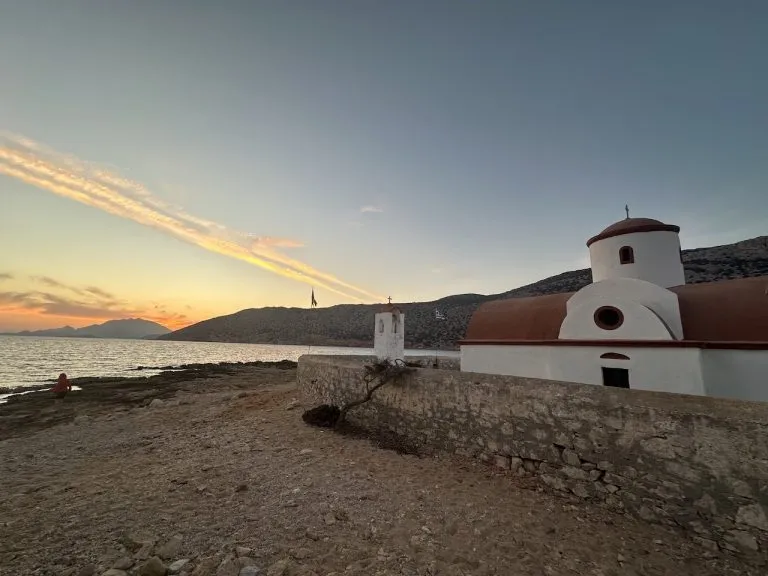
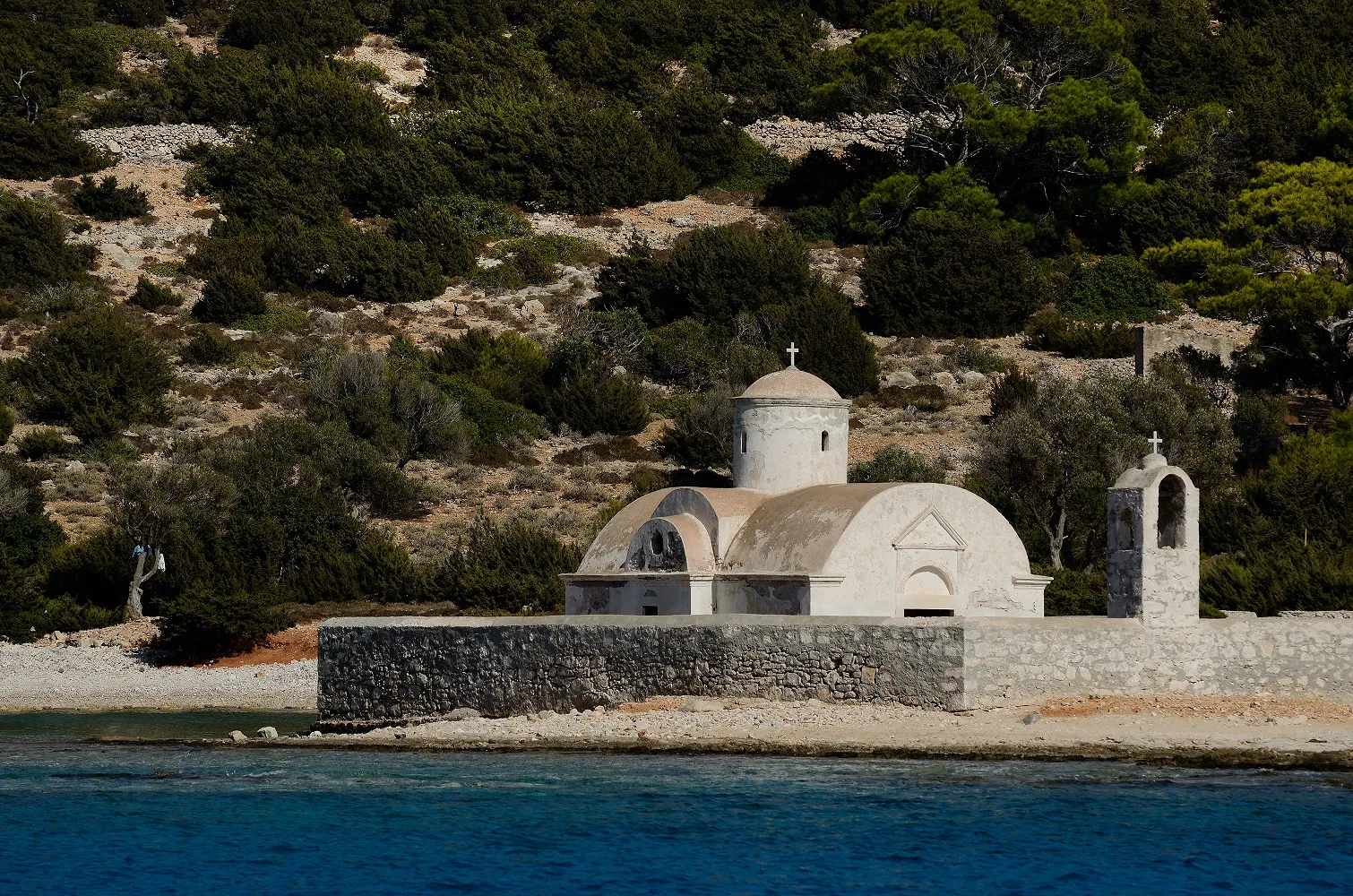
On the harbour front of Nimporio, the church of Agios Nikolaos — Saint Nicholas, patron saint of sailors, appropriately enough for a sponge-diving island — is the spiritual heart of the village and one of the most beautifully maintained small churches in the Dodecanese. Its bell tower is one of the tallest on the island, and its interior is rich with icons, silver ex-votos, and the accumulated devotional offerings of generations of Chalki families who sent their men to sea and prayed for their return. The church’s feast day in December is one of the island’s most important celebrations, but the building rewards a visit at any time of year — a cool, quiet, dimly lit interior of considerable beauty, entirely unchanged by the passing decades.
Ftenagia Beach and the Swimming Coves
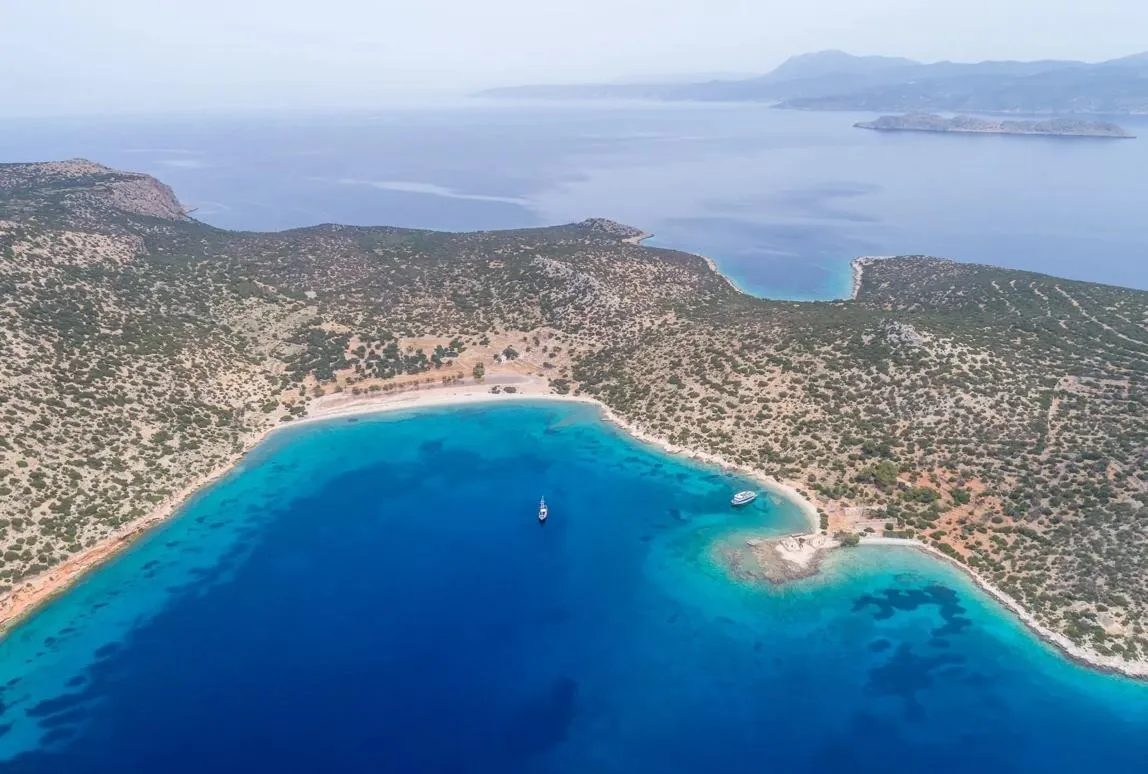
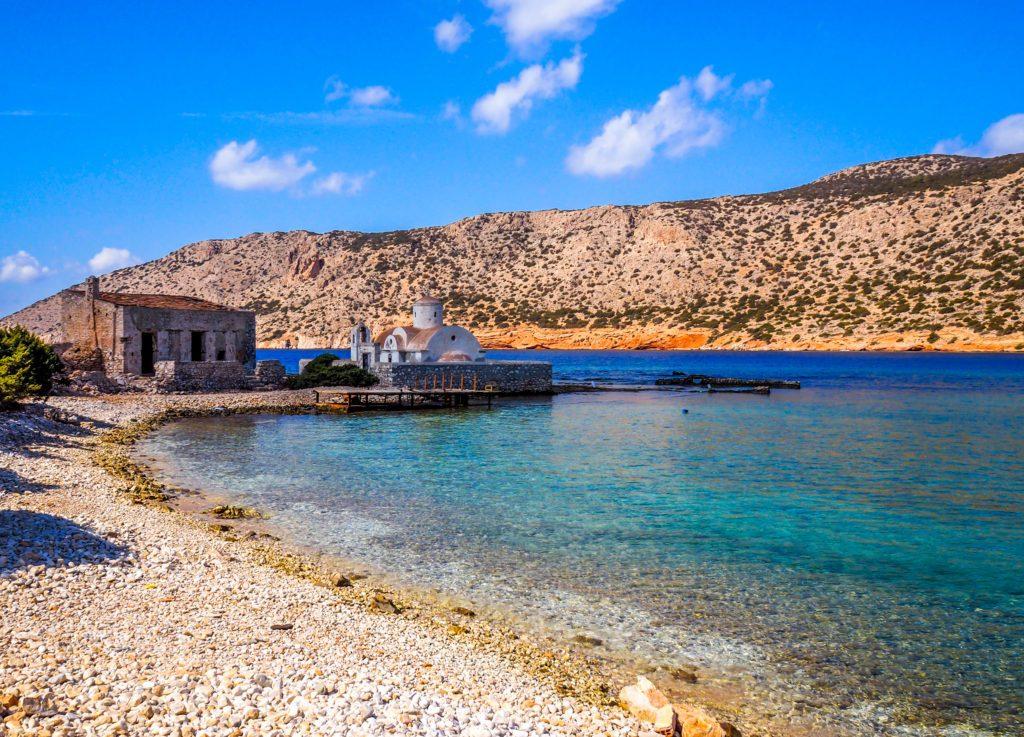
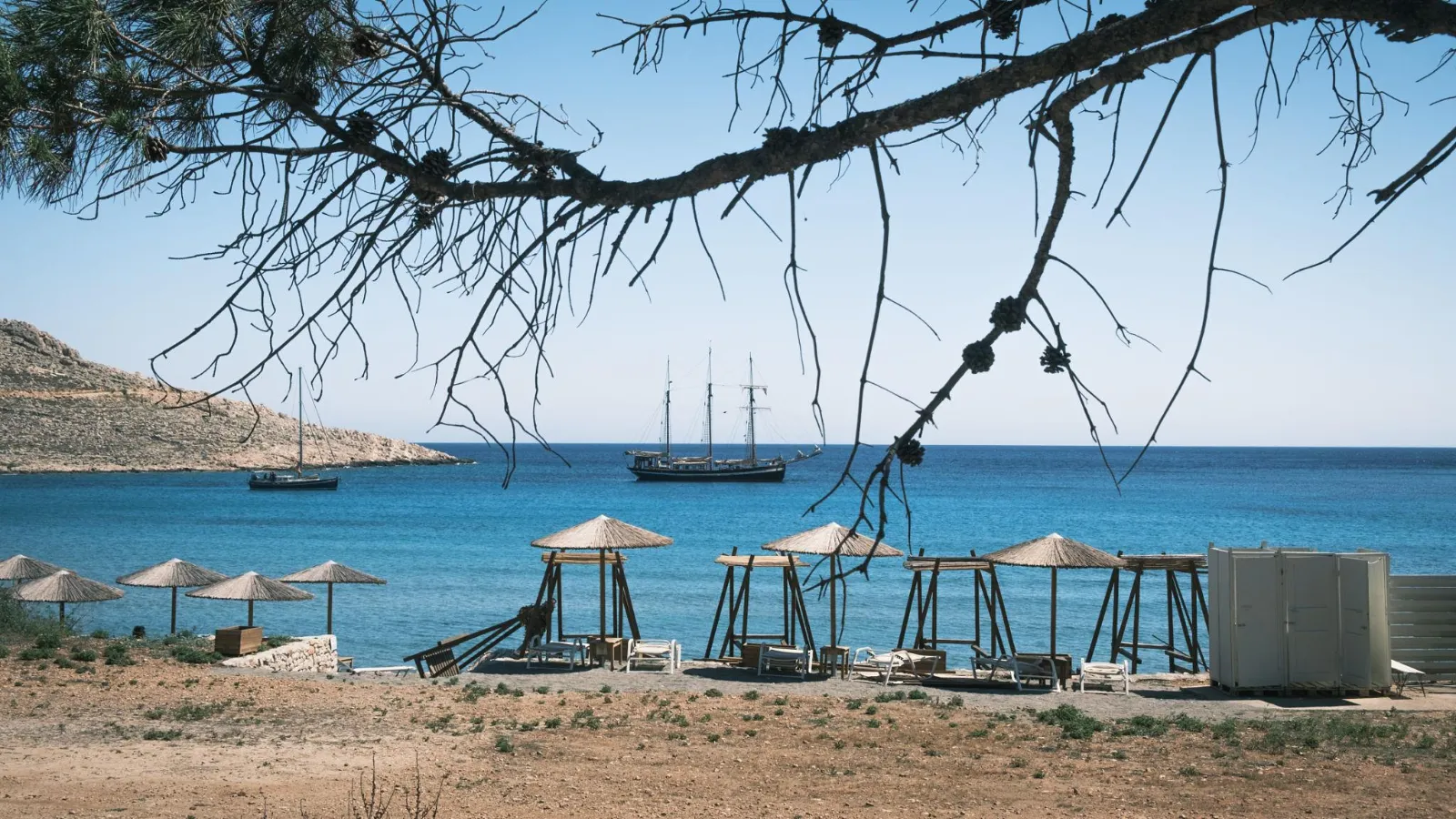
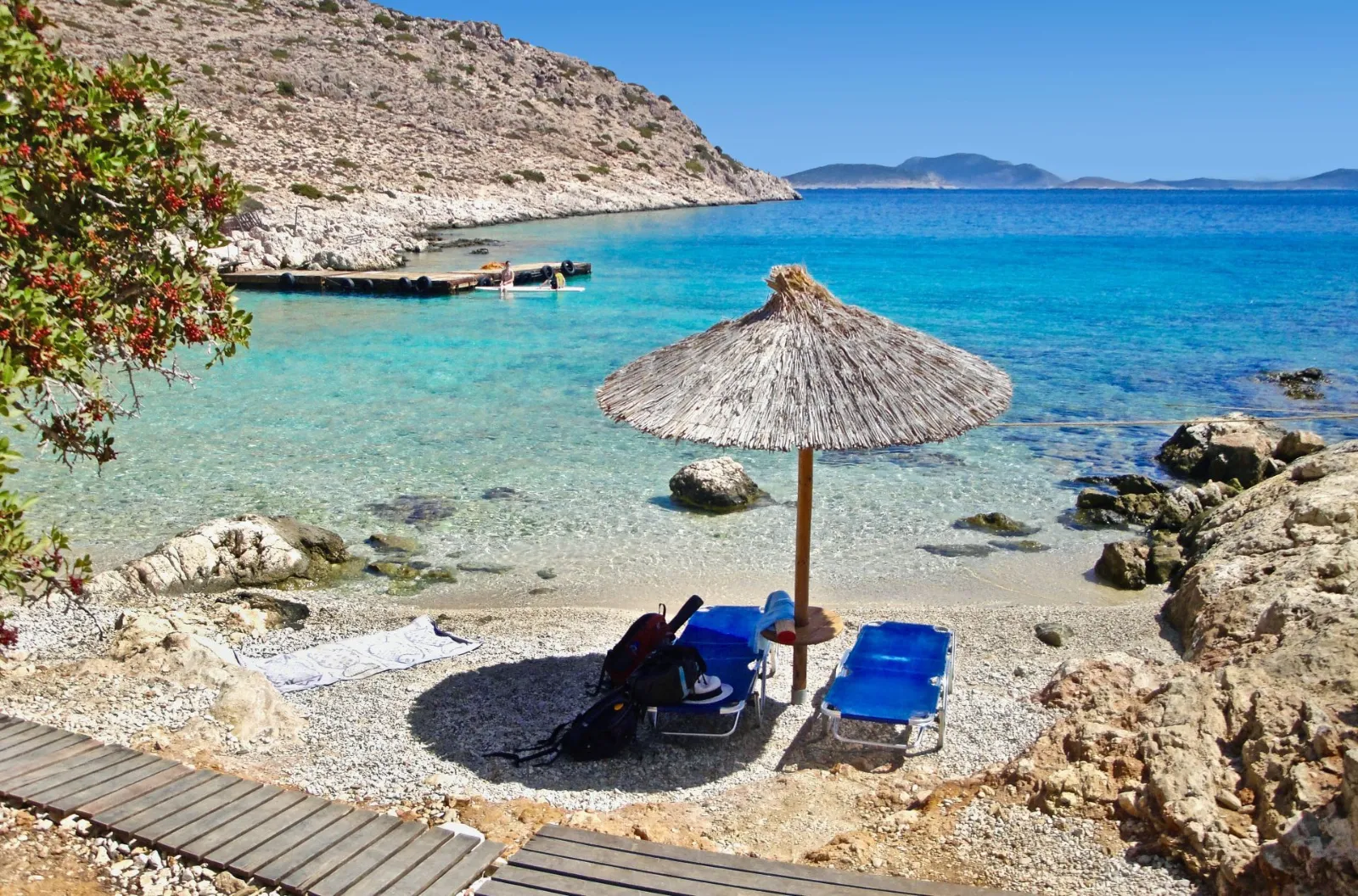
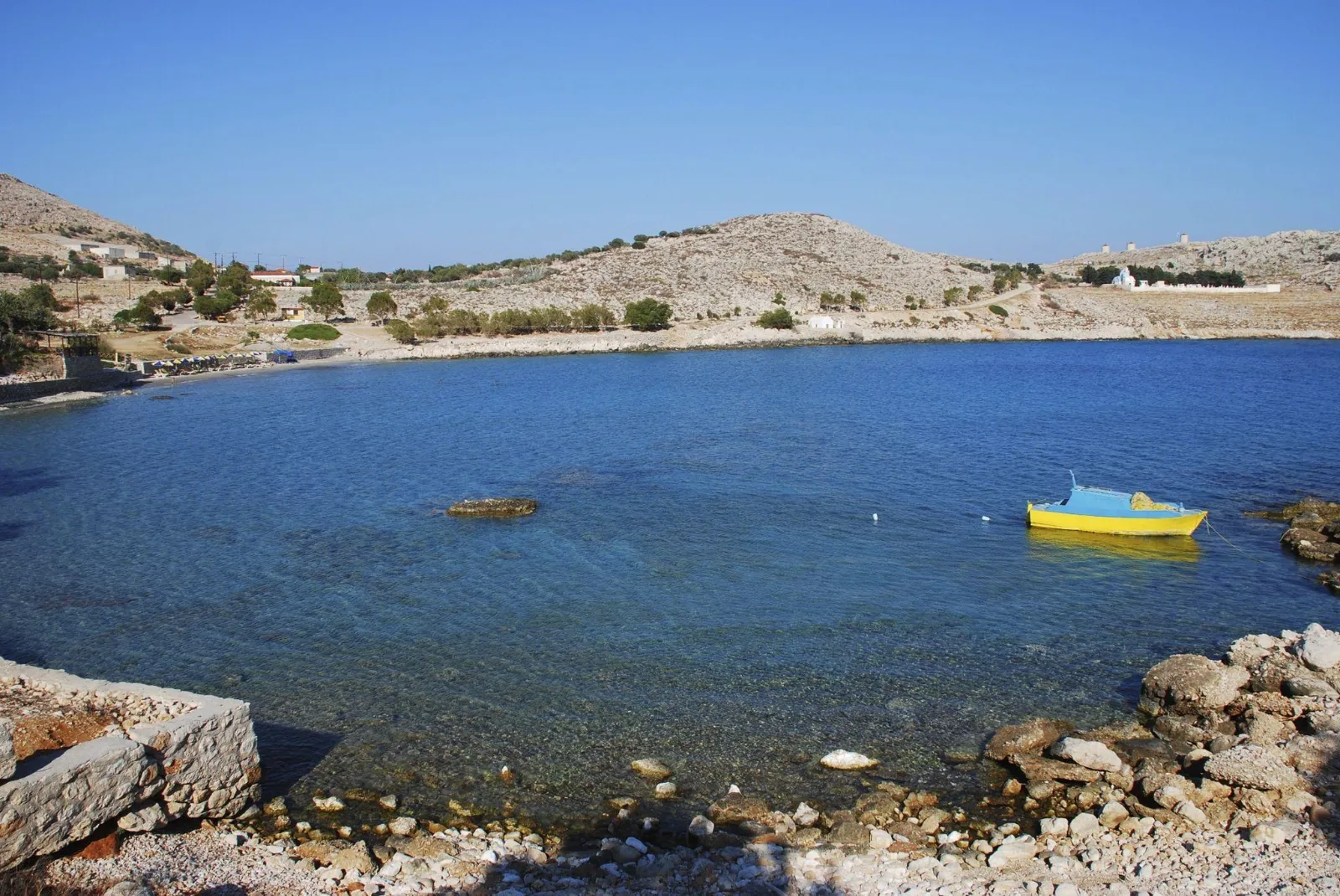
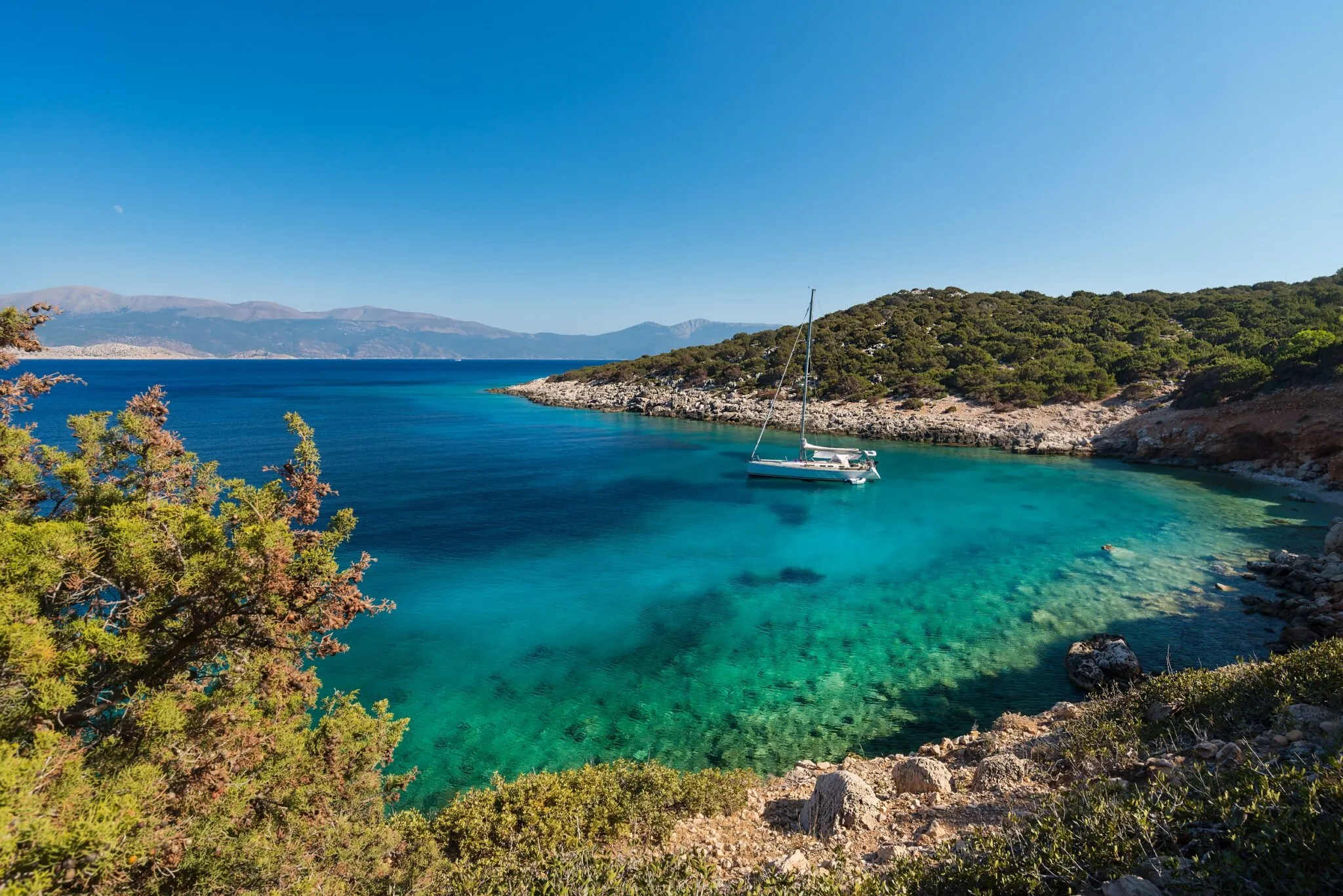
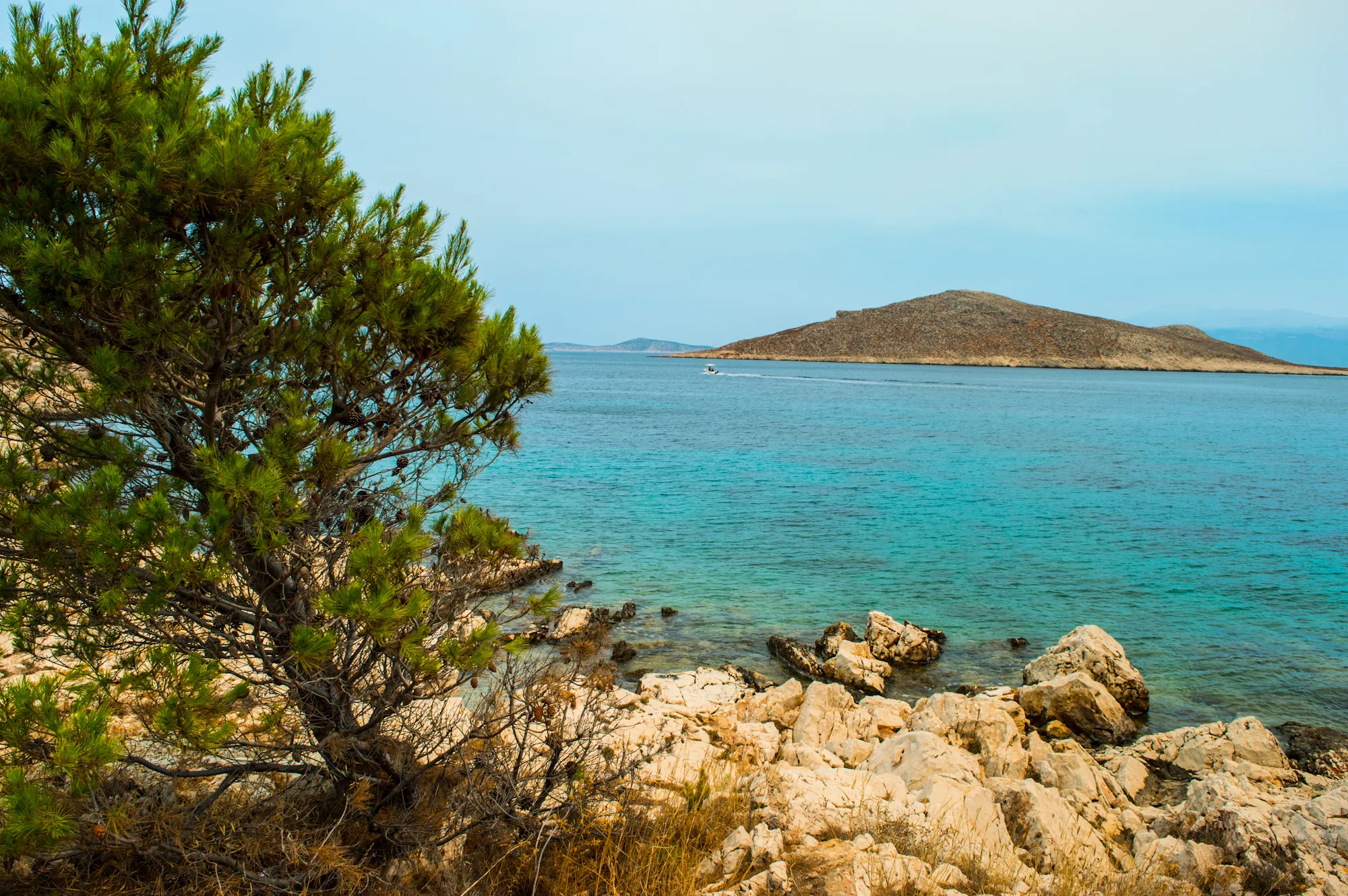
A short walk from Nimporio, the pebble beach of Ftenagia is the most accessible swimming spot on the island — a small, sheltered cove of fine white pebble and water of the kind of clarity and turquoise intensity that makes the Aegean famous. It is a quiet, unpretentious beach with no facilities beyond a single seasonal taverna, and its very simplicity is part of its charm. Further around the coast, a succession of smaller coves — Pondamos, Kania, Dyo Yiali — are accessible on foot via the island’s network of old paths or, more easily and more rewardingly, by sea. These coves, carved from the island’s pale limestone and opening onto water of exceptional clarity and colour, are among the most beautiful and least visited swimming spots in the Dodecanese. By yacht, you can anchor off each one in turn, slipping into the water in absolute silence with no other vessel in sight — an experience of the Aegean at its most pristine and most private.
Areta Bay and the Southern Coast
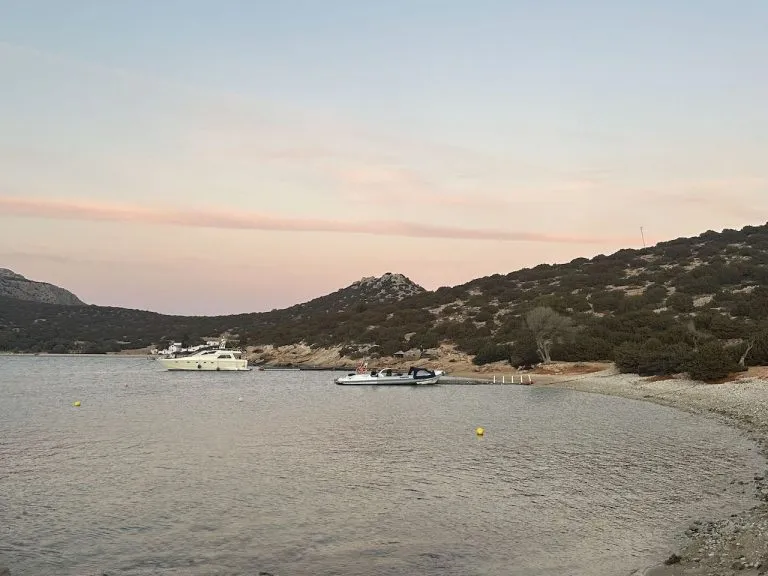
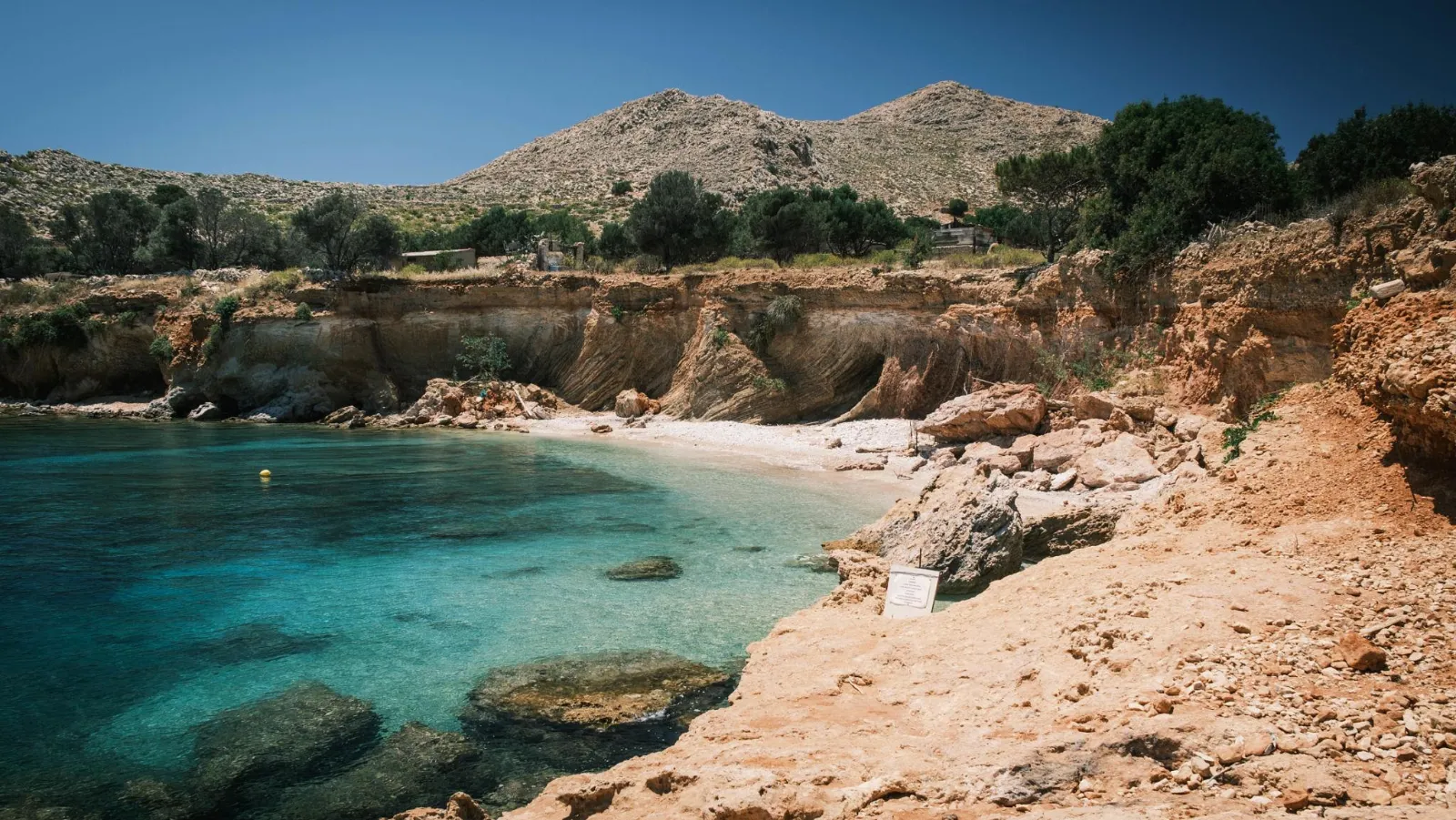
The southern coast of Chalki, facing the open Mediterranean, is wilder and more dramatic than the sheltered northern side — a landscape of steep limestone cliffs, isolated headlands, and small bays that see almost no visitor traffic even in the height of summer. Areta Bay, on the southwestern coast, is one of the finest and most completely secluded anchorages on the island, its pale pebble beach and turquoise water entirely undisturbed and accessible only from the sea. The snorkelling here, over clear, shallow water with a rocky seabed rich in marine life, is outstanding. Spending a morning anchored in Areta Bay with no other boat visible in any direction is to experience something that is becoming increasingly rare in the Mediterranean — genuine solitude in a place of genuine beauty.
Why Choose Chalki
Chalki is the island for the traveller who has understood, perhaps through long experience, that what they are really looking for is not more things to see but a different quality of experience entirely. It is for the person who finds profound satisfaction in a single beautiful harbour viewed at different times of day, who values a conversation with a local fisherman over a guided tour of a famous monument, who considers an afternoon swimming in a deserted cove followed by a long dinner at a waterfront table to be a day perfectly spent. Chalki does not offer a programme. It offers a place — and the invitation to inhabit it fully, on its own terms, for as long as you can.
For families, Chalki has a particular magic that is hard to replicate elsewhere: the rare gift of a safe, car-free environment where children can roam freely through the village lanes, swim off clean pebble beaches in calm and shallow water, and experience a version of Greek island life that has not been sanitised or packaged for their consumption. The island’s small scale means that everything is within walking distance, that the community is warm and immediately recognisable, and that the pace of life is naturally calibrated to something slower and more humane than the mainland or the larger resort islands.
What makes Chalki ultimately irreplaceable is the combination of architectural beauty, natural purity, and human warmth that it achieves at such a small scale and with such apparent effortlessness. The neoclassical harbour is genuinely magnificent — comparable to Symi and Hydra in its visual impact, but experienced here without the crowds. The coastline is among the cleanest and most unspoiled in the Dodecanese. And the welcome extended by the island’s small community to those who make the effort to come this far and stay long enough to matter is the kind of welcome that makes you feel, quite quickly, as though you belong here. That feeling — of having found not just a beautiful place but a place that feels, improbably and immediately, like yours — is the rarest gift that travel can offer, and Chalki gives it freely and without condition.