Why Andros
There are islands in the Cyclades that reveal themselves immediately and completely — that offer their beauty all at once, in a single spectacular gesture, and ask nothing more of you than to receive it. Andros is not one of these islands. Andros is an island that reveals itself gradually, layer by layer, to the visitor willing to look beyond the first impression and stay long enough to understand what they have found. It is the northernmost and, in many respects, the most complex and most surprising of the Cyclades — an island of rushing streams and waterfalls, of dense green valleys and medieval villages, of a maritime tradition so deep and so proud that it shaped the character of an entire people, and of a contemporary cultural life so unexpectedly rich and sophisticated that it consistently astonishes those who arrive expecting the spare, sun-bleached simplicity of the classic Cycladic island. Andros is all of those things, and it is also, in its own quiet and entirely distinctive way, one of the most beautiful islands in Greece.
The island’s most immediately striking characteristic, for anyone arriving from the drier Cyclades to the south, is the water. Andros has more fresh water than any other island in the Cyclades — springs rising from its limestone geology, streams running year-round through its valleys, waterfalls descending the hillsides in the spring months, and the particular lushness of vegetation that only permanent water can sustain. The valleys of the island’s interior are green with plane trees, fruit orchards, and the ancient olive groves that have been cultivated here for millennia, and the sound of running water — in the village fountains, in the streams beside the old paths, in the waterfalls above the coastal villages — is a constant and deeply pleasurable companion to any exploration of the island on foot. This abundance of fresh water, combined with the strong north wind — the famous Andros meltemi, which arrives each summer with a reliability and a force that has shaped the island’s character as profoundly as any historical event — gives Andros a physical and sensory identity quite unlike any other island in the archipelago.
The island’s other great distinction is its maritime heritage. For generations, Andros produced more merchant navy captains and shipping magnates than any other island in Greece — a tradition of seafaring excellence that made Andros families among the wealthiest in the country and gave the island, particularly its capital Chora, a legacy of neoclassical mansions, cultural institutions, and civic pride entirely disproportionate to its size. The extraordinary Museum of Contemporary Art in Andros Chora — one of the finest in Greece, housing works by Picasso, Braque, and the great Greek modernists alongside a rotating programme of international exhibitions — exists because of that maritime wealth, donated to the island by shipping families whose sense of obligation to their home was as strong as their ambition to surpass it. It is a museum that would be remarkable in Athens. In Andros, it is extraordinary.
What to Do and What to See
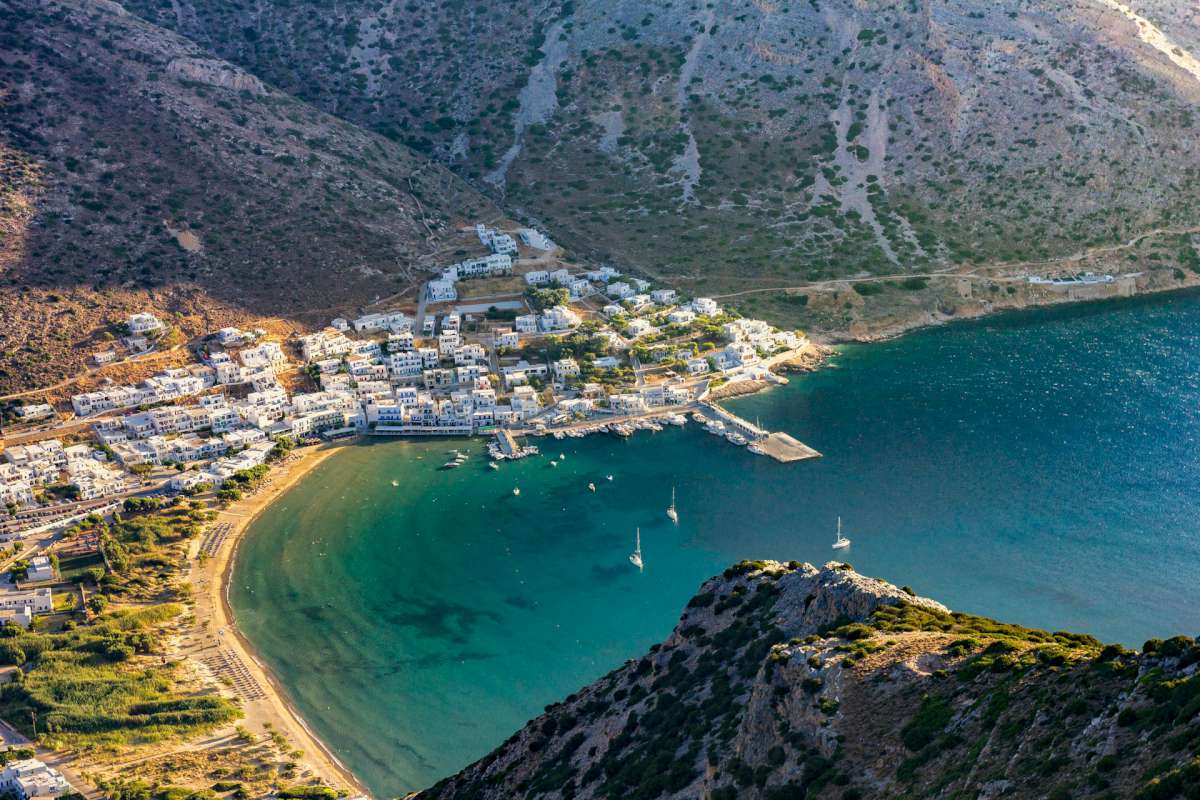
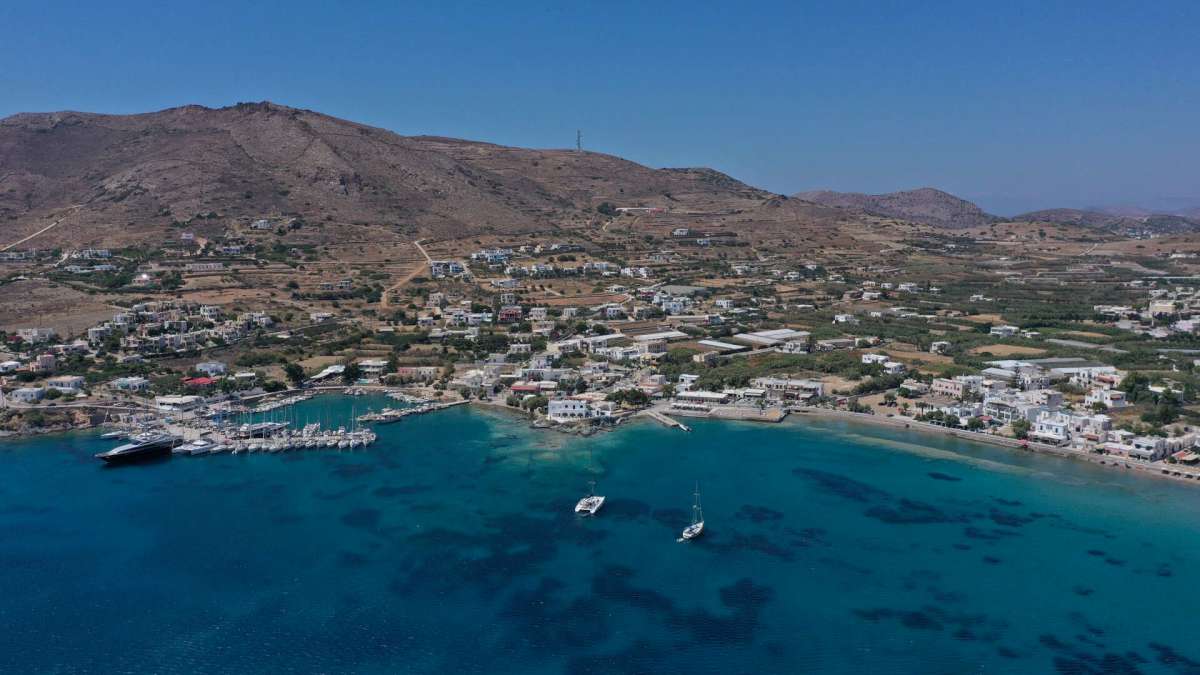
Andros rewards the visitor who moves between its different pleasures with genuine curiosity — between the cultural richness of its capital and the natural beauty of its interior, between the exceptional beaches of its southern coast and the wilder, more dramatic scenery of its northern shore, between the architectural heritage of its medieval tower houses and the contemporary art that fills its finest museum. For those arriving by yacht, the island’s coastline — over 176 kilometres of it, indented with bays and coves of exceptional variety — adds a further and deeply rewarding dimension that could occupy a week of exploration without repetition.
Andros Chora — The Capital
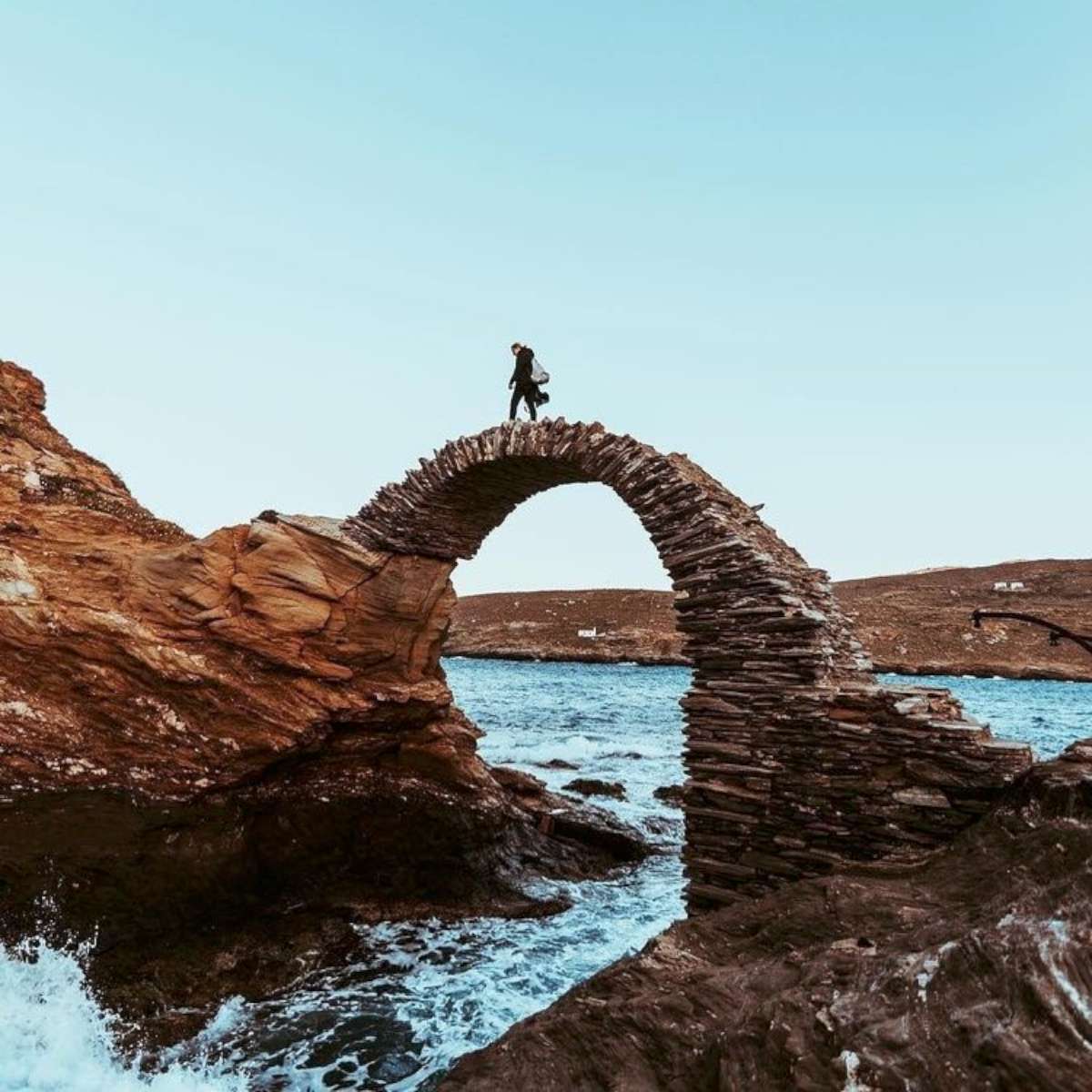
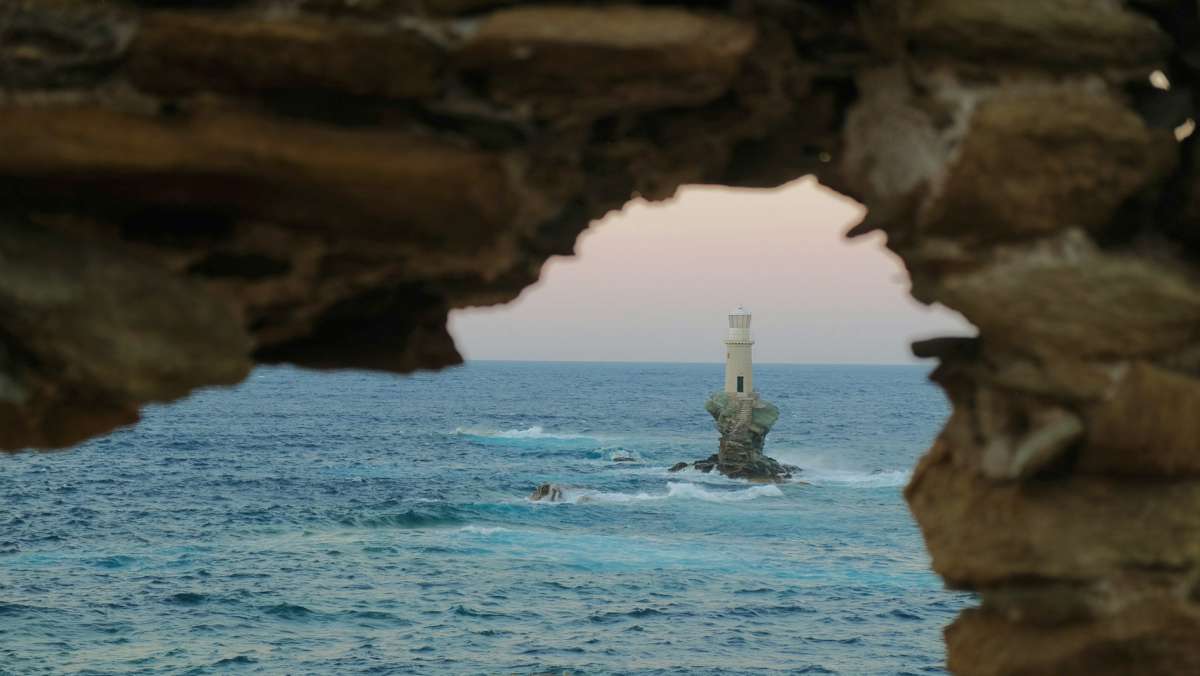
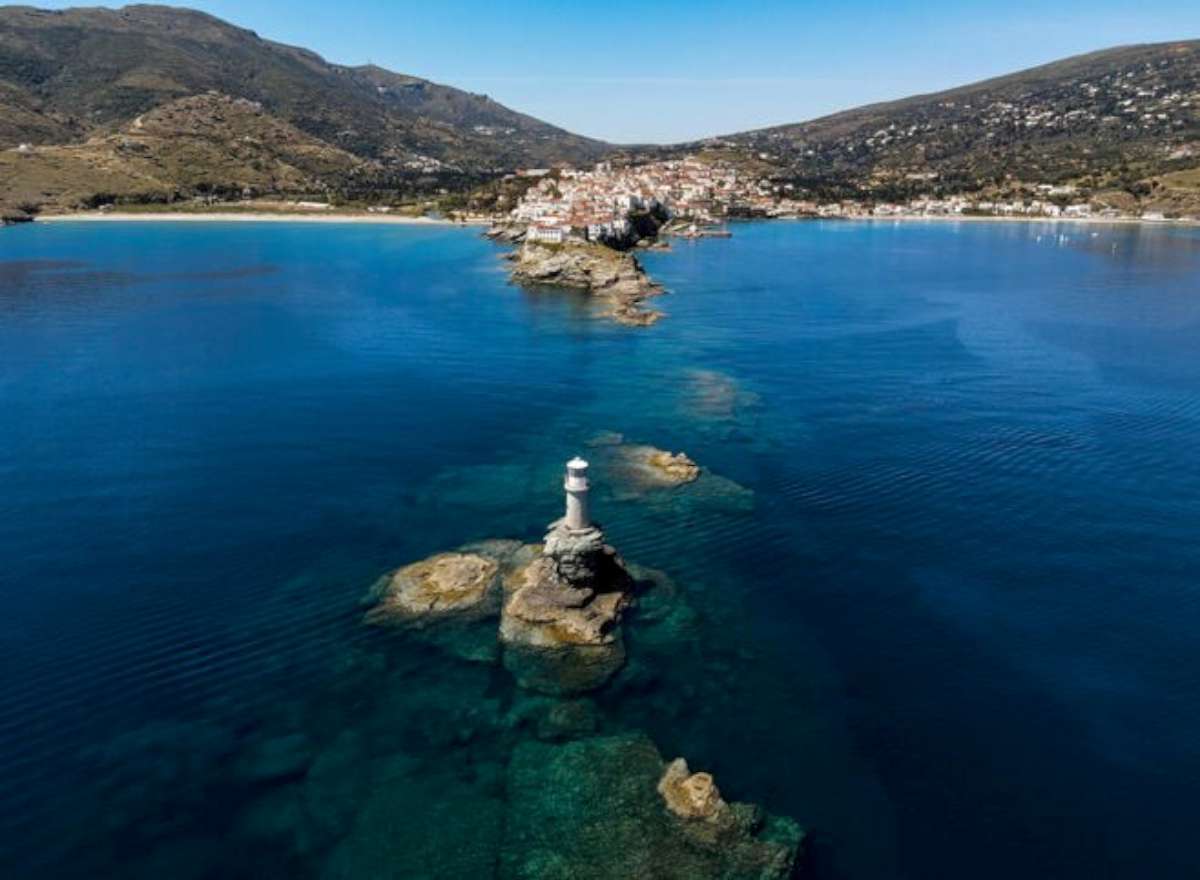
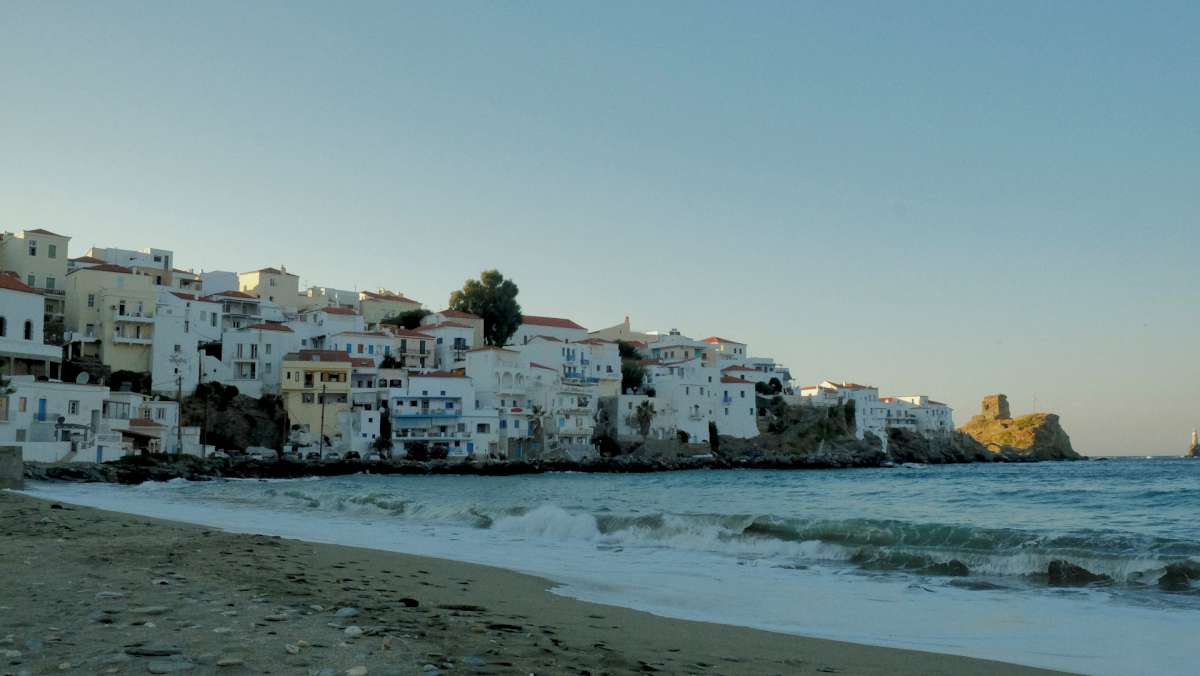
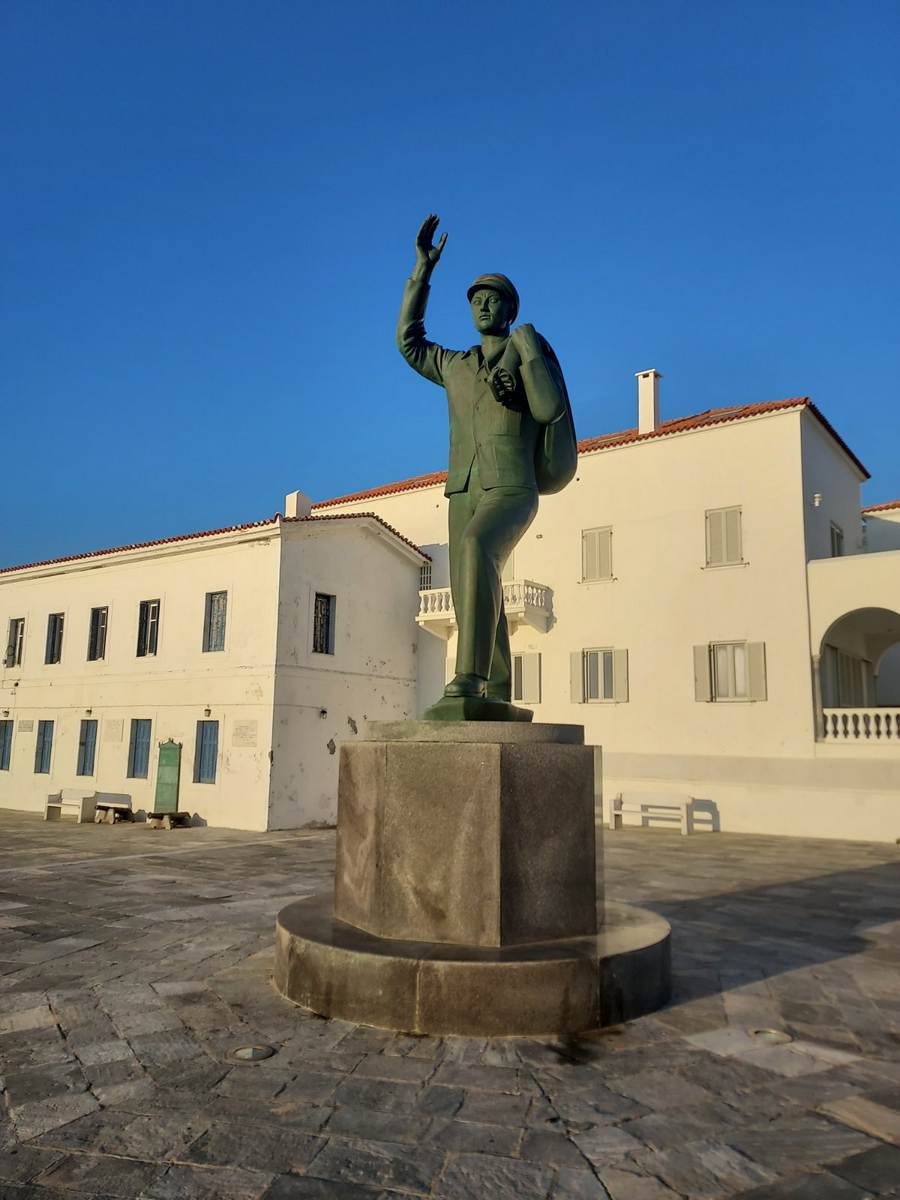
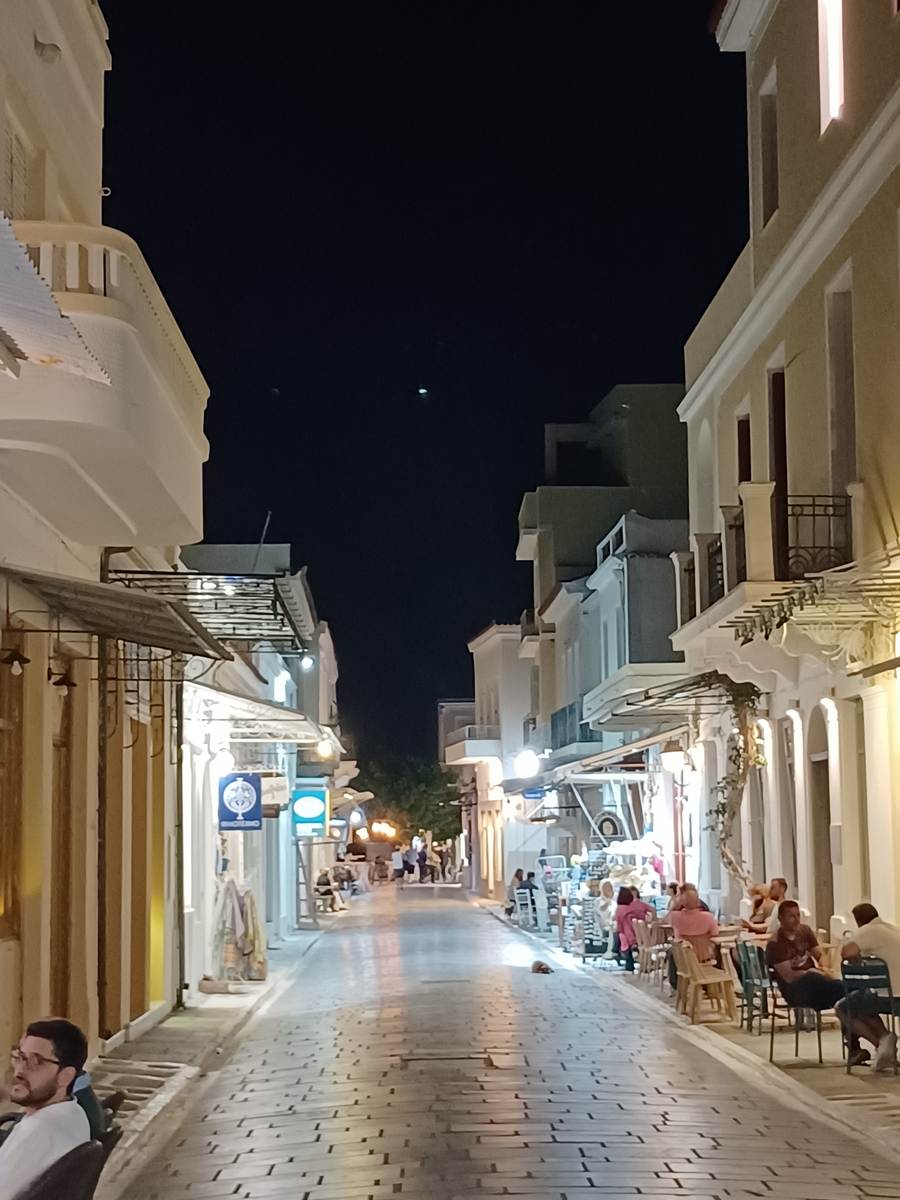
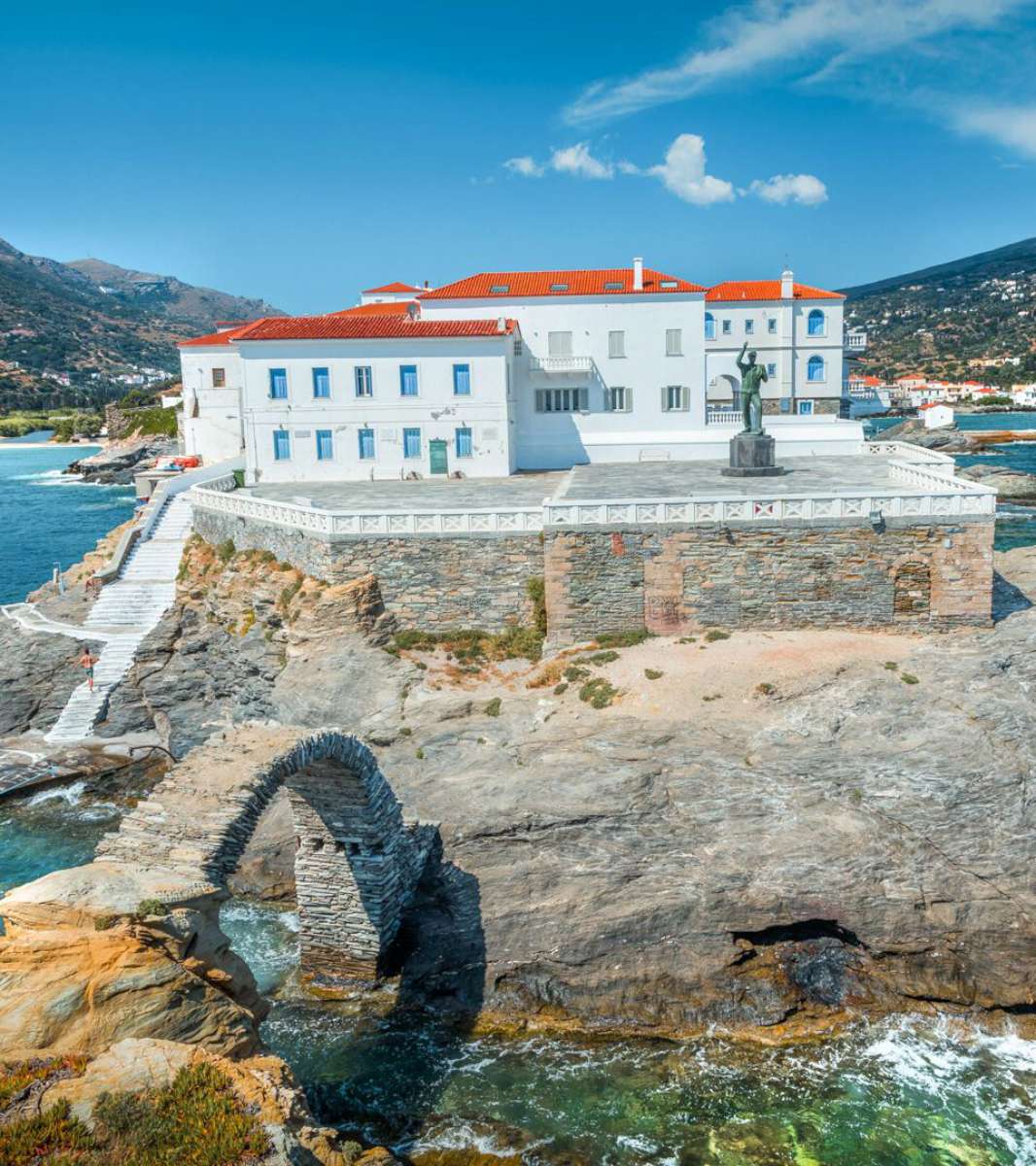
The capital of Andros is unlike any other Cycladic island capital — a long, narrow town built on a rocky promontory between two bays, its neoclassical mansions and Venetian-influenced architecture speaking of a prosperity and a cosmopolitan ambition that set it clearly apart from the whitewashed simplicity of the typical Cycladic chora. The main pedestrian street, paved in marble and lined with elegant mansions whose ground floors house excellent cafés, bakeries, and boutique shops, leads to the headland square where a famous bronze statue of the Unknown Sailor stands facing the sea — a monument to the maritime tradition that made Andros what it is. At the very tip of the promontory, the ruins of the Venetian castle of Faneromeni occupy a small rock connected to the headland by a narrow stone bridge, and the views from here across both bays and out to the open Aegean are magnificent. Walking Andros Chora in the evening, when the marble streets are lit by lanterns and the mansions glow warmly against the darkening sky, is one of the most elegant and most civilised pleasures available on any Greek island.
The Museum of Contemporary Art
In the heart of Andros Chora, the Basil and Elise Goulandris Foundation Museum of Contemporary Art is simply one of the finest museums in Greece — a collection of international and Greek modern art of the very highest quality, housed in a purpose-built building of considerable architectural distinction and supplemented by a programme of temporary exhibitions that brings major international work to this improbable but entirely fitting location each summer. The permanent collection includes works by Picasso, Braque, Kandinsky, Matisse, and the great Greek modernists — Tsarouchis, Moralis, Hadjikyriakos-Ghikas — and the quality and coherence of the whole is remarkable. For the culturally curious traveller, the museum alone justifies the journey to Andros, and the combination of a world-class collection with the architectural beauty of the surrounding chora makes for a cultural morning of exceptional completeness.
The Ancient Capital of Paleopolis and the Archaeological Museum
On the western coast of Andros, the ancient city of Paleopolis — capital of the island in antiquity, inhabited from the Geometric period through the Byzantine era and abandoned in the medieval period following a series of landslides — now lies partially beneath the sea and partially exposed on the hillside above a beautiful bay. The small but excellent Archaeological Museum in the village above the ancient site contains finds from Paleopolis of considerable quality and interest, including the celebrated Hermes of Andros — a Roman copy of a classical original of the first order — and the Matron of Herculaneum, both of which are of international art historical significance. The site itself, with its visible ancient walls and the poignant sight of ancient stonework continuing beneath the clear, shallow water of the bay, is deeply atmospheric and rewards unhurried exploration.
The Villages of the Interior — Mesaria, Menites, Apikia
The interior of Andros contains a network of traditional villages of considerable beauty and considerable variety, connected by the old kalderimi paths that cross the island’s valleys and ridges in a system that offers some of the finest walking in the Cyclades. Mesaria, in the central valley, is a medieval village of great atmospheric power — its 12th-century Byzantine church of the Taxiarches one of the oldest and finest on the island. Menites, above the western coast, is famous for its extraordinary natural springs — water pouring continuously from lion-head fountains of ancient design into stone basins beside the church, a scene of such timeless and beautiful simplicity that it has been photographed and painted by artists for generations. Apikia, further up the valley, is the home of the Sariza spring whose water is bottled and sold throughout Greece — a village of great natural charm in a setting of unusual greenness and fertility for the Cyclades.
The Beaches — Agios Petros, Achla, Vitali
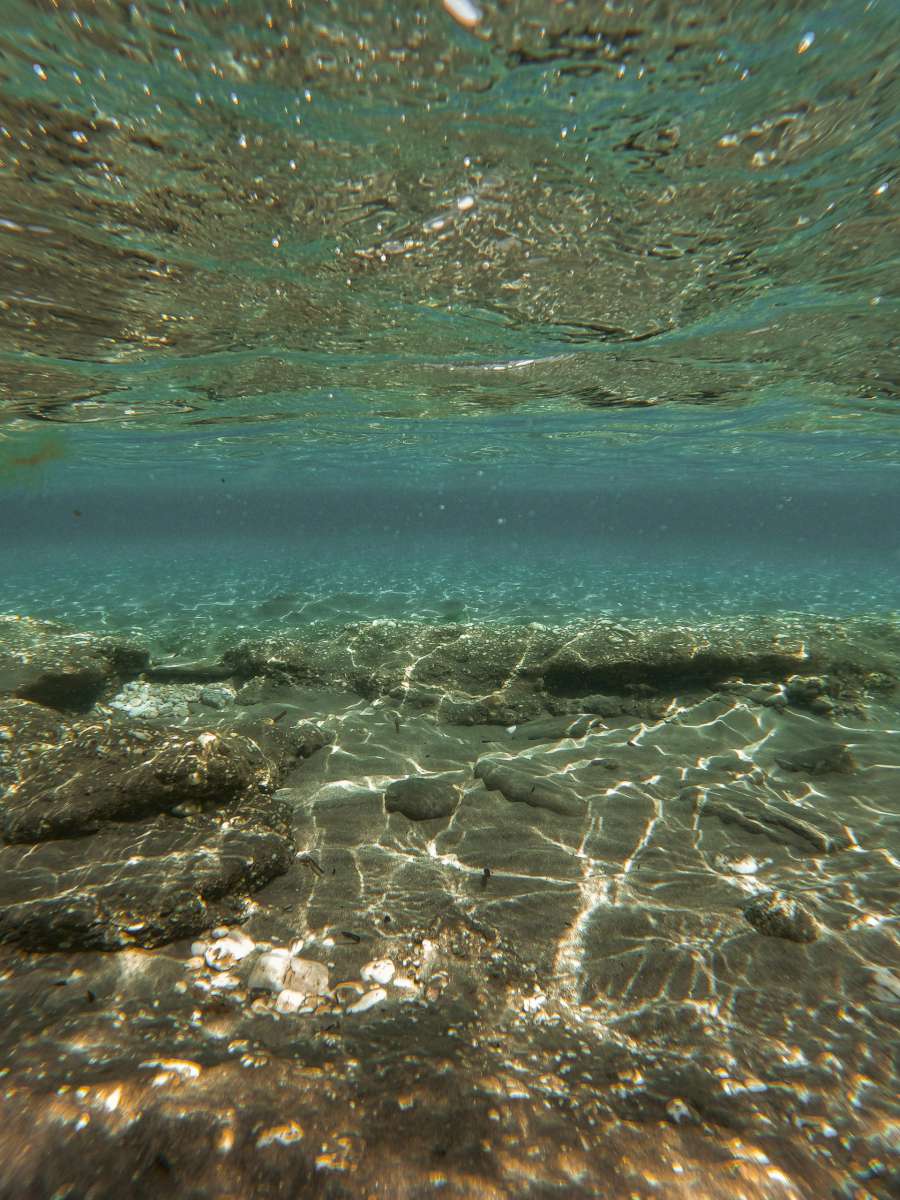
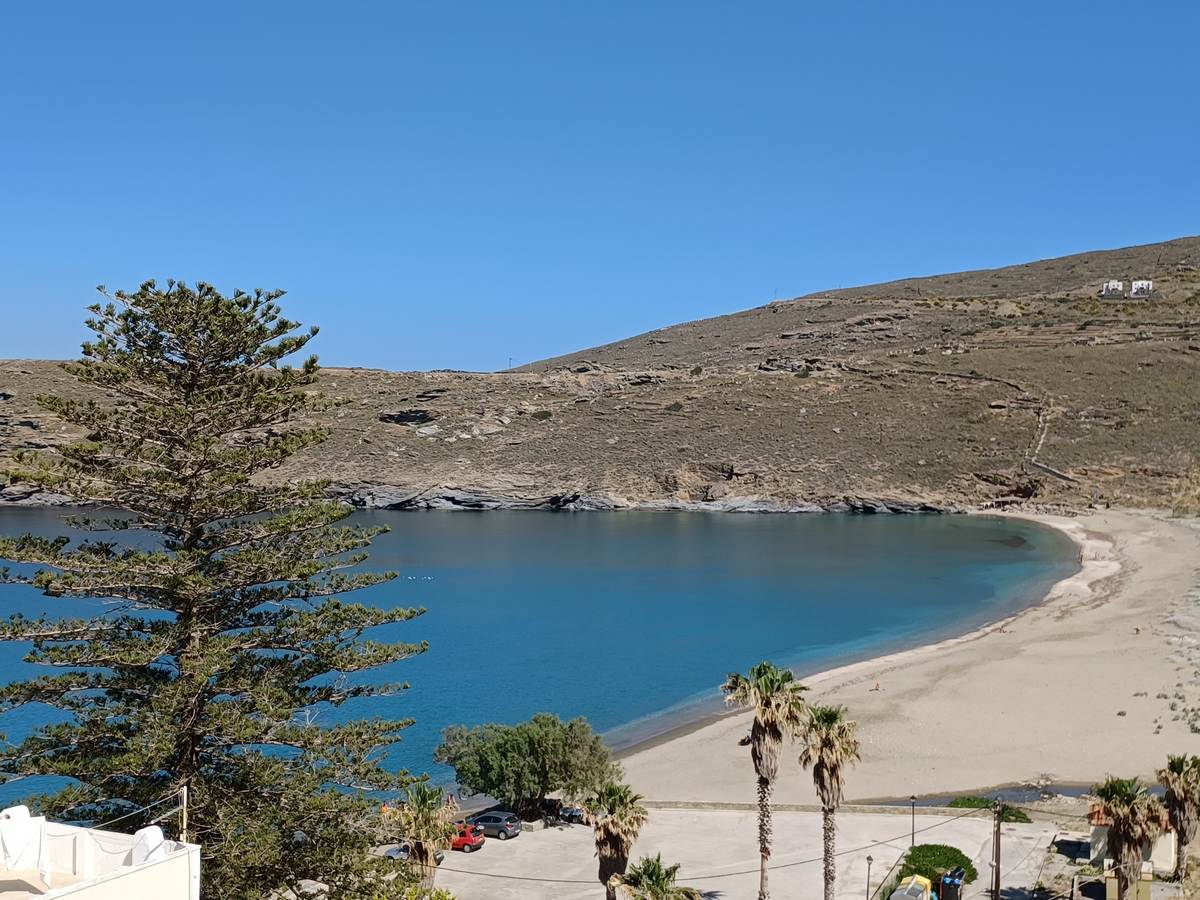
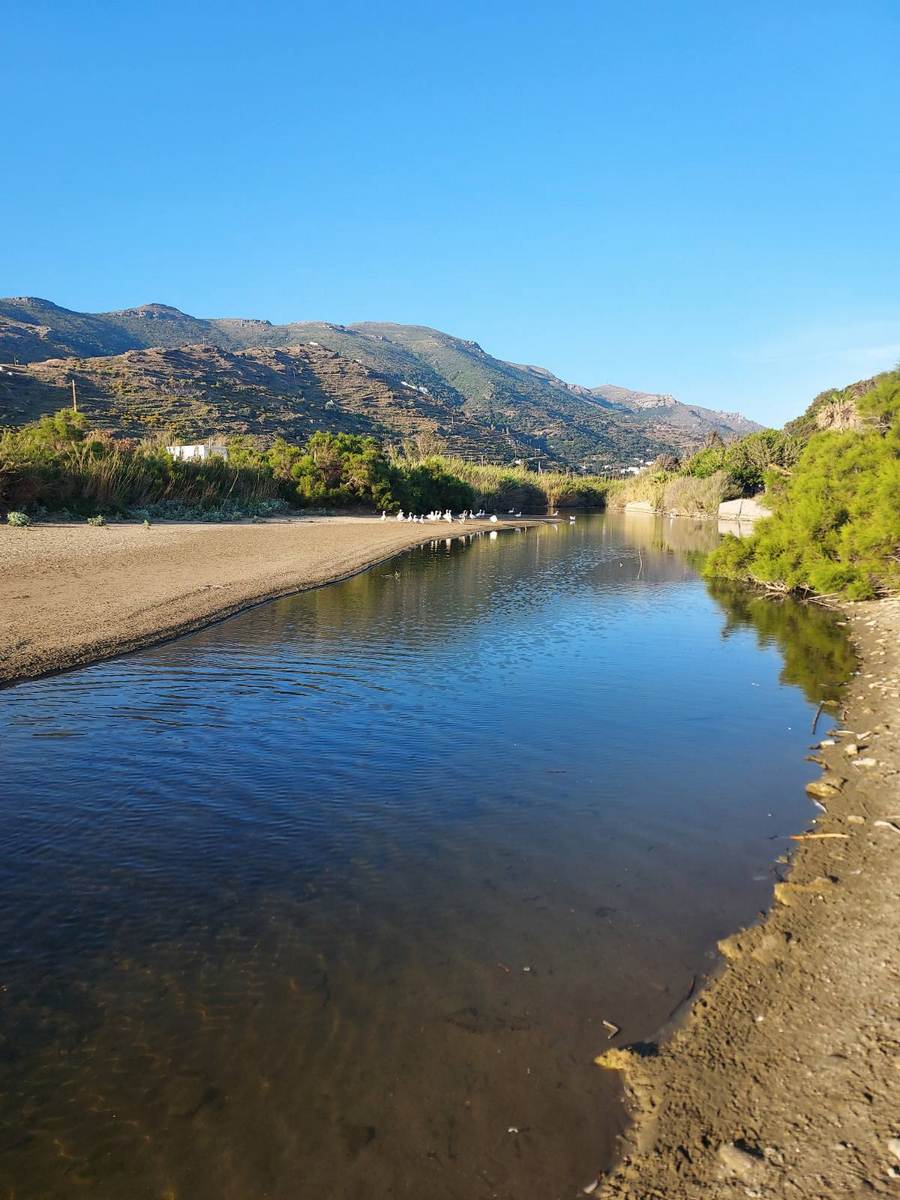
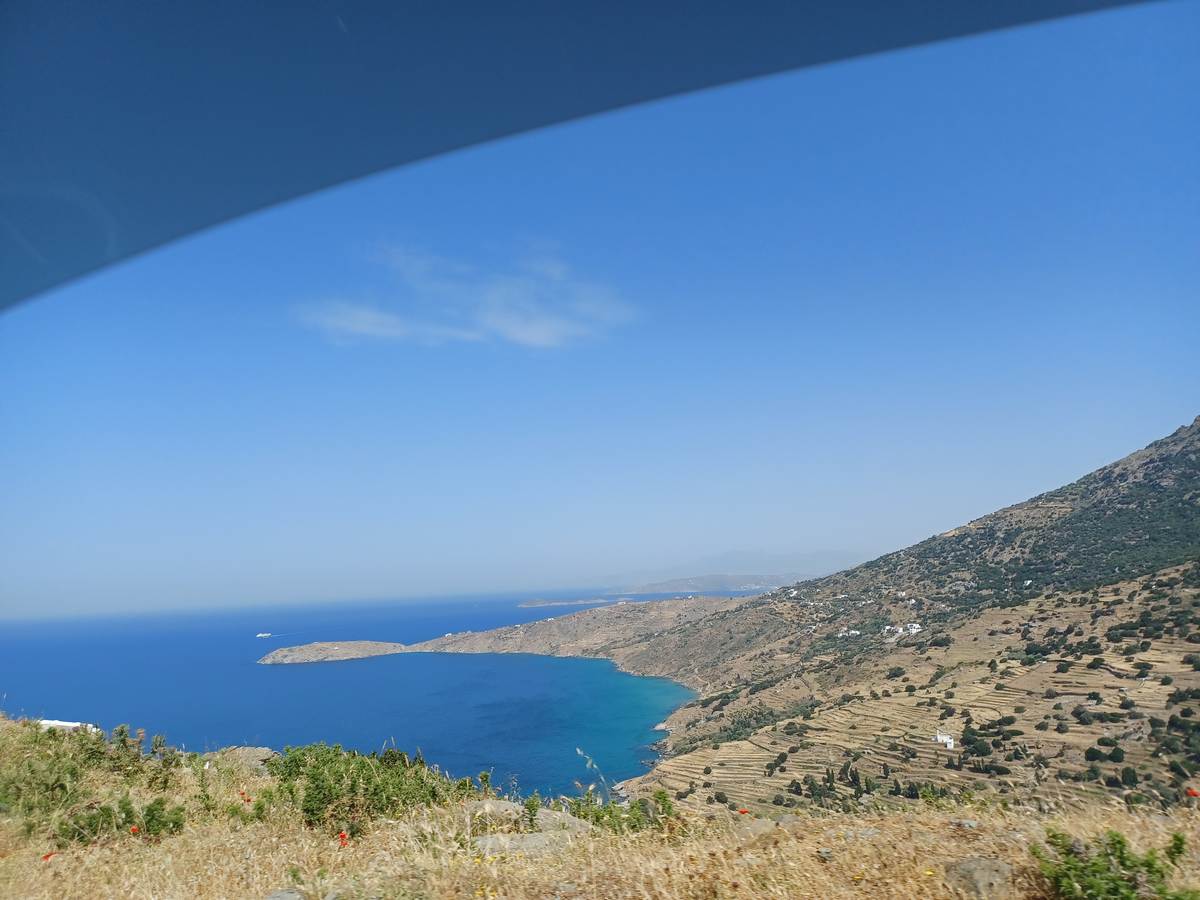
Andros has beaches of exceptional variety and quality distributed along its 176-kilometre coastline, and arriving by yacht allows access to the finest and most remote of them without the road journeys that make several of them difficult to reach by land. Agios Petros, on the northern coast, is a long, dramatic beach of grey sand and powerful surf — a beach for the strong swimmer and the windsurfer, wild and beautiful in a way that is entirely characteristic of Andros’s northern shore. Achla, on the northeastern coast, is accessible only on foot via a long path through a river valley or by sea, and the combination of its remote setting, its river delta, and its clear, calm water makes it one of the most rewarding beach destinations on the island. Vitali, a wide sandy bay on the southwestern coast near Gavrio, is the island’s calmest and most family-friendly beach — shallow, sheltered, and of a remarkable sandy quality with water of great clarity.
The Dove Towers
Scattered across the agricultural landscape of the island’s interior, the ancient dovecotes of Andros — stone towers of considerable height and remarkable geometric beauty, their outer walls decorated with intricate patterns of flat stones arranged in herringbone and diamond formations — are one of the most distinctive and most photographed elements of the island’s traditional landscape. Built by the Venetians and maintained through the centuries as a source of fertiliser and food, these towers now stand as architectural monuments of unusual elegance in the middle of the terraced fields and olive groves, and encountering them in the course of a walk through the island’s interior — suddenly visible above the scrub in their elaborate patterned stone — is one of the small, unexpected pleasures that make exploring Andros on foot so continuously rewarding.
Why Choose Andros
Andros is the island for the traveller whose curiosity extends beyond the beach — who wants the natural beauty and the clear Aegean water but also wants cultural depth, architectural distinction, excellent food, and the particular satisfaction of discovering an island that most of the world has not yet fully found. It is an island of genuine sophistication — not the manufactured sophistication of a resort that has decided to market itself as upscale, but the authentic sophistication of a community with a long tradition of education, civic pride, and engagement with the wider world, expressed in everything from its extraordinary museum to its well-maintained walking paths to the quality of the olive oil pressed from its ancient groves.
For families with varied interests, Andros is close to ideal. The beaches are exceptional in variety — something for every preference, from the wild surf beaches of the north to the calm, shallow bays of the south. The walking is accessible and rewarding at every level of experience. The museum is genuinely engaging for older children and adults alike. And the island’s size and infrastructure make it comfortable and well-served without ever feeling overrun or over-developed. The meltemi wind, strong and reliable through the summer months, makes Andros one of the finest windsurfing destinations in the Cyclades — a fact well known to the windsurfing community and an additional draw for active families and groups.
What ultimately makes Andros irreplaceable in a Cyclades itinerary is the contrast it provides — not just with the more famous and more visited islands of the archipelago, but with the very idea of what a Cycladic island is supposed to be. Where the classic Cyclades image is one of whitewashed stone and pure, spare light, Andros offers green valleys and running water and neoclassical mansions and one of the finest contemporary art museums in Greece. It is a Cycladic island that has arrived at its own entirely distinct identity, forged by geography and maritime history and the particular pride of a community that has always looked outward at the world and brought the best of what it found back home. To sail into Andros Chora and spend two or three days in its company is to add a dimension to your understanding of the Cyclades — and of Greece — that no other island in the group quite provides.