Why Amorgos
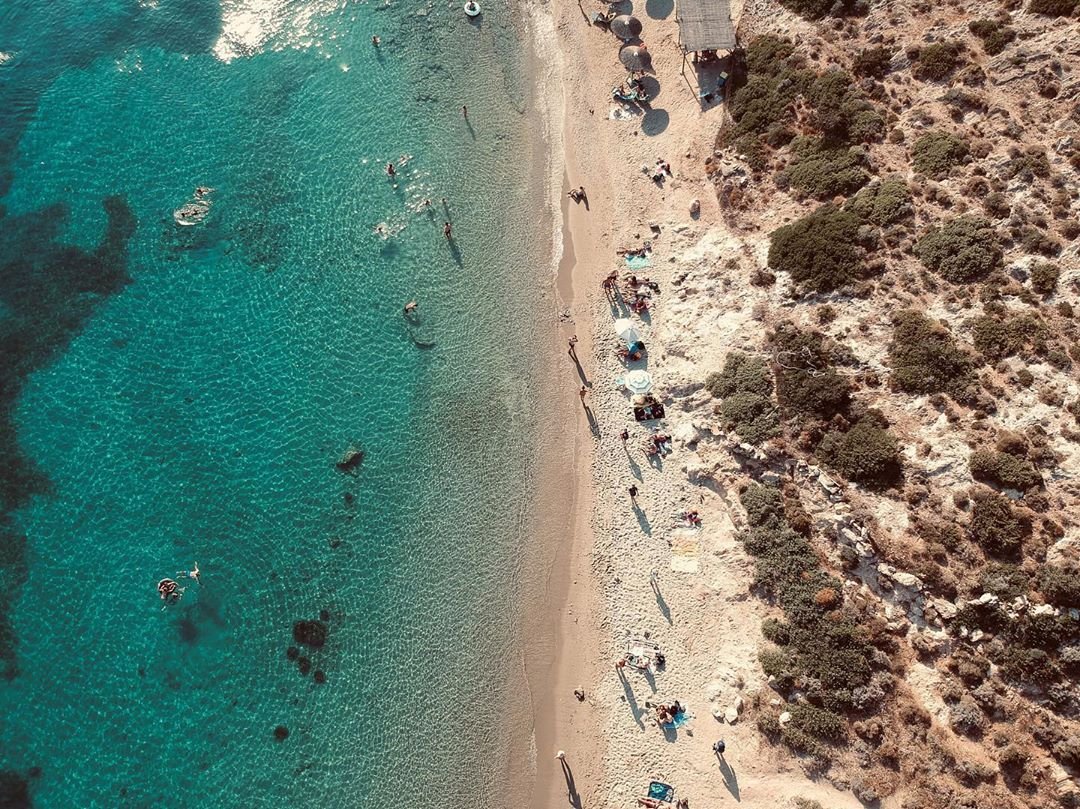
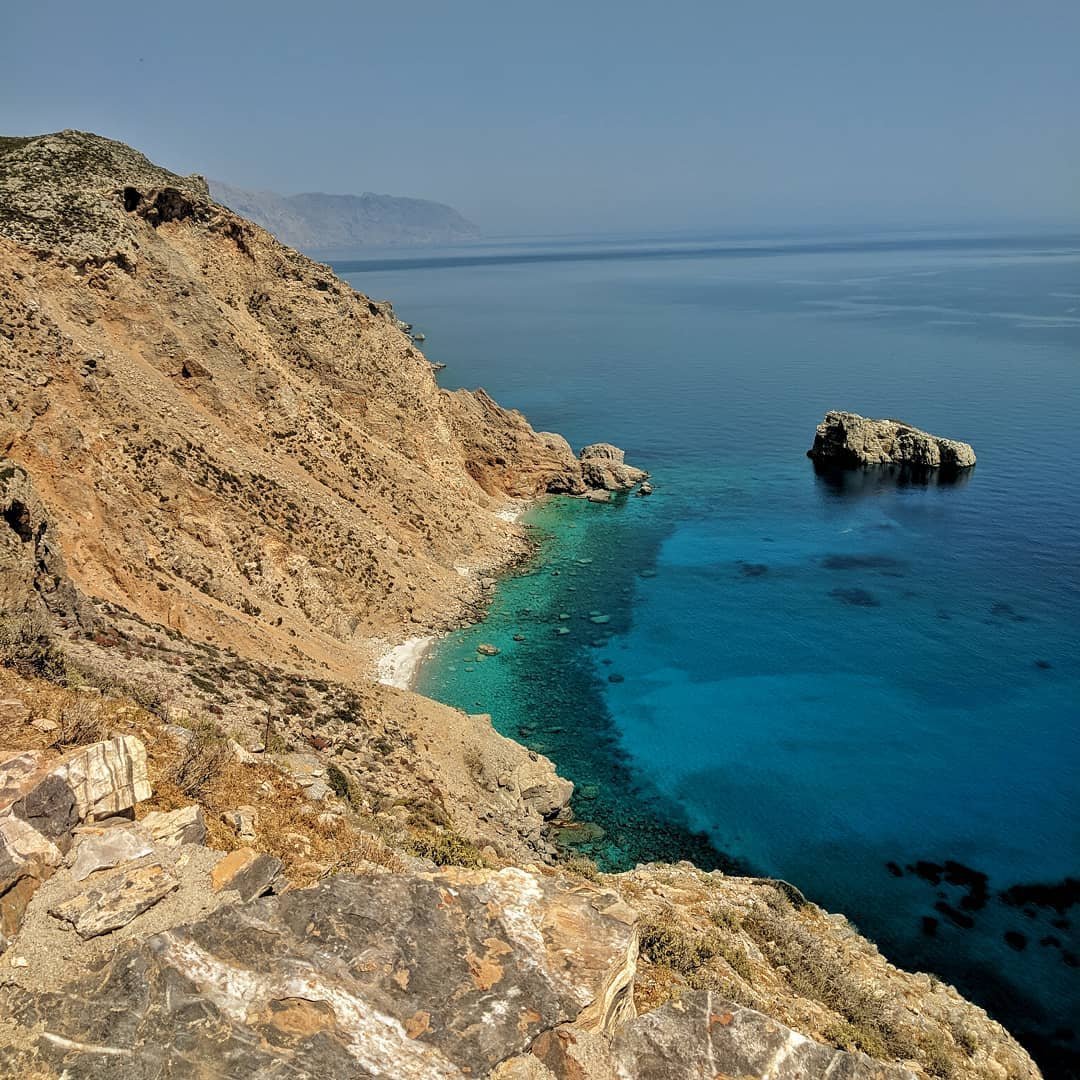
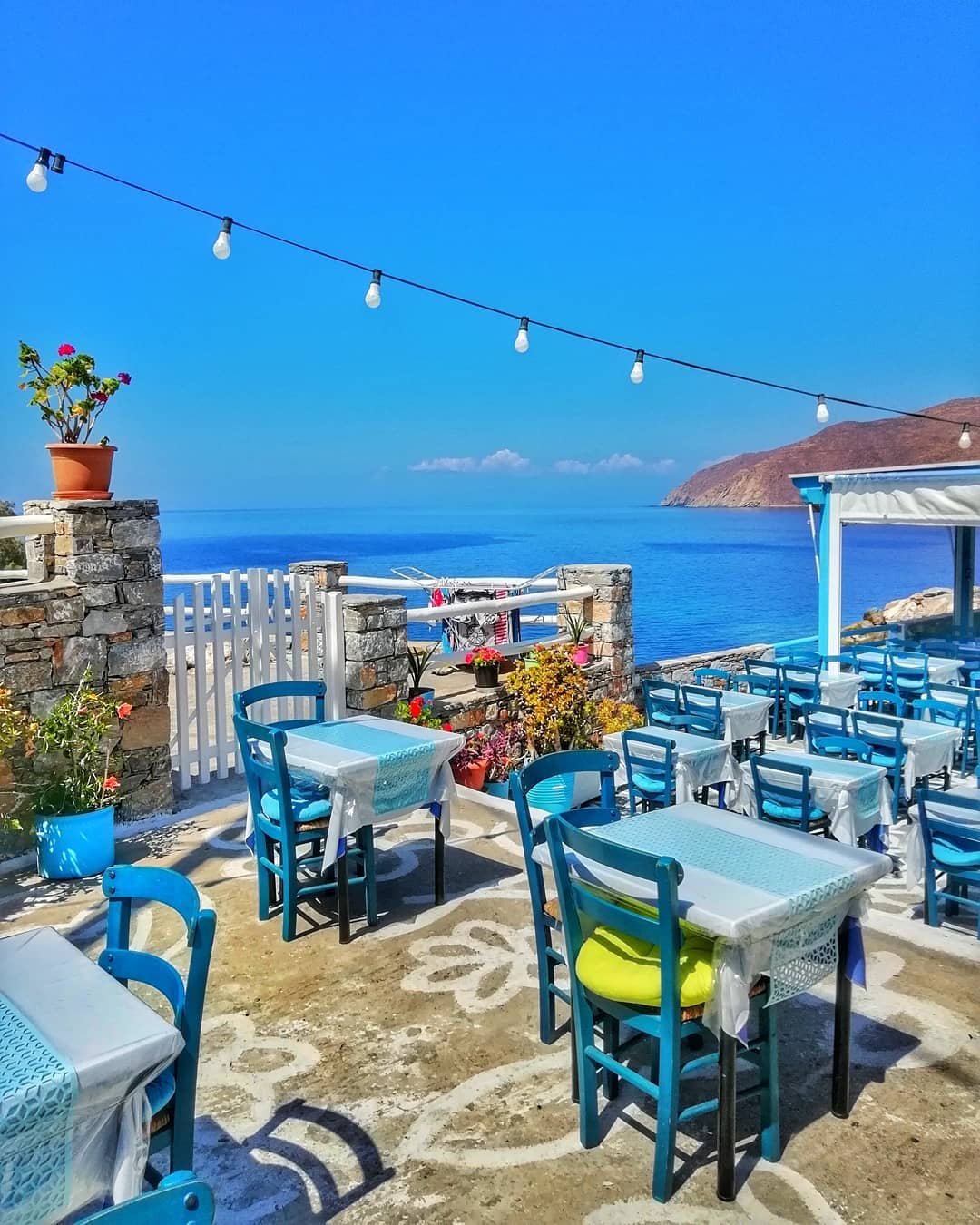
There are islands in the Aegean that demand something of you — that are not content to simply receive your admiration from a comfortable distance but insist, quietly and with complete authority, that you come closer, stay longer, and give them your full attention. Amorgos is this kind of island. The most easterly of the Cyclades proper, stretching its long, narrow, mountainous body across the sea at the point where the Cyclades give way to the Dodecanese, Amorgos is an island of dramatic, almost severe physical beauty — steep limestone cliffs dropping directly into the deepest and most intensely blue water in the Aegean, a mountainous spine rising to over 800 metres and running the full length of the island in a ridge of bare, sun-bleached rock, and a coastline of wild, largely inaccessible grandeur that is among the most dramatic in the entire Greek island world. It is an island that has inspired artists, writers, and filmmakers — most famously Luc Besson, who chose Amorgos as the setting for his 1988 film The Big Blue, drawn by the extraordinary clarity and depth of the water surrounding it — and that has built, over the decades since, a devoted following among those who understand that the Aegean’s most profound beauties are rarely its most accessible ones.
The island is long and thin — nearly 33 kilometres from end to end but barely 6 kilometres across at its widest point — and this elongated shape, combined with the great height of its central ridge, creates a landscape of exceptional drama and exceptional variety. The northern part of the island, around the main port of Katapola, is relatively green and gentle, its valleys cultivated and its hillsides dotted with traditional villages of great beauty. The central section, dominated by the island’s capital Chora and the extraordinary Monastery of Hozoviotissa clinging to the vertical cliff face below it, is the island’s spiritual and architectural heart — a concentration of ancient, medieval, and Byzantine heritage in a landscape of such wild beauty that it seems to exist outside ordinary time. The southern part of the island, beyond the village of Aegiali, becomes progressively wilder and more remote, its cliffs higher, its coves more difficult to reach, and its quality of solitude more complete — a landscape that rewards the sailor who ventures into it with some of the most dramatic and most completely unspoiled coastal scenery in the Cyclades.
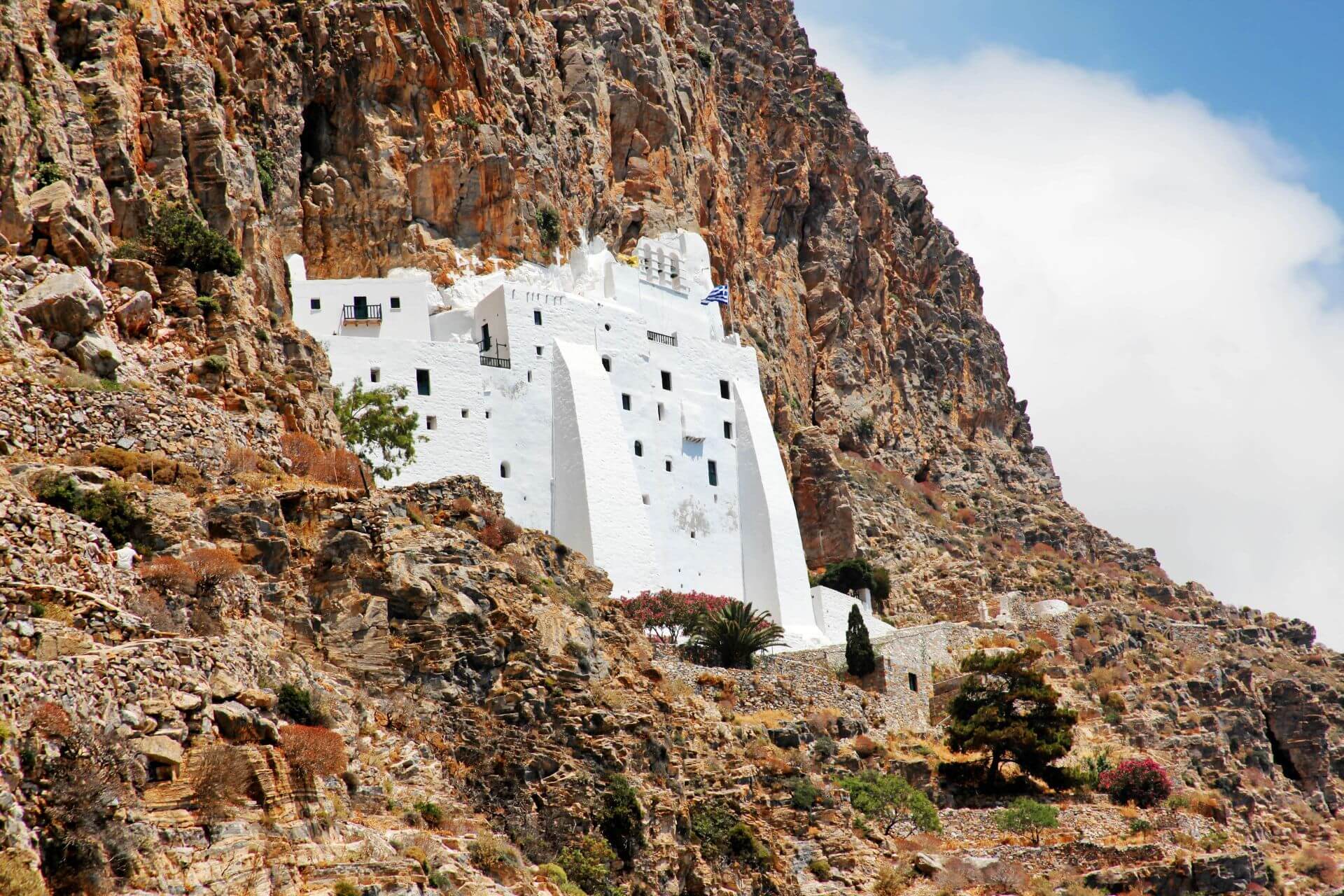
What gives Amorgos its particular and unforgettable atmosphere is the combination of this physical drama with a quality of spiritual depth that is rare even in an island world rich in sacred places. The Monastery of Hozoviotissa, built into the vertical cliff face of the island’s eastern coast in the 11th century, is one of the most extraordinary monastic buildings in Christendom — a white structure of eight storeys clinging to a near-vertical wall of orange limestone 300 metres above the sea, its interior containing one of the most venerated icons of the Virgin in the Orthodox world and a community of monks who continue to inhabit it and to extend to visiting pilgrims and curious travellers alike a welcome of genuine warmth and genuine spiritual depth. To approach Hozoviotissa from the sea, watching it emerge gradually from the cliff face as your vessel rounds the headland, is one of the most powerful and most completely memorable visual experiences available to the sailor anywhere in the Aegean.
What to Do and What to See
Amorgos rewards the visitor who brings to it the combination of physical energy and contemplative patience that its character requires — who is willing to walk its steep paths and climb to its hilltop villages, to swim in its deep clear water and sit in silence before its ancient monastery, and to allow the island’s particular quality of wildness and beauty to work on them at the pace the island itself sets, which is unhurried, deliberate, and entirely its own.
The Monastery of Hozoviotissa
The Monastery of Hozoviotissa is the single most extraordinary building on Amorgos and one of the most extraordinary monastic structures in the entire Orthodox world. Built in 1088 by order of the Byzantine Emperor Alexios I Komnenos into a vertical crack in the great orange cliff of the island’s eastern coast, the monastery rises eight storeys above the sea in a structure barely 5 metres wide at its widest point, its white walls flush with the cliff face and its windows looking out over a sheer drop of 300 metres to the sea below. The interior is a sequence of small, dim, candlelit rooms carved into the living rock, their walls covered in icons and votive offerings, their atmosphere of ancient sanctity and genuine religious feeling entirely palpable and entirely moving. The icon of the Virgin of Hozoviotissa, brought to the island according to tradition from Palestine during the iconoclast period to protect it from destruction, is venerated continuously and with great devotion. The monks who inhabit the monastery receive visitors each day with the traditional hospitality of Greek Orthodox monasticism — a small glass of the local raki, a piece of loukoumi, and a welcome that is both entirely genuine and entirely characteristic of a community that has lived in this extraordinary place for nearly a thousand years.
Chora — The Island Capital
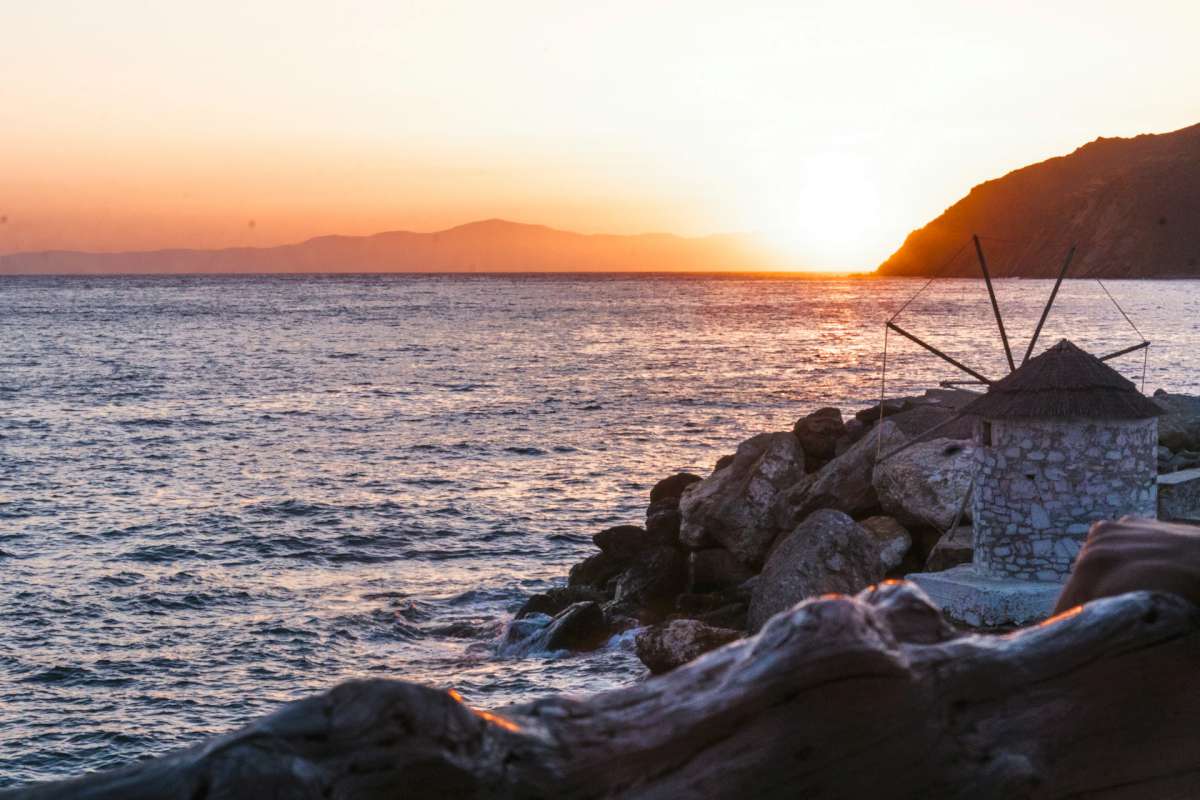
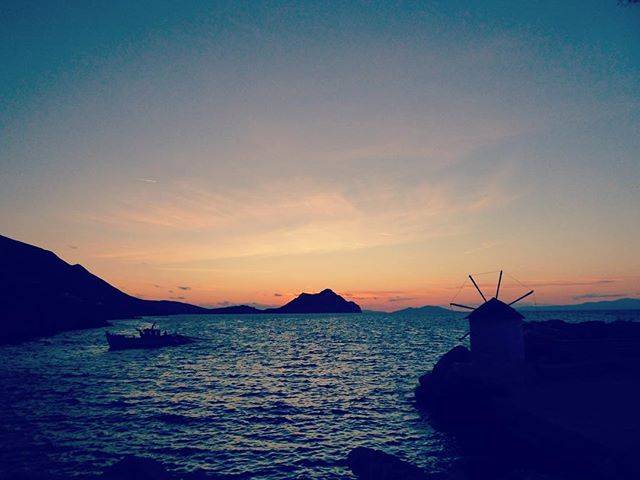
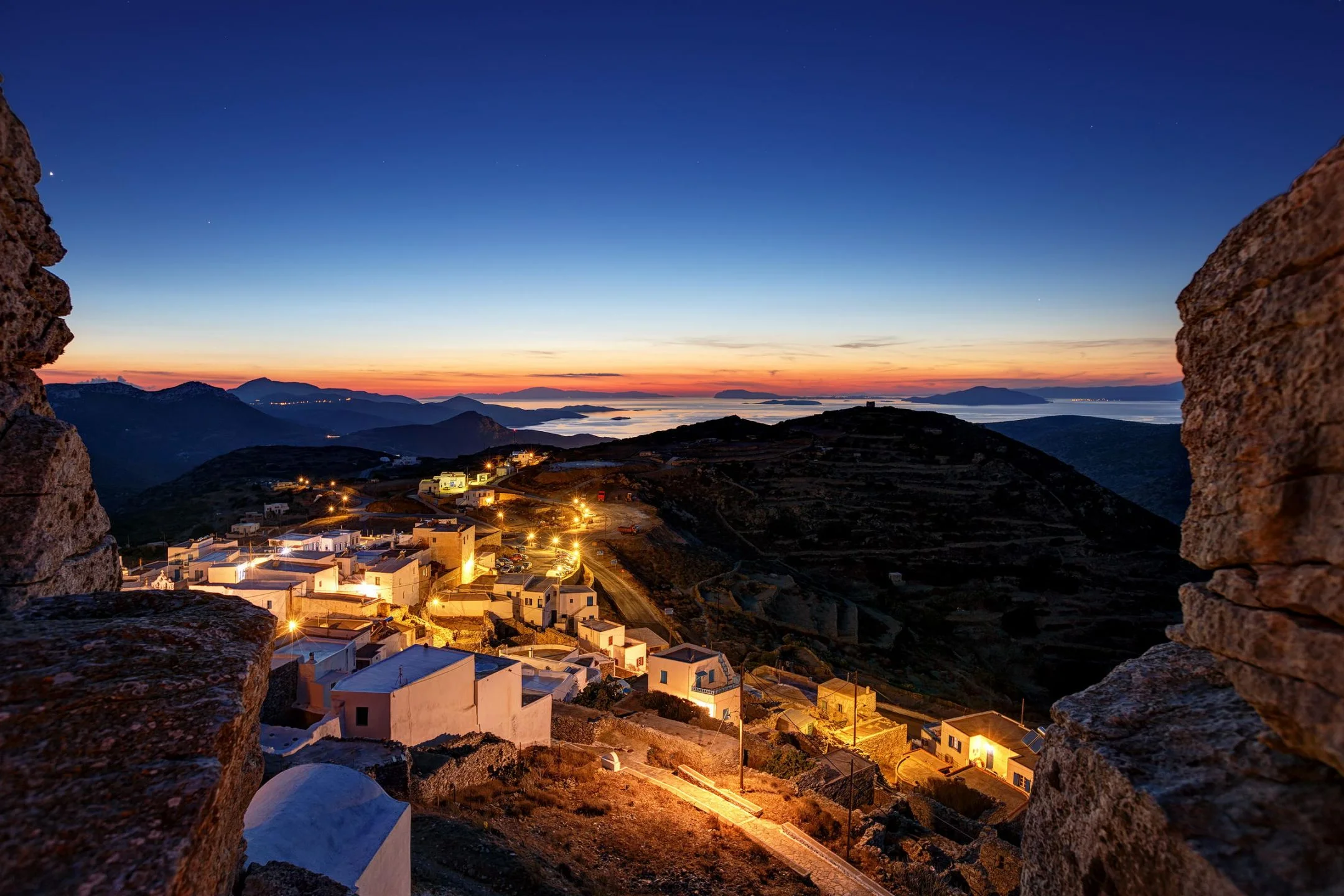
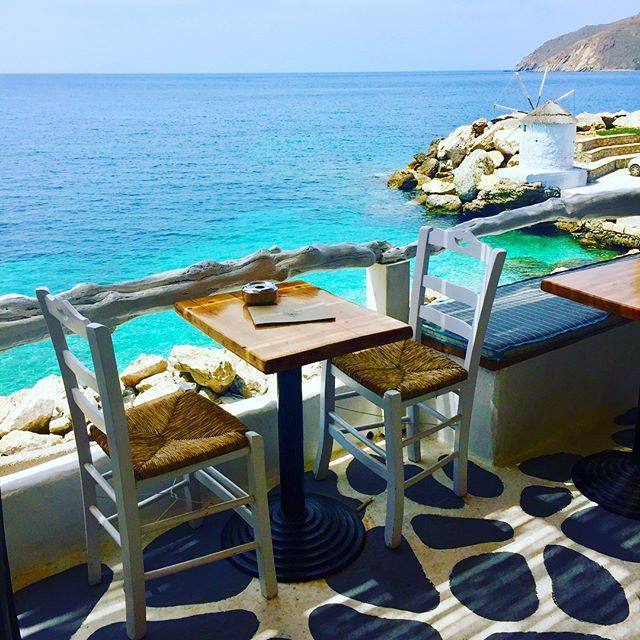
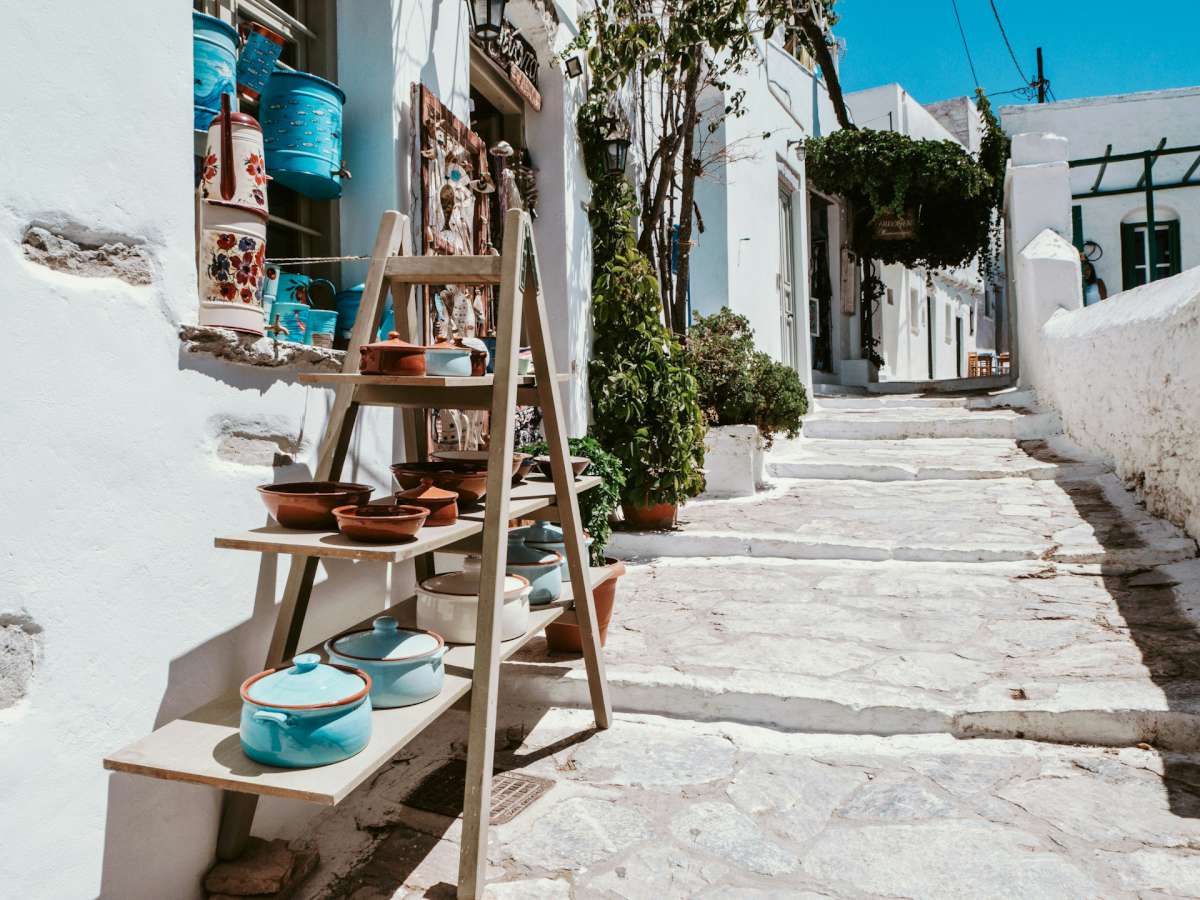
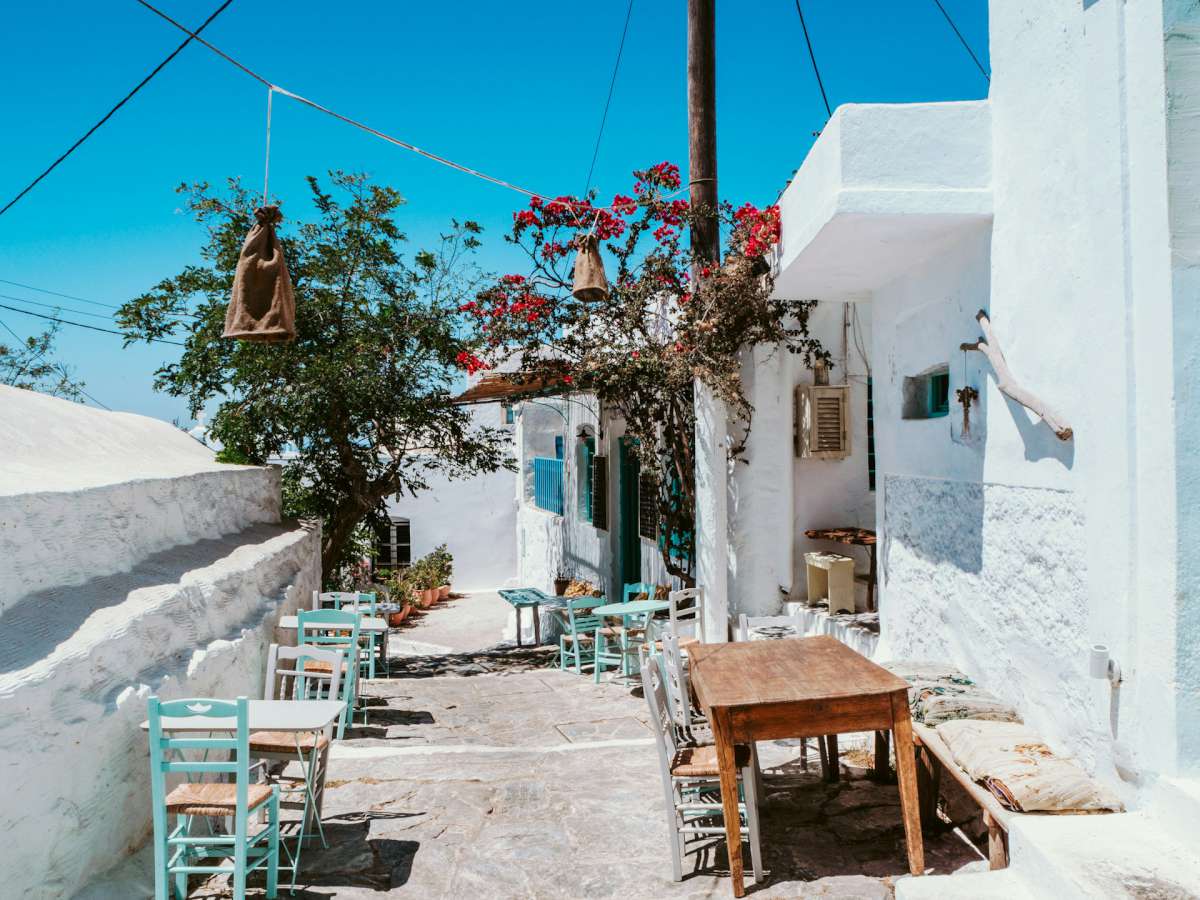
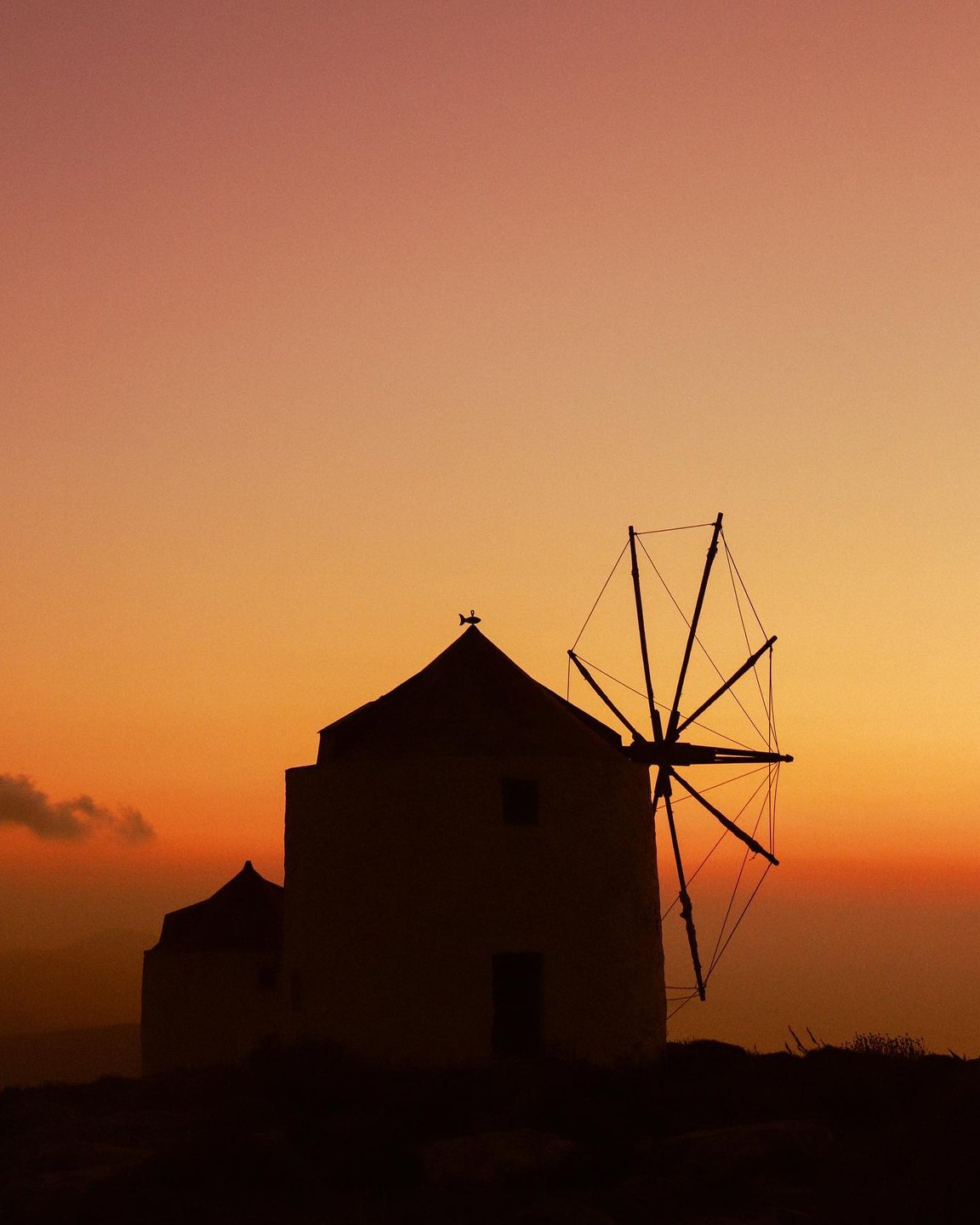
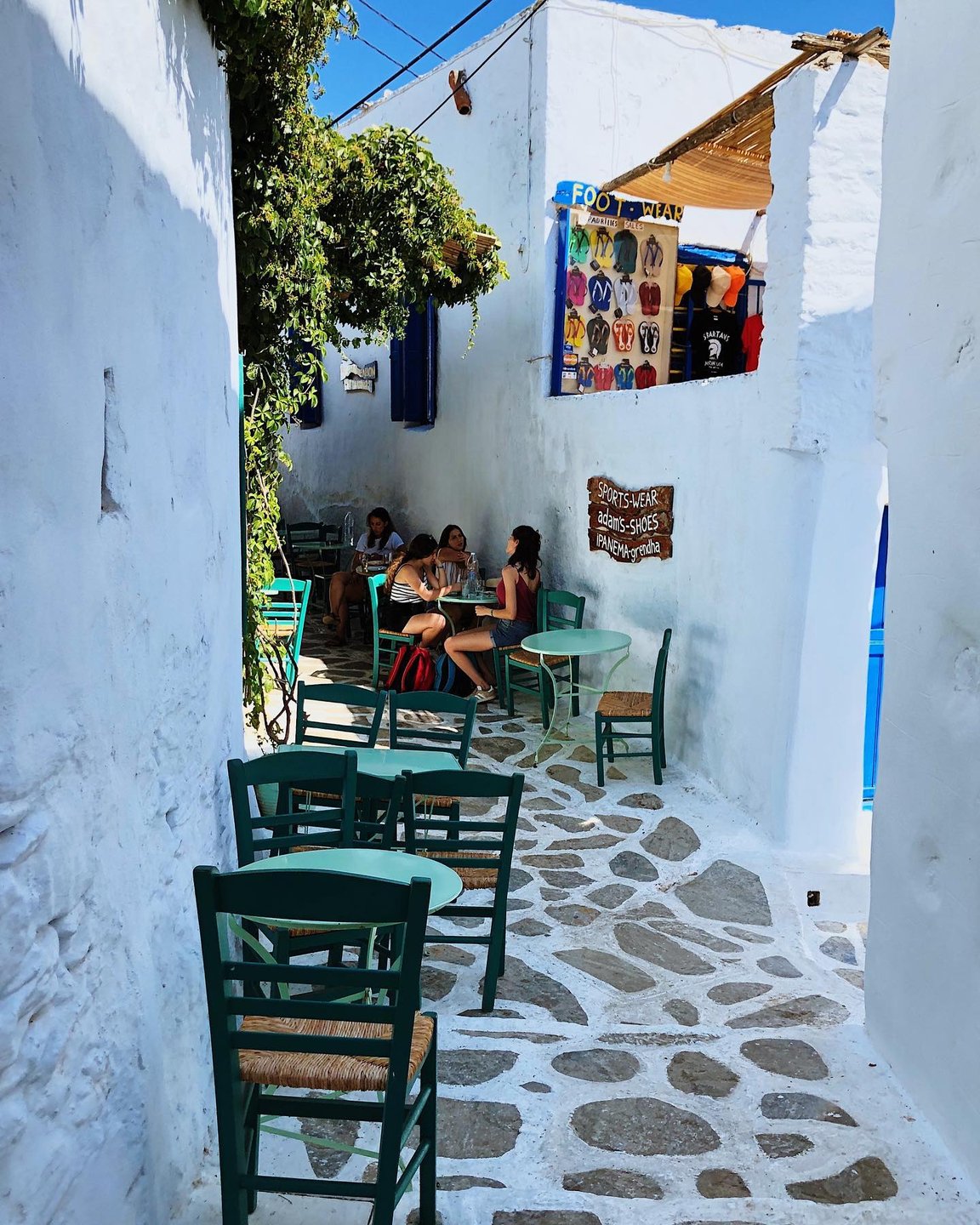
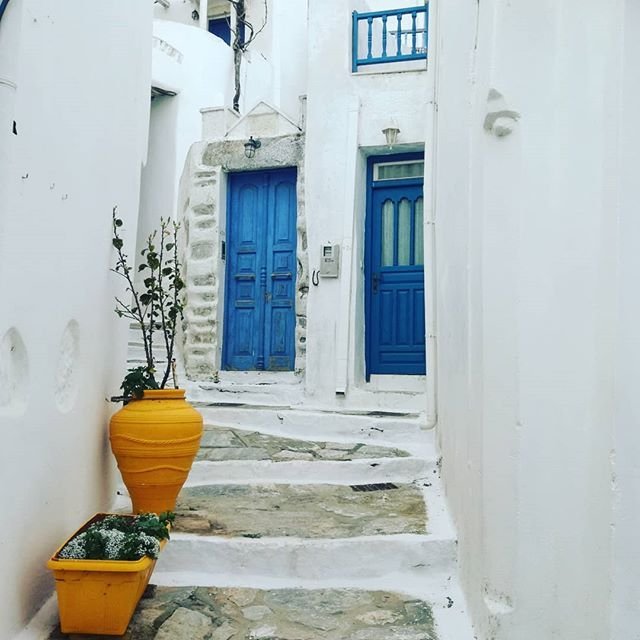
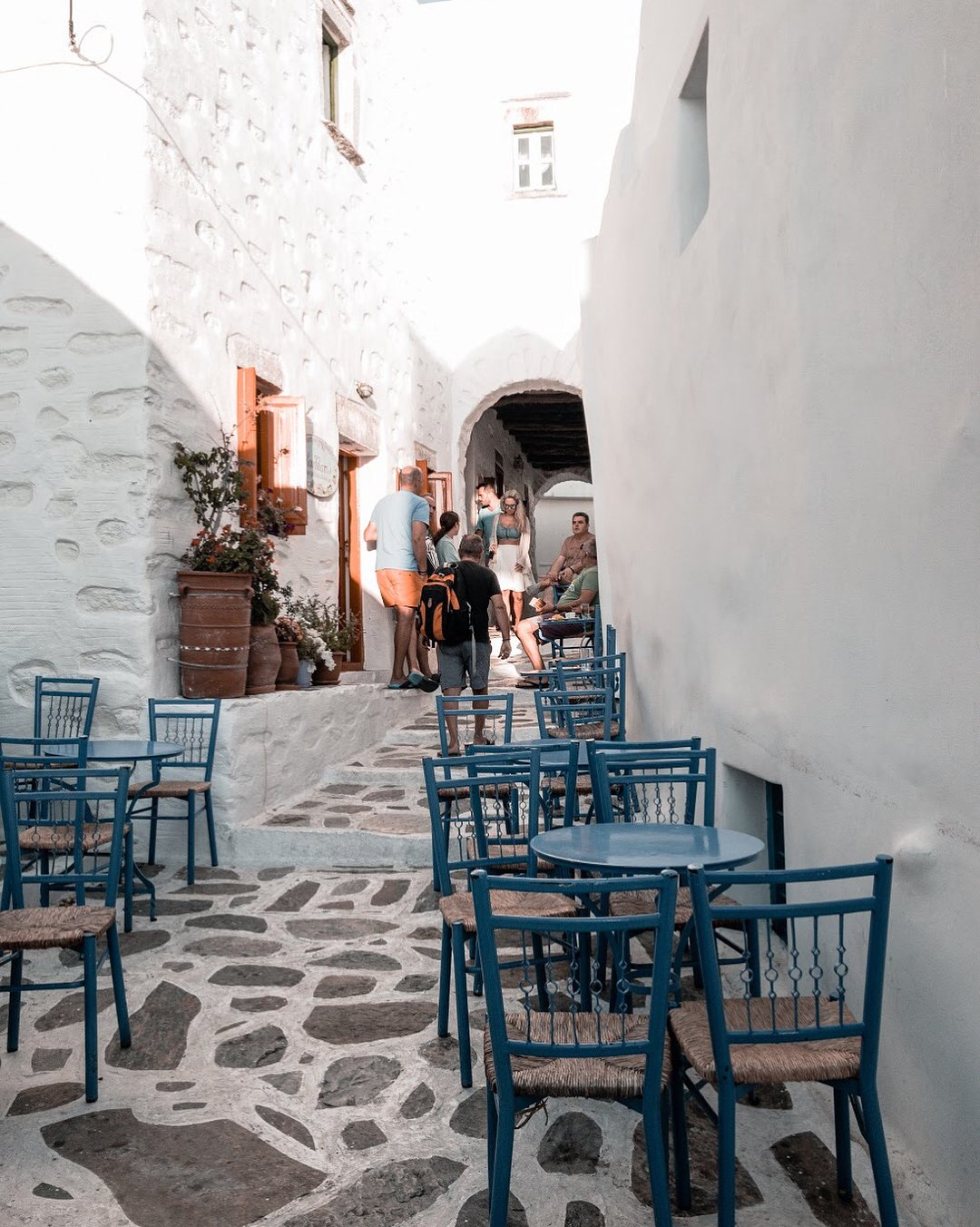
Perched on the ridge above Katapola at a height of 380 metres, the Chora of Amorgos is one of the finest and most completely authentic island capitals in the Cyclades — a dense, whitewashed village of medieval lanes and Venetian tower houses, its windmills standing on the ridge above in a row that is visible for miles from the sea, its small churches and cobbled squares and flowering balconies composing a townscape of extraordinary beauty and extraordinary integrity. The Venetian castle above the village, built in the 13th century and preserving its original walls and towers in good condition, offers views across the full length of the island and out to the surrounding sea that are among the finest from any hilltop in the Cyclades. The village’s small Archaeological Museum contains finds from the ancient city of Minoa and from the broader island, including Early Cycladic material of considerable quality. And the experience of walking Chora’s lanes at sunset — when the whitewashed walls catch the last light in shades of gold and rose and the windmills turn slowly against the darkening sky — is one of the most perfectly composed and most completely beautiful island evenings in the Aegean.
Katapola and the Ancient City of Minoa
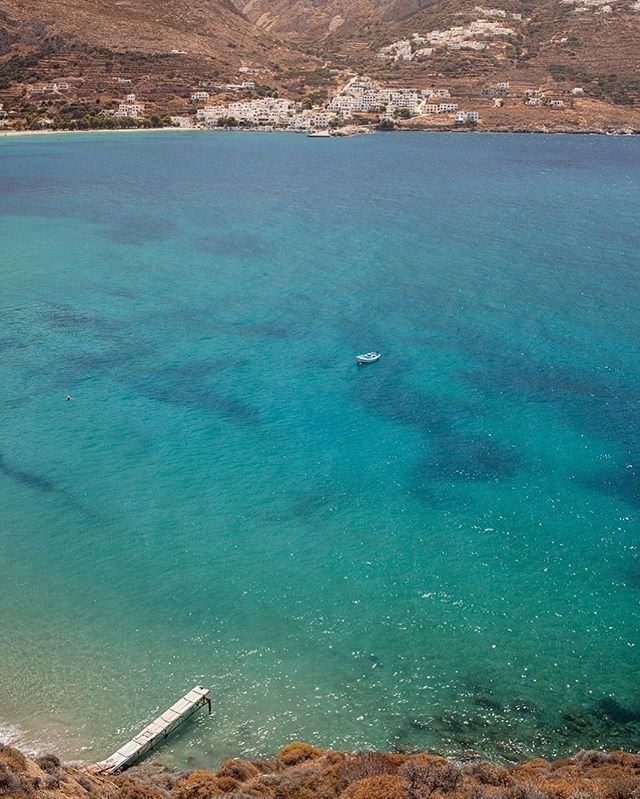
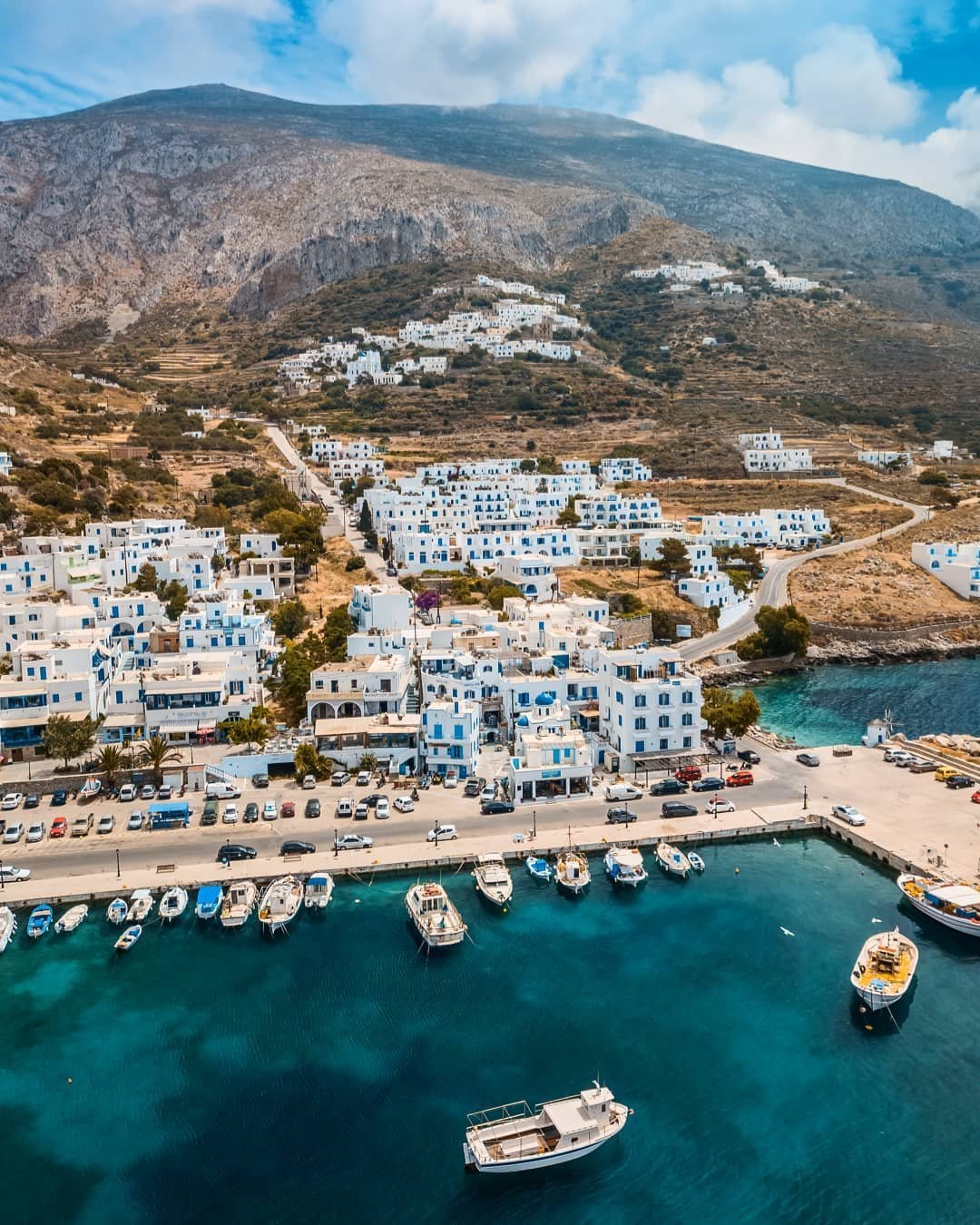
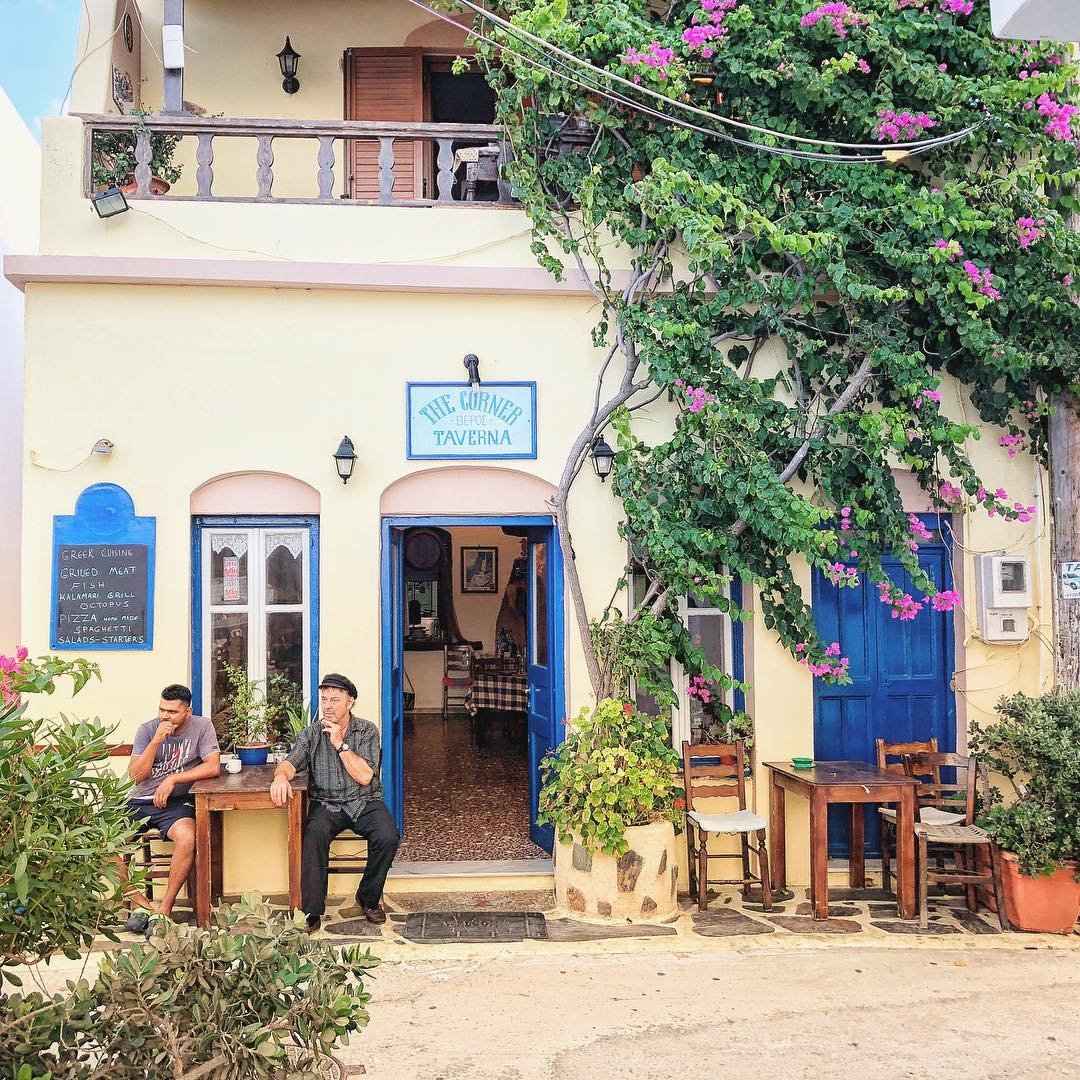
The main harbour of Amorgos, Katapola is a pleasant, relatively calm port village in a wide bay on the island’s western coast, its harbour front lined with tavernas and small shops and its waterfront animated by the daily rhythms of the island’s ferry connections and its small but genuine working fishing fleet. Above the village, on the hill of Minoa, the remains of the ancient city of Amorgos — settled from the Geometric period and flourishing through the Classical and Hellenistic eras — include the foundations of a gymnasium, a temple, and substantial sections of the ancient city walls, their stones pale against the blue of the bay below in a setting of great natural beauty. The ancient cemetery of Katapola has yielded finds of considerable quality, many of them now in the Archaeological Museum of Chora. The bay of Katapola is one of the island’s more sheltered anchorages, and the combination of the harbour village, the ancient site above, and the exceptional swimming in the clear water of the bay makes it one of the most complete and most rewarding overnight stops on any Amorgos itinerary.
Aegiali and the Northern Bay
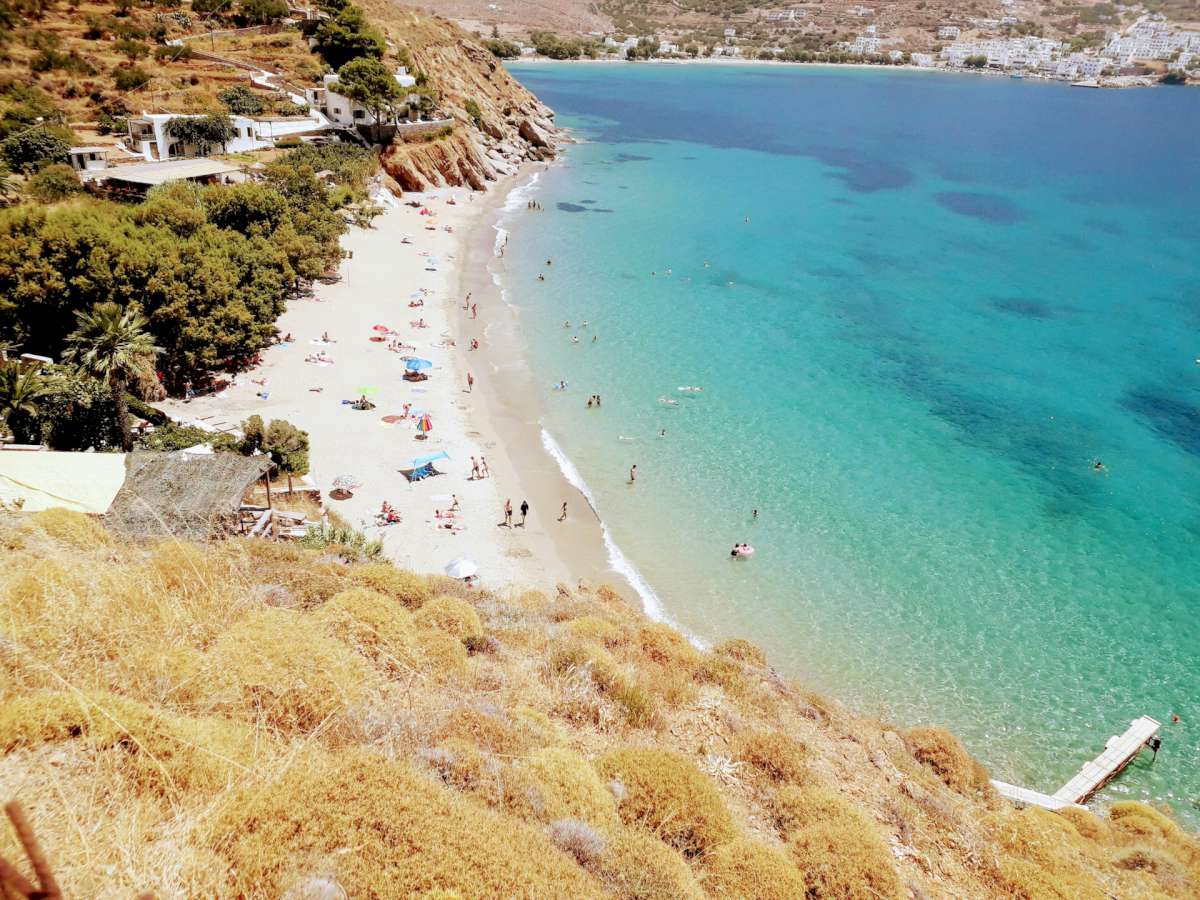
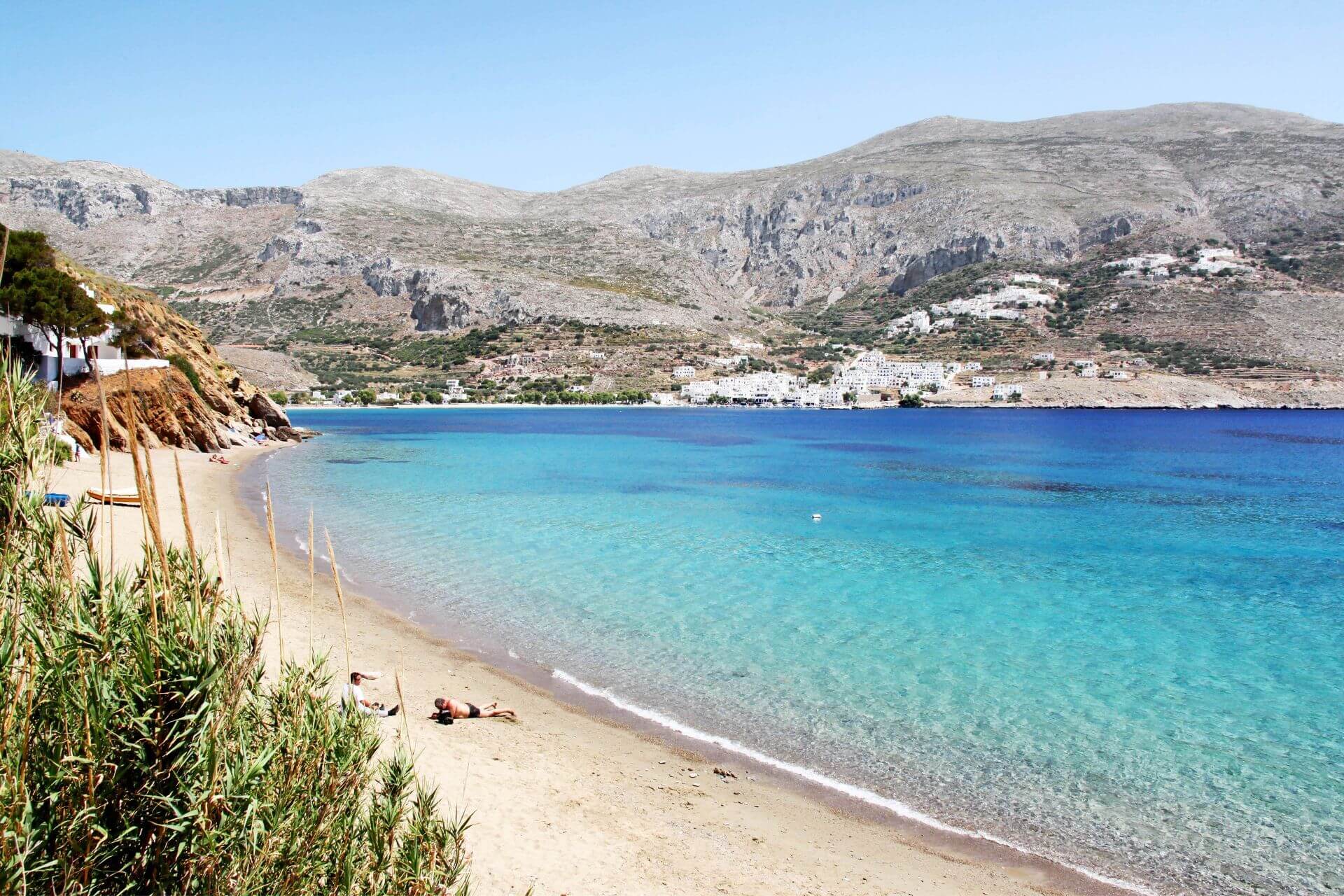
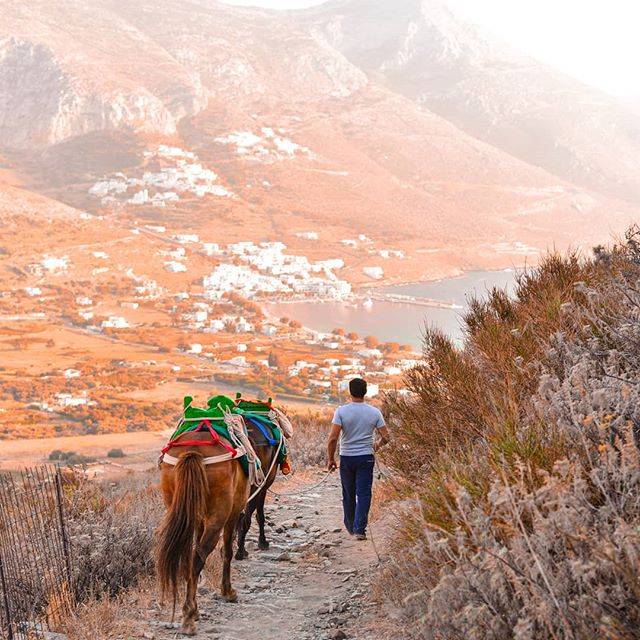
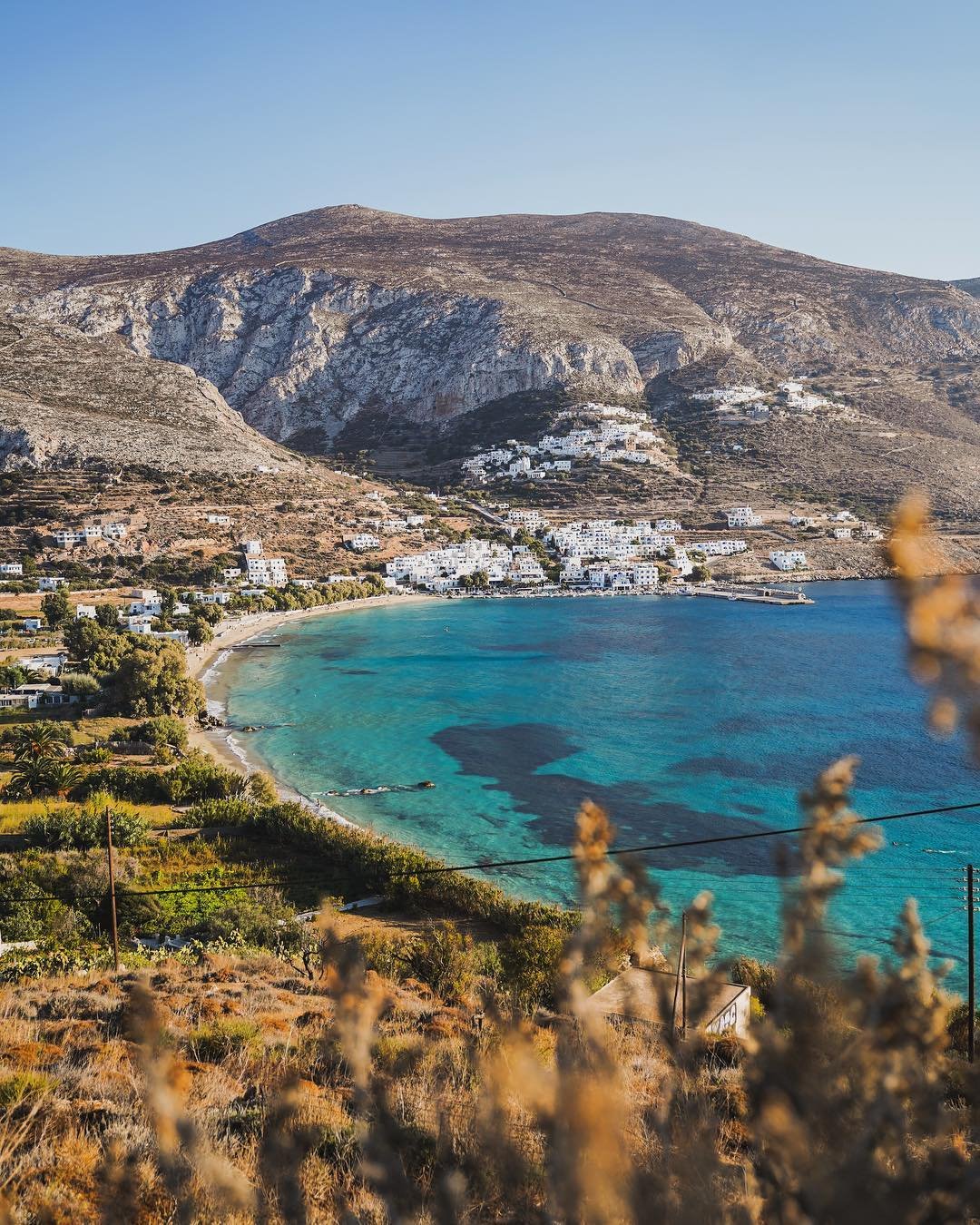
At the northeastern end of Amorgos, the bay of Aegiali is the island’s second harbour and its second village — a wide, sandy-beached bay of considerable beauty set between steep mountain walls, its small port village more relaxed and more resort-oriented than Katapola, its long sandy beach one of the finest on the island. The villages above Aegiali — Tholaria and Langada, perched on the hillsides in positions of great drama and great beauty — are connected to the harbour by old paths of considerable quality and offer, from their terraces and their small kafeneions, views across the bay and out to the open sea that are among the most beautiful on the island. The walking between Aegiali, Tholaria, and Langada is outstanding — through a landscape of wild thyme and asphodel, past ancient stone walls and abandoned terraces, with the great cliff of the island’s eastern coast always visible to the south and the open sea always visible to the north.
The Diving and the Deep Blue
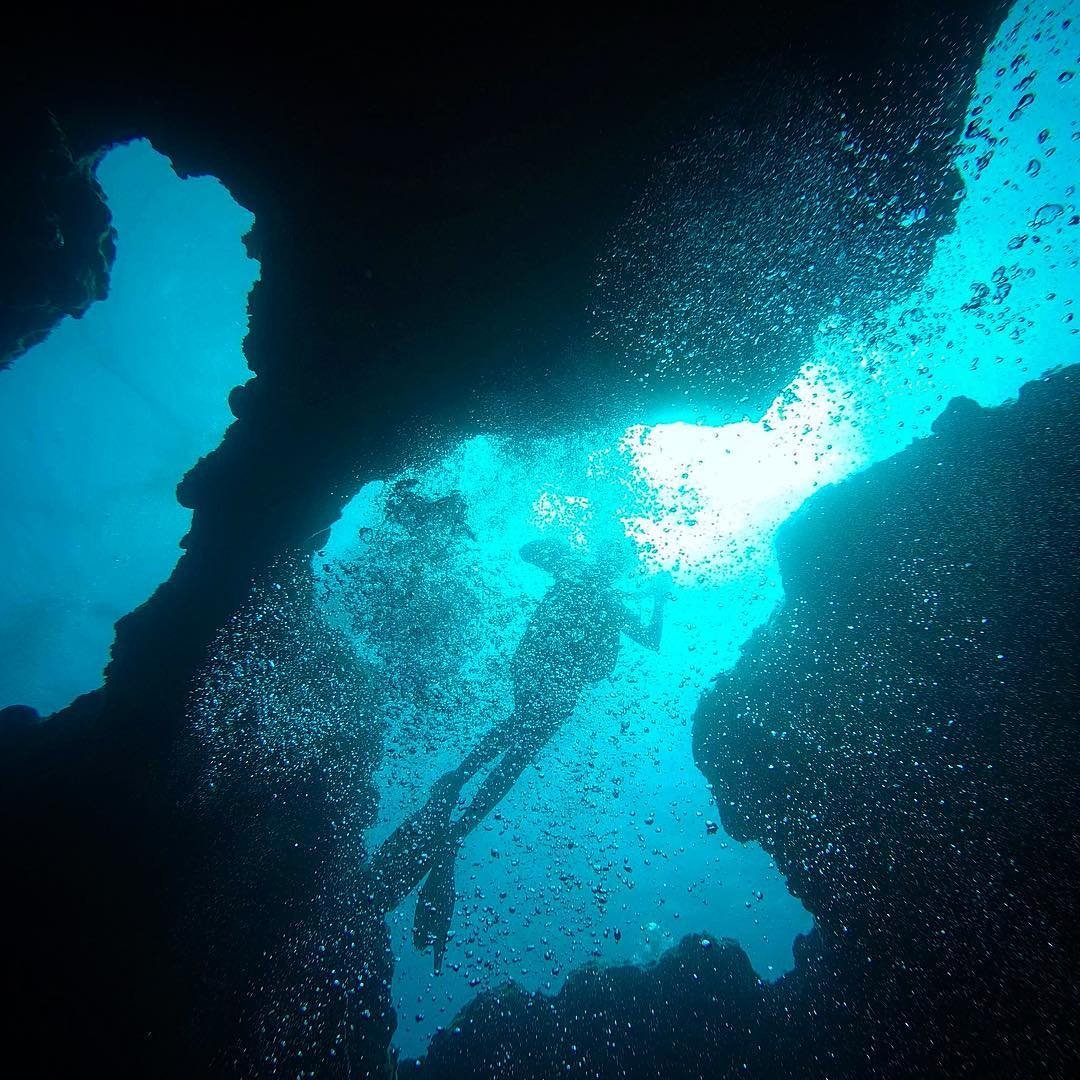
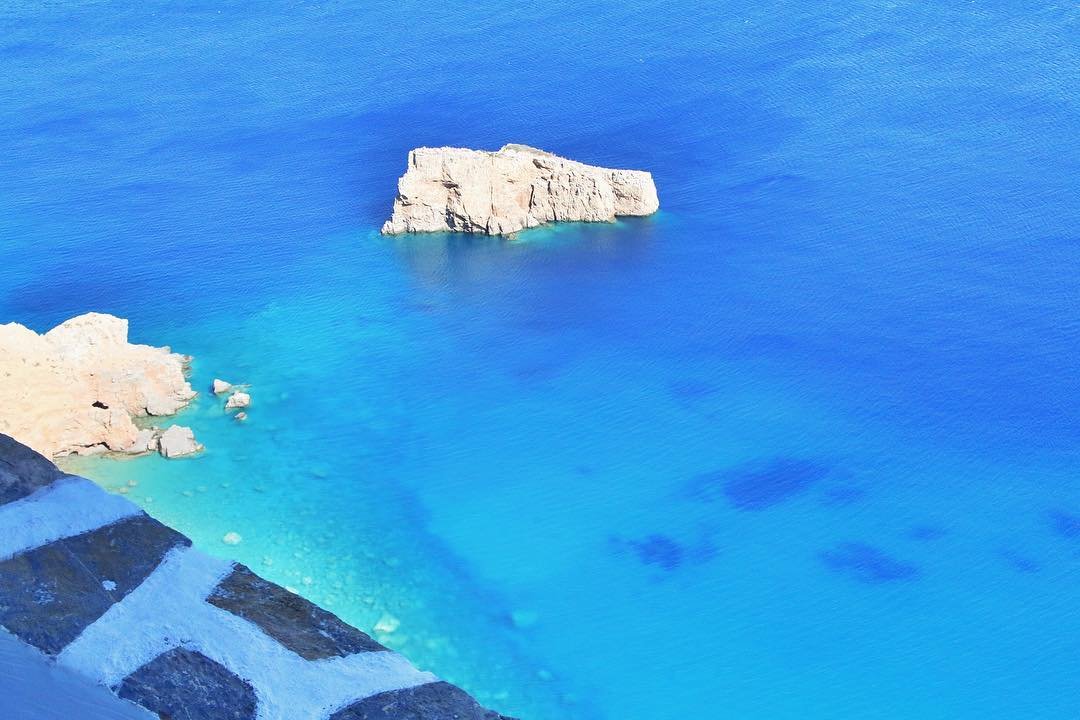
The water surrounding Amorgos is among the deepest, clearest, and most biologically rich in the Cyclades — a consequence of the island’s exposed position at the eastern edge of the archipelago and the great depth of the sea channel between it and the neighbouring islands. The visibility here regularly exceeds 30 metres, the underwater landscape of cliffs, caves, and rock formations mirrors the drama of the island above, and the marine life — grouper, moray eel, octopus, and the occasional large pelagic fish — is of exceptional quality. The waters around Amorgos that inspired Luc Besson’s The Big Blue are, for those who dive or snorkel in them, exactly as extraordinary as the film suggested — deep, clear, wildly beautiful, and filled with the particular quality of Aegean underwater light that has no equivalent anywhere else in the Mediterranean.
Why Choose Amorgos
Amorgos is the island for the traveller who wants the Cyclades at their most elemental — stripped of comfort and convenience and the softening influence of mass tourism, reduced to the essential combination of sea, rock, light, and the deep human history that these islands carry. It is for those who find that beauty is more powerful when it is demanding, that the views earned by a steep climb are finer than those provided by a cable car, and that the silence of a wild and largely uninhabited coastline is one of the most restorative and most completely necessary things that travel can offer. It is for hikers, divers, sailors, and all those for whom the Greek islands are not a backdrop for leisure but an environment to be engaged with seriously and with full attention.
For sailing itineraries in the eastern Cyclades and Small Cyclades, Amorgos is the natural eastern anchor — the dramatic final destination of a passage through the Small Cyclades from Naxos, or the beginning point of an eastbound passage toward the Dodecanese. Its two harbours, Katapola and Aegiali, provide good shelter on opposite sides of the island and allow the visiting sailor to experience two entirely different aspects of the island’s character in a single stay. The passages between Amorgos and its neighbours — the Small Cyclades to the west, Astypalaia to the southeast — are among the most dramatic and most completely beautiful open-water passages in the Cyclades, offering in clear conditions a quality of blue-water sailing and a quality of coastal scenery that represent, for many sailors who have completed them, some of the finest hours ever spent at sea.
What Amorgos ultimately gives the traveller who comes to it with the patience and the physical willingness it requires is an experience of the Greek island world at its most ancient, most elemental, and most profound. The monastery in the cliff, the windmills on the ridge, the deep blue water below the great eastern cliffs, the silence of Chora at midnight under a sky full of stars — these things belong to a version of Greece that is not performed for visitors but simply exists, as it has always existed, in one of the most beautiful and most completely itself places in the Aegean. To have been to Amorgos is to carry something with you that does not diminish with time, and to understand, more clearly than before, what the Greek islands are ultimately about.