Why Alonissos
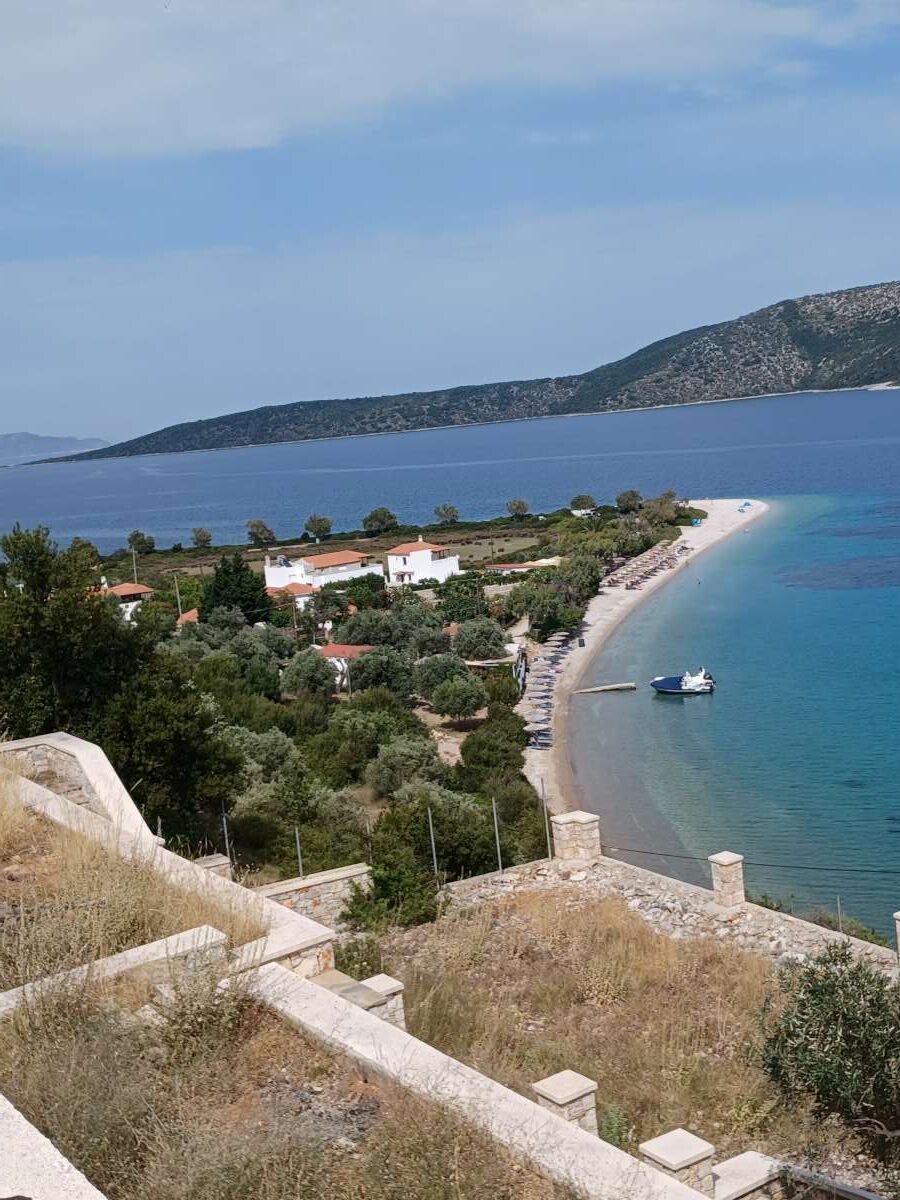
There are islands in the Greek world that feel as though they exist at a slight remove from the ordinary — islands where the natural world is so present, so vivid, and so completely undisturbed that the experience of being there feels less like a holiday and more like a privilege. Alonissos is one of these islands. The easternmost and least developed of the Sporades, wrapped in dense forests of Aleppo pine and holm oak, its steep coastline falling directly into water of an extraordinary, deep, luminous blue, Alonissos occupies a unique position in the Greek islands as the centrepiece of the largest marine protected area in all of Europe — the National Marine Park of Alonissos and the Northern Sporades — and the combination of that protected status with the island’s own natural beauty and its long-standing commitment to a quieter, more thoughtful kind of tourism has produced something genuinely and increasingly rare in the Aegean: an island that feels, in every direction and at every time of day, completely and entirely wild.
The National Marine Park, established in 1992 and covering an area of approximately 2,200 square kilometres of sea, islands, and islets around Alonissos, was created primarily to protect the Mediterranean monk seal — one of the most endangered marine mammals on earth, with a global population of fewer than 800 individuals, of which a significant colony makes its home in the sea caves of the park’s uninhabited islands. The monk seal is the symbol of Alonissos and of the park, and the commitment of the island’s community to its protection is genuine, long-standing, and deeply felt. But the park protects far more than the monk seal — its waters are home to an exceptional diversity of marine life, its seabed is among the cleanest in the Mediterranean, and its uninhabited islands preserve ecosystems of great rarity and beauty. Sailing within the park’s boundaries, with the knowledge that these waters are protected from industrial fishing and that the marine world beneath your hull is among the most intact in the entire Aegean, adds a dimension to the experience of being here that goes well beyond the merely scenic.
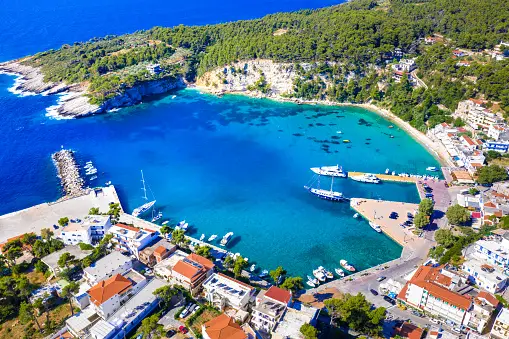
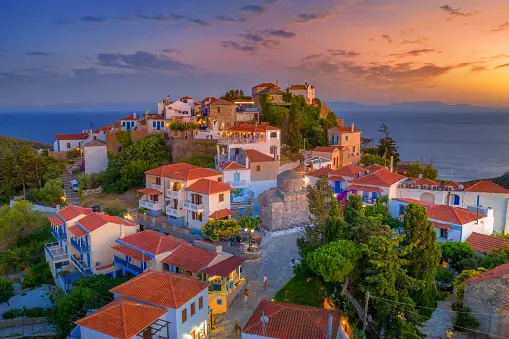
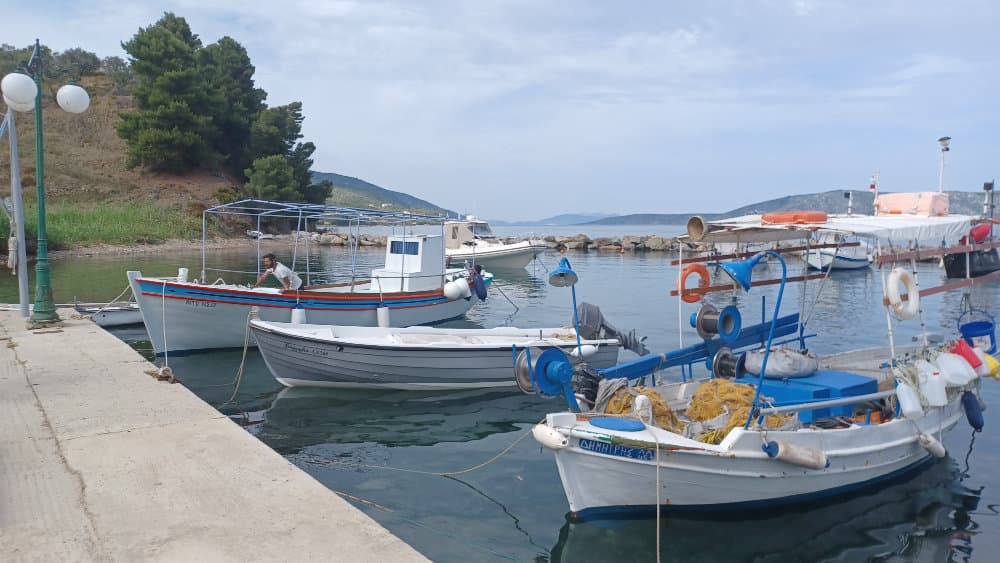
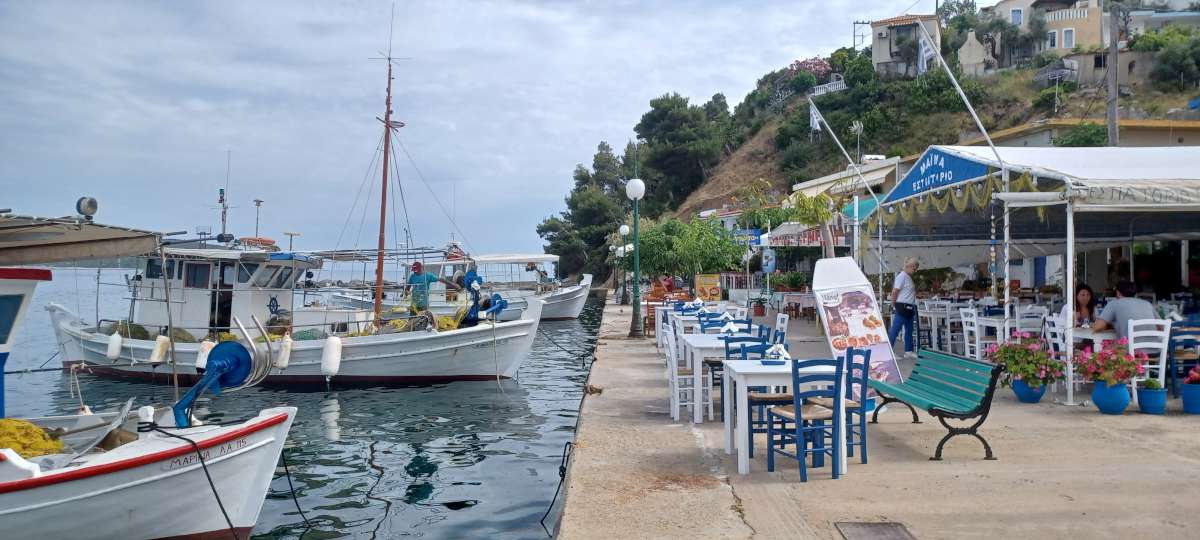
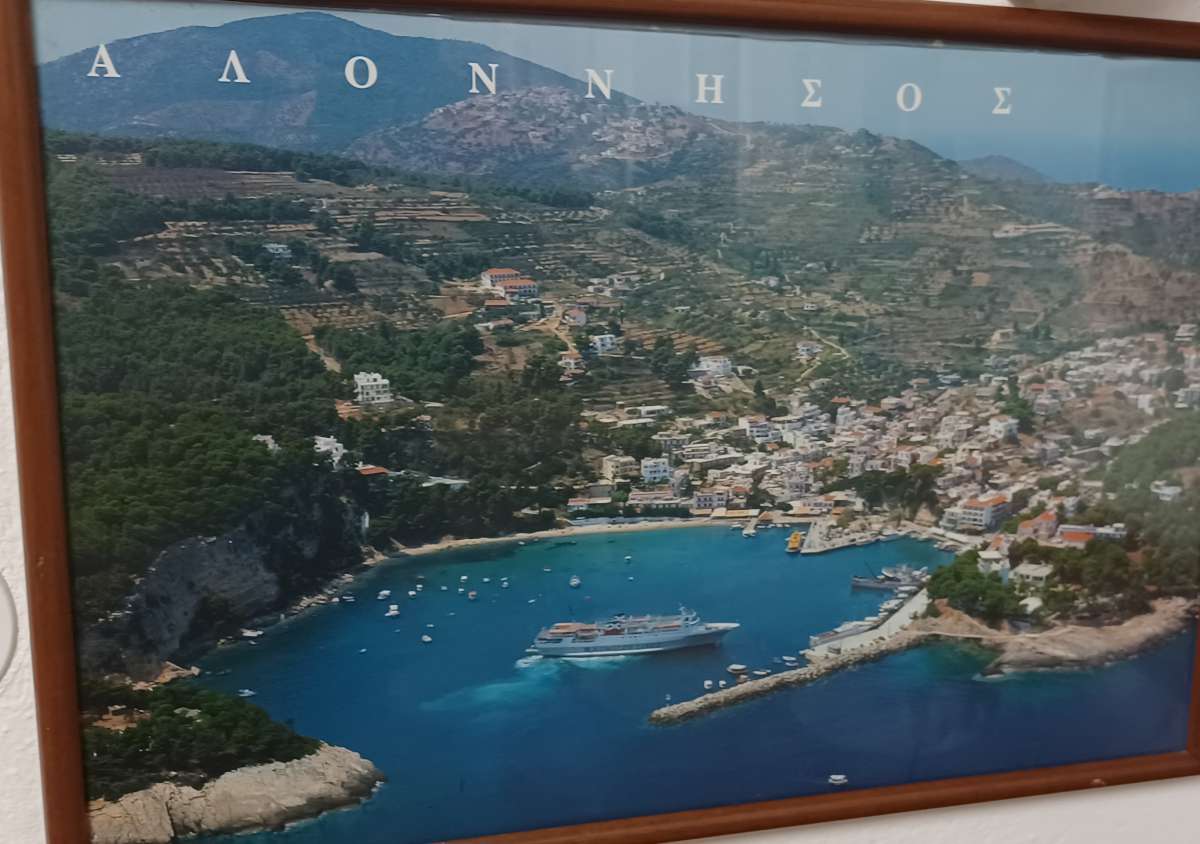
Alonissos Town — the Chora, rebuilt on its hilltop following a devastating earthquake in 1965 — is a small, immaculately restored village of exceptional beauty, its winding lanes and whitewashed houses looking out over the sea with a view that encompasses the full breadth of the park and, on clear days, extends to the distant outline of Mount Athos on the northern horizon. Below it, the small port of Patitiri serves as the island’s main harbour — unpretentious, functional, and surrounded by the kind of authentic waterfront life that reminds you that Alonissos, for all its natural magnificence, is first and foremost a real community with its own daily rhythms and its own deep relationship with the sea.
What to Do and What to See
Alonissos rewards the visitor who brings with them a genuine interest in the natural world and a willingness to explore — by sea, on foot, and underwater — an environment of exceptional quality and beauty. The National Marine Park, the island’s network of walking paths, its ancient hilltop capital, its wild coastline of deep-water coves and sea caves, and the remarkable archipelago of uninhabited islands within the park together create an experience that is quite unlike anything else available in the Greek islands.
The National Marine Park and the Monk Seal
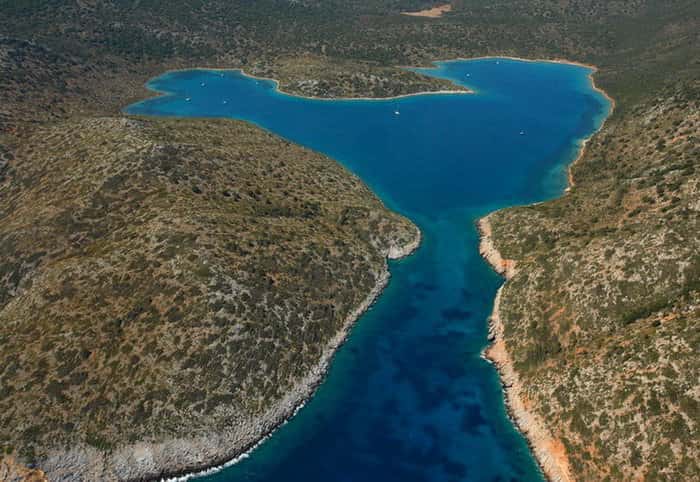
The National Marine Park of Alonissos is the centrepiece of the island’s identity and its most extraordinary offering. Covering a vast area of sea, the park encompasses Alonissos itself and eight uninhabited satellite islands — Peristera, Kyra Panagia, Gioura, Piperi, Psathoura, Skantzoura, Praso, and Adelfi — each one different in character, each one of great natural and in some cases archaeological interest. The waters of the park are home to dolphins, loggerhead sea turtles, a remarkable variety of fish species, and the elusive Mediterranean monk seal. Several of the islands within the park — most notably Piperi, the core sanctuary zone — are entirely off-limits to visitors, but others, including Kyra Panagia with its ancient monastery and fertile valleys, and Gioura with its wild goats and Homeric cave, are accessible by licensed day-trip boats from Patitiri. Sailing through the park on a yacht, with the uninhabited islands rising from the sea on every side and dolphins riding the bow wave, is one of the defining experiences of the northern Aegean.
Alonissos Town — The Old Chora
Perched on its hilltop 300 metres above the sea, the old village of Alonissos — rebuilt and gradually reoccupied by a community of artists, writers, and lovers of authentic Greek island life following its post-earthquake abandonment — is one of the most beautiful and most atmospheric hilltop settlements in the Sporades. Its narrow lanes, restored stone and whitewashed houses, and small squares with views over the sea in every direction create a scene of considerable beauty and considerable peace. The village has a small but excellent museum of traditional island life, several fine art galleries, and a handful of exceptional small restaurants and wine bars whose terraces overlook the sea — making the Chora as rewarding for an evening’s dining and exploration as it is for a morning’s walking and photography.
The Walking Paths
Alonissos has one of the finest networks of restored traditional paths in the entire Sporades — over 25 marked trails totalling more than 100 kilometres, crossing the island’s forests, terraced hillsides, and coastal headlands in a system that allows walkers of all levels to explore the island’s interior and coastline on foot. The most celebrated route connects the port of Patitiri with the old Chora through a landscape of olive groves and pine forest, passing ancient cisterns and dry stone walls and arriving at the hilltop village through a sequence of increasingly dramatic sea views. The northern coast path, following the clifftops above the most dramatic stretches of the island’s shoreline, offers views across the park’s uninhabited islands that are among the finest walking panoramas in the northern Aegean. Early morning walks, before the heat of the summer day builds and while the light is still horizontal and golden across the forest, are an experience of this island at its most completely beautiful.
Patitiri and the Southern Beaches
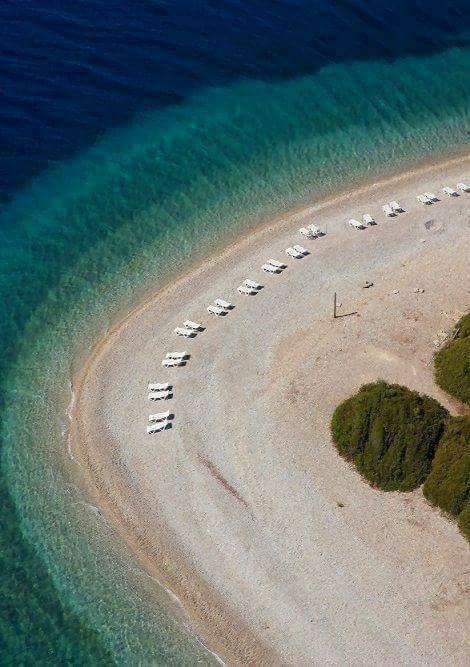
The island’s main port, Patitiri, is an unpretentious and genuinely pleasant small harbour town whose waterfront is lined with tavernas, diving centres, and the offices of the park’s management organisation and conservation groups. The swimming directly off the rocks at the harbour entrance is surprisingly good — the water here is exceptionally clear and deep — and the small pebble beaches immediately south of the town, accessible on foot, offer calm, clean swimming in sheltered conditions. The diving around Alonissos is considered among the finest in the Aegean — the protected waters of the park, combined with an exceptionally clear visibility regularly exceeding 30 metres, create diving conditions of the very highest quality, and the submerged ancient city of Ikos off the coast near Patitiri — a Bronze Age settlement now lying beneath several metres of water — is one of the most remarkable and least known underwater archaeological sites in Greece.
Kokkinokastro and the Ancient Sites
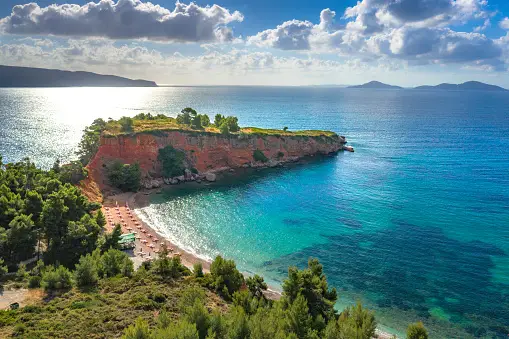
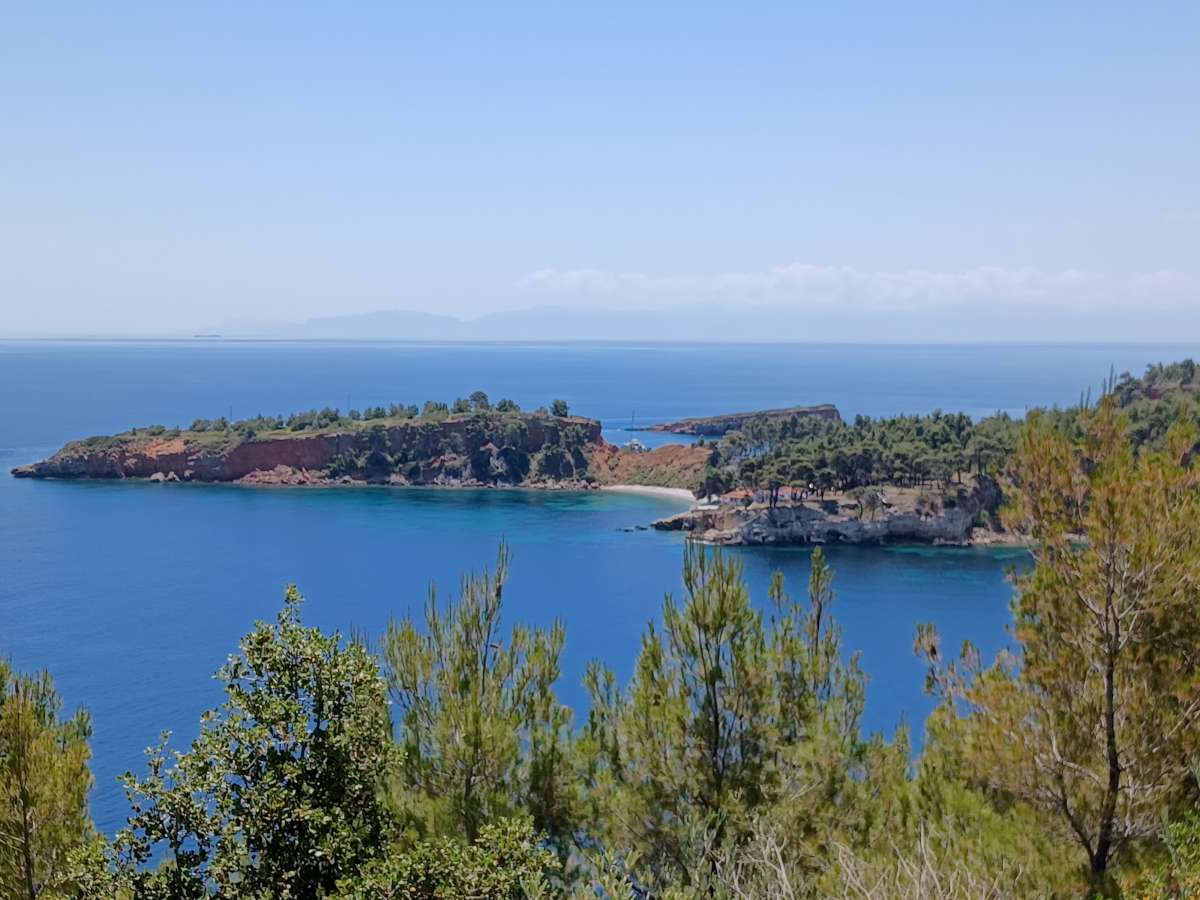
On the eastern coast, the distinctive red rock formation of Kokkinokastro marks the site of the ancient city of Ikos — the predecessor of the modern island — whose walls and structures are partially visible above water at the cliff base and continue beneath the surface into the remarkably clear water of the bay below. The beach at Kokkinokastro, set against its dramatic red ochre cliffs, is one of the most visually striking on the island and one of the finest for snorkelling, with the ancient stonework visible through the water and a marine life richness that reflects the island’s protected status.
The Uninhabited Islands of the Park
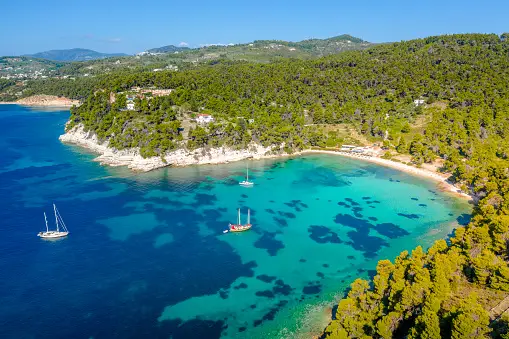
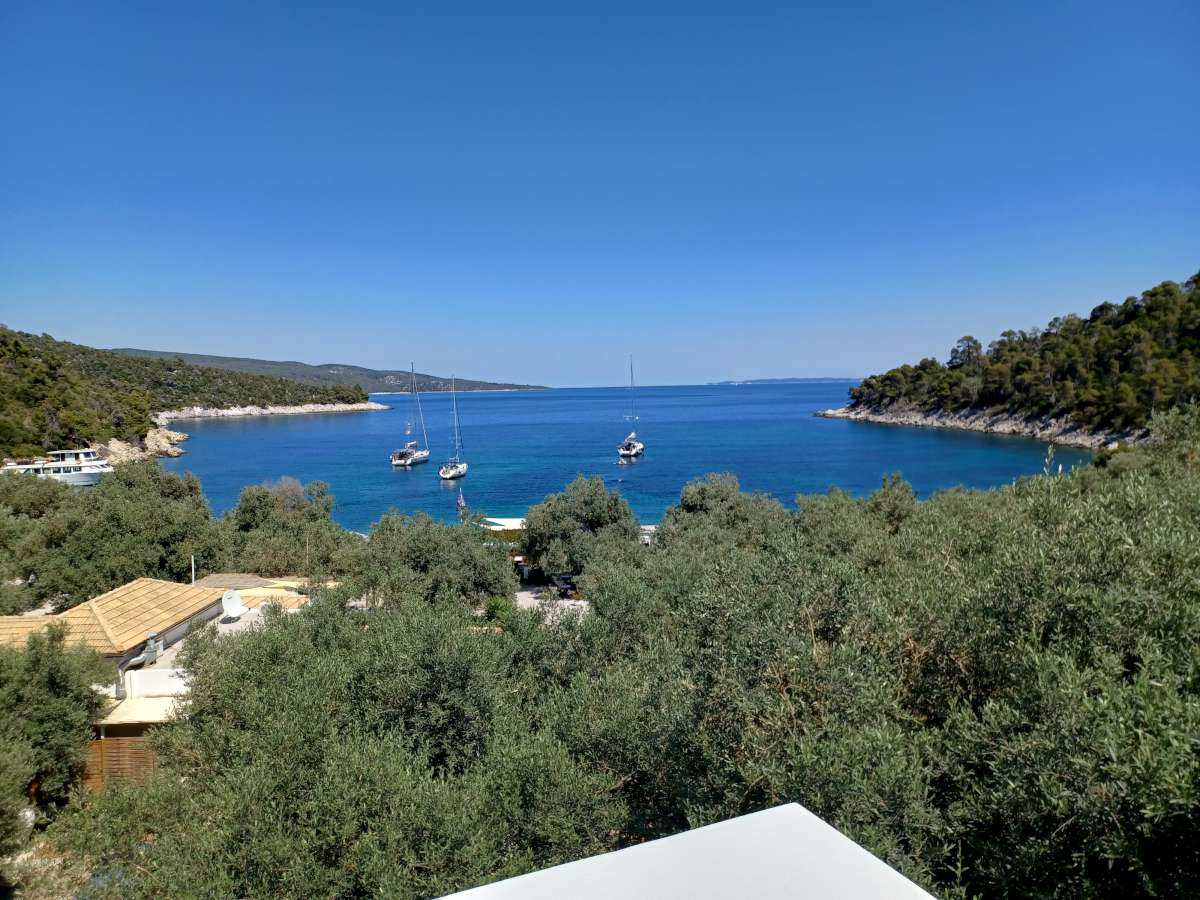
For those sailing the park in their own yacht, the uninhabited islands of the archipelago offer anchorages and swimming of an entirely exceptional quality. Peristera, closest to Alonissos and easily accessible, has sheltered sandy beaches and a ruined medieval tower, its water among the clearest in the park. Kyra Panagia, the largest of the satellite islands, has two beautiful sandy bays with a working monastery above them — inhabited by a single monk — and interior valleys of wild botanical richness. Gioura, the most remote of the accessible islands, has wild goats descended from ancient stock and a cave that classical tradition identifies as the cave of Polyphemus — the Cyclops of the Odyssey. These are anchorages and experiences available only to those who arrive by sea, and they are among the most extraordinary in the entire Aegean.
Why Choose Alonissos
Alonissos is the island for the traveller whose idea of the perfect Greek island experience is inseparable from the natural world — who measures the quality of a destination not by the sophistication of its restaurants or the liveliness of its social scene but by the clarity of its water, the richness of its marine life, the integrity of its landscape, and the depth of the silence that falls over it at the end of an unhurried day. It is an island for divers, for walkers, for those who want to sail a protected marine park in a yacht and experience what the Aegean looked like before the pressures of the modern world began their long, slow work of diminishment. It is, in the most complete and literal sense, a place that has been saved — and the experience of being in it carries a quality of gratitude that is entirely appropriate to that fact.
For sailing itineraries in the northern Aegean, Alonissos is the natural culmination of a Sporades cruise — the island that rewards the willingness to go a little further, to venture beyond the well-known, and to discover what the northern end of the island chain has preserved that the busier south has long since sacrificed. Combined with Skiathos and Skopelos, it forms a triangle of remarkable variety: social and lively at one end, architecturally magnificent in the middle, wild and ecologically extraordinary at the other. No single itinerary in the Sporades that omits Alonissos is complete, and no sailor who has spent time in its waters and among its islands ever fails to return.
What Alonissos gives the traveller who is ready to receive it is something that the most famous and most visited of the Greek islands, paradoxically, often cannot — the feeling of being somewhere genuinely unspoiled, genuinely protected, and genuinely alive with the natural world in its full, undiminished vitality. The monk seal in its sea cave, the dolphins at the bow, the ancient stones visible through thirty metres of perfectly clear water, the silence of the park at anchor in the early morning — these are the gifts of Alonissos, and they are gifts of a kind that, once received, make every other kind of holiday feel like a reasonable but clearly inferior substitute.