Why Sifnos
There are islands whose reputation rests on a single quality — a famous beach, a spectacular view, a celebrated nightlife — and there are islands whose reputation rests on something deeper, more various, and more difficult to reduce to a single selling point. Sifnos belongs firmly and emphatically to the second category. One of the most consistently beloved and most consistently praised islands in the western Cyclades, lying between Serifos to the north and Milos to the south at a distance of 80 nautical miles from Piraeus, Sifnos has built, over decades of devoted attention from the most discerning Greek and international travellers, a reputation as the most complete and most deeply satisfying island in the western group — a place of exceptional architectural beauty, extraordinary ceramic tradition, outstanding natural landscape, and, above all, the finest food culture of any island in the Cyclades. That last distinction — the food — is not a peripheral attraction. It is the organizing principle of the Sifnian experience, the thread that connects the island’s ancient prosperity, its ceramic heritage, its village culture, and its contemporary identity into a single, coherent, deeply pleasurable whole.
The island was, in antiquity, one of the wealthiest in the entire Cyclades — its gold and silver mines generating revenues of such abundance that the Sifnians built, in the 6th century BC, the most lavishly decorated treasury at the sacred site of Delphi, its carved marble frieze one of the masterpieces of Archaic Greek sculpture and one of the finest objects in the Delphi Archaeological Museum today. That ancient wealth funded temples, public buildings, and a civic life of considerable sophistication, and left behind a legacy of historical self-confidence and cultural ambition that the island has never entirely lost. When the mines were exhausted — flooded, according to myth, by Poseidon in punishment for the Sifnians’ failure to send their customary golden egg as a tithe to Delphi — the island’s prosperity declined, but its identity endured: the tradition of craft, of beauty, of doing things well and with care, that the ancient mines had funded became embedded in the island’s character and expressed itself, in the centuries that followed, in the extraordinary ceramic tradition that still flourishes here, in the architectural quality of its twelve villages, and in the food culture that has made Sifnos, to those who know it, the gastronomic capital of the Cyclades.
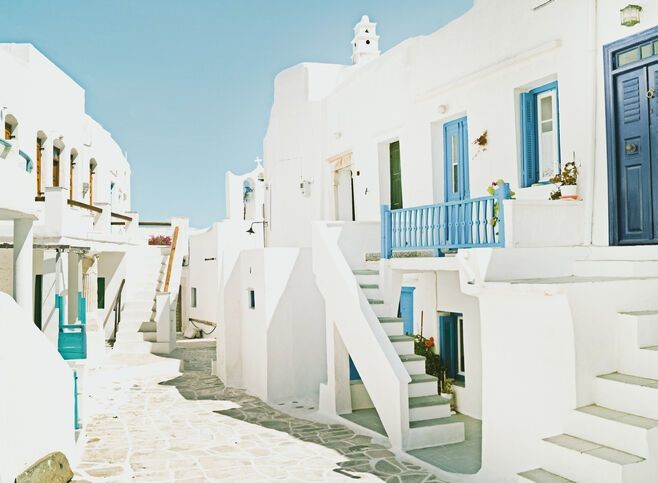
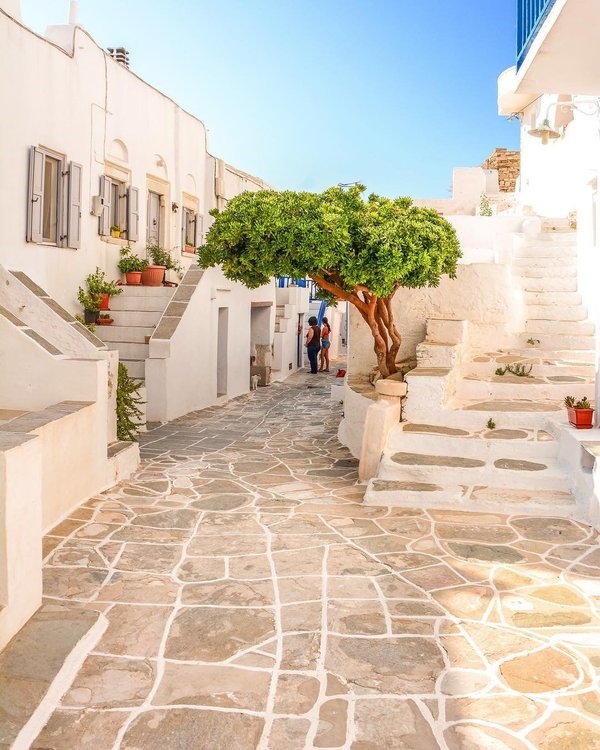
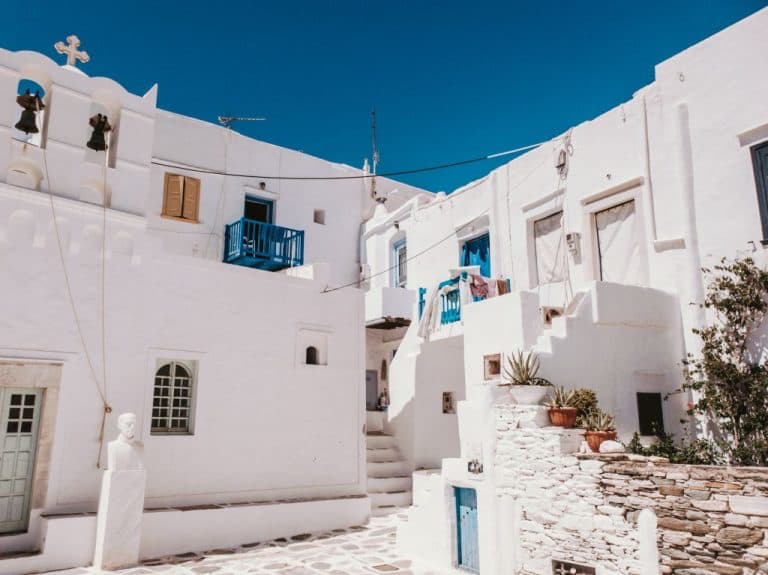
The island’s most immediate and most completely captivating quality, on the first approach by sea, is its architectural beauty. The twelve villages of Sifnos — Apollonia, Artemonas, Kastro, Vathy, Kamares, Faros, Platys Gialos, and the smaller settlements scattered across the island’s mountainous interior — compose a landscape of Cycladic architecture at its most accomplished and most varied, each village different in character and position and scale, and each contributing to an overall impression of an island that has been built and rebuilt and continuously refined over centuries by people who cared deeply about the quality of their built environment and had both the skill and the taste to achieve it. Sifnos does not have one beautiful village. It has twelve, and the experience of moving between them — on foot along the ancient path network that connects them through a landscape of olive groves and thyme-covered hillsides and sudden blue views of the sea — is one of the most completely satisfying and most completely memorable of all Cycladic island experiences.
What to Do and What to See
Sifnos rewards the visitor who brings to it the full range of their curiosity and their appetite — for architecture and archaeology, for beach and walking, for ceramic art and culinary pleasure — and who is willing to move between its different pleasures at a pace set by the island’s own unhurried rhythm.
Apollonia and Artemonas — The Village Capital
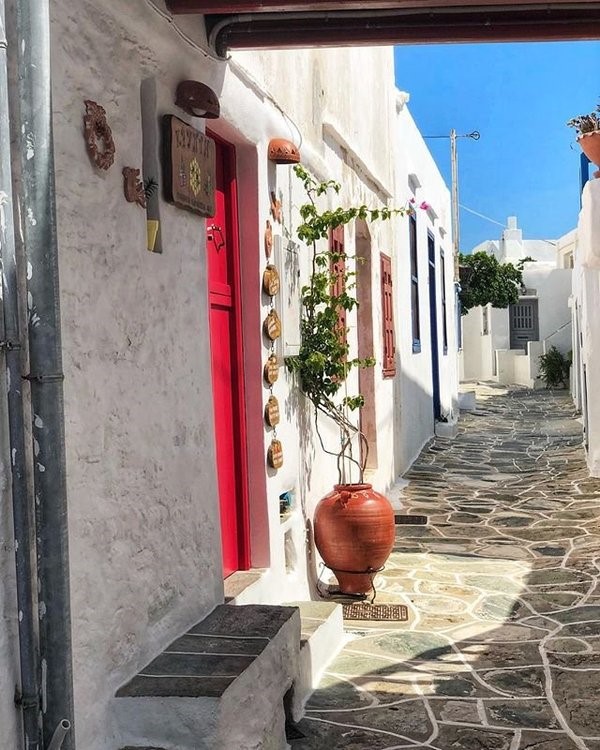
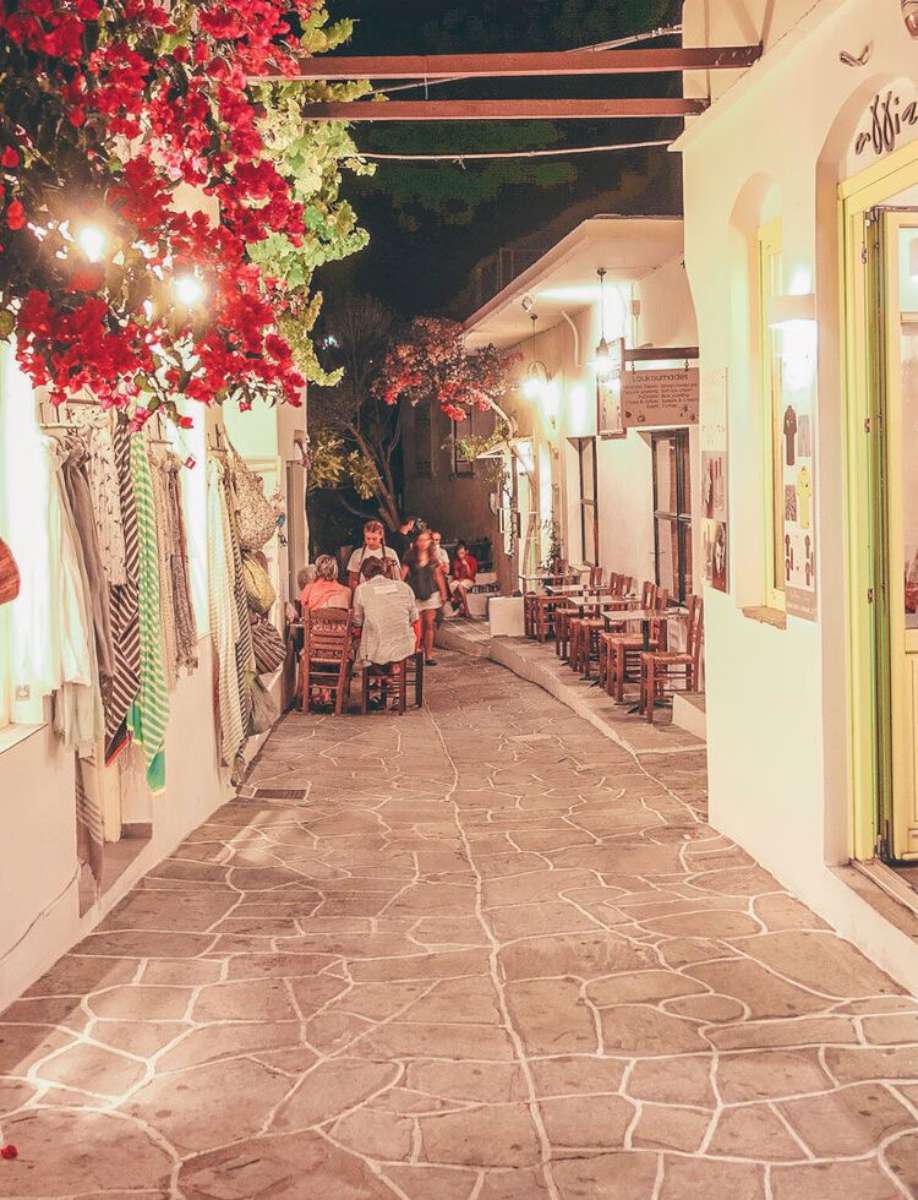
The capital of Sifnos — Apollonia — is not a single village but a continuous settlement spread across three adjacent hills, its whitewashed lanes and neoclassical-influenced houses composing a townscape of great beauty and great social vitality. The central pedestrian lane — the Steno — is the social spine of the island, its outdoor tables occupied from morning to late at night and its combination of excellent tavernas, ceramic shops, and the kind of easy, confident social atmosphere of a community that has been welcoming visitors for generations giving it an energy and a warmth entirely characteristic of Sifnos at its most complete. The neighbouring village of Artemonas, a short walk north of Apollonia, is architecturally distinguished by its large neoclassical captains’ houses — the legacy of a seafaring prosperity that overlaid the Cycladic simplicity of the older village with a more ambitious and more urban architectural ambition — and by the extraordinary density of its churches, which include some of the finest examples of Cycladic ecclesiastical architecture on the island. Together, Apollonia and Artemonas compose an island capital experience of exceptional variety and exceptional quality.
Kastro — The Medieval Village
On the eastern coast of Sifnos, the medieval village of Kastro is one of the finest and most completely preserved fortified settlements in the Cyclades — a dense, labyrinthine village of medieval stone houses built within and upon the walls of the Venetian castle that occupied this dramatic headland above the sea, its outer ring of houses forming a continuous defensive perimeter and its interior lanes of such intimate complexity and such accumulated architectural beauty that walking through them is one of the most completely absorbing experiences on any western Cycladic island. The Kastro was the island’s capital until 1836 and preserves within its walls churches of Byzantine and post-Byzantine quality, the remains of the Venetian castle’s towers, and an Archaeological Museum housing finds from the island’s ancient sites of considerable quality. The views from the Kastro’s external walls directly above the sea — the headland dropping sharply to the water below, the open Aegean extending to the eastern horizon — are magnificent, and the combination of the medieval architecture, the ancient finds, and the extraordinary coastal setting makes Kastro one of the most completely and most memorably rewarding single destinations in the western Cyclades.
The Panagia Chrysopigi
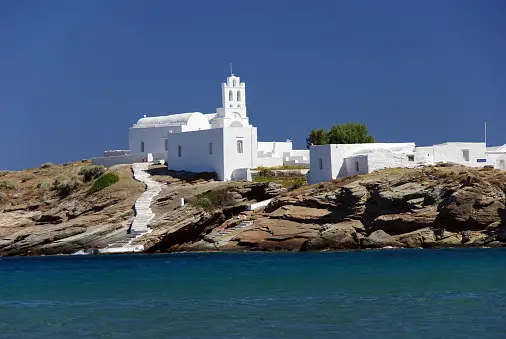
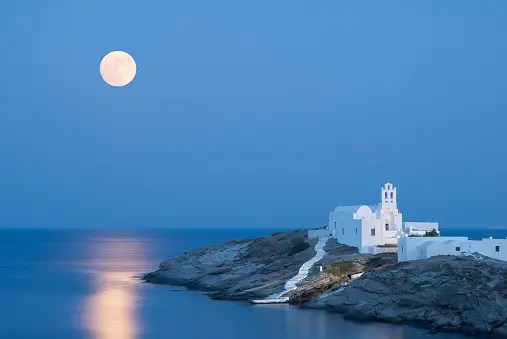
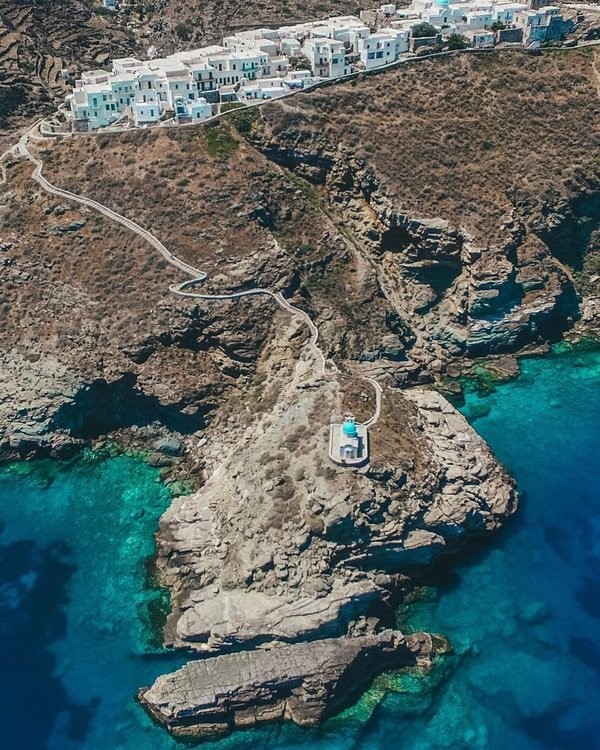
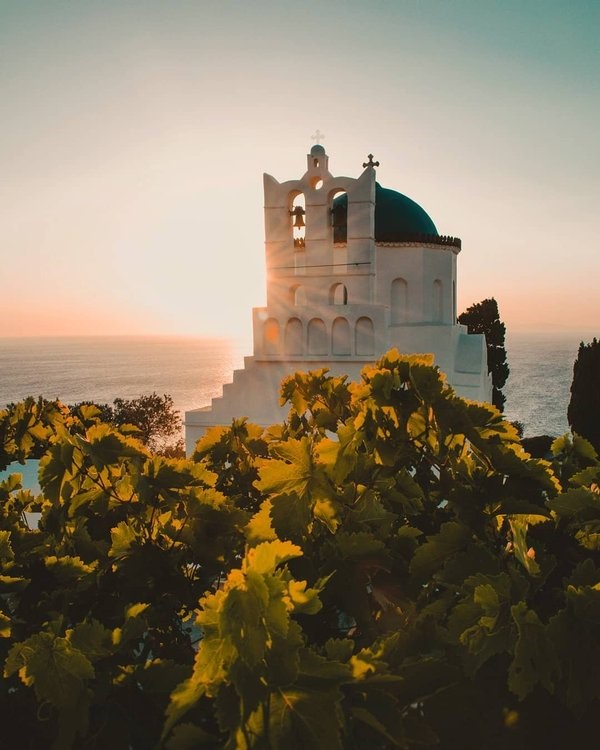
On the southeastern coast of Sifnos, the monastery of the Panagia Chrysopigi — Our Lady of the Golden Well — occupies a small peninsula connected to the main island by a narrow bridge, its white walls and arched bell tower rising directly from the sea in one of the most iconic and most completely beautiful architectural compositions in the entire Cyclades. Built in 1650 on the site of an ancient sanctuary, the monastery is the most venerated religious site on the island and the object of an annual pilgrimage on the 40th day after Easter — Ascension Thursday — when the entire population of Sifnos and thousands of pilgrims from across the Cyclades gather here for a festival of religious celebration and communal feasting that is one of the most vivid and most completely authentic expressions of Greek Orthodox island culture surviving anywhere in the Aegean. The monastery is open to visitors throughout the day, and the experience of crossing the narrow bridge to its promontory — the sea on both sides, the white structure ahead, the surrounding Aegean glittering in every direction — is one of the most immediately and most permanently beautiful arrivals at any island monument in the Cyclades.
The Ceramic Tradition
Sifnos has produced ceramics continuously since antiquity — the island’s particular clay, found in the hills above the village of Vathy on the southern coast, having a quality and a workability that has sustained a ceramic tradition of extraordinary longevity and extraordinary vitality. The ceramics of Sifnos — characteristically decorated with blue motifs on a cream or terracotta ground — are among the most distinctive and most celebrated examples of Greek folk ceramic art, and the island’s potters, working in studios throughout the villages, continue to produce work of great skill and great beauty in the traditional manner. The village of Vathy, set at the head of the island’s most beautiful bay, is the historical centre of the ceramic tradition, and visiting the studios and workshops there — watching the potters at their wheels, examining the finished work in the traditional forms that have been made on this island for millennia — is one of the most completely characteristic and most completely enjoyable cultural experiences that Sifnos has to offer. The ceramic shops of Apollonia and Artemonas stock the finest examples of contemporary Sifnian ceramics alongside the traditional forms, and buying a piece of Sifnian pottery — the island’s most portable and most genuine souvenir — is an act of cultural participation entirely in keeping with the island’s spirit.
The Food Culture and the Revithada
To understand Sifnos fully, you must eat on it — and eat with the specific attention that the island’s food culture deserves. Sifnos is the birthplace of Nikolaos Tselementes — the most influential Greek cookbook writer of the 20th century, whose 1910 cookbook remains the foundation of modern Greek culinary education — and the island wears this distinction with the easy confidence of a place that has always known what it was doing in the kitchen. The most characteristic dish of Sifnos is the revithada — a slow-cooked chickpea stew prepared in a sealed ceramic pot and traditionally left to cook overnight in the dying heat of the communal village oven, its long, slow preparation producing a dish of such depth and such completely satisfying simplicity that it has become the symbol of the island’s food philosophy: unhurried, ingredient-led, deeply traditional, and completely excellent. The mastelo — lamb or goat slow-cooked in wine and fresh dill in the island’s distinctive ceramic vessel — is equally celebrated. The local honey, the wild capers, the fresh cheese of the island’s goats — all of these ingredients, combined with the freshest possible seafood and served in the excellent tavernas of Apollonia, Artemonas, Kastro, and the coastal villages, make eating on Sifnos one of the most rewarding and most consistently pleasurable culinary experiences available on any Cycladic island.
The Beaches and Vathy Bay
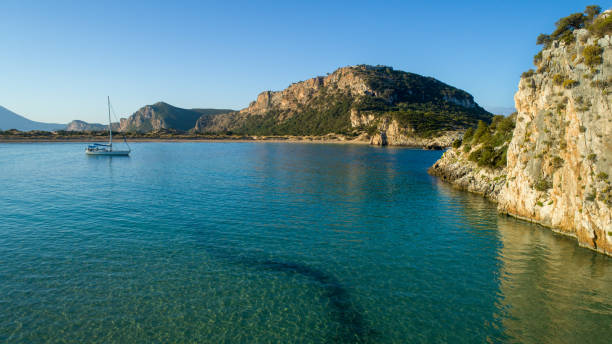
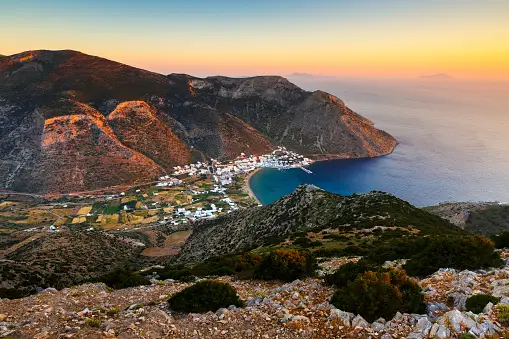
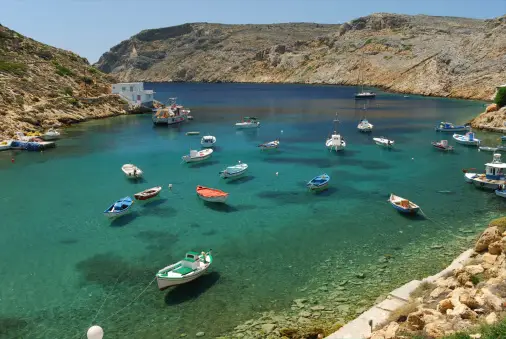
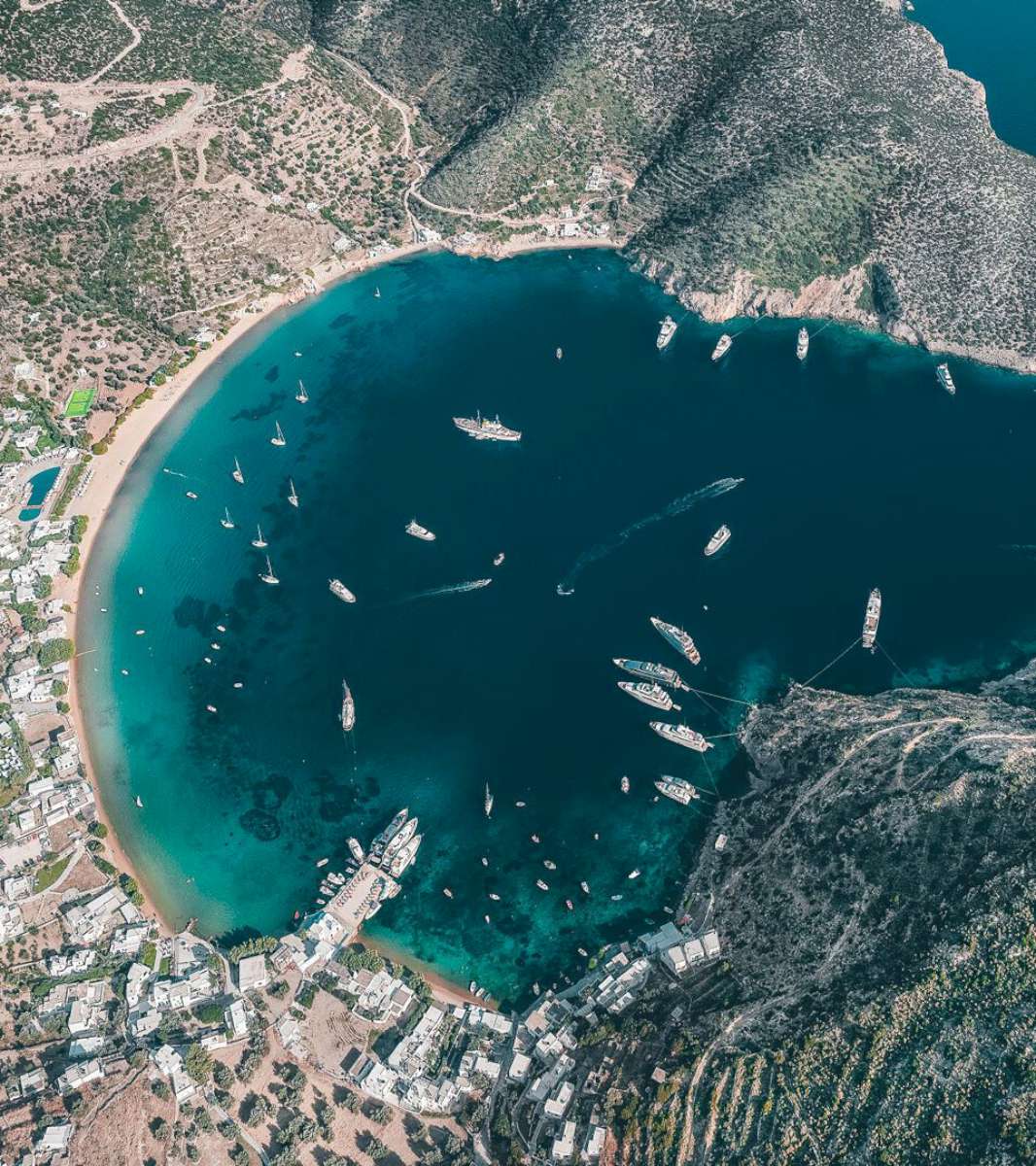
Sifnos has beaches of great variety distributed around its 70-kilometre coastline, ranging from the organised and accessible to the wild and remote. Platys Gialos on the southern coast is the island’s largest and most complete beach resort — a wide arc of golden sand and calm water backed by excellent tavernas and a pleasant village. Faros, on the southeastern coast, is a cluster of three small sandy bays of great natural beauty connected by short coastal paths, its calm, sheltered water and traditional fishing village atmosphere making it one of the most completely charming beach destinations on the island. Chrysopigi, adjacent to the famous monastery, is a double beach of pale sand and brilliant turquoise water whose setting — the white monastery on its promontory above — gives it a visual backdrop of extraordinary beauty. And Vathy, the most sheltered and most dramatically enclosed bay on the island — a deep, fjord-like inlet surrounded by steep hillsides, its calm water of extraordinary clarity and its small settlement of ceramic workshops and excellent fish tavernas accessible only by sea or by a long walk from the road — is the finest and most completely beautiful anchorage on Sifnos, and one of the finest in the western Cyclades.
Why Choose Sifnos
Sifnos is the island for the traveller who wants the western Cyclades at their most civilised and most complete — who wants the finest food, the most beautiful villages, the most accomplished ceramic tradition, the most varied walking network, and the most elegant and most genuine expression of the Cycladic island ideal in a single destination of exceptional quality and exceptional consistency. It is for food lovers who want to eat in the birthplace of modern Greek cuisine. It is for architecture enthusiasts who want twelve beautiful villages connected by ancient paths through a landscape of great natural beauty. It is for sailors who want the finest anchorage in the western Cyclades at Vathy and the most atmospheric monastery approach in the Cyclades at Chrysopigi. And it is for those who simply want to be on an island that does everything well — that bakes its bread with care, makes its ceramics with skill, builds its houses with taste, and welcomes its visitors with the warm, unhurried generosity of a community that is genuinely proud of what it has and genuinely pleased to share it.
For sailing itineraries in the western Cyclades, Sifnos is the natural jewel of the group — the island that rewards the longest stay and repays every additional day with new pleasures discovered on foot or by dinghy, new tavernas found by following a recommendation from the previous evening’s conversation, new coves reached by anchoring off the southern coast and swimming to shore in water of extraordinary clarity and warmth. The combination of Vathy’s incomparable anchorage with the shore-side pleasures of Kastro, Chrysopigi, and Apollonia creates an itinerary of exceptional completeness for the sailor willing to spend three or four days exploring this single island in proper depth.
What Sifnos ultimately is — and what it has been for every generation of travellers discerning enough to seek it out — is the Cyclades as they should be: beautiful, authentic, deeply pleasurable, and entirely serious about the things that matter. The food and the ceramics and the architecture and the walking paths and the monastery on its promontory and the revithada slow-cooking in its ceramic pot in the village oven — these are not tourist attractions. They are the expressions of a culture that has been refining itself on this beautiful island in the western Aegean for five thousand years, and that shows, in the quality and the completeness of what it still produces, absolutely no signs of stopping.