Why Kythnos
There are islands in the northern Cyclades that the ferry from Piraeus passes on its way to more famous destinations, visible for a short time from the deck as a low, brown-golden silhouette against the Aegean sky before the faster passengers return to their coffee and their phones and the island slips back below the horizon, unvisited and unmourned. Kythnos is one of these islands — and it is, for those who have the intelligence or the good fortune to disembark rather than sail past, one of the most completely and most unexpectedly rewarding of all the lesser-known Cyclades. Lying between Kea to the north and Serifos to the south in the western chain of the Cyclades, barely 56 nautical miles from Piraeus and accessible in under three hours from the port of Lavrion, Kythnos is an island of modest elevation and considerable beauty — its 104 kilometres of coastline enclosing 99 beaches and coves of remarkable variety, its two traditional villages of Chora and Dryopida among the most authentic and most completely preserved in the northern Cyclades, and its thermal springs at Loutra one of the oldest and most established natural spa destinations in the entire Aegean world.
The island’s ancient and medieval name — Therma, still used by its permanent residents today — points to the feature that has distinguished Kythnos from all its Cycladic neighbours since antiquity: the natural thermal springs at Loutra on the northeastern coast, where water at temperatures of up to 52 degrees Celsius rises from the volcanic rock of the seabed and has been channelled, since Byzantine times and with increasing medical sophistication in the modern period, into bathing facilities of considerable therapeutic repute. The springs at Loutra are rich in iron, calcium, and magnesium, and have been prescribed by Greek physicians for the treatment of rheumatic conditions, skin disorders, and a range of circulatory complaints for over a thousand years. The combination of this therapeutic tradition with the natural beauty of the bay at Loutra — a wide, sheltered arc of warm, shallow water where the thermal springs mix with the cooler sea to create a bathing environment of unusual warmth and unusual tranquillity — gives the northeastern coast of Kythnos a character entirely distinct from the rest of the island and entirely distinct from any comparable destination in the Cyclades.
But Kythnos is far more than its thermal springs. It is an island of considerable and quietly accumulated beauty — of two traditional villages of genuine architectural quality and genuine community life, of a coastline of 99 beaches that range from the organised and accessible to the wild and completely solitary, of a landscape of bare golden hills and deep blue coves that composes, in the particular light of the northern Cyclades, a picture of Aegean beauty at its most elemental and its most completely satisfying. It is known primarily to Athenians — who have been using it as their nearest and most convenient island escape for generations — and to the sailing community of the western Cyclades, who have discovered in its many sheltered anchorages and its excellent holding ground some of the finest overnight stops in the northern archipelago. For the international traveller with the curiosity to seek it out, Kythnos offers the rare and increasingly precious gift of a genuinely undiscovered island of genuine quality — an island that has been quietly and contentedly itself for centuries and sees no particular reason to change.
What to Do and What to See
Kythnos rewards the visitor who comes to it with an open mind and an unhurried disposition — who is willing to explore its two traditional villages on foot, to seek out its remarkable variety of beaches by road and by sea, to soak in the thermal springs at Loutra, and to discover in the combination of all these pleasures the particular, understated, entirely genuine quality of the Cycladic experience at its most authentic and its most unmediated.
Chora — The Island Capital
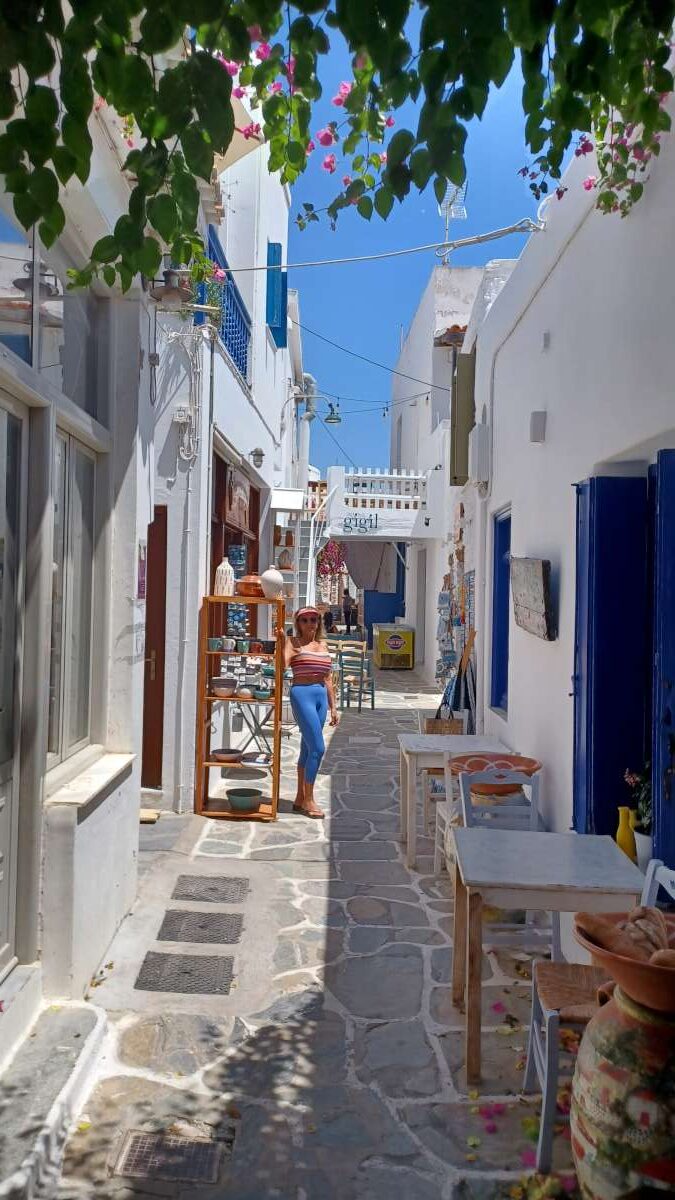
The capital of Kythnos — Chora, also known as Mesaria — sits in the centre of the island on a gentle ridge between the two coasts, its traditional Cycladic architecture and its remarkably intact community life combining to produce one of the most completely authentic small island capital experiences in the northern Cyclades. The village is built on a distinctive grid pattern unusual among Cycladic settlements — its lanes crossing at regular intervals, its houses aligned in orderly rows, the whole composition giving it a quality of planned regularity entirely characteristic of a community that has known exactly what it wanted from its built environment for a very long time. The central lane of Chora — too narrow for any vehicle and entirely given over to foot traffic — is lined with the kafeneions and small tavernas where the island’s community gathers at every hour of the day in the manner of a Greek village where the social rituals of coffee and conversation are taken with complete seriousness. The Church of Agios Savvas at the village’s highest point, and the numerous smaller chapels distributed through the lanes, give Chora a density of religious life entirely characteristic of the Cyclades. Walking the village in the late afternoon, when the light falls on its red-roofed and whitewashed facades at a low angle and the smell of cooking drifts from open kitchen windows, is one of the most quietly satisfying and most completely genuine small island experiences in the northern Cyclades.
Dryopida — The Hidden Village
Of Kythnos’s two traditional villages, Dryopida is the more surprising and in many ways the more beautiful — a large, dense settlement of reddish-tiled houses and arched lanes built into a deep valley in the island’s southern interior in a manner entirely unlike the classic whitewashed hilltop Cycladic village and entirely unlike anything else in the western Cyclades. The architecture of Dryopida reflects the island’s historical identity as a metalworking and mining community — its houses more substantial and more urban in character than the typical Cycladic village, its lanes vaulted and its churches decorated with a richness that speaks of a community with both the means and the aesthetic ambition to invest in its own built environment. The Cave of Katafyki, on the edge of the village, is one of the most impressive cave systems in the Cyclades — a vast underground network of stalactite and stalagmite formations of considerable natural beauty, its main chamber large enough to have served historically as a place of refuge for the island’s population during pirate raids, and its scale and geological variety making it one of the finest natural sites on the island.
Loutra — The Thermal Springs
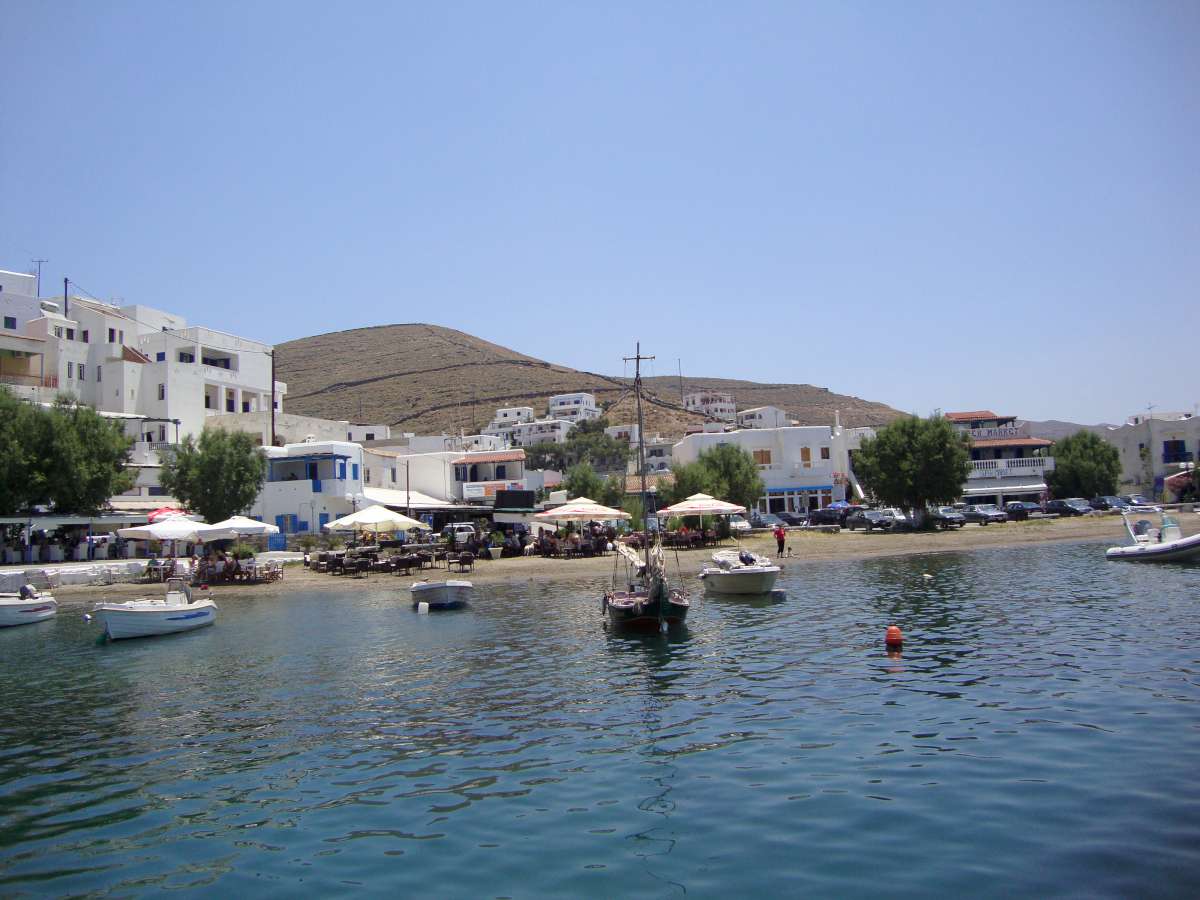
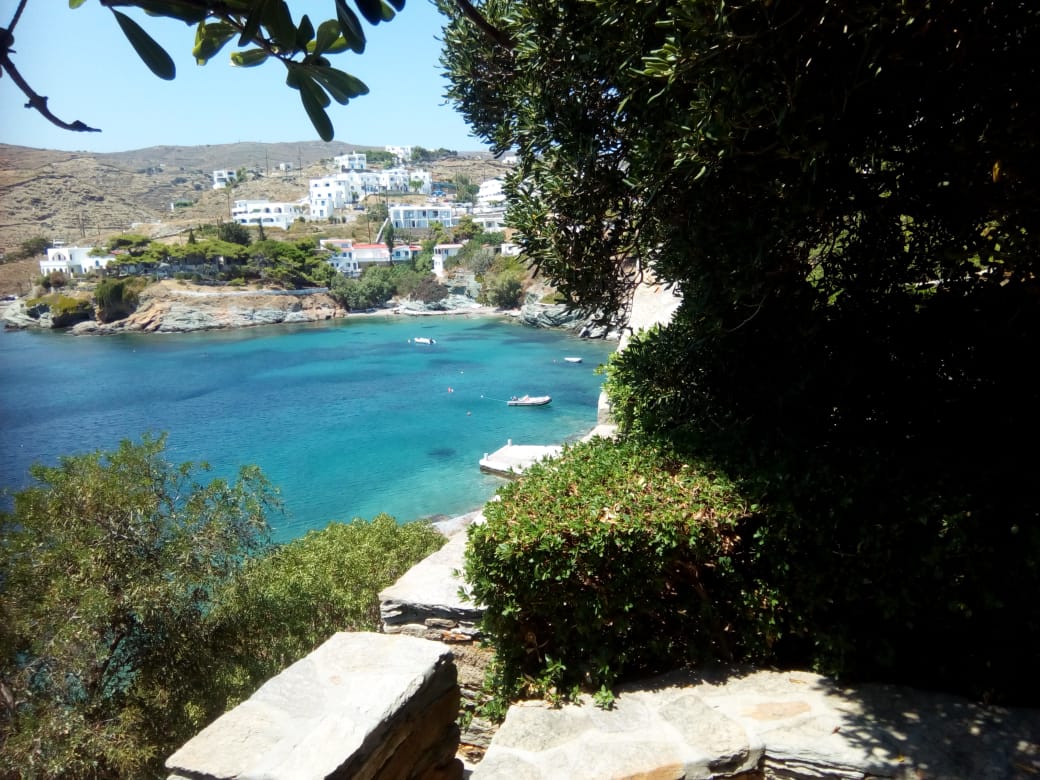
On the northeastern coast of Kythnos, the small settlement of Loutra is the island’s thermal spa resort — a gentle, unhurried village of traditional houses around a wide, sheltered bay where the natural hot springs that give the island its medieval name rise from the volcanic rock and are channelled into the bathing facilities of the local spa. The waters at Loutra are among the most mineralised and most therapeutically potent in the Aegean, their high content of iron and sulphur compounds making them effective in the treatment of a range of musculoskeletal and dermatological conditions. But the pleasure of Loutra is not only or even primarily medical — it is the pleasure of a warm, calm, sheltered bay where the thermal water mixing with the sea creates bathing conditions of unusual warmth and unusual serenity, the pleasure of the traditional tavernas on the harbour front serving fresh fish to tables that overlook a bay of complete natural beauty, and the pleasure of a place whose pace is so entirely governed by rest and recuperation that the very act of sitting still feels, here more than almost anywhere else in the Cyclades, like the most natural and the most completely appropriate thing in the world.
The Beaches and the Kolona Sandbar
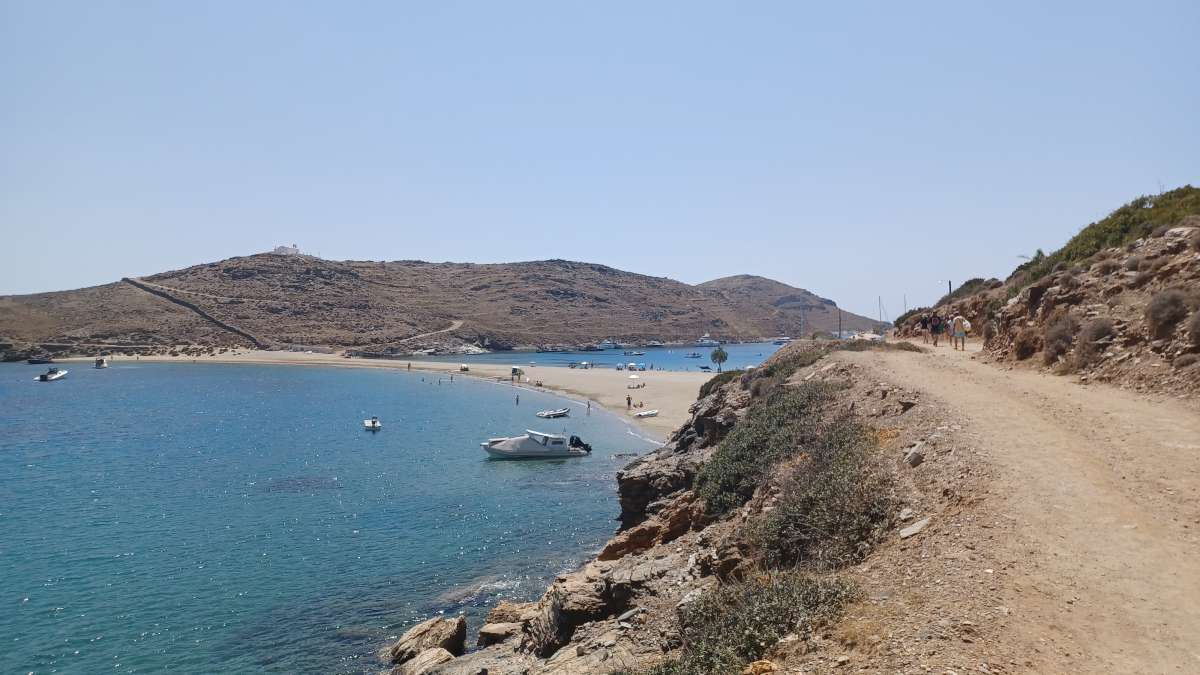
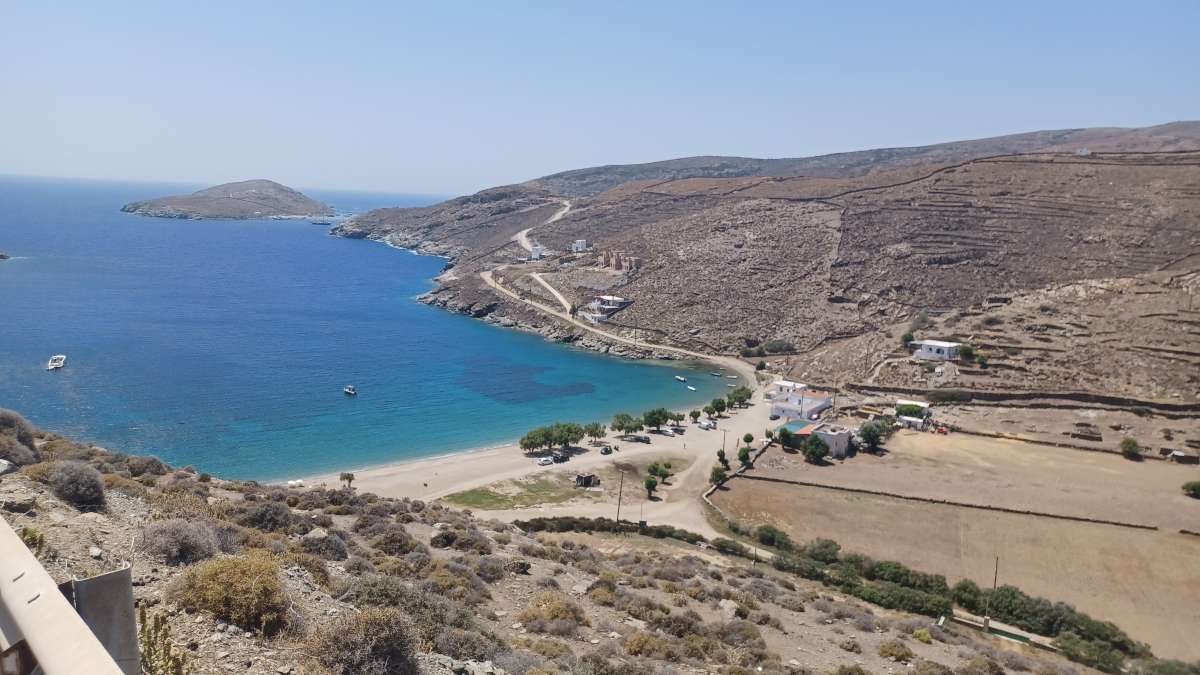
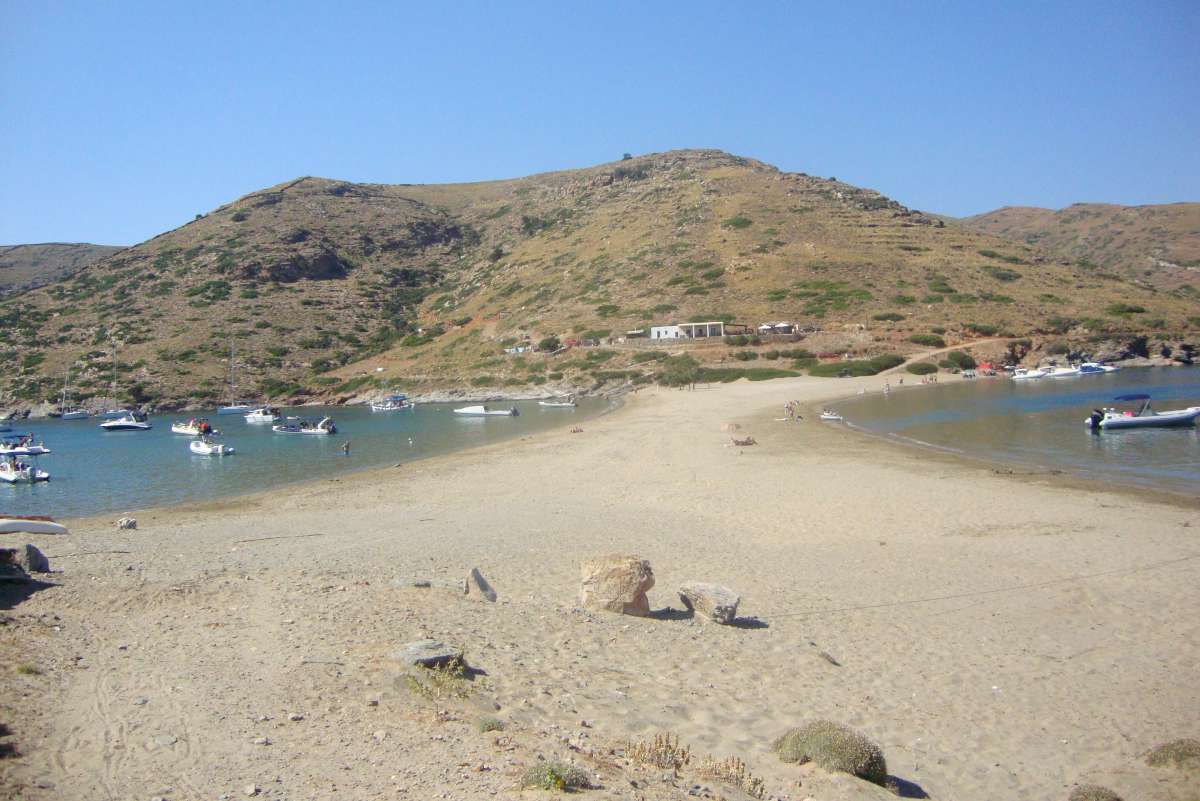
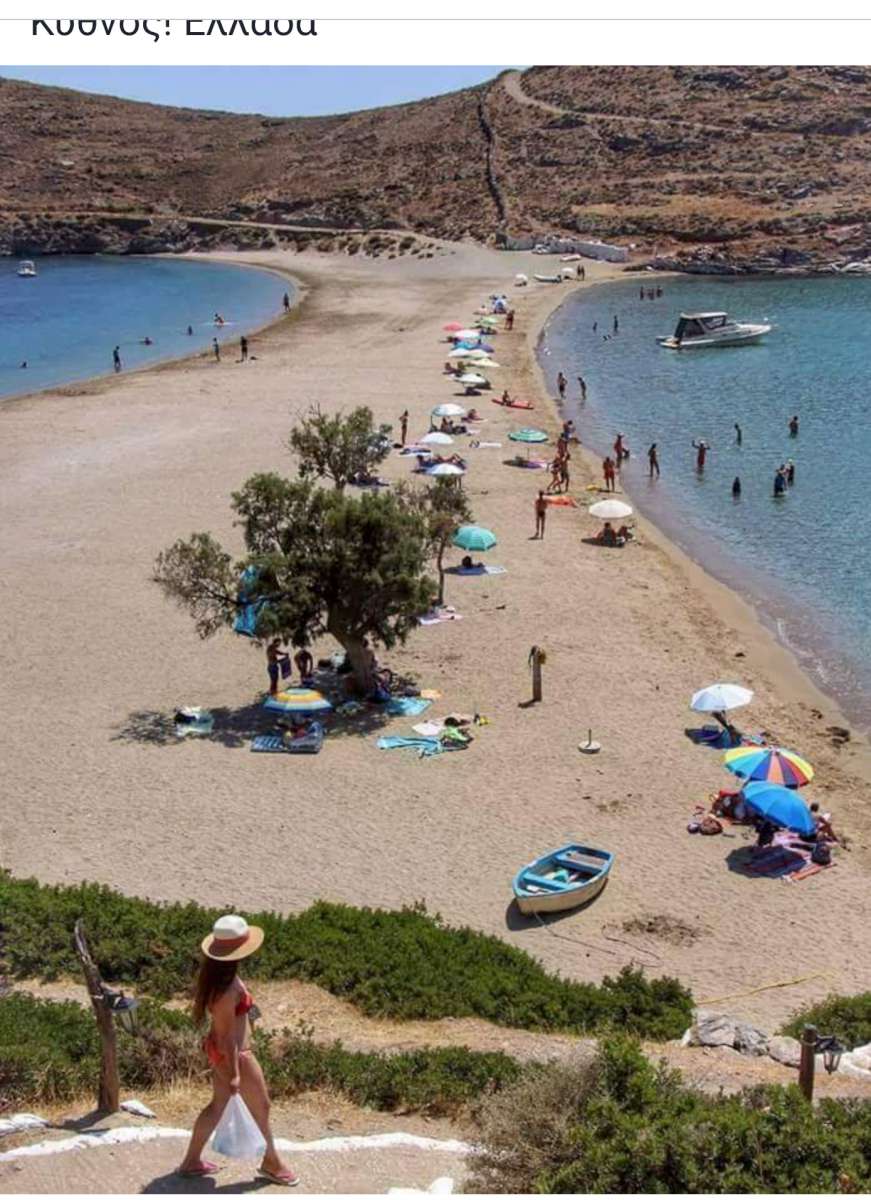
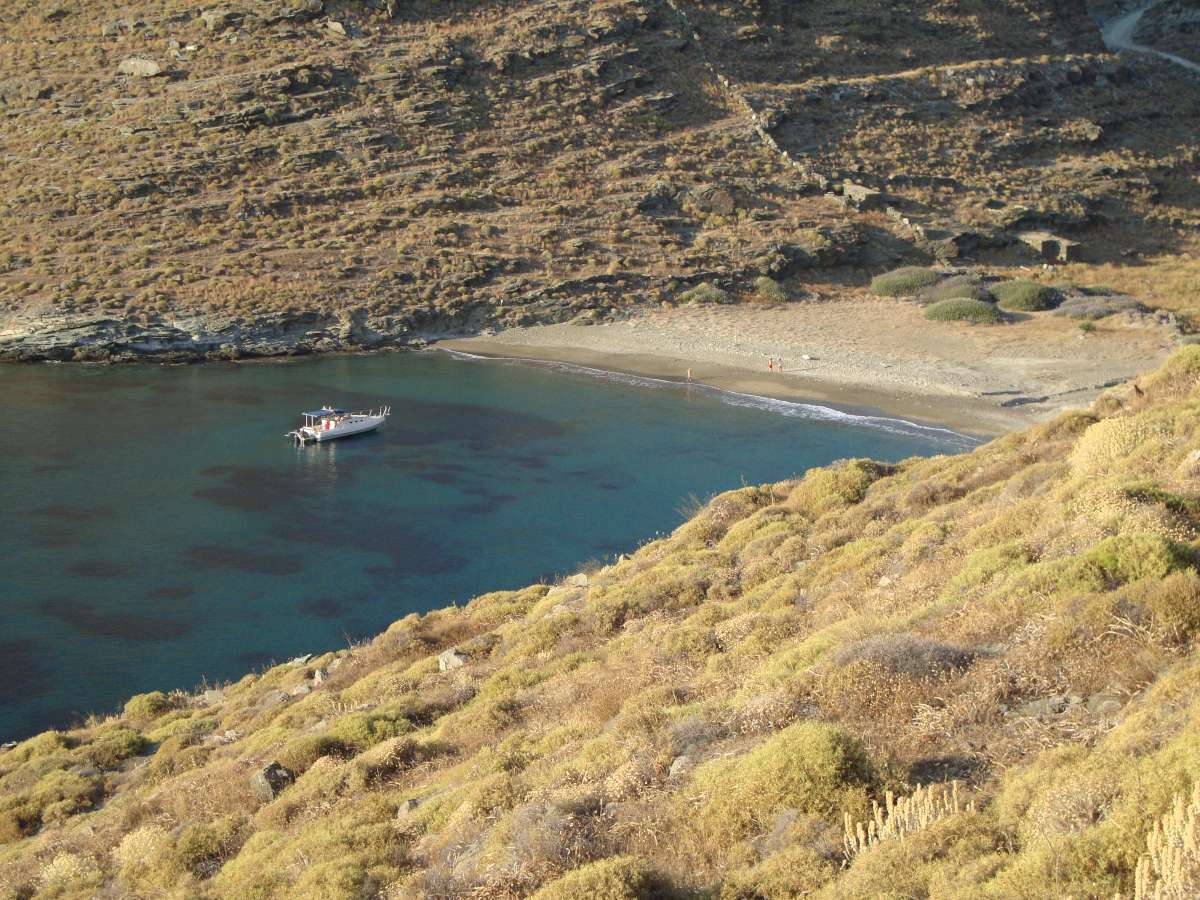
Kythnos has 99 beaches — a number remarkable for an island of its size, and a variety of character and quality that ensures that the sailor or the land-based visitor who explores them systematically will find, in the course of a few days, every category of Cycladic beach experience from the organised and accessible to the wild and completely solitary. The most celebrated single beach feature on the island is Kolona — a narrow sandbar of pale golden sand connecting the main island to the small rocky islet of Agios Loukas in the north, with sea on both sides of the bar simultaneously visible and simultaneously swimmable, creating a natural phenomenon of great beauty and great photogenic appeal. The beach of Fikiada near the port is long, clean, and excellent for families. Episkopi on the southern coast is a wide, sandy bay of great natural beauty accessible by a short walk from the road. And the series of coves along the western and southern coasts — many of them accessible only by sea or by short walks from the road — offer swimming of extraordinary quality in complete solitude, their pale sand and crystal water entirely without facilities and entirely without crowds.
The Sailing Anchorages
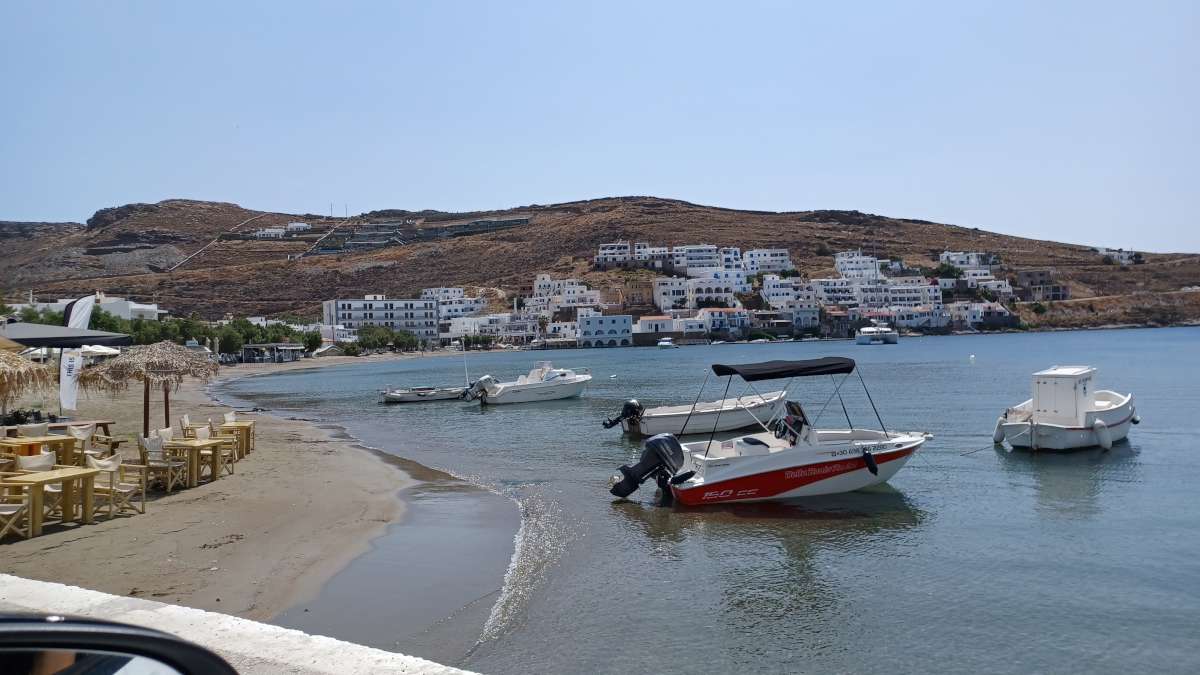
For those arriving by yacht, Kythnos is one of the finest and most varied cruising destinations in the western Cyclades — an island with a coastline of sufficient complexity and sufficient variety to occupy several days of exploration, with anchorages of excellent holding ground distributed around its perimeter at convenient intervals. The bay of Merichas, the main port, is well sheltered and well equipped. The anchorage at Loutra is calm and atmospheric, the thermal springs visible on the beach. The Kolona sandbar, approached by dinghy from an anchorage to its north, is one of the most memorable natural features available to the cruising sailor in the northern Cyclades. And the many smaller coves of the southern and western coasts — visible from the water, accessible by anchor, and entirely without the facilities and the visitors that the island’s road system attracts — provide the kind of solitary, crystalline, entirely Cycladic swimming that the sailing life in these waters is, at its best, entirely composed of.
Why Choose Kythnos
Kythnos is the island for the Athenian who wants their nearest and most reliable escape, for the sailor who wants the western Cyclades with the finest variety of anchorages in the group, and for the international traveller who wants the authentic Cycladic experience — the traditional villages, the genuine community life, the extraordinary variety of beaches, and the quiet warmth of an island that receives its visitors with the uncomplicated hospitality of a place that has always had more guests than it has had reasons to impress them — in a destination that the mainstream currents of international tourism have not yet reached and that retains, in consequence, the particular and increasingly precious quality of being entirely and completely itself.
The thermal springs add a dimension of wellness and recuperation entirely unique in the northern Cyclades — making Kythnos the natural destination for those who want to combine the pleasures of sailing and swimming and eating well with the additional and deeply agreeable pleasure of ending each day in waters of natural warmth and natural therapeutic quality. That combination — Cycladic beauty and Aegean sailing and the warm mineral waters of Loutra — is available nowhere else in the archipelago, and it is one of the most complete and most pleasurable combinations that any island in the northern Cyclades can offer.
What Kythnos ultimately provides — for the sailor approaching its coastline in the early morning light, for the walker climbing to Chora through the golden scrubland of the island’s gentle hills, for the bather easing into the warm mineral water at Loutra as the sun sets over the western Cyclades — is the experience of an island at peace with itself: unhurried, genuine, extraordinarily beautiful in its quiet, northern Cycladic way, and entirely content to offer its pleasures to those who seek them out without making any particular effort to be discovered by those who do not. That quality of self-sufficiency and genuine contentment, increasingly rare in the modern travel landscape, is Kythnos’s finest and most enduring gift.