Why Naxos
There are islands in the Aegean that seem to contain within themselves the full idea of what a Greek island can be — not one facet of the experience but all of them simultaneously, offered with a generosity and a completeness that makes every other island in the archipelago feel, by comparison, like a partial answer to a question that Naxos answers whole. Naxos is this island. The largest and most fertile of the Cyclades, rising to nearly 1,000 metres at the summit of Mount Zas — the highest peak in the entire Cycladic archipelago, named for Zeus himself, who according to mythology was raised in a cave on its slopes — Naxos combines the white-village beauty of the classic Cycladic aesthetic with a landscape of extraordinary interior richness: deep green valleys of citrus and olive groves, medieval Venetian towers and fortified villages on hilltop ridges, ancient marble quarries whose half-finished kouroi still lie abandoned in the landscape as though the sculptors left only yesterday, and a coastline of such length and variety that sailing its full perimeter without stopping to explore would take the better part of a week. Naxos does not ask you to choose between the pleasures of the sea and the pleasures of the land. It offers both, in abundance, without reservation.
The island’s fertility — the result of its size, its elevation, and the freshwater springs that rise from its limestone geology — has made it one of the most agriculturally productive islands in the Cyclades for millennia, and the quality of what that productivity generates remains today one of the most compelling reasons to visit. The Naxian potato, grown in the island’s central valley and considered by Greek chefs to be among the finest in the country, is a staple of every kitchen on the island. The local cheese — graviera and arseniko, produced from the milk of the island’s free-ranging sheep and goats in quantities large enough to supply much of the Cyclades — is of outstanding quality. The Kitron liqueur, distilled from the leaves of the citron tree that grows uniquely on Naxos and nowhere else in Greece, is one of the most distinctive local products in the entire Aegean. And the wine, produced from ancient vineyards on the island’s sun-facing slopes, is the honest, characterful, entirely drinkable expression of a winemaking tradition stretching back to antiquity and to the island’s mythological association with Dionysus himself — the god of wine who, legend tells us, found the abandoned Ariadne on the beach of Naxos and made her his bride.
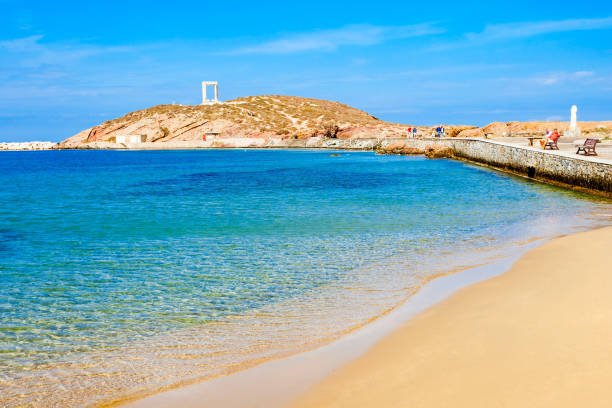
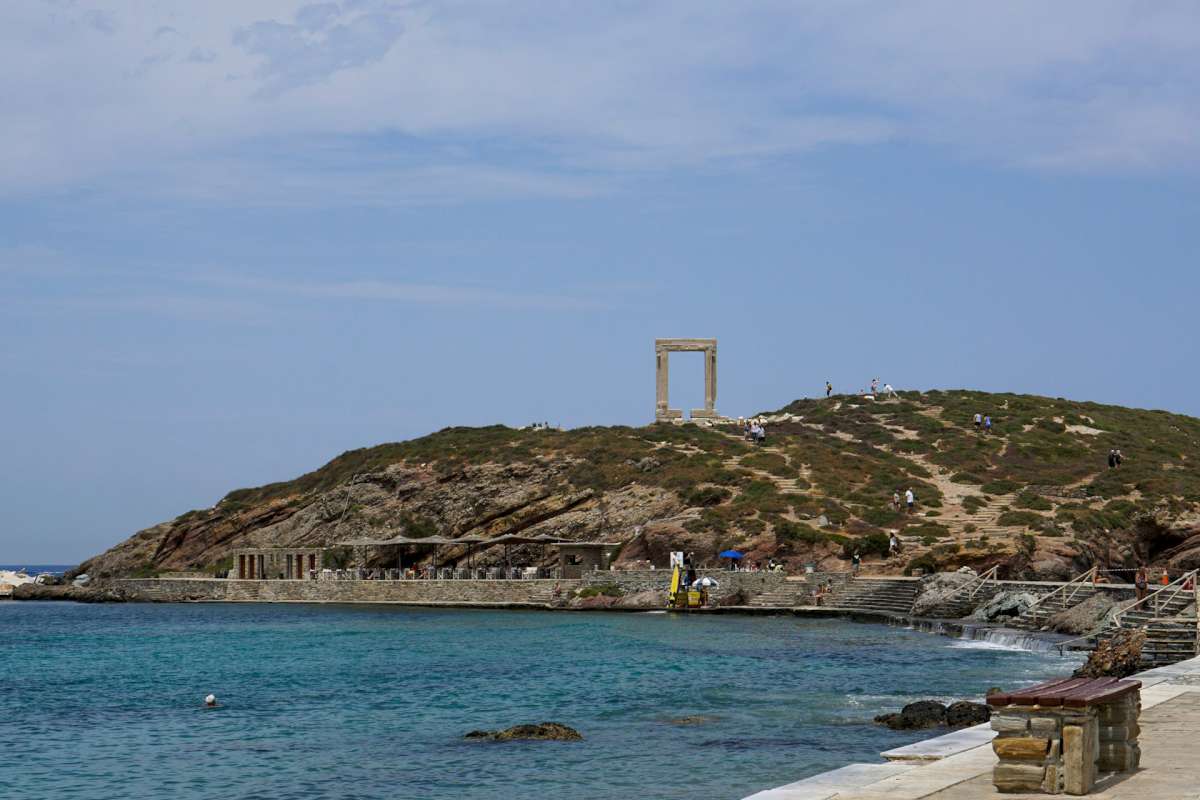
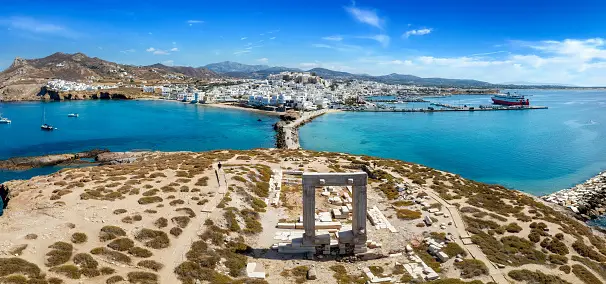
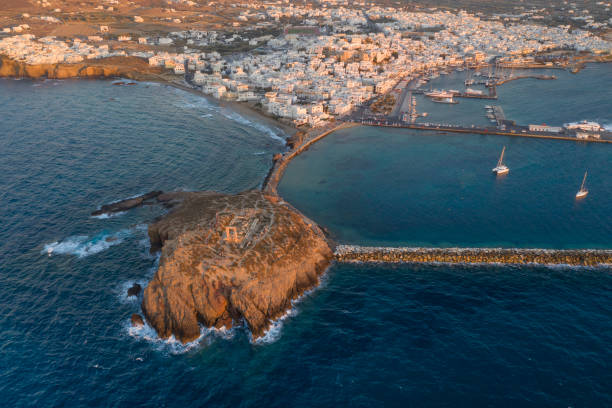
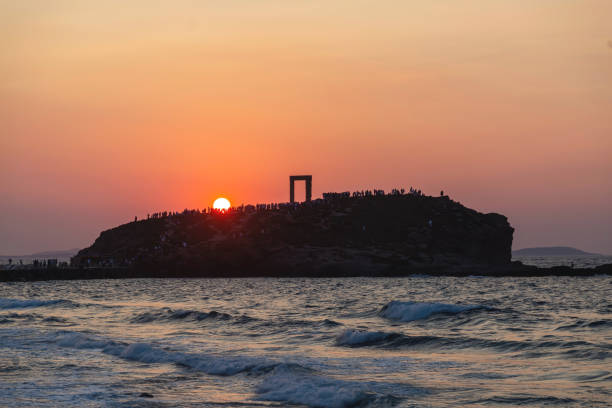
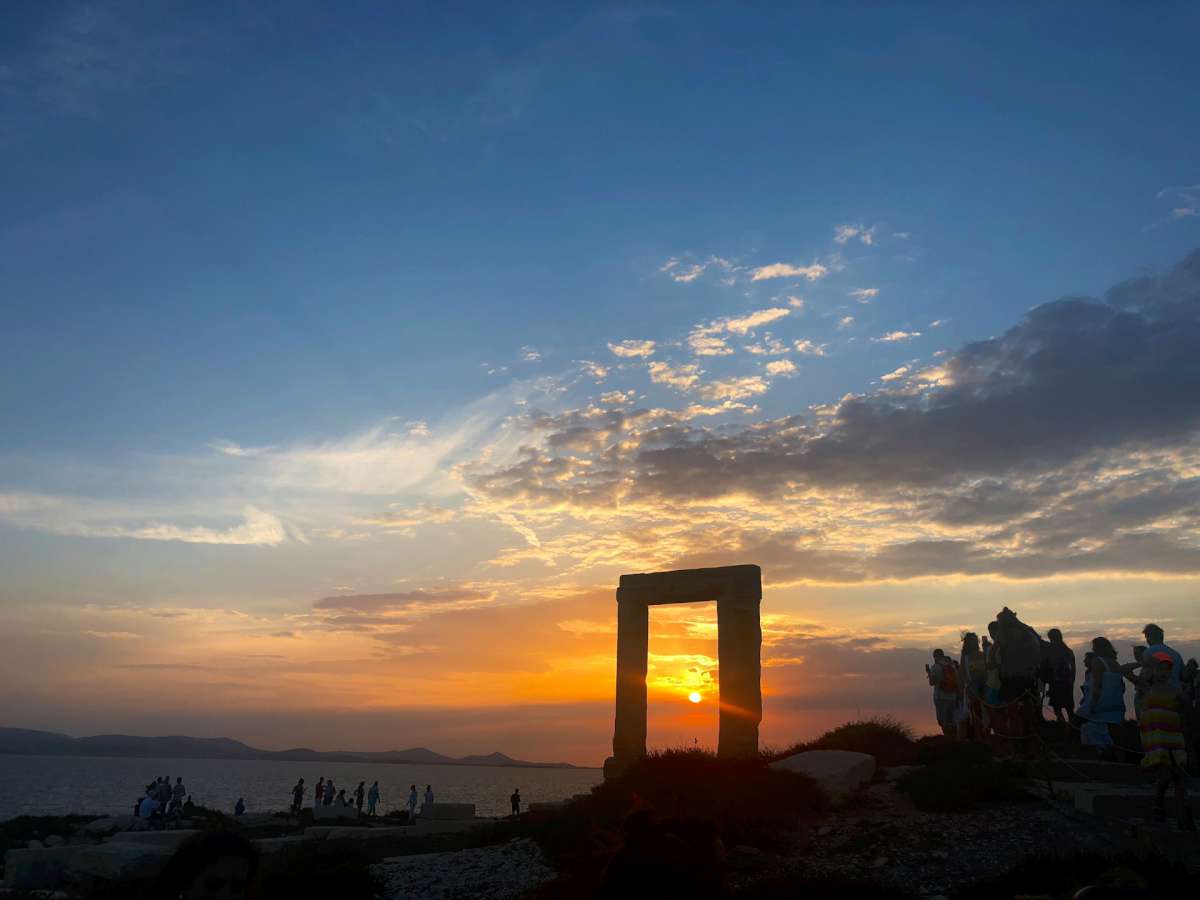
That mythological inheritance — Dionysus and Ariadne, Zeus and the cave of Zas, the labours of Theseus played out on the island’s shores — gives Naxos a depth of classical resonance that amplifies and enriches every element of its physical beauty. Standing before the great Portara — the marble doorway of the unfinished Temple of Apollo that dominates the islet at the entrance to Naxos harbour, silhouetted against the sunset in one of the most iconic images in Greek island photography — you are not merely looking at an architectural ruin of the 6th century BC. You are standing at the intersection of history and myth, of stone and sea and light, that is the deepest and most defining characteristic of the Greek island experience at its most complete.
What to Do and What to See
Naxos rewards the visitor who approaches it with the ambition its scale deserves — who is willing to move between its beaches and its mountain villages, its archaeological sites and its Venetian castles, its harbour town and its silent interior valleys, with the same curiosity and the same willingness to be surprised that the island brings to every one of its multiple and magnificent personalities.
The Portara and Naxos Town
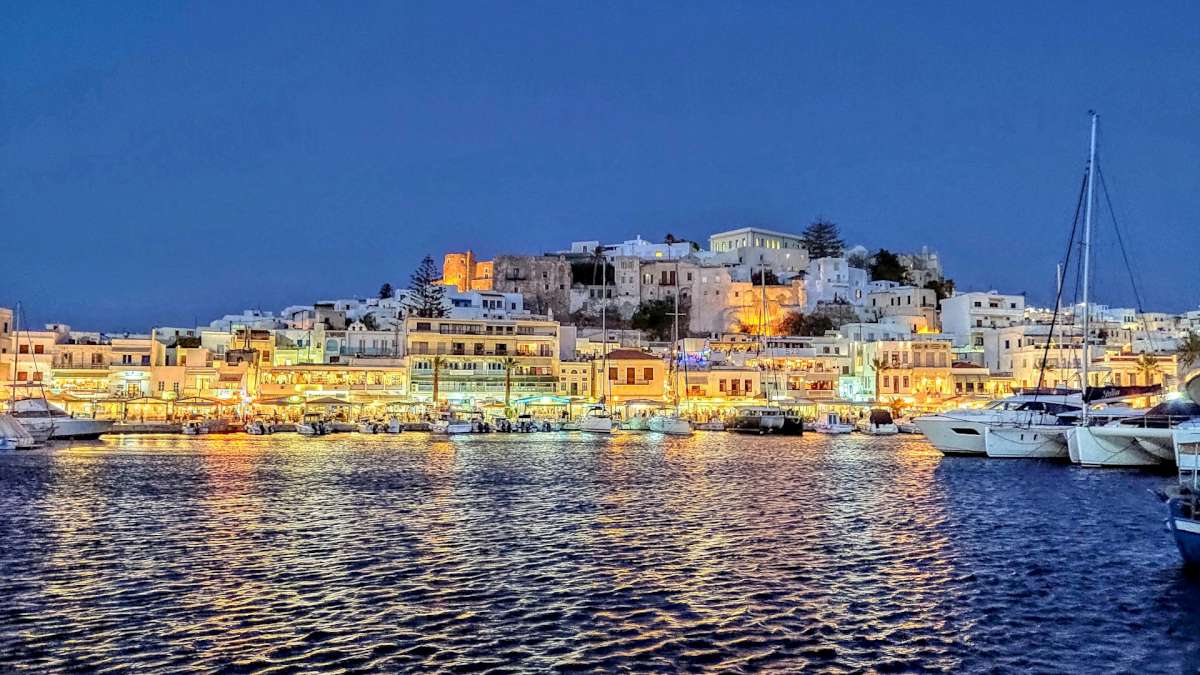
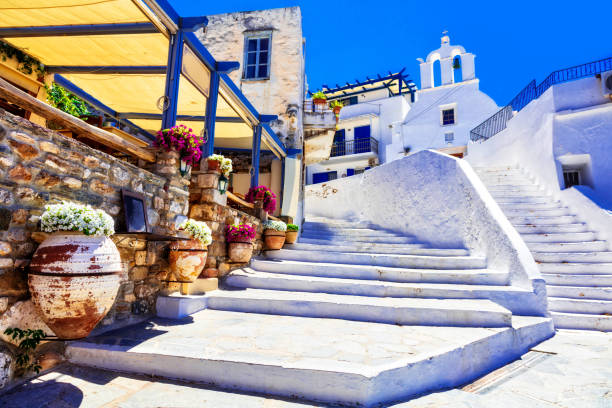
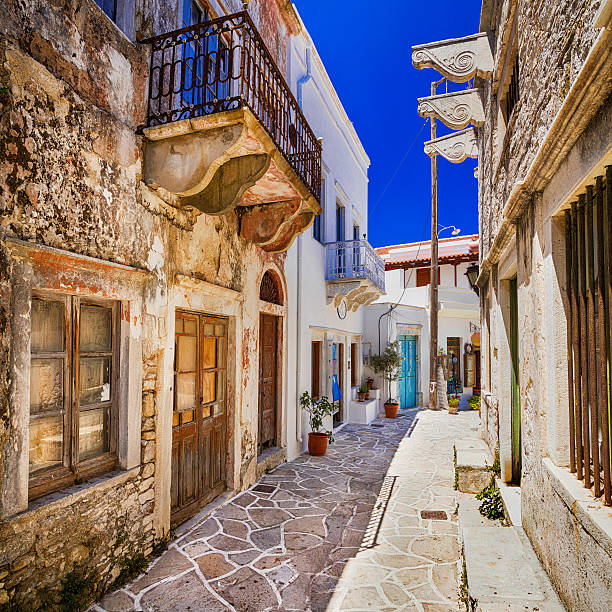
The harbour town of Naxos — Chora — is one of the finest and most complete island capital experiences in the Cyclades. Behind the waterfront, the old town climbs the hill in a labyrinth of marble-paved lanes, vaulted passageways, and whitewashed houses that culminates in the Venetian Kastro — a medieval fortified settlement of extraordinary architectural integrity whose interior lanes, neoclassical Catholic churches, and surviving tower houses speak of seven centuries of Venetian and Frankish occupation with unusual completeness and unusual beauty. The Archaeological Museum within the Kastro houses one of the finest collections of Cycladic and ancient art outside Athens, including Early Cycladic figurines of outstanding quality and a series of magnificent Archaic kouroi. And at the harbour entrance, the great Portara — two marble columns and a lintel standing 6 metres high on the islet of Palatia, the unfinished gateway of a temple to Apollo begun in the 6th century BC and never completed — provides the island’s most iconic image and its most powerful symbol of ambition, of incompleteness, and of the extraordinary persistence of the ancient world in the landscape of the living Aegean.
The Kouroi of Flerio and Apollonas
In two separate locations on Naxos — at Flerio in the island’s fertile central valley and at Apollonas on the northern coast — unfinished marble kouroi of massive scale lie abandoned in the landscape exactly as they were left by their sculptors in the Archaic period, the circumstances of their abandonment unknown and the effect of their presence in the open countryside, half-emerged from the living rock, of a strangeness and a beauty that no museum context could replicate. The kouros at Apollonas is the largest — over 10 metres long, lying on its back in an ancient quarry above the sea, its features still clearly visible and its sheer scale genuinely astonishing. The two kouroi at Flerio, lying in a garden of citrus trees and running water, are smaller but more detailed and more atmospherically situated. Together, these three abandoned sculptures constitute one of the most remarkable open-air experiences of ancient Greek art available anywhere in the Cyclades — a direct, unmediated encounter with the ambition and the craft of the Archaic sculptors in the very landscape from which their material was drawn.
The Venetian Villages of the Interior
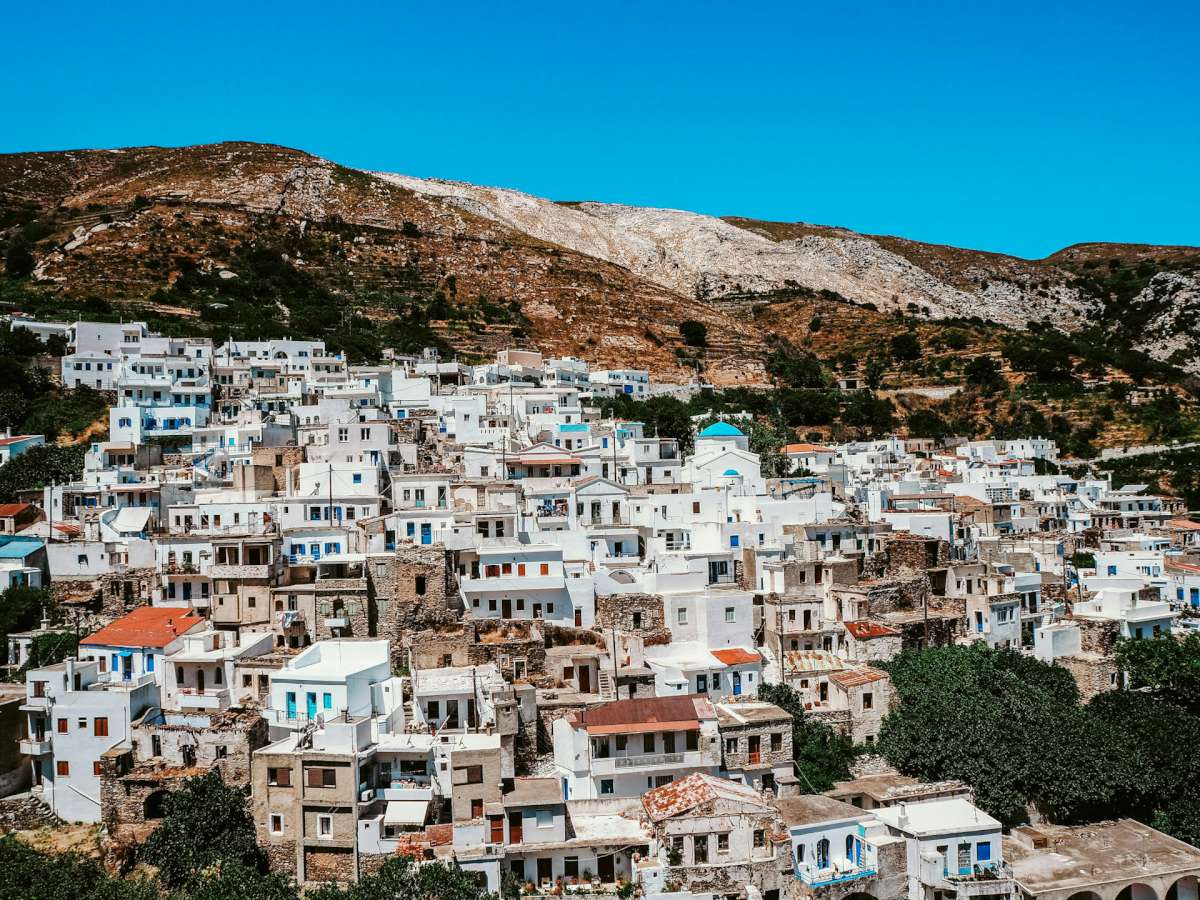
Across the mountainous interior of Naxos, a network of medieval Venetian tower-villages — Halki, Filoti, Apeiranthos, Koronos — preserves one of the most complete and most beautiful examples of Frankish-era island architecture in the Aegean. Apeiranthos is the finest of these — a dense, dark, marble-built village of extraordinary character, its lanes paved in white marble and its tower houses built from the same dark grey schist that gives the village its dramatic and entirely distinctive appearance. The small Archaeological Museum in Apeiranthos contains Early Cycladic finds of considerable quality. The village kafeneion serves the best locally produced wine on the island. And the overall impression of Apeiranthos — its confident, slightly austere beauty, its evident pride in its own identity, and the views across the island’s eastern valleys from its marble lanes — is of a place entirely unlike any other in the Cyclades and entirely, permanently memorable.
Mount Zas and the Walking Routes
At the summit of Mount Zas — accessible via a well-marked path from the village of Filoti that passes the cave where Zeus was said to have been raised — the view encompasses the entire Cyclades on clear days: Paros, Ios, Santorini, Mykonos, Amorgos, the Small Cyclades, and the distant mountains of the Turkish coast visible on the horizon. The walk is one of the finest mountain walks in the island world — through a landscape of increasing wildness and increasing beauty, past ancient cisterns and abandoned terraces and the flowering scrub of the high Cycladic slopes — and the summit, when reached, delivers a panorama of genuinely staggering scope. Naxos has an extensive network of well-marked walking paths connecting its villages and beaches through this extraordinary interior landscape, and the walking here — combining mountain and valley, ancient path and Venetian village, coastal views and inland forests — is among the finest in the Greek islands.
The Beaches
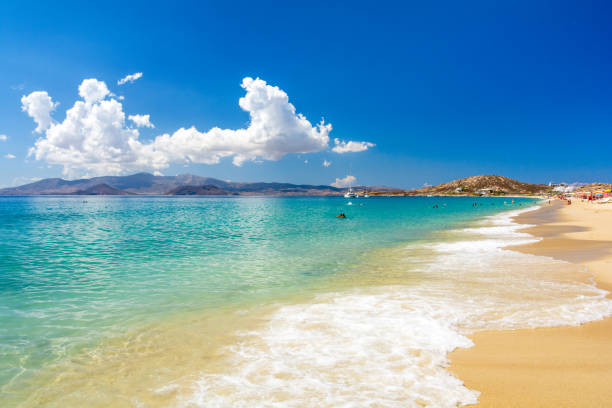
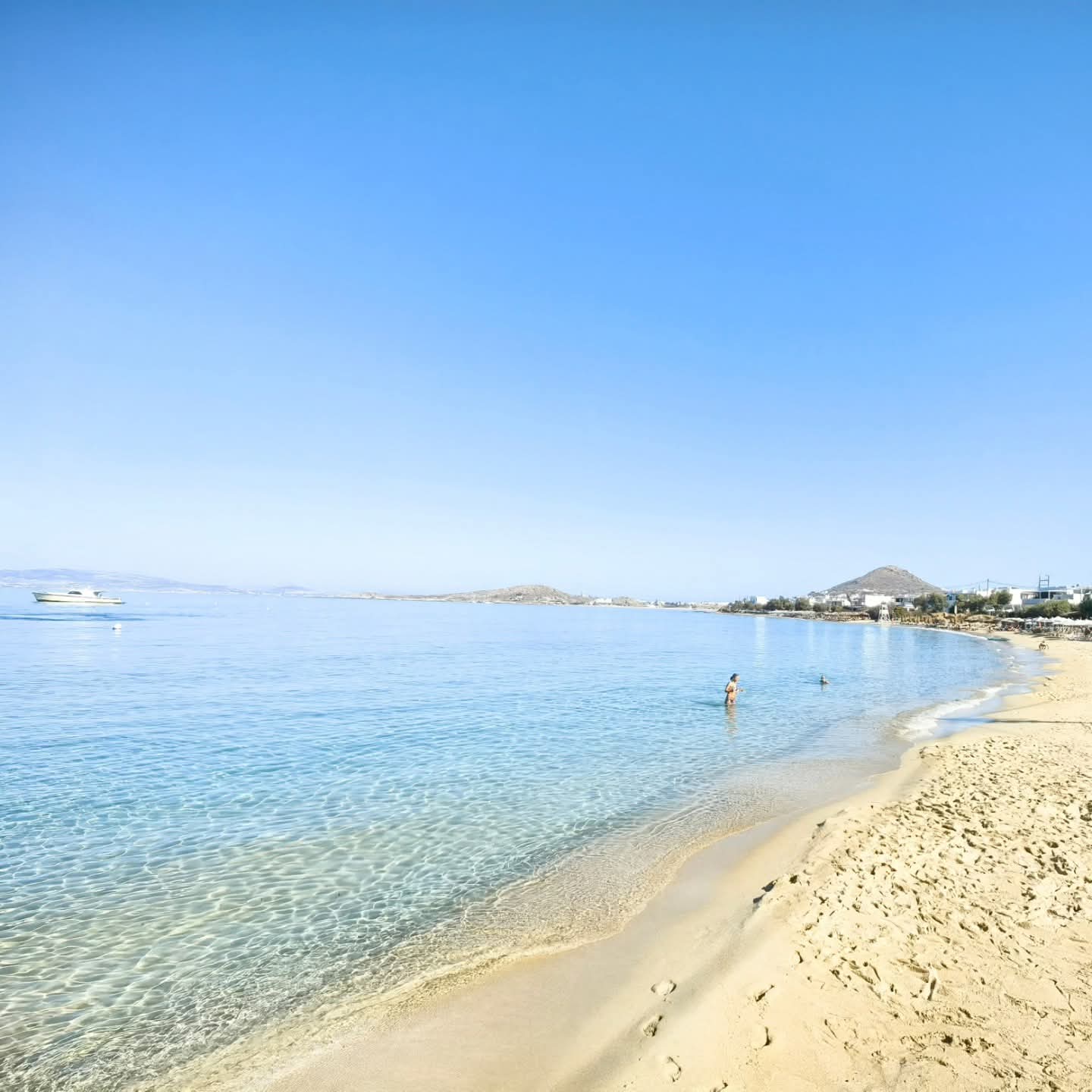
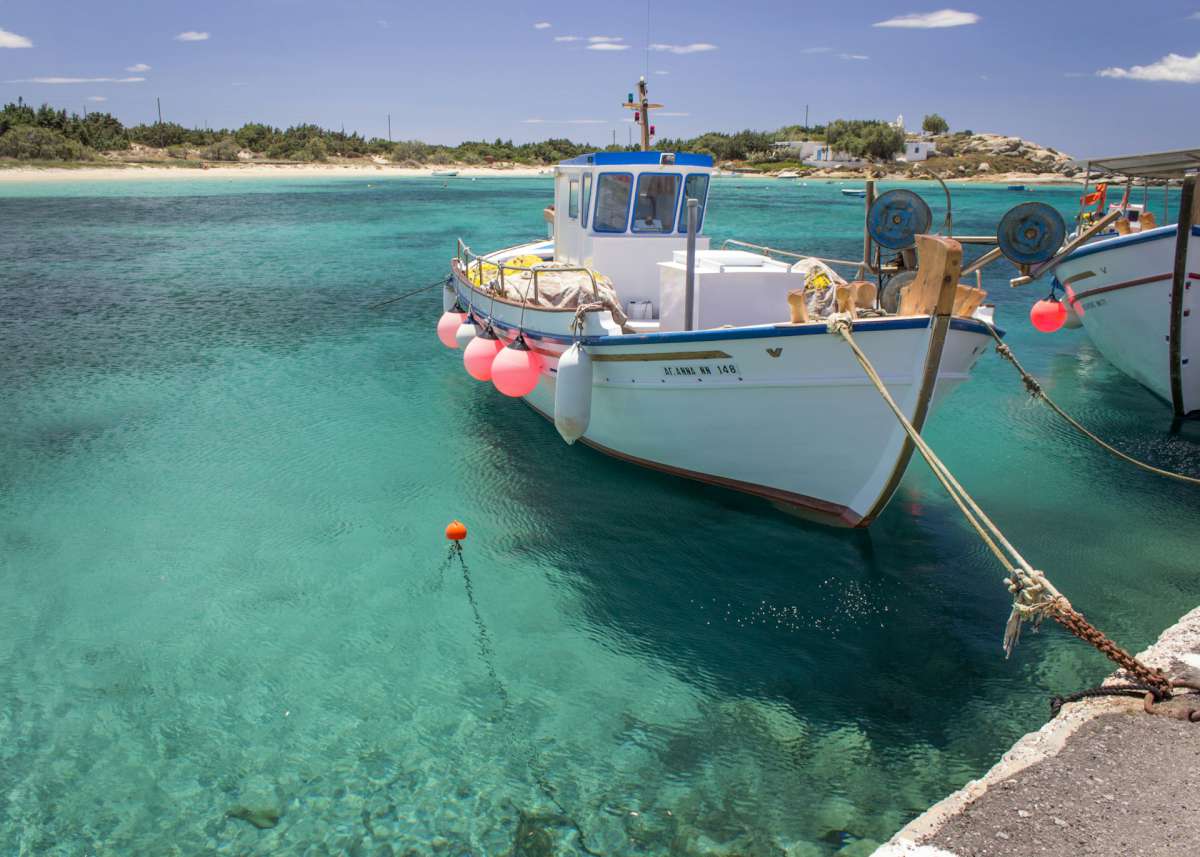
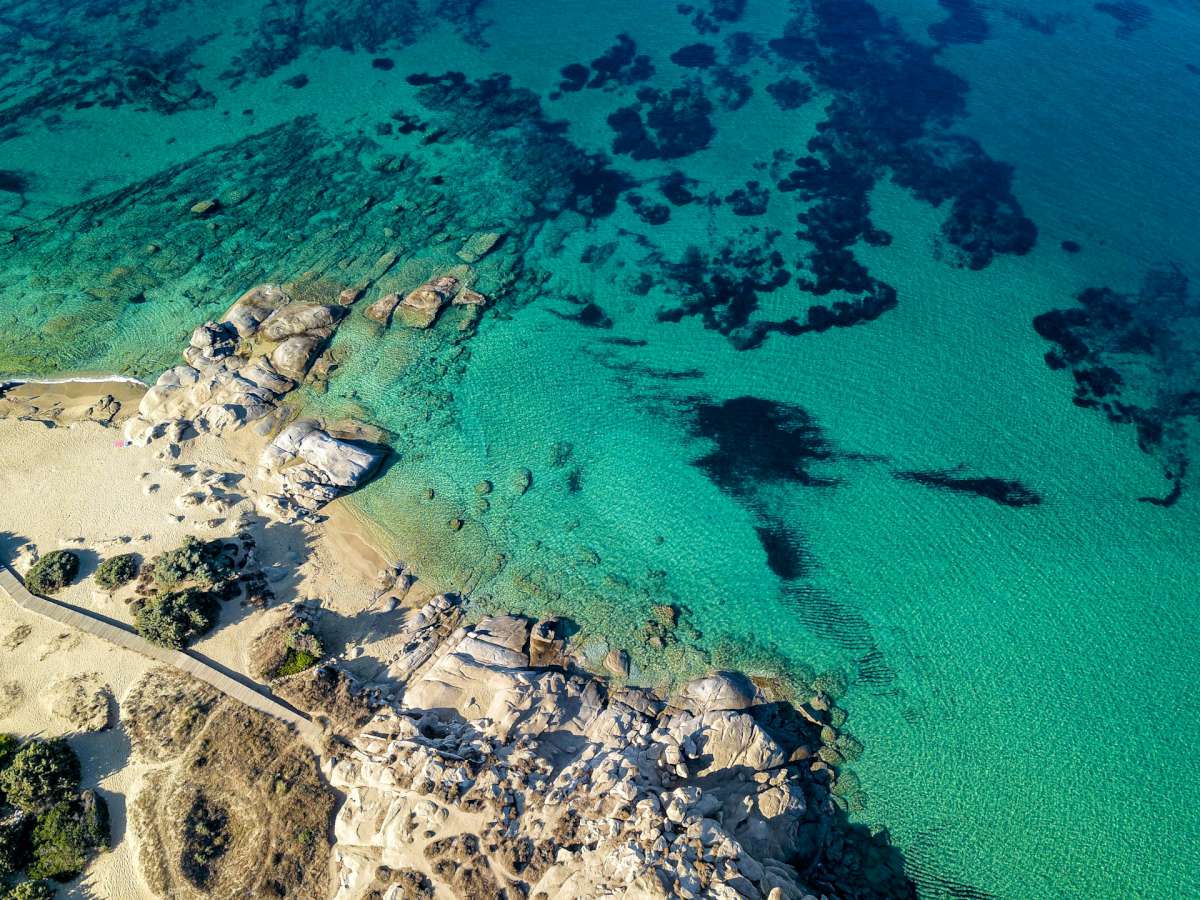
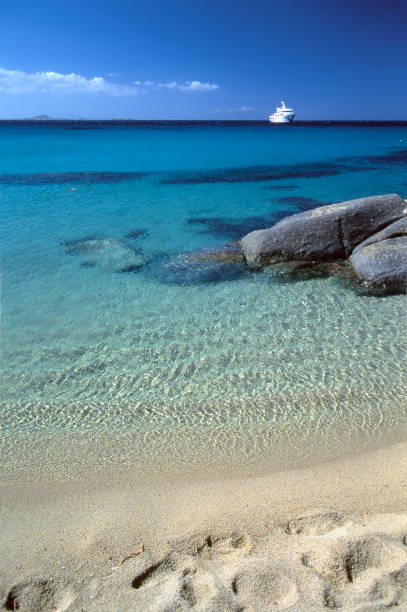
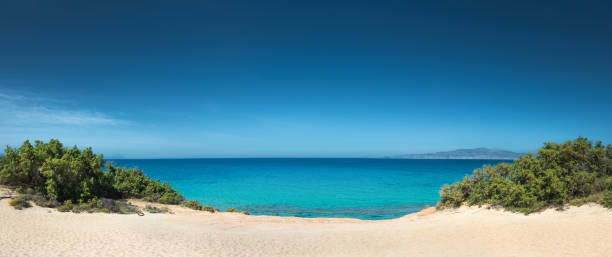
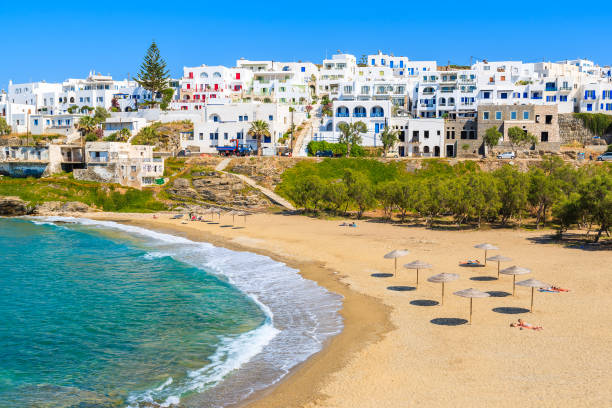
Naxos has the finest and most varied coastline of any Cycladic island — a succession of beaches along its long western shore that progresses from the relatively organised and accessible in the north to the increasingly wild and increasingly beautiful in the south. Agios Prokopios and Agia Anna, immediately south of the harbour, are long, sandy, and well-equipped — the most popular and the most complete beach destinations on the island. Plaka, further south, is wider, quieter, and magnificent — a broad sweep of fine white sand and shallow turquoise water that extends for several kilometres without a break and offers, particularly in the early morning before the day visitors arrive, a quality of space and natural beauty entirely appropriate to the largest island in the Cyclades. Mikri Vigla, at the southern end of the beach sequence, is the windsurf and kiteboard capital of the Cyclades — the consistent meltemi winds and the shallow, sandy lagoon behind the beach creating conditions of international competition standard that draw riders from across Europe each summer.
Why Choose Naxos
Naxos is the island for everyone — and that is not a marketing slogan but a genuine statement of fact about an island so varied in its pleasures and so generous in its provision of them that it genuinely accommodates every kind of traveller with equal completeness. Families find the long, safe, sandy beaches and the calm shallow water of the western coast incomparable. Sailors find a large, well-sheltered harbour and a coastline of extraordinary variety. Food lovers find the finest local produce in the Cyclades — cheese, potato, wine, Kitron, fresh fish — served in excellent tavernas across the island. History and archaeology enthusiasts find the Portara, the Kastro, the kouroi, the Venetian villages, and one of the best archaeological museums in the islands. Walkers find a mountain landscape of real challenge and real reward. Windsurfers find world-class conditions. And those who simply want to sit on a great beach in beautiful water with the certainty that a fine dinner awaits them in the evening find, in Naxos, exactly that — provided with a completeness and a consistency that no other Cycladic island can quite match.
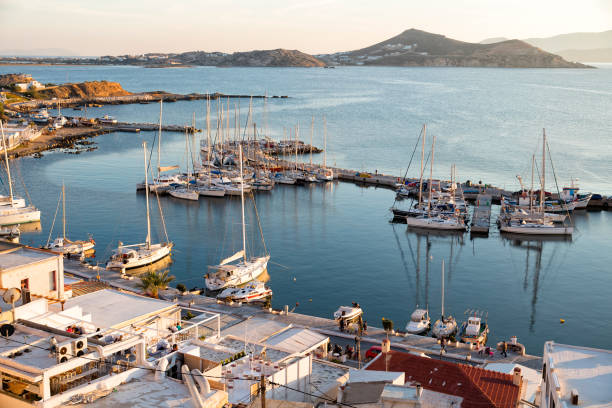
For sailing itineraries in the central Cyclades, Naxos is the natural hub — the largest harbour, the best provisioning, the widest variety of anchorages, and the most rewarding shore-side exploration in the group. The passages between Naxos and its neighbours — Paros to the west, the Small Cyclades to the southeast, Mykonos to the north, Ios and Santorini to the south — are among the most beautiful and most manageable short passages in the Cyclades, and the combination of Naxos as a base with day sails to the surrounding islands creates an itinerary of exceptional variety and exceptional quality.
What Naxos ultimately is — and what it has always been, through antiquity and Venetian occupation and Ottoman rule and the long modern history of the Greek state — is the most complete island in the Cyclades. Not the most dramatic, not the most fashionable, not the most photographed. The most complete. The island that has everything, that gives everything, and that sends every visitor away with the particular satisfaction of a place that did not merely meet expectations but exceeded them so thoroughly and so generously that the only reasonable response is to start planning the return.