Why Mykonos
There are islands that have become something larger than themselves — places that have transcended the merely geographical to become ideas, symbols, and states of mind that resonate far beyond the shores of the island that generated them. Mykonos is the supreme example of this transformation in the entire Greek island world. A small, relatively flat, wind-scoured island of bare granite and brilliant white architecture in the heart of the Cyclades, Mykonos has built, over the course of six decades of international fame, a reputation as one of the most glamorous, most hedonistic, and most completely alive summer destinations on the planet — a place where the world’s most beautiful people come to dance, to see and be seen, to eat magnificently and drink extravagantly and stay until the sun comes up over the Aegean, and to do all of this in a setting of such complete and such completely genuine natural and architectural beauty that the glamour, which might elsewhere feel hollow, here feels entirely earned and entirely appropriate. Mykonos is famous because it deserves to be famous. It is beautiful, it is alive, and it offers its visitors a quality and a variety of pleasure that very few places on earth can match.
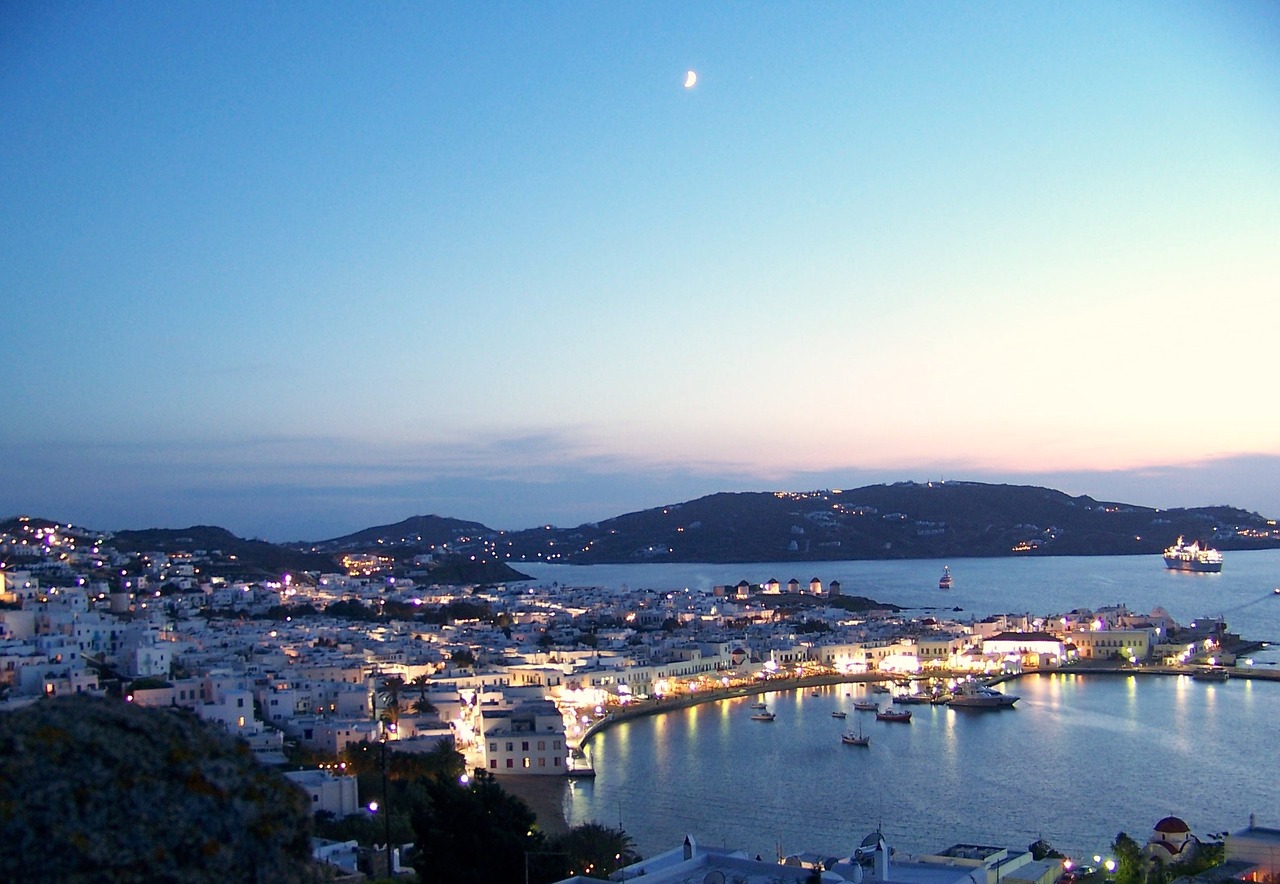
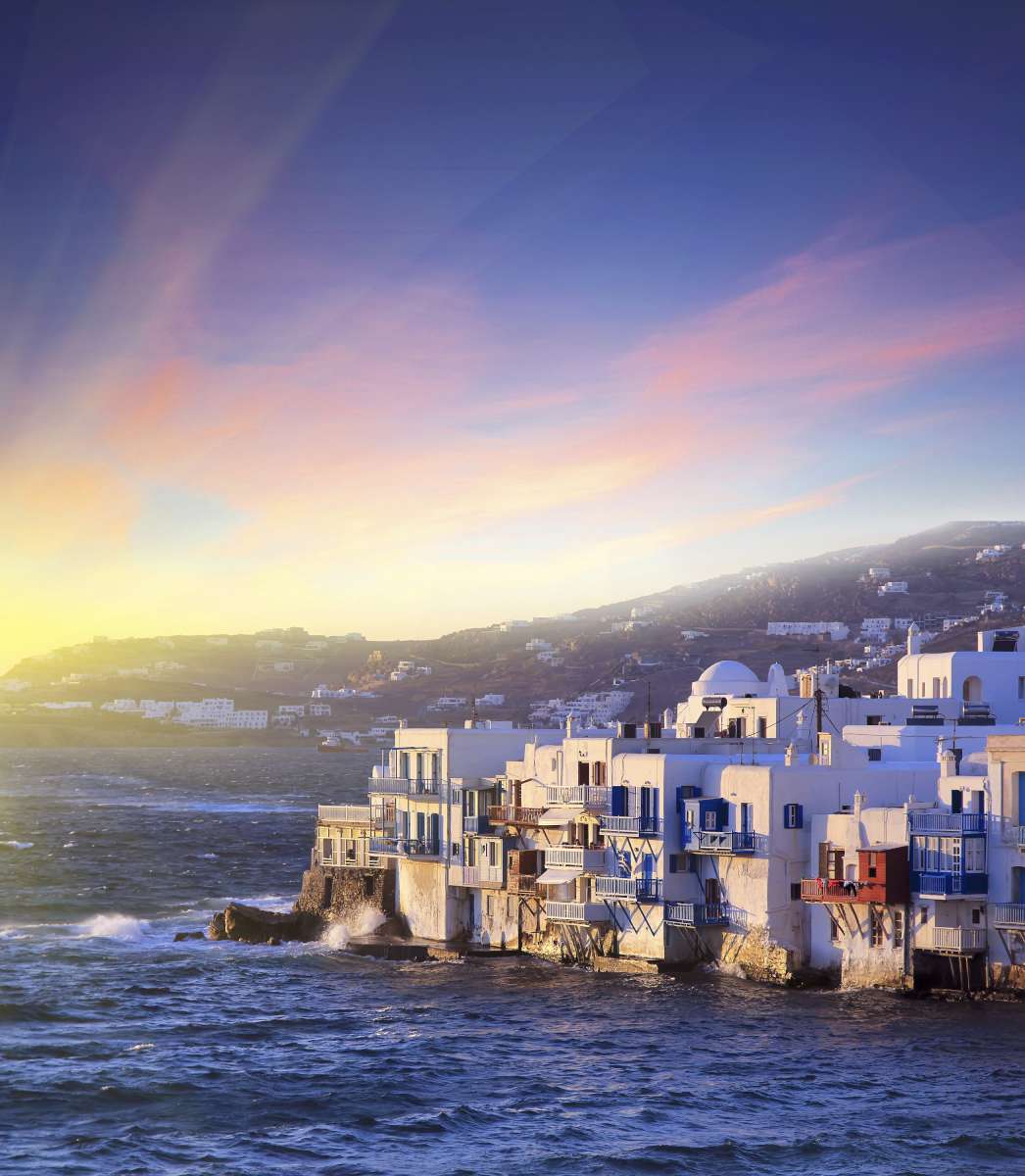
And yet Mykonos is also, beneath the international reputation and the summer spectacle, a real Cycladic island of great beauty and great character — an island whose fishing tradition and maritime heritage predate the tourism by centuries, whose architecture is among the most perfectly composed and most completely authentic in the entire Cyclades, whose local community retains a pride and an identity that the decades of international attention have tested but not erased, and whose natural setting — the long, white-sand beaches of the southern coast, the wild northern shore beaten by the famous meltemi winds, the extraordinary clear light that falls on white walls and blue domes with an intensity found nowhere else in the Aegean — is of a beauty and a quality that would make it worth visiting even if no one had ever built a beach club or opened a restaurant on it. The famous windmills on the hill above the harbour, the pelicans that wander the lanes of Chora as though they own them, the Little Venice waterfront with its coloured balconies hanging directly above the breaking waves — these things are famous because they are genuinely, uncommonly beautiful, and their familiarity through a million photographs has not diminished their power to astonish the visitor who encounters them in person for the first time.
The wind is the island’s defining physical characteristic and its most reliable constant — the strong, dry, north-northwesterly meltemi that sweeps across the Cyclades each summer with particular force and frequency on Mykonos, cooling the days, roughening the sea on the northern and western coasts, and filling the sails of the visiting yacht fleet with an enthusiasm that has made the waters around the island some of the finest recreational sailing in the Aegean. The meltemi is why Mykonos was originally poor — its force made agriculture difficult and its unpredictability made fishing dangerous — and it is partly why Mykonos is now famous, its cooling effect making the island one of the most comfortable places in the Cyclades during the height of summer, and the spectacle of it filling the famous windmills’ sails providing one of the most endlessly photographed images in all of Greek island tourism.
What to Do and What to See
Mykonos rewards every kind of visitor with equal generosity — the culturally curious and the hedonistically inclined, the beach lover and the architecture enthusiast, the sailor and the foodie, the couple seeking romance and the group seeking the finest nightlife in the Mediterranean. Its pleasures are multiple, its quality is consistent, and the combination of natural beauty, architectural magnificence, cultural heritage, and world-class hospitality makes it one of the most completely satisfying and most completely alive destinations in the entire Greek island world.
Mykonos Town — Chora
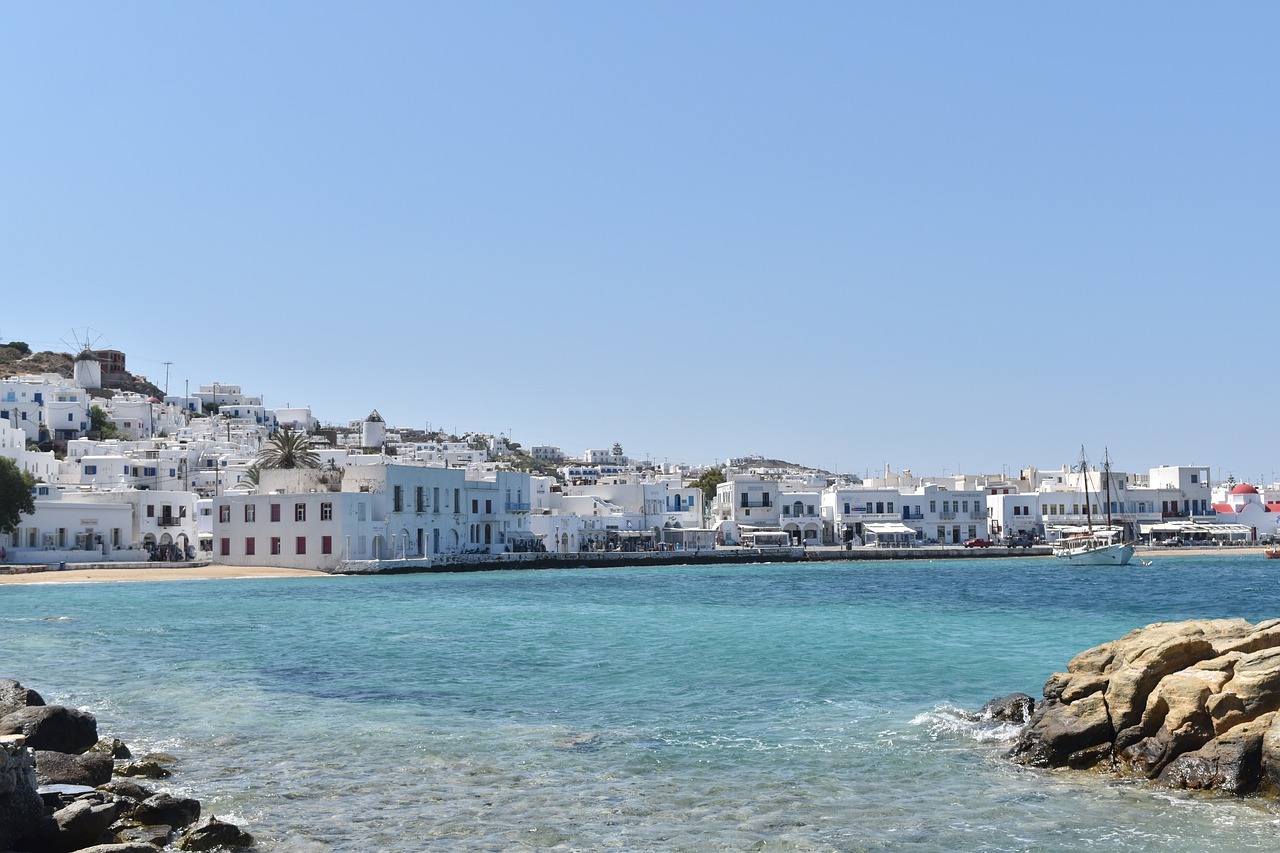
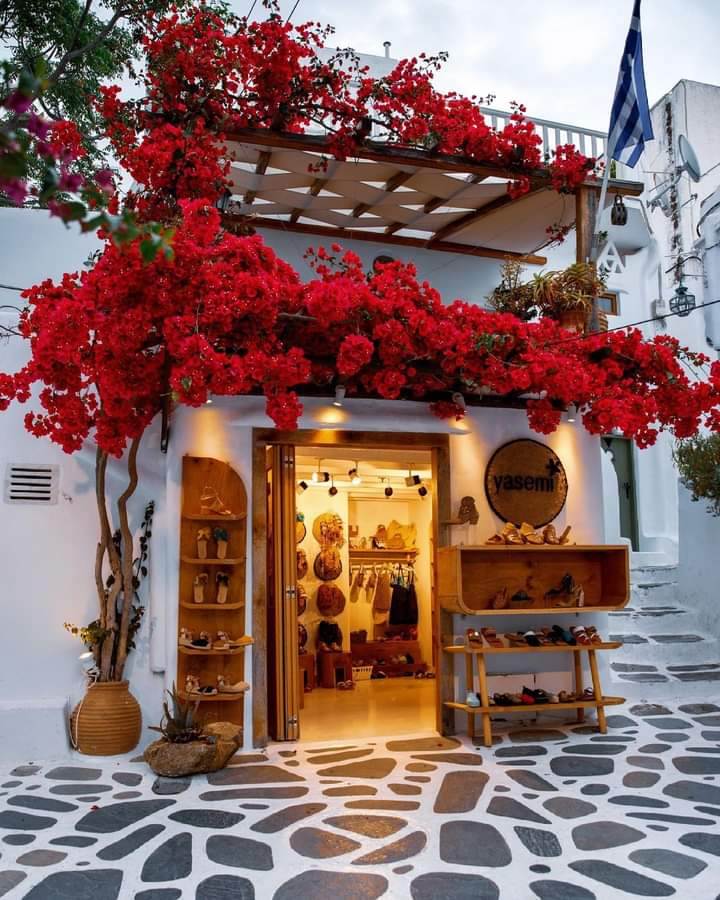
The town of Mykonos — Chora — is one of the most beautiful and most completely composed urban environments in the Cyclades. Its dense network of narrow, marble-paved lanes, whitewashed to a brilliance that seems almost to generate its own light, was designed — tradition holds — as a deliberate labyrinth to confuse the pirates who periodically raided the island, and the result is a townscape of such organic complexity and such continuous visual surprise that even those who know it well find themselves discovering new lanes, new squares, and new perspectives on familiar buildings with every visit. The lanes are lined with boutiques, galleries, jewellers, and restaurants of the highest international quality, and the social energy of Chora — the constant movement of people from every nation and every background, the sound of music drifting from open doorways, the scent of jasmine and sea air — is unlike anything else in the Cyclades and unlike almost anything else in the Mediterranean.
Little Venice
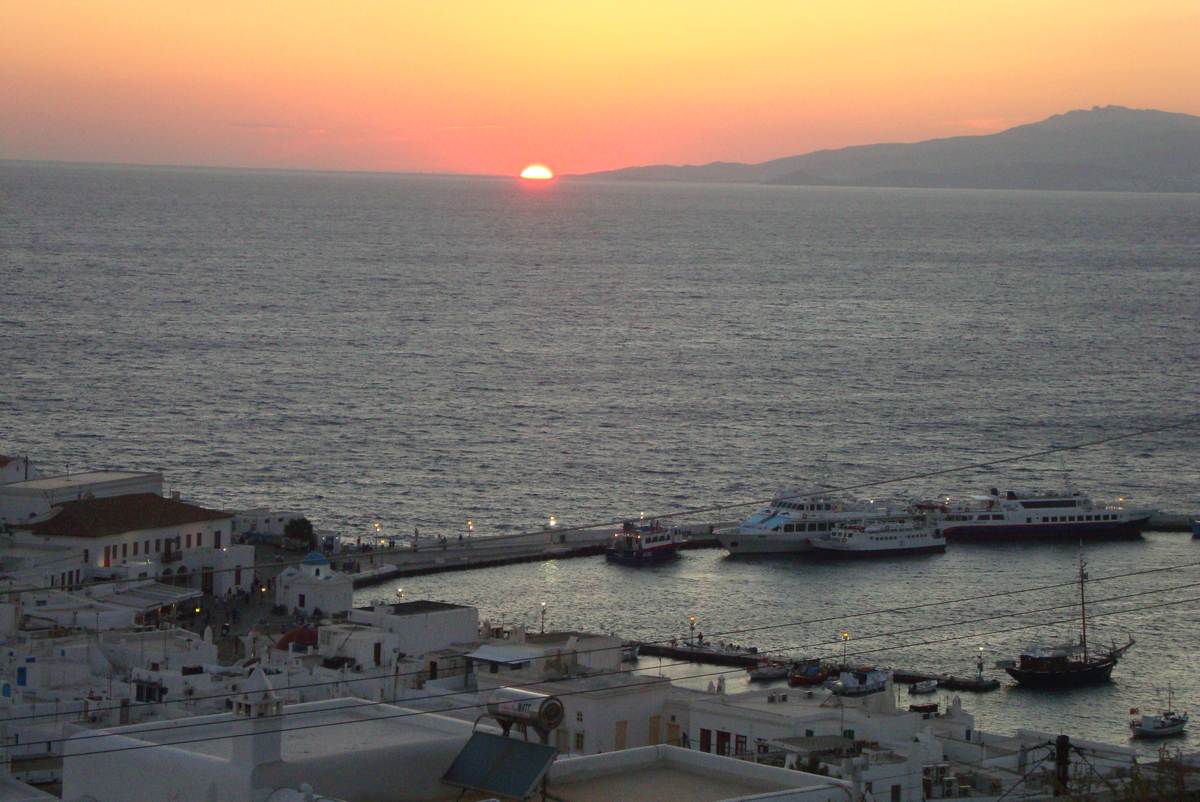
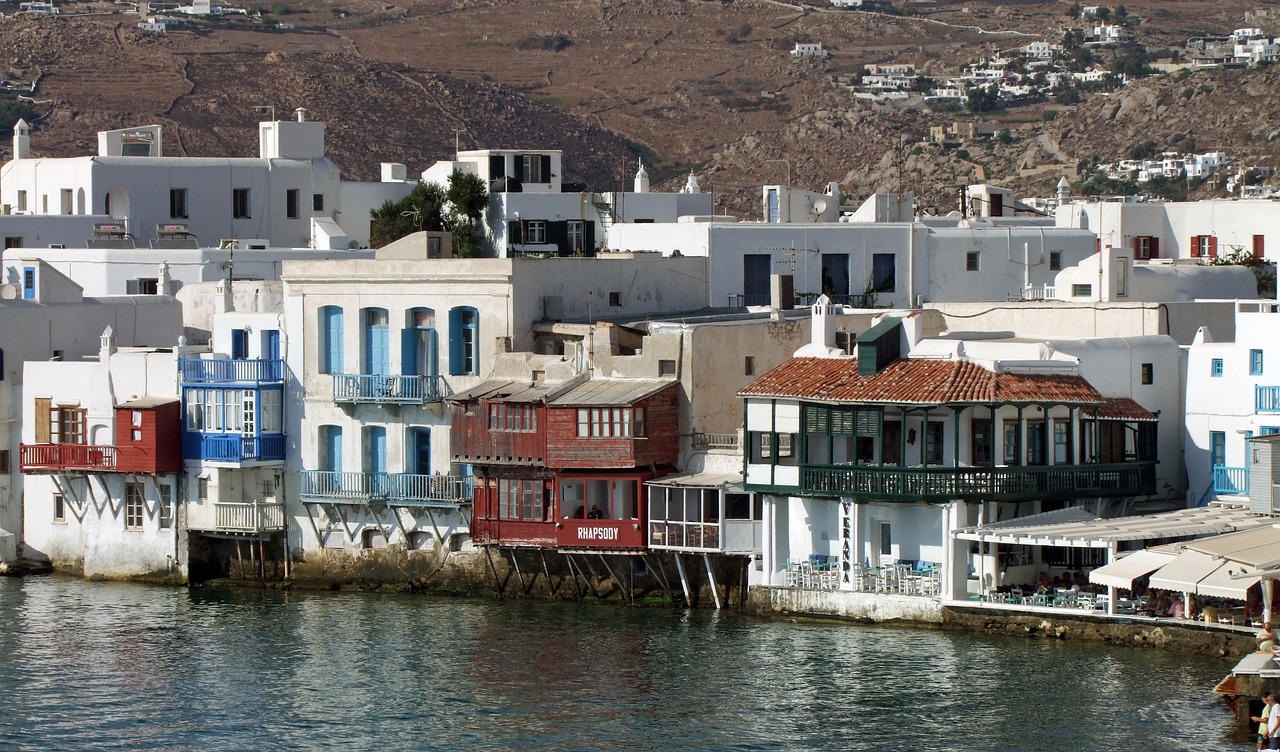
On the western edge of Chora, the neighbourhood known as Little Venice — Alefkandra — is the island’s most iconic and most completely beautiful single waterfront scene: a row of 18th-century sea captains’ houses built directly on the water’s edge, their coloured wooden balconies projecting over the sea with a reckless, romantic confidence, the waves breaking directly against their foundations in a display that is simultaneously beautiful and slightly alarming. The cafés and bars occupying the ground floors of these houses — their tables set on platforms barely above the waterline — are the finest places in Mykonos to watch the sun set over the sea, the brilliant orange light catching the coloured facades of the houses and the white foam of the breaking waves in a scene of such complete and such completely unrepeatable beauty that the crowds it attracts are entirely understandable and entirely forgivable.
The Windmills
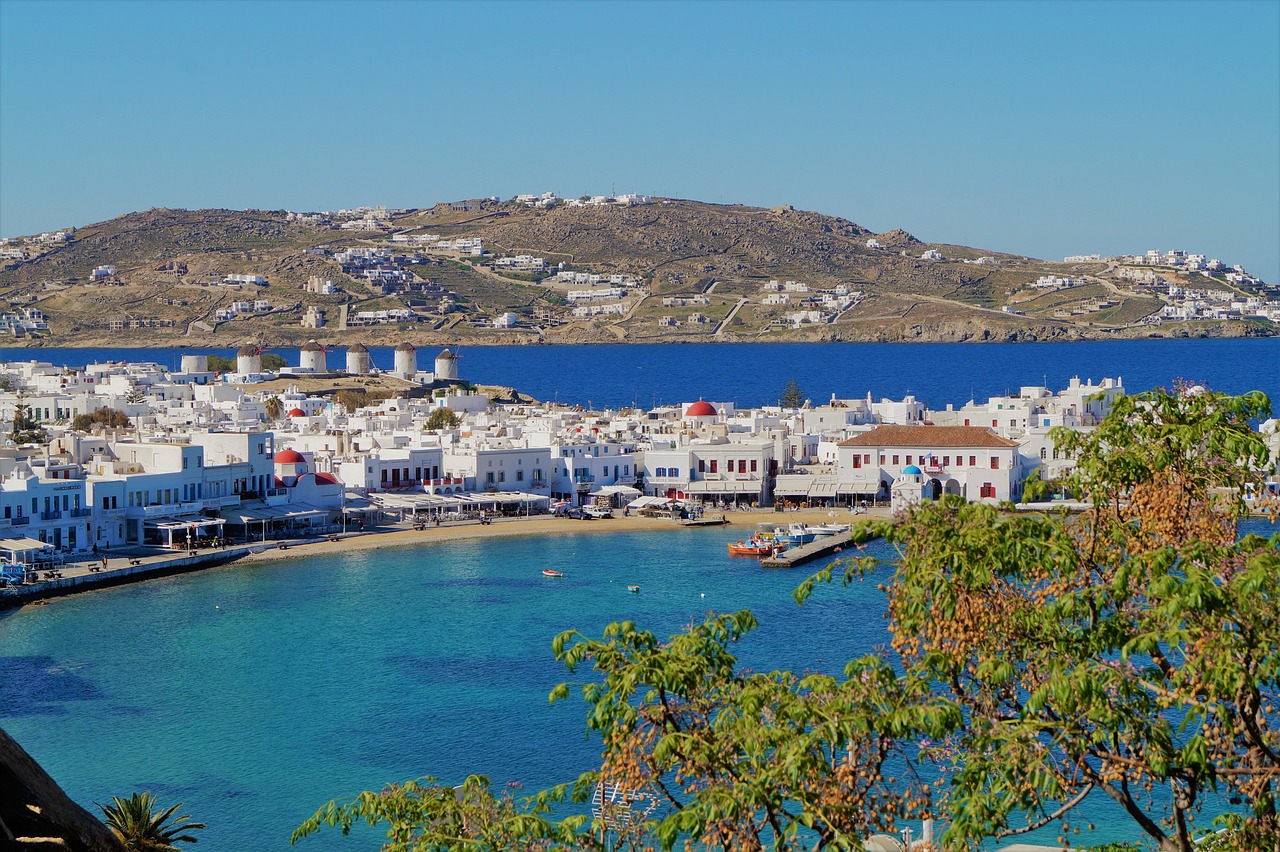
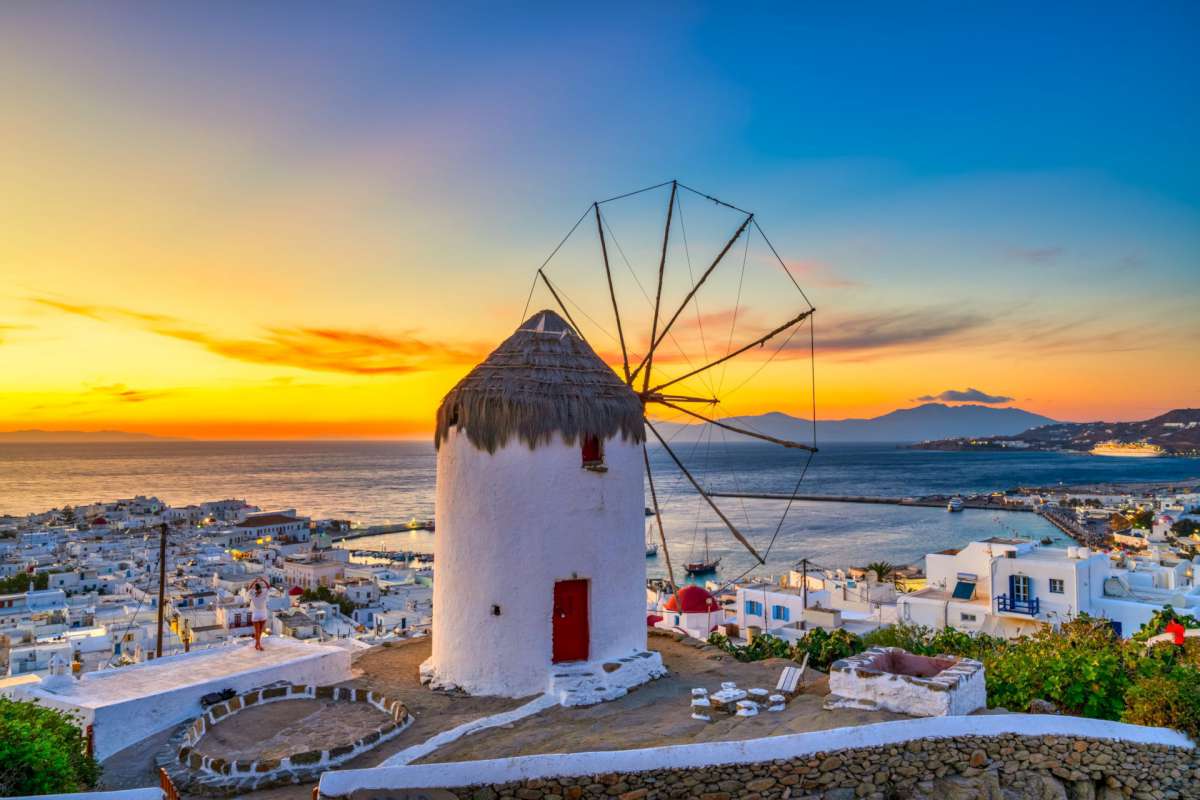
Above the harbour and Little Venice, the row of 16th-century Venetian windmills that stand on the Kato Myli ridge is the most recognisable image of Mykonos and one of the most recognisable images in all of Greek island photography. Built by the Venetians to mill the wheat that Mykonos received from grain-producing islands, the windmills are now beautifully preserved landmarks that offer, from the path below them, one of the finest combined views of Chora, the harbour, and the surrounding sea available from any point on the island. The best time to photograph them — and the best time to simply stand and look at them — is the hour before sunset, when the light falls on their white cylindrical towers and their thatched wooden caps from a low, horizontal angle that makes even the most indifferent photographer produce images of remarkable quality.
Delos — The Sacred Island
A short boat ride from Mykonos harbour, the uninhabited island of Delos is one of the most important ancient sites in the entire Mediterranean world — the mythological birthplace of Apollo and Artemis, the religious centre of the ancient Aegean, and at the height of its power in the 2nd and 1st centuries BC one of the most important commercial ports in the ancient world. The archaeological site of Delos is extraordinary in its scale and its state of preservation: the Sacred Lake, the Terrace of the Lions, the House of Dionysus with its famous mosaic floor, the ancient theatre, the remarkably well-preserved private houses of the Hellenistic merchant community with their magnificent floor mosaics still intact — together they constitute one of the finest ancient sites in Greece, available as a day excursion directly from the Mykonos harbour in a crossing of barely 30 minutes. For those arriving by yacht, anchoring off Delos and visiting the site in the early morning, before the day boats arrive from Mykonos, is one of the most completely rewarding cultural experiences available in the central Cyclades.
The Beaches
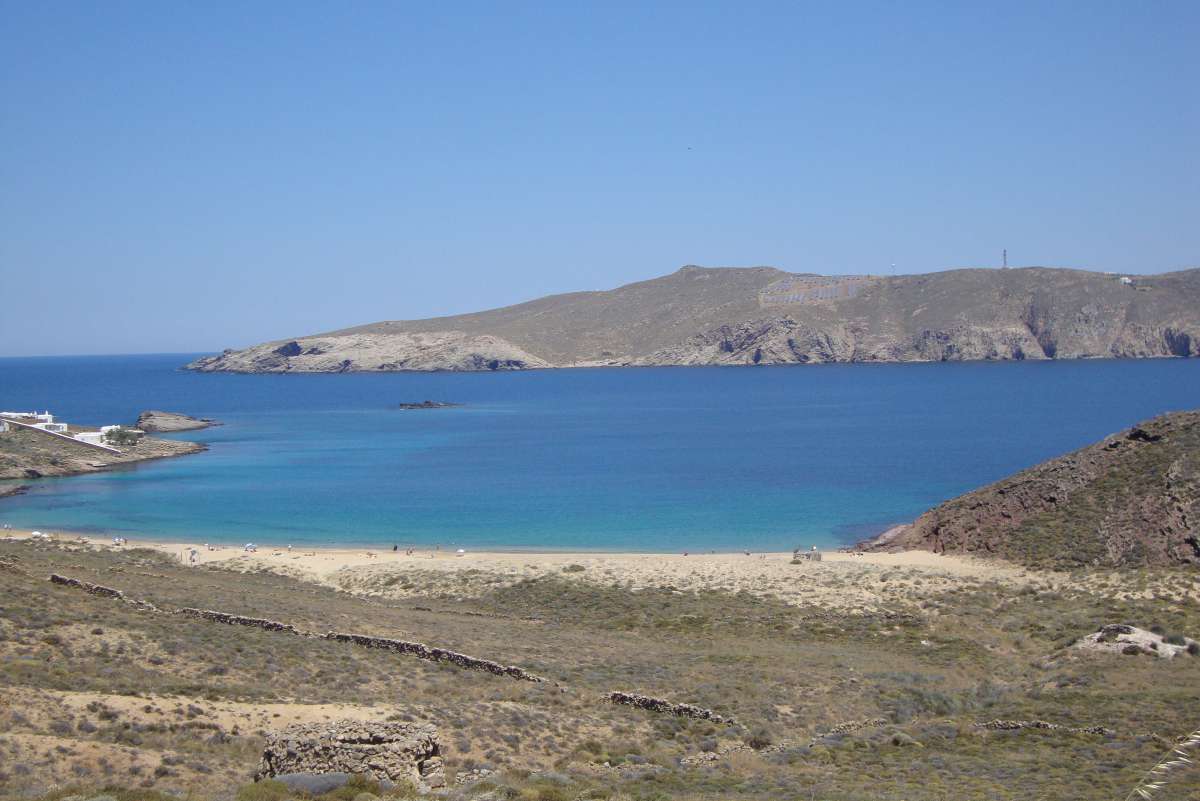
Mykonos has a southern coastline of exceptional quality — a succession of sandy beaches that progresses from the relatively accessible and well-organised near the harbour to the progressively more spectacular and more comprehensively equipped with world-class beach clubs as you move southeast along the coast. Psarou is intimate, sheltered, and the most exclusive — a small, perfectly enclosed bay of calm turquoise water where the world’s finest yachts anchor offshore and the beach clubs serve the finest champagne at the finest prices in the Cyclades. Platis Gialos is wider, sandier, and more accessible — an excellent family beach of great natural quality. Paradise and Super Paradise are the legendary party beaches of international reputation — their clubs and music and the particular quality of their summer afternoon social energy of a kind that is, if you are in the mood for it, entirely irresistible and entirely unique to Mykonos. And Elia, at the far end of the southern coast, is wider, quieter, and more naturally beautiful — a long beach of fine golden sand and clear water that offers, even in high summer, stretches of relative solitude within a short walk of the water taxis.
The Food and Nightlife
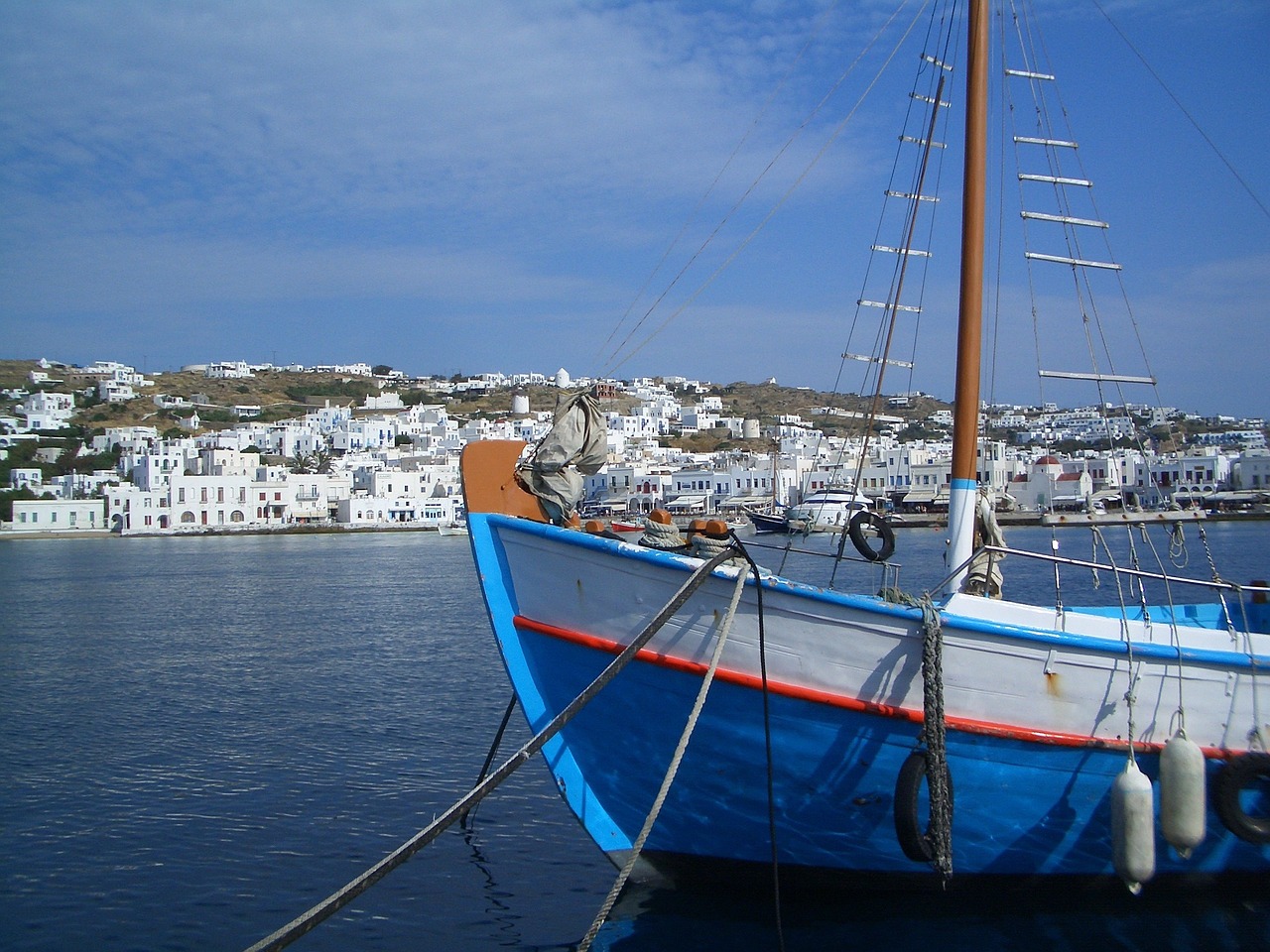
Mykonos has one of the finest and most varied restaurant and nightlife scenes of any island in the Mediterranean — a consequence of decades of international investment and international expectation that has produced a hospitality culture of genuine world-class quality. The fish tavernas of the old harbour serve grilled octopus and fresh lobster with a directness and a quality rooted in the island’s fishing tradition. The fine dining restaurants of Chora offer cuisine of international standard in settings of extraordinary architectural beauty. And the nightlife — from the sunset cocktail bars of Little Venice to the open-air clubs that operate through the night and into the following morning — is, at its best, simply the finest in the Greek islands: a combination of music, setting, crowd, and the particular electricity that Mykonos generates in high summer that has no equivalent anywhere in the Aegean and very few equivalents anywhere else on earth.
Why Choose Mykonos
Mykonos is the island for those who want the Greek island experience at its most polished, most energetic, and most completely alive — who want the best beaches and the finest restaurants, the most beautiful architecture and the most extraordinary nightlife, the cultural depth of Delos an hour away and the glamour of the beach clubs an hour in the opposite direction, and all of it wrapped in the extraordinary natural light and the authentic Cycladic beauty of an island that has been genuinely beautiful for far longer than it has been internationally famous.
It is equally an island for families who want the finest beaches and the safest, most comprehensively serviced holiday environment in the Cyclades; for couples who want the most romantic sunsets and the most beautiful candlelit dinner tables in the Aegean; for sailors who want the finest natural sailing conditions in the central Cyclades with the best provisioning and the most animated harbour evening at the end of each day; and for those solo travellers and groups who want the most socially alive, most internationally diverse, and most completely stimulating island social scene in the entire Mediterranean.
What Mykonos ultimately is — beneath the celebrity endorsements and the magazine covers and the decades of international fame — is a small, beautiful, genuinely extraordinary Cycladic island that found, in the second half of the 20th century, the perfect expression of its natural gifts: the light, the architecture, the wind, the beaches, and the particular quality of Greek warmth and Greek generosity that, combined with an ambition to offer the best of everything to everyone who comes, has made it not merely the most famous Greek island but one of the most completely alive and most completely rewarding places to spend a summer week anywhere on earth. The world came to Mykonos because Mykonos deserved it, and Mykonos, to its great credit, has never stopped deserving it.