Why Trikeri
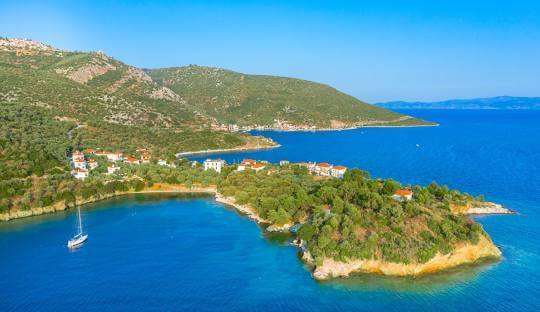
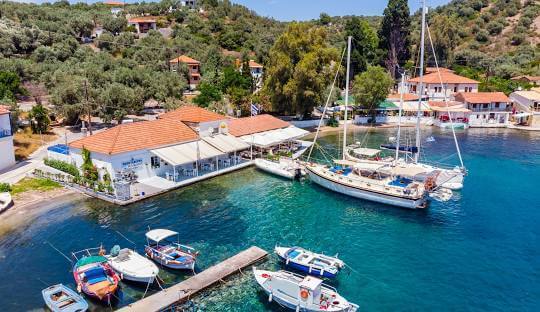
There are places in Greece that the mainstream current of tourism has simply never reached — not because they lack beauty or interest or the qualities that make a destination worth visiting, but because they lie just far enough from the well-worn routes, just quietly enough beyond the familiar names, to have been passed over by the travelling world in favour of more celebrated neighbours. Trikeri is one of these places. A small, densely forested peninsula at the southern tip of the Pelion — that extraordinary finger of mountain and forest and sea that projects into the Aegean from the coast of Thessaly — Trikeri and its associated islet of Palio Trikeri sit at the point where the Pagasetic Gulf opens into the northern Sporades channel, surrounded by water of remarkable clarity and framed by a landscape of such wild, unhurried, and completely genuine Greek beauty that those who find their way here tend to feel, very quickly, that they have discovered something the rest of the world has overlooked.
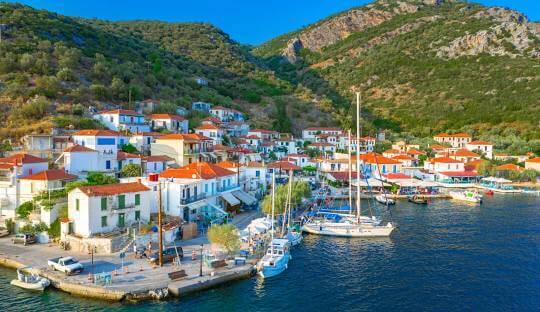
The village of Trikeri — perched on a hillside above the sea in a position of great natural drama, its traditional stone houses and cobbled lanes entirely without motor traffic, its donkeys still the primary means of moving goods between the harbour and the village above — is one of the most authentic and most completely unchanged traditional settlements in mainland Greece. There are no cars in Trikeri village. The road ends at the harbour below, and everything above — houses, churches, kafeneions, the bakery, the school — exists in the timeless, pedestrian, donkey-assisted manner of a Greek mountain village that happens also to look out over one of the finest views of the northern Aegean available from any inhabited place on the mainland coast. The combination of that traditional character with the extraordinary natural setting — the pine-covered hills, the clear Pagasetic water, the distant silhouettes of the Sporades on the horizon — gives Trikeri a quality of completeness and authenticity that is increasingly rare and increasingly precious in the modern Greek travel landscape.
The broader Trikeri peninsula and its surrounding waters form part of the wider Pelion experience — a region of Greece that has always had a particular and very devoted following among those who know it, and that offers a combination of mountain and sea, forest and coastline, traditional architecture and excellent local cuisine that is unique in the Greek mainland. The Pagasetic Gulf, enclosed on three sides and opening to the north, has waters that are calmer, warmer, and clearer than the open Aegean outside, and the sailing within it — between the forested capes and quiet bays of the Pelion coast, between the fishing villages of Trikeri and the small islands at the gulf’s southern mouth — is of a particularly intimate and rewarding character entirely distinct from the more dramatic open-water sailing of the Aegean beyond.
What to Do and What to See
Trikeri rewards the visitor who moves between its simple pleasures with an unhurried ease — walking the car-free lanes of the hilltop village, swimming in the clear water of the gulf’s southern bays, exploring the small island of Palio Trikeri by dinghy, and eating the freshest possible fish at a harbourside taverna as the afternoon light falls across the water. For those arriving by yacht, the area offers a sequence of sheltered anchorages and hidden coves of great quality, and the combination of mainland Greek authenticity with an exceptional natural setting makes Trikeri one of the most rewarding and least-expected destinations on any northern Aegean itinerary.
Trikeri Village — The Car-Free Settlement
The hilltop village of Trikeri is the heart of the experience and its most irreplaceable element. Reached from the small harbour below by a path that climbs through olive groves and flowering scrub, the village reveals itself gradually — first the sound of the donkeys and the church bells, then the first glimpse of whitewashed walls and terracotta rooftops above the olive trees, and finally the full scene of a traditional Greek settlement entirely intact and entirely alive, its cobbled lanes and stone houses preserved in a state of authenticity that owes nothing to restoration programmes or tourist investment and everything to the simple fact that the village has always been exactly what it is. The kafeneion on the main square serves coffee and ouzo to the same tables where the same conversations have been conducted for generations, the small church of the Assumption contains frescoes of considerable age and considerable beauty, and the views from the upper lanes of the village across the Pagasetic Gulf and out to the Sporades on the horizon are of a sweep and a quality that remain, even after repeated visits, genuinely breathtaking.
Palio Trikeri — The Monastery Island
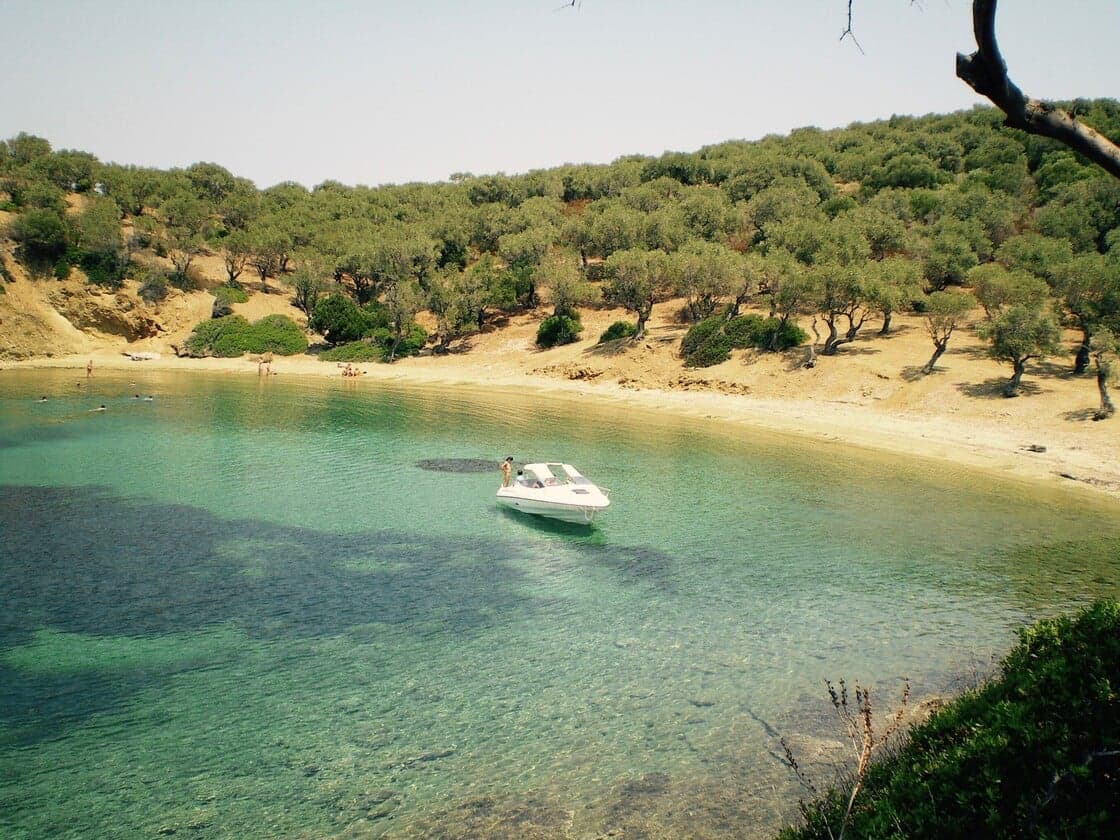
Just off the tip of the Trikeri peninsula, the small islet of Palio Trikeri is one of the most peaceful and most completely beautiful small island destinations in the northern Aegean — a low, densely forested rock of perhaps two square kilometres, occupied by a single working monastery, a handful of traditional houses, and a series of small sandy beaches of exceptional clarity and calm. The islet is accessible by small boat from Trikeri harbour and serves as a natural day-trip destination for those anchored in the area. The Monastery of the Nativity of the Virgin, set among ancient olive trees at the island’s highest point, is a place of genuine sanctity and genuine beauty — its church contains outstanding Byzantine frescoes, its gardens are tended with loving care, and the monk who inhabits it extends the kind of quiet, gracious welcome that is the tradition of Greek Orthodox monasticism at its finest.
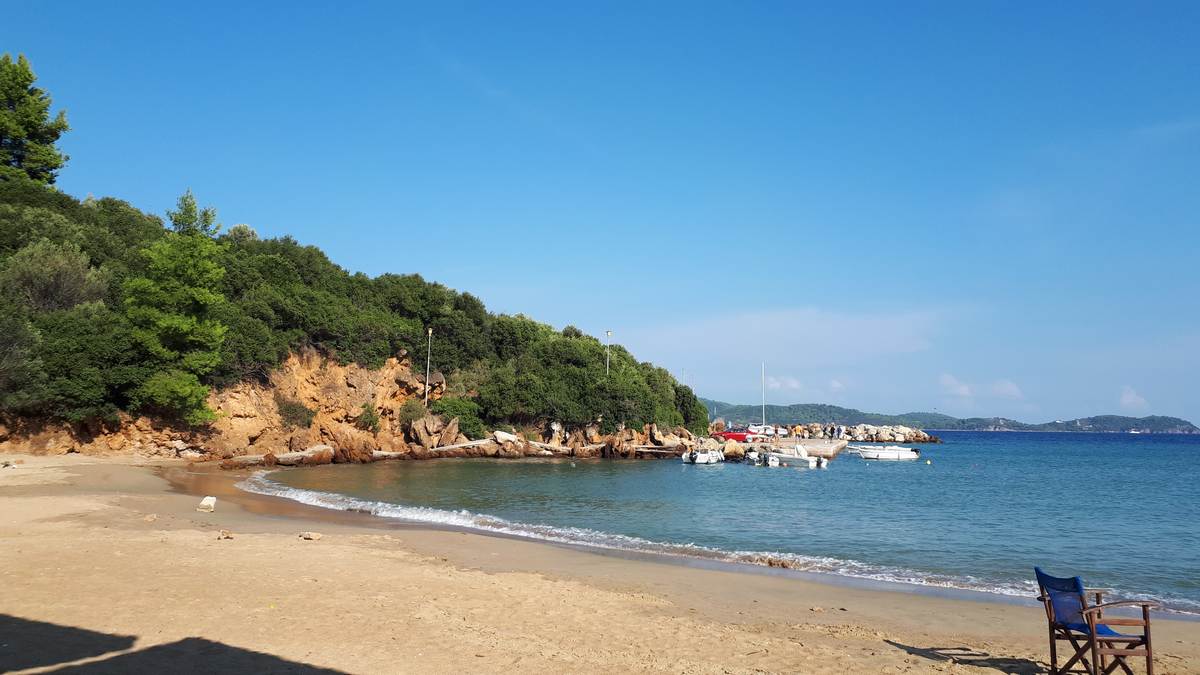
The beaches of Palio Trikeri — small, sandy, entirely without facilities, their pale sand giving way to water of the kind of shallow, warm, brilliant turquoise that one associates with the Ionian rather than the Aegean — are among the most completely peaceful swimming spots in the northern mainland coastal area. By yacht, anchoring off the islet’s southern shore and spending a morning swimming in absolute silence, with nothing but the sound of the sea and the distant bell of the monastery above, is one of the great simple pleasures of the northern Aegean.
The Pagasetic Gulf and the Pelion Coast
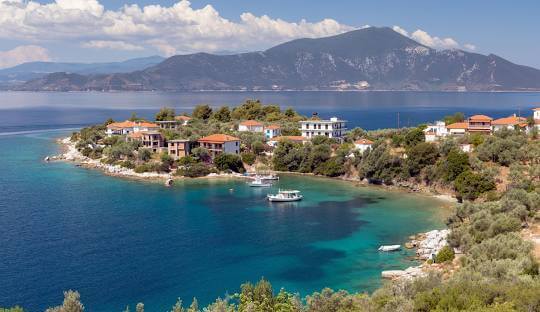
The waters of the Pagasetic Gulf surrounding Trikeri are among the calmest, warmest, and clearest in the northern Aegean — a semi-enclosed sea whose sheltered character creates swimming and sailing conditions of exceptional quality throughout the summer months. The Pelion coastline to the north of Trikeri, dotted with small fishing villages and traditional Pelion architecture — the distinctive two-storey stone houses with their wooden upper floors projecting over the narrow lanes below — offers a sequence of anchorages and swimming spots of great variety and great beauty. The village of Milina, the bay of Marathias, the small port of Horto — each one different in character, each one offering the combination of clear gulf water and traditional Greek village life that makes the Pagasetic coast so rewarding for the sailor willing to explore it slowly and attentively.
The Mythological Heritage — Jason and the Argonauts
The waters of the Pagasetic Gulf carry one of the most resonant of all Greek mythological associations: it was from Volos — the ancient Iolcos, at the northern end of the gulf — that Jason and the Argonauts set sail on their legendary quest for the Golden Fleece, their ship the Argo built from the timber of Mount Pelion above. Sailing the same waters today, with the great forested bulk of Pelion rising above the northern shore and the clarity of the gulf water unchanged from the legendary time, it is entirely easy and entirely natural to feel the weight of that story — to understand why the Greeks chose this particular combination of mountain, forest, and sea as the setting for one of their greatest tales of adventure and ambition. For those with any feeling for mythology, the Pagasetic Gulf is not merely a beautiful sailing ground. It is a mythological landscape of the first order, alive with stories that have shaped the imagination of the western world for three thousand years.
The Walking Paths of Pelion
The broader Pelion peninsula, of which Trikeri is the southern tip, is famous throughout Greece for its network of ancient kalderimi paths — stone-paved routes that once connected the peninsula’s mountain villages and that now offer some of the finest walking in mainland Greece. The paths around Trikeri, descending through olive groves and pine forest to small coves of clear water, are accessible and rewarding at every level of walking experience, and the combination of forest fragrance, sea views, and the sudden discovery of a deserted pebble beach at the end of a downhill path is among the most characteristically and most completely Greek of all the island’s pleasures. The path from Trikeri village down to the harbour below, lined with wild sage and rock roses and offering at every turn views across the gulf that are simultaneously magnificent and entirely intimate, is itself sufficient justification for the short climb up.
Why Choose Trikeri
Trikeri is the destination for the traveller who wants Greek authenticity in the most complete and most unmediated form — a car-free village where the traditional rhythms of Greek rural and maritime life are not reconstructed for visitors but simply continuing, unchanged, in the manner they have continued for centuries. It is for the person who has grown weary of the packaged version of Greece and wants to encounter the real one — the donkeys and the kafeneions and the church bells and the grandmother hanging washing from a stone balcony above a cobbled lane — in a setting of extraordinary natural beauty and with the extraordinary bonus of some of the clearest and calmest water in the northern Aegean immediately below.
For those sailing the northern Aegean or the Sporades, Trikeri represents one of the most rewarding and most completely unexpected detours available — a mainland destination of genuine quality that sits naturally on any itinerary connecting the Sporades with the mainland ports of Volos and the wider Thessalian coast. The sailing into the Pagasetic Gulf from the open Sporades channel is one of the finest coastal approaches in northern Greece, the anchorages within the gulf are superb, and the combination of Trikeri village, Palio Trikeri island, and the broader Pelion coast creates an itinerary of authentic Greek character and natural beauty that provides the perfect counterpoint to the more famous island destinations of the Sporades to the south.
What makes Trikeri ultimately unforgettable is the simplicity and the completeness of what it offers — the particular Greek gift of a place that asks nothing of you except to be present, to eat well, to swim in clear water, to walk at a pace set by the landscape rather than by a schedule, and to allow the quality of the light and the silence and the view to do their slow, inevitable, entirely welcome work on whatever it is in you that needed, without knowing it, exactly this. Trikeri provides that experience with the quiet generosity of a place that has always had more beauty than visitors, and that remains, in that beautiful imbalance, entirely itself.