Why Keros
There are places in the Greek island world that carry a weight of human history so ancient and so profound that the experience of approaching them by sea — even today, even knowing nothing of what lies beneath the surface of the island and the water around it — produces a feeling of quiet awe that is difficult to explain and impossible to dismiss. Keros is one of these places. An uninhabited island in the heart of the Small Cyclades, lying between Koufonisia and Amorgos in the channel that separates the central Cyclades from the open Aegean to the east, Keros is one of the most important prehistoric archaeological sites in the entire Mediterranean world — a place of ritual and ceremony for the Early Cycladic civilisation over four thousand years ago, whose significance to the ancient Aegean world was so great that objects were brought here from islands across the entire Cycladic archipelago to be deposited, broken, and left in a deliberate act of sacred destruction whose meaning archaeologists are still working to fully understand. It is a place that existed at the centre of a world of considerable sophistication and considerable mystery, and the mystery has not diminished with the centuries.
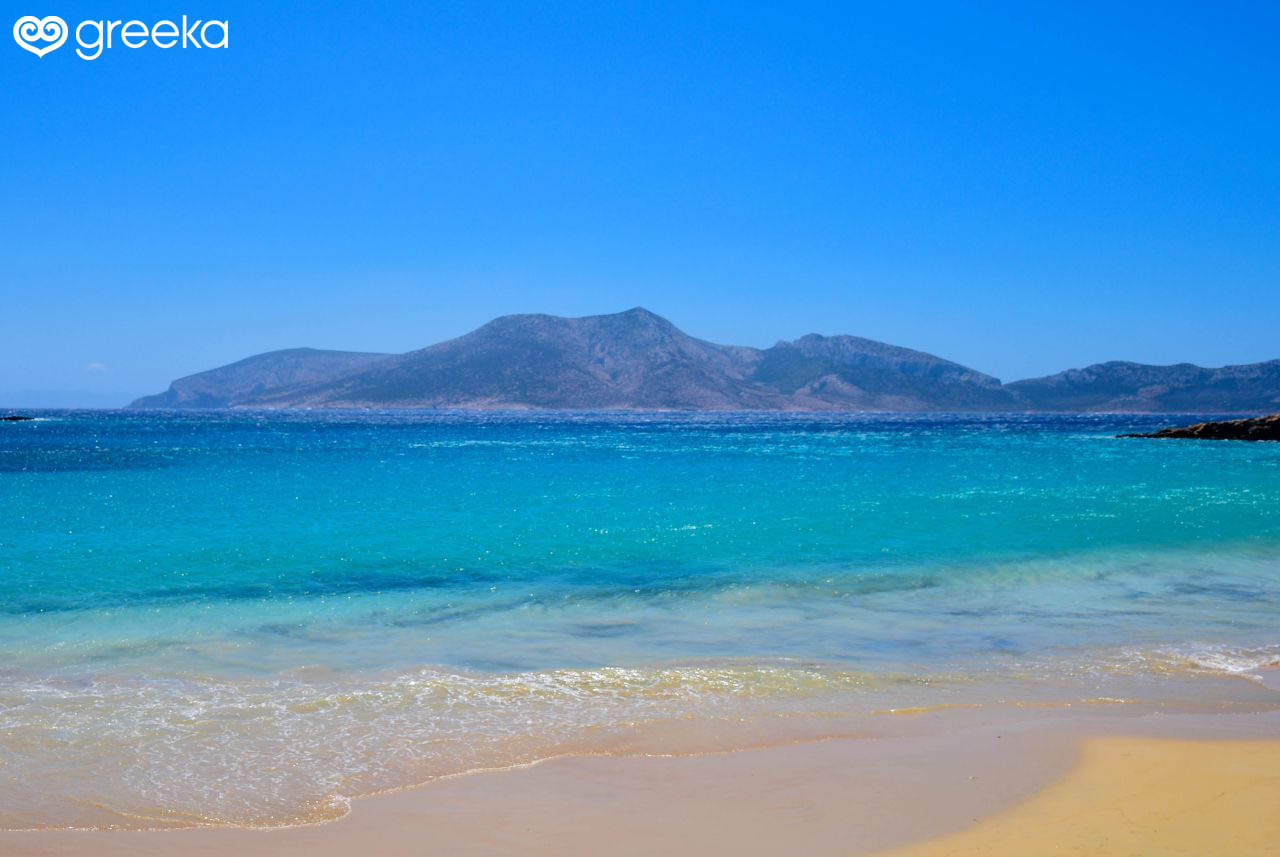
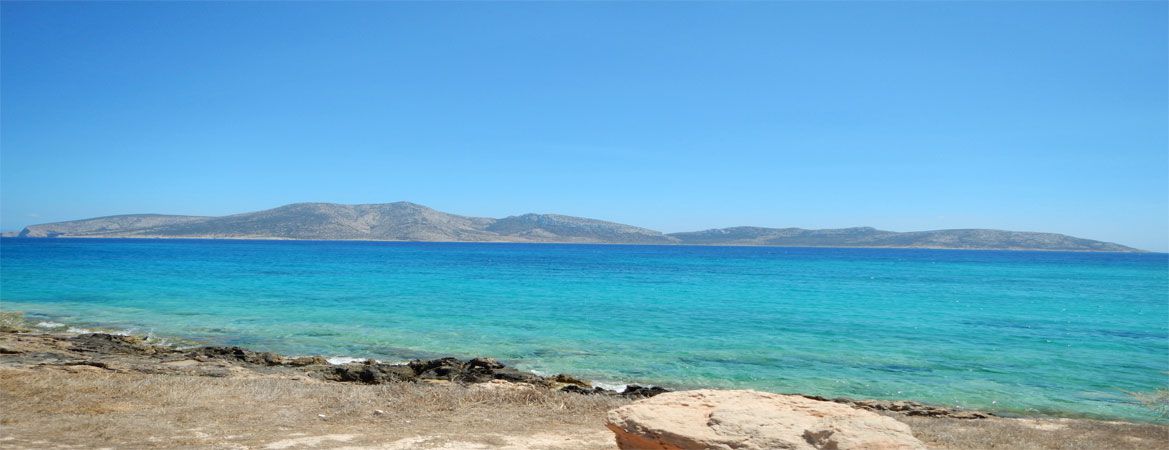
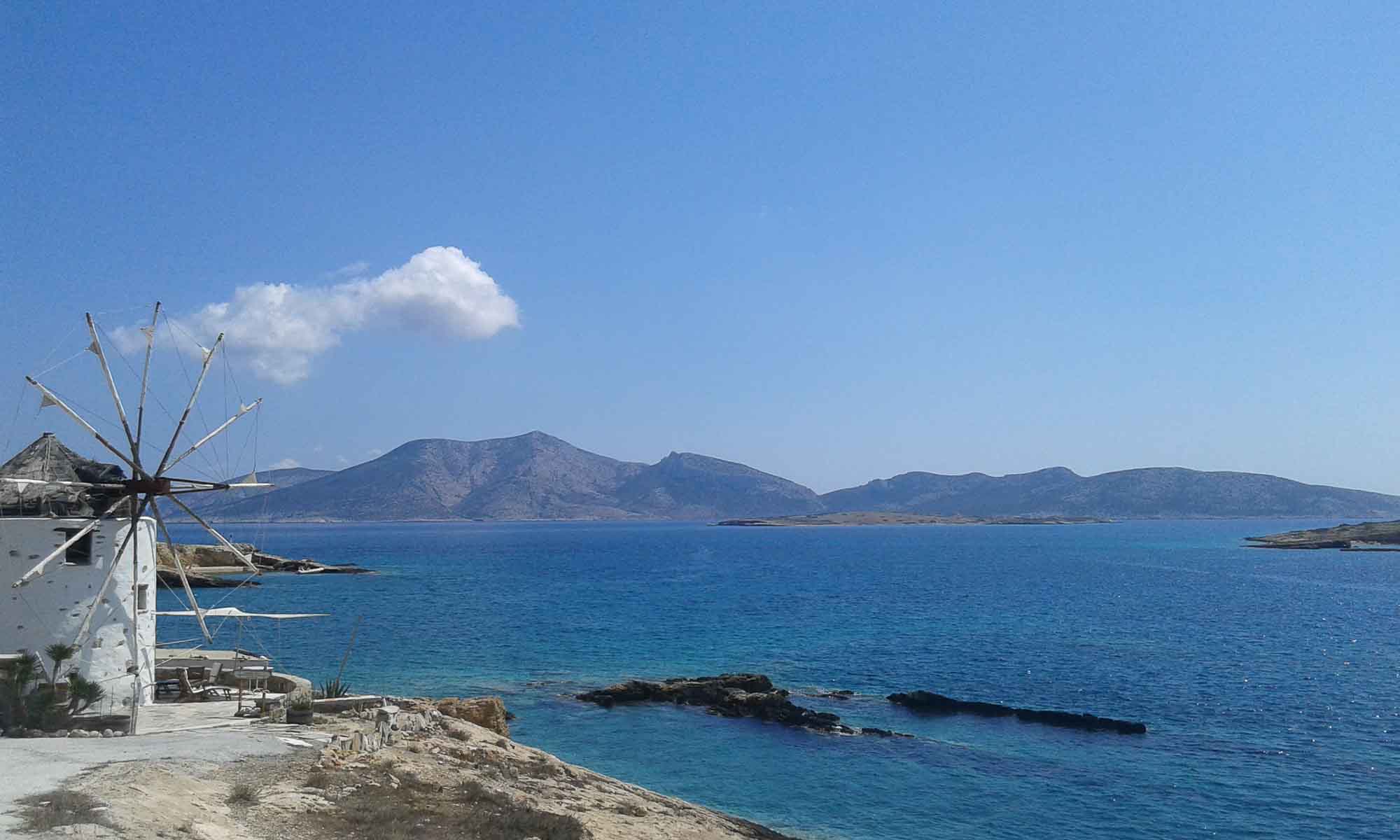
The island itself is small, steep, and entirely uninhabited — a roughly triangular mass of pale schist rising to 431 metres at its highest point, its hillsides covered in low scrub and wildflowers, its coastline of rocky headlands and small coves dropping directly into water of the deep, clear, intensely blue quality that characterises this part of the Small Cyclades. There are no houses, no harbour facilities, no tavernas, no roads, and no permanent human presence — only the archaeological excavations that have been conducted here intermittently since the early 20th century and with increasing intensity and sophistication since the 2000s, under the direction of the Greek Archaeological Service and Cambridge University. The island is a protected archaeological site of the highest category, and landing on its main archaeological zone is restricted to authorised visitors. But approaching it by sea, anchoring off its coastline in the extraordinary clarity of the surrounding water, and contemplating the weight of what lies beneath the surface of this silent, wind-swept, magnificently remote island is an experience of a depth and a quality entirely out of proportion to the modest dimensions of the place responsible for it.
The particular magic of Keros lies in this combination — the physical beauty of the island and its setting, the extraordinary antiquity and significance of what it contains, and the complete wildness and silence of a place that has had no permanent human inhabitants for millennia and that exists today in a state of natural preservation that is genuinely and increasingly rare in the Aegean. To anchor off Keros in the early morning, with the sun rising over the Cyclades and the island standing silent and steep against the pale sky, is to be in the presence of something ancient and something wild simultaneously — a combination that the Aegean offers nowhere else in quite the same intensity.
What to Do and What to See
Keros does not offer organised tourism, visitor facilities, or the conventional pleasures of a Greek island destination. What it offers is something rarer and more profound: the experience of being in the presence of one of the great sacred sites of prehistoric Europe, in a natural setting of extraordinary beauty, accessible only by sea, and encountered in the kind of silence and solitude that allows its significance to register at something beyond the merely intellectual level. For those arriving by yacht, the island and its immediate surroundings offer an experience of the ancient Aegean world at its most immediate, most mysterious, and most completely moving.
The Prehistoric Sanctuary — Kavos and Dhaskalio
The archaeological significance of Keros centres on two adjacent sites at the island’s southwestern point. At Kavos, on the southern shore of Keros itself, excavations conducted over decades have revealed one of the most remarkable prehistoric ritual deposits ever discovered anywhere in the Bronze Age Mediterranean — a vast accumulation of deliberately broken Early Cycladic figurines and marble vessels, brought to this site from across the Cyclades and ritually smashed and deposited here over a period of several centuries around 2500 BC. The famous Cycladic figurines — those hauntingly beautiful abstract marble sculptures of the human form that have influenced artists from Brancusi to Henry Moore — are found in their greatest concentration and their greatest variety in the deposits at Keros, and the deliberate, ceremonial breaking of objects of such evident value and beauty speaks of a ritual practice of great sophistication and great religious intensity. Keros was not simply a settlement. It was a sanctuary — a place to which the peoples of the Early Cycladic world came, from islands across the archipelago, to perform acts of sacred deposition in a ceremony whose full meaning remains, tantalizingly, just beyond the reach of complete understanding.
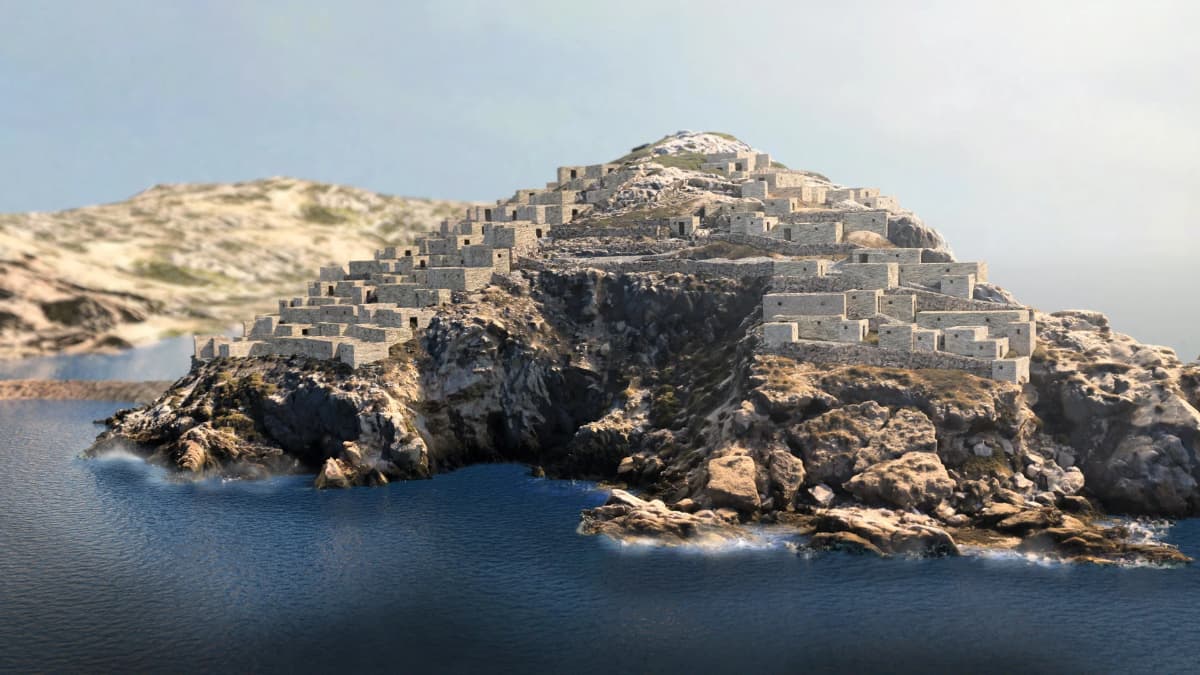
On the tiny adjacent islet of Dhaskalio — a rocky outcrop separated from Keros by a shallow channel of brilliant turquoise water — recent excavations by the Keros-Dhaskalio Melian Project have revealed the remains of a monumental Early Cycladic building complex of extraordinary sophistication: a multi-storeyed structure of carefully dressed marble, supplied with imported timber and metal, its construction requiring a degree of architectural planning and resource mobilisation entirely without parallel in the Early Bronze Age Aegean. Dhaskalio was, it now appears, not simply a habitation site but a place of considerable importance and considerable prestige — a built monument on an island that was itself a monument, together forming a sacred complex of a scale and a significance that places Keros among the most important prehistoric sites in Europe. Viewing Dhaskalio from the water as you sail between Keros and Koufonisia — the tiny islet with its pale rock and its extraordinary turquoise surrounding water, now knowing what lies beneath and within it — is one of the most quietly thrilling moments available to the archaeologically curious sailor in the entire Aegean.
The Surrounding Waters and Anchorages
The waters surrounding Keros are of exceptional clarity and beauty — the particular shade of deep, luminous blue-green that characterises the Small Cyclades channel, with a visibility that regularly exceeds 25 metres and a seabed of pale sand and dark rock rich in marine life. Anchoring off the island’s western coast, in the shelter of the headland above the archaeological site, offers a degree of solitude and a quality of swimming that is among the finest in the Small Cyclades. The complete absence of other vessels for much of the day, the silence broken only by the wind and the sea, and the knowledge of what lies on the island above and beneath the water around you combine to produce an experience of the ancient Aegean at its most immediate and most completely affecting.
The Wider Small Cyclades Context
Keros is most meaningfully experienced as part of the broader Small Cyclades itinerary — in the company of Koufonisia to the northwest, with its extraordinary turquoise coves and its animated harbour village; Schinoussa to the west, with its traditional character and its hilltop chora; and Irakleia to the west, with its remarkable cave and its complete Cycladic authenticity. Together, these islands form one of the finest and least-known sailing itineraries in the central Aegean, and Keros — silent, uninhabited, ancient beyond any of its neighbours — provides the itinerary with a historical and spiritual anchor of extraordinary power, a reminder that the beauty of the Cyclades is not merely a contemporary phenomenon but the continuation of something that has drawn human beings to these islands, across these waters, for five thousand years.
Why Choose Keros
Keros is the destination for the traveller who wants to encounter the deepest layer of Greek — and indeed European — civilisation in its most direct and most unmediated form. It is for those for whom the Cycladic figurines in the National Archaeological Museum in Athens are not merely beautiful objects but haunting questions — questions about who made them, and why, and what it meant to bring them across the open Aegean to this particular island and break them here in a ceremony of deliberate and sacred destruction. It is for those for whom the presence of the ancient world, felt directly rather than mediated through a museum or a guidebook, is one of the most profound and most irreplaceable things that travel can offer.
For sailing itineraries in the Small Cyclades, Keros requires no detour and no special planning — it sits naturally on the route between Koufonisia and Amorgos, and the experience of sailing past it, or anchoring off it for a morning, adds a dimension to the surrounding itinerary that elevates the entire journey from the merely scenic to the genuinely significant. The archaeological importance of the site means that it should be approached with respect — landing restrictions exist for good reason, and the protection of what remains to be excavated and understood at Kavos and Dhaskalio is a matter of genuine global heritage significance. But the experience of being close to it, on the water that surrounds it, in the silence that now fills a place that was once, five thousand years ago, one of the most sacred and most visited sites in the prehistoric Mediterranean — that experience is available to every sailor willing to set a course for the Small Cyclades, and it is an experience of a quality and a depth that no amount of museum visiting can fully replicate or replace.
What Keros gives the visitor who comes to it with open eyes and genuine curiosity is the rarest gift the Aegean has to offer — the feeling of direct, unmediated contact with the deep human past, in a place of great natural beauty, surrounded by the same sea that surrounded it when it was alive with ceremony and meaning and the boats of the Early Cycladic world. That continuity — of water and light and the human impulse to sail toward something sacred — is what Keros embodies, and it is, in the most complete and literal sense, ancient and eternal and extraordinary.