Why Schinoussa
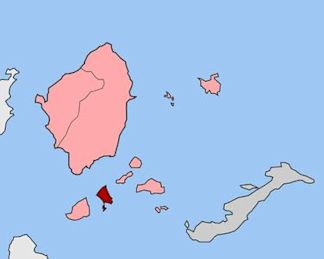
There are islands in the Greek world whose greatest quality is the one most difficult to describe in a travel brochure — not a famous beach or a celebrated monument or a spectacular view, but a feeling. The feeling of arriving somewhere that has no particular interest in impressing you, that extends its welcome quietly and without fanfare, and that reveals its beauty gradually, in the manner of something that has always been there and expects you to take the time to notice it properly. Schinoussa is this kind of island. One of the four inhabited islands of the Small Cyclades, lying in the channel between Naxos and Amorgos alongside its neighbours Irakleia, Koufonisia, and Donoussa, Schinoussa is the quietest and in many ways the most perfectly proportioned of the group — small enough to cross on foot in an afternoon, varied enough to reward several days of unhurried exploration, and possessed of a natural beauty and a human warmth that accumulate, over the course of a stay, into something that feels considerably larger and considerably more important than the island’s modest dimensions might suggest.
The island covers barely 8 square kilometres, has a permanent population of around 250 people, and receives a modest but loyal stream of visitors — predominantly Greek, with a growing international following among those who have exhausted the more obvious Cycladic destinations and are looking for what lies beyond them. It has no famous landmark, no celebrated archaeological site, no spectacular geological drama. What it has instead is a coastline of 18 beaches distributed around its perimeter in a variety of small sandy coves and rocky inlets of remarkable individual beauty, a hilltop main village of complete Cycladic authenticity, a community of warm and genuinely welcoming people, and a quality of peace and simplicity that the island wears with the natural ease of something that has never been anything else. Schinoussa is not trying to be a lesser version of somewhere more famous. It is trying to be exactly what it is, and it succeeds completely.
The island’s name is believed to derive from the schinos — the mastic shrub — that once covered its hillsides in abundance, and the low, fragrant scrubland that still characterises much of its landscape gives it a distinctive botanical identity and a characteristic scent that greets the arriving sailor well before the island itself comes clearly into view. Walking the island’s paths through this landscape of wild herbs, low stone walls, and sudden blue glimpses of sea, you feel at every turn that you are moving through a Cycladic world entirely unmediated by the requirements of tourism — a world where the smell of the herbs underfoot and the sound of the wind across the low hills and the light on the pale stone of the terraces is the same as it has always been, and where the simple fact of being present in it is, in itself, entirely sufficient.
What to Do and What to See
Schinoussa’s pleasures are simple, genuine, and available in abundance to those who come prepared to receive them on the island’s own unhurried terms. Walking, swimming, eating, and sitting in the evening warmth of the village are the primary activities, and the quality of all four — the variety and beauty of the swimming coves, the excellence of the walking paths, the freshness of the taverna food, and the warmth of the village social life — is far above what the island’s modest profile might lead you to expect.
Chora — The Main Village
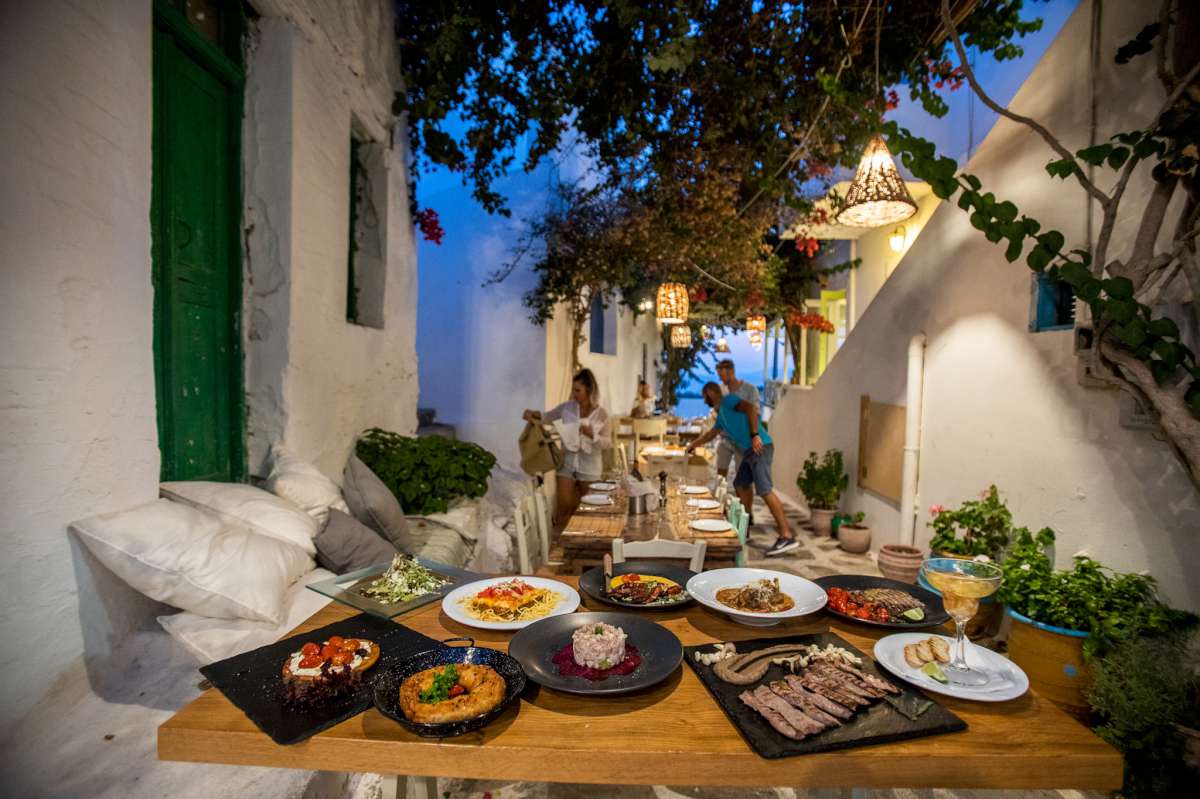
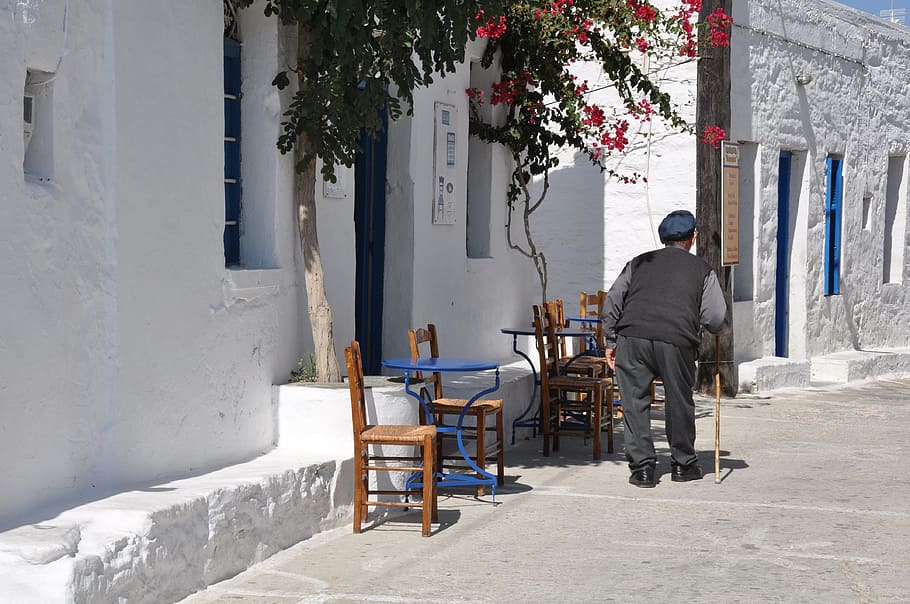
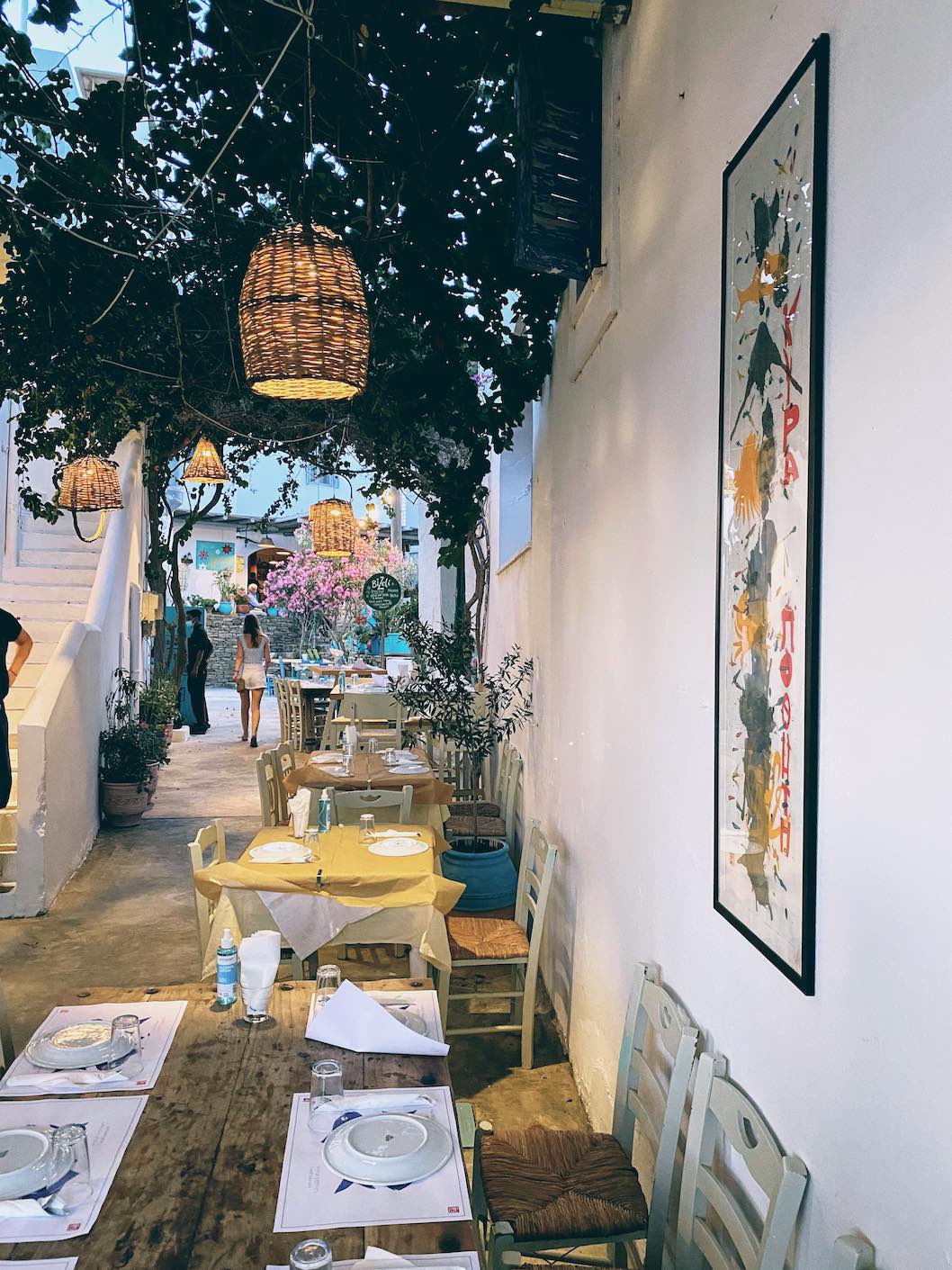
The main village of Schinoussa — simply called Chora, or Panagia after its principal church — sits on the island’s central ridge at a height of about 130 metres, its whitewashed houses and blue-domed church arranged along a narrow lane of cobbled stone with views across the island and the surrounding sea in every direction. It is a village of complete Cycladic simplicity and complete Cycladic charm — small enough to know by name within a day, warm enough to feel like home within two. The central lane is lined with the island’s handful of tavernas and small cafés whose outdoor tables fill each evening with a social mix of locals and visitors that is entirely natural and entirely unpretentious, and the church of the Panagia at the lane’s end — whitewashed, blue-domed, impeccably maintained — is one of the most photographed and most genuinely beautiful small churches in the Small Cyclades. The views from the ridge on which Chora sits, taking in on clear days the full sweep of the central Cyclades from Naxos to the west to Amorgos to the east and the distant silhouette of Ios and Santorini to the south, are of a scope and a beauty that consistently and pleasurably astonish visitors encountering them for the first time.
The Beaches
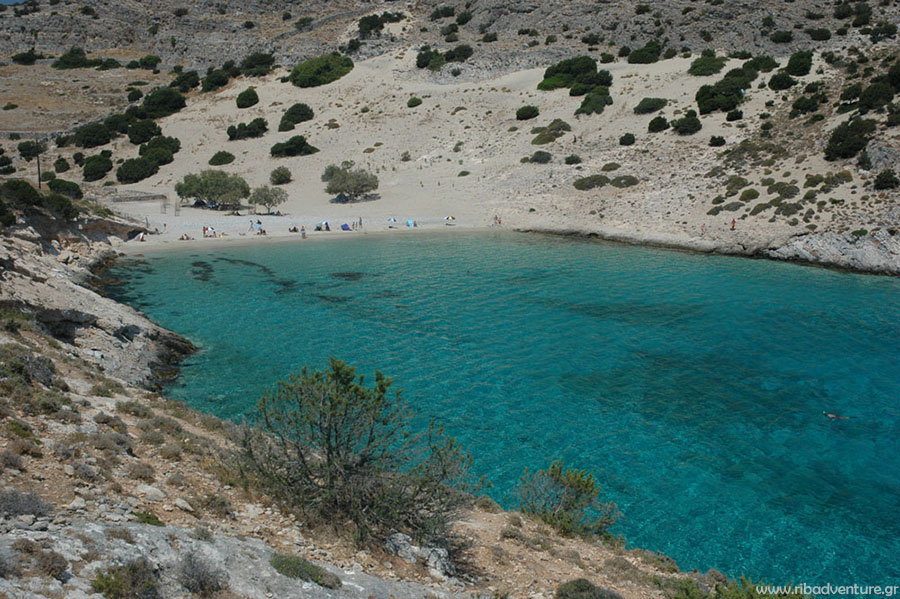
Schinoussa’s 18 beaches are its greatest natural treasure — a remarkable number for an island of its size, and a variety of character and quality that ensures that no two days of swimming need repeat themselves. Tsigouri, on the eastern coast below Chora, is the largest and most accessible — a wide sandy bay of calm, clear turquoise water with a single seasonal taverna at the back of the beach and a quality of light in the late afternoon that makes it one of the most beautiful swimming spots on the island. Lioliou, on the southeastern coast, is smaller and more sheltered, its pale sand and shallow water ideal for families and for those who want the calmest and warmest swimming the island offers. Almyros, Psili Ammos, Finikas — each beach in the sequence around the island’s perimeter is different in orientation, in the colour and depth of its water, and in the quality of the solitude it offers, with the more remote western and northern beaches accessible only on foot or by sea and offering, as a reward for the additional effort, a degree of privacy and a quality of natural beauty that the more accessible eastern shores cannot quite match.
The Walking Paths
Schinoussa’s network of old paths — connecting the village with the beaches, the farmsteads, and the small chapels scattered across the island’s hillsides — constitutes one of the finest and most rewarding small-island walking systems in the Small Cyclades. The paths are well marked and well maintained, crossing a landscape of wild beauty — dry stone walls, abandoned terraces, ancient threshing floors, and the low fragrant scrubland that gives the island its name — with views across the surrounding sea that are magnificent at every turn. The circuit of the island’s perimeter, visiting each beach in sequence over the course of a full day’s walking, is one of the most satisfying and most completely characteristic experiences that Schinoussa has to offer — a day that begins in the cool of the early morning at Chora and ends, after many swims and many rests and the gradual accumulation of a detailed and intimate knowledge of the island’s coastline, back at the village in time for a long dinner and a well-earned carafe of local wine.
The Sunsets from Chora
Schinoussa’s western orientation and the clear, unobstructed horizon that the island’s ridge provides make its sunsets among the finest in the Small Cyclades — a long, slow, colourful transition from the blue of the Aegean afternoon to the gold and rose and deep violet of a Cycladic evening, witnessed from the tables of the Chora tavernas or from the path above the village that offers a completely open western view. The sunset over the sea toward Naxos, with the great mountain bulk of that island catching the last light in shades of amber and bronze on the horizon, is one of the characteristic and most repeated pleasures of an evening on Schinoussa, and it never becomes ordinary. The Greeks have a word — meraki — for doing something with all of your soul, with love and creativity and complete attention. Schinoussa’s sunsets have meraki, and so does everything else about this small, quiet, entirely beautiful island.
Why Choose Schinoussa
Schinoussa is the island for the traveller who has understood that the Greek islands at their finest are not about spectacular monuments or famous beaches or glamorous social scenes, but about a quality of experience — of peace, of natural beauty, of genuine human warmth, and of the particular, irreplaceable pleasure of a small community living its own life in a beautiful place and making room, generously and without fuss, for those visitors who come to share it. It is an island for couples who want the Cyclades entirely to themselves, for families who want calm water and safe, accessible beaches and the freedom to let children roam, and for solo travellers and sailors who want to find, even briefly, the version of Greece that exists beyond the postcards.
For those sailing the Small Cyclades, Schinoussa sits naturally in the centre of the group — a natural overnight anchorage between the relative liveliness of Koufonisia to the east and the greater remoteness of Irakleia to the west, and a destination of sufficient individual quality to justify a stay of two or three days in its own right. Its harbour of Mersini is small but adequate for yachts, its holding ground good, and the short walk from the harbour up to Chora rewards the effort immediately and completely. The combination of excellent beaches, beautiful walking, and the authentic village life of Chora makes Schinoussa one of the most completely satisfying overnight stops in the Small Cyclades itinerary.
What Schinoussa ultimately offers — and offers with the quiet generosity of an island that has always had more beauty than visitors and has never seen any reason to change that balance — is the experience of the Cyclades as they were before they became famous. The clear water, the white houses, the fragrant scrubland, the fresh fish, the warm evenings, the star-filled sky above a dark and peaceful sea — all of these things, which the most celebrated Cycladic islands offer now only in diminished or compromised form, Schinoussa offers whole and intact and entirely without condition. That is its gift, and it is a gift of rare and enduring value.